
It’s hard to escape the gloomy feeling surrounding PC hardware at the moment. As the AI hyperscaler revolution revs its Harley past us into the sunset, with most of the industry’s DRAM manufacturing capacity packed into its luggage, it’s now a really bad time to upgrade your PC. It’s not just the cost of DDR5 RAM that’s been inflated beyond all proportion, but also SSDs, graphics cards, and even hard drives. Will it ever end? I had a chat with Ben Miles, consultant for memory distributor M2M, and director of PC system builder Wired2Fire, to get a feel for what’s going on behind the scenes.
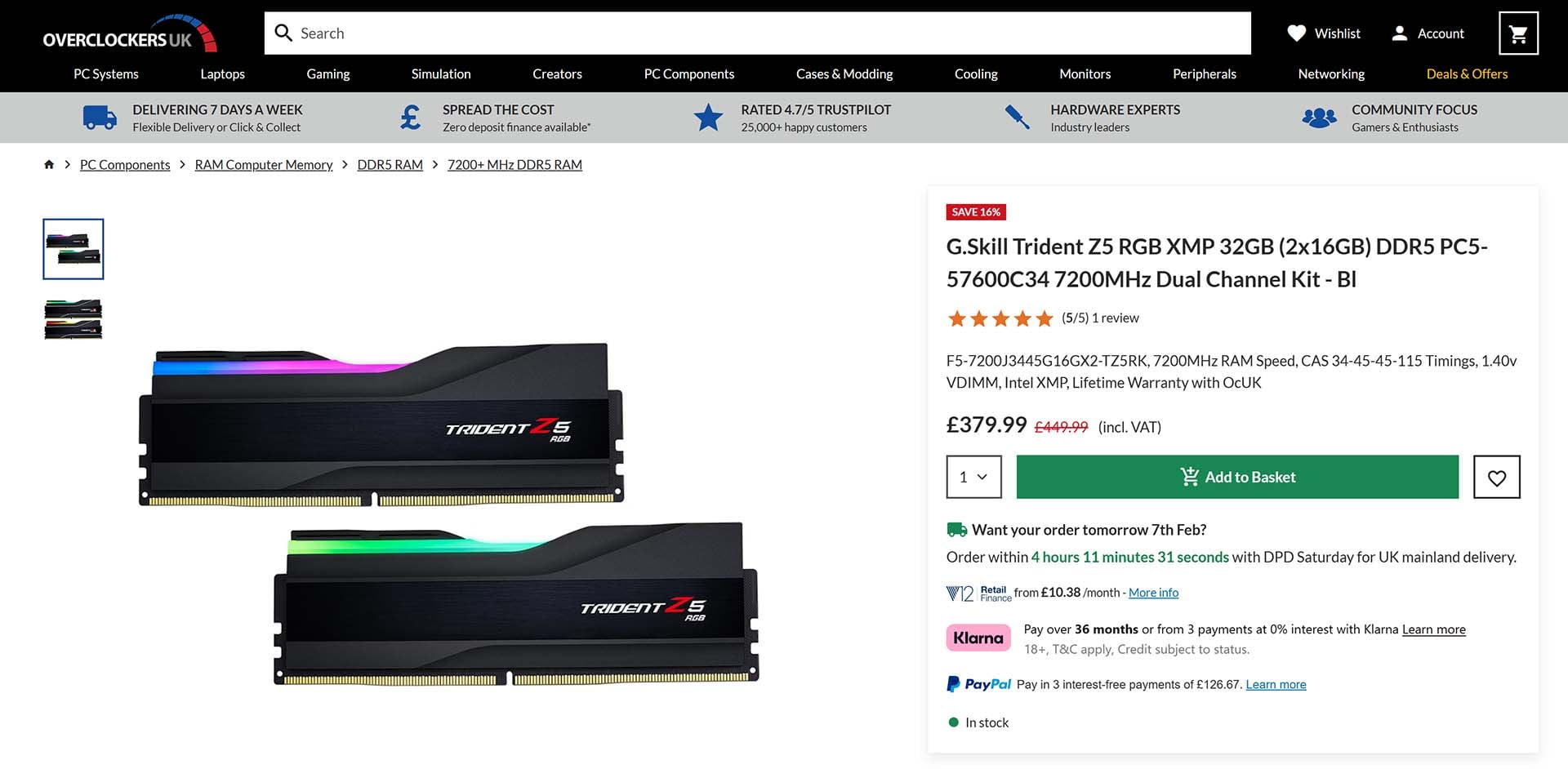
We catch up soon after I’ve written an optimistic piece about RAM prices coming down, based on large-scale price reductions on DDR5 memory at Overclockers and CCL. Is this a sign of nature healing? Sadly not. “There are definitely no green shoots, unfortunately, in DRAM at the moment,” says Miles, “it’s still very much on an upward trajectory.” The same also goes for SSD prices.
Are RAM prices coming down?
So what’s the situation with all those discounted kits? “Those positive price trends at Overclockers and others are much more likely just to be those companies looking to liquidate some assets,” says Miles. “Everybody will have liquidated a load of cash flow to try and get as much DRAM and SSDs as possible to see out the storm for the next six months, because everybody knew the price trajectory was up,” he explains.
Once it was clear that RAM and storage pricing were about to head in an extreme direction, it was a race to stock up. “If I had £10 million of liquidity in October,” Miles gives as an example, “then I’d just spend £10 million plus my credit limit on DRAM and storage back then, because it was so clearly defined that the upward march would continue in pricing – that it would be a better investment than just about anything else you could do.
There are definitely no green shoots, unfortunately, in DRAM at the moment.
“Everybody would have done that on 30-day or 60-day end-of-month terms, and of course, all that purchasing is now falling due. Hence, you’re going to start seeing some deals, albeit deals on RAM that was previously very expensive.”
There’s also just simple maths at play here, as even a small percentage of profit margin results in a much larger amount of money if prices are going up at these levels. “If you’re charging 7% for the margin on a kit of RAM,” Miles explains, “that DRAM, which is normally £80 a kit, but now costs a £380 a kit – the cash delta, even with a 7% margin, is still greater, so you have more of an ability to discount it short term.”
The only way is up
Ben Miles says M2M has a direct relationship with SK Hynix, Samsung and Micron, which are the big three when it comes to DRAM production, and all of them are continuing to raise their prices. “None of those companies have reduced their cost prices at all,” he says, “they are all unfortunately still going up.”
Does this mean the cost of PC memory is going to continue to climb even further as well? “In the short term, it’s definitely going to go up, yes,” is the answer. He notes that prices are likely to stabilise at some point, as high costs have pushed down demand for PC memory by around 60%, but that there’s still a great deal of pressure on the industry.
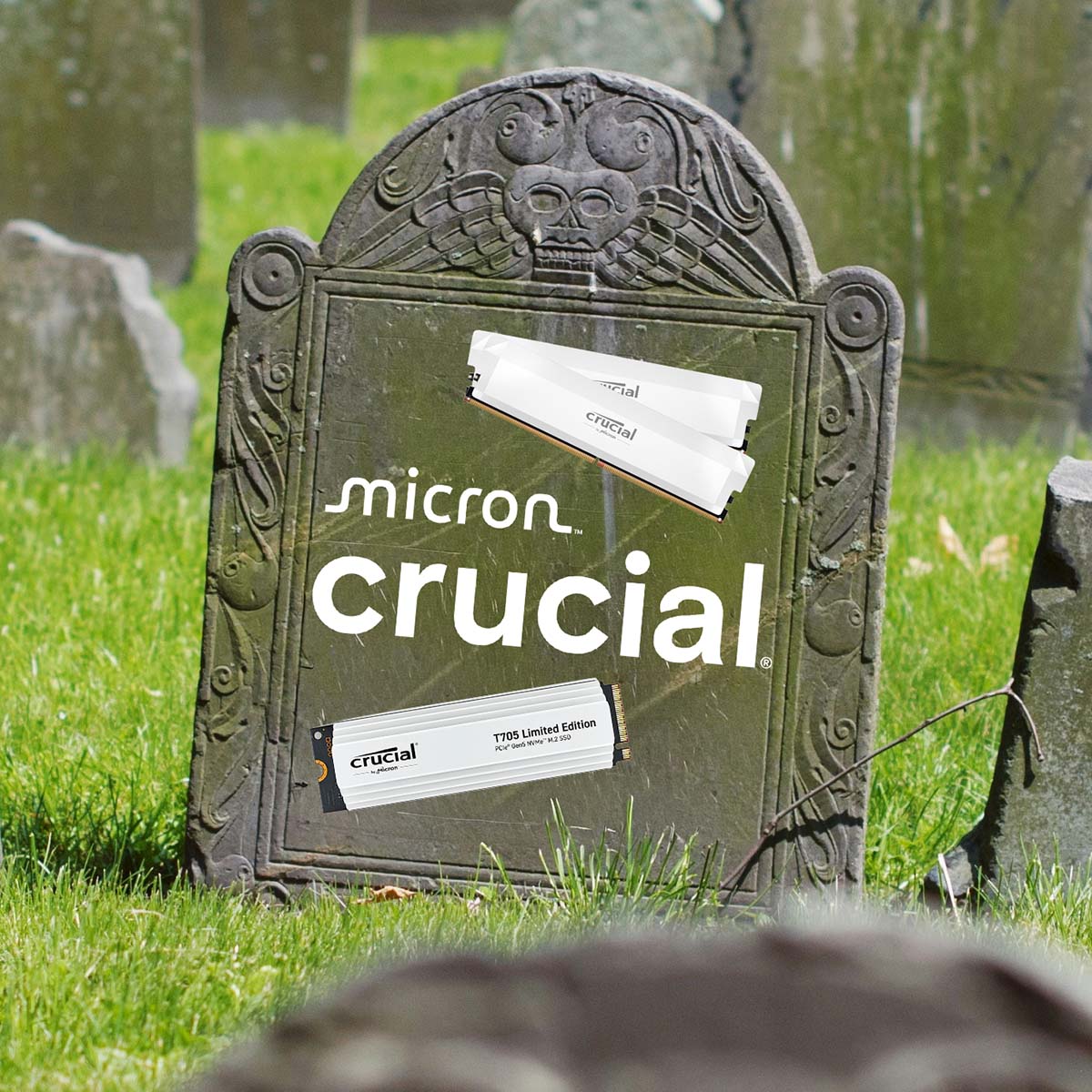
“The biggest problem I see at the moment is Crucial divesting out of consumer, because it’s just left a massive hole in overall availability,” says Miles. “It means demand for Hynix and Samsung products is through the roof. The market is quite incestuous. If you look at G.Skill, Kingston, Corsair, Klevv – all these brands – they buy their PCBs and chips from the big three and use them in whatever combination of kit gives them the most competitive product, or performance, or whatever they’re looking to do.
“But Samsung and Hynix lately are just saying ‘we haven’t got anything for you, and any DRAM that we are going to make, we’re going to badge as our own product, so we can maximise our own margins.’ So your Kingstons and Corsairs are absolutely being starved at the moment, and that’s causing a big problem.”
Your Kingstons and Corsairs are absolutely being starved at the moment, and that’s causing a big problem.
This is a very different situation from the GPU shortage during the Covid pandemic, when falling production, a boom in cryptocurrency mining, and eBay scalpers looking to make a quick buck, made for an unholy combination that pushed prices sky high. “It’s important that consumers understand that the market is not driven by scalpers,” says Miles. “It’s not driven by Overclockers or Scan being greedy – it’s none of that – we’re just exposed to the realities of the market.”
And while that market reality is a direct result of huge demand for memory for AI hyperscalers, it’s also important to point out that these firms aren’t hoovering up all the DIMMs we want for our PCs. They mainly want high-bandwidth memory (HBM), and the unprecedented level of demand for it has prompted the big DRAM makers to shift most of their manufacturing capacity to HBM, rather than DDR5 and DDR4.
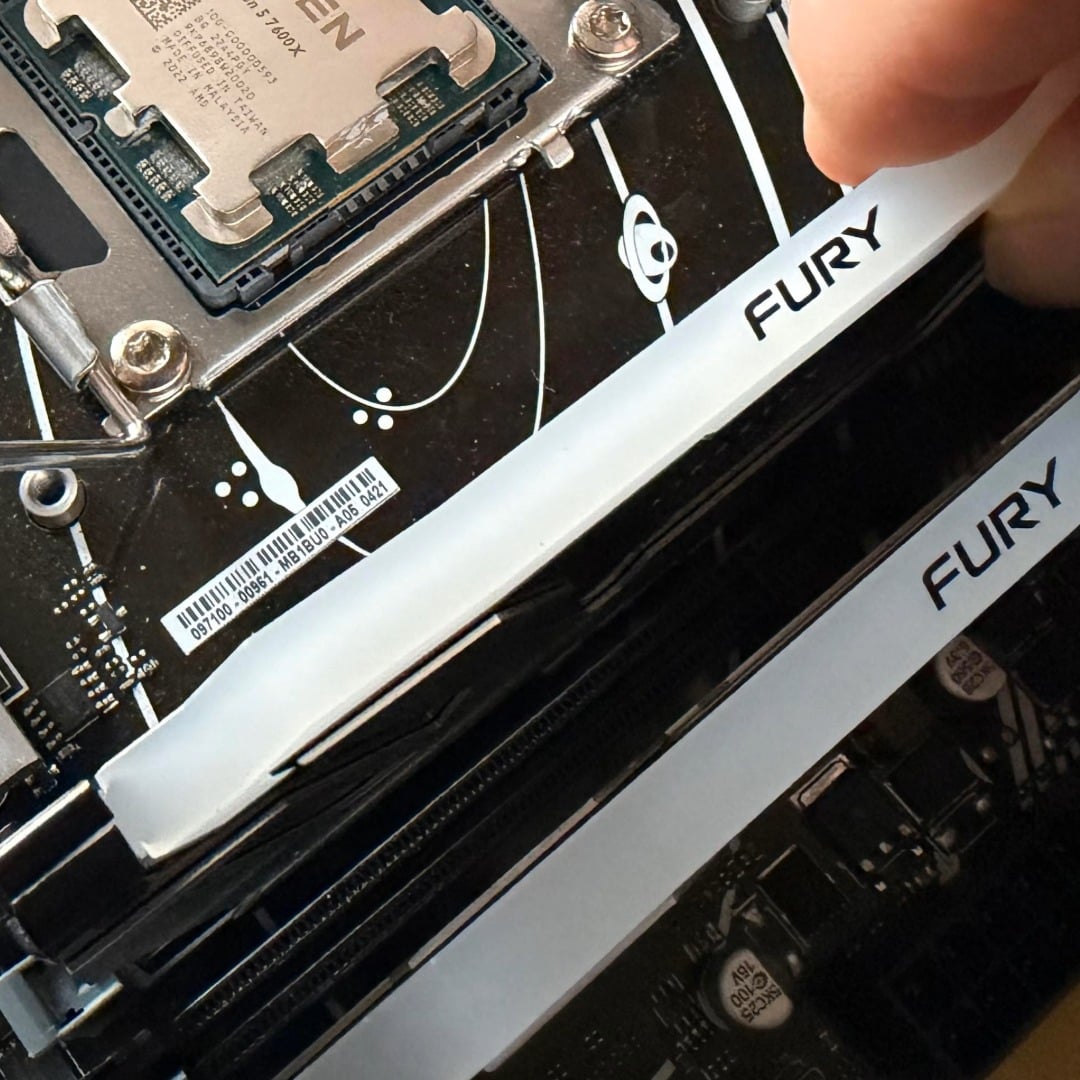
This means the modules we want for our PCs simply aren’t being made in anything like the volume required to satisfy demand, and turning that situation round is like steering the Ever Given out of the Suez Canal.
“It takes two-to-three months to reconfigure your factory to switch to making one type of RAM from another,” says Miles. “So even if they were to say, ‘Oh, there’s been an AI decommit, let’s start stamping out consumer and enterprise memory again,’ it’ll still take three months for just one factory to do it. That’s the kind of lag time we’ll be looking at across the industry.” Of course, expanding capacity by building more factories will take even longer. “If you say, ‘I want to build a memory foundry, and I’ve got planning permission, and I’ve got a contractor, and I’ve got space in the ground,’ it still takes years to get that built.”
“It takes two-to-three months to reconfigure your factory to switch to making one type of RAM from another.
One small positive note is that some much smaller Chinese chip makers are also churning out DDR5. Can they help plug the gap? “Traditionally, the big three – Samsung, Micron and Hynix – make up about 95% of DDR5 output,” explains Miles. “The 5% remainder is a couple of small players like Nanya and a Chinese company CXMT, who are new to DDR5. We can expect some capacity come online, but none of those firms have the capability of turning out HBM – stuff that’s really in demand.”
That’s good in one sense, in that it means there’s an incoming supply of DDR5, but the capacity isn’t anything like the size of SK Hynix, Samsung and Micron’s output in previous times. As we’ve seen recently, CXMT DDR5 memory prices don’t look much cheaper than any others at the moment. Much like building a few more flats doesn’t solve a housing crisis in a population boom, the same goes for memory – it relieves a bit of pressure, but it’s unlikely to have the impact we all want.
Bad for business
We might complain about the cost of 32GB and 64GB memory for our gaming and enthusiast PCs, but that’s nothing compared to the horrors being endured by business users at the moment. Miles notes a big difference in the availability of 16GB and 32GB kits compared to large-capacity modules. “The high-capacity stuff, so 64GB density and up, is almost unobtainable at the moment,” says Miles. He recalls a 2x 64GB 128GB Micron kit cost roughly £250 ex VAT at cost price, which he’d sell with a 10% markup on that, plus VAT. “The rebuy price is now well over £1,000 ex VAT for that kit,” he says.
If you’re a game developer who needs loads of RAM because Unreal Engine needs it, you’ve just got to bend over and take it.
“If you’re a game developer, for example, and you need loads of RAM because Unreal Engine needs it, you’ve just got to bend over and take it, unfortunately, as you still need that RAM. But yeah, the high-capacity stuff is really taking the brunt of the pressure, because consumers have the capability to say ‘in an ideal world, I’d have 128GB, but I will take 64GB or 32GB at the moment, and I can upgrade it in a couple of years.’ Businesses don’t have that luxury – they spec to requirement.”
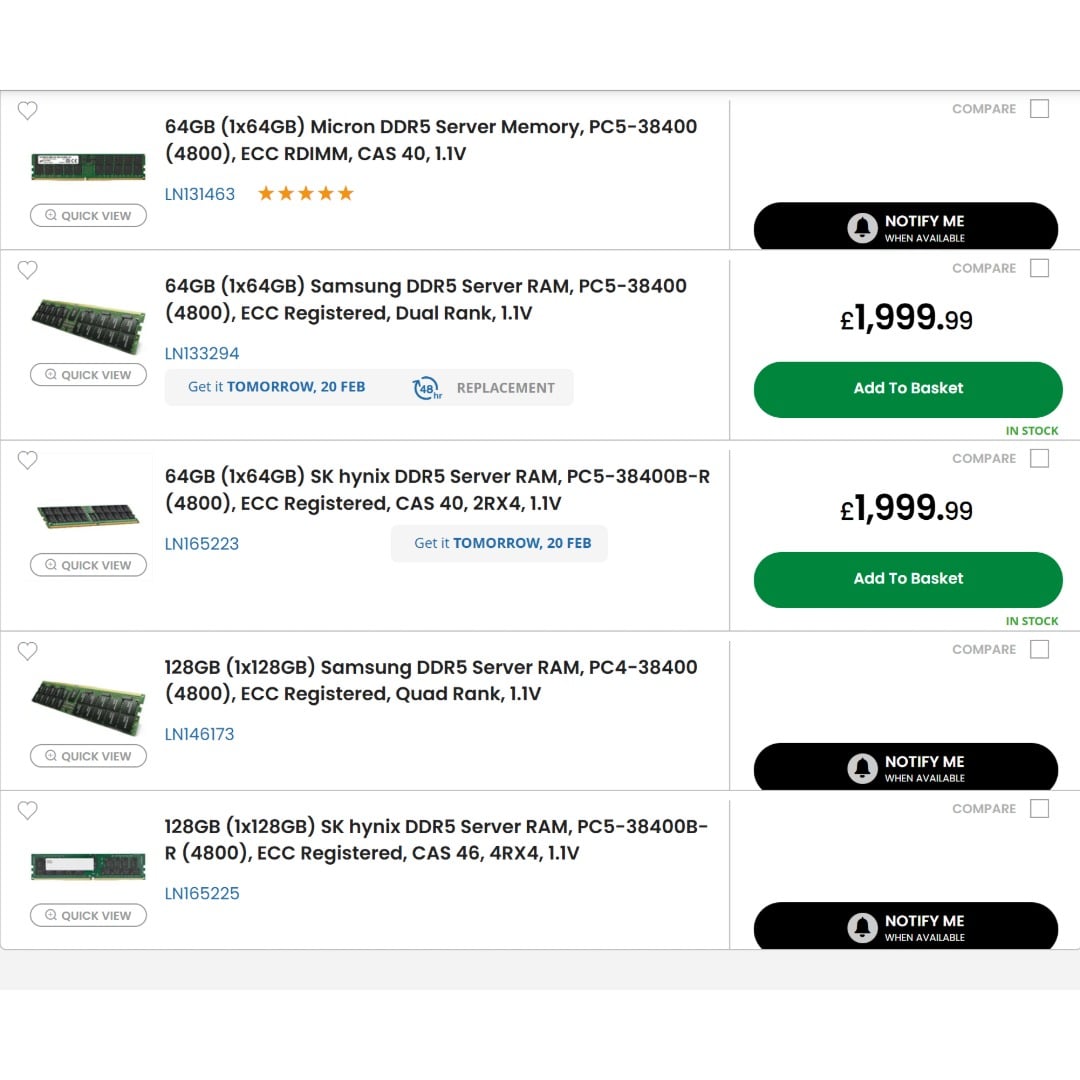
The situation is even worse if you need to buy ECC-registered memory to build a server or workstation. A quick look at Scan shows that a simple 64GB 4,800MT/s ECC registered DDR5 DIMM currently costs a massive £1,999, and 128GB DIMMs simply aren’t available. “Registered DIMMs just haven’t been manufactured,” claims Miles, “so they’re going backwards and forwards between trading companies, and they’re going up and up and up each time in price, just because it’s the same stock that’s going round in a circle. It will reach a tipping point, at which it’s realised its maximum value, and then it will start being resold back into the channel.”
GPU prices
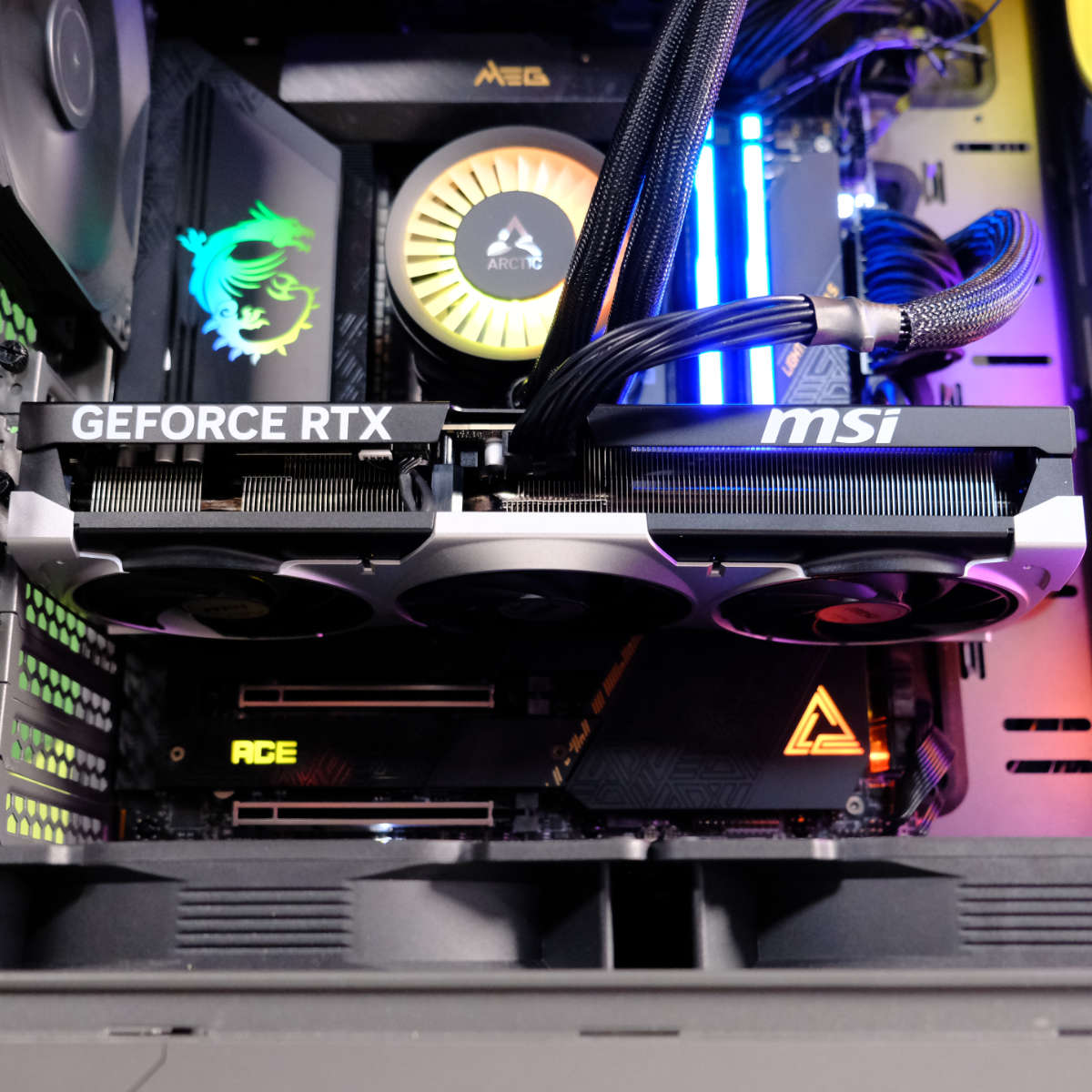
Then we come to graphics cards, which are also victims of the DRAM shortage. Nvidia might not have officially confirmed that the RTX 5070 Ti and 5060 Ti 16GB are end-of-life, but several people in the industry have told me off the record that this is indeed the case. A large part of the problem is that Nvidia reportedly used to supply its graphics card partners with both the GPU and VRAM in a kit, but now only supplies the GPU, leaving the board partners to source VRAM themselves.
We’re now seeing RTX 5070 Ti prices going above $1,000, and it’s harder and harder to find 16GB graphics cards, with reports that both Nvidia and AMD prioritise 8GB models now. Meanwhile, RTX 5090 cards are now so expensive that they’re simply unaffordable, even to people with a healthy bank balance. There’s no doubt about it – buying the best GPU for your needs is now much harder.
Ben Miles predicts another knock-on effect of this situation. “It’s going to be all about which of those add-in board manufacturers have the best relationship with the memory vendors,” he says. “A lot of them, having bought solely from Nvidia for god knows how long, are not going to have a relationship with them, or a meaningful one. Suddenly, now they’ve got to go and compete with everybody else on that open market for VRAM. You’re going to see big shifts in the norms of pricing. You might see some historically expensive brands being better priced and vice versa, based on how good their memory availability is.”
The end of the desktop PC?
It’s hard to be optimistic and positive in such a rubbish time for PC hardware, but there is light at the end of the tunnel. It’s just a long way off. “Long term, I’ve got no doubt that the desktop industry will rebound,” says Miles. “It’s been hit by pressures like this before. I can remember the hard drive crisis, when all those hard drive factories got flooded, and suddenly hard drives cost the earth.
I’ve got no doubt that the desktop industry will rebound.
“I don’t think we’ve ever seen a situation as bad as it is now, in terms of so many different categories under pressure at once, but the demand hasn’t disappeared – the demand is still there, so it will just take time for the factories to meet that demand. Where there’s money to be made, and there is, they will find a way to do it. You just can’t build a DRAM fab quickly.”
How long is this crisis going to last? “At least for the rest of 2026, then potentially into ’27,” predicts Miles. “Things can change quickly – if you get a big decommit on stock from any of the big four AI hyperscalers who are driving this fun time at the moment, you could suddenly see a big pressure release on consumer DRAM.
“It’s not going to go on for three or four years, because there are foundries in China, which are being built to fill in this sudden lack of supply, plus the AI bubble is going to hit a bottleneck eventually, and that bottleneck won’t be money, it will be power infrastructure, or availability of land, or something like that – the demand won’t be forever.”
The AI bubble is going to hit a bottleneck eventually.
Let’s hope that, by the end of 2027, we can get back to our fun hobby. In the meantime, I suggest sitting tight, postponing any big core hardware upgrades, and spending your money on a nice new OLED monitor, case, or a decent set of peripherals.
It’s a bad time to build a whole new PC, but new games will still work on a lot of old hardware; we just might have to temporarily lower our expectations about graphics settings, or not have so many games installed at once. Worse things have happened, and one day next year we’ll hopefully get back to normal.