
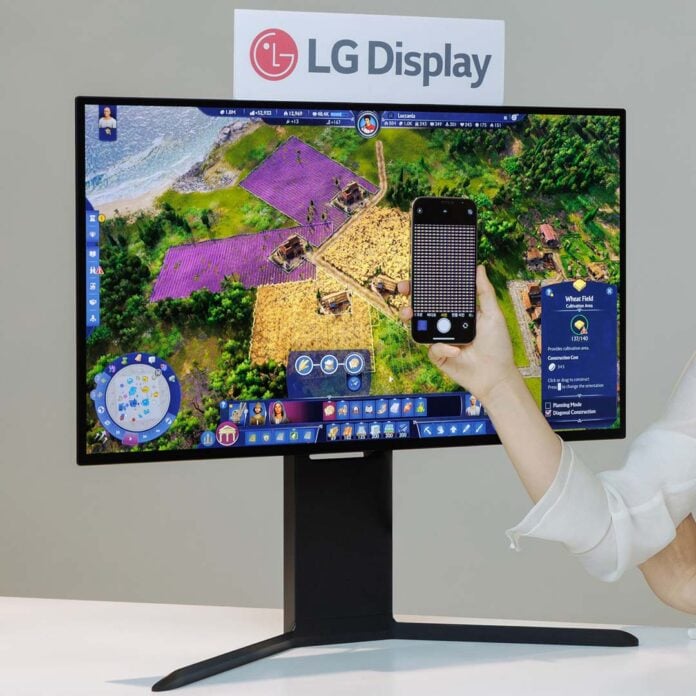
I love my QD-OLED monitor, but using it to write on almost every day is bothersome on account of its text fringing. While I can’t do anything about this inherent drawback right now, LG may have convinced me to swap sides from Samsung in the near-future, as its new panel designs may remedy this issue once and for all with additional benefits to boot.
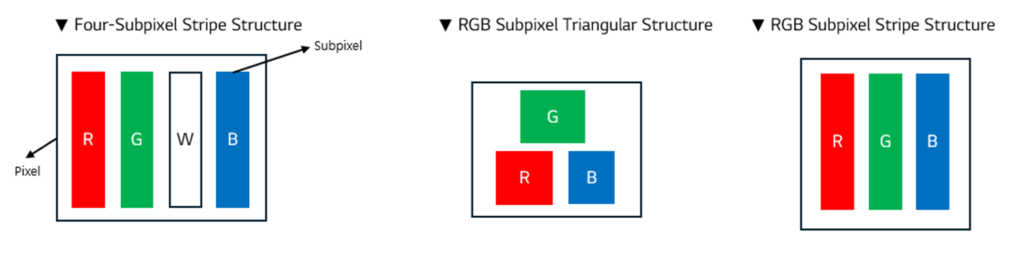
These new OLED panels feature an ‘RGB stripe’ subpixel structure, meaning that every pixel on the screen has red, green, and blue subpixels arranged in a horizontal striped pattern. This marks a significant departure from the manufacturer’s previous generation design, which feature white subpixels.
These white subpixels are partly to blame for text fringing on existing LG OLEDs, due to an incompatibility with Windows ClearType, but help boost brightness and panel efficiency. As such, it’s safe to presume that these new panels perform similarly, if not better, without the aid of that subpixel, all without giving text that distinct and distracting outer glow.
This RGB stripe sub-pixel structure doesn’t come at the expense of any other core specification you’d value on a gaming monitor either. LG plans to ship this new panel in 27in batches, complete with a maximum 4K resolution and 240Hz refresh rate. Better still, they’ll support the brand’s ‘Dynamic Frequency & Resolution’ (DFR) tech, allowing the screen to downscale to 1080p and run at a whopping 480Hz.
Personally, I prefer combining a 4K resolution with a 32in panel, but a pixel density of 160 pixels per inch (PPI) will look stunningly sharp regardless. I’ve no doubt LG will ship large screen sizes in due course, but we’ll see this 27in variant in action at CES 2026. Here’s hoping the company doesn’t play coy with brightness levels.
While I’ve spoken at length about LG, it’s important to note that I’m specifically talking about LG Display, not LG Electronics. While the latter is responsible for producing the televisions, monitors, and other gadgets you might find with an LG badge, LG Display solely manufactures screens that you’ll find in other monitor brands too like AOC and Asus.
I’m curious to see if Samsung Display, the equivalent entity to LG Display, has anything in the works to combat its rivals new approach. QD-OLED could face its biggest challenge yet in 2025, but that won’t stop the likes of MSI MPG 271QR QD-OLED X50 and other monitors using the same technology from being among the best monitors on the market.
In any case, I’m eager to get my hands on a monitor rocking these new LG panels. If and when I do, you can expect coverage right here on Club386, so make sure you’re following the site’s Google News feed to stay in the loop.