

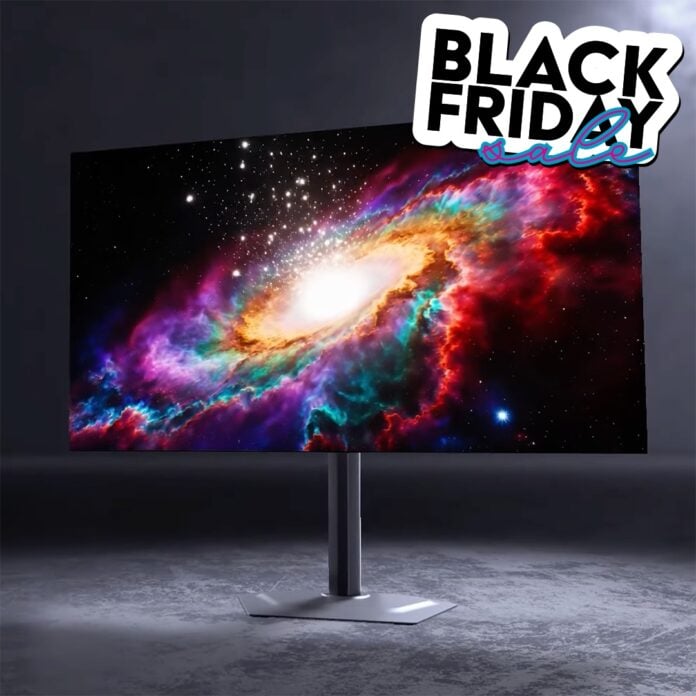
Over on Amazon you can now bag a Gigabyte MO27Q28GR for just $423.99 in the United States, or £439.99 in the United Kingdom, making now the perfect time to buy this excellent OLED gaming monitor as it’s never been cheaper. Better still, this is one Black Friday deal from the storefront that doesn’t require a Prime membership prior to purchase.
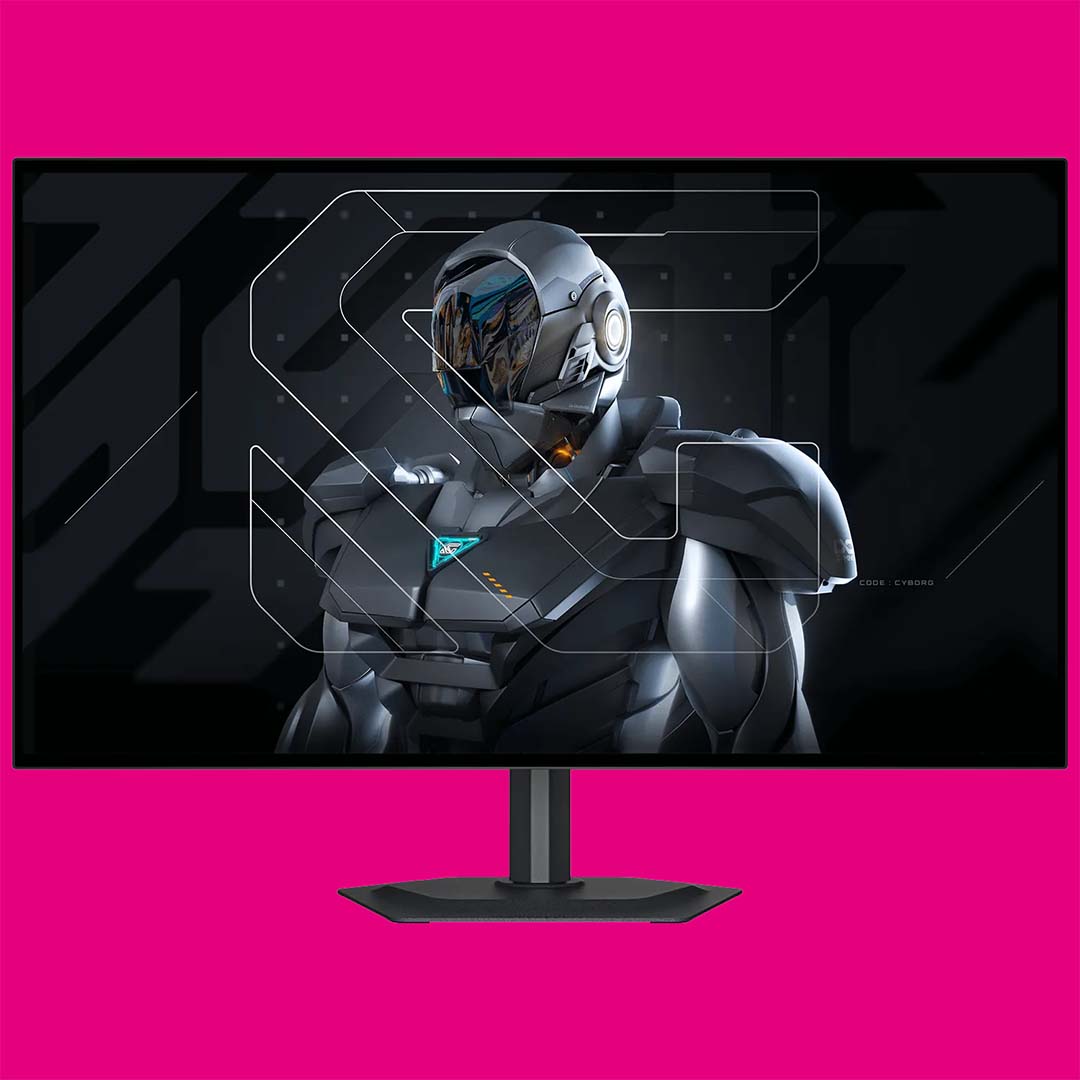
Gigabyte MO27Q28GR
$499.99 / $423.99
“A new gold standard for self-emissive displays.” Read our review.
The MO27Q28GR is a refresh of the MO27Q28G that I reviewed earlier this year. Both monitors are identical in every way bar one, with the newer monitor adopting a glossy screen coating rather than a matte finish. Through this change, Gigabyte has remedied one of the sparingly few critiques I had of the panel, making an already stunning screen all the better.
In terms of specifications, the MO27Q28GR sports a 27in Tandem WOLED panel with a native QHD (2560×1440) resolution and 280Hz refresh rate. This is the latest and greatest in self-emissive technology that LG Display has to offer, regularly trading blows with QD-OLED alternatives in almost every regard, while notably pushing OLED brightness to fresh heights.
Our test results showed the MO27Q28G achieved an impressive peak SDR light output of 390nits, making it the second brightest OLED monitor we’ve ever tested, falling behind first place by a handful of nits. The screen also sports DisplayHDR True Black 500 certification, the highest accreditation on the market right now, guaranteeing impressively punchy HDR highlights.
Of course, there’s no discussing OLED monitors without mentioning per-pixel local dimming, which gives screens like the MO27Q28GR the gorgeously inky black contrast for which the panel technology is so famous. It sounds like hyperbole, but after experiencing perfect black levels it’s honestly difficult to return to the murky greys of an LCD backlight.
You can expect gorgeous colour reproduction on the MO27Q28GR too, with the screen’s glossy coating helping to give extra oomph to brightness, sharpness, and colour saturation relative to its matte counterpart. Gigabyte quotes 99.5% coverage of the DCI-P3 gamut and that lines right up with our testing of the MO27Q28G, which hit an impressive 100%. In real terms, that means every hue that colourists are using to create HDR content can be displayed on this panel.
There are some minor drawbacks worth knowing about when it comes to picture quality. While testing the MO27Q28G, we noticed some small fluctuations in colour and luminance uniformity, hampering the monitor’s ability to serve as a professional display, but nothing you’d notice while gaming. Similarly, the RGWB subpixel layout can cause some fringe artefacts around text elements.
Returning to the positives of this display, I haven’t even mentioned its near-instant pixel response time. With no liquid crystals to shift, OLED monitors such as the MO27Q28GR can transition between hues at lightning-fast speed, massively improving motion clarity over an LCD with the same refresh rate. This means there’s no ghosting or other undesirable effects from overdrive, and you can expect consistency of speed across the refresh rate range.
Finally, on to ports, and the MO27Q28GR has all you could realistically want from a gaming monitor. You’ll find two HDMI 2.1 connections as well as a single DisplayPort 1.4 input, all of which can run the panel at its native resolution and refresh rate. There’s also a KVM built into the chassis, allowing you to conveniently share peripherals plugged into the screen’s two USB-A ports between multiple systems. The USB-C port sadly only delivers 18W of power, but that’s still a decent charge rate for some devices like smartphones.
Check out my in-depth explainer on why OLED monitors are so good for gaming, for more detail about what makes a self-emissive screen like the MO27Q28GR such an enticing buy for any setup.