
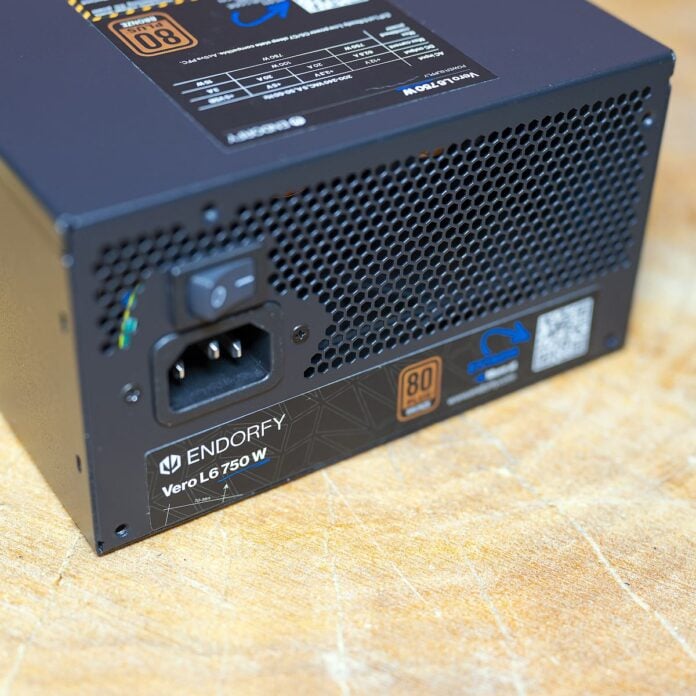
Endorfy’s Vero L6 is an attractive ATX 3.1 power supply touting dependable power output, high excursion capability for current GPUs, and strong overall value in the mainstream segment. It targets users who want a technically up‑to‑date platform (ATX 3.1 + PCIe 5.1 12V‑2×6) without paying flagship PSU prices. Certified at 80 Plus Bronze and Cybenetics Silver, it’s a non-modular cable design available in common 550W, 650W, and 750W capacities, but there’s no semi-passive operation.

Endorfy Vero L6 750W
€69.90
Pros
- Good pricing
- Cybenetics Silver certificate
- Solid performance for its class
- More than decent quality
- 5-year warranty
- Full 600W on 12V-2×6
Cons
- Non-modular cables
- No semi-passive operation
- No Japanese capacitors
- Loud operation at over 65% load
Club386 may earn an affiliate commission when you purchase products through links on our site.
How we test and review products.
To make the most of ATX 3.1 and PCIe 5.1, you’ll need the 750W variant that I have for review today, ensuring compatibility with high-wattage components, such as the Nvidia GeForce RTX 4000/5000 series. This also means Endorfy’s PSU uses the latest 12V-2×6 (ATX12VO) power connector designed to deliver up to 600W of raw, unhindered power to the graphics card. You needn’t worry about the rather infamous 12VHPWR here.
When compared to ATX 2.X, which supports high-load peaks but does not define a maximum above the power supply’s nominal power, ATX 3.1 sets clear target values – specifically, the PCIe connection for the graphics card must handle load changes of up to three times the power consumption. There is also a surge tolerance of up to 235%.
Here’s a full list of variants you can choose from.
| Capacity | 12V-2×6 cable | PCIe 6+2 pin | Warranty | EUR MSRP |
|---|---|---|---|---|
| 550W | 300W | 2x | 5 Year | €49.90 |
| 650W | 450W | 2x | 5 Year | €59.90 |
| 750W | 600W | 3x | 5 Year | €69.90 |
The 750W model, in particular, can be used for setups with high-end CPUs such as AMD Ryzen 9 or Intel Core i9, paired with GPUs as powerful as AMD RX 9070 XT or Nvidia RTX 5080/5090. It has one 600W 12V-2×6 cable, while the 550-650W range has the 300 and 450W cable.
A five-year warranty period is quite reasonable in this segment. When compared to the competition, pricing is consistent with other models with a similar feature set, such as the Lian Li RB series or be quiet! models. For example, be quiet!’s 750W System Power 11 is available for around £65 on UK shores.
Look and feel
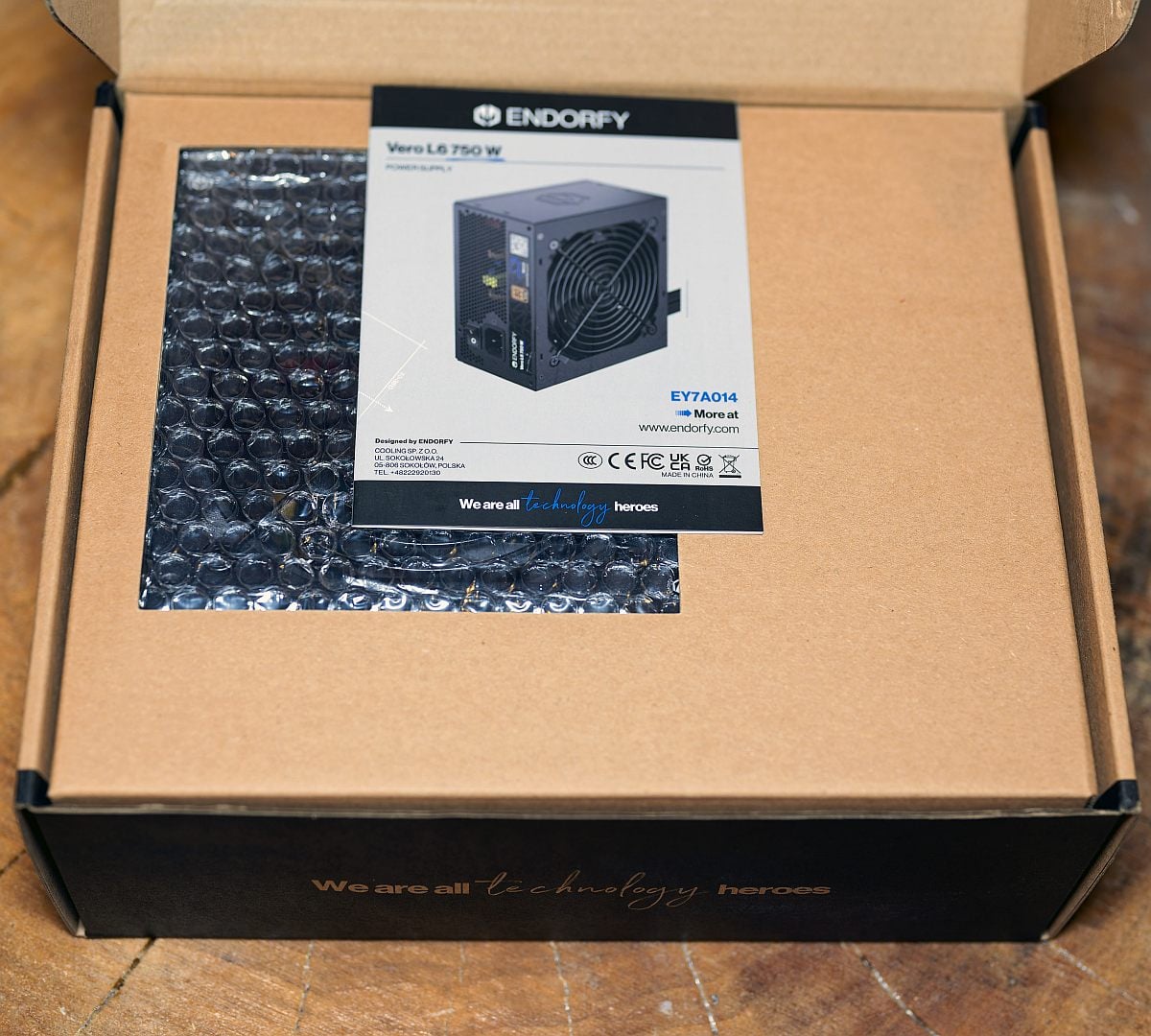
The power supply comes in a plain cardboard box. On the front, you will find information about the model, PSU power, 80 Plus Bronze certification (no Cybenetics badge), and a picture of the PSU. On the back, there is additional detail about the specification and the provided cables plus whatever else is in the box.


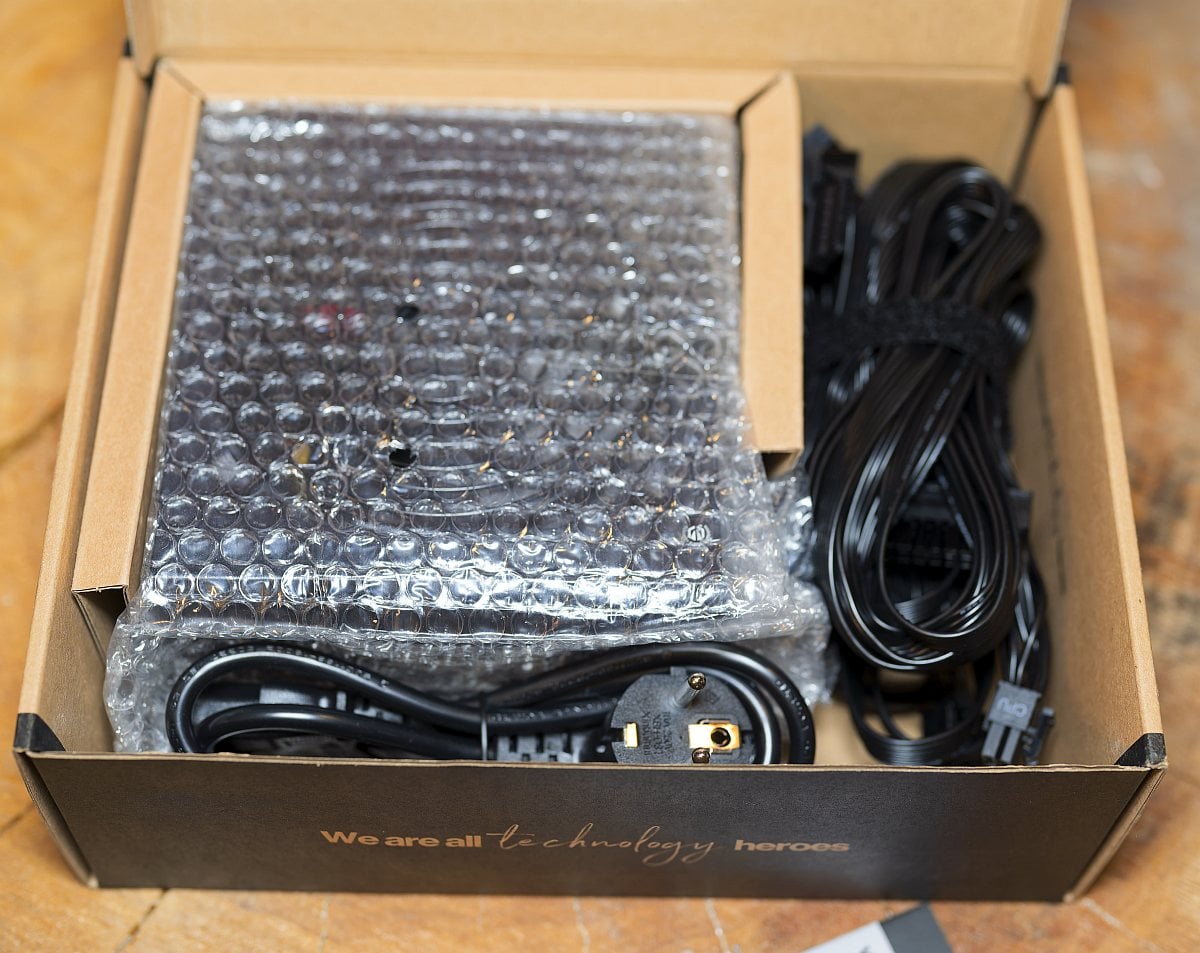
The supply comes with the obligatory power cable, plastic ties, mounting screws, and a user manual. There’s nothing revolutionary here, but still, it’s a nice package.
The cabling
Unlike premium fully-modular units, the Vero L6 750W is, as you recall, a non‑modular design, which reduces cost and electrical resistance on critical paths at the expense of some cable‑management flexibility. All leads are permanently attached and use black sleeving/insulation, which blends visually into most builds but requires more planning to hide unused runs.
Cabling and connectors include:
- 1× 24‑pin ATX main power
- 2× 4+4‑pin EPS for CPU power
- Native 12V‑2×6 600W PCIe 5.1 cable for next‑gen GPUs (it’s 450W for the 550/650W variants)
- Three PCIe 6+2‑pin connectors for older or mid‑range graphics cards (two for 550/650W models)
- A mix of SATA and Molex for storage and peripherals
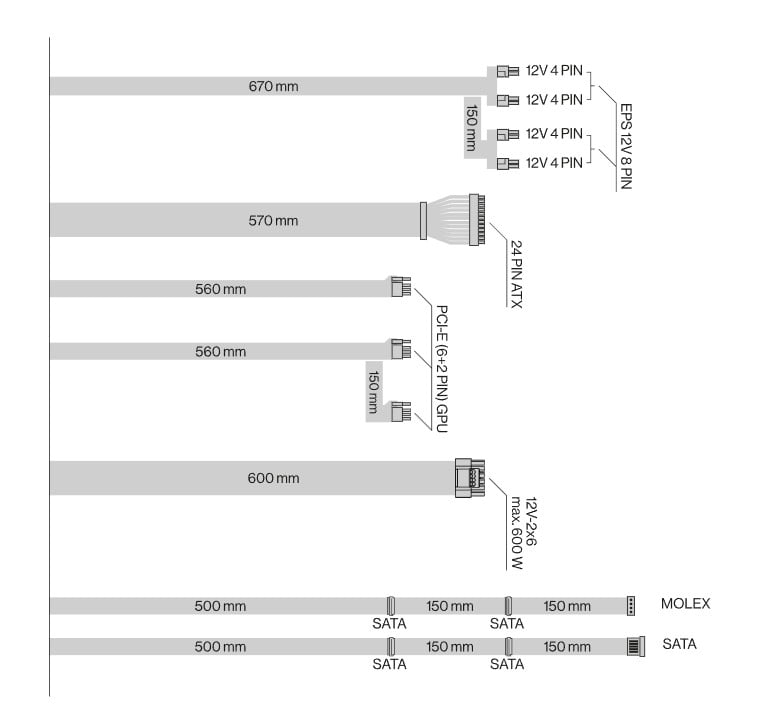
The fixed 12V‑2×6 cable is key: unlike many legacy Bronze units that rely on adapters, Vero L6 natively supports up to 600W GPU draw under ATX 3.1, including transient excursions. Endorfy uses cables mainly with 18 AWG (American Wire Gauge), where a lower number means a larger cross-section – so, for example, 16 AWG used in higher-end models is better. Additionally, its thoughtful design ensures it fits comfortably in smaller PC cases or builds with limited space, enhancing its overall usability.
Detailed inspection
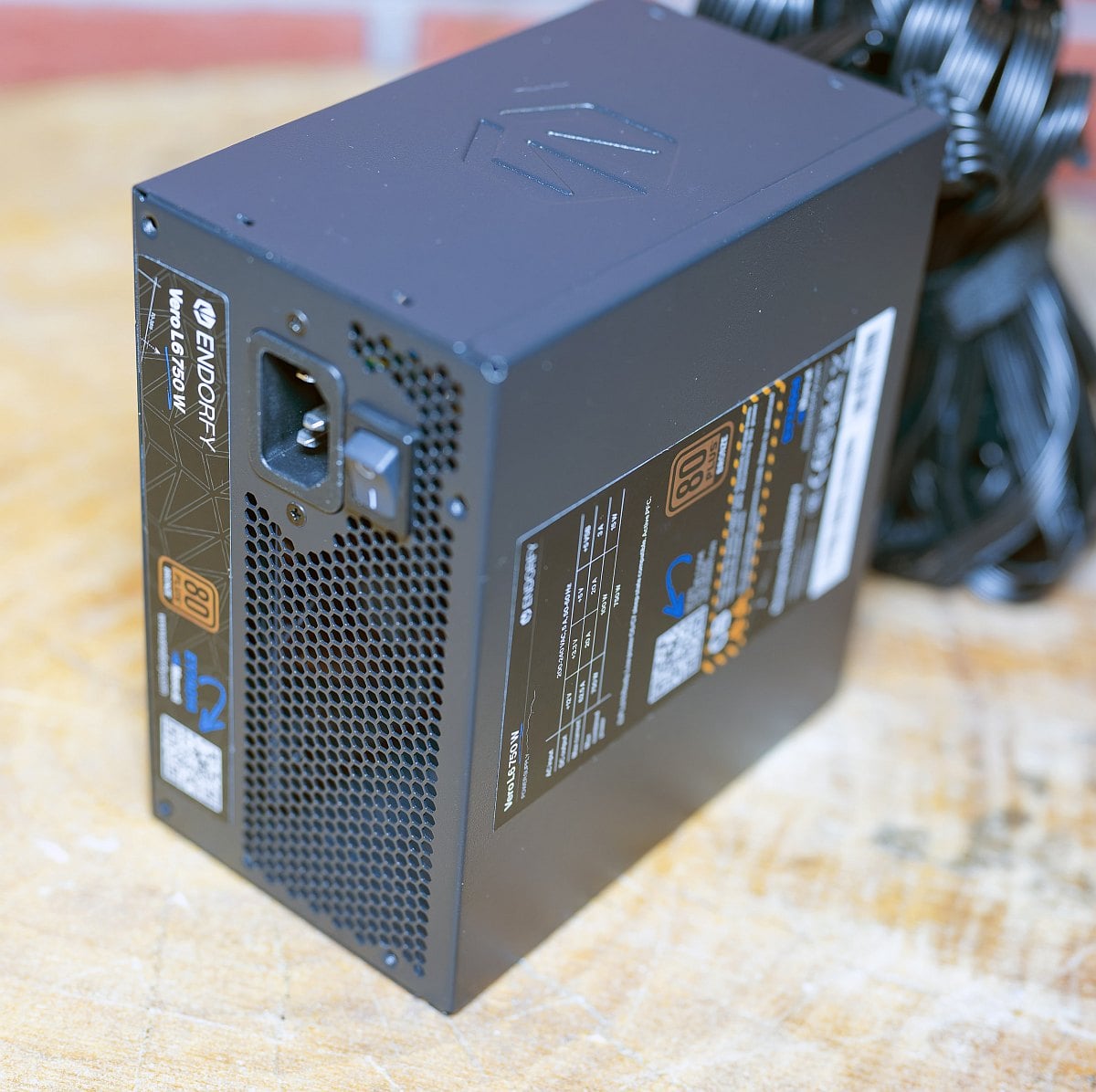
Dimensions are 150mm x 87mm x 140mm (W x H x D). These are really nice and petite for a PSU of this wattage.
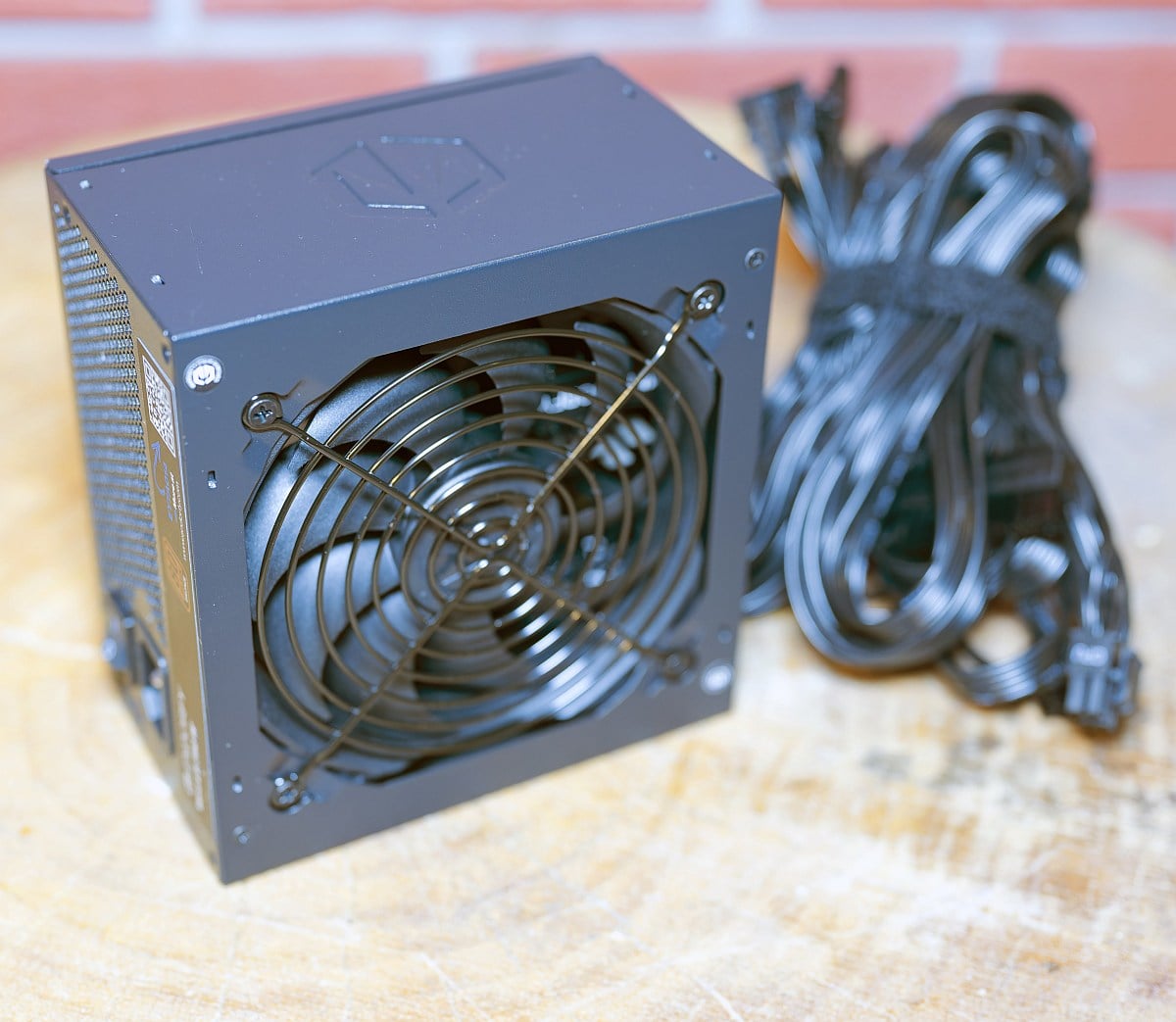
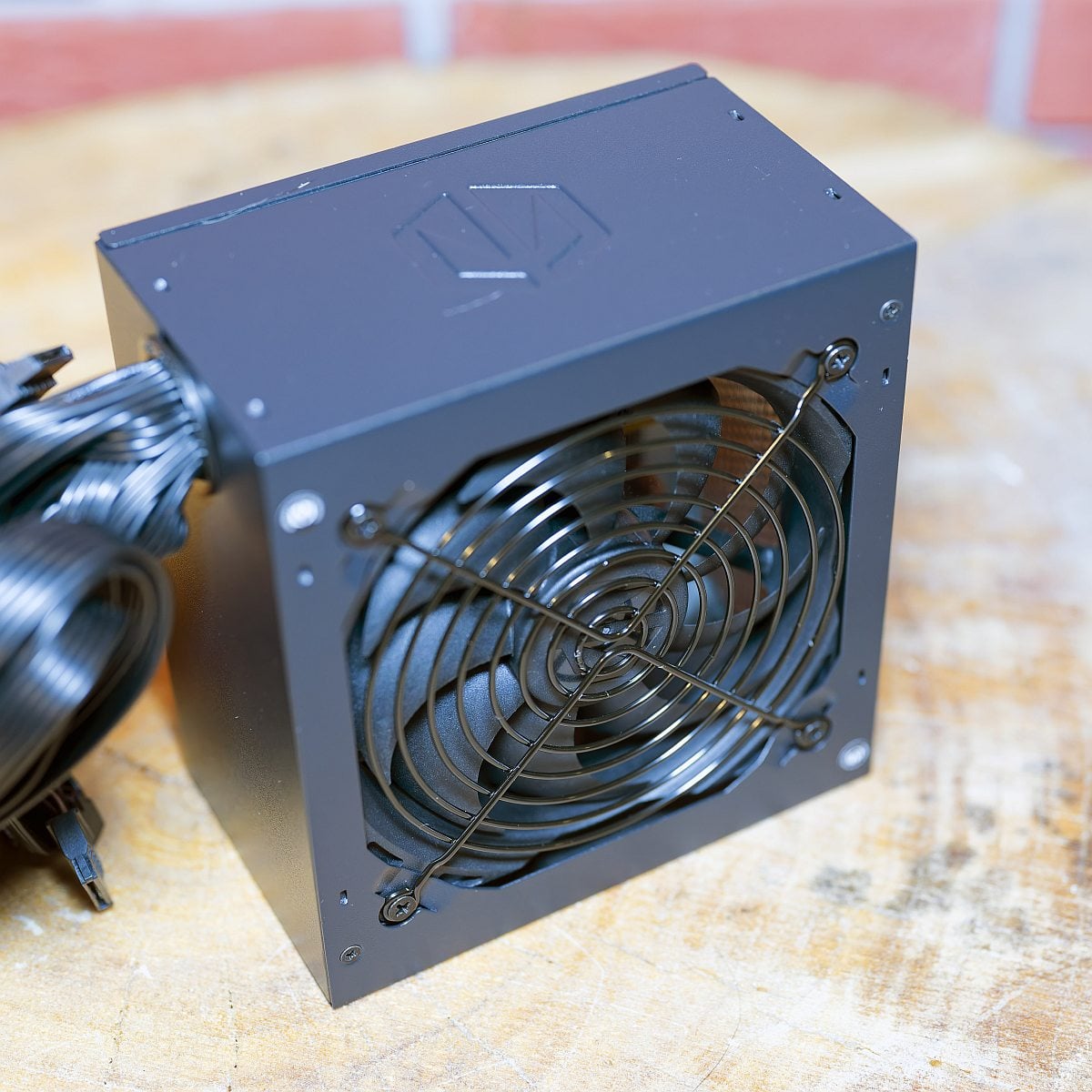
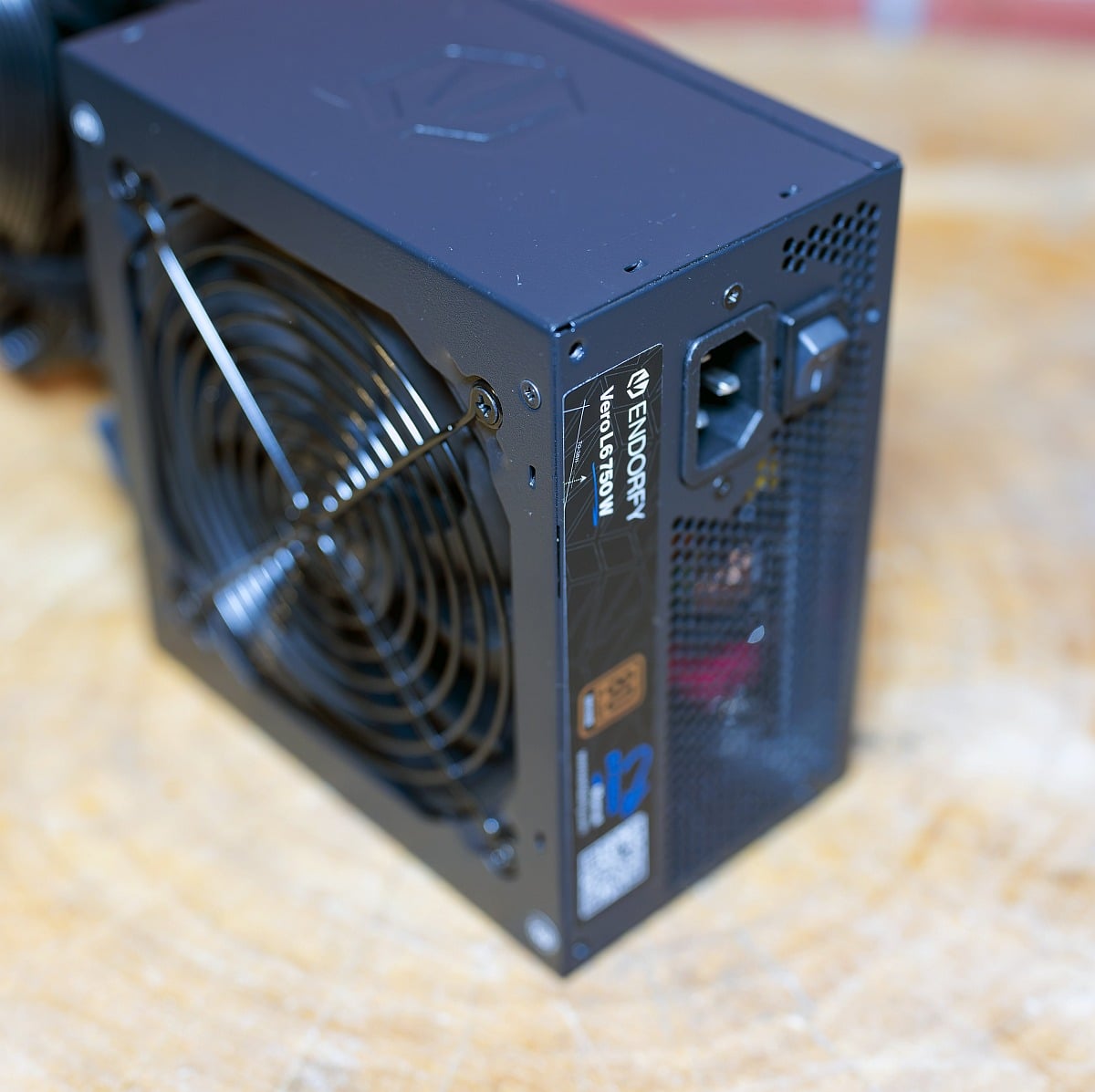
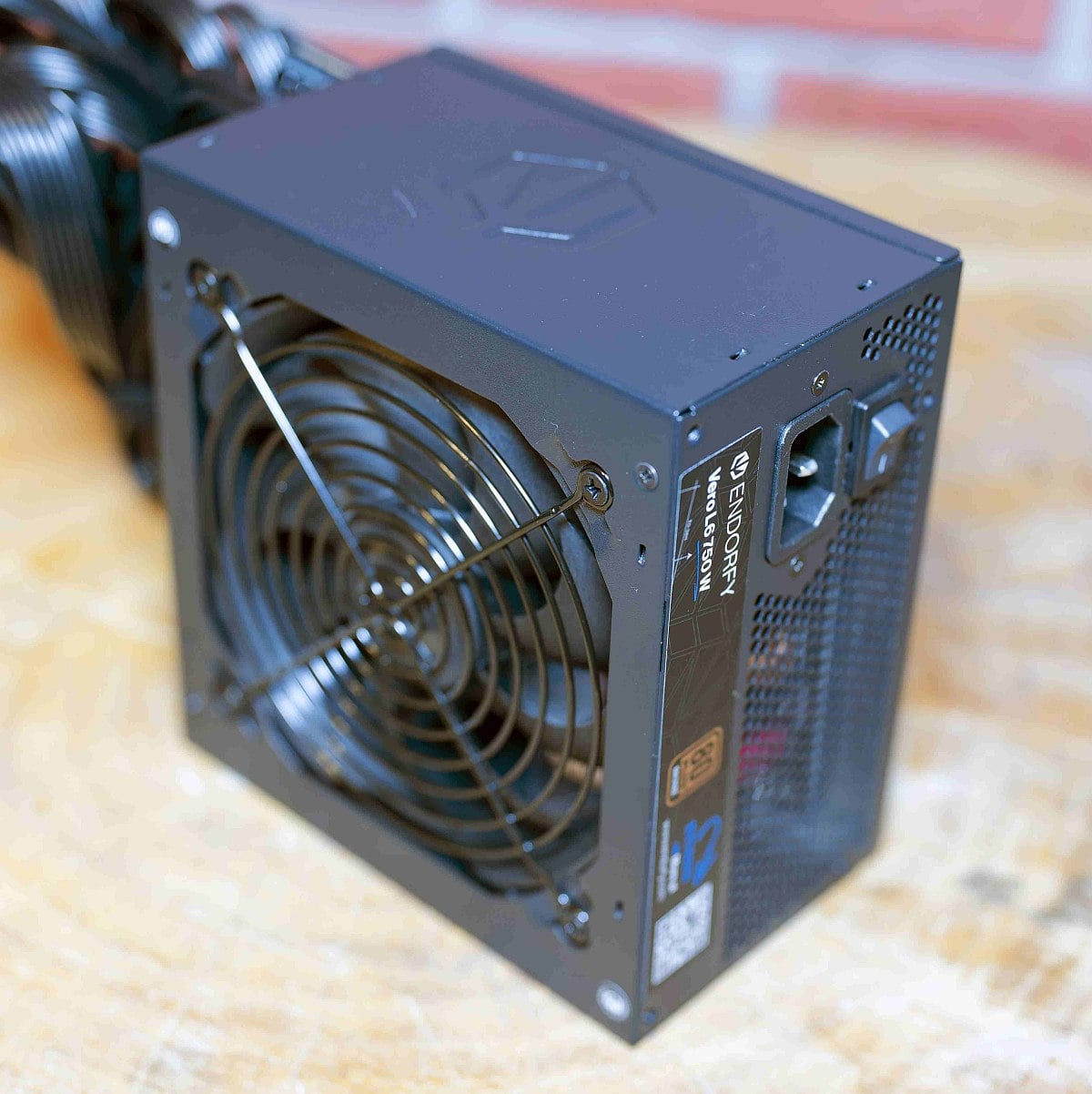
A full-mesh-style exhaust at the rear promotes smooth airflow out of the chassis, while the intake side is optimised around the 120mm fan, featuring a grille pattern that balances restriction and noise.
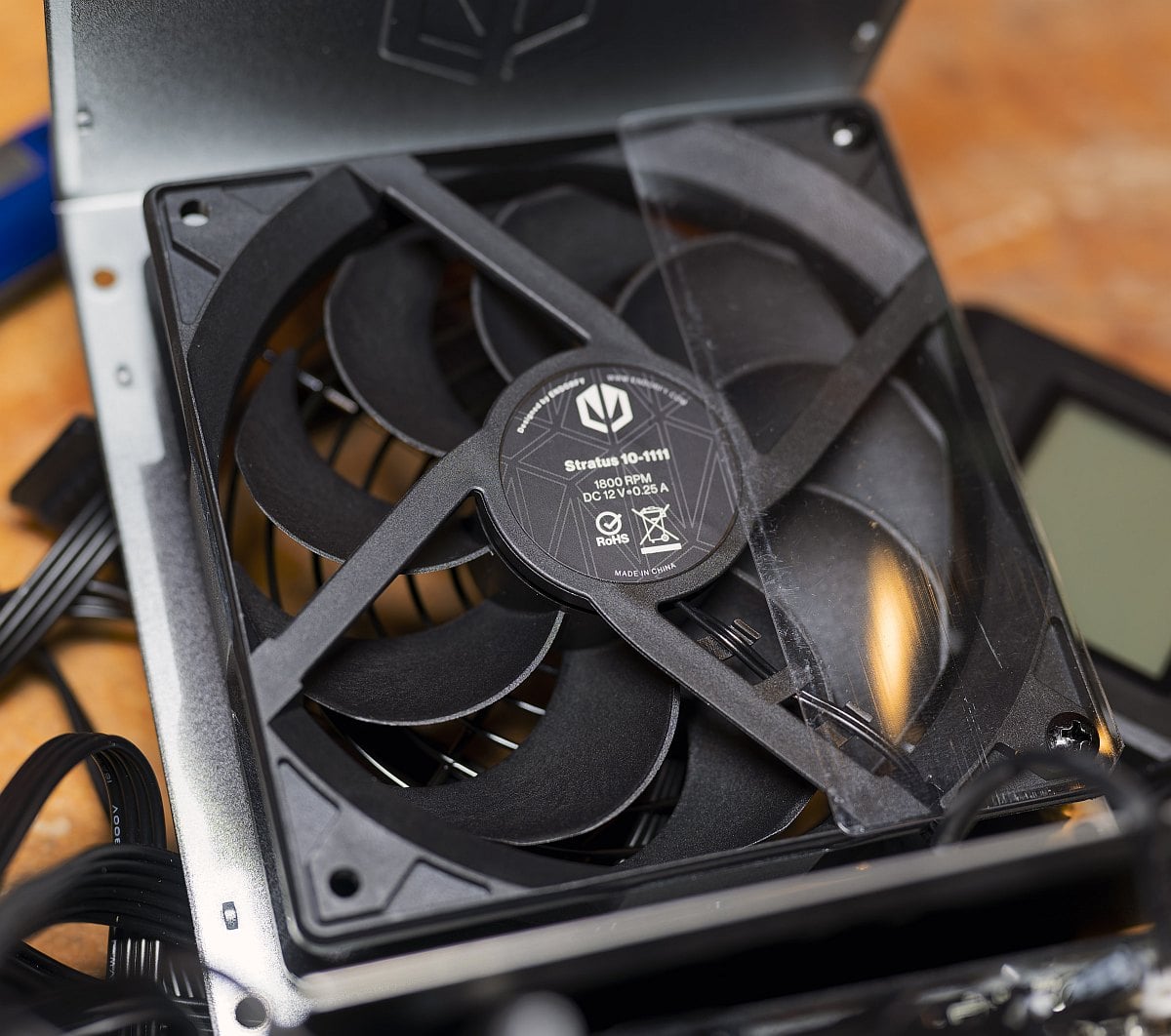
The heart of its cooling system is a 120mm Stratus fan. It has a fluid-dynamic bearing and a maximum speed of 1,800rpm.
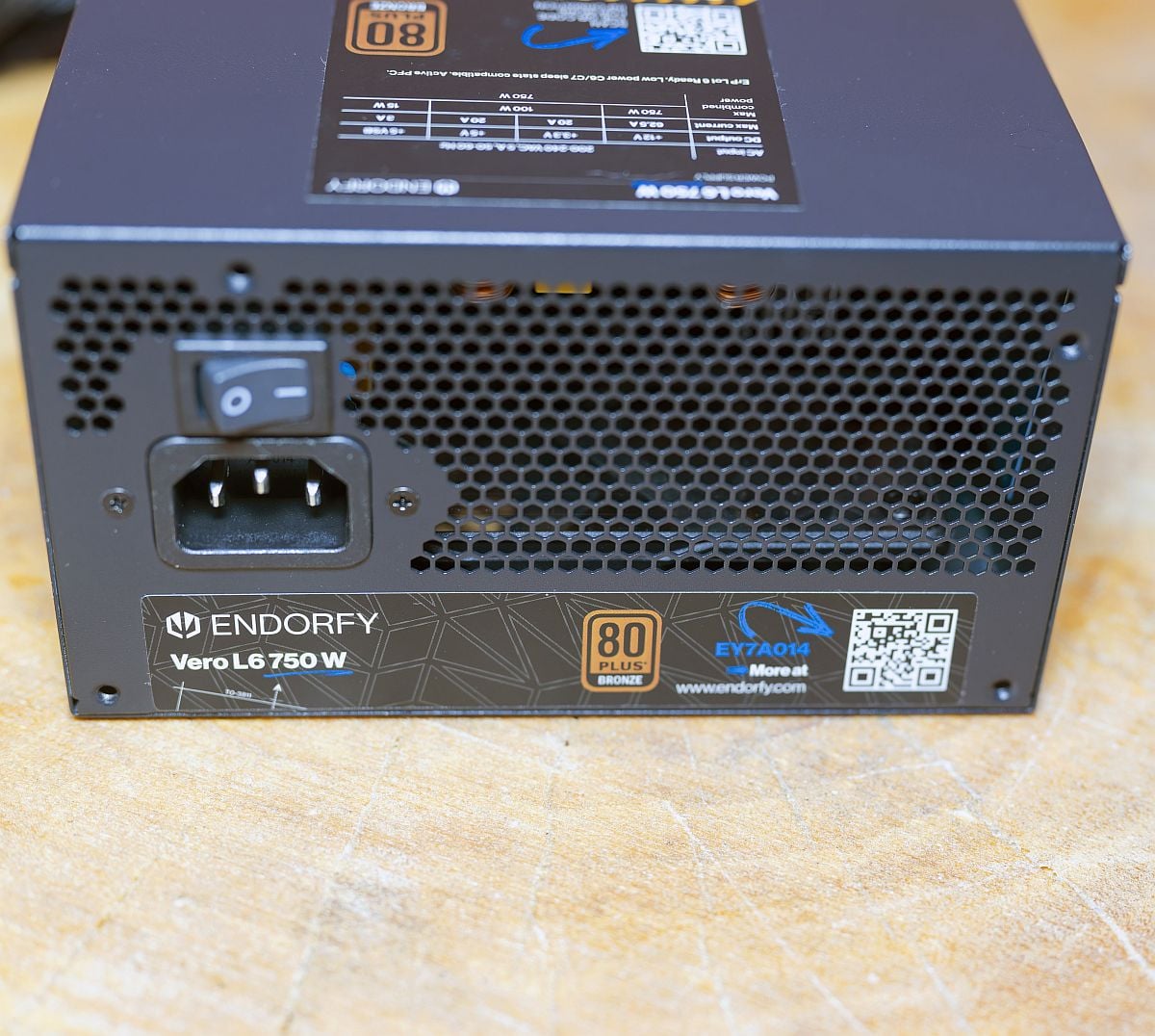
Protection coverage is comprehensive: OVP, UVP, OCP, SCP, OPP, SIP and OTP are all present, coordinated to guard against over‑voltage, under‑voltage, over‑current, short‑circuit, overpower, surge events and over‑temperature. You also get an 80,000-hour MTBF rating, too.
There’s no button for semi-passive operation, but that’s totally understandable at this budget.
Internals
A heatsink connects to the parts of the power supply that need the most cooling and dissipates a large portion of the heat. Even though a Cybenetics Silver efficiency power supply generates relatively little heat, active cooling is required to prevent overheating under high load.
On closer inspection, internal wiring is kept tidy with short, direct runs from the PCB to the fixed-cable bundle, reducing potential hotspots and simplifying assembly. Solder quality on the main board is consistent for a cost-optimised design, with no obvious cold joints or excessive flux residue, suggesting a mature manufacturing line rather than a first‑generation platform.
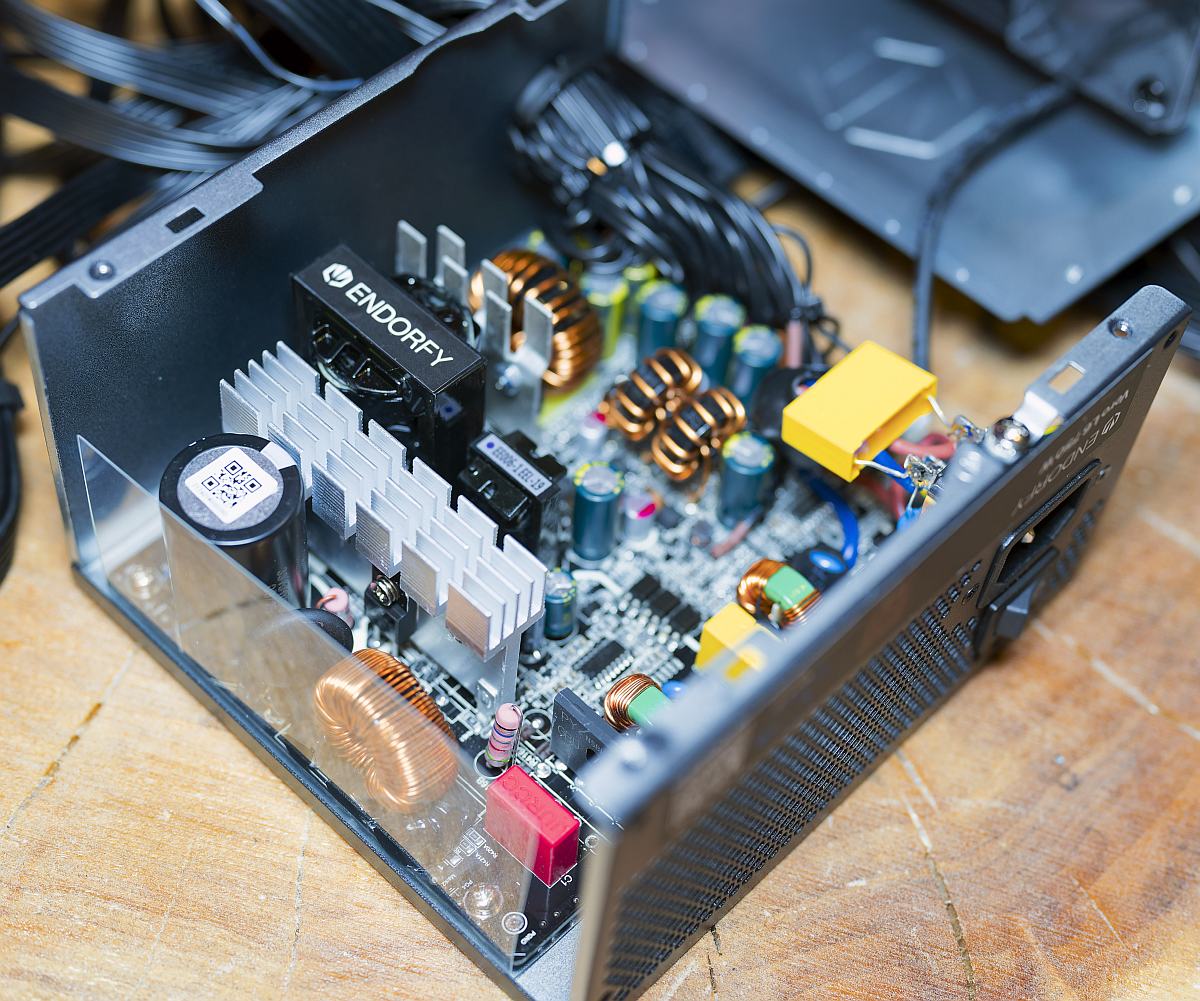
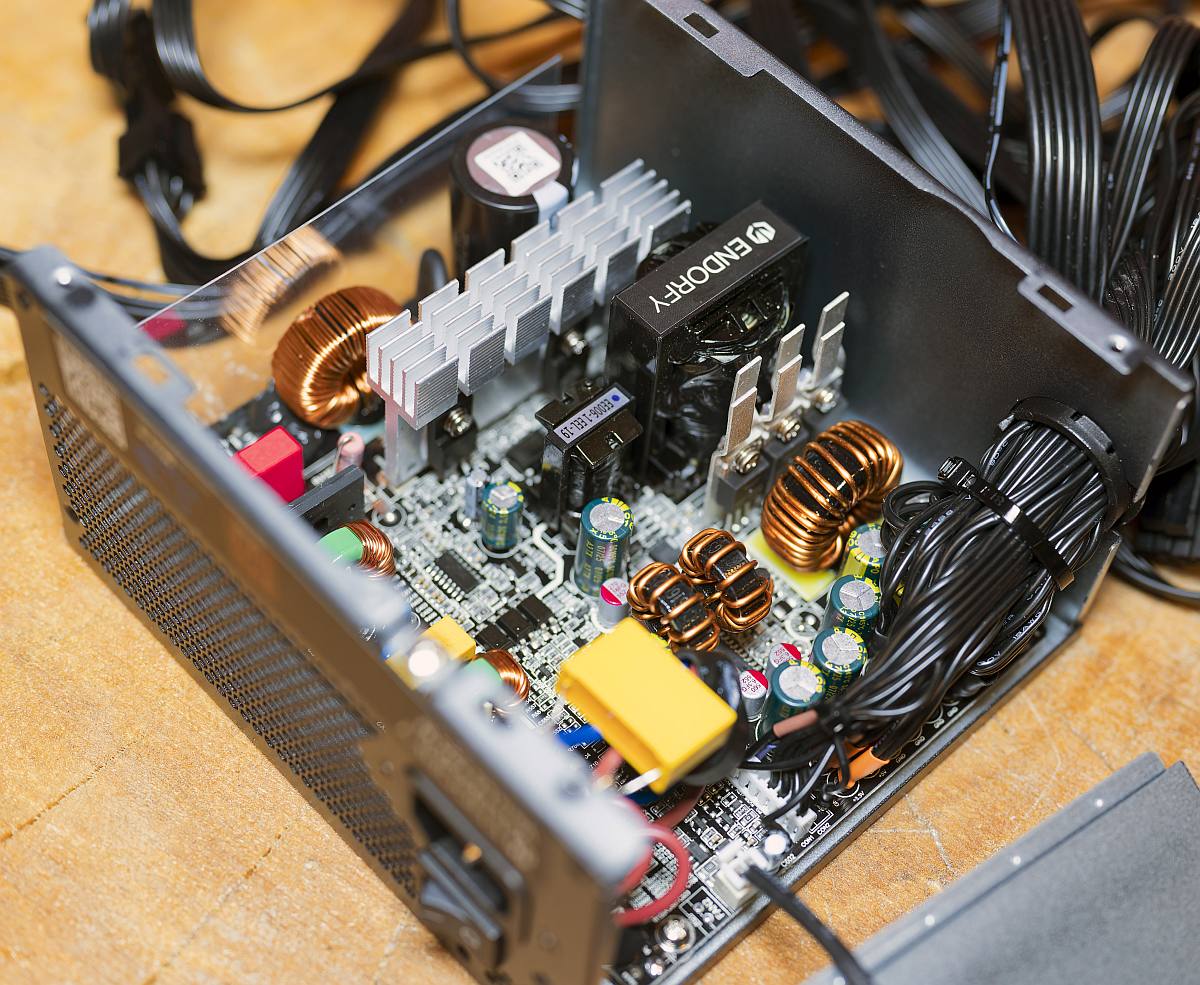
The OEM for this PSU is Jiumeng. As for the topology, it’s an APFC (Active Power Factor Correction), double forward for the primary side. It features an advanced APFC controller, specifically using Champion CM6800UBX.
As for the secondary side, you can find synchronous rectification and for the minor rails DC-DC converters for 12V. This stage has the following capacitors:
Electrolytic – 9x Teapo (3,000 @ 105°C, SC) and 2x Teapo (2,000 @ 105°C, SH) and Polymer – 4x Teapo.
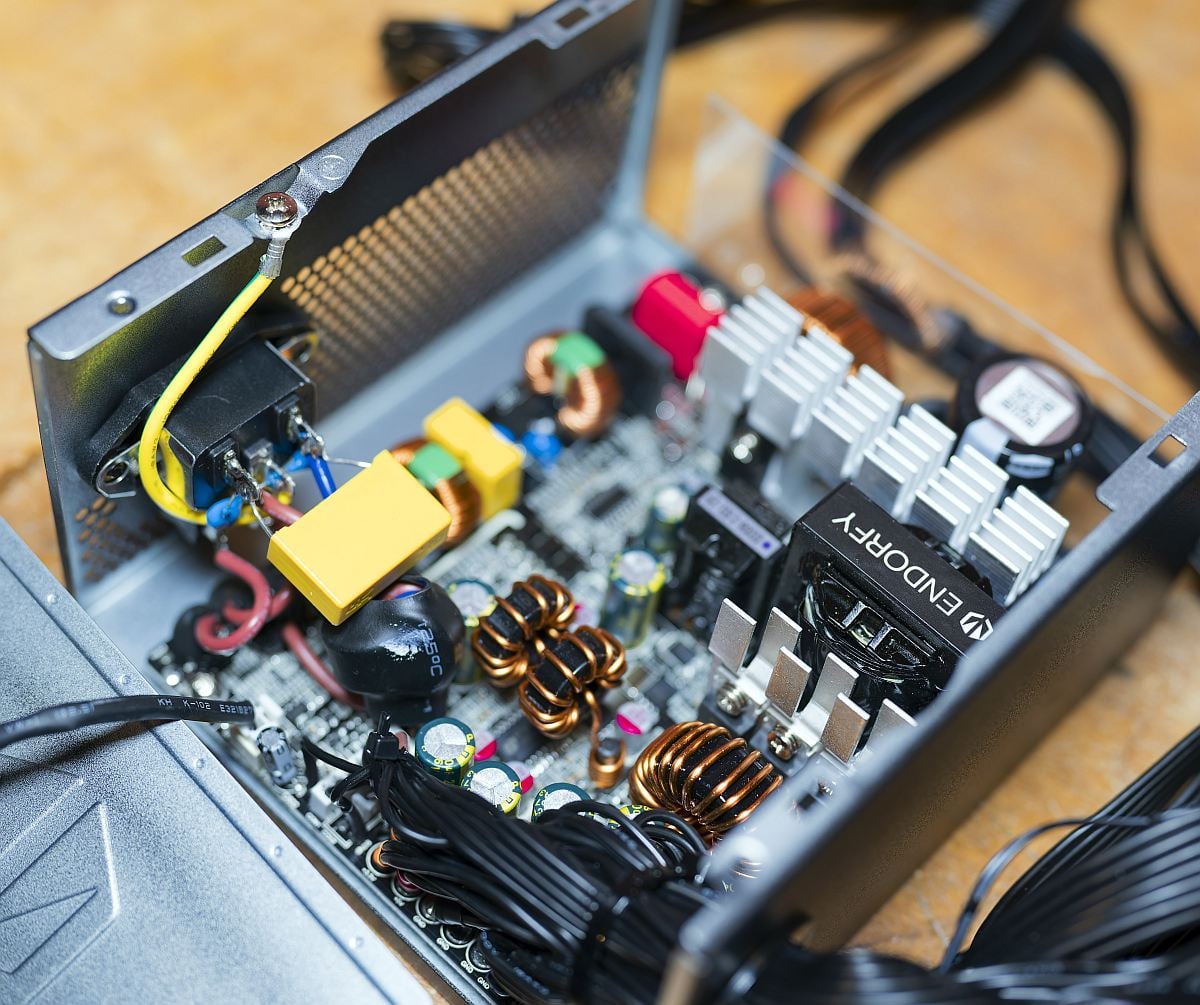
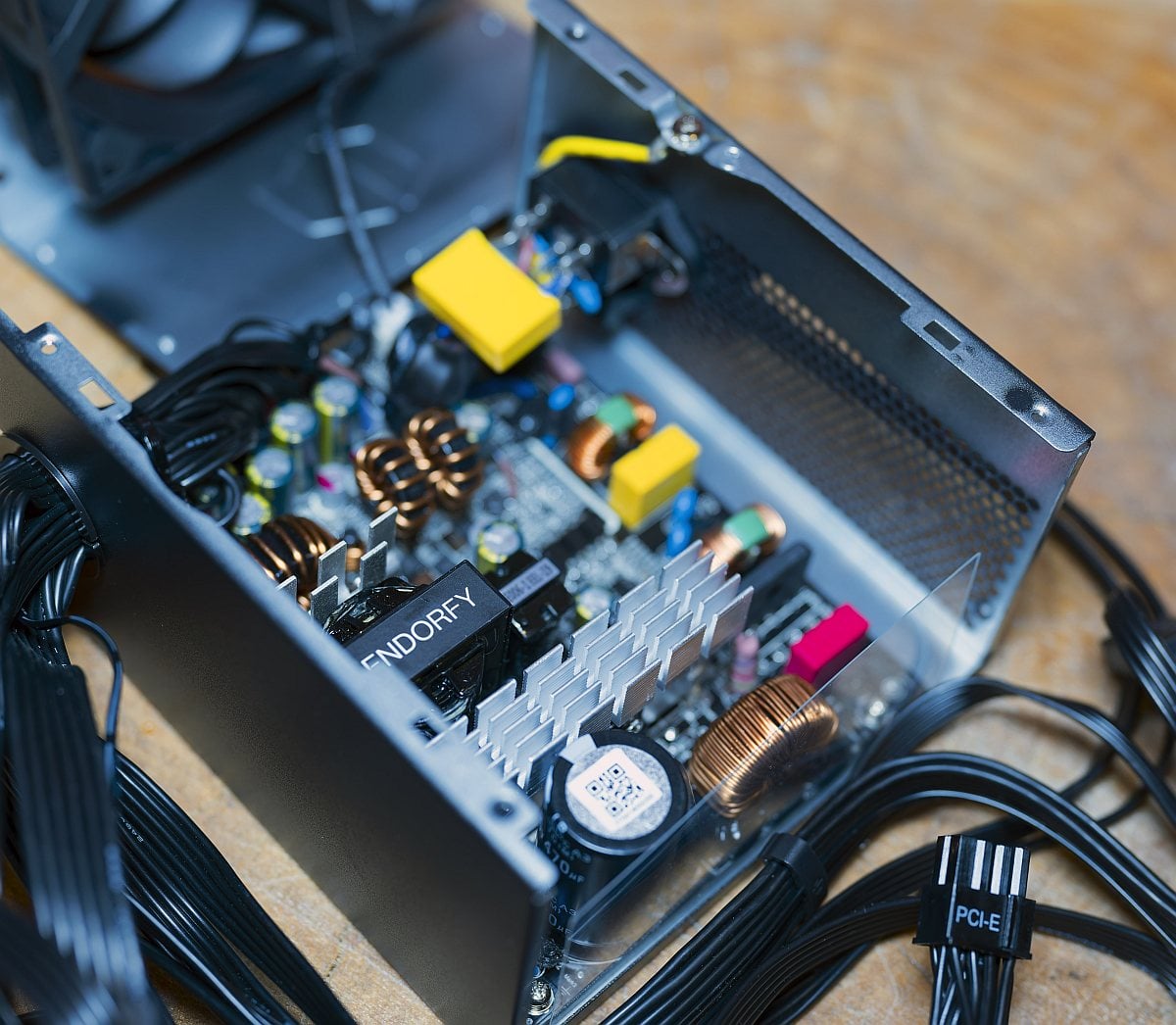
It’s a pity that we don’t see Japanese capacitors, but this is quite typical in this market price segment. Synchronous rectification is standard, using MOSFETs that handle high loads without significant heat or inefficiency.
Performance and efficiency
My first basic test is performed with a power-supply tester. It doesn’t draw more than a couple of watts from the PSU, but it helps determine whether the PSU is operational. A self-check indicates whether the voltages are at the proper levels.
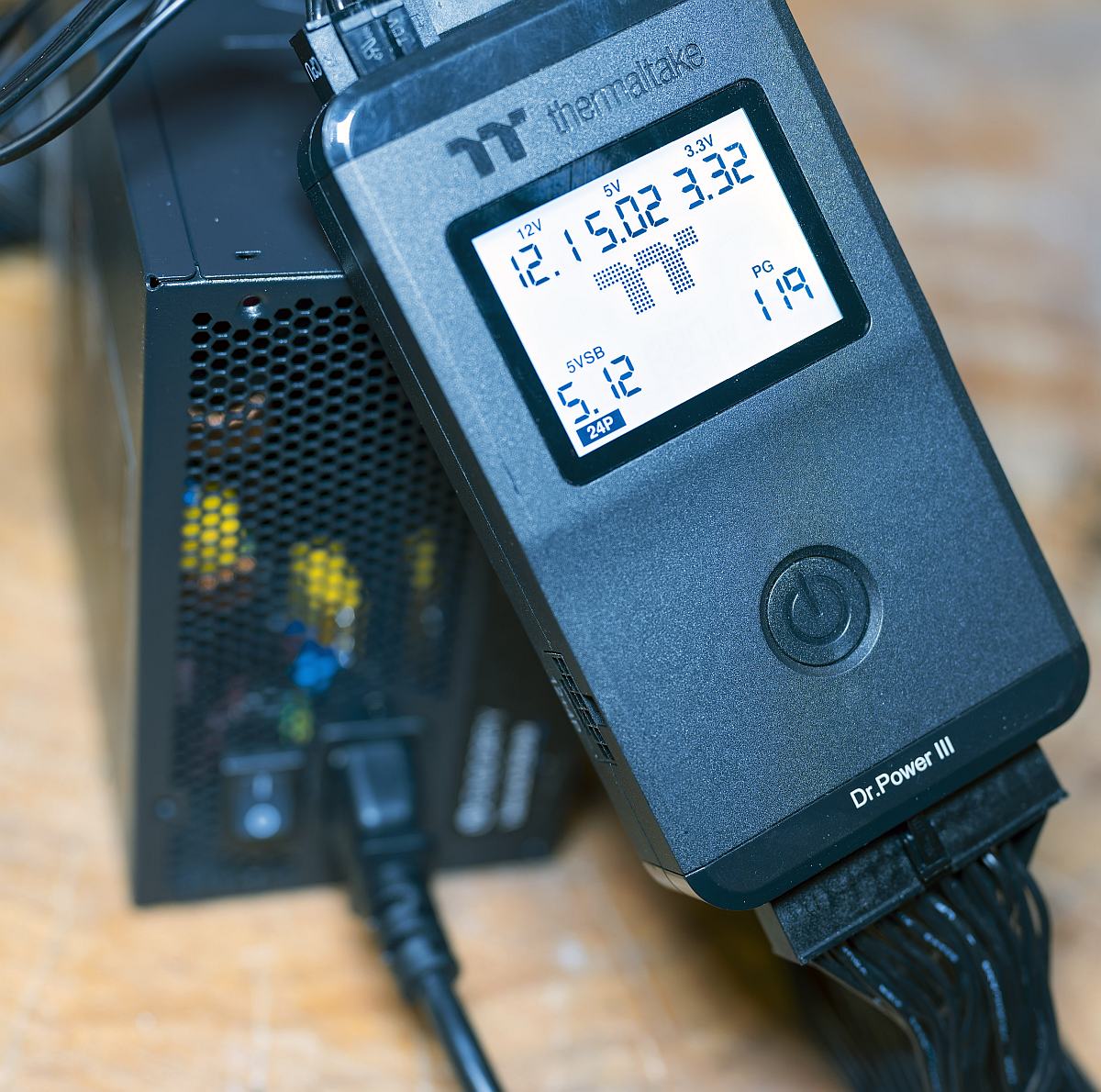
As you can see, there are no issues with the Endorfy L6 750W unit.
The following professional setup was used for the remainder of the testing:
- Voltcraft VC-870 Digital Multimeter – voltage measurement (+ Fluke 97 scope meter)
- Oscilloscope – GW INSTEK GDS 3154
- DC load – original solution
- Fluke 97 Scope meter (a measurement of voltage and ripple),
- Voltcraft SL-451 decibel meter (volume measurement)
- ACUVIM-IIRF is used to measure active power (input from the socket).
- PCE Instruments PCE-DT 50 tachometer – for the measurement of the rotational speed of the fan.
Measurements are taken only using 230V input voltage.
I’ll give you the TLDR first. Endorfy Vero L6 750W exceeds 80 Plus Bronze certification, delivering good efficiency that keeps power waste and heat generation in check. Under typical loads, the PSU consistently maintains good performance. This directly translates into lower electricity bills for users running their systems extensively, as well as a reduced environmental impact.
12V regulation
| Wattage | Endorfy L6 750W |
| 75W (10%) | 12.14V |
| 187.5W (25%) | 12.11V |
| 375W (50%) | 12.09V |
| 562.5W (75%) | 12.05V |
| 750W (100%) | 12.02V |
Voltage remains solid across the load spectrum, with a roughly one percent deviation from highest to lowest, providing stable power to sensitive components even at full load. This stability is crucial because voltage fluctuations can cause system crashes or hardware damage, especially in high-performance components like CPUs and GPUs.
Wide-load efficiency
| Wattage | Endorfy L6 750W |
| 75W (10%) | 83.81 per cent |
| 187.5W (25%) | 88.79 per cent |
| 375W (50%) | 89.58 per cent |
| 562.5W (75%) | 88.31 per cent |
| 750W (100%) | 86.55 per cent |
80 Plus Bronze PSUs are the ones that offer solid everyday performance without hitting the expense and heights of, say, Platinum or Titanium models. Endorfy is comfortably over 86% efficient at workloads common on consumer PCs.
Low-load efficiency
| Wattage | Endorfy L6 750W |
| 40W | 77.74 per cent |
| 60W | 82.69 per cent |
| 80W | 84.92 per cent |
Examining low-load efficiency is equally important if, like us, your PC spends a vast amount of time idling. Nothing to complain about here.
12V ripple suppression
| Wattage | Endorfy L6 750W |
| 75W (10%) | 11.2 mV |
| 187.5W (25%) | 10.8 mV |
| 375W (50%) | 14.5 mV |
| 562.5W (75%) | 25.3 mV |
| 50W (100%) | 30.9 mV |
Ripple suppression reflects good quality AC-to-DC conversion. The Endorfy L6 750W features consistently low ripple up to 50% of its operating range, and though it then climbs up, the supply still delivers pretty clean power that ensures stable, error-free operation for modern components.
Reduced ripple contributes to better long-term health of your PC parts, too, and it can even lead to slightly improved overclocking headroom because delivered power is consistent and mostly free of electrical noise.
Noise
| Wattage | Endorfy L6 750W |
| 75W (10%) | 31.9 dBA (820 rpm) |
| 187.5W (25%) | 35.3 dBA (1,200 rpm) |
| 375W (50%) | 39.5 dBA (1,550 rpm) |
| 562.5W (75%) | 42.1 dBA (1,800 rpm) |
| 750W (100%) | 42.2 dBA (1,800 rpm) |
These are decent results for this class of PSU, especially till around 60-65%. Endorfy L6 750W doesn’t have a semi-passive mode, but the 120mm fan’s control keeps noise in check, with the PSU practically silent during low-to-medium workloads.
However, under heavy loads, noise output is high, so it’s best to avoid power-hungry components if you prefer quiet PC builds. I definitely notice the fan when running full chat, so my advice would be to overspec your proposed wattage. Doing so means the fan won’t work as hard at a particular wattage.
Conclusion
In summary, the Endorfy Vero L6 750W is a technically competent, ATX 3.1‑ready power supply that blends mainstream‑class components with a modern control platform, native 12V‑2×6 support and independently-measured Cybenetics Silver efficiency. It is not trying to compete with ultra‑high‑end Titanium units on absolute noise or feature set. Instead, it delivers a solid electrical baseline, acceptable acoustics for the most part and strong transient handling at a very competitive price.
It’s an attractive power supply unit for your next reasonably-priced build. The 80 Plus Bronze efficiency rating, and Silver from Cybenetics, ensures relatively low energy waste. It doesn’t use semi-passive cooling, so the 120mm fan is constantly spinning, with a minimum 800rpm, and becomes loud after 60-65% of load.
The average efficiency in the 20–100% range is over 86% and the maximum efficiency is 89.58% at 50% load, which is perfectly okay for a PSU of this ilk.
For a single‑GPU gaming or creator system in the mid‑to‑upper performance tier, where budget matters but corners cannot be cut on safety and standards compliance, the Endorfy Vero L6 750W is a well‑balanced and up‑to‑date choice.