
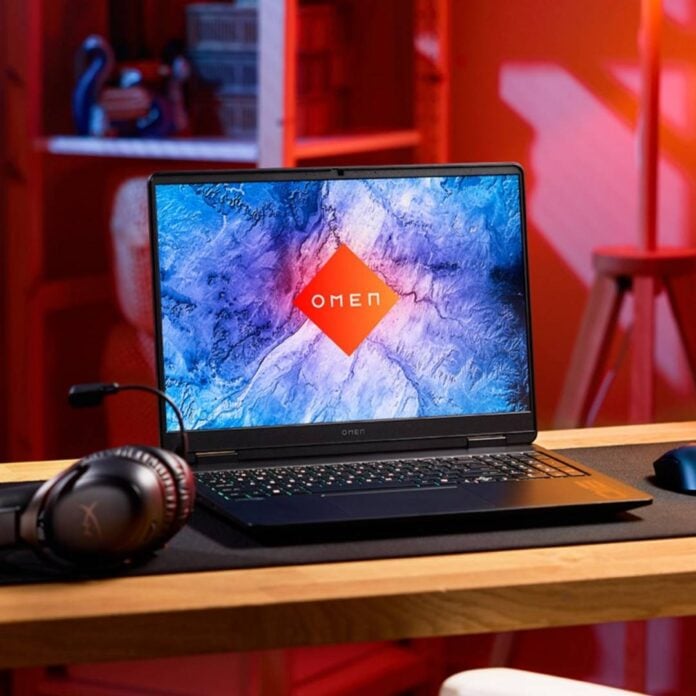
HP has launched a laptop subscription program that allows you to rent different laptop configurations for a monthly fee. It represents an alternative option for those who can’t stomach the increasing prices of modern hardware, but like many subscription models, there are caveats.
Like its professional variant, the Omen Gaming Subscription is a monthly plan that lends you one of HP’s laptops for a monthly fee based on the machine’s performance and features. At the moment, HP offers four options, powered by AMD Ryzen 7 / Intel Core Ultra 9 CPUs plus a range of Nvidia RTX 50 Series Mobile GPUs. These are priced from $49.99 for an RTX 4050 plus 16GB of memory up to $129.99 for an RTX 5080 plus 32GB of memory. HP also offers peripherals for rent, including a gaming mouse for $4.99, a headset for $7.99, or a monitor for $5.99.

To encourage users to try this program, HP is offering a 30-day risk-free period during which you can cancel at any moment at no additional cost. The brand takes care of hardware returns. However, going past the 30-day window, you get locked into a 12-month plan that can’t be cancelled without fees. This is a non-issue if you keep the laptop for more than a year, as after that, you can cancel with nothing else to pay. At that point, you can either keep paying your monthly subscription with no strings attached, or better yet, you can switch to a plan and upgrade your hardware. Understandably, doing so will lock you back into another 12-month plan.
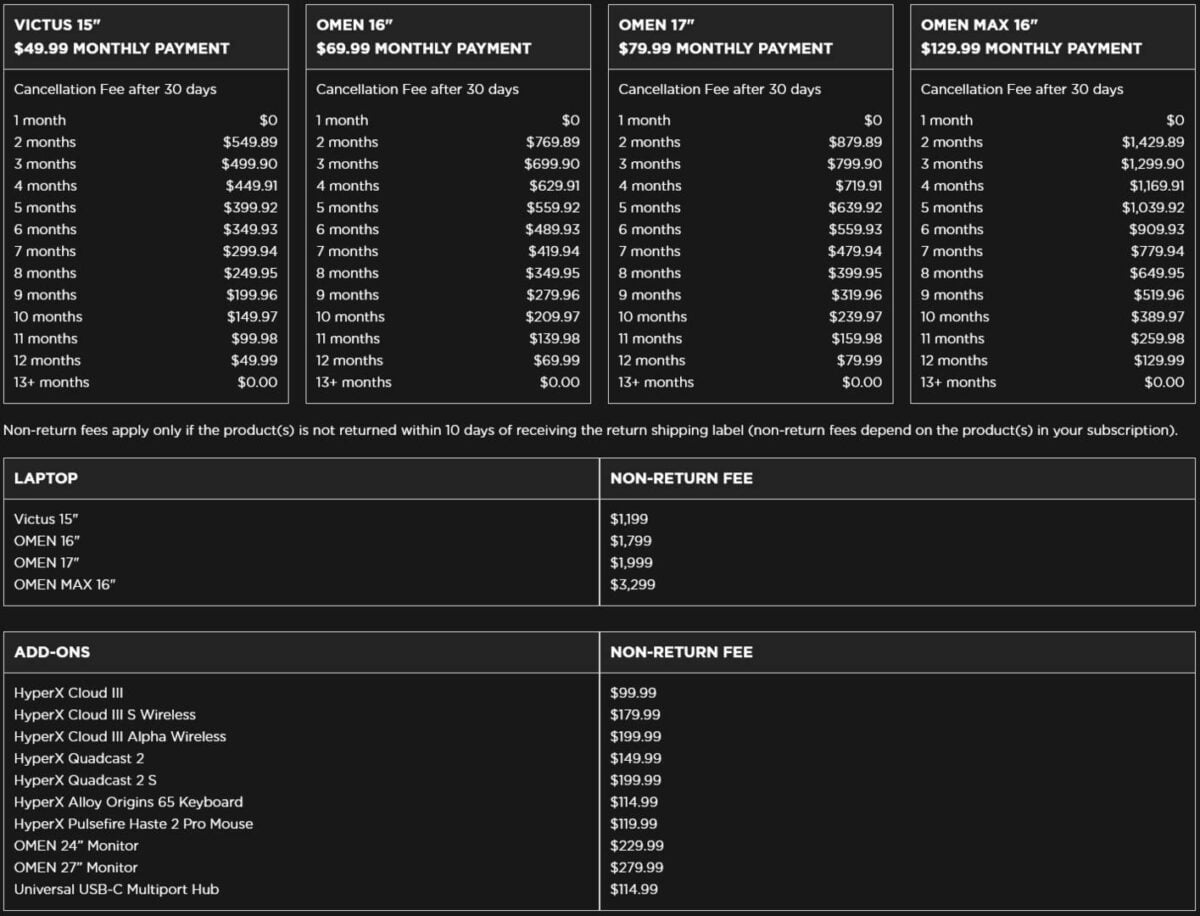
Now, if for some reason you don’t want to proceed with the program beyond the free-return window, you will be charged depending on how long you have been a member. These cancellation fees can reach up to $1,429.89 if you change your mind too soon. Plus, if you can’t or won’t return the product after cancellation, you get struck by another massive bill reaching up to $3,299 for the Omen Max 16. In other words, going past a month, make sure you can pay at least eight or nine months to avoid paying huge sums unnecessarily.
Furthermore, if the laptop is physically damaged – meaning dropped or hit – the standard subscription won’t pay for repairs or replacement, and you may even be liable for any costs associated with that. On the other hand, in case of any software or hardware issue unrelated to the user, HP promises to fix them via its live support or send a replacement the next business day, at no extra cost.
Until this point, all the modalities seemed quite reasonable. However, the big caveat that will likely discourage many potential customers is what happens when the cumulative payments reach the value of the machine. Unfortunately, regardless of how many years you keep the same laptop, you will never own it. Likewise, there doesn’t seem to be an option to buy the machine at a discount after renting it for some duration.
This is an even bigger discouragement considering that most of these plans give HP a full return on investment in less than two years. For example, if you save the $129.99 each month or purchase the laptop from stores that offer installment plans, you would pay for it in about 16 months. Yes, HP’s program is less demanding in regard to the credit check requirements, but the price is high, literally.
I only see one reason to go for HP’s solution, and that is if you like to stay on the cutting edge of hardware performance, as upgrading your machine each year at no further cost is tempting. That said, this will rely exclusively on HP’s will to offer new hardware.