
The amount of game-changing displays on show at CES 2026 is dizzying, and MSI’s booth is no different. Not only is the brand launching one of the first fifth-generation QD-OLED monitors on the market, it’s also pioneering the way forward for Nvidia G-Sync Pulsar screens. If that wasn’t enough, the company’s also got a pair of 5K Dual Refresh Rate (DFR) models in the works.
Of course, no talk of tech in 2026 is complete without the industry’s favourite acronym: AI. In that vein, MSI is showing off a wealth of features driven by deep learning, as part of its first MEG gaming monitor in years.
MEG X
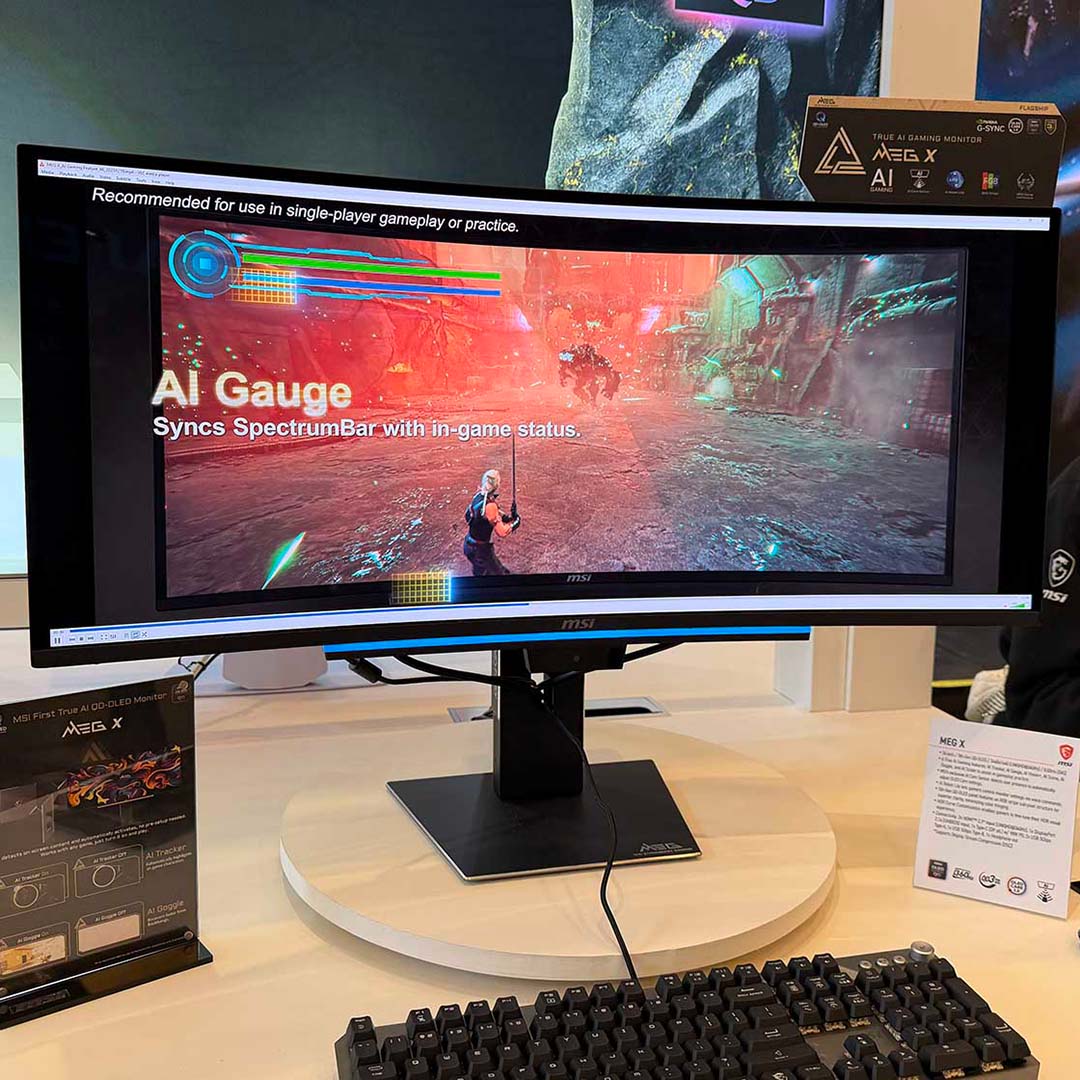
Meet the MEG X. This ultrawide gaming monitor is near-identical to the MPG 341CQR QD-OLED X36 (details below), save for the inclusion of DisplayPort 2.1 UHBR20 ports. The display boasts the same excellent fifth-generation panel with an RGB Stripe subpixel layout that eliminates fringing, complete with a 360Hz refresh rate and other generational improvements.
Where the MEG X separates itself from its close relative is in its AI features. In addition to the AI Care Sensor, the monitor boasts on-screen smarts that aim to improve visual fidelity as well as provide you with competitive advantages. Without spoiling too much, you’ll want to keep the latter tech strictly offline.
There are six features that make up the suite with MSI recommending the majority of them for first-person. ‘AI Tracker’ automatically highlights enemies, while ‘AI Goggle’ saves your screen from the blinding effects of a flashbang. Meanwhile, ‘AI Scope’ automatically zooms in for more precise aiming, and ‘AI Gauge’ purportedly provides an indication as to enemy health states. How well all this works remains a bit of a mystery, but hey, I’ll try anything once.
MSI knowingly recommends users only enable these features for single-player titles, as many of them inarguably come close to sounding like outright cheats for competitive environments. However, the remaining two options are less detrimental to your standing against anti-cheat measures.
‘AI Scene’ analyses on-screen content and swaps to the appropriate display profile, while ‘AI Vision+’ smooths out brightness curves in dark scenes for a brighter overall image. I’m sceptical about the usefulness of these features, as I prefer the game to appear as the developer intended, but I’ll wait until I get chance to see them perform in-person before making any final judgements.
More interesting, in my view, is the MEG X’s compatibility with MSI AI Robot Lite. This tech gives you the ability to make adjustments to the monitor’s settings via your voice, theoretically saving you the bother of diving into the OSD or Gaming Intelligence app.
Expect MEG X to cost north of the MPG 341CQR QD-OLED X36, which retails for $1,100. As for when you can lay your hands on this monitor, MSI hasn’t provided a launch window as yet.
MPG 341CQR QD-OLED X36
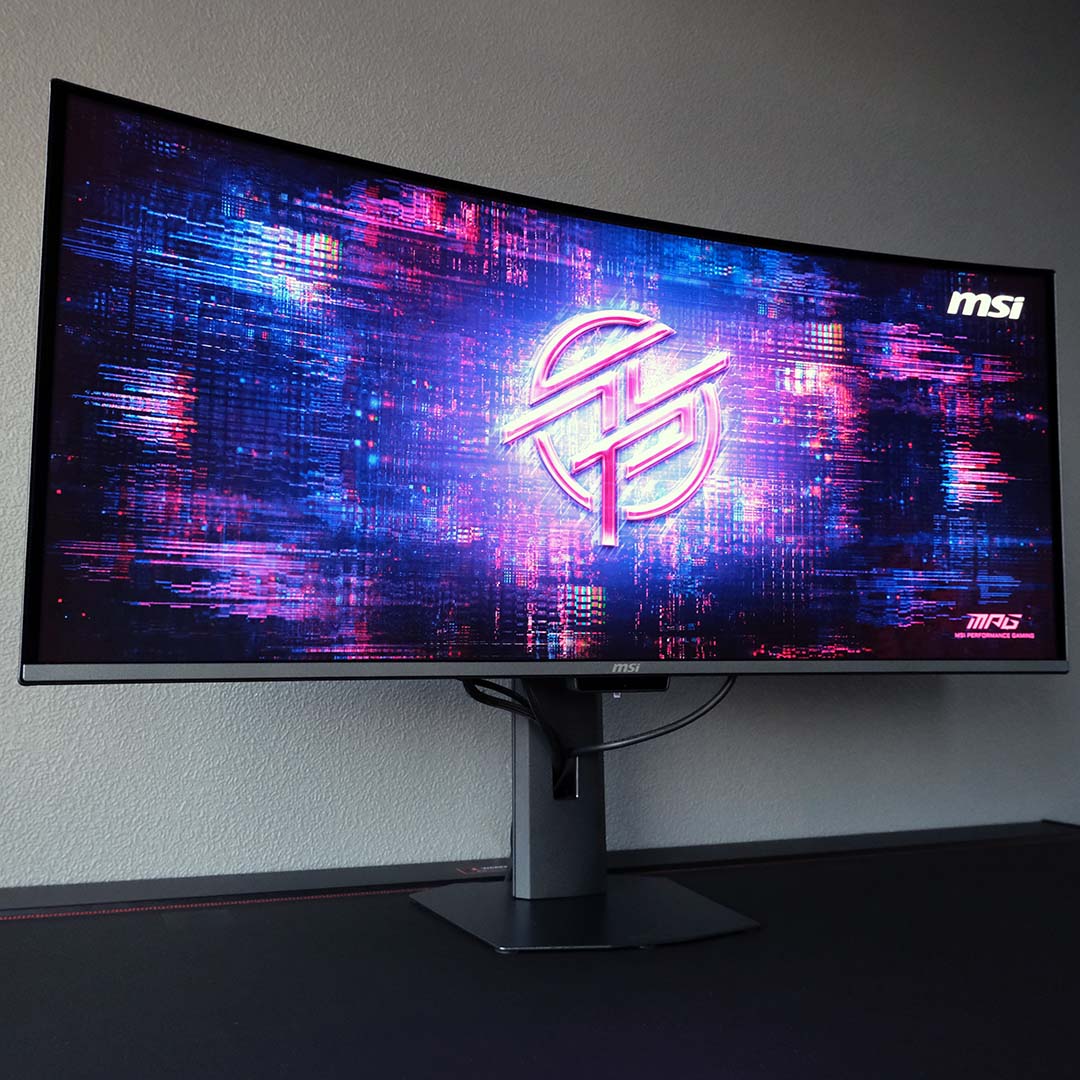
Speaking from first-hand experience, the MPG 341CQR QD-OLED X36 is a properly exciting gaming monitor. This display represents the biggest leap in QD-OLED performance in years, resulting in a spectacular screen.
Rather than repeat myself here, I suggest you check out my in-depth MPG 341CQR QD-OLED X36 review for all the details you need.
MPG 272QRF X36
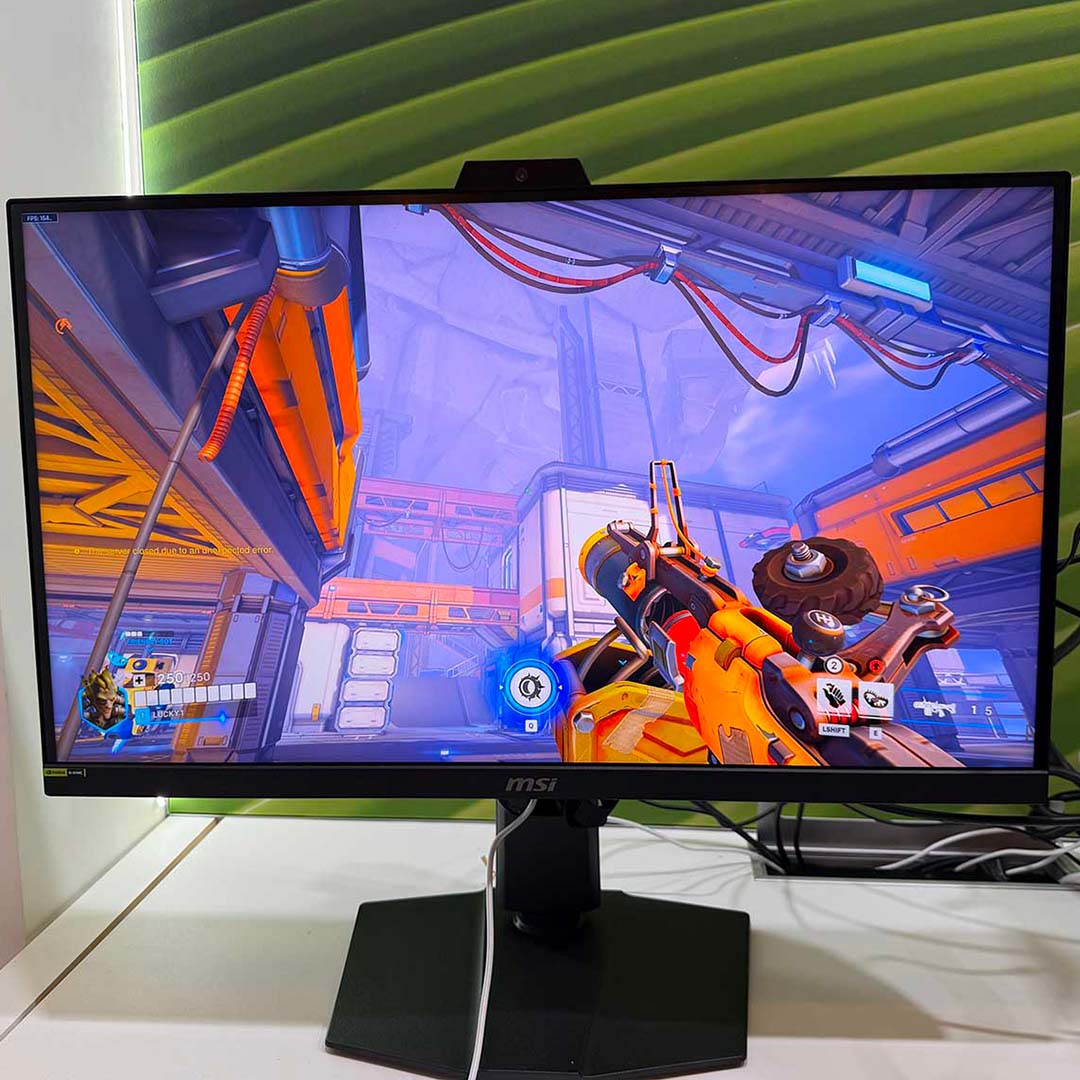
Following the Nvidia G-Sync Pulsar announcement, we finally have a closer look at MSI’s inaugural offering with the technology, the MPG 272QRF X36. This is one gaming monitor that anyone with a penchant for esports titles will want to pay attention to.
This display offers a 27in Rapid IPS panel, with a native QHD (2560×1440) resolution and 360Hz refresh rate. So far, so normal. However, this screen will apparently provide motion clarity that’s effectively 4x better than native through flicker-free backlight strobing that won’t come at the expense of Variable Refresh Rate (VRR).
Ben’s had a quick go with the MPG 272QRF X36 in the MSI booth. Despite his best efforts to push the panel to breaking point in Overwatch 2, it stayed resolutely and surprisingly smooth. First impressions are positive, but we’re naturally keen to test this monitor out away from the show floor.
This isn’t the only party trick that G-Sync Pulsar affords the screen. Through a built-in light sensor at the top of the chassis, the Nvidia feature can automatically shift colour temperature and brightness for more optimal viewing depending on ambient light conditions.
All of these G-Sync Pulsar capabilities seemingly haven’t come at the expense of important baseline screen qualities. MSI claims the MPG 272QRF X36 will arrive with an average Delta-E of less than 2, with 119% coverage of the sRGB gamut and 90% of DCI-P3.
You can pick one of these up for yourself starting January 7 at $649.
MPG 271KRAW16
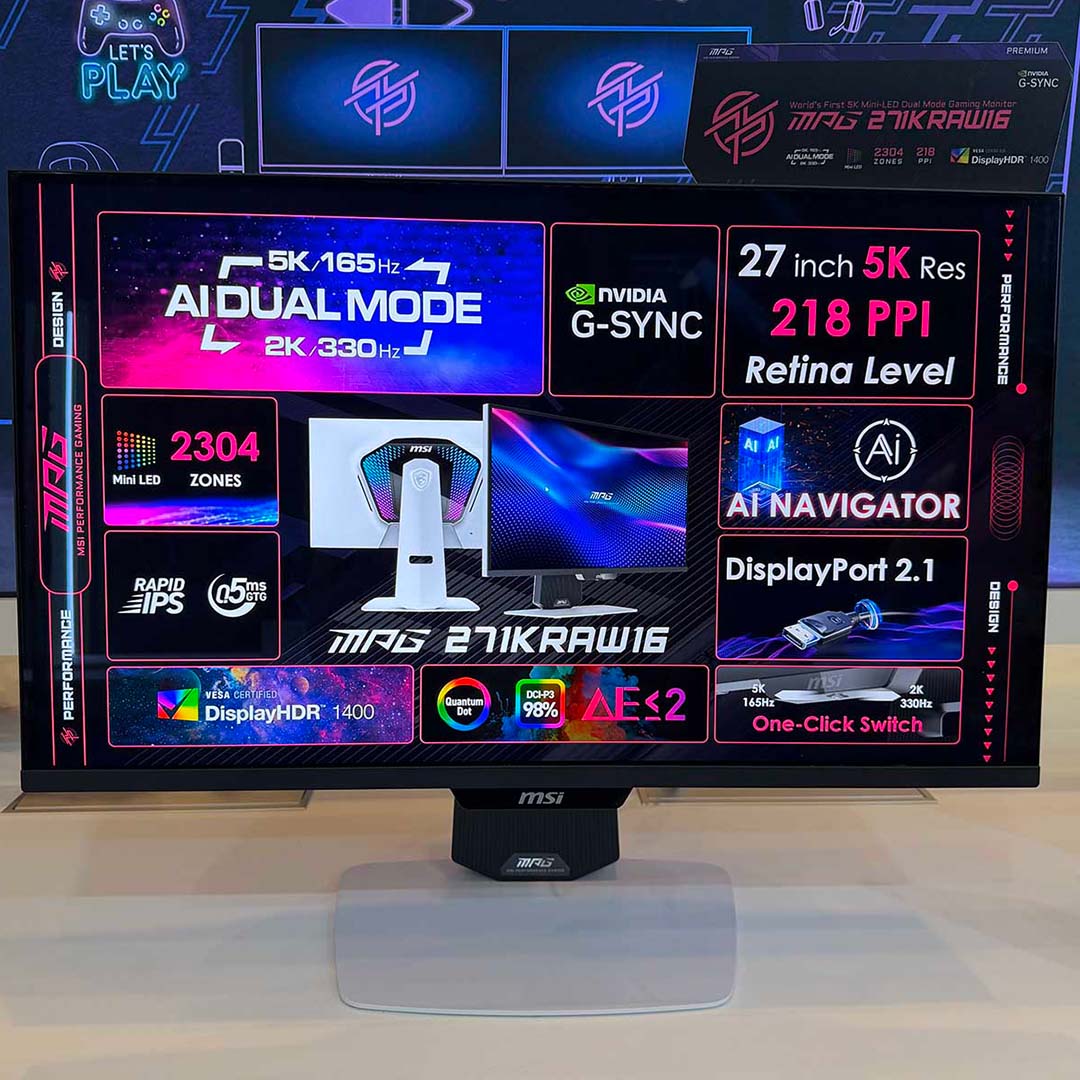
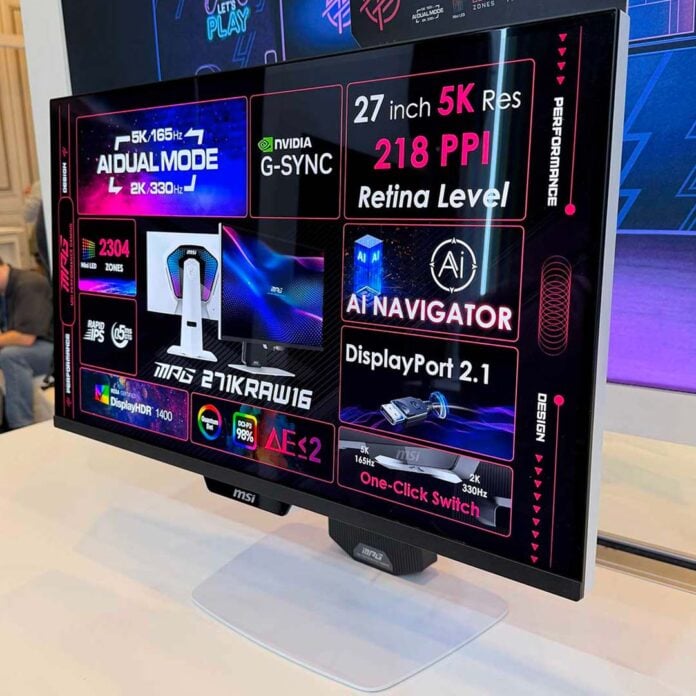
For those that crave sharpness beyond the realms of 4K, but don’t want to forgo the smoothness of high refresh rate, the MPG 271KRAW16 looks like a compelling option. As a DFR display, this model can switch between 5K/165Hz and 2K/330Hz modes.
Better still, this is a Mini-LED Rapid IPS panel, complete with 2,304 local dimming zones and a quantum-dot layer that nets the display 98% coverage of the DCI-P3 gamut. Together, these qualities should ensure one of the best HDR experiences you can expect from a backlit panel.
At 27in, the MPG 271KRAW16’s 5K resolution provides 218 Pixels Per Inch (PPI). That’s the same lush PPI as the Philips Brilliance 5K 27E3U7903, which we know to be pin-sharp to the eye.
Sadly, details on pricing and availability aren’t available at the time of writing. However, this is one monitor I will be keeping tabs on.
MAG 271KPD7
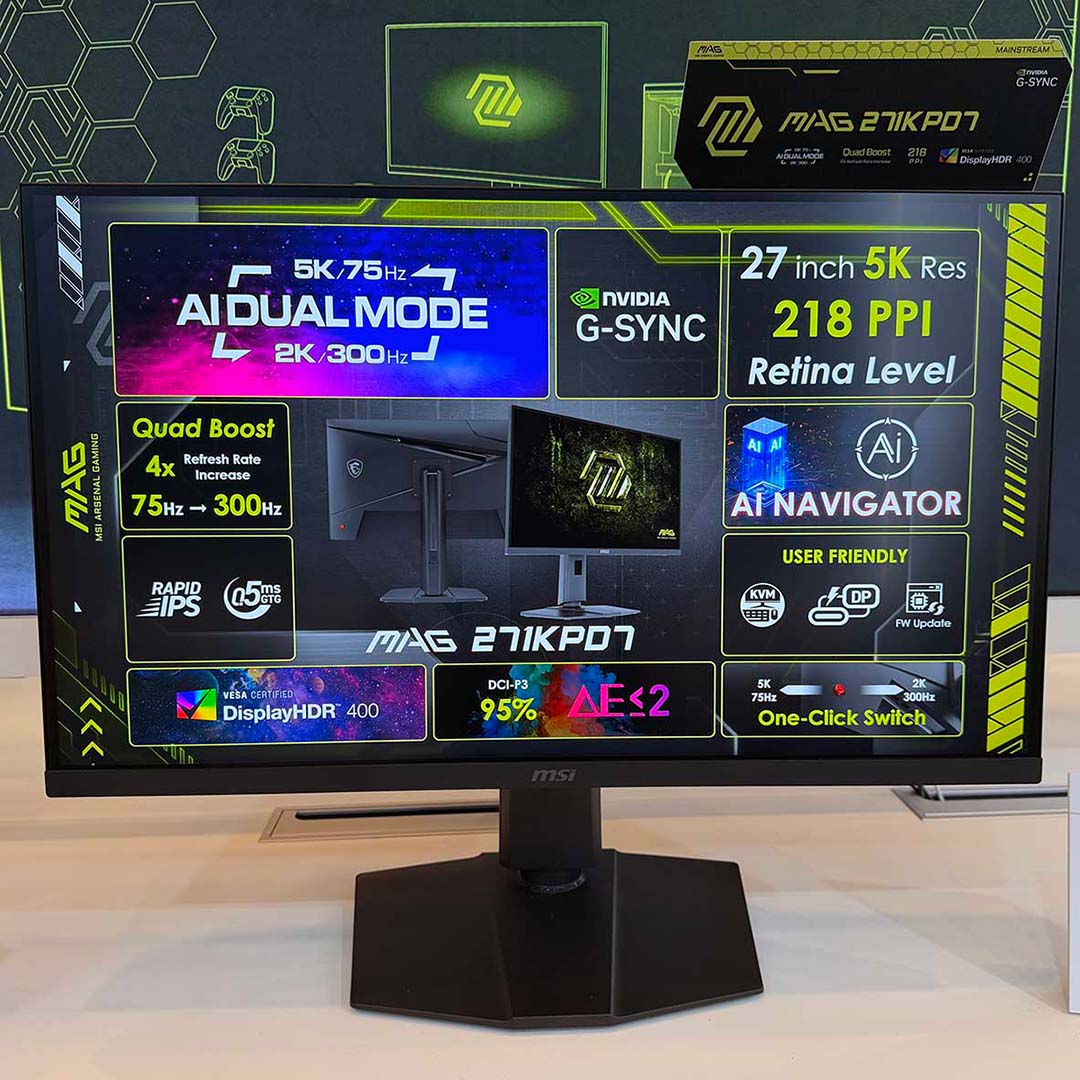
Consider the MAG 271KPD7 the little brother of the MPG 271KRAW16. Both monitors rock a similar 27in panel with DFR capabilities, but MAG trims back refresh rates to 75Hz at 5K and 300Hz at 2K.
This model also forgoes Mini-LED and quantum-dot niceties, but still turns in respectable coverage of DCI-P3 at 95%. MSI also claims the screen will boast an average Delta-E of less than 2 out of the box.
Like the MPG 271KRAW16, there’s no concrete pricing or launch window for MAG 271KPD7. Even so, it’s a safe bet that the latter will prove the more affordable option; it’s a question of much cheaper, and how much longer you might have to wait.
Club386 is trawling the many halls of CES 2026, and there’s plenty to see so make sure you’re following the site on Google News. If you’re a fan of our coverage, please also use the button below to set us as a Google Preferred Source.