
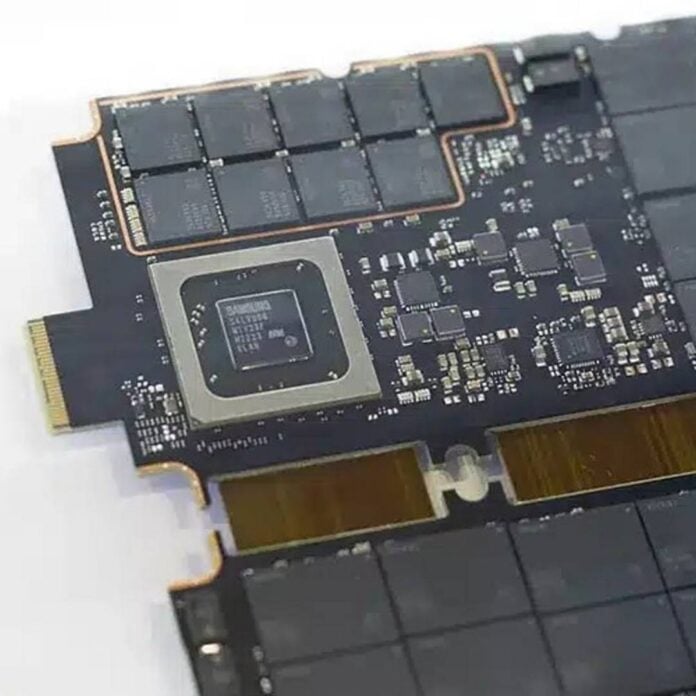
Samsung is reportedly preparing mass production of its next-gen PCIe 6.0 SSDs that are destined to target AI data centres, of course. The drives are expected to reach up to 32GB/s using a PCIe 6.0 x4 connection, while packing up to 256TB of storage capacity.
According to ZDNet, the Korean giant intends to introduce testing equipment for the first PCIe 6.0 SSDs during the first half of 2026. This initial phase will focus on technical validation, process optimisations, and certifications, in preparation for mass production. Samsung needs to double its efforts to catch its competitor Micron, which started sampling its PCIe 6.0 solutions back in Q3 2025. In fact, Micron has already debuted mass production of its Gen 6 data-centre SSDs earlier this year, offering around 28GB/s transfer speeds and multi-million IOPS, both in air- and liquid-cooled enterprise form factors.
To achieve these high speeds, both Samsung and Micron are using PAM-4 signalling at 64GT/s alongside a flow-control unit (FLIT) encoding layer, low-latency Forward Error Correction (FEC), and Cyclic Redundancy Check (CRC) to maintain reliability. As a result, each PCIe 6.0 lane delivers up to 8GB/s, which is double the performance of PCIe 5.0. This means each SSD can leverage up to 32GB/s of bandwidth, minus any bandwidth lost for overheads.
More importantly, Gen 6 SSDs are built to deliver these speeds without drastically increasing power consumption and subsequently the heat output. These are major concerns for data centres which have to deal with megawatts or even gigawatts of power and associated heat.
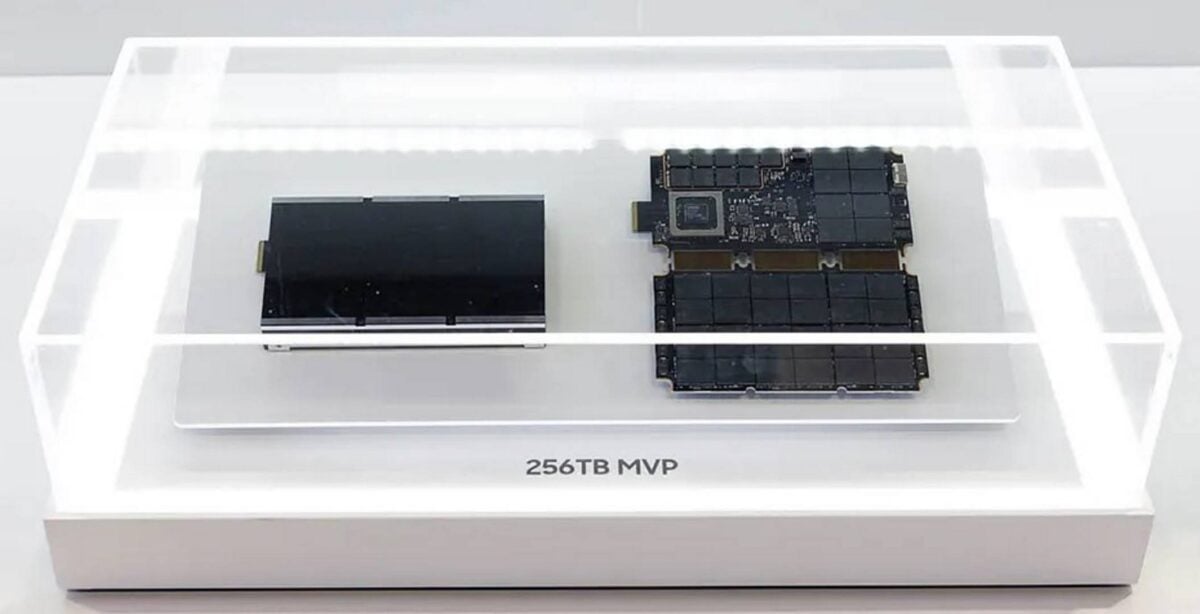
Samsung’s first Gen 6 SSDs seem to be the PM1763, targeting 30GB/s transfer speeds using a 16-channel controller. Power consumption is expected to be around 25W, marking a 60% efficiency increase. Being server/data centre-oriented, they will be available in E1.S / E3.S / EDSFF form factors, cooled either by air or liquid. The latter could be the most viable option if Gen 6 controllers turn out to be as hot-running as their early Gen 5 counterparts.
Unsurprisingly, consumer M.2 solutions will follow later, partly due to the lack of platform compatibility with PCIe 6.0. Silicon Motion, a major SSD controller manufacturer, is not expecting Gen 6 SSDs on consumer platforms until 2030, be it desktop or laptop.