
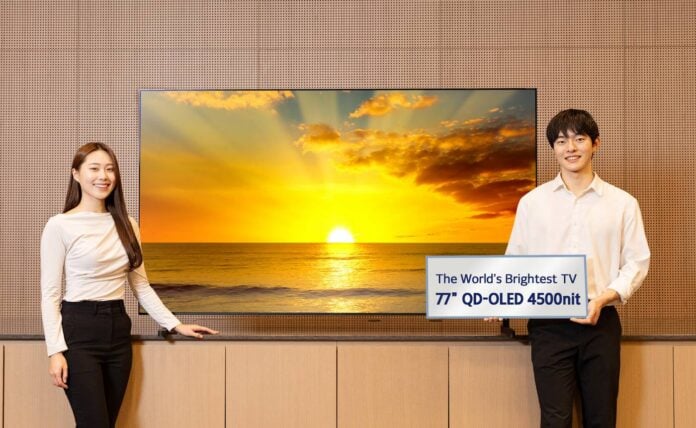
Samsung has announced its new QD-OLED TVs, said to boast the world’s brightest images on such panel technology. The company is expanding its OLED-based portfolio with multiple products at CES 2026, including AI-powered displays, XR headsets, and large-format TVs that can reach 4,500nits of brightness using optimised organic materials. This should bring it head to head with LG’s Primary RGB Tandem 2.0 OLED TV panels which are rated for 4,500nits peak as well.
As a major player in the self-emissive panel technology, Samsung Display is continuously in search of ways to improve its QD-OLED offering. Aside from the beloved QD-OLED gaming monitors, Samsung’s panels are also found on mid- to high-end TVs. While the former are fine in dark rooms, the latter is generally found in bright living rooms that demand a higher luminance output to counter the elevated ambient light and reach a comfortable viewing experience. Therefore, panel brightness is always an important consideration for manufacturers.
Though Samsung’s latest QD-OLED panels are already quite bright, reaching 4,000nits peak, the newly announced 77in TV is said to push that up to 4,500nits. This means that HDR content will appear punchier and truer to life, especially when mastered with these brightness levels in mind, without crushing dark details and contrast. Unfortunately, the company didn’t specify the window size possible at this luminance, but looking at previous models, it will likely be at 3%. As for full-screen brightness, we can expect similar or above current QD-OLED TVs’ 440nits. LCD and Mini-LED panels remain stronger in this department, mind you.
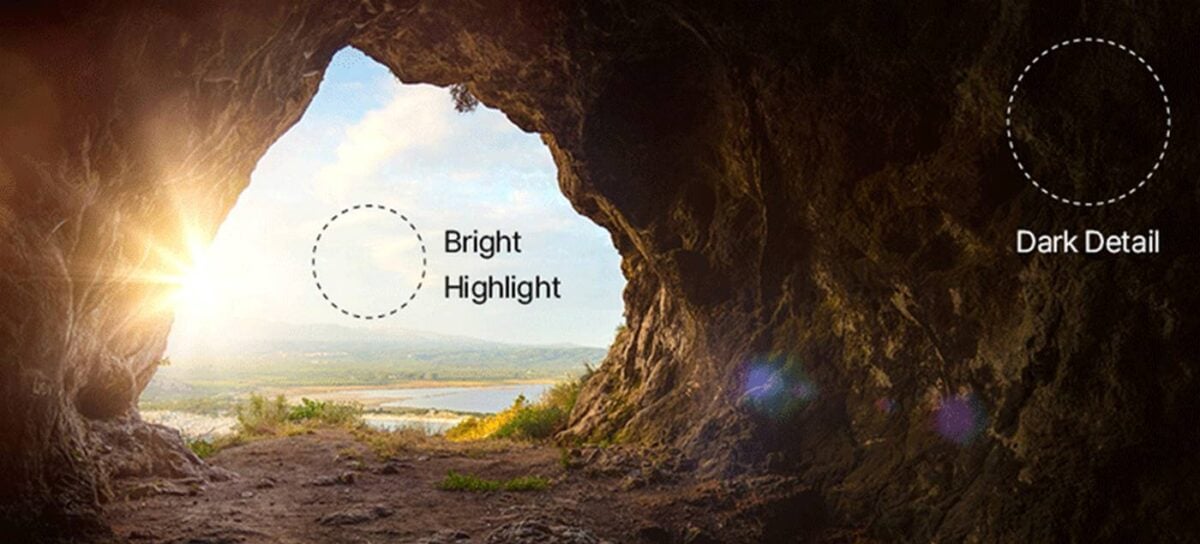
It is important to note that contrary to other display technologies such as WOLED, which rely on a white sub-pixel to boost brightness, QD-OLEDs increase all RGB luminance levels, allowing colours to retain higher saturation while avoiding the washed-out appearance that may result from elevated brightness levels.
“QD-OLED achieves its peak luminance by combining the maximum brightness of each RGB component. Compared to competing products with similar peak brightness, QD-OLED demonstrates the potential for more vivid colour reproduction and higher perceptual brightness, further enhancing compatibility with AI-based picture quality optimisation technologies,” said Samsung.
As mentioned in this statement, AI has become an unavoidable part of modern TVs, which have grown reliant on AI-based picture quality processing, be it for upscaling or tone-mapping optimisations. As a result, Samsung is planning to unveil multiple technologies said to improve the user experience.
Either way, the higher brightness headroom of these new TVs should help deliver better colour volume and image-processing flexibility without compromising accuracy. We can expect these Samsung TVs to be showcased in detail during CES, with availability around the second half of 2026.