
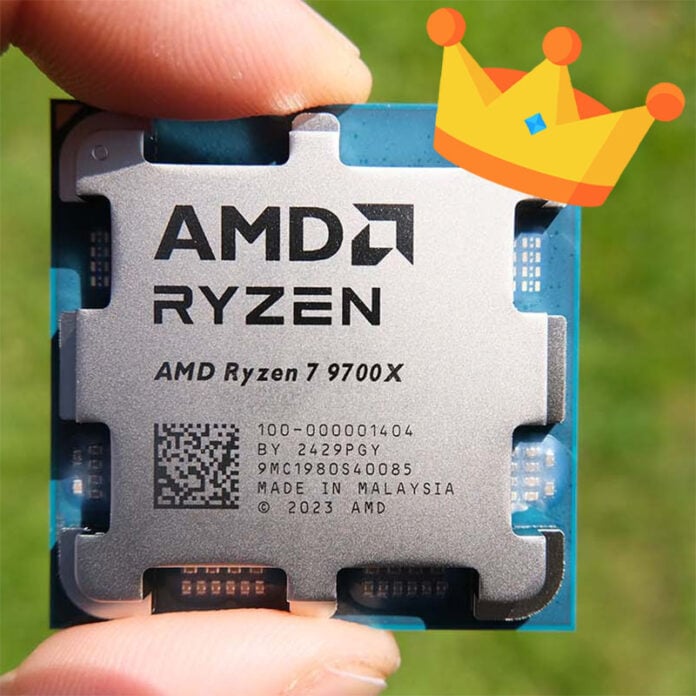
While many gaming PCs have boasted greater graphics horsepower than the PlayStation 5 and Xbox Series consoles for several years, most systems have paled in terms of CPU core counts. However, this numbers game will soon end in an amicable draw across all ecosystems, as PC gamers are now moving increasingly towards 8-core CPUs.
According to the last Steam Hardware & Software Survey of 2025, the number of systems with eight physical processors has grown for the fourth month in a row and now account for 25.98% of Steam users. By contrast, the dominance of 6-core processors continues to shrink, settling at a 29.36% share this month, just 3.38% ahead.
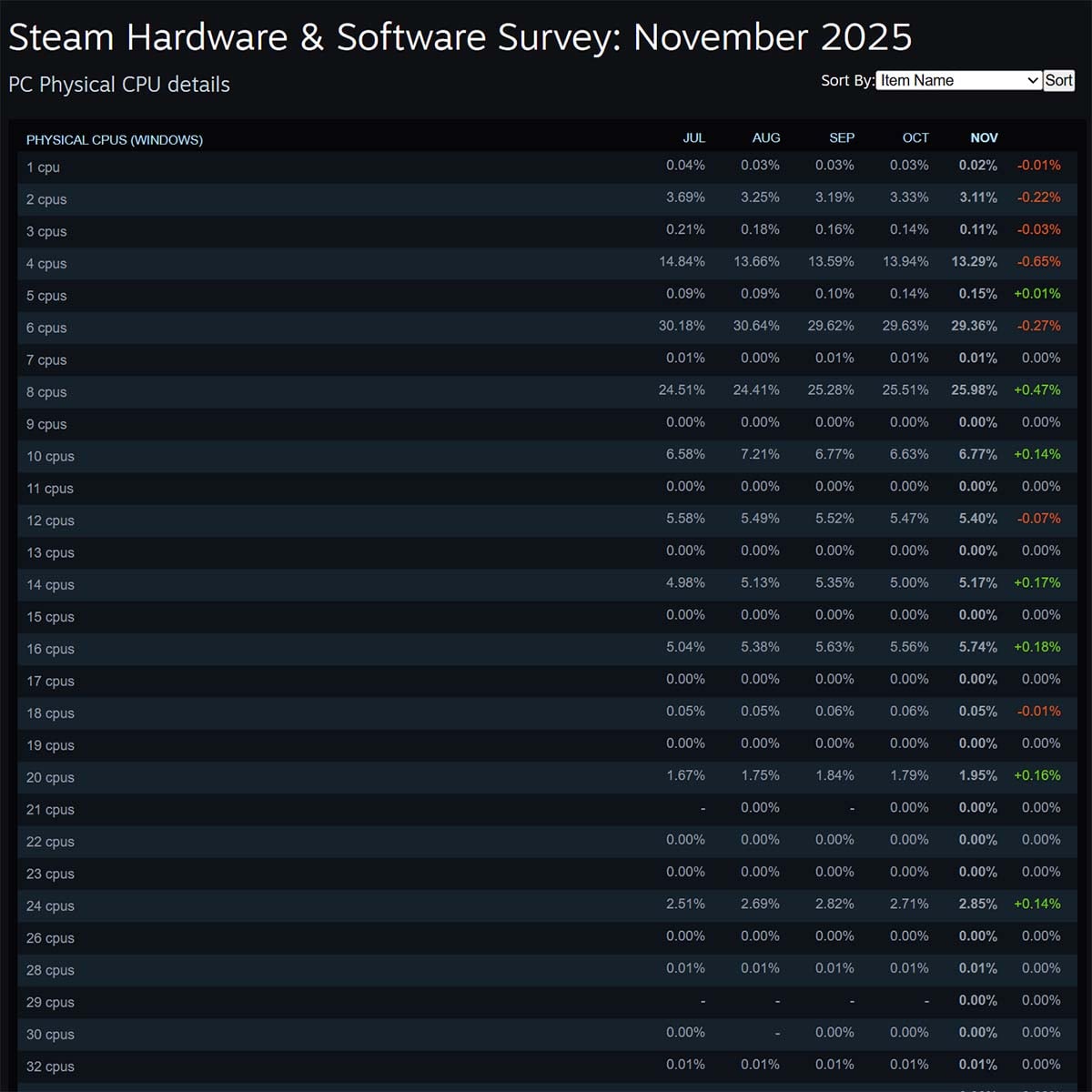
The likes of AMD’s Ryzen 7 7800X3D and 9800X3D have undoubtedly proven a massive boon to the popularity of 8-core processors. While AMD has released 6-core chips with 3D V-cache, none have been widely available for purchase until AMD’s Ryzen 5 7500X3D launched recently.
While I applaud efforts to make 3D V-Cache more affordable, I’m actually happy to see more consumers adopt processors with eight cores. If this trend continues, PCs on average will finally match current-generation consoles, which have sported these counts since their release back in 2020.
Of course, quantity does not describe quality. After all, a Core Ultra 9 285K technically has 24 cores but that’s split across eight performance and 16 efficient cores. More pressingly, though, the latest PC CPUs are significantly more powerful than the CPUs in console chips in terms of instructions per clock (IPC).
Current generation consoles use custom SoCs featuring Zen 2 cores, the same architecture you’ll find in Ryzen 3000 series processors. Put a Ryzen 7 3700X up against a newer Ryzen 7 9700X with Zen 5 cores, and the latter chip will wipe the floor with its predecessor, despite each chip having eight cores at its disposal.
Of course, these IPC gains also trickle down with the likes of a 6-core Ryzen 5 9600X also thrashing the Zen 2 SoCs on consoles. However, being able to more easily parallelise code, knowing eight cores are available across platforms, should hopefully incentivise developers to better take advantage of multiple threads.
If the pace of 8-core CPU adoption continued at its current rate, octacore CPUs would become the new norm as early as April 2026. As such, 6-core processors would have enjoyed a three-year reign as the default, after assuming the throne from quad-core CPUs in March 2022. However, a serious decline in motherboard sales and rising DRAM prices could stifle adoption rates of 8-core processors.
In any case, it’s not a matter of if but when eight becomes the dominant CPU core count. It’s a future I eagerly await, both for present and upcoming releases. This progression should raise the performance floor and make cross-platform development that little bit easier for developers, netting a better experience for all. Of course, that’s not forgetting AMD could raise core counts across the board with Zen 6 designs, but that’s just hearsay for the moment.
How many cores does your CPU have? Join the conversation on your preferred social platform, whether it’s Facebook or some other haunt. You can expect further coverage on the hardware space from me and the team, so make sure you’re following the Club386 Google News feed.