
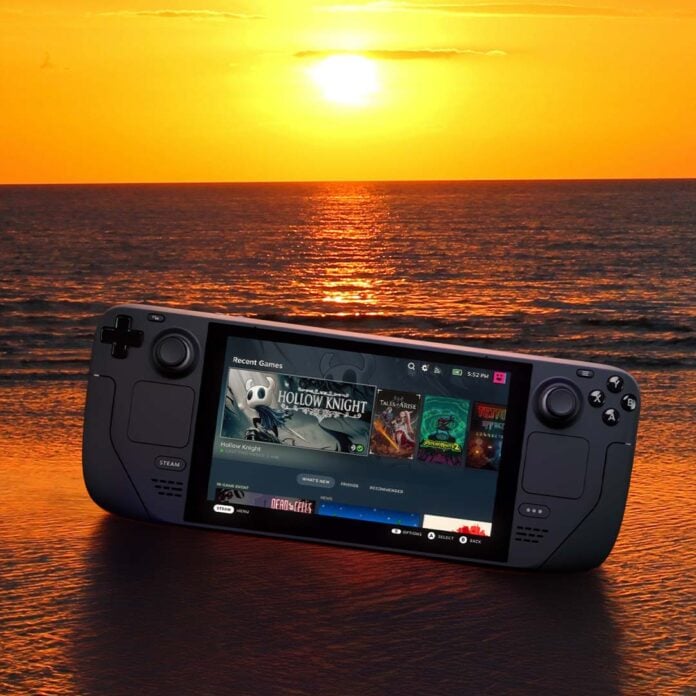
Just shy of four years since the Steam Deck LCD hit the scene, the handheld’s time is up. Valve is no longer producing new units of its backlit system, meaning whatever stock the manufacturer has is all there ever will be available direct from the Steam store. Once that model disappears from the store shelf, grabbing a Steam Deck will become a considerably dearer affair.
Valve didn’t loudly announce the Steam Deck LCD’s discontinuation by way of a blog post. Instead, the company inserted a small note on to the Steam Deck store page, below the three models. The message reads: We are no longer producing the Steam Deck LCD 256GB model. Once sold out, it will no longer be available.
I’ve reached out to Valve regarding its plans following the final Steam Deck LCD’s departure from its warehouse. I’m sure like many others, I’m curious as to what the company will do (if anything) to maintain the affordability of its handheld.
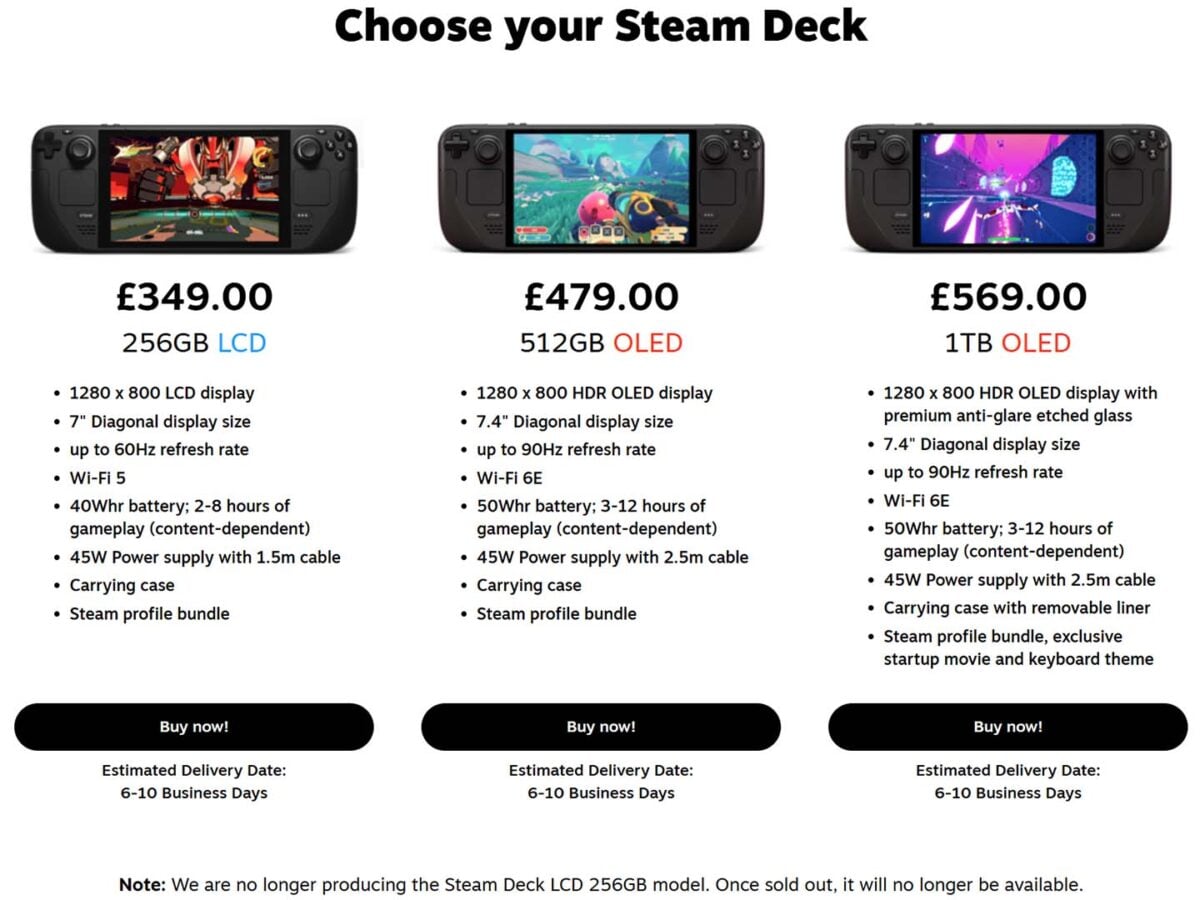
With the £349 ($) Steam Deck LCD gone, this radically raises the starting price of the handheld to £479. That’s a 37% increase that budget-oriented gamers will definitely struggle to stomach. It also brings the system far closer to competitors such as the ROG Xbox Ally.
Of course, certified refurbished versions of the Steam Deck OLED are up for grabs once every blue moon for £389. However, that’s hardly a reliable replacement for the Steam Deck LCD’s affordability. I do wonder how long the cheaper (£249-319), refurbished LCDs will remain available.
Why would Valve discontinue the Steam Deck LCD? The most obvious reason in my view is in service of manufacturing consolidation. While Valve differentiates its handhelds by display technology in name, there are appreciable differences under the hood too.
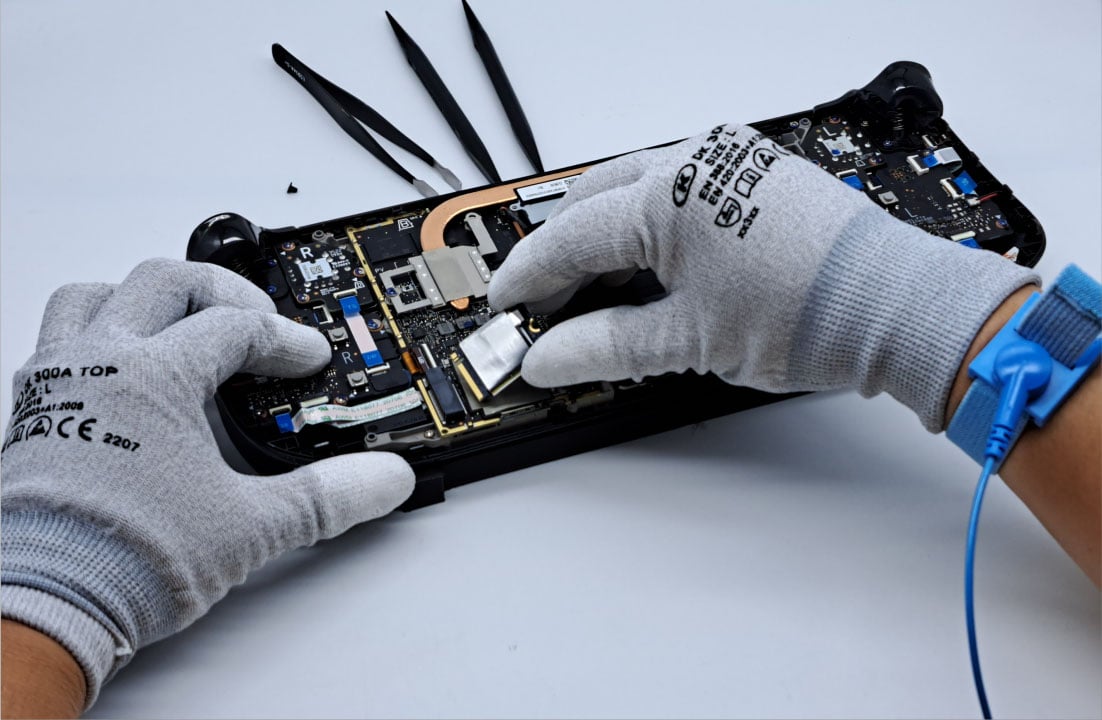
For example, the Steam Deck LCD uses a 7nm APU, while the Steam Deck OLED uses a 6nm design. There aren’t any major differences in design between the two chips, save for the latter’s greater efficiency on account of the more-advanced node. Ending the 7nm orders frees up cash for Valve, either to pocket, or place towards greater bulk orders for the 6nm variant, possibly reducing cost in the process.
Then there are differences in wireless standards with Steam Deck OLED rocking tri-band WiFi in place of the LCD’s dual-band. SSD capacity and RAM speed also differ between the two models, and the DRAM shortage likely plays a part in Valve’s decision, however small. Of course, that’s not forgetting the battery size and the display panel itself, which varies in approach and size, necessitating a different bezel.
Of course, Valve also has Steam Machine, Steam Controller, and Steam Frame manufacturing to contend with now. Perhaps the removal of the Steam Deck LCD provides benefits to manpower, particularly in terms of quality assurance and support. On the latter point, the company has confirmed it plans to continue providing customer service to owners of the backlit handheld.
Regardless of the reason, the main takeaway from this discontinuation is that the Steam Deck is about to become a more-expensive handheld. That’s a shame in my view, as affordability is a large part of the Steam Deck’s appeal, outside of its operating system. Does Valve have a price cut in the works, or a more-affordable OLED SKU? I hope so, but only time will tell.
For more hardware news, particularly with CES 2026 round the corner, make sure you’re following the Club386 Google News feed.