
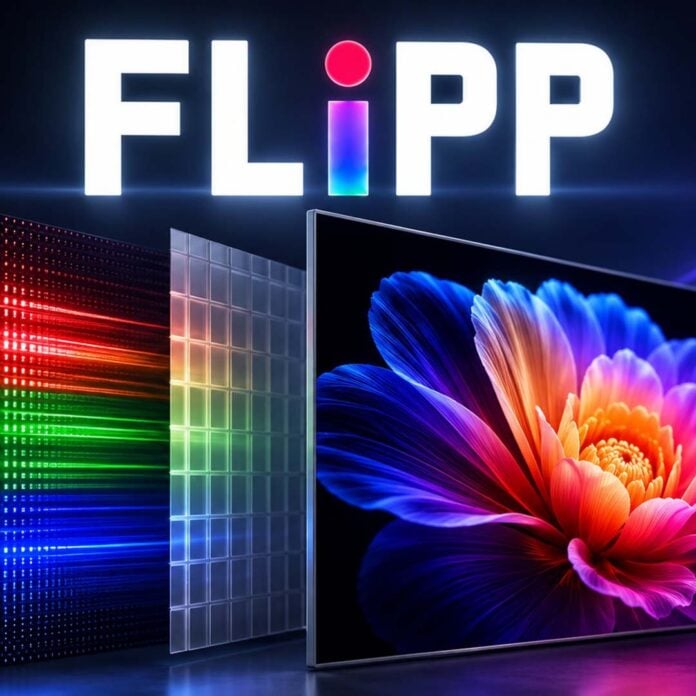
Future WOLED monitors could be in for a serious brightness boost thanks to LG Display’s new manufacturing process, which the company describes as being nothing short of a “dream technology.” Better still, this new approach comes with benefits to panel efficiency and lifespan too.
LG Display, not to be confused with LG Electronics, unveiled its FMM-Less innovative Pixel Patterning (FLiPP) method during a showcase at International Meeting on Information Display (IMID) 2026. In short, this approach increases the aperture ratio – the space occupied by RGB subpixels on a panel- by ~55%, providing benefits to screen brightness, efficiency, and more
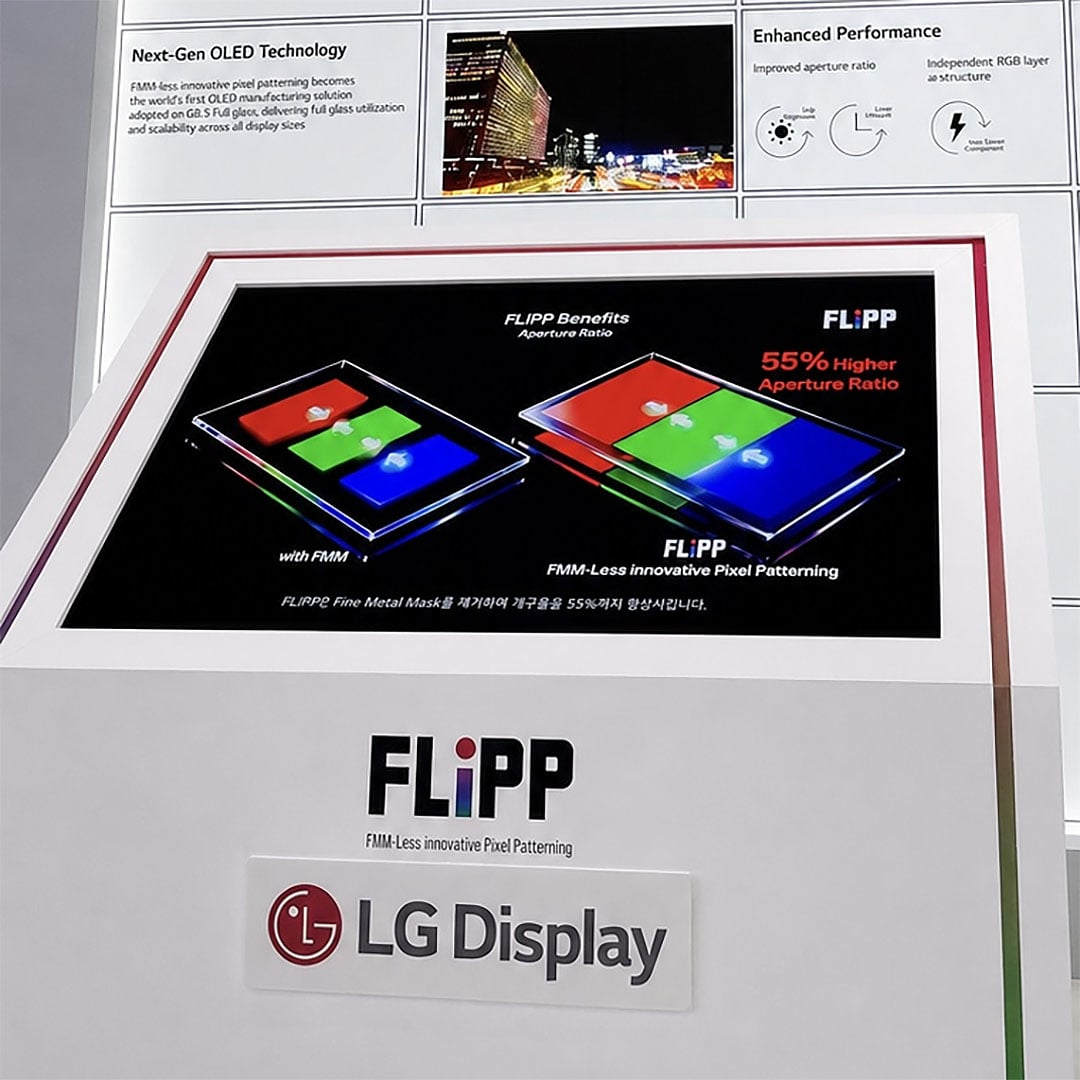
Unless you’re intimately familiar with OLED panel production, you may rightly be asking: what does FMM mean? This refers to fine metal mask, which has been a key part of the manufacturing process for this display type for over a decade. These ultra-thin plates serve as stencils, guiding the placement of RGB subpixels through vapour deposition.
While FFMs are tried and tested, they’re far from perfect. As LG Display explains, every new panel size or resolution demands an entirely new mask, increasing production costs. Then there are problems stemming from sagging, caused by the weight of metal, leading to potential misalignment and colour-mixing defects.
LG Display is understandably keeping much of FLiPP’s inner workings a trade secret, but did provide some detail into how the approach differs. Rather than relying on stencilled evaporation, this method precisely coats RGB pixels in a given order and position, using photolithography to “erase unnecessary areas during OLED pixel patterning.”
In addition to offering tantalising boosts to brightness and efficiency, FliPP could also lead to a wider variety of panel resolutions and sizes with lower overhead costs. With no mask constraints or costs to consider, this process could just as easily apply to a 1in display as a 100in panel. We should see the fruits of this freedom materialise in the PC space first, with LG Display committing to using IT applications “such as tablets and monitors” as the test bed for this tech.
Taking LG’s claims of a 60% brightness boost at face value and applying them to its latest Tandem WOLEDs, as found in the AOC Agon Pro AGP277QKDC, we could see SDR light output reach a peak of ~650nits. This would effectively bridge the gap between OLEDs and LCDs, save those with a Mini LED backlight, further incentivising the adoption of OLED monitors.
It’s unclear how quickly we can expect to see FLiPP panels hit the market, but this is one innovation I certainly can’t wait to see for myself. In the meantime, there are plenty of OLED monitors worth a look in our guide to the best gaming monitors on the market today.