

DDR4 prices are now ballooning due to current consumer DRAM shortages, and it looks as though they’re going to go up even further. According to analysis by Goldman Sachs, via Ctee, DDR4 spot prices are now as much as 172% higher than contract prices.
In other words, buying DDR4 silicon/chips on the open market is currently much more expensive than buying them with a company’s normal long-term supply contract. This imbalance reflects the ongoing tight supply and growing demand from server manufacturers, as well as regular consumers, many of whom have stuck with DDR4 due to sky-high DDR5 prices.
This drastic increase in DDR4 costs has also trickled down to DIY kits, as price history logs show a 453% jump in just six months. For example, a 32GB kit of Corsair Vengeance LPX DDR4-3200 climbed from just $47.49 in May 2025 to $262.99 in January 2026. In fact, this is the highest ever price for this specific kit. These price increases will vary from kit to kit, and from brand to brand, but the overall trend is unmistakably going up.
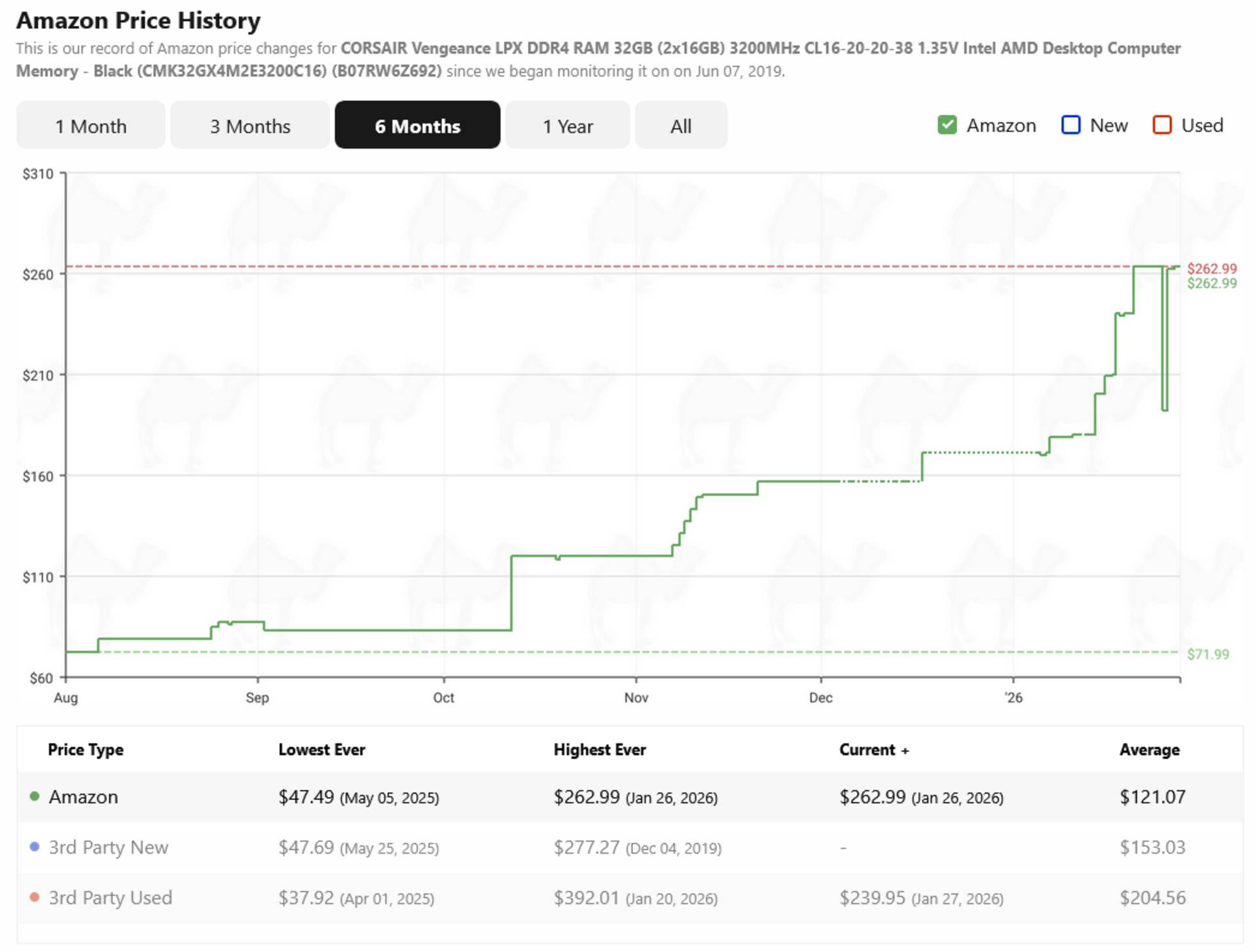
As with DDR5, this price shock is a result of the global memory supply shortage affecting both DRAM and NAND flash. It’s driven by an explosive boom in AI infrastructure, consuming a large share of both high-performance and conventional memory. Unsurprisingly, due to the higher margins offered by AI datacentres, some DRAM manufacturers have reallocated wafer capacity from common DRAM products to the high-bandwidth memory (HBM) used by AI accelerators. Then, as consumer DRAM manufacturing capacity dropped, demand outpaced supply.
Goldman Sachs says that Taiwan’s major server ODM manufacturers, including Inventec, Quanta, Wiwynn, and Wistron, have increased their total revenue by 94% in December of last year. This has helped them maintain a high growth rate of more than 50% for 13 consecutive months, showing that demand momentum is solid.
DDR4 isn’t the only consumer part affected by this shortage; everything remotely related to memory has also been impacted, from GPU prices to hard drive prices. Nothing is safe. The situation is so dire that there’s even a DDR3 revival, as people seek to save some cash when building high-capacity systems.
Unfortunately, this shortage may persist well into 2027 or beyond, according to industry analysts and memory makers, as new fab capacity takes years to come online. However, even if supply ramps up, the strategic prioritisation of AI means consumers are likely to still get the short end of the stick.