
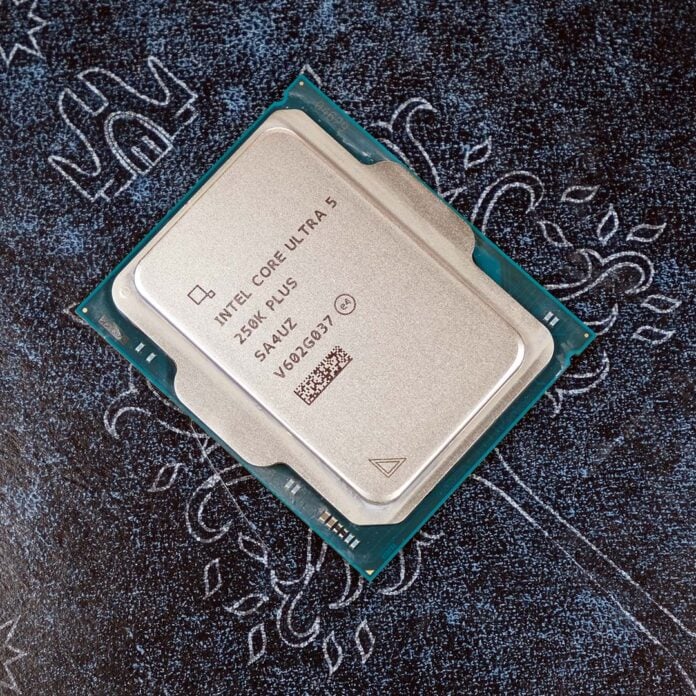
The Core Ultra 5 250K Plus completes Intel’s one-two punch for its Arrow Lake Refresh. This CPU boasts plenty of hardware and software improvements, netting impressive multi-core value that you don’t usually see at this price point.
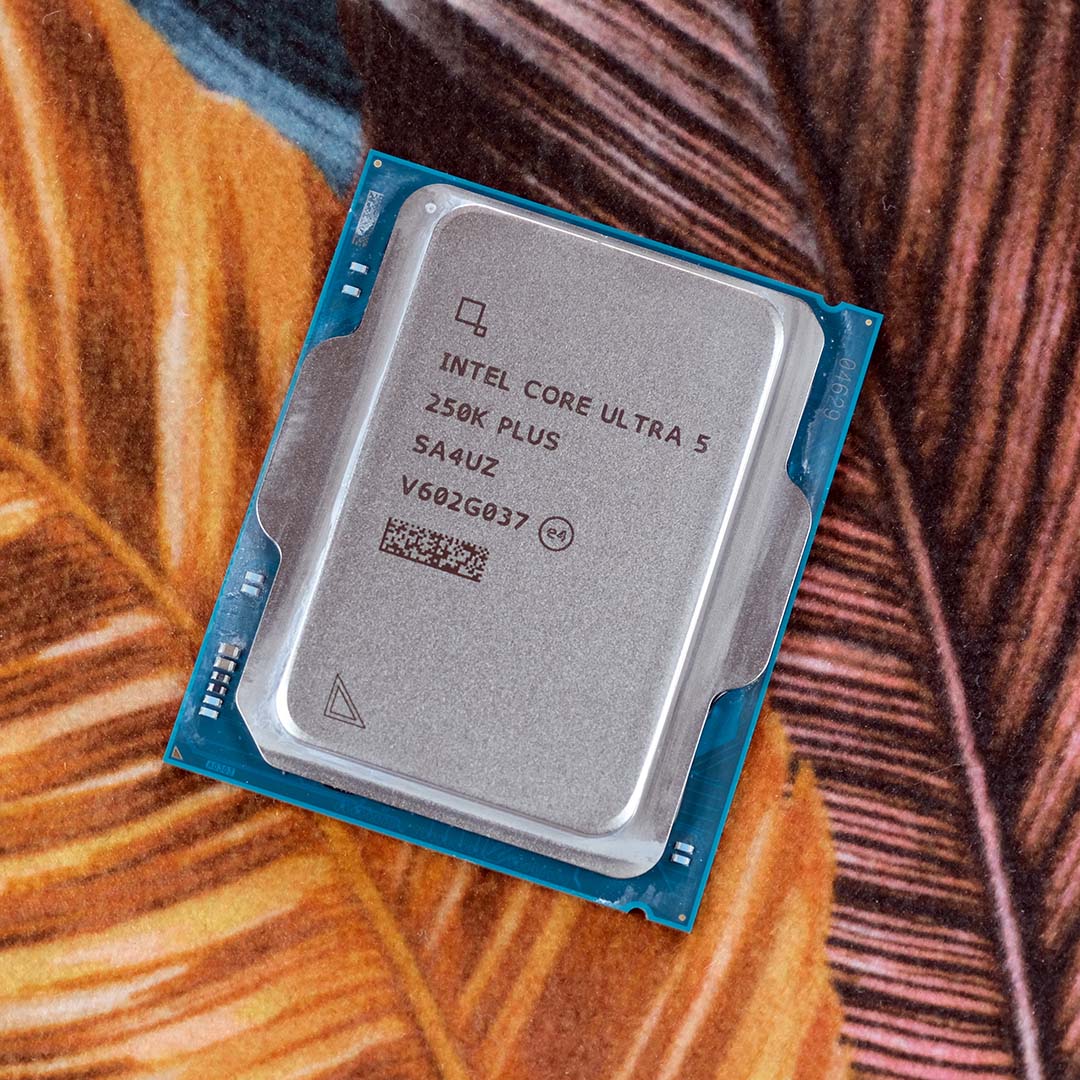

Core Ultra 5 250K Plus
$199 / £209
Pros
- Welcomingly low price
- Unbeaten productivity value
- Great multi-core pace
- Solid power efficiency
- Binary Optimisation compatible
Cons
- Some gaming shortfalls
- Limits Gen 5 SSD speeds
Club386 may earn an affiliate commission when you purchase products through links on our site.
How we test and review products.
Arriving at $199, the 250K Plus serves as a much more affordable replacement for the outgoing Core Ultra 245K. This makes the processor $100 cheaper than the Core Ultra 7 270K Plus, and a match for the Ryzen 5 9600X.
Specifications

There’s no better way to quickly acquaint yourself with the Core Ultra 5 250K Plus, or any processor for that matter, other than the patented Club386 Table of DoomTM. In doing so, it becomes clear that we’re looking at a slightly beefier Core Ultra 245K in terms of hardware.
However, there are other improvements lying under the hood, as well as new software tweaks that Intel’s implementing to further bolster Arrow Lake Refresh performance. I’ll cover these changes in some detail during this review, but definitely check out Ben’s announcement coverage for further reading.
| Model | Cores / Threads | Boost clock (P/E core) | TDP PL2 | Cache (L2+L3) | Memory support | Launch MSRP |
|---|---|---|---|---|---|---|
| Ultra 200 Plus (2026) | ||||||
| Ultra 7 270K Plus | 24 (8+16) / 24 | 5.5 / 4.7GHz | 250W | 76MB | DDR5-7200 | $299 |
| Ultra 5 250K Plus | 18 (6+12) / 18 | 5.3 / 4.7GHz | 159W | 60MB | DDR5-7200 | $199 |
| Ultra 200 (2024) | ||||||
| Ultra 9 285K | 24 (8+16) / 24 | 5.7 / 4.6GHz | 250W | 76MB | DDR5-6400 | $589 |
| Ultra 7 265K | 20 (8+12) / 20 | 5.5 / 4.6GHz | 250W | 66MB | DDR5-6400 | $394 |
| Ultra 5 245K | 14 (6+8) / 14 | 5.2 / 4.6GHz | 159W | 50MB | DDR5-6400 | $309 |
| 14th Gen (2023) | ||||||
| i9 14900K | 24 (8+16) / 32 | 6.0 / 4.4GHz | 253W | 68MB | DDR5-5600 | $589 |
| i7 14700K | 20 (8+12) / 28 | 5.6 / 4.3GHz | 253W | 61MB | DDR5-5600 | $409 |
| i5 14600K | 14 (6+8) / 20 | 5.3 / 4.0GHz | 181W | 44MB | DDR5-5600 | $319 |
| 13th Gen (2022) | ||||||
| i9 13900K | 24 (8+16) / 32 | 5.8 / 4.3GHz | 253W | 68MB | DDR5-5600 | $589 |
| i7 13700K | 16 (8+8) / 24 | 5.4 / 4.2GHz | 253W | 54MB | DDR5-5600 | $409 |
| i5 13600K | 14 (6+8) / 20 | 5.1 / 3.9GHz | 181W | 44MB | DDR5-5600 | $319 |
The Core Ultra 250K Plus arrives with 12 Skymont E-cores, four more than the 245K, and all running 100MHz faster at 4.7GHz. This increase in core count to 18 total also nets additional cache, rising from 50MB to 60MB.
While the processor is still working with 6 Lion Cove P-cores, Intel’s found room for a 100MHz frequency boost here too. Better still, there’s no change from the 245K’s 159W TDP to accommodate the 250K Plus’ higher clocks and core count, making this a frugal choice that won’t require top-end cooling.
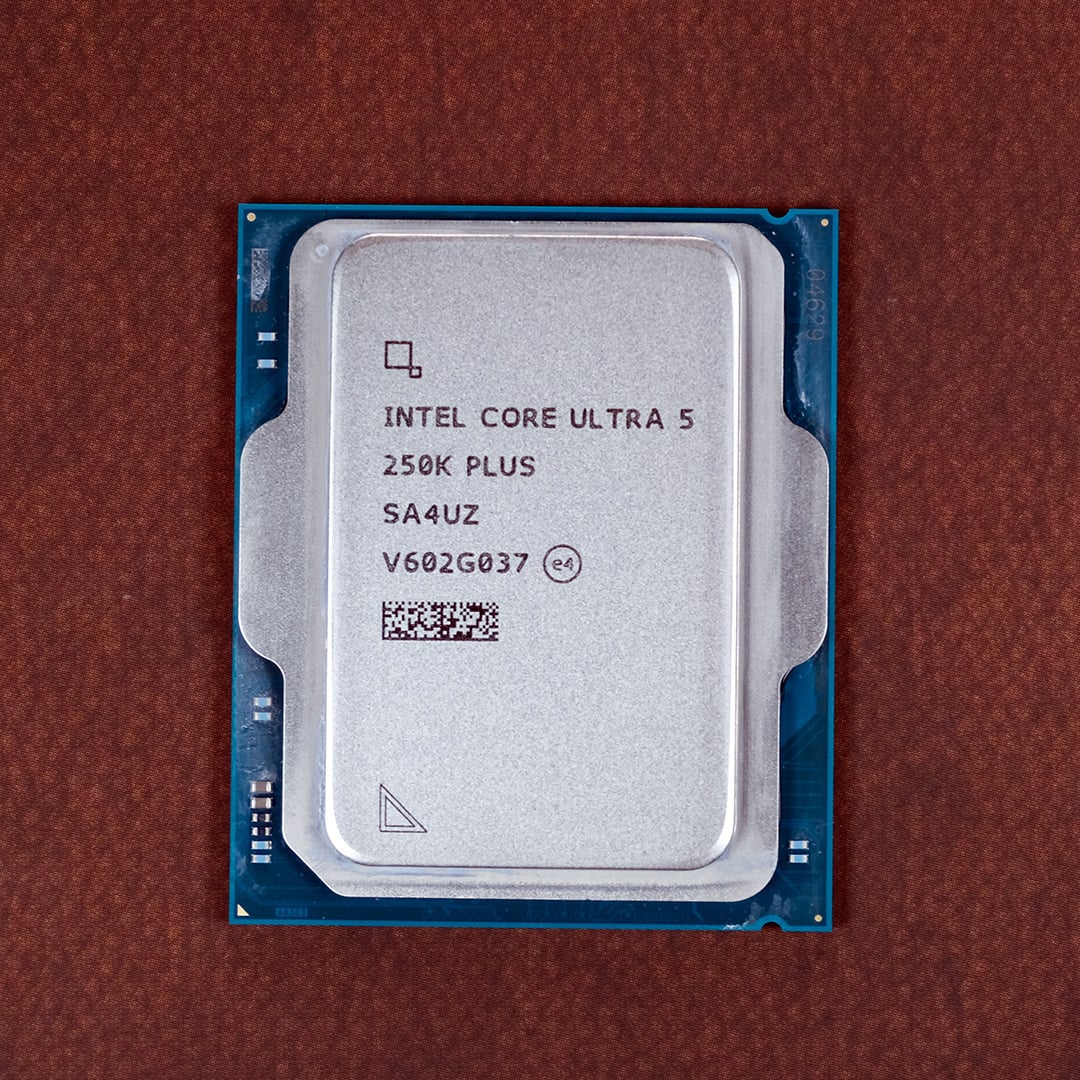
While more cores and higher clocks are welcome, Intel’s also made internal changes to the design of these Core Ultra 200S Plus chips. The most seismic of which is the 900MHz speed increase for the die-to-die interconnect, improving the pace of communication between tiles across the processor to boost performance.
Disappointingly, though, this hasn’t removed the SSD bottleneck inherent to Arrow Lake’s IOE (I/O Extender). While the 250K Plus does support Gen 5 storage, you shouldn’t expect flagship drives to run at maximum speed with this chip. Using my 2TB WD_Black SN8100, capable of reaching 14,900MB/s sequential reads, I was only able to achieve 12,337MB/s. That’s hardly slow, but something worth knowing about.
As much as we’re all feeling the pinch when it comes to memory prices, Intel looks to the future with a 400MHz increase to the 250K Plus’ memory controller. Not only does this provide more headroom for RAM overclocks, but it also nets native support for 7,200MT/s kits, or up to 8,000MT/s via Core 200S Boost on compatible DIMMs.
You can also pair the 250K Plus with four-rank CUDIMM modules, in an industry-first. Doing so means you can run 256GB of memory in a dual-channel configuration, removing the speed and latency shortcomings of a traditional quad-DIMM setup while retaining the capacity benefits. I highly doubt most people will be doing so with the current memory market, but it’s a cool capability that I look forward to seeing on future Intel CPUs too.

Building on its Application Optimization (APO) offerings, Intel is introducing a ‘Binary Optimization Tool’. For the moment, the feature is exclusive to Core Ultra 200S Plus processors, but we should expect to see it carry forward to other chip families in the future.
Similar to APO, Binary Optimisation works on an opt-in basis with Intel creating bespoke profiles for individual applications. The tool increases instructions per cycle (IPC) by optimising code execution combined with better use of core architecture.
There are currently 13 profiles available at launch, that you can access by downloading the tool. Intel explains that building this tech into the CPU or chipset isn’t possible as it’d fall foul of anti-cheat measures and the like. Still, a performance boost at no cost is certainly worth putting in a few minutes and clicks to acquire.

These Core Ultra 200S Plus processors will play nice with any existing LGA1851 motherboard, without requiring a BIOS update. However, Intel recommends installing the latest firmware for optimal performance. Alternatively, there are several new boards launching in tandem with the 250K Plus that serve as a turnkey solution.
Since arriving in 2024, Intel’s LGA1851 platform has become far more affordable. Z890 motherboards start from ~£200, remaining competitive with AMD’s X870E offerings, and you can save some cash by going with a B860 or H810 chipset if overclocking isn’t a priority.
Taking all this into account, the 250K Plus makes for quite the attractive proposition at $199. While the Ryzen 5 9600X, the chip’s most direct competitor, is slightly cheaper at the time of writing, costing $185, I foresee price wars emerging in the coming weeks if not days.
Test Methodology
To assess the Core Ultra 5 250K Plus’ capabilities relative to the Core Ultra 7 270K Plus and other CPUs, I’ve run the chip through our refreshed test suite. In addition to new productivity benchmarks, I’ve benchmarked games at 1080p using ‘High’ presets without upscaling where possible.
To minimise potential processor bottlenecks, I’m cranking up graphics horsepower as much as I can with an Nvidia GeForce RTX 5090 Founders Edition. While I don’t foresee prospective buyers of the 250K Plus putting together such a pairing, doing so for our test purposes will show us just how much juice is in Intel’s affordable contender.
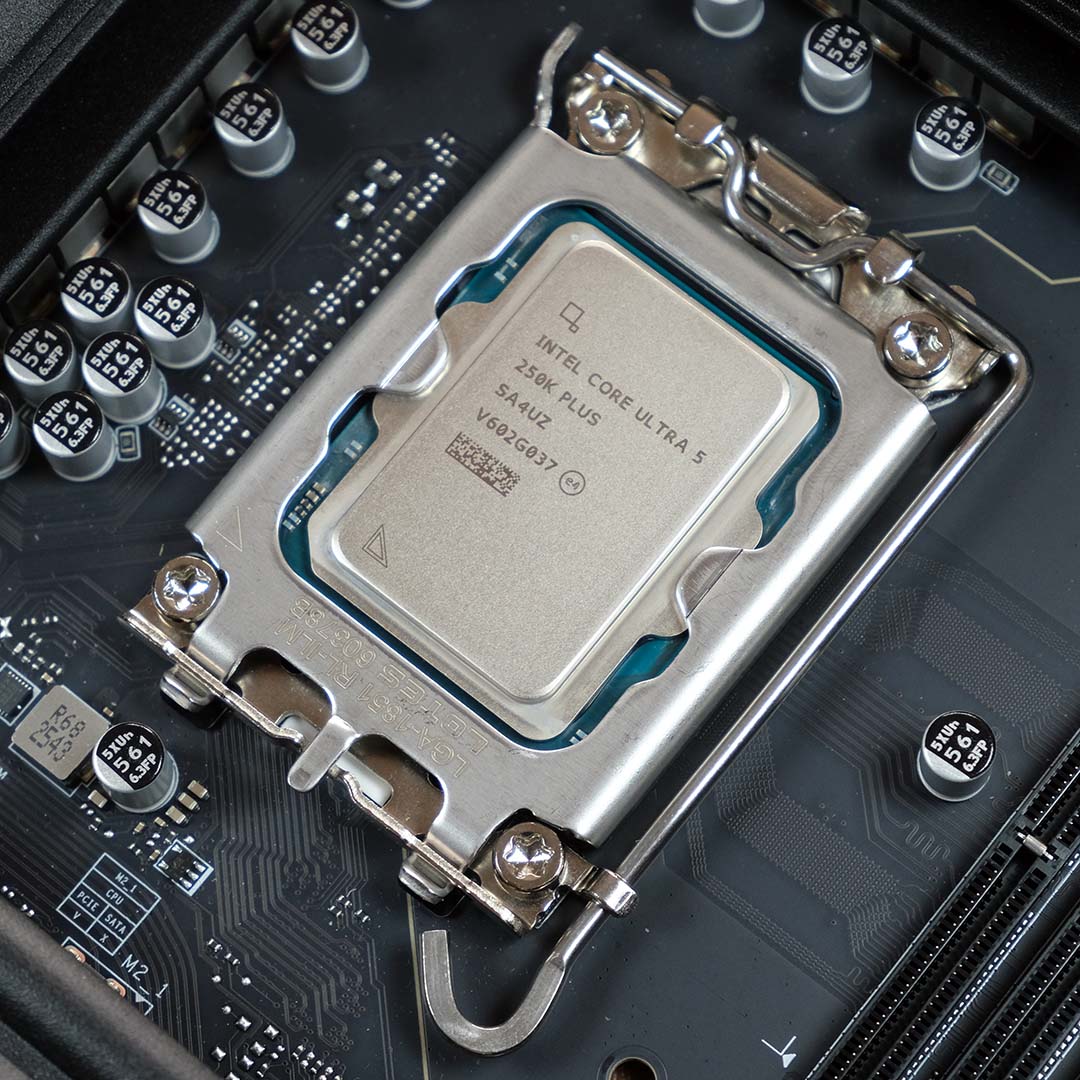
Core Ultra 5 250K Plus test PC
Club386 carefully chooses each component in a test bench to best suit the review at hand. When you view our benchmarks, you’re not just getting an opinion, but the results of rigorous testing carried out using hardware we trust.
Shop Club386 test platform components:
CPU: Intel Core Ultra 5 250K Plus
Cooler: Arctic Liquid Freezer III Pro 420 A-RGB
Motherboard: MSI MAG Z890 Tomahawk WiFi II
GPU: Nvidia GeForce RTX 5090 Founders Edition
Memory: 32GB DDR5-7200 G.Skill Trident Z5 RGB
Storage: 2TB WD_Black SN8100 NVMe SSD
PSU: 1,200W be quiet! Dark Power 14
Chassis: be quiet! Light Base 900 FX
In terms of test components, an MSI MAG Z890 Tomahawk WiFi II serves as the bedrock of my test setup, alongside 32GB of DDR5-7200 CL34 G.Skill Trident Z5 RGB RAM. Meanwhile, AMD CPUs slide into an MSI MEG X870E Ace Max and enjoy 32GB of DDR5-6000 CL32 G.Skill Trident Z5 Neo RGB. The remainder of kit, including chassis, cooler, GPU, SSD, and PSU, are the same across both platforms.
Lastly, I’m running Intel Application Optimisation (APO) profiles by default if available. I’ll also explore the benefits of Binary Optimisation as and when it becomes applicable, with analysis of any difference in CPU performance.
App Performance
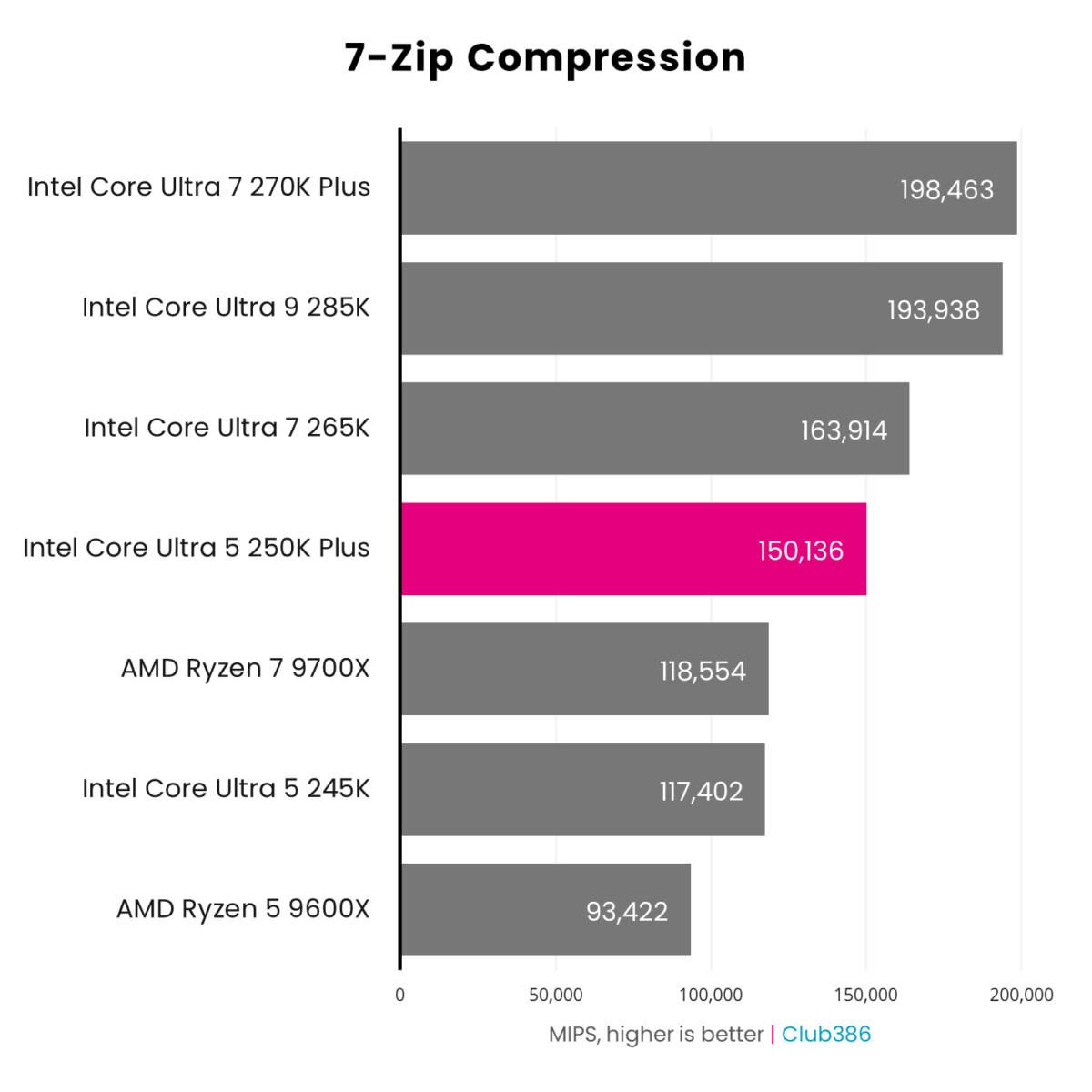
Running 7-Zip Compression workloads sees the Core Ultra 5 250K Plus open with quite the flourish, delivering just over 150M inputs per second. That’s an impressive 28% faster than the chip’s predecessor, the Core Ultra 5 245K. Comparisons to the Core Ultra 7 270K Plus are relatively favourably too, clocking in 24% behind the fellow Arrow Lake Refresh chip despite costing 33% less.
However, it’s in comparison to the Ryzen 9000 series that the 250K Plus looks all the more enticing. Not only does Intel’s chip beat the more-expensive Ryzen 7 9700X by 27% in this test, but it absolutely embarrasses the Ryzen 5 9600X with a 61% advantage.
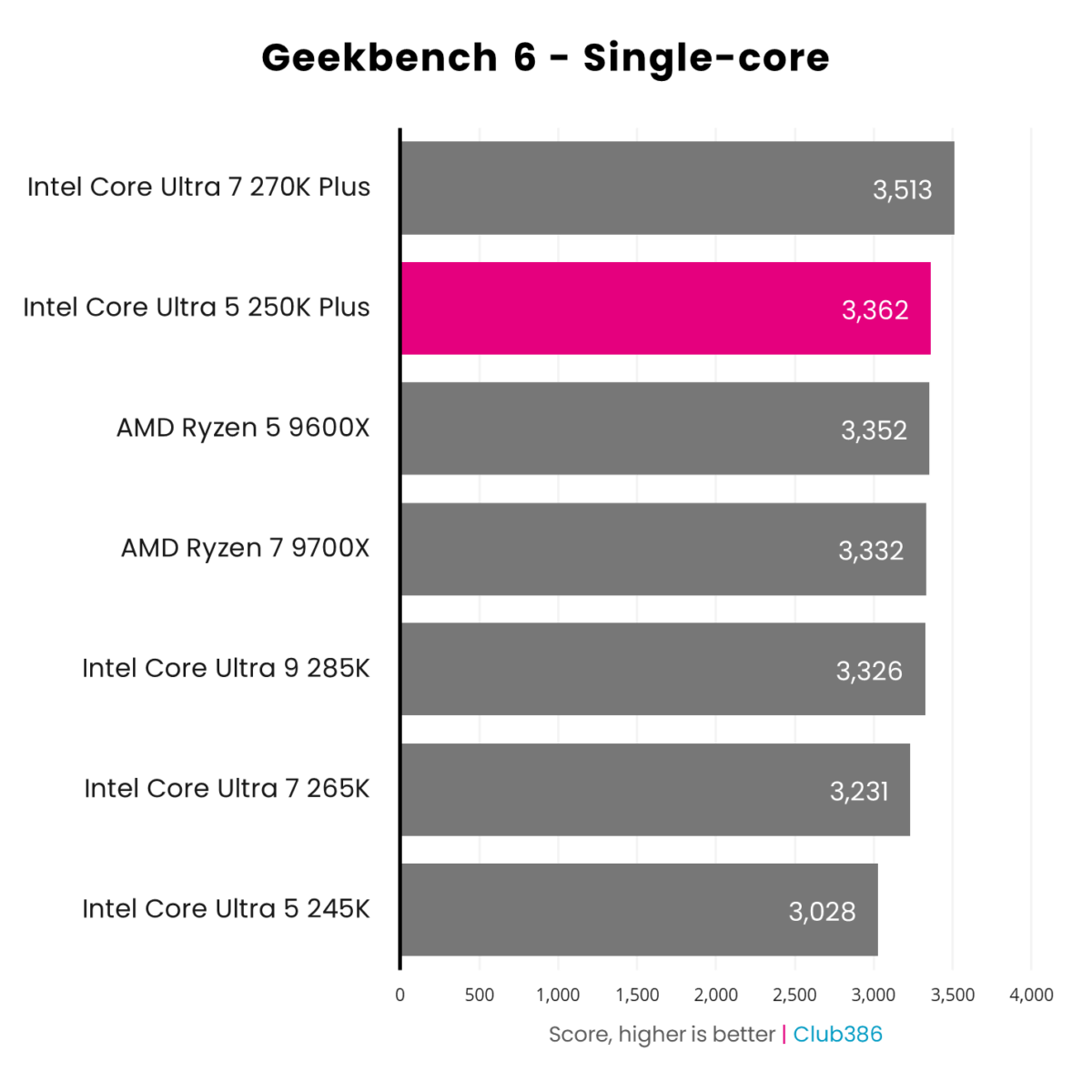
Despite being one of the cheapest chips on the chart, the Core Ultra 5 250K Plus comes out second in Geekbench 6’s single-core benchmark. Scoring 3,362pts, the $199 processor is a mere 4% behind its $299 sibling, the Core Ultra 7 270K Plus.
Ryzen 5 9600X isn’t far behind on 3,352pts. A 10-point separation places the processors within margin of error of one another, effectively making this a tie for Intel and AMD. Binary Optimisation is doing a fair amount of heavy lifting here, saving the Core Ultra 5 250K Plus from the jaws of defeat by boosting its baseline score of 3,182pts.
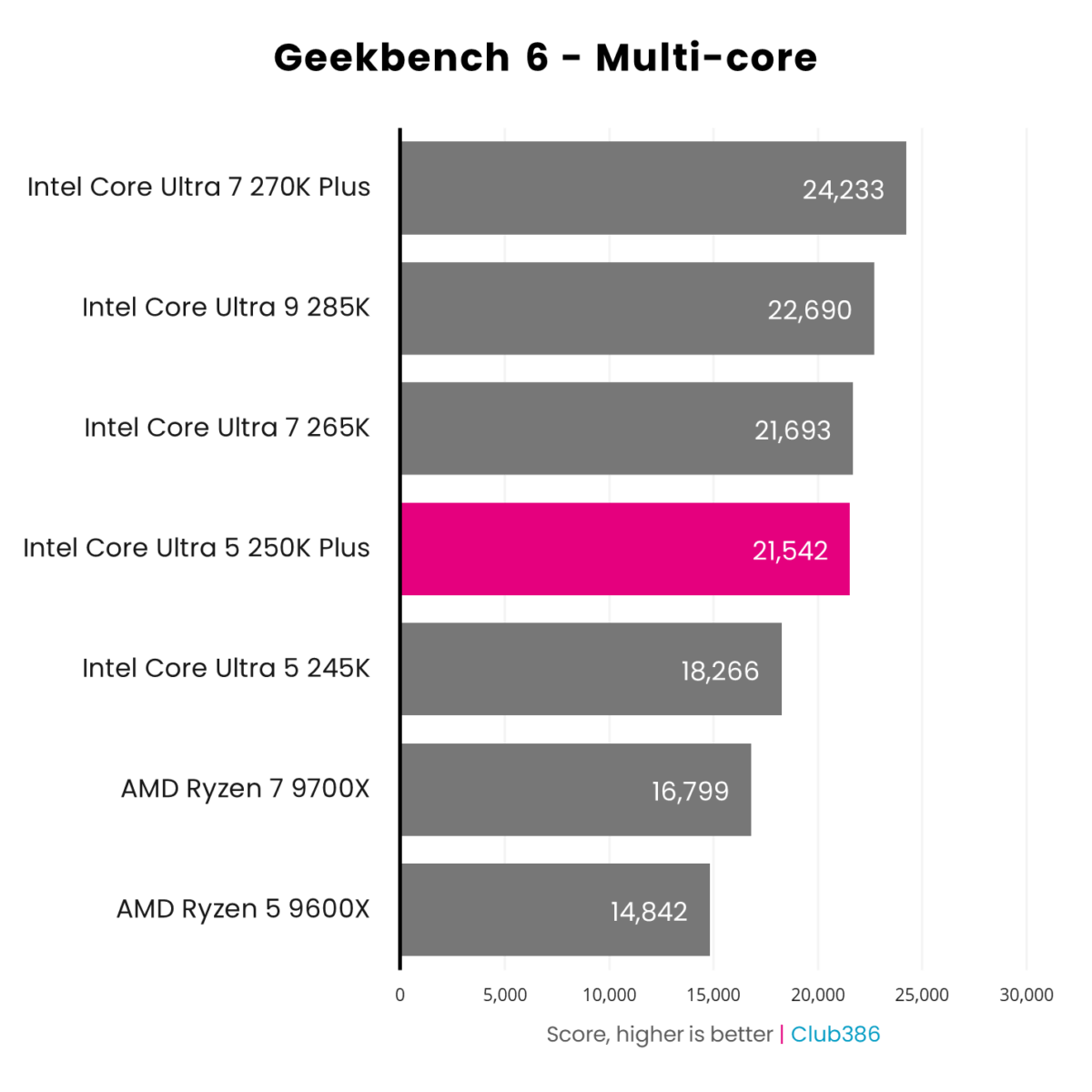
Engaging multiple cores in Geekbench 6, the Core Ultra 5 250K Plus continues to hold its own with a score of 21,542pts, up from 20,692pts sans Binary Optimisation. While this result places the processor smack bang the middle of the chart, it continues to stay on the heels of more-expensive chips. The chip delivers impressive bang for buck, landing a mere 1% slower than the Core Ultra 7 265K, and just 11% behind the Core Ultra 7 270K Plus.
Meanwhile, those four additional E-cores combined with clock speed boosts and other upgrades provide an 18% uplift over the Core Ultra 5 245K. The biggest gains are yet to come, however, with a 28% advantage over the Ryzen 7 9700X and a scorching 45% lead over the Ryzen 5 9600X.
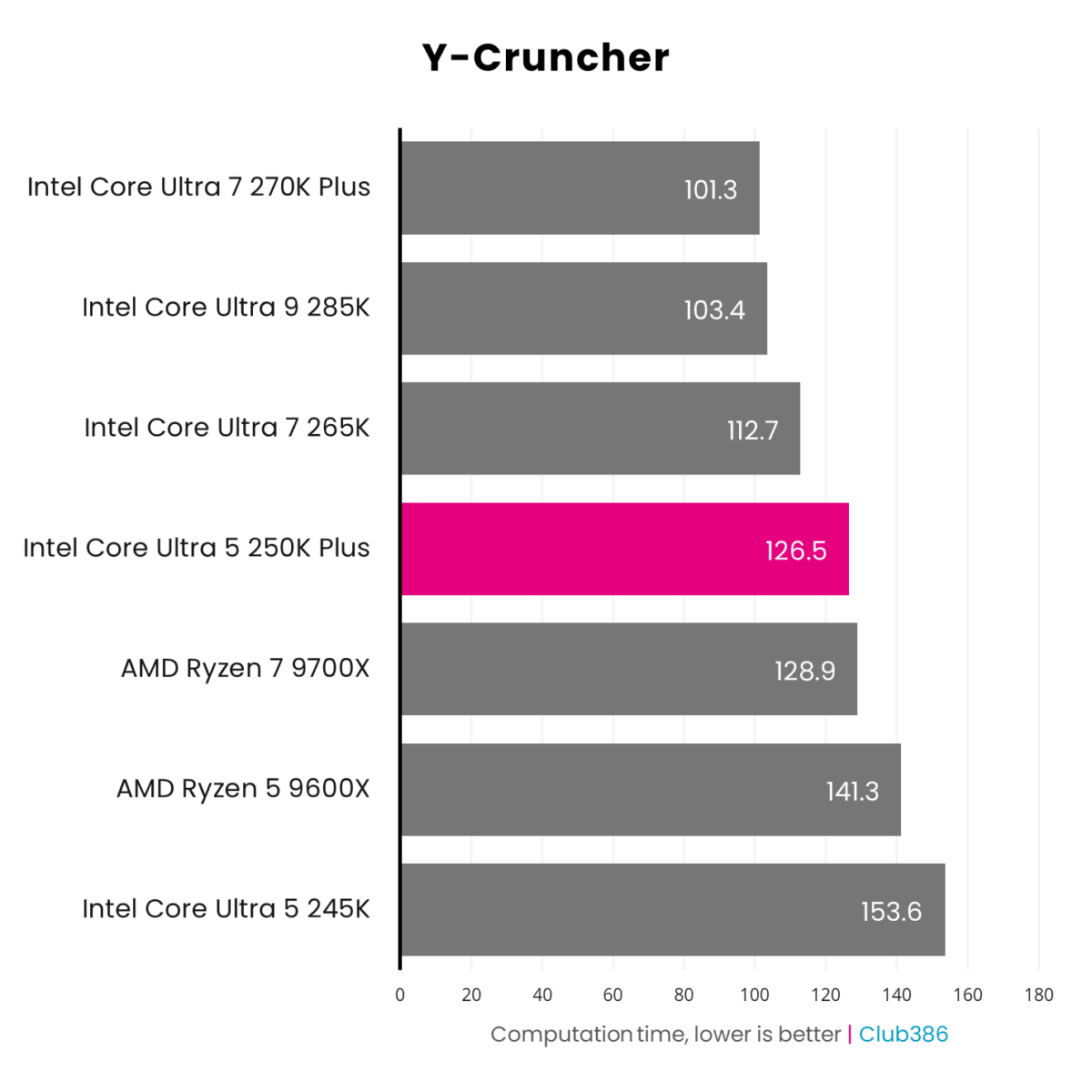
Tasking the Core Ultra 5 250K Plus with calculating Pi up to five billion digits takes 126.5 seconds, making for yet another surprisingly punchy display of computing power. It’s 12% faster than its closest rival, the Ryzen 5 9600X, but even manages to pip past the costlier Ryzen 7 9700X, too.
Keeping comparisons within the family, the 250K Plus is a solid 21% faster than the 245K in this test. You’ll feel the 25% difference in speed relative to the Core Ultra 7 270K Plus across numerous calculations, but that extra time doesn’t sting so much once you remember this chip is 33% cheaper.
Content Creation
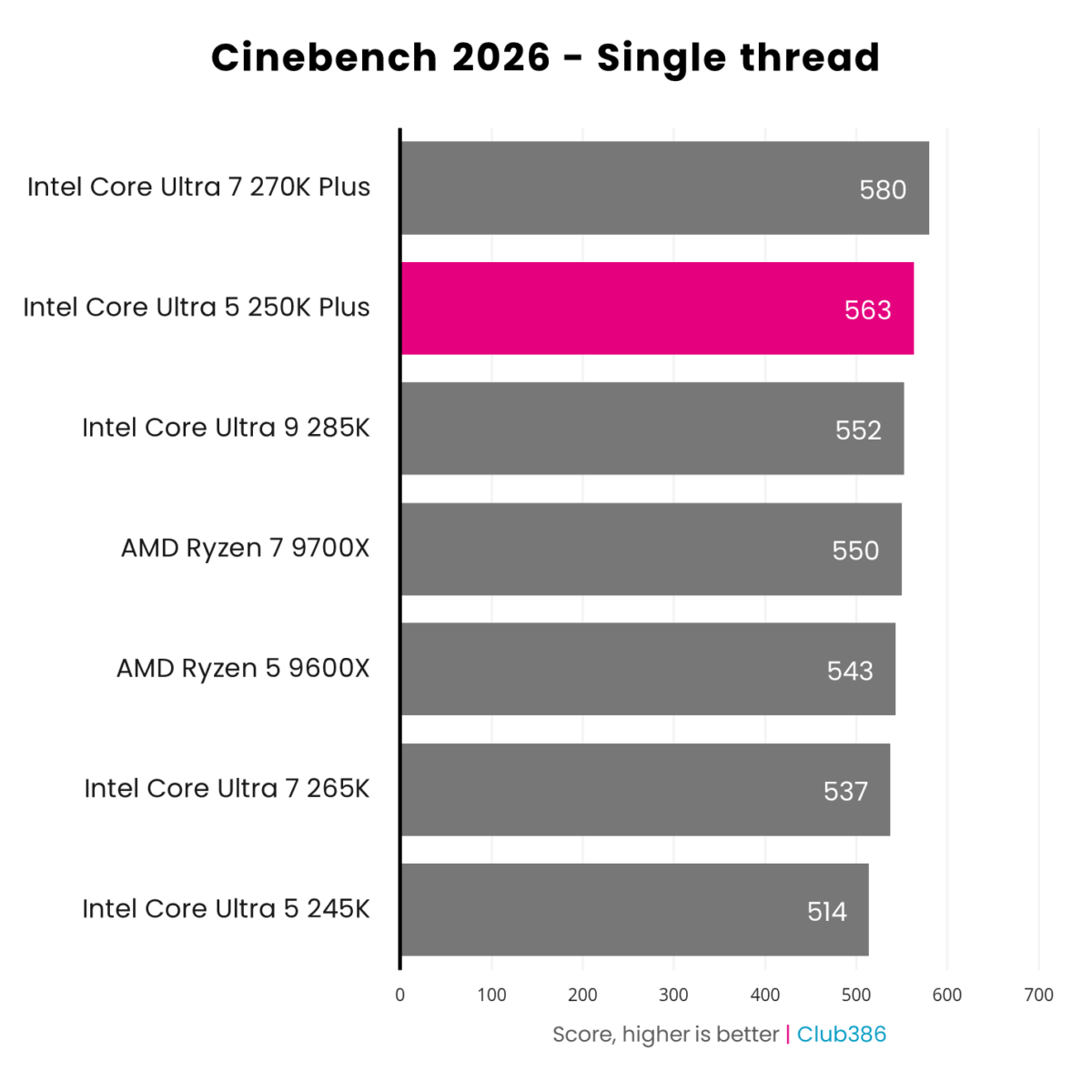
That’s another silver medal for single-core performance to the Core Ultra 5 250K Plus as the CPUs face off in Cinebench 2026. This is a close race where every point matters, but 563pts gives the Intel chip a 2-4% win over its AMD competition.
Yet again, the 250K Plus keeps the Core Ultra 7 270K Plus on its toes, trailing by a piddly 3%.
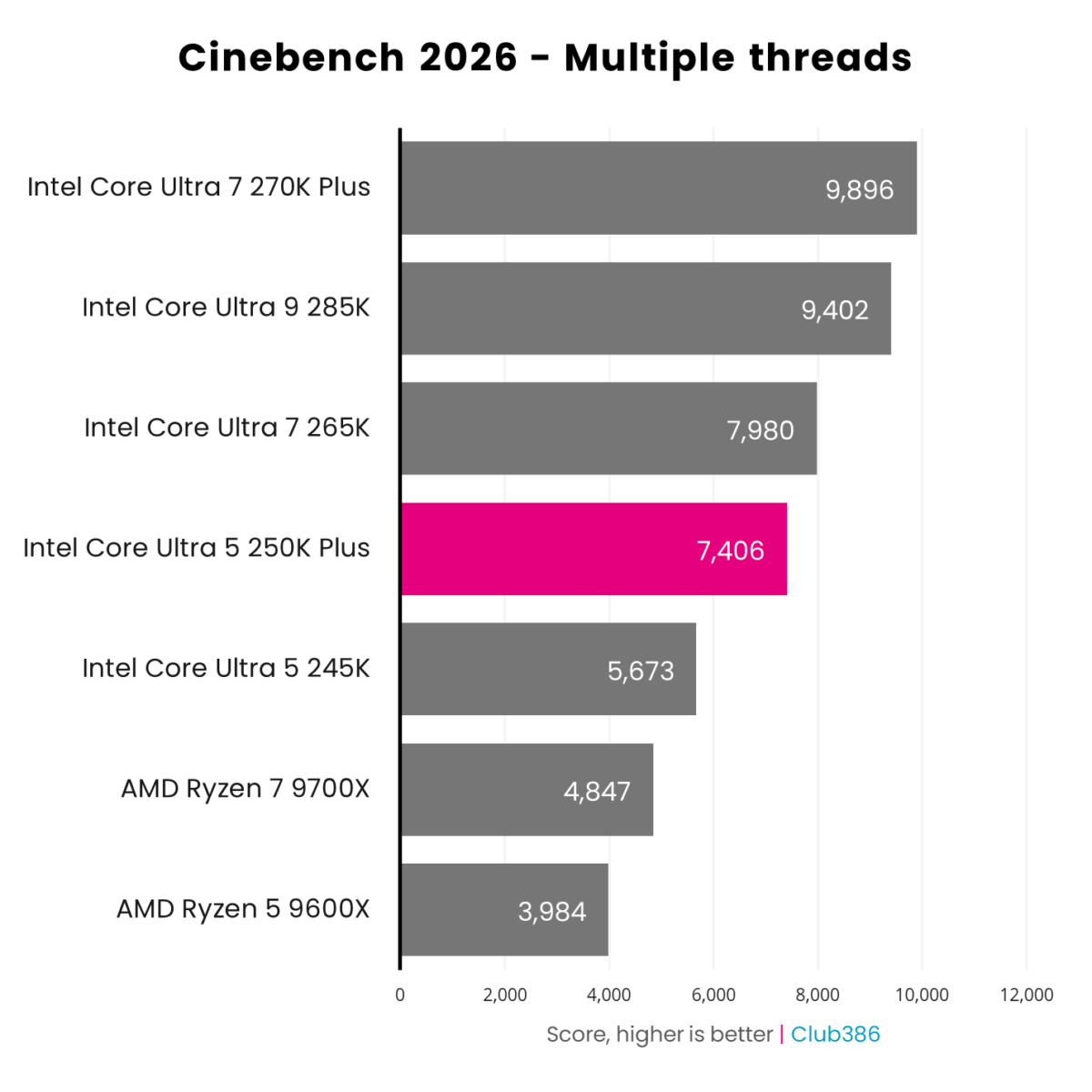
Performance gaps expectedly widen across all processors in Cinebench 2026 once multiple threads enter the frame. Scoring 7,406pts, the Core Ultra 5 250K Plus sits comfortably in the middle of the pack, closely following the Core Ultra 7 265K with a 7% gap.
This sort of workload truly is Intel’s domain, as AMD notably falls behind by comparison. The 250K Plus almost doubles the performance of the Ryzen 5 9600X, and lords a 52% edge over the Ryzen 7 9700X.
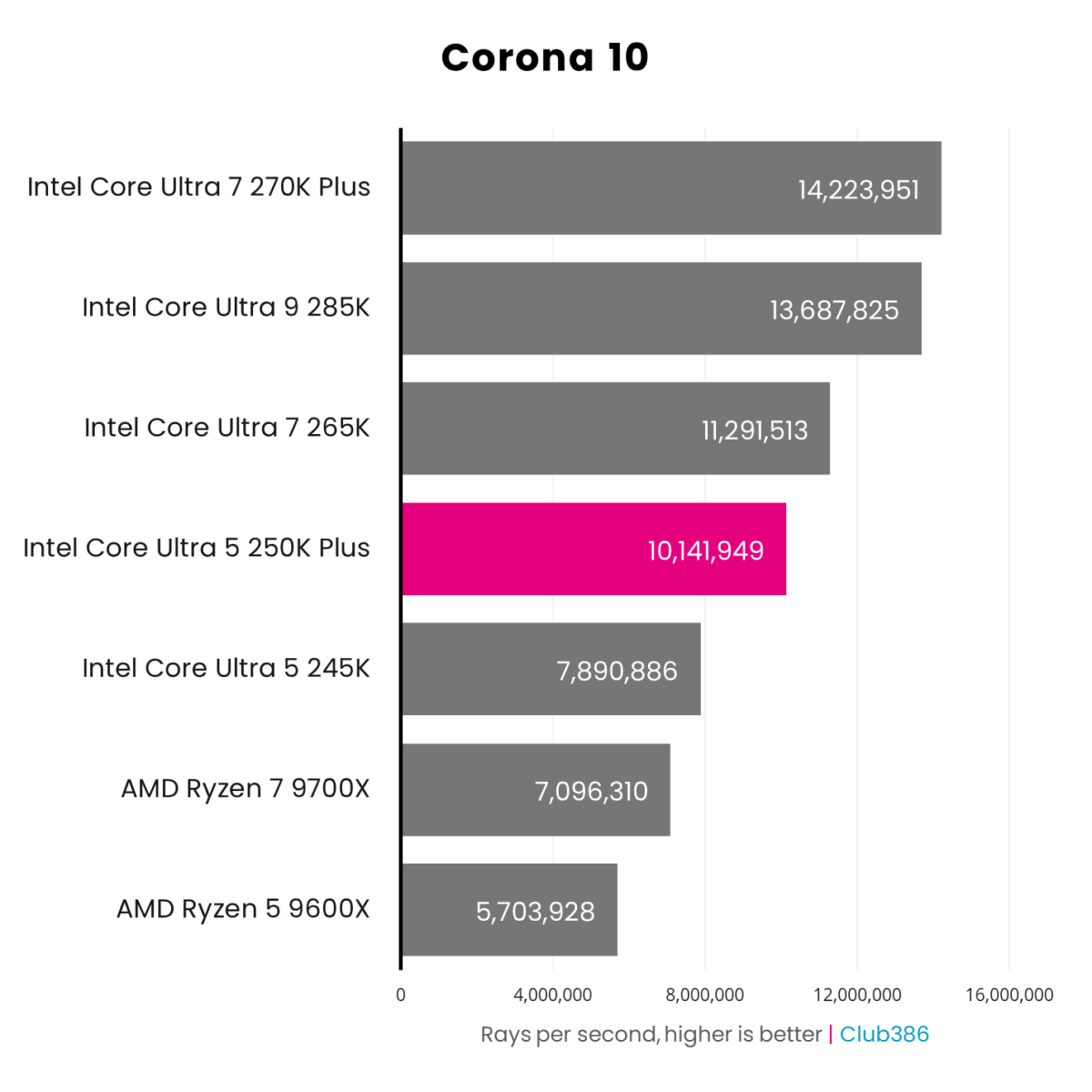
Intel finds another stronghold in Corona 10, with both Arrow Lake and Arrow Lake Refresh CPUs thrashing their Zen 5 opponents. The Core Ultra 250K Plus flexes its rendering prowess over both the Ryzen 7 9700X and 9600, outpacing their rays per second by a whopping 42% and 78%, respectively.
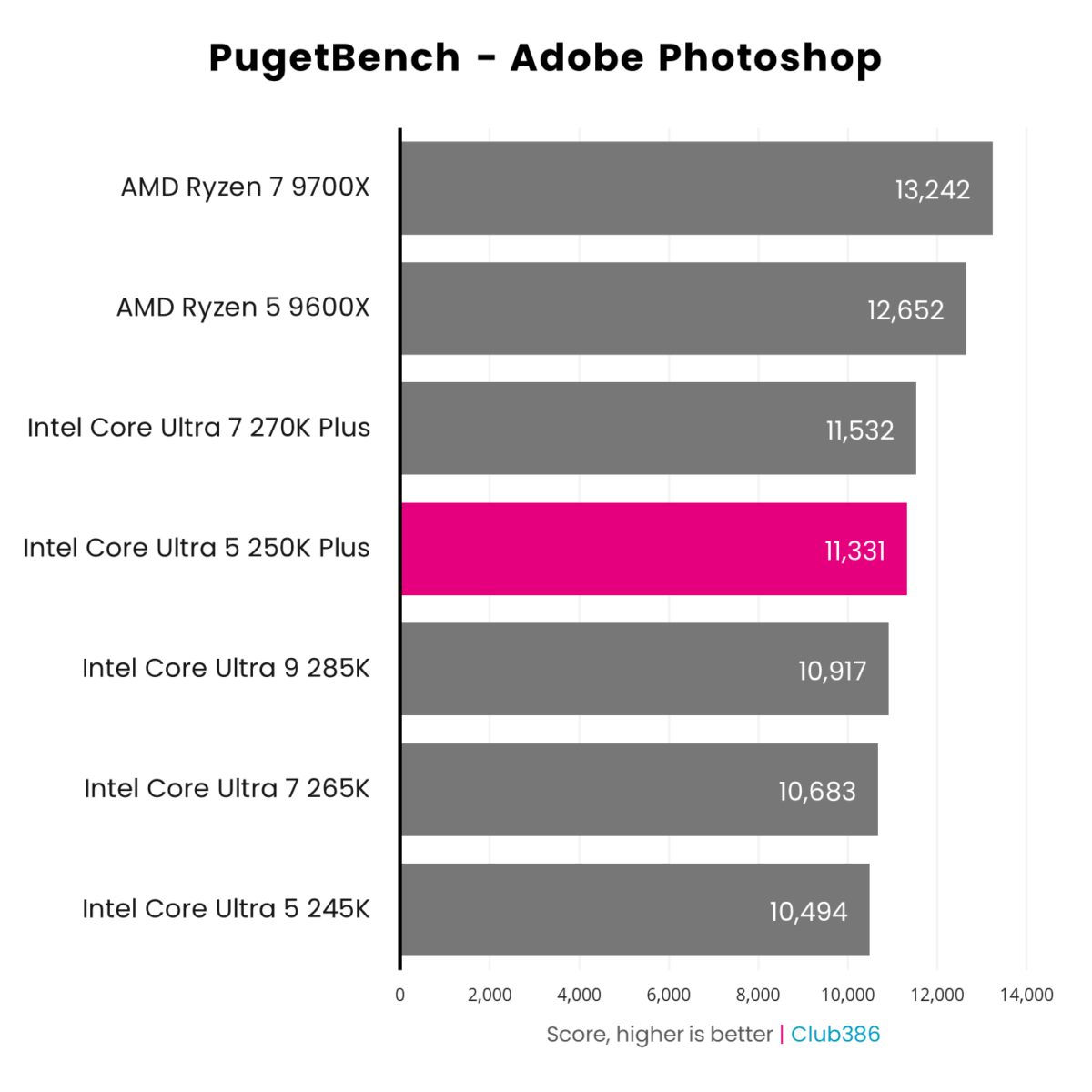
Adobe Photoshop marks a rare stumbling point for Intel, as AMD swipes the two most-prestigious podium positions. In the case of the Core Ultra 5 250K Plus, the CPU falters to the tune of 10% relative to the Ryzen 5 9600X.
Following on from my Core Ultra 7 270K Plus review, I ask again: where’s my Photoshop Binary Optimisation, Intel?
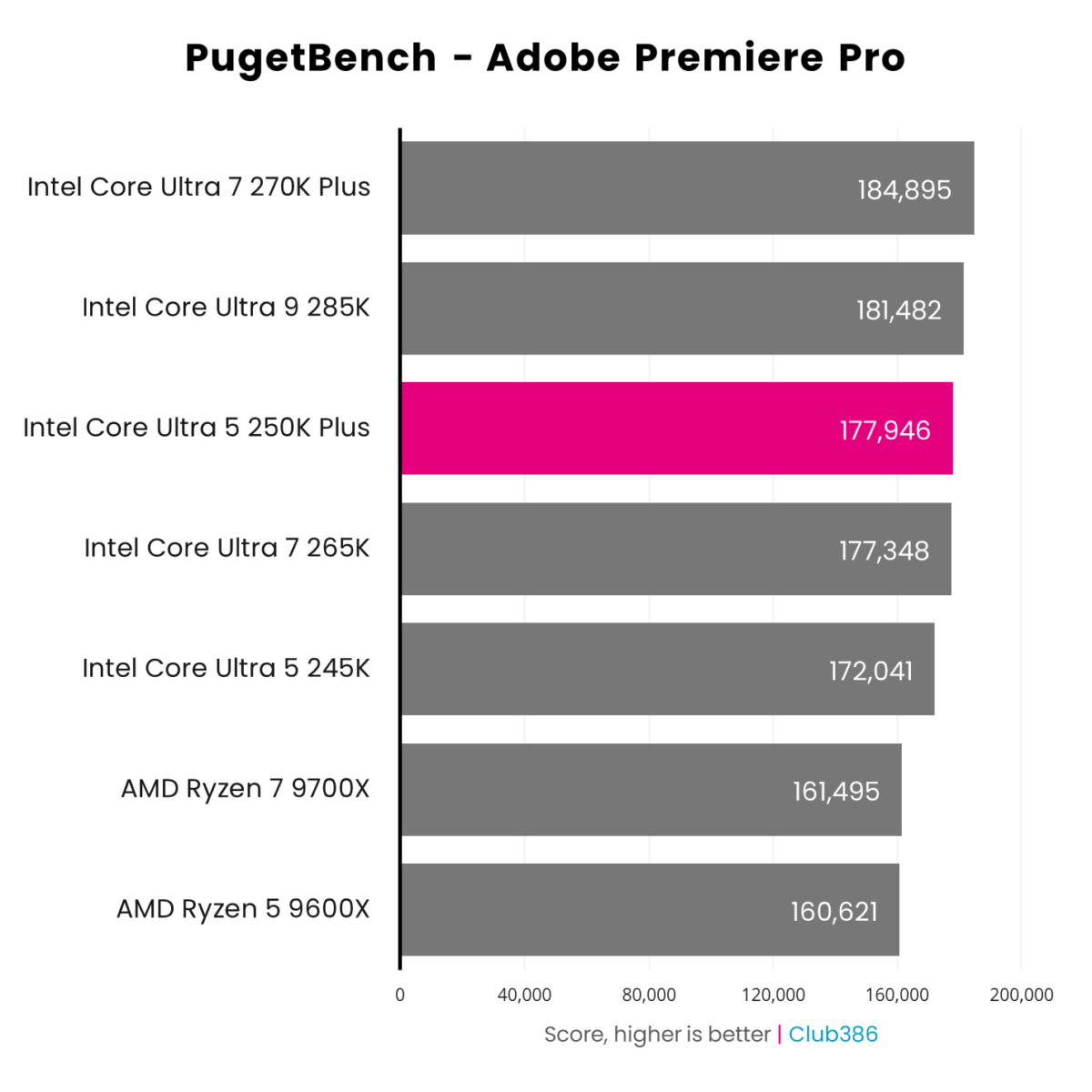
Beating the Core Ultra 7 265K, the Intel’s new $199 CPU is offering formerly $394 performance at essentially half the price, and the chip’s only 2% off the $589 Core Ultra 9 285K.
Wins over AMD for the Core Ultra 5 250K Plus range between 10-11%. While not a seismic difference, it’s difficult to justify choosing anything but Intel’s offering for Premiere Pro given price parity with the Ryzen 5 9600X.
Memory
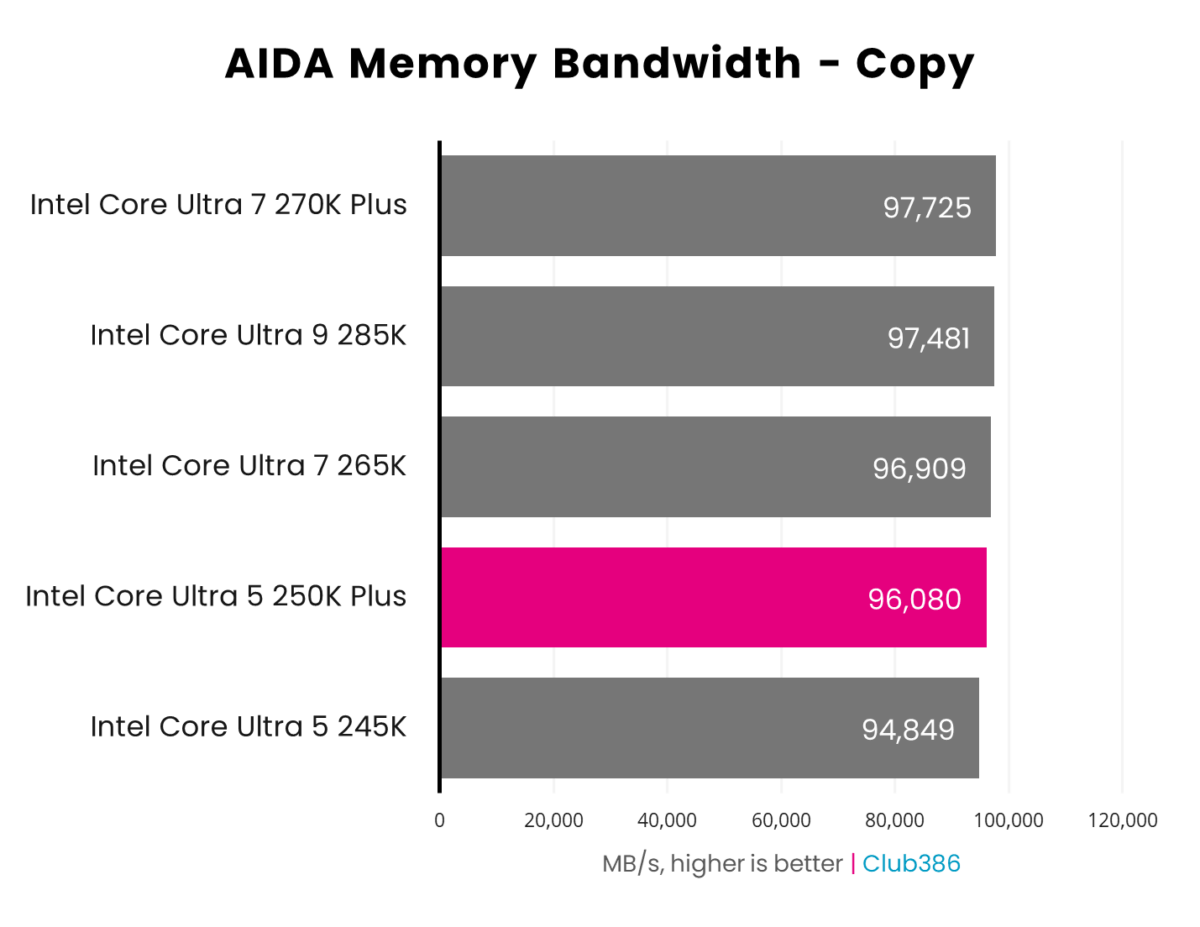
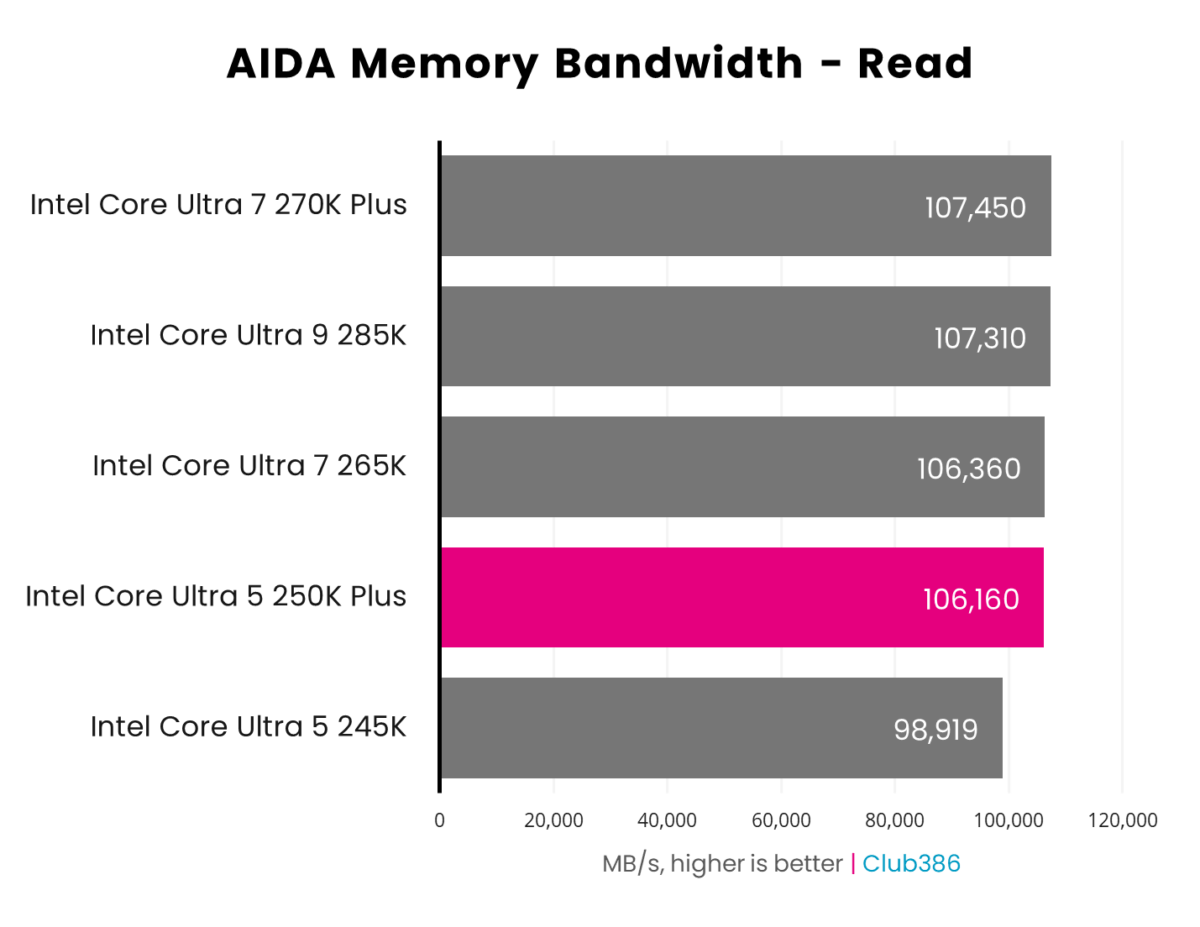
Running a dual-channel kit of DDR5-7200 CL34 memory gives the Core Ultra 5 250K Plus ample room to showcase its memory performance.
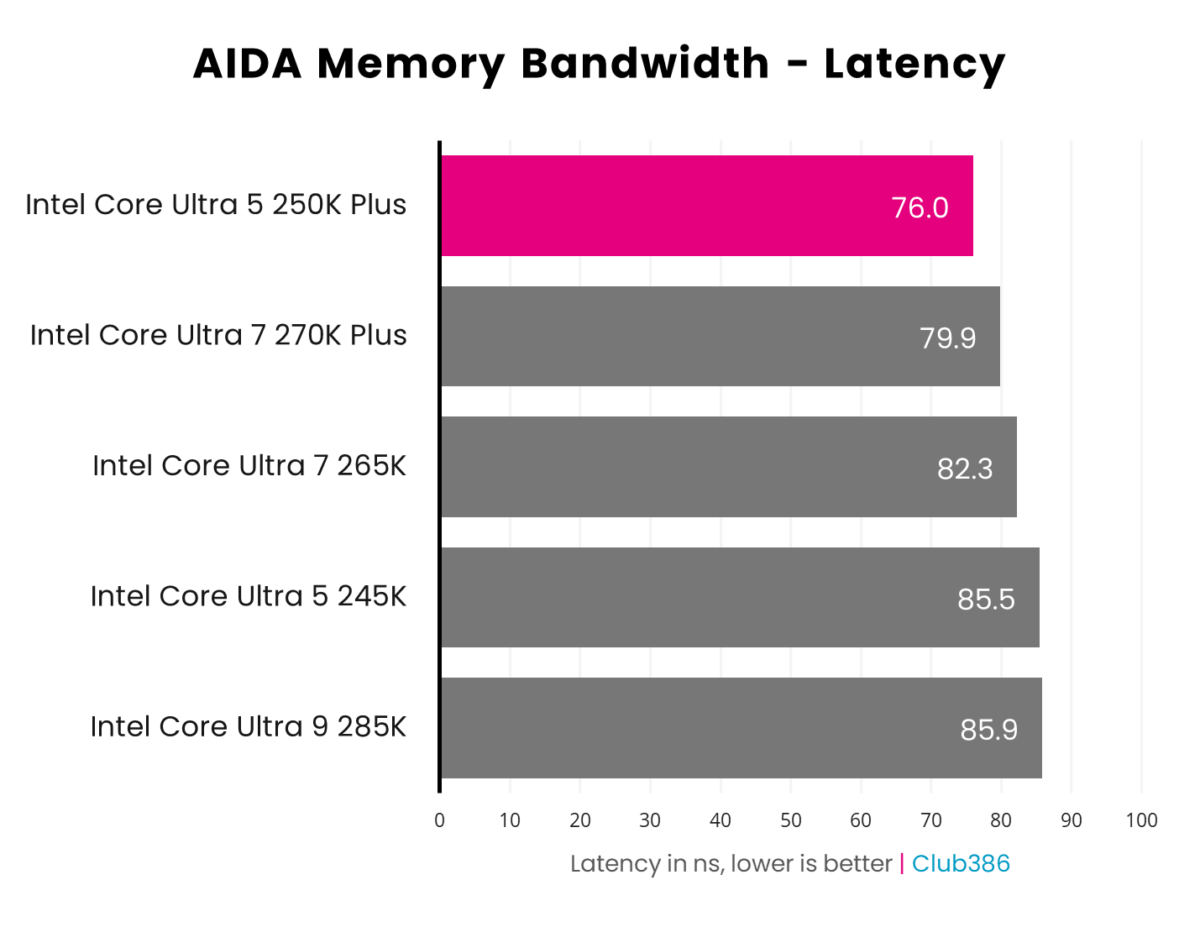
That 400MHz increase to the memory controller and faster die-to-die signalling leads to significantly better latency across both Arrow Lake Refresh processors. The Core Ultra 250K Plus comes out on top in this race at 76ns, shaving 6.3ns off the Core Ultra 7 265K’s results and a sizeable 9.5ns from the Core Ultra 5 245K.
Gaming
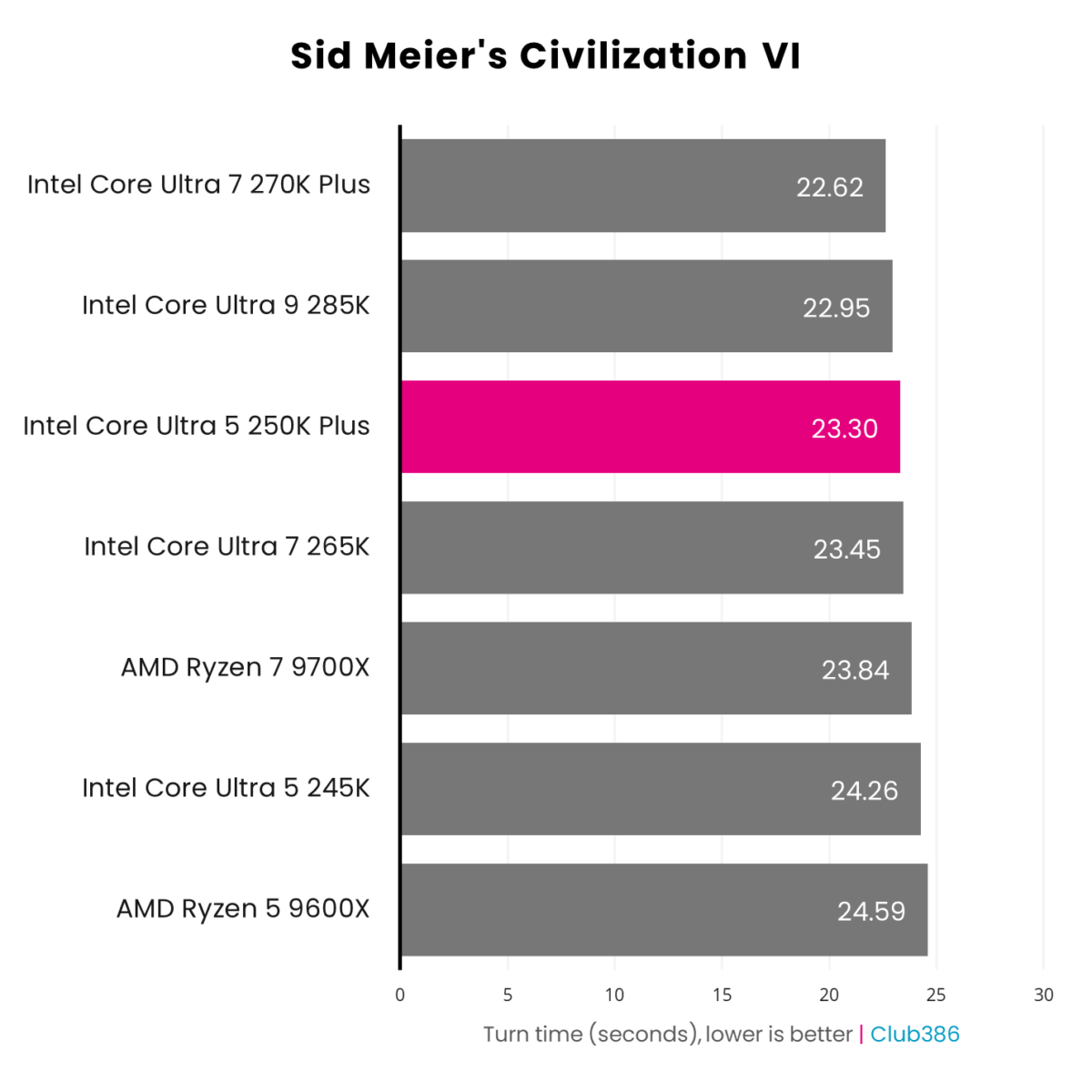
Before diving into frame rates, the processors first face off against one another in the Civilization VI Gathering Storm AI benchmark. We measure victory in this 4X arena in seconds, and the Core Ultra 5 250K Plus is third to finish.
While an average turn time of 23.30s is among the fastest on the chart, it’s only 1.29s faster than the Ryzen 5 9600X. For context, running the 250K Plus would shave two minutes of wait time in a 100-turn game.
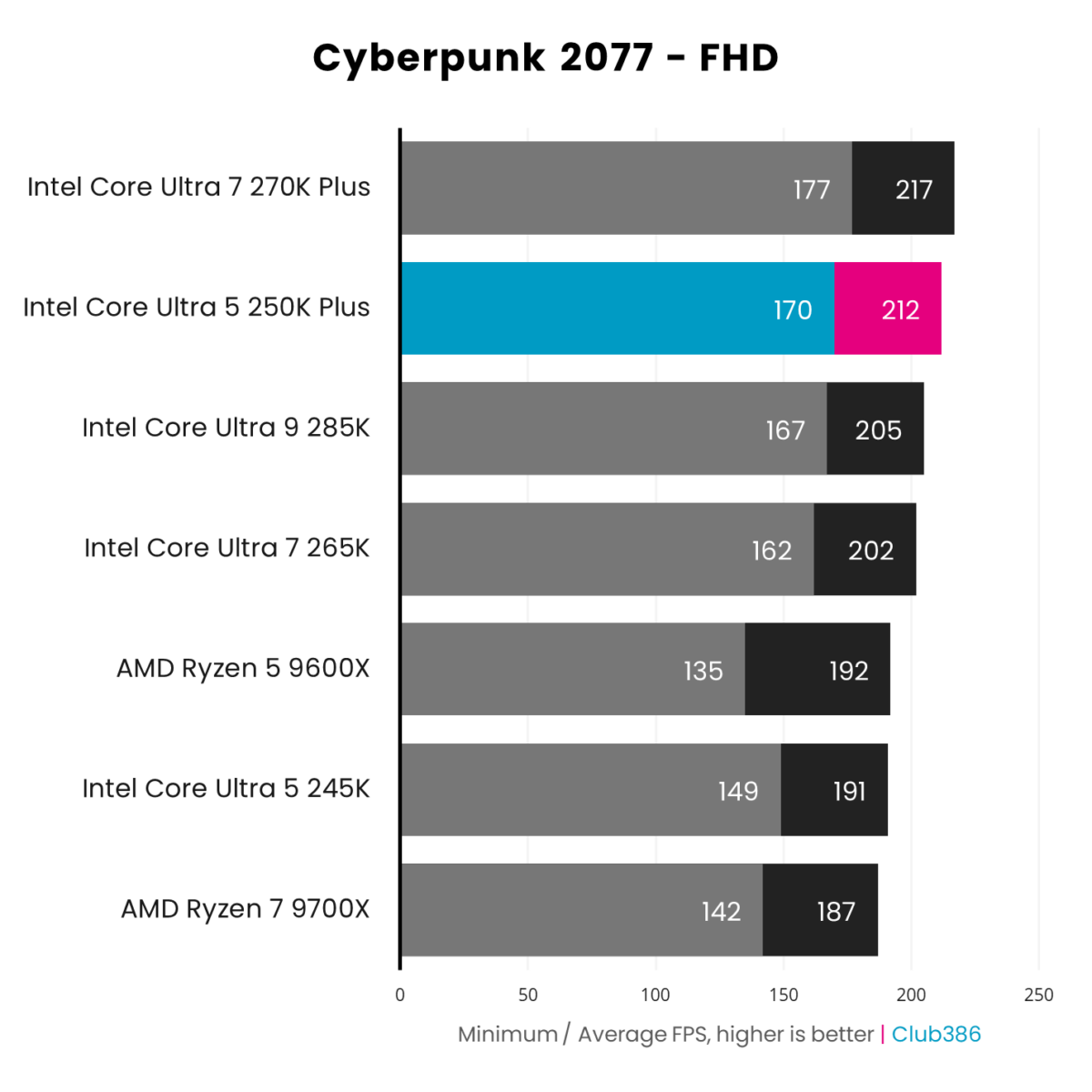
Cyberpunk 2077 is one of two games to benefit from a Binary Optimisation profile, which boosts minimum and average frame rate from 165/207 to 170/212. That’s five additional frames across both performance categories, or a 2-3% improvement. While small, this is within Intel’s expectations.
CD Projekt Red’s RPG proves a strong showing for the 250K Plus’ gaming value, offering the lion’s share of the Core Ultra 7 270K Plus’ frame rate. Moreover, the Intel processor clears both AMD chips to the tune of 10-13%.
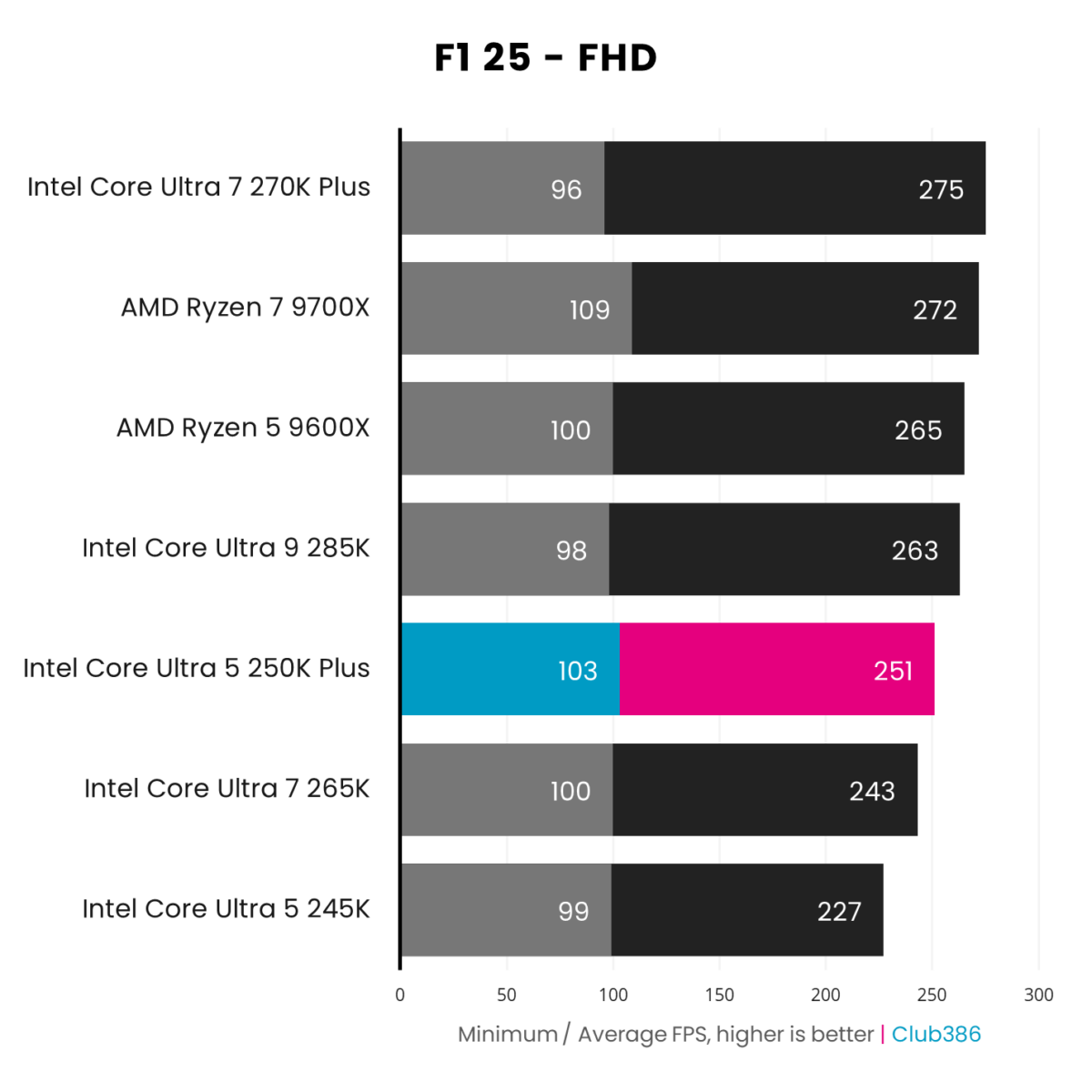
Hitting the tarmac in F1 25, the Core Ultra 5 250K Plus loses some of its sheen. While the CPU is a welcome 10% faster than the Core Ultra 5 245K, overtaking the Core Ultra 7 265K by 3% too, it doesn’t have the speed to match AMD’s Ryzens in this title. Ryzen 5 9600X crosses the finish line with a 265fps average, 5% the better of the 250K Plus’ 251fps.
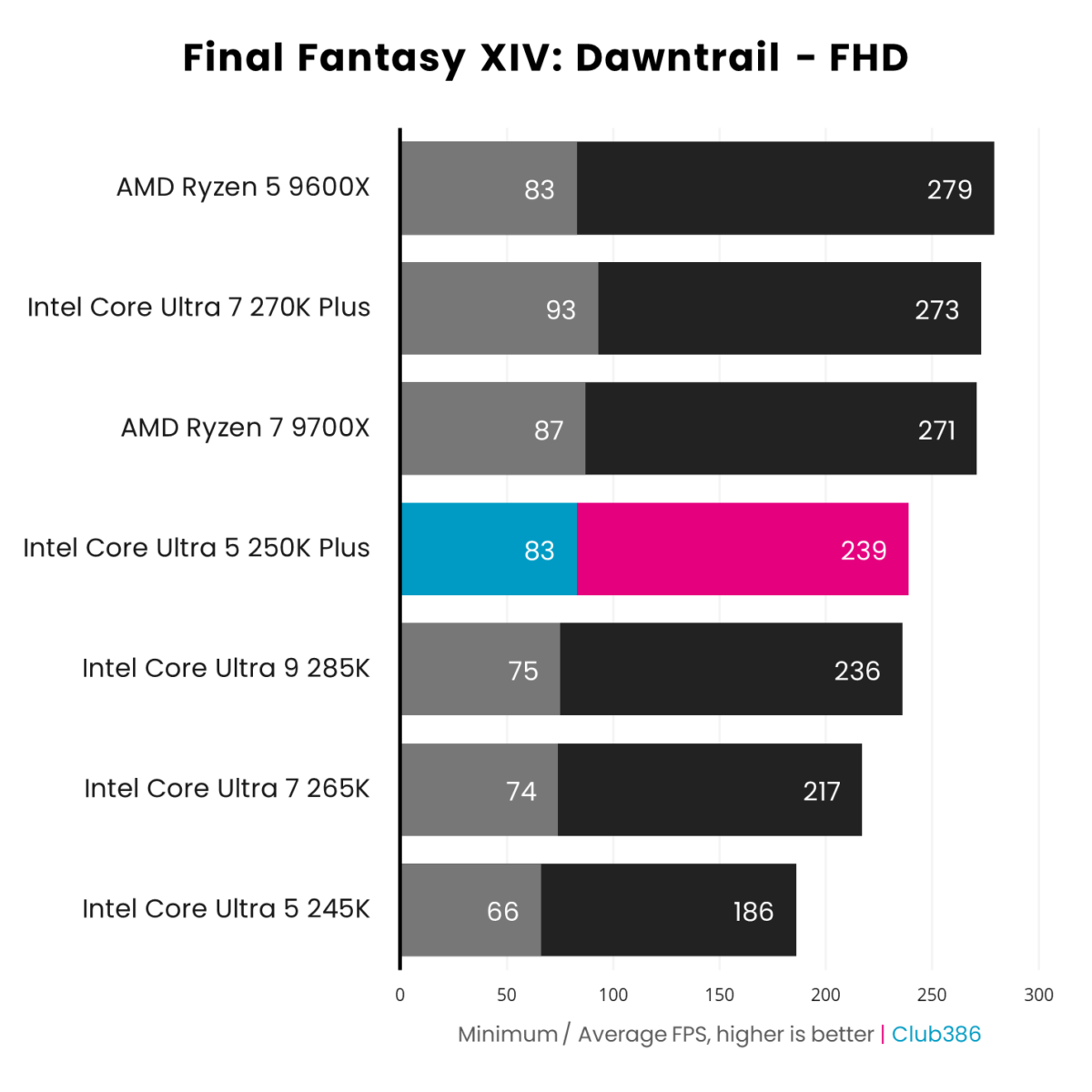
Swapping race tracks for the planet of Hydaelyn doesn’t aid the Core Ultra 5 250K Plus’ position. The Ryzen 5 9600X reigns supreme in Final Fantasy XIV: Dawntrail with a 279fps average frame rate, besting its direct Intel rival by a decisive 17%.
Binary Optimisation is doing all it can to bolster the 250K Plus, raising the chip’s performance from 227fps to 239fps. This 5% improvement is under the 6% boost Intel advertises, but that extra percent wouldn’t close the gap anyway.
To be clear, the 250K Plus still provides a solid experience and is providing clear gains over the Core Ultra 7 265K and Core Ultra 5 245K. However, there’s only so much that Intel’s improvements for Arrow Lake Refresh can do to build on performance that lagged so far behind.
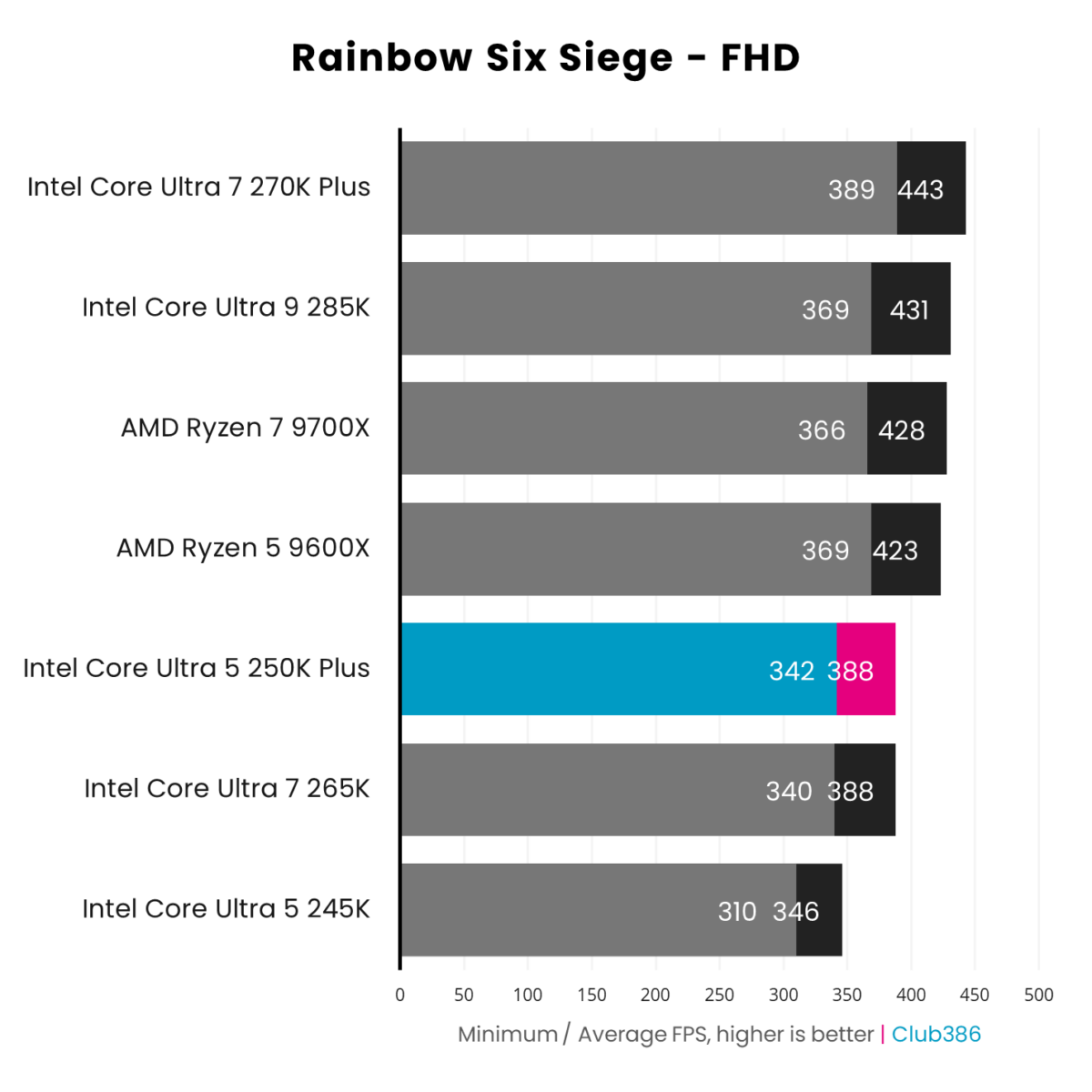
While the Core Ultra 7 270K Plus sits pretty at the top of our Rainbow Six Siege chart, the Core Ultra 5 250K Plus falls decidedly short of its sibling and rival. The Ryzen 5 9600X fires off 423fps on average, giving it a 35fps (9%) lead over the 250K Plus.
Some will question the tangible difference between these frame rates, but I’d rather have every frame possible at my disposal in a competitive shooter. While greater performance won’t improve your skills, it can give you that game-winning edge through lower input lag and greater motion clarity with the right monitor.
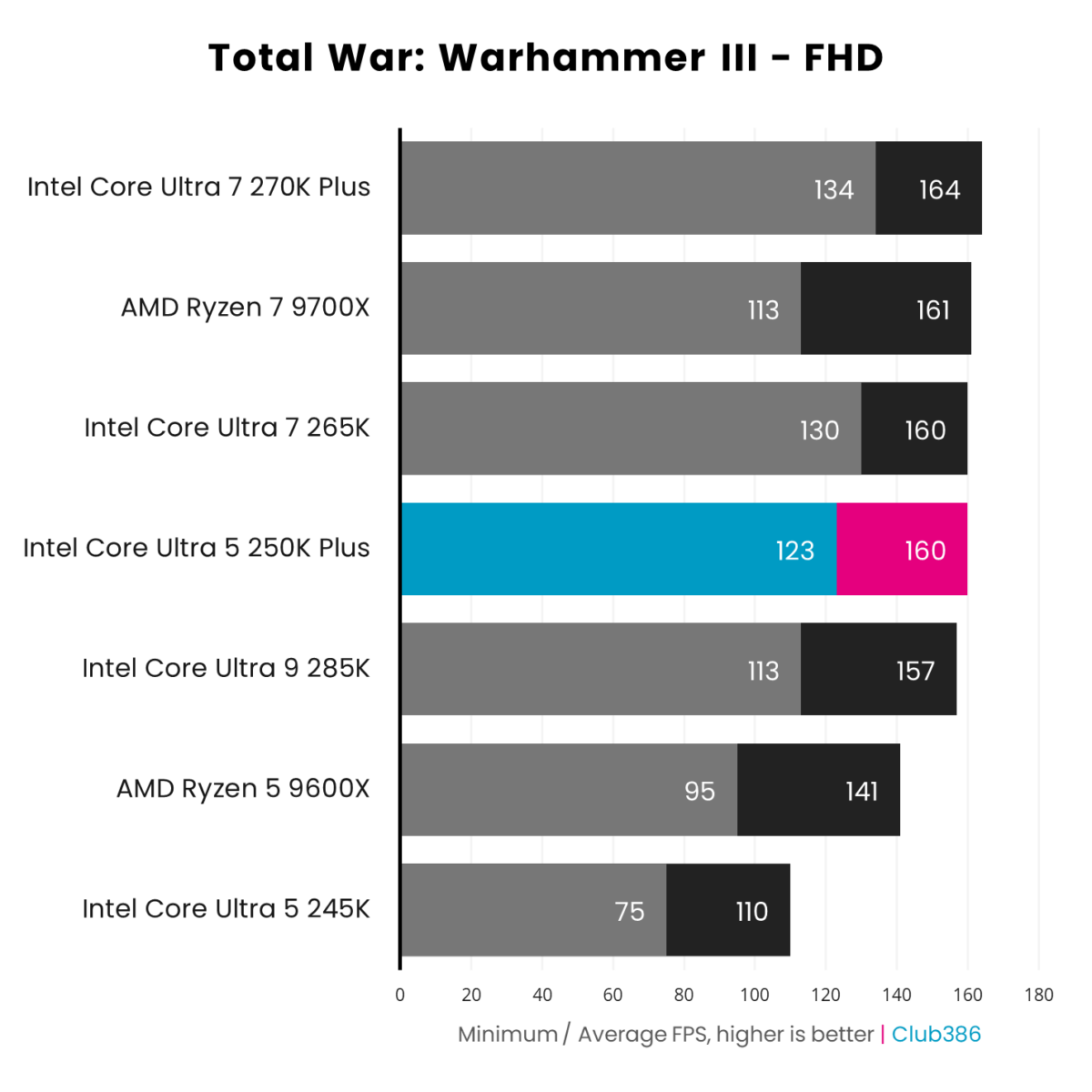
Rounding off our gaming tests, the Core Ultra 5 250K Plus enjoys a comeback in the Total War: Warhammer III Mirrors of Madness benchmark. All those cores and threads create a 14% gap in average frame rates relative to the Ryzen 5 9600X, and allow the chip to keep pace with the Core Ultra 7 270K Plus.
Power and Temperature
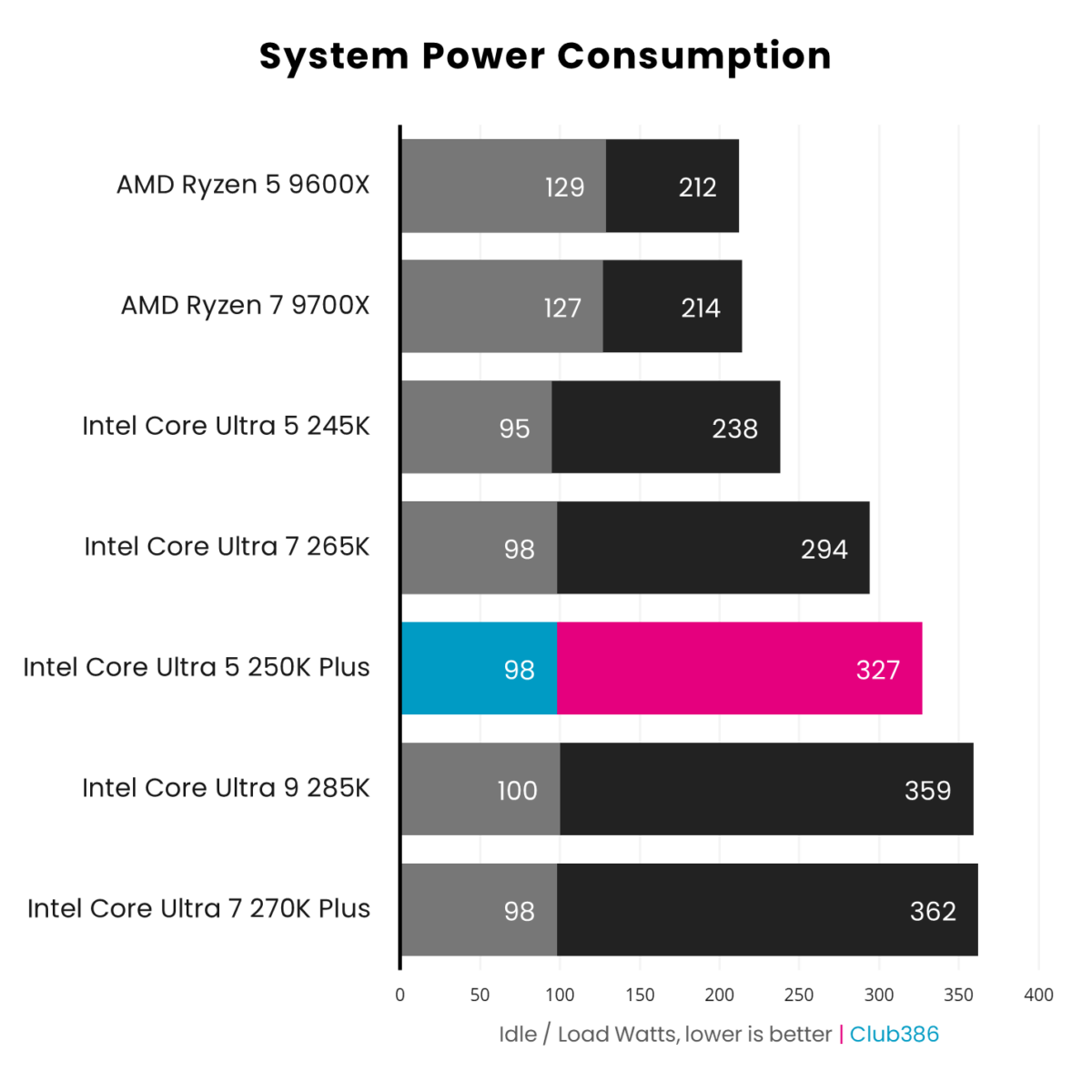
A 159W TDP should make the Core Ultra 5 250K Plus frugal in its power consumption. System power draw peaks at 327W with the processor while running a Cinebench 2026, which while lower than the Core Ultra 9 285K (359W) and Core Ultra 7 270K Plus (362W) isn’t massively far off the 250W chips.
Meanwhile, the 65W AMD CPUs expectedly sip far fewer watts under load at 212-214W. Of course, raw wattage is only part of the equation, as we must take into consideration how well each processor is using all that ‘leccy (which we’ll do so shortly).
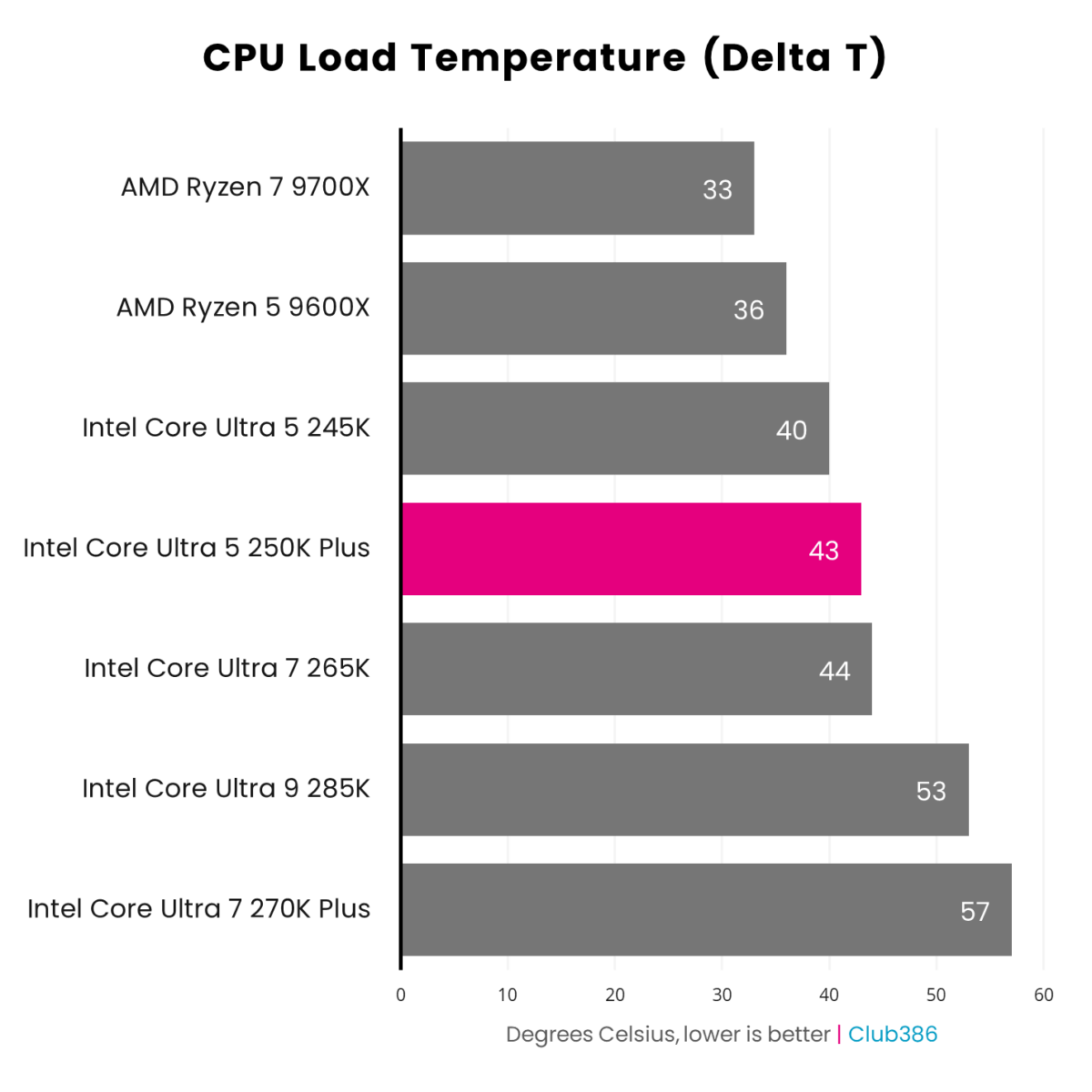
Despite the increase in system power consumption, the Core 250K Plus’ operating temperatures remain reasonable. A Delta T value of 43°C sandwiches the processor between the initial batch of Arrow Lake CPUs, and a good distance from the 24-core models. Meanwhile AMD Ryzen 9000 processors take the top spots as the coolest chips on the chart thanks to their low TDP.
Value Ratings
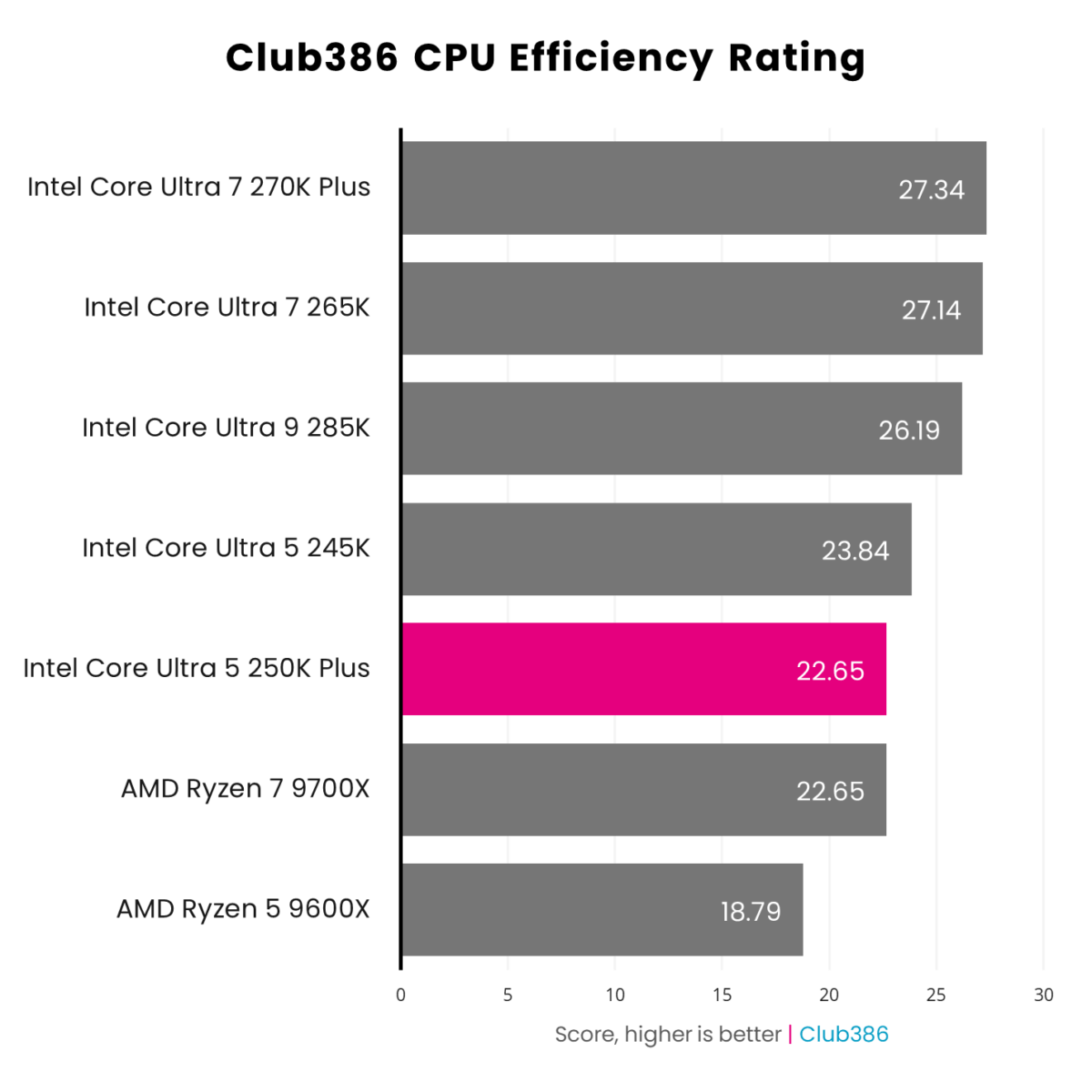
Taking each processor’s Cinebench 2026 multiple thread score and dividing it by system power consumption, we arrive at the Club386 CPU Efficiency Rating. In this regard, the Core Ultra 5 250K Plus’ heightened requirements are evident, scoring 22.65 (7,406/327) and coming in behind the older Core Ultra 5 245K’s more efficient rating of 23.84 rating (5,673/238).
Nevertheless, the 250K Plus smashes the Ryzen 5 9600X, which finishes bottom of the board on 18.79 (3,984/212), and matches the Ryzen 7 9700X (4,847/214).
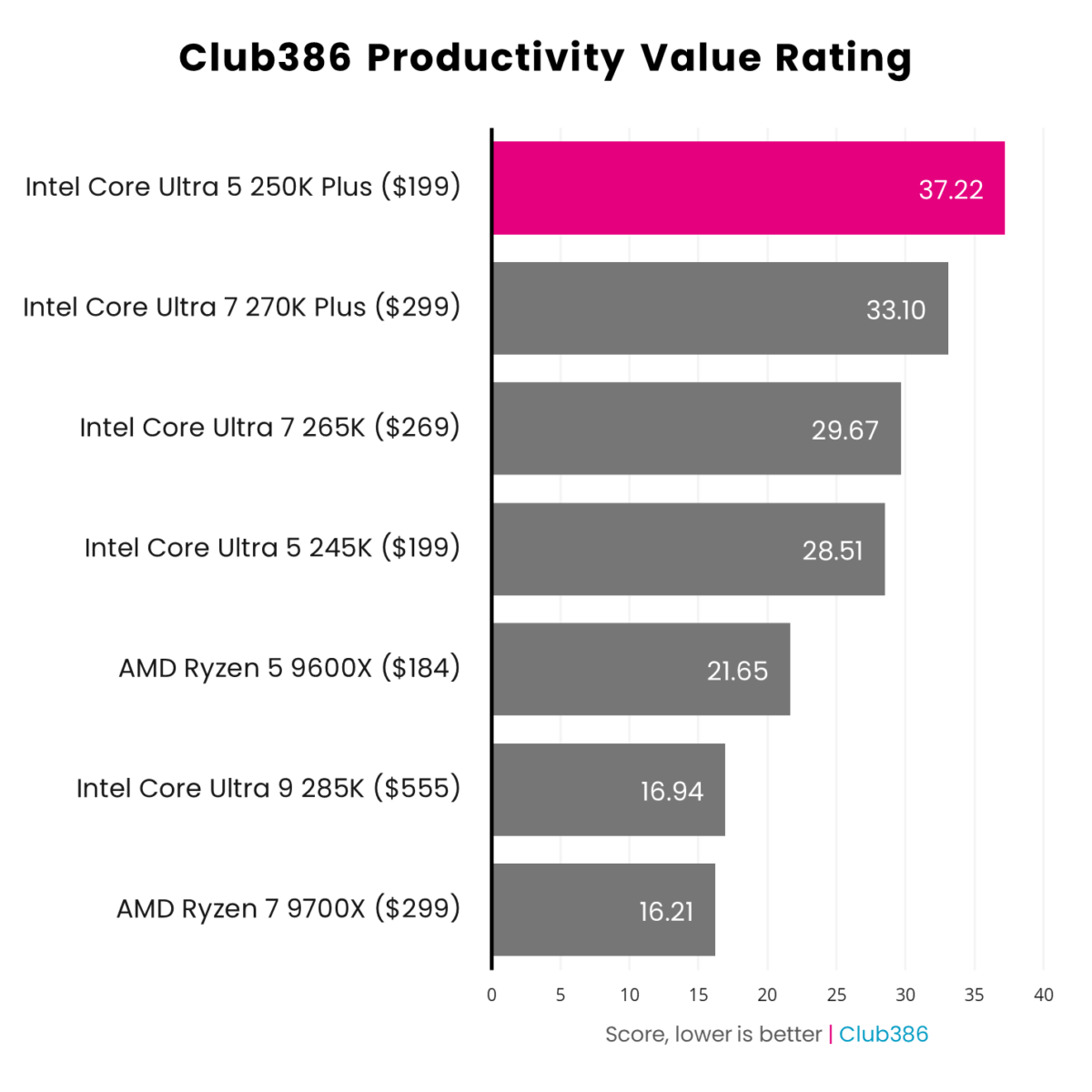
Taking that same Cinebench 2026 score and dividing it by the current price of each processor results in the Club386 Productivity Value Rating. Sitting pretty at the top of the board with a clear lead, we find the Core Ultra 5 250K Plus on 37.22 (7,406/199).
While the $199 chip may not be as efficient as its costlier sibling, the Core Ultra 7 270K Plus, there’s simply no beating the multi-core value it offers. AMD isn’t even remotely competitive here, as the Ryzen 5 9600X’s score of 21.65 (3,984/184) offers just over half the value of the 250K Plus despite costing almost the same.
Seeing these chart positions also succinctly puts into context how strangely expensive the Core Ultra 9 285K remains. Why Intel plans to continue offering the CPU when the 270K Plus exists is beyond me.
Conclusion
While the Core Ultra 5 250K Plus isn’t as much a jack of all trades as its pricier sibling, the Core Ultra 7 270K Plus, the CPU remains a compelling choice for creatives in search of an affordable multi-core powerhouse. The scales tip so favourably for the processor in terms of productivity value that its shortcomings in gaming relative to the competition become easier to forgive.
However, the allure of the Ryzen 5 7600X3D ($249) looms large over both the 250K Plus and Ryzen 5 9600X. While you shouldn’t expect the 3D V-Cache chip to compete with Intel in multi-core workloads, anyone building a rig exclusively for gaming will continue to gravitate towards AMD.
There’s also platform longevity to consider. Arrow Lake Refresh arrives so late in the game, the likes of 250K Plus will be among the last chips we see on LGA1851, with Intel already looking ahead to LGA1954 for Nova Lake later this year. This isn’t a problem if socket longevity isn’t a priority for you, but it’s hard to ignore AMD AM5’s potential upgrade paths.
If nothing else, I’m glad Intel is bringing some disruption to the budget processor market via the 250K Plus. I’ve never before seen this level of multi-core performance at such an affordable price. This chip is sure to prove a hit with creators on a budget, and hopefully sets the stage for high value in AMD and Intel architectures to come.