
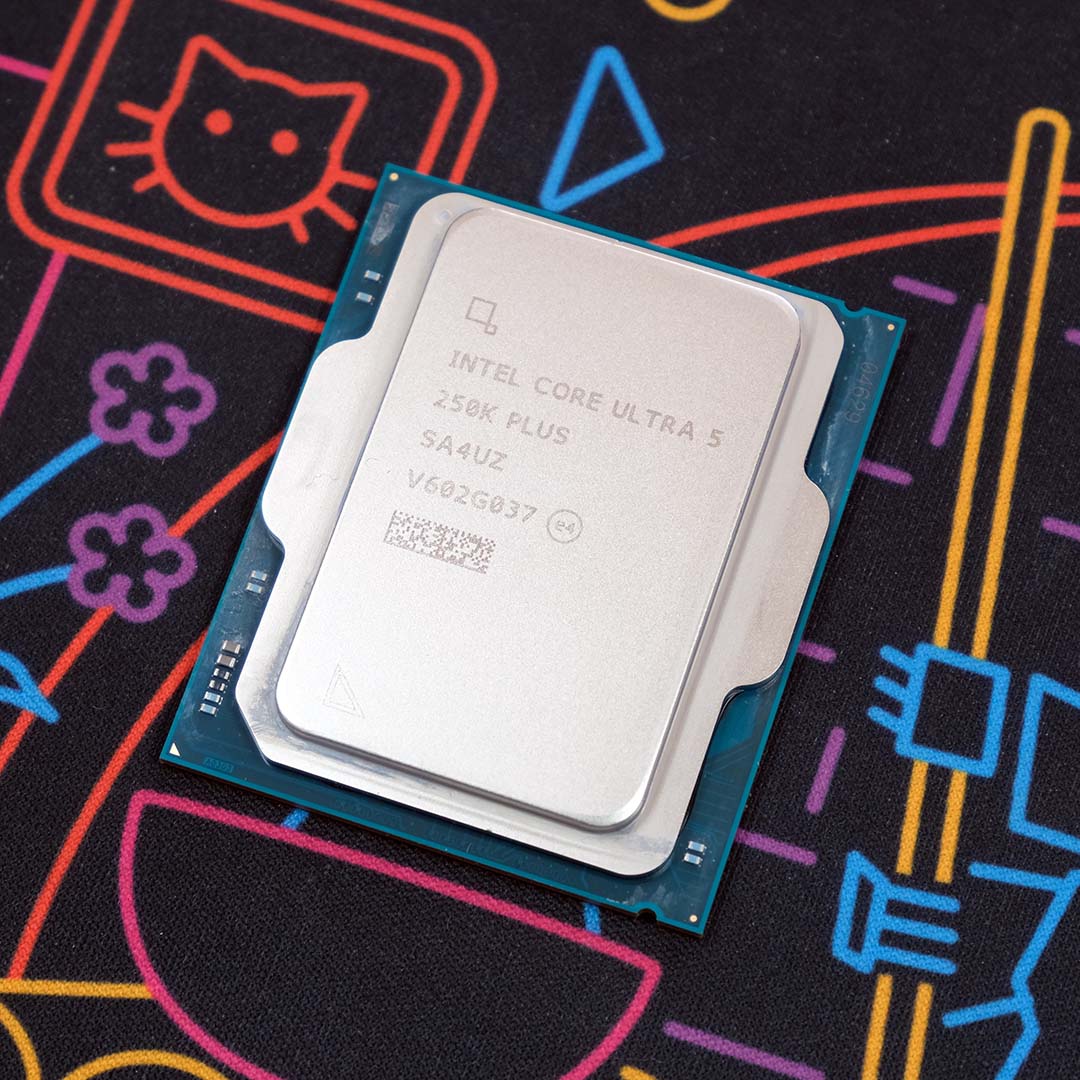
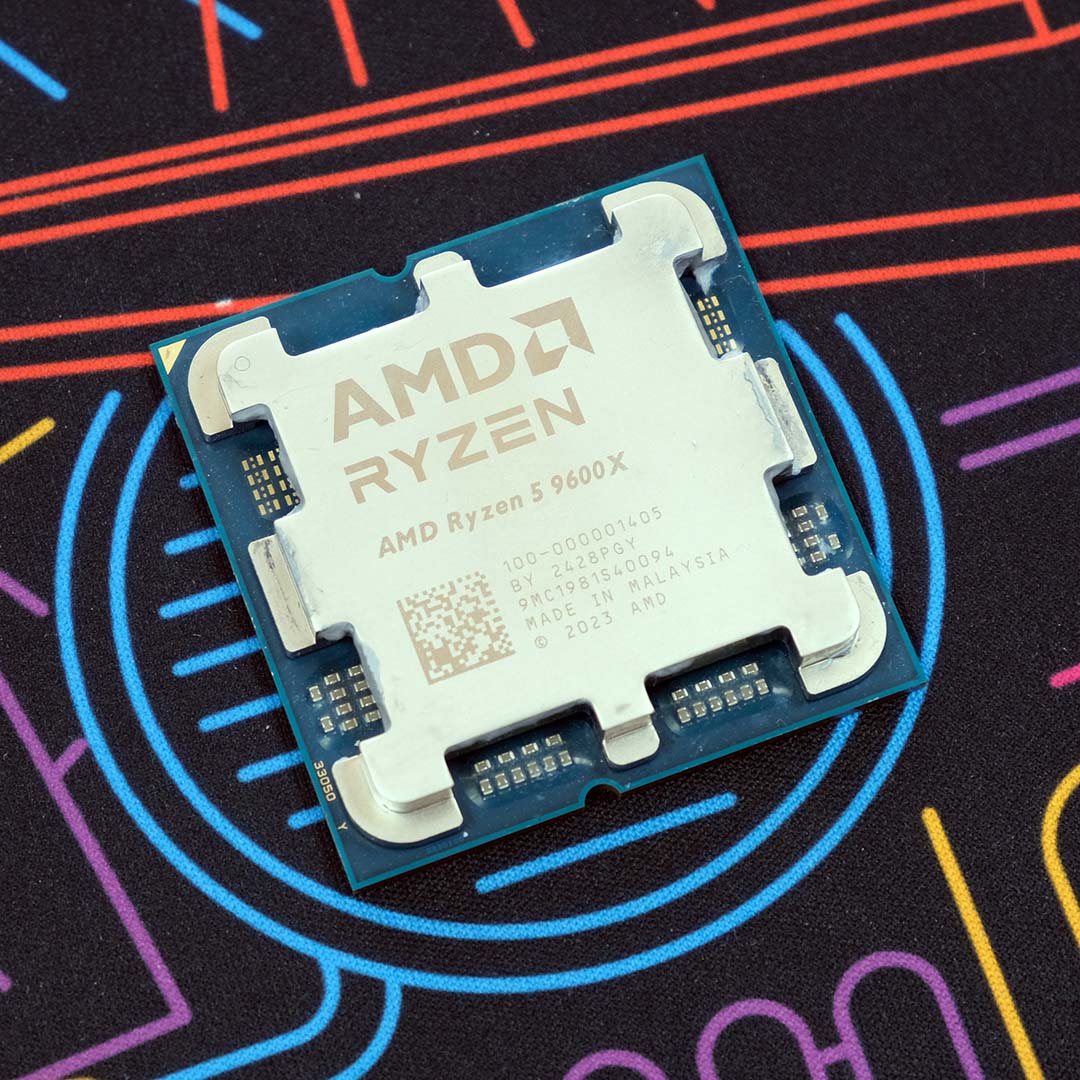
There’s a new $200 CPU in town, as the Intel Core Ultra 5 250K Plus throws down the gauntlet to the Ryzen 5 9600X as the preferred processor of choice at this price. Intel is back on form with this release, but AMD still has strengths that make this battle more nuanced than you might think.
Condensing the new benchmark data from my Core Ultra 5 250K Plus review, I’m closely examining how this Arrow Lake Refresh CPU stacks up against the Ryzen 5 9600X. In this head-to-head, I will provide commentary on specifications, in addition to performance across games and production workflows.
Specifications
Conducting direct comparisons between the Core Ultra 5 250K Plus and Ryzen 5 9600X is tantamount to comparing apples and oranges in most cases, owing to vast differences in architectural design. However, there are some broad similarities between the chips that leave room for analysis.
| Core Ultra 5 250K Plus | Ryzen 5 9600X | Ratio | |
|---|---|---|---|
| Release date | March 2026 | August 2024 | – |
| Platform | LGA1851 | AM5 | – |
| Cores | 18 (6P+12E) | 6 | 3.00 |
| Threads | 18 | 12 | 1.50 |
| TDP | 159W | 65W | 2.45 |
| Architecture | Arrow Lake Refresh | Zen 5 | – |
| L2 cache | 30MB | 6MB | 5.00 |
| L3 cache | 30MB | 32MB | 0.94 |
| Base clock | Performance: 4.2GHz Efficient: 3.3GHz | 3.9GHz | 1.08 / 0.85 |
| Boost clock | Performance: 5.3GHz Efficient: 4.6GHz | 5.4GHz | 0.98 / 0.85 |
| Launch MSRP | $199 / £209 | $279 | 0.71 |
Arrow Lake Refresh processors arrive with four additional E-cores relative to the initial batch of Arrow Lake CPUs, bringing the 250K Plus up to 18 (6P+12E) in total. By contrast, Zen 5 didn’t depart from prior designs, with the Ryzen 5 9600X maintaining the same homogeneous 6-core approach as 2017’s Ryzen 5 1600X, albeit with advances in architecture.
Intel continues to leave Hyper-Threading by the wayside, creating a 1:1 ratio between cores and threads on the 250K Plus at 18 apiece. AMD, meanwhile, holds on to its equivalent Simultaneous Multithreading (SMT) tech, giving the 9600X two threads per core for a grand total of 12.
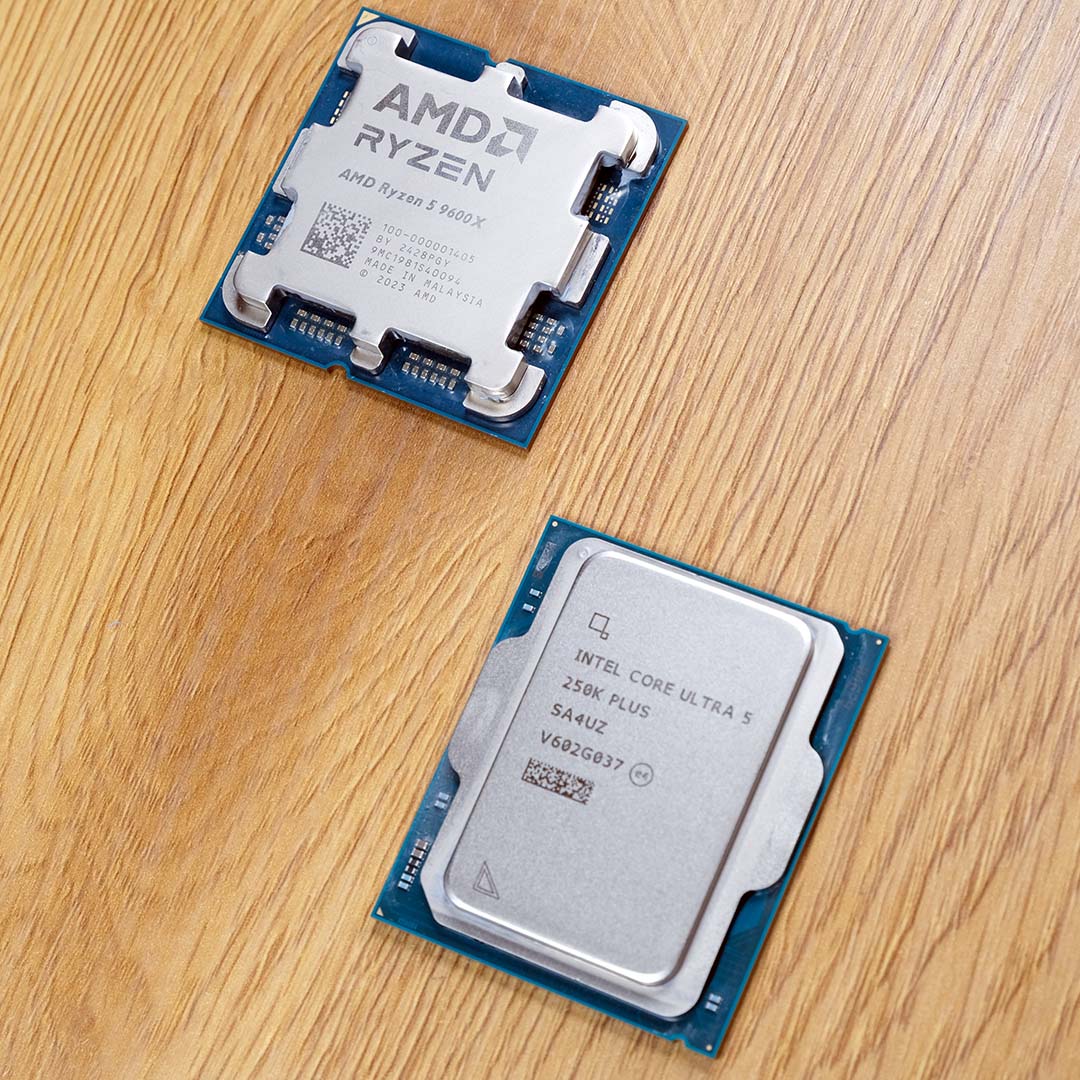
The 250K Plus arrives with a 159W TDP, providing this processor with over 2x the available power relative to AMD’s 65W 9600X. Sadly, neither Intel nor AMD bundles a cooler with their respective chips, but sourcing an appropriate aftermarket model won’t be difficult or expensive for either CPU – just check our guide to buying the best CPU cooler for our top recommendations.
Sizing up clock speeds, the 250K Plus’ 4.2GHz base clock is 300MHz higher than the 9600X’s 3.9GHz. However, the tables turn for boost clocks, with AMD enjoying a 100MHz lead over Intel (5.3GHz vs. 5.4GHz). Of course, these frequencies aren’t indicative of each processor’s underlying capacity for instructions per clock (IPC), as they’re both based on very different architectures.
At the time of writing, the Ryzen 5 9600X has fallen well below its launch MSRP of $279, with the processor now more commonly occupying the sub-$200 price range. As such, Intel’s $199 target for the 250K Plus is a clear challenge towards AMD’s chip.
Test methodology
Using our latest CPU test suite, complete with new benchmarks and methodology, I’ve put both the Core Ultra 5 250K Plus and Ryzen 5 9600X through their paces. In addition to testing their productivity prowess, I’ve also captured gaming performance data at 1080p, using ‘High’ settings without upscaling whenever possible.
I’ve used the same chassis, cooler, storage, and power supply across each test bench. I also paired both CPUs with a GeForce RTX 5090 Founders Edition to stave off any GPU bottlenecks. You’ll find a full list of components in the widgets below.
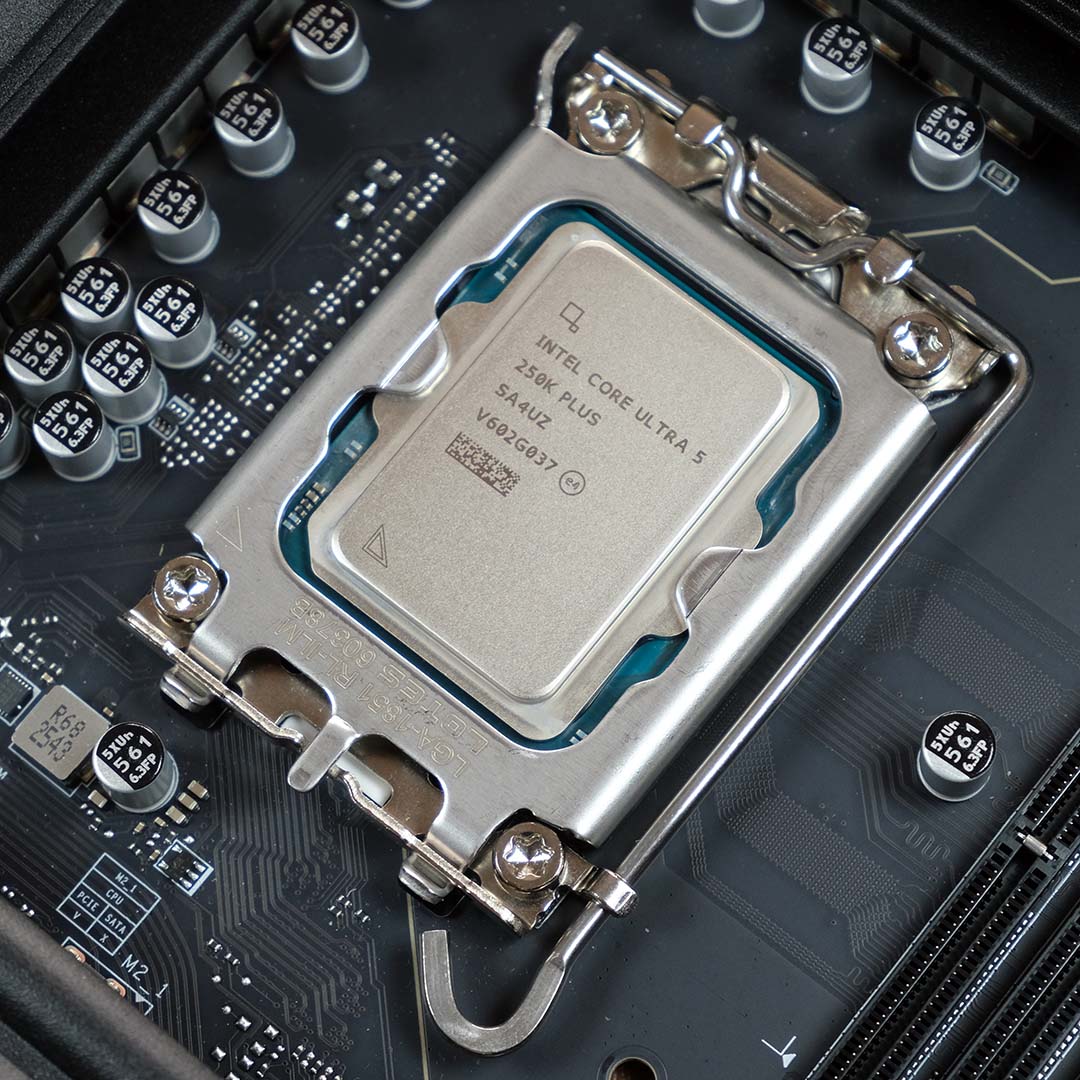
Core Ultra 5 250K Plus test PC
Club386 carefully chooses each component in a test bench to best suit the review at hand. When you view our benchmarks, you’re not just getting an opinion, but the results of rigorous testing carried out using hardware we trust.
Shop Club386 test platform components:
CPU: Intel Core Ultra 5 250K Plus
Cooler: Arctic Liquid Freezer III Pro 420 A-RGB
Motherboard: MSI MAG Z890 Tomahawk WiFi II
GPU: Nvidia GeForce RTX 5090 Founders Edition
Memory: 32GB DDR5-7200 G.Skill Trident Z5 RGB
Storage: 2TB WD_Black SN8100 NVMe SSD
PSU: 1,200W be quiet! Dark Power 14
Chassis: be quiet! Light Base 900 FX
Unique to our LGA1851 test PC is an MSI MAG Z890 Tomahawk WiFi II motherboard, as well as a dual-channel kit of 32GB DDR5-7200 CL34 G.Skill Trident Z5 RGB memory.
Ryzen 5 9600X test PC
Club386 carefully chooses each component in a test bench to best suit the review at hand. When you view our benchmarks, you’re not just getting an opinion, but the results of rigorous testing carried out using hardware we trust.
Shop Club386 test platform components:
CPU: AMD Ryzen 5 9600X
Cooler: Arctic Liquid Freezer III Pro 420 A-RGB
Motherboard: MSI MEG X870E Ace Max
GPU: Nvidia GeForce RTX 5090 Founders Edition
Memory: 32GB DDR5-6000 CL32 G.Skill Trident Z5 RGB
Storage: 2TB WD_Black SN8100 NVMe SSD
PSU: 1,200W be quiet! Dark Power 14
Chassis: be quiet! Light Base 900 FX
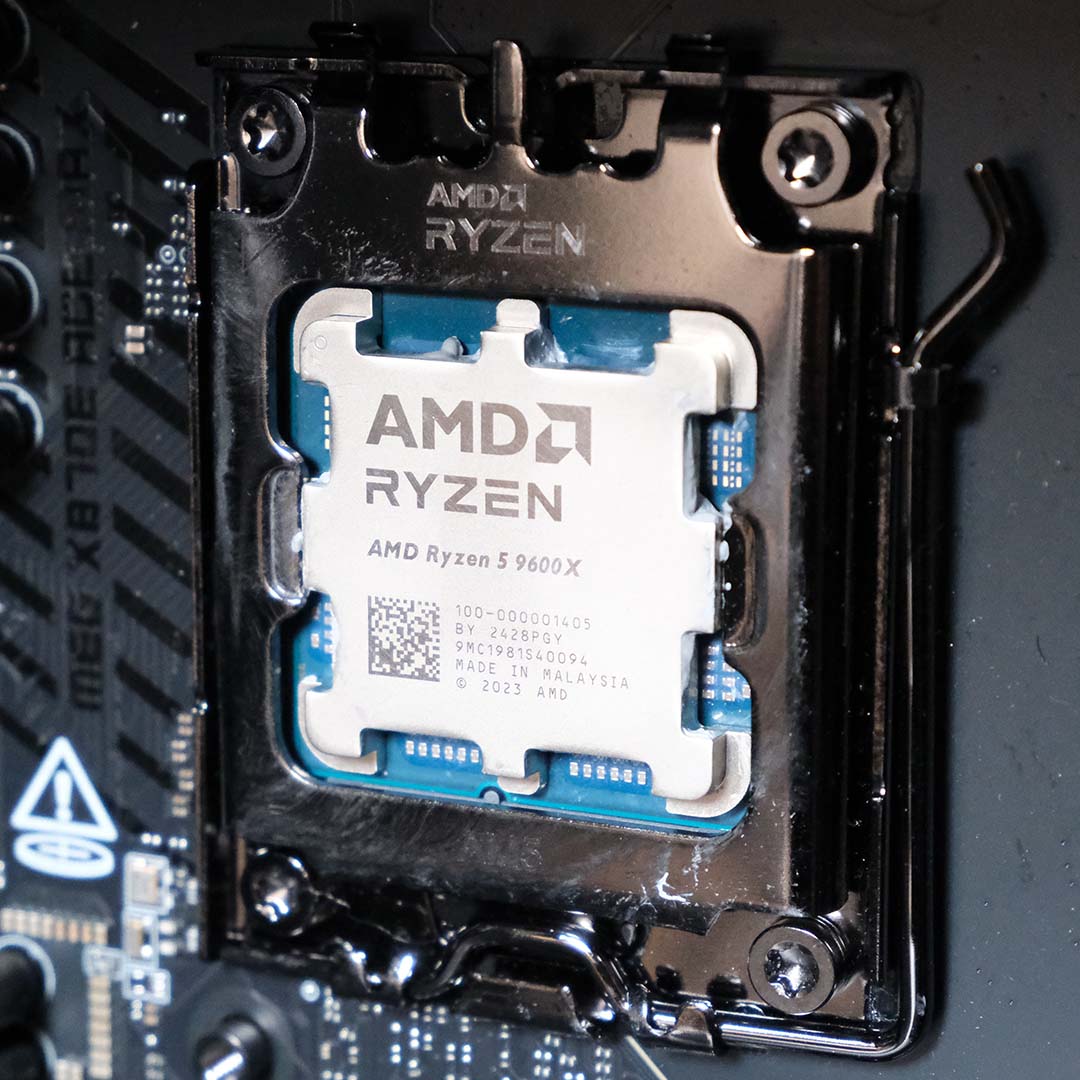
For our AM5 test PC, we’re using an MSI MEG X870E Ace Max motherboard and a dual-channel kit of 32GB DDR5-6000 CL32 G.Skill Trident Z5 Neo RGB RAM.
App performance
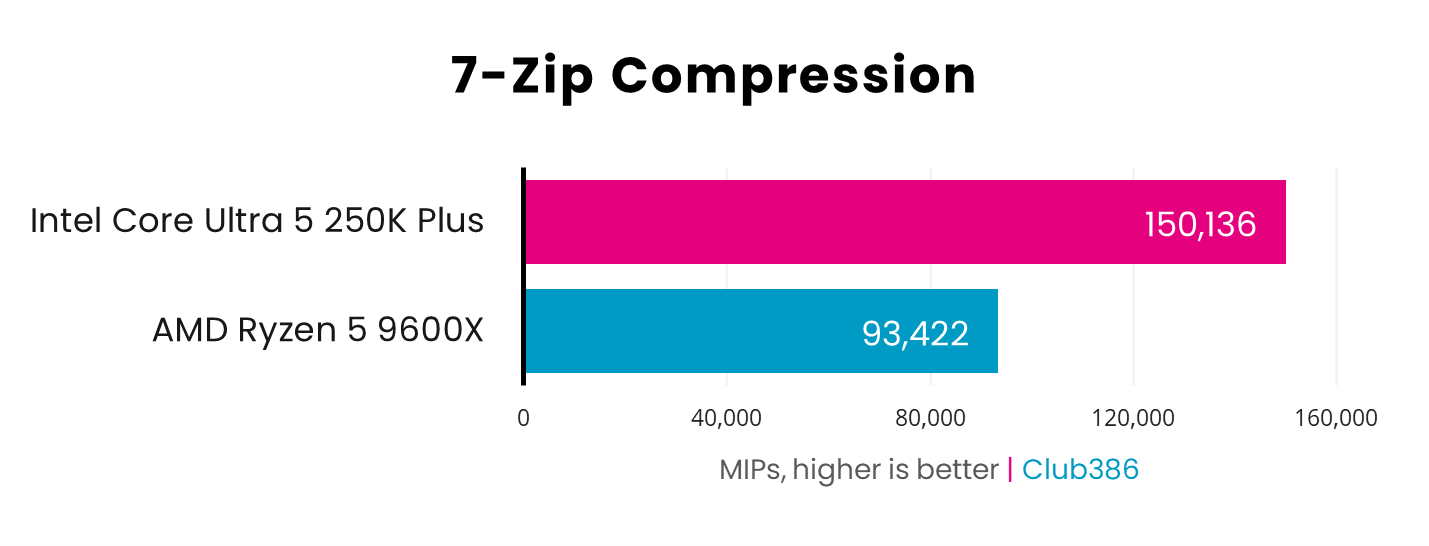
The Core Ultra 5 250K Plus finds plenty of room to put its large pool of cores and threads to use in our 7-Zip Compression benchmark, pushing past 150M instructions per second. That’s a welcome 61% improvement over the Ryzen 5 9600X, which clocks in at a relatively paltry 93,422MIPS.
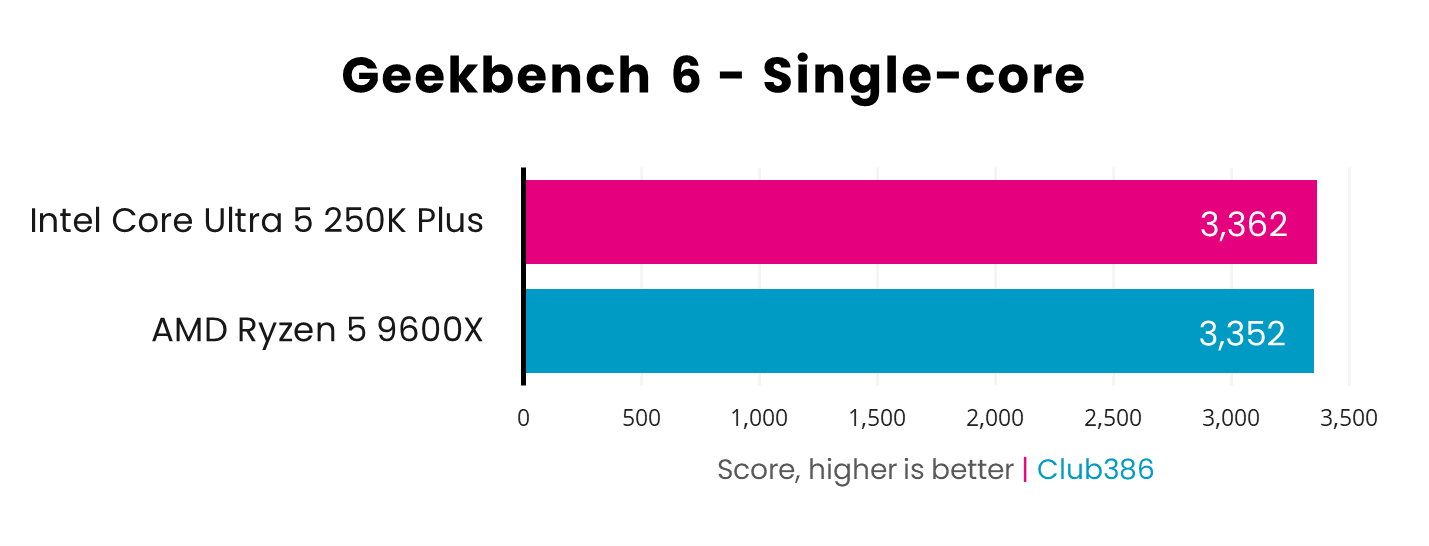
Out of the box, Intel’s Core Ultra 5 250K Plus actually falls behind the Ryzen 5 9600X in a Geekbench 6 single-core head-to-head. Intel’s chip scores 3,182pts to its rival’s 3,352pts, but applying the application’s Binary Optimisation profile boosts performance by 6% and secures a win by a minute margin of 10pts.
I should note that Primate Labs, the developer of Geekbench, considers Binary Optimisation results invalid at the time of writing. However, I don’t share this opinion, and encourage anyone with a Core Ultra 200S CPU to use the tool.
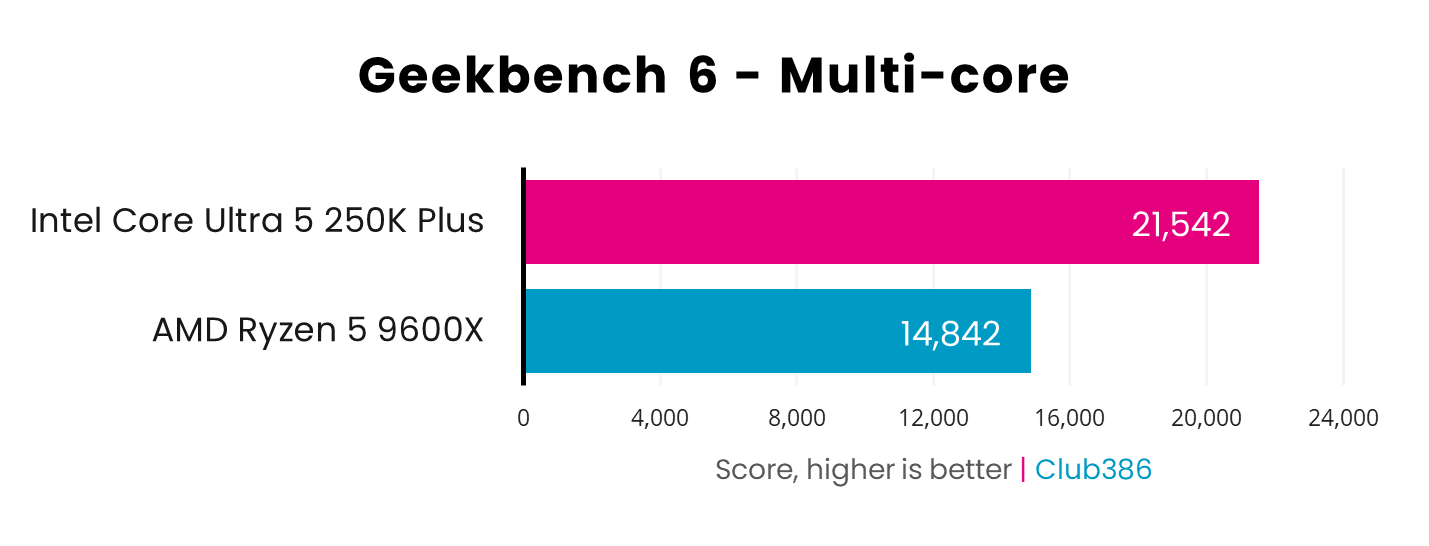
Binary Optimisation provides a 4% boost to the Core Ultra 5 250K Plus’ Geekbench 6 multi-core score, from 20,692pts to 21,542pts. However, even without the feature’s support, the processor is confidently ahead of the Ryzen 5 9600X with a 45% advantage.
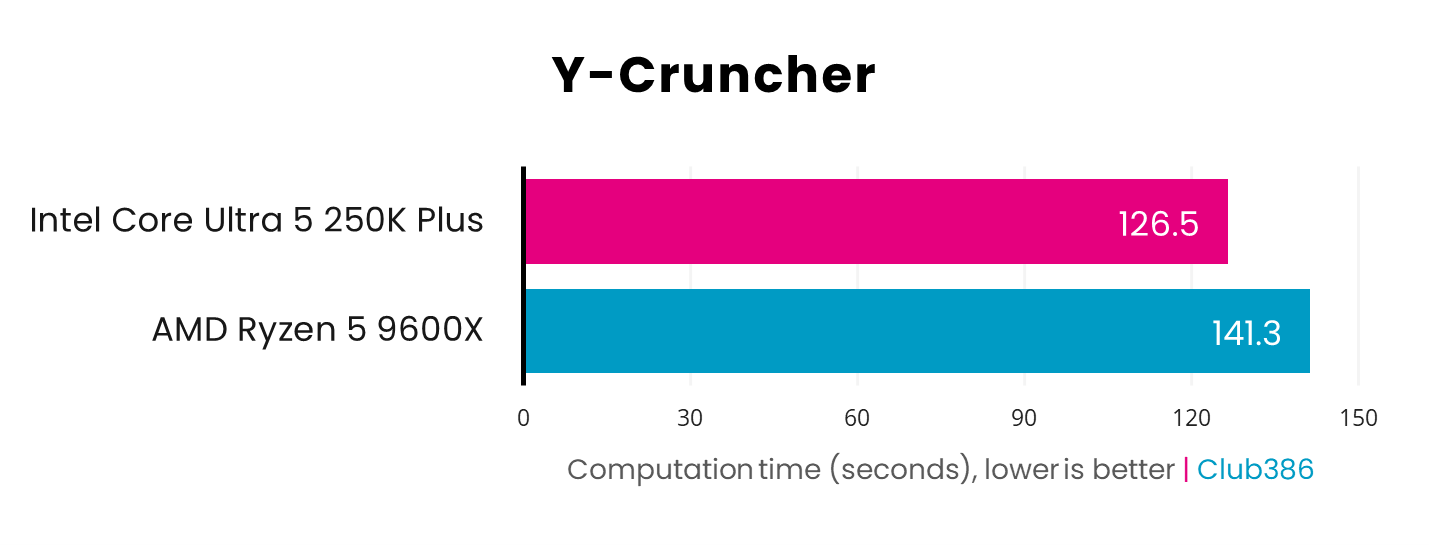
While the idea of calculating the first 5B digits of Pi sends shivers down my spine, the Core Ultra 5 250K Plus handles the task at solid speed, taking 126.5 seconds. That’s 10% quicker than the Ryzen 5 9600X, which completes the task in 141.3 seconds, leaving Intel with welcome cumulative gains over multiple calculations for regular number crunchers.
Content creation
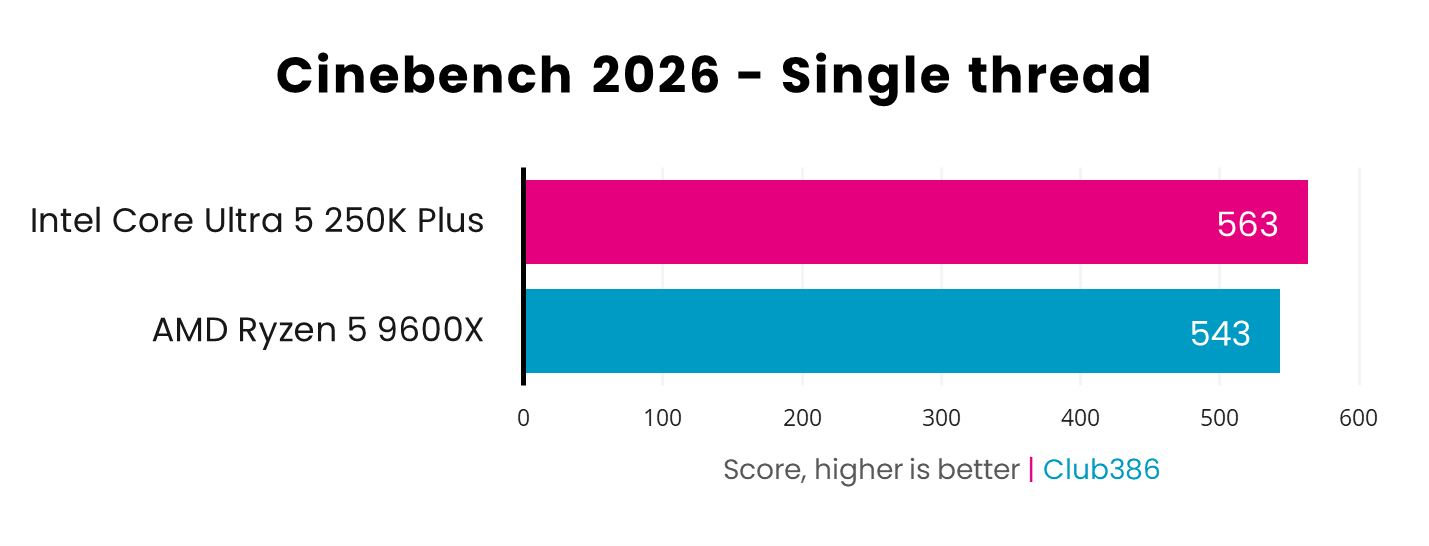
Cinebench 2026 offers another close-fought race in single-threaded performance. The Core Ultra 5 250K Plus emerges the victor over the Ryzen 5 9600X in this bout, but only by 4%.
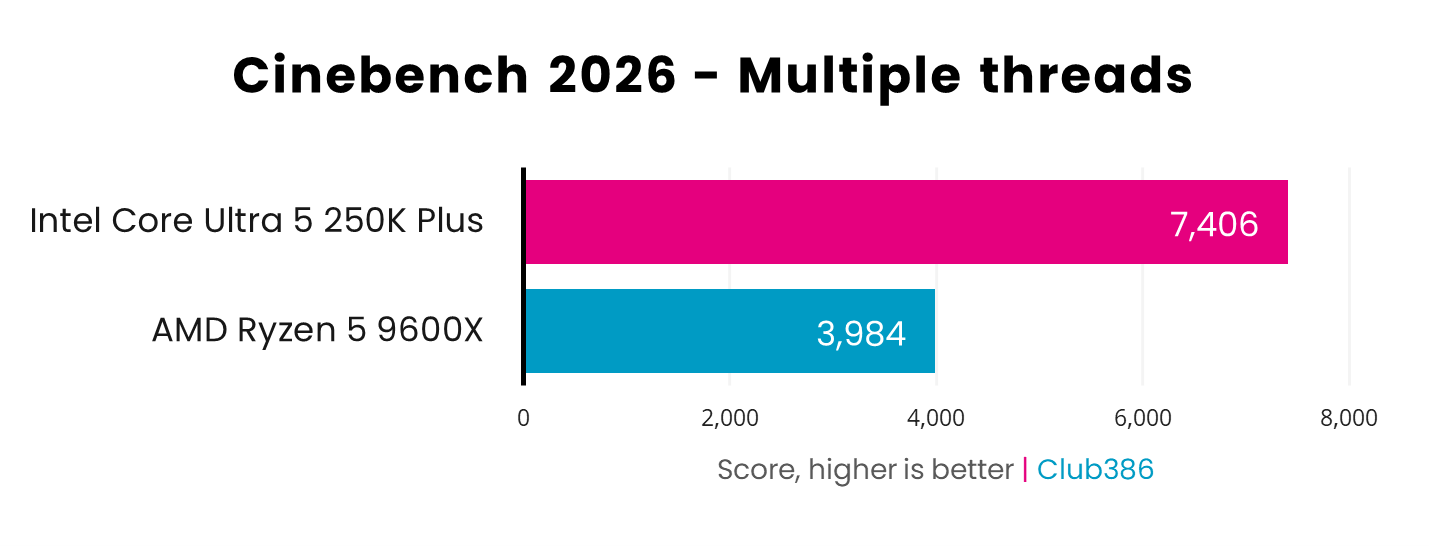
Performance gaps widen between the processors once Cinebench 2026 puts out the call for multiple threads. The Core Ultra 5 250K Plus nearly eclipses the Ryzen 5 9600X, scoring 90% higher.
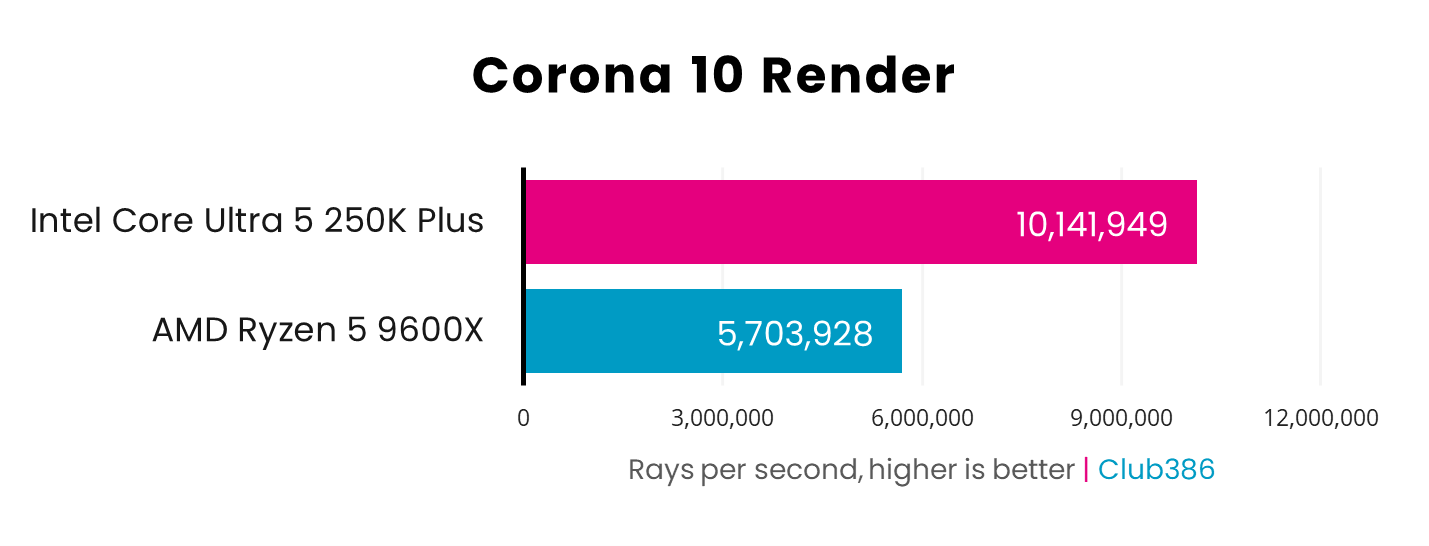
Loading up Corona 10 Render secures another clear victory for Intel. The Core Ultra 5 250K Plus handles a far greater number of rays per second than the Ryzen 5 9600X, with a 78% improvement.
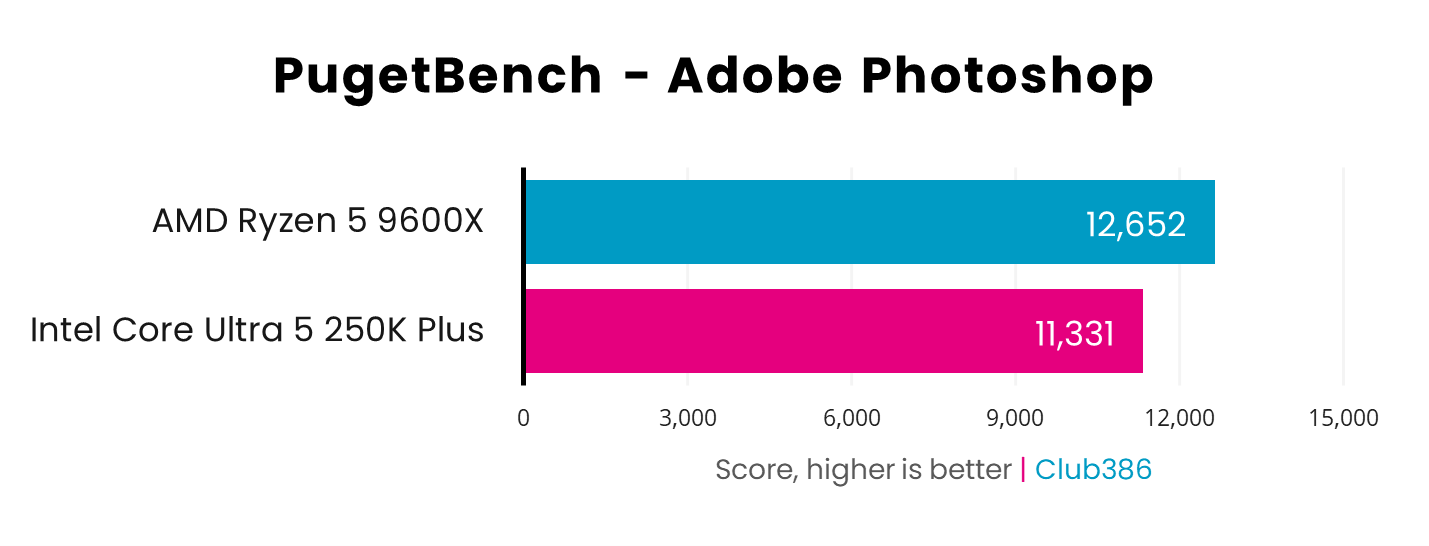
Adobe Photoshop marks a rare win for the Ryzen 5 9600X over the Core Ultra 5 250K Plus in the world of creative tasks. This application broadly prefers Zen 5 to Arrow Lake Refresh, as we see a similar flip take hold in our Core Ultra 7 270K Plus vs Ryzen 9700X head-to-head.
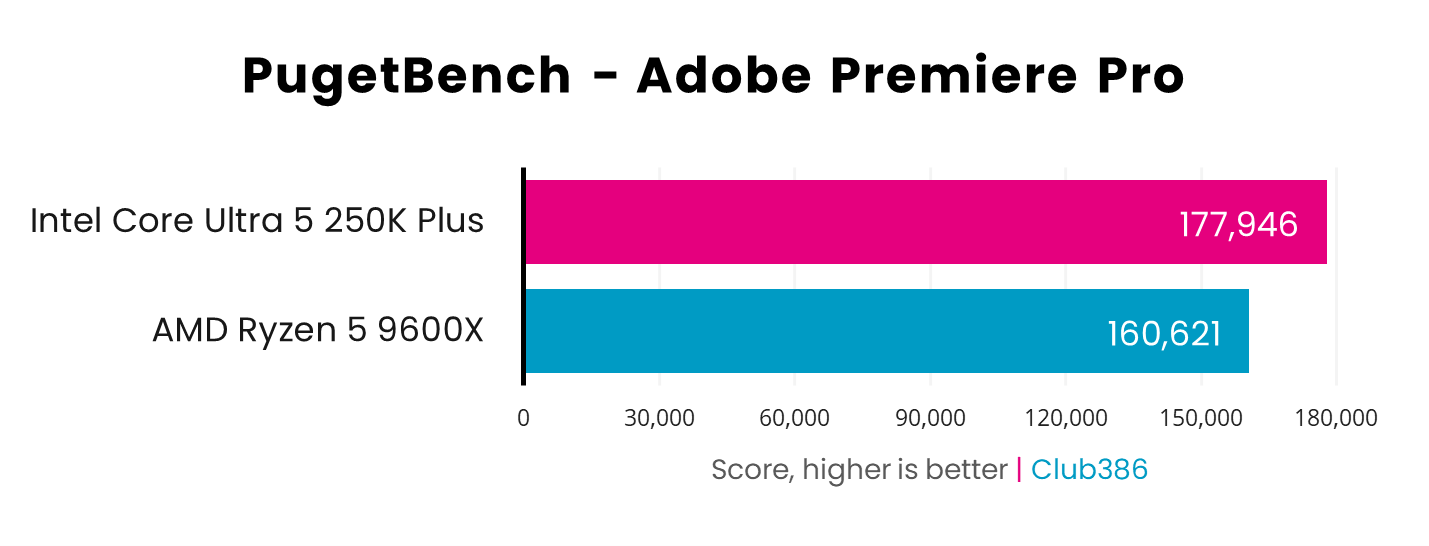
Not all Adobe apps long for Zen 5, though, as Arrow Lake Refresh is back on top with superior Premiere Pro performance. The Core Ultra 5 250K Plus comes out 11% ahead in this clash.
Gaming
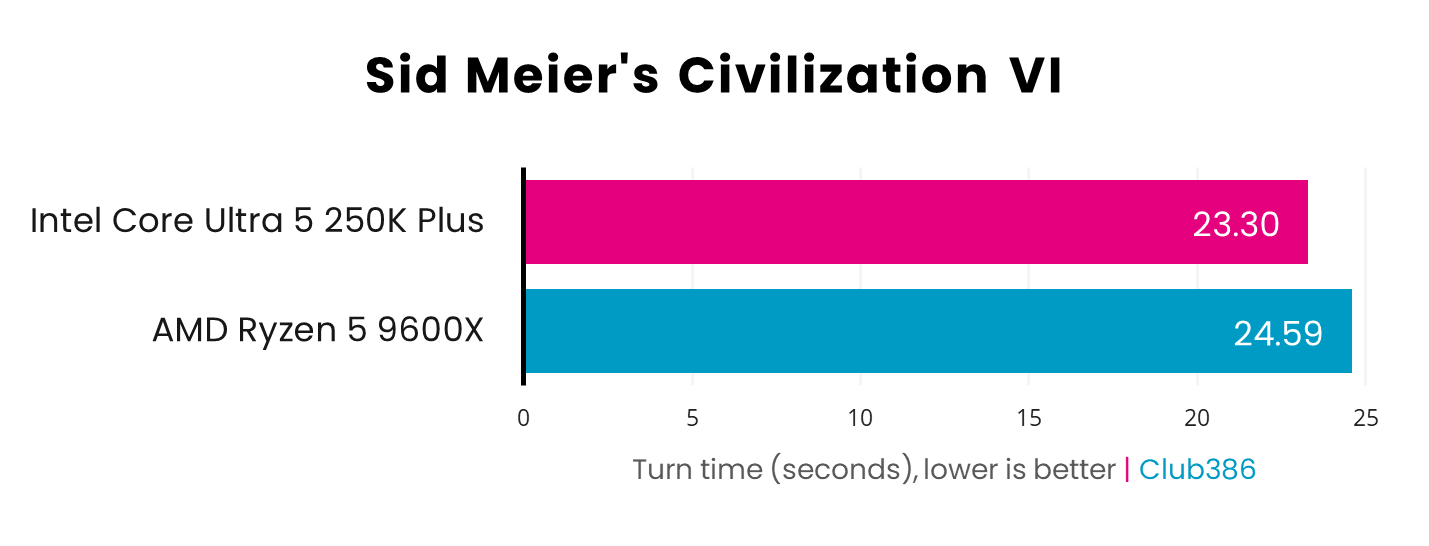
The Civilization VI Gathering Storm AI benchmark tests processor performance with a large computational weight worthy of a certain Titan. Those additional cores and threads clinch the win for the Core Ultra 5 250K Plus, taking 23.3 seconds on average to complete each turn, edging past the Ryzen 5 9600X’s result of 24.59 seconds.
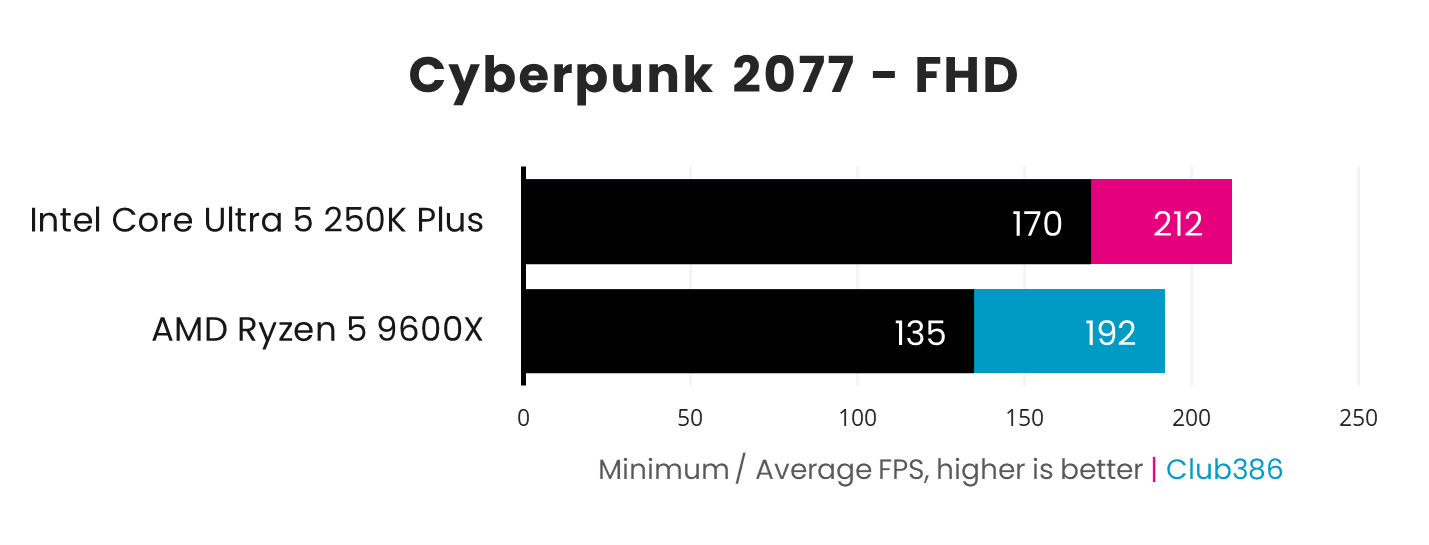
Stepping into the streets of Night City, Intel’s Core Ultra 5 250K Plus proves the best of chooms with CD Projekt Red’s game. Intel handily outperforms AMD regardless of Binary Optimisation, with an impressive 26% improvement to minimum frame rates and a welcome 10% on average.
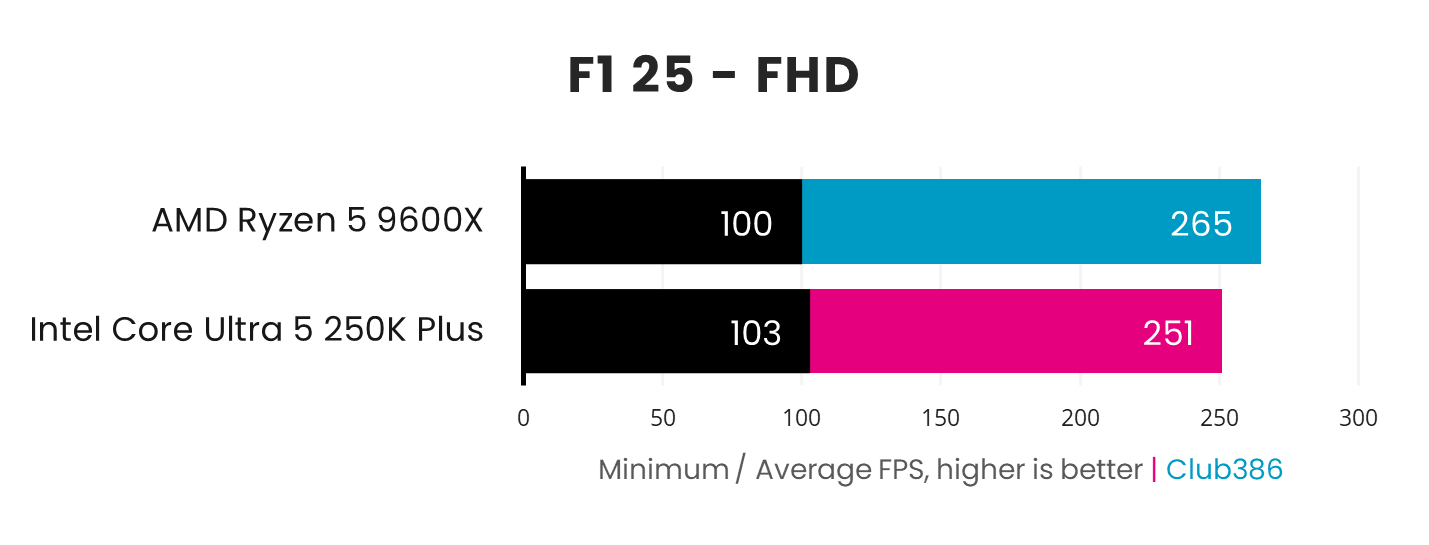
While Intel offers slightly better minimum frame rates in F1 25, the Core Ultra 5 250K Plus can’t keep up with the Ryzen 5 9600X when it comes to average performance. AMD passes the chequered flag with a 6% lead.
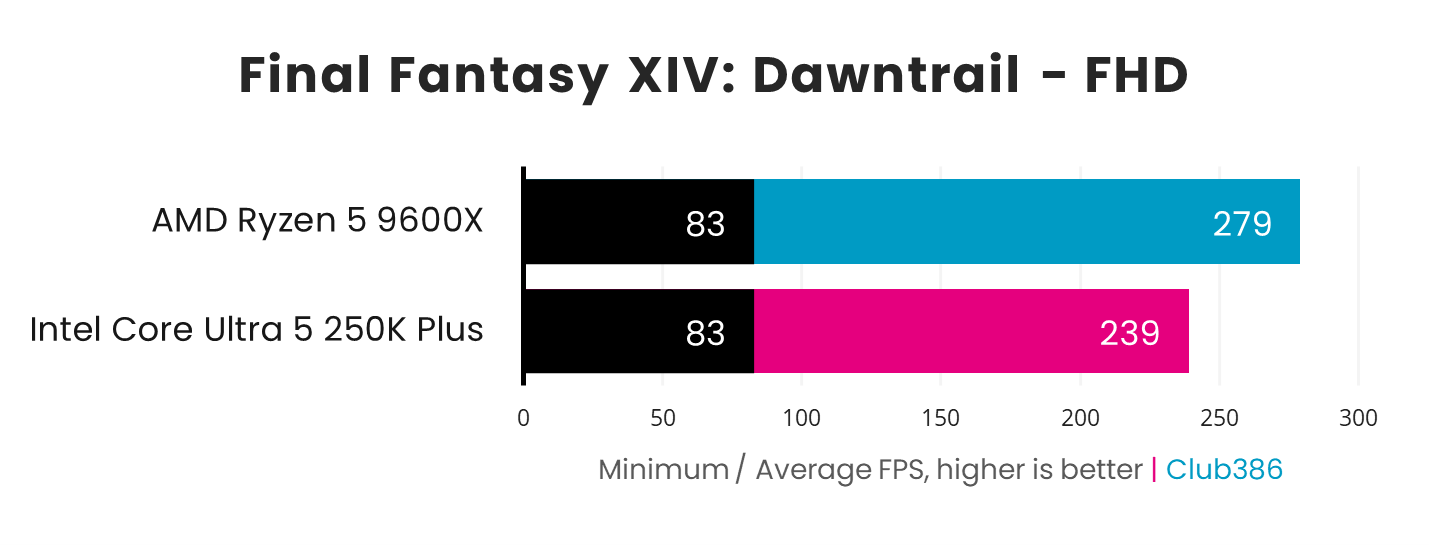
AMD takes another win in gaming performance through Final Fantasy XIV: Dawntrail, with its average frame rates being 17% quicker than Intel’s offering. These results reflect boosts from Binary Optimisation to boot, with AMD’s Ryzen 5 9600X furthering its advantage over the Core Ultra 5 250K Plus to 23% without the feature.
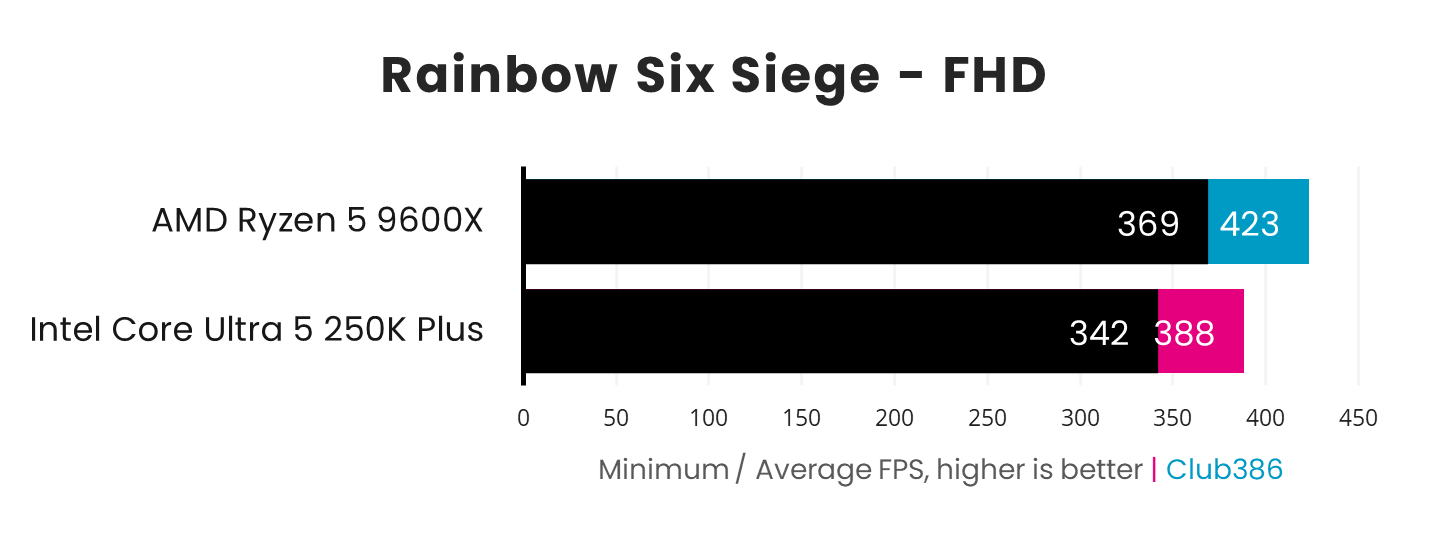
Rainbow Six Siege provides plenty of breathing room for processors to reach dizzyingly high frame rates, but the Ryzen 5 9600X once again proves the faster chip in this case. With a 423fps average, AMD’s CPU is 9% faster than the Core Ultra 5 250K Plus.
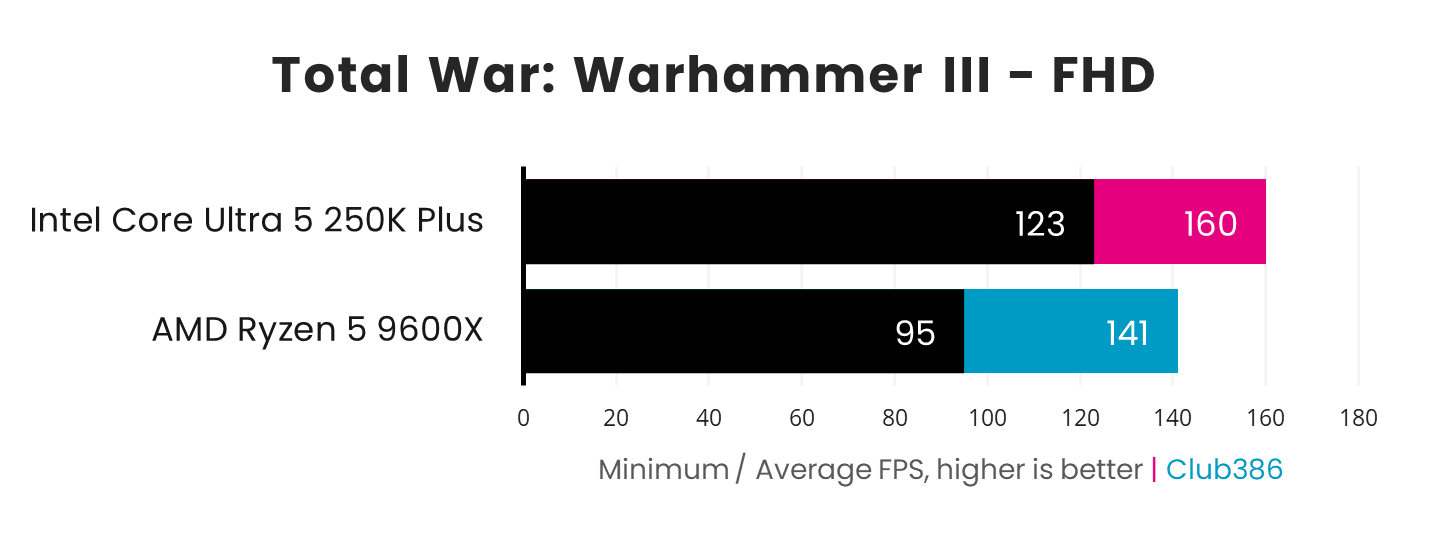
Intel’s Core Ultra 5 250K Plus emerges victorious on the battlefield that is Total War: Warhammer III. In the real-time strategy game’s Mirrors of Madness benchmark, the Intel chip beats the Ryzen 5 9600X by 13%.
Power and temperatures
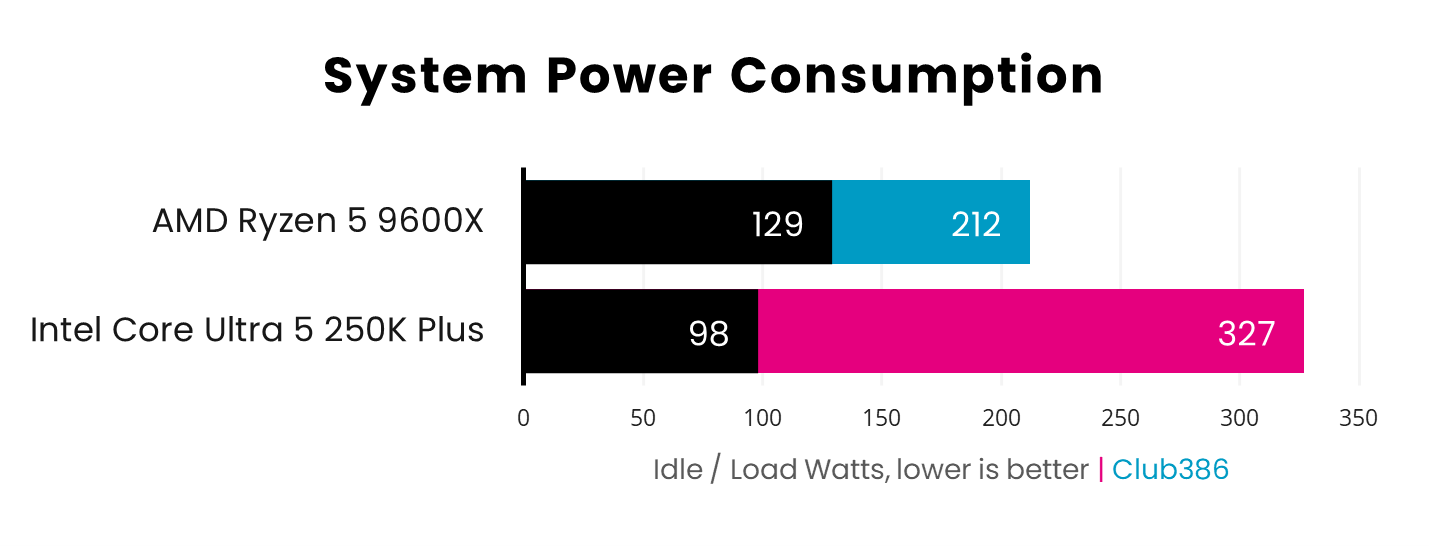
Given the differences between each processor’s TDP (65W vs. 159W), the Core Ultra 5 250K Plus expectedly pushes system power consumption much higher than the Ryzen 5 9600X. However, a Cinebench 2026 all-core load only manifests a 54% increase, well under what on-paper power limits would suggest.
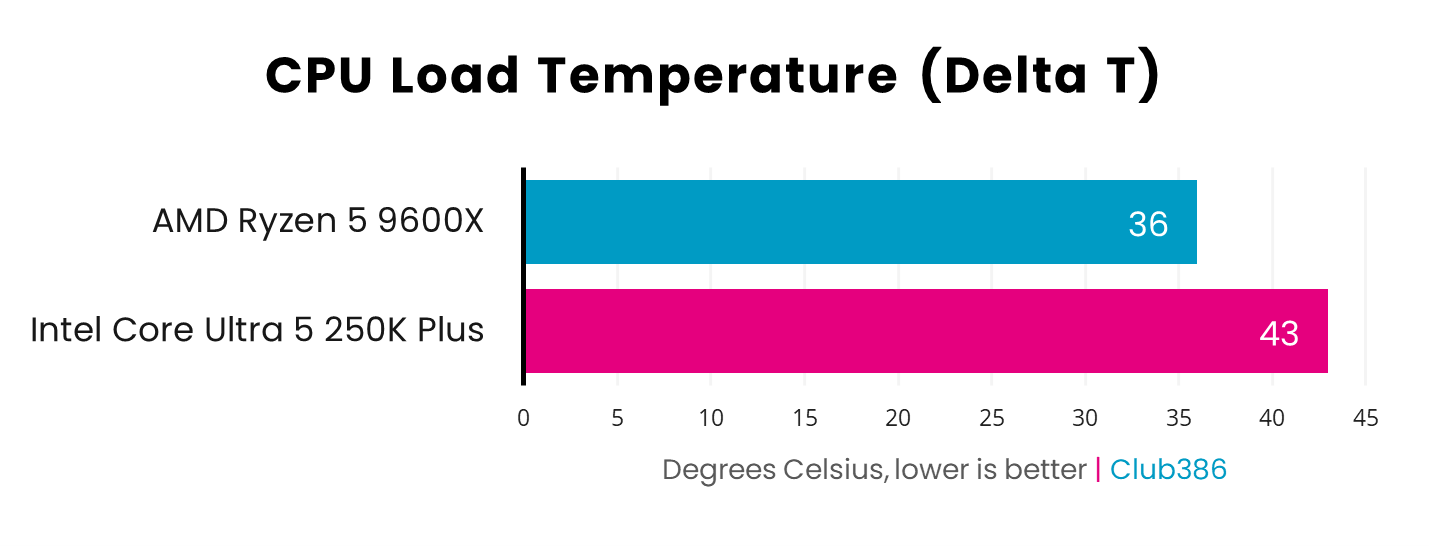
Subtracting ambient room temperature from the equation, both the Ryzen 5 9600X and Core Ultra 5 250K Plus run reasonably cool under load. While the AMD chip is the cooler of the duo in this instance, I’d happily slap a budget or mid-range cooler on Intel’s chip too.
Value ratings
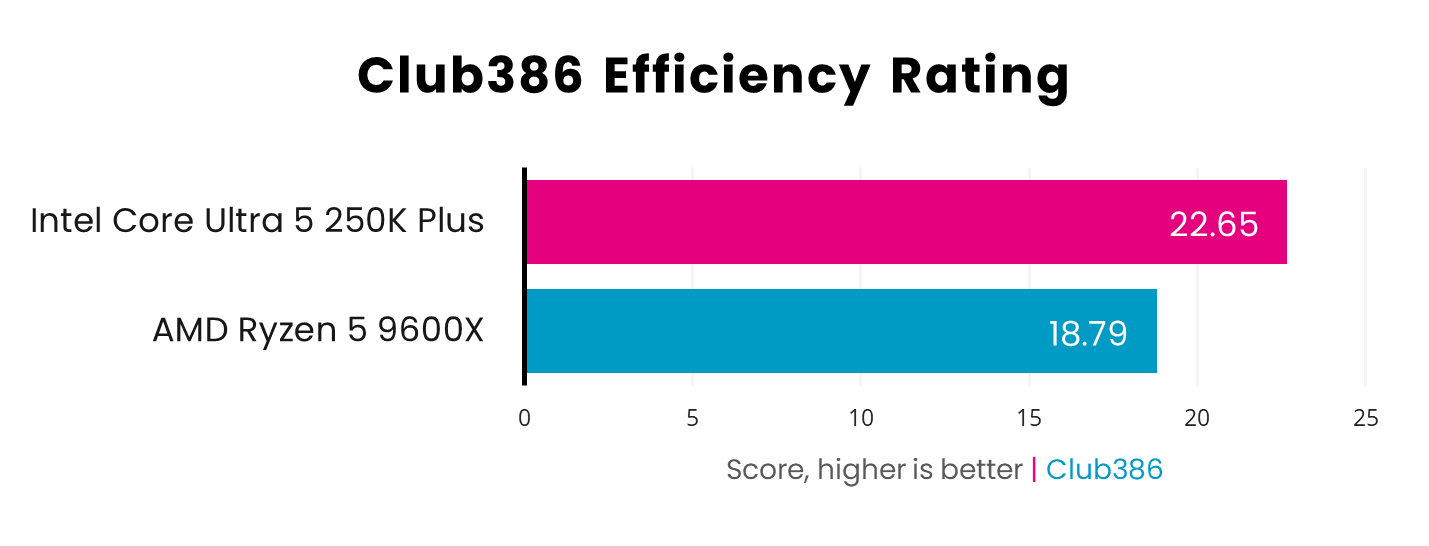
Higher power draw doesn’t necessarily mean lower efficiency. Dividing each processor’s Cinebench 2026 multi-thread score by peak system power consumption, we have an indication of points per watt, which we dub our official efficiency rating.
In the case of the Core Ultra 5 250K Plus, we’re looking at 7,406pts from 327W, leading to a score of 22.65. Next up, the Ryzen 5 9600X delivers 3,984pts through 212W, scoring 18.79. As such, we’re getting better performance per watt from the Intel CPU.
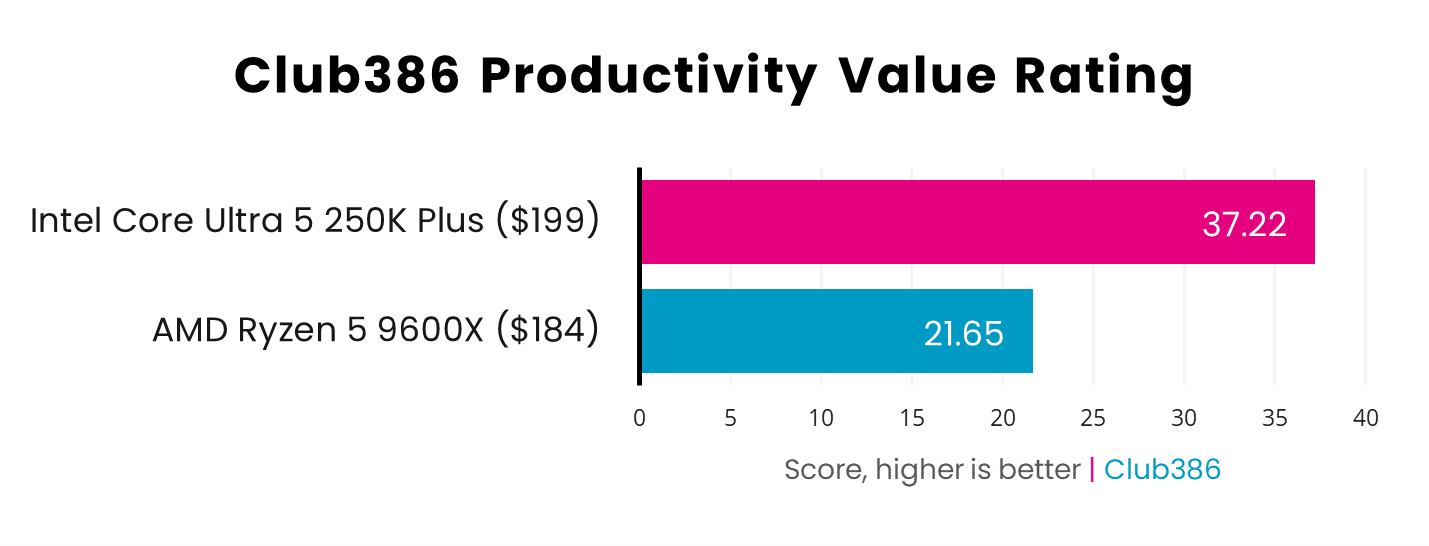
Adopting a similar approach for productivity value, but this time swapping power consumption for price, we have an approximation of performance per dollar. Despite a lower up front cost, the Ryzen 5 9600X can’t compete with the Core Ultra 5 250K Plus here, with Intel proving the better buy by 72%.
Conclusion
AMD’s Ryzen 5 9600X proves a worthy foe for the Core Ultra 5 250K Plus, regularly trading blows in single-core workflows such as gaming. However, there’s simply no beating the value Intel’s CPU offers for creative and workstation tasks, where the multi-core might of Arrow Lake Refresh comes to roost.
However, opting for the 250K Plus does sacrifice potential upgradability down the line. While you can upgrade to the Core Ultra 7 270K Plus, there likely won’t be any future processor families coming to LGA1851 motherboards. AM5, meanwhile, has at least one more CPU series on the way for its AM5 platform.
Intel Core Ultra 5 250K Plus
The Core Ultra 5 250K Plus delivers great value for money with solid single-core pace and fantastic multi-core chops. Read our review.
AMD Ryzen 5 9600X
The Ryzen 5 9600X is a solid budget gaming CPU, arriving in tandem with upgrade potential via its AM5 socket. Read our review.
It’s also worth noting that the 250K Plus doesn’t support the full speed of the fastest PCIe Gen 5 SSDs owing to an architectural design flaw. Our 2TB WD_Black SN8100, usually capable 14,900MB/s sequential reads, instead ran at up to 12,100MB/s in our testing. Paired with the 9600X, the drive ran at full pelt without issue.
There can be only one CPU at the heart of your next PC, and digesting all our analysis and test data should make deciding between the 250K Plus and 9600X that much easier. Don’t forget to check out our best CPU guide for further recommendations encompassing more of AMD and Intel’s offerings.