

Intel Panther Lake has made a cracking first impression at CES 2026, especially when it comes to battery life and performance of the integrated Arc B390 GPU, but I’ve found there are some teething issues with Intel’s accompanying multi frame gen tech. I had the chance to play several games on Panther Lake laptops at CES, and while multi frame gen works remarkably smoothly in many of them, there’s also clearly some work to be done.
As with Nvidia’s multi frame gen tech, which now runs at 6x in DLSS 4.5, you need a solid starting point to get the most out of Intel’s new tech. If your game is only running at 15fps, then adding frame gen is still going to make for a horrible experience with high latency, even if the reported frame rate is high. If you’re running at over 45fps, though, it starts to be a useful tool for smoothing out motion. That’s not out of the question either. As I found in my Panther Lake GPU benchmarks, this integrated GPU is surprisingly potent, averaging 50fps in Cyberpunk 2077 at High settings, and that’s at 1080p without any help from XeSS.
One of the games on show in Intel’s Core Ultra lounge had some problems, though, and that was Assassin’s Creed: Shadows. At first glance, it looks like Intel’s integrated Panther Lake GPU is running this game incredibly smoothly, with frame rates of over 100fps. That’s at 1080p, with XeSS upscaling on Balanced, multi frame gen on 4x, and the game running at its Medium graphics preset.
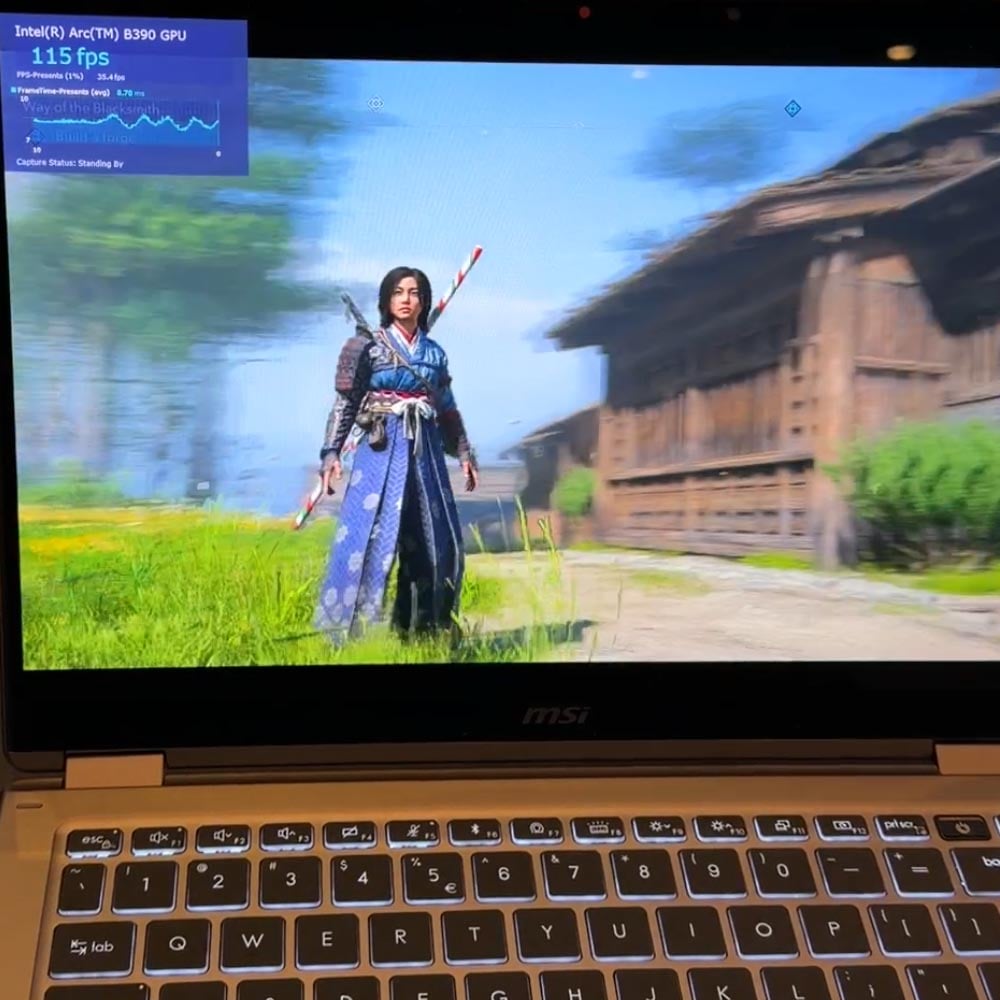
However, the true frame rate without frame gen hovers between 30 and 40fps, which isn’t really high enough to use multi frame gen, at least not in this title, and panning the mouse around the scene resulted in juddery motion. That’s still a half-decent playable frame rate for a thin and light laptop with integrated graphics, and you could always drop the settings further – I just wouldn’t enable multi frame gen at these settings.
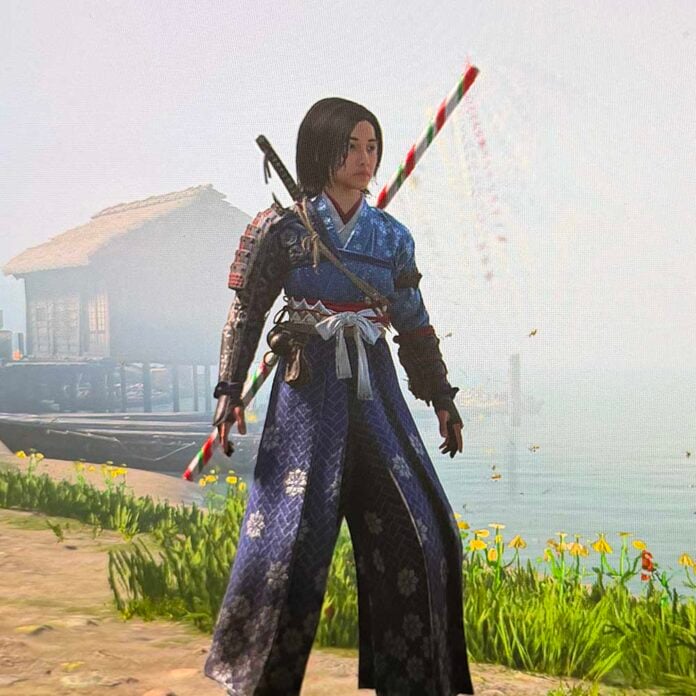
However, I also spotted some visual artefacts in this title with multi frame gen enabled. In particular, it got confused in a waterside scene where there were petal particles flying around, resulting in it appearing to treat the coloured bands on Naoe’s peppermint Bo staff as similar flying particles. As you can see in the images above, there are colour trails spurting off the staff like a firework. It looks pretty, but it’s definitely not how it’s supposed to look.
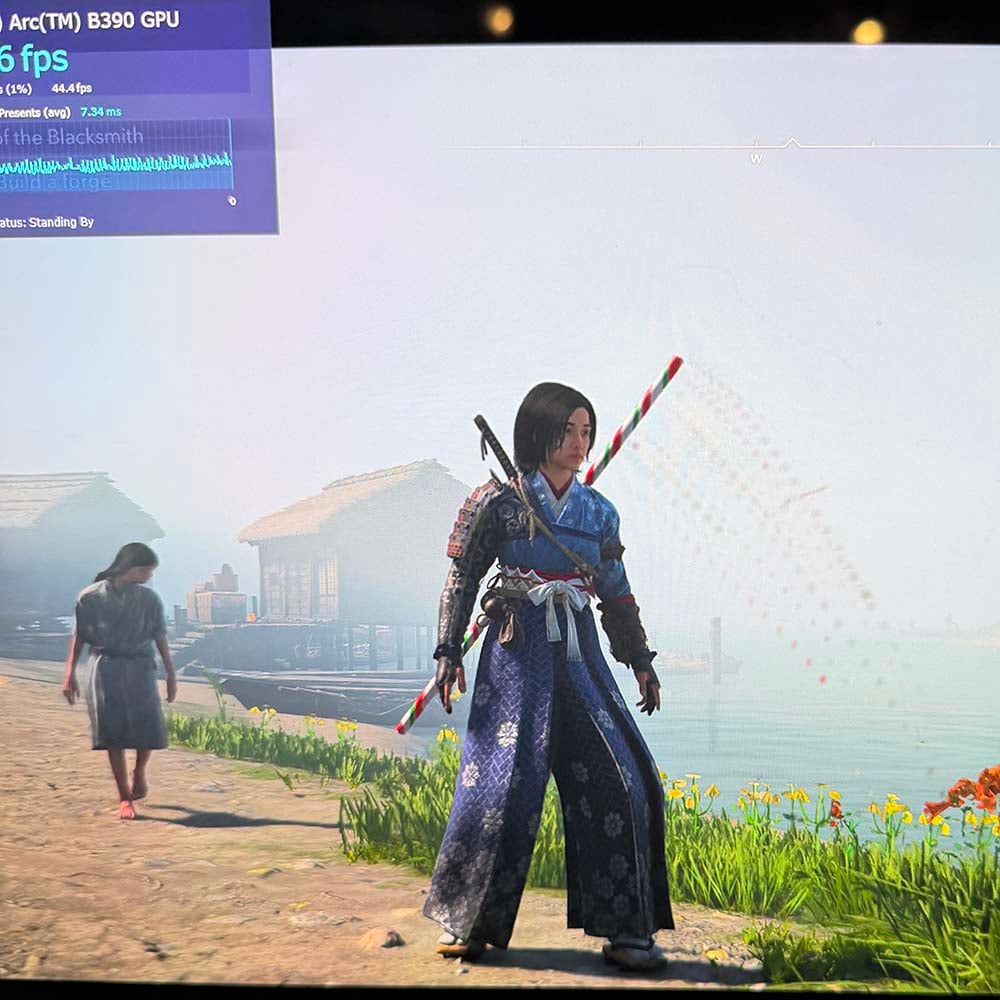
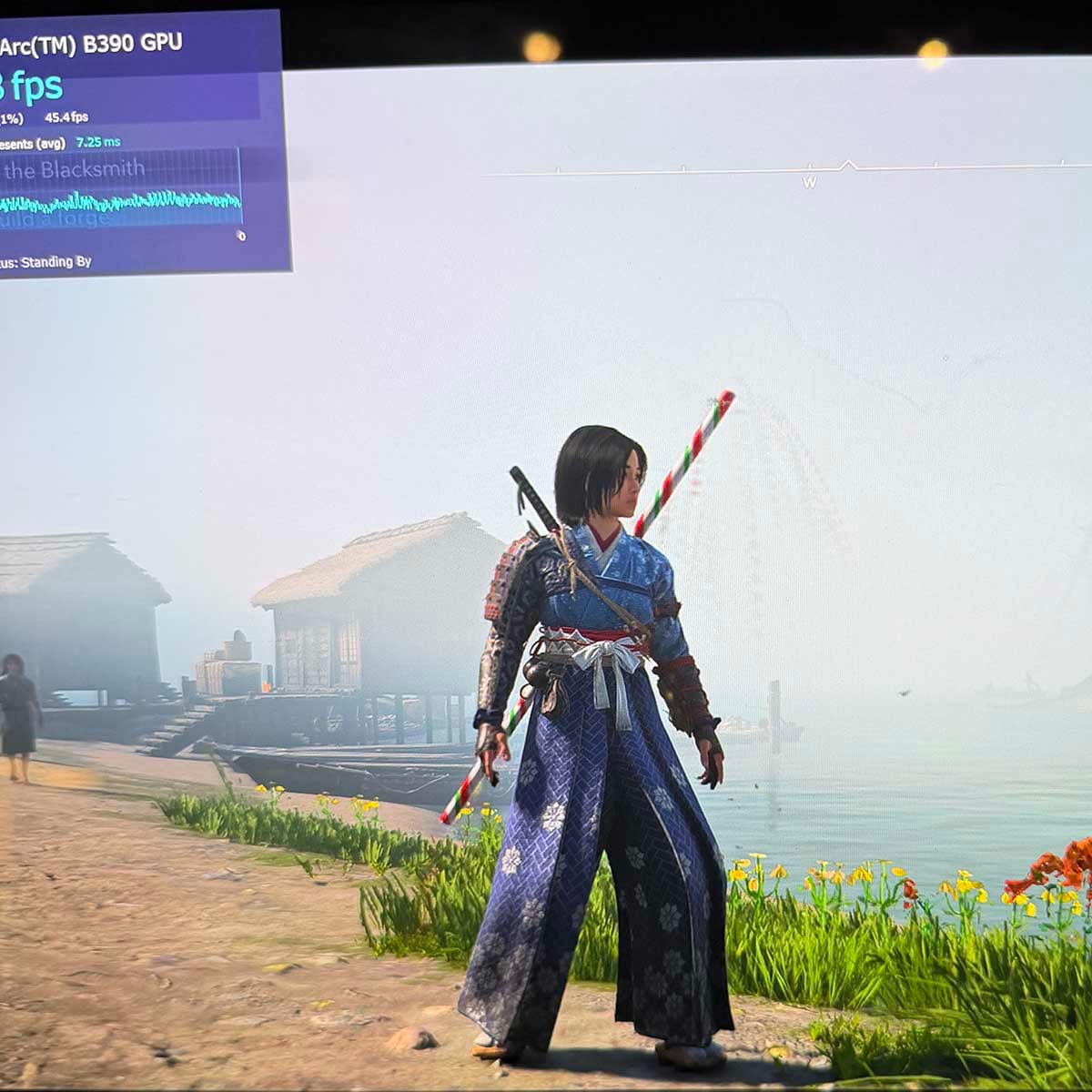
I show the footage to Intel fellow and graphics hardware expert, Tom Petersen, to see what he makes of it. ‘It’s very pretty,’ he agrees, ‘but it’s not what I would expect… I think what’s happening is the optical flow is getting confused, and if you look at it, obviously the game is not giving any motion vectors to that cue.’ Petersen explains that ‘what’s happening is our network that’s calculating optical flow is getting confused by the, whatever you want to call these things going here, and probably some motion in the background.’
He’s up front about the challenge here. ‘This is obviously not a great experience,’ admits Petersen, ‘I’m not proud of it, but we have a lot of work to do.’ Multi frame gen isn’t the main selling point for Panther Lake, though, according to Petersen. ‘We’re at the beginning of this,’ he tells us, ‘and AI as a technology is definitely going to continue to be more significant in gaming, and it’s going to have places where it falls down for sure.
‘There are going to be people who just turn it off, which is totally fine, because it’s not like we’re selling Panther Lake based on the performance of 4x AI. A lot of people would get pissed off if we said performance is whatever 4x AI is. We have to say the performance is whatever our normal raster is.’
While there are clearly some problems with Intel multi frame gen, it’s somewhat refreshing to hear Intel prioritising raster performance in this way, while also readily admitting that its AI tech isn’t perfect. Even without multi frame gen enabled, Panther Lake’s GPU is still surprisingly capable. As Intel says, there clearly is work to do, and hopefully the Arc team will continue working on its AI tech and drivers to iron out these sorts of issues.