
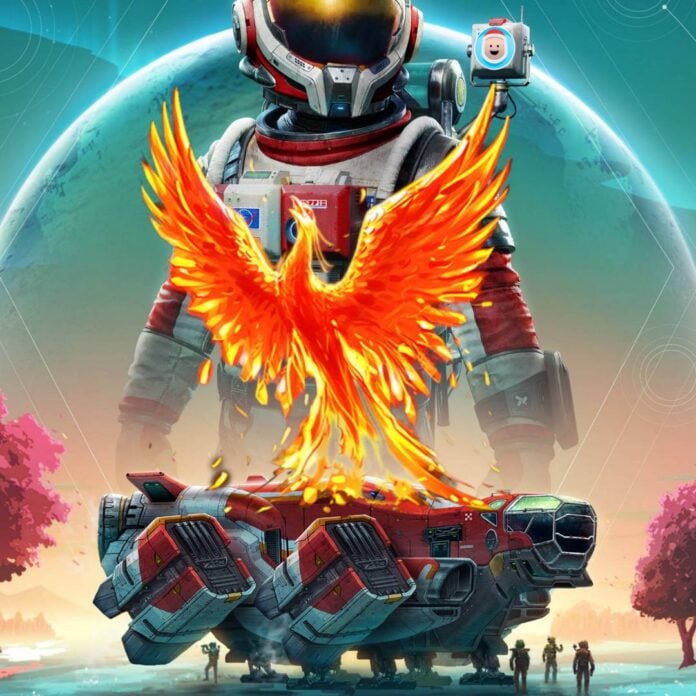
If you ask players about the first thing that comes to mind when hearing the name No Man’s Sky, most will likely say: disappointment, lie, or even scam. And that’s for a well-deserved reason. When the game was introduced at E3 2014, it took the audience by storm, as the developers promised an infinite universe filled with solar systems and procedurally-generated planets, each offering a different topography, fauna, and flora. The game was pictured as an endless space to explore with seamless transitions between the ground, planets and space; no loading screens getting in the way. Needless to say, the hype was real.
But when the game launched on August 9, 2016, users’ hopes crashed harder than the USS Enterprise-D on Veridian III, as the Minecraft in space didn’t live up to its promise. Yeah, you could do some of what the game was planned to offer, such as mining and exploring planets, but the life forms felt bizarre and unpolished, the planets’ design was repetitive, and the gameplay became bland after only a couple of hours. As for multiplayer and epic space battles, they were nowhere to be seen.
Understandably, when players butted heads with reality, they went ballistic and tore the game apart in forums and online discussions. Fundamentally, they were sold one game and got something different. Things were so bad that the UK’s Advertising Standards Authority launched an investigation into whether the promotional materials misled players. As if this wasn’t enough, Hello Games’ lack of communication added fuel to the fire as players started believing the developer cashed out and ran away.
The new beginning
After months without a word, in November 2016 and out of nowhere, Hello Games broke radio silence to announce the Foundation update. This time, Hello Games didn’t try to over promote its game; in fact, quite the opposite, as the update introduced a broader set of systems than what the announcement outlined. Launching the game surprised players with an overhauled experience, complete with base building, new game modes, and even new giant ships that could be used as mobile headquarters. Though far from perfect, this update brought hope back as players started believing that No Man’s Sky could one day become what it was meant to be from the beginning.
After showing players that they didn’t abandon the game, Hello Games went silent again, until March 2017, when it released the Path Finder update (1.2). This update brought ground vehicles to speed up the planets’ exploration, new ship types to try, and even a photo mode to immortalise your settlement. The update also improved graphics, added a 4K mode on the PlayStation 4 Pro, and base-sharing via the Steam Workshop.
Furthermore, August 2017 marked the release of the Atlas Rises update (1.3), which expanded the game’s content to a point where No Man’s Sky began resembling the vision developers and players had originally. It added about 30 hours of story missions, better planet diversity, and fast-travel portals. Most notably, Atlas Rises introduced a rudimentary multiplayer mode allowing up to 16 players to see each other in places, such as space stations. Yes, you could only see each other as blobs of light, but this gave the feeling that you were no longer alone in this vast universe.
Light at the end of the tunnel
The biggest leap happened in July 2018, meanwhile, with the launch of the NEXT update (1.5), which overhauled the game into a true multiplayer experience. For the first time, players could see each other, team up with friends or strangers to explore the world, build bases, or complete missions together. NEXT also introduced a third-person view, player customisation, alongside extensive quality-of-life improvements. At the same time, the game’s Xbox version release brought in thousands of new players who didn’t witness the original dire launch state of the game, allowing them to see it with a different eye, perhaps speaking enough good about it to encourage early adopters to give it a second chance. Unsurprisingly, the reviews were starting to shift the overall player perspective as positive experiences flooded Steam.
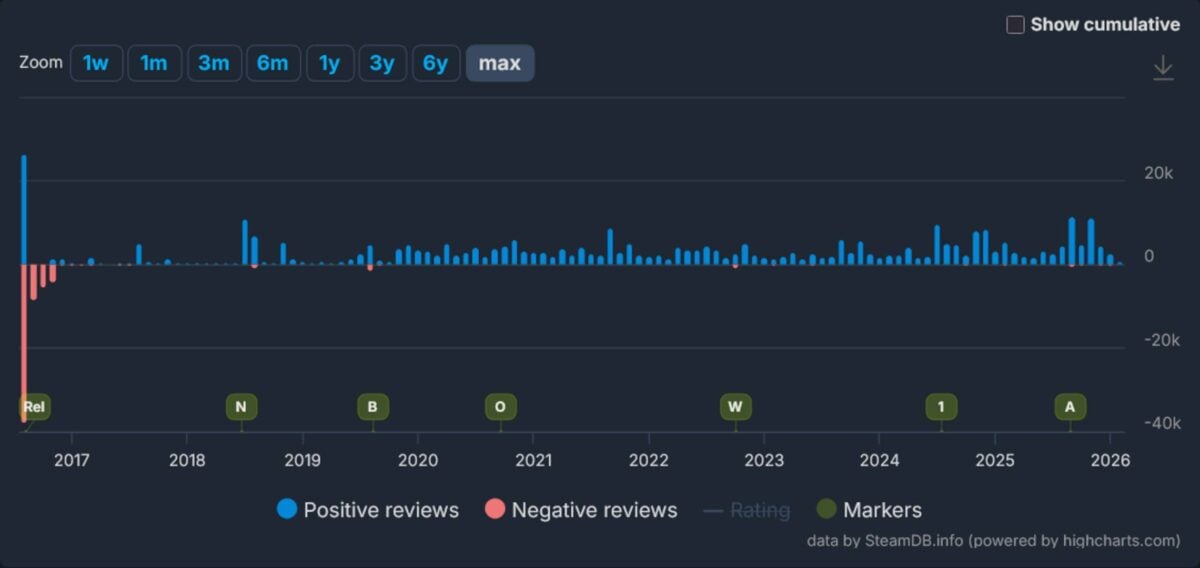
Hello Games’ Sean Murray acknowledged the transformation, noting his appreciation of the positivity around No Man’s Sky, telling The Verge “We wanted the legacy of the game to be a positive one.” By 2019, Steam reviews turned mostly positive, cementing the game’s transformation.
In August 2019, the Beyond update added VR support and a social hub where up to 32 players could meet. Then, in September 2020, the Origins update expanded planetary diversity once more with brand-new biomes, weather effects, massive sandworms, and surface NPC traders. 2020 onward also saw its share of new features, from new ship types, like the organic starship, to giant mechs and seasonal events.
Today is so different
Today, No Man’s Sky is a completely different game, closer than ever to the vision Hello Games had many years back. While some promised parts are still missing, the game has substantially improved over the years, with recent expansions adding deeper and richer experiences, be it on PC, console, handheld, or VR. Each subsequent update contributed in some way, turning the game into a fine example of redemption.
If you hop into the game today, you will be greeted with a great space odyssey, featuring most of what you can expect from this genre. This includes customisable ships, walkable ship interiors, space walks, planetary exploration, resource gathering, Tech trees, crafting, plus all the titbits mentioned earlier. In its current state, No Man’s Sky checks nearly all the boxes, even boasting features that weren’t promised in the first place. For instance, the Voyager update was so ambitious that Hello Games had to rework the game engine to make it happen!
All of this is just the emerging part of the updates’ iceberg, counting only the major snippets of what Hello Games has changed over the years, which include over 30 updates and expansions. And the best part, during the nine years of updates and fixes which led to the current game, Hello Games didn’t ask for a single dime, releasing all updates for free – no paid DLCs, no microtransactions, and no loot boxes.
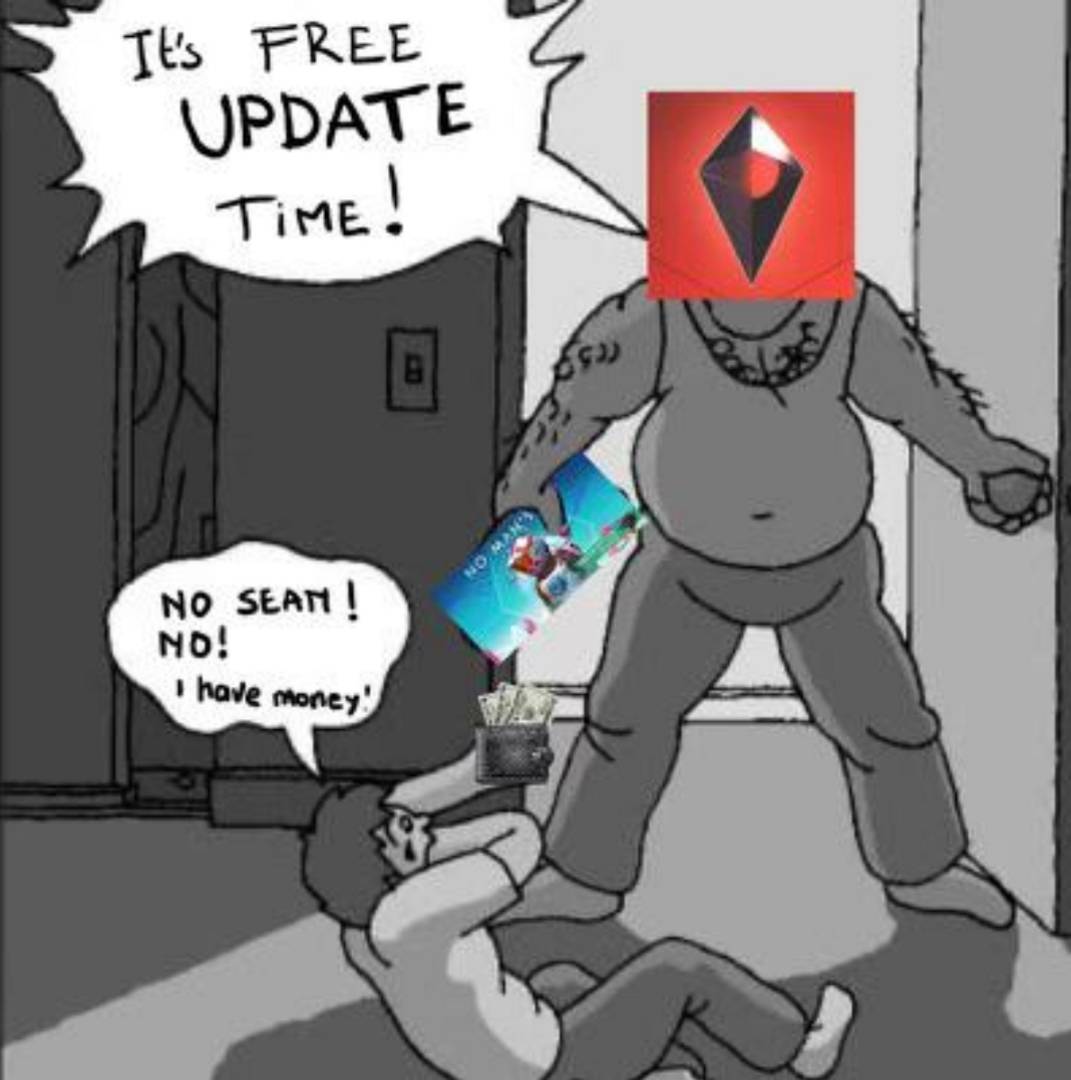
Most games that launch in a slimier state generally die or get shoved under the rug by their developers. Hello Games didn’t do that; it navigated the storm and reached the promised land. As a token of gratitude, some players have started referring to No Man’s Sky as the greatest comeback story in video games’ history, and rightfully so. Hello Games proved that a failed launch doesn’t define a game’s ultimate success. If only EA could have done the same with Anthem.