
Here’s something I wasn’t expecting to say any time soon – by far the coolest PC gaming tech at CES this year came from Intel, thanks to Panther Lake. That’s extraordinary when you consider that both AMD’s Lisa Su and Nvidia’s Jensen Huang had big keynotes at the event, but there it is. So, what’s so cool about Intel Panther Lake?
There’s a lot going on in this tiny little chip, which has seen Intel pull out all its big guns in the face of relentless competition. The main one for me, though, is its incredible integrated GPU. It’s easy to forget that, until recently, Intel hardly had any proper GPU tech to speak of, while AMD had decades of experience from ATi under its belt. AMD has had years and years to perfect the art of putting its latest cutting-edge GPU tech into CPUs, but Intel has suddenly pulled out a magic GPU from seemingly nowhere.
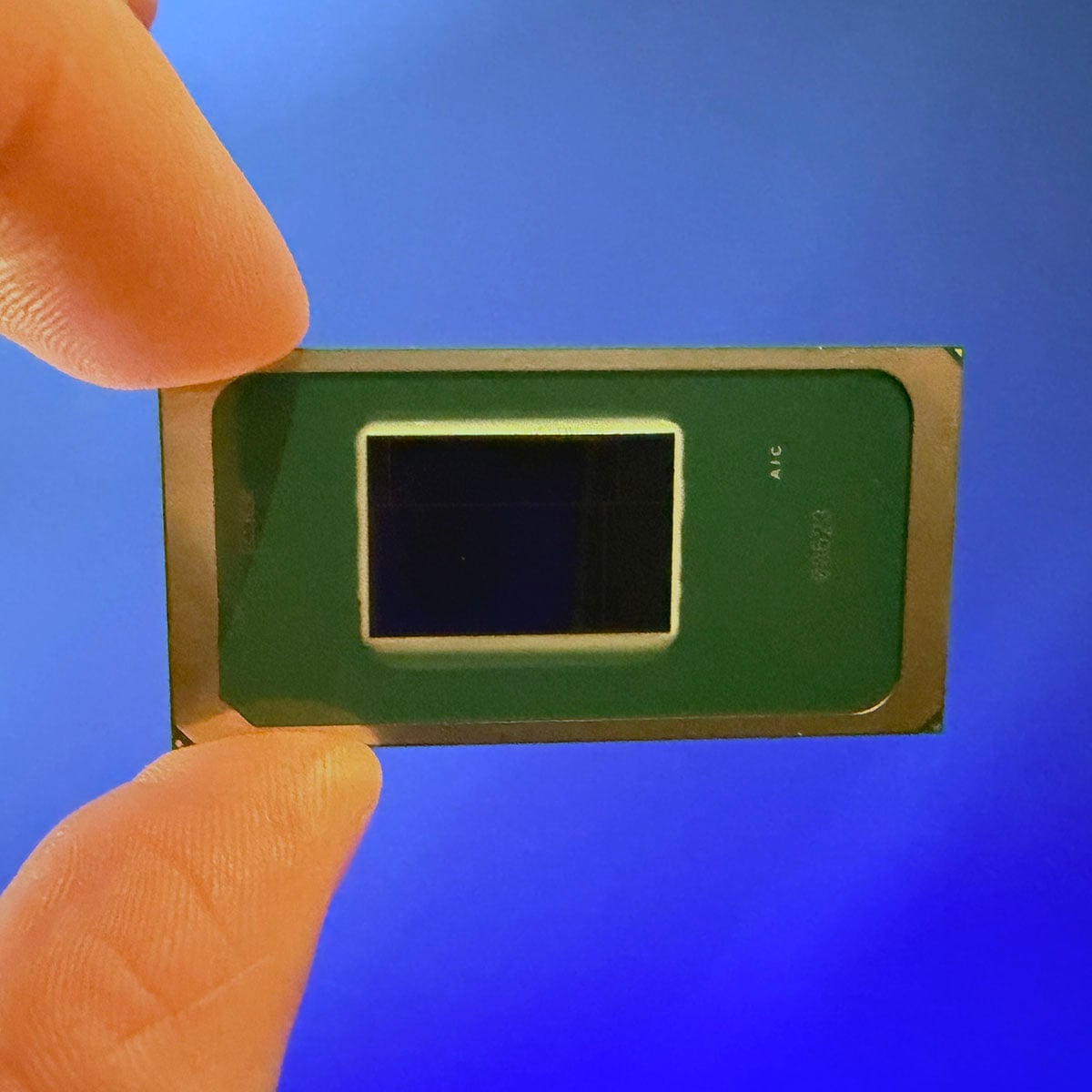
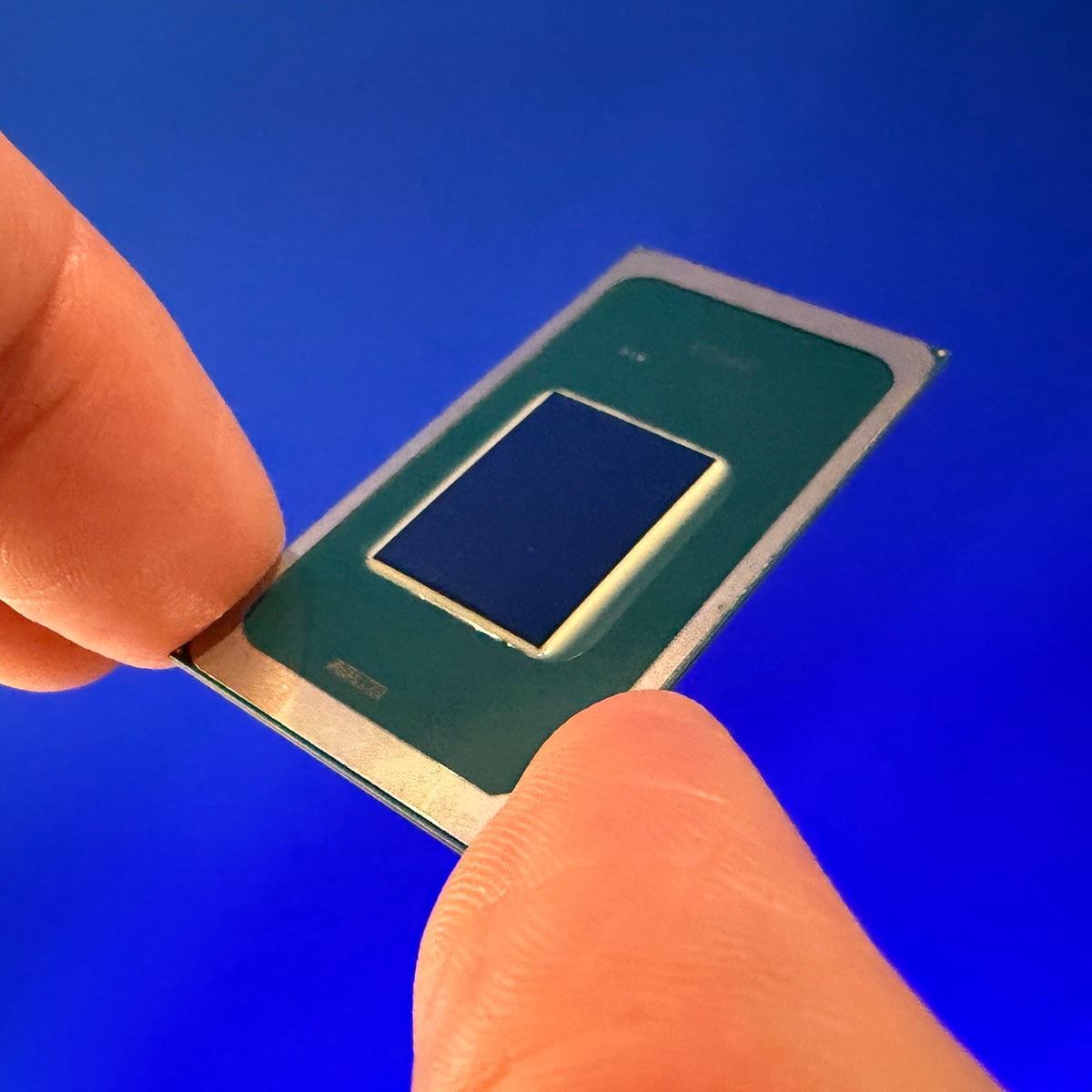
Intel’s new laptop chips contain the company’s Xe3 GPU cores (up to 12 of them), with 122 TOPS of AI power, complete with support for AI-based multi frame gen – a first for a GPU integrated into an x86 CPU. I had the chance to run a load of Panther Lake GPU benchmarks at CES, and was bowled over by the performance of these tiny laptop chips. You can genuinely enable ray tracing in Cyberpunk 2077 at 1080p on a Panther Lake laptop, averaging 52fps, and that’s not even with frame gen switched on.
Meanwhile, AMD launched its new AI 400-series laptop chips, which are still (for some reason) stuck with ageing and underpowered RDNA 3.5 GPUs. The first chips based on AMD’s RDNA 3 GPU architecture first debuted in 2022, and it absolutely baffles me that AMD is still using this tech in its latest CPUs. AMD’s integrated GPUs have always lagged a bit behind their desktop counterparts – memorably, the Ryzen 7 5700G still had ancient Radeon Vega graphics, for example. But AMD has to up its game now, and work on getting RDNA 4 or even RDNA 5 into its next CPUs. Intel has rewritten the rulebook with Panther Lake – you can’t compete with last-gen GPUs in your processors any more.

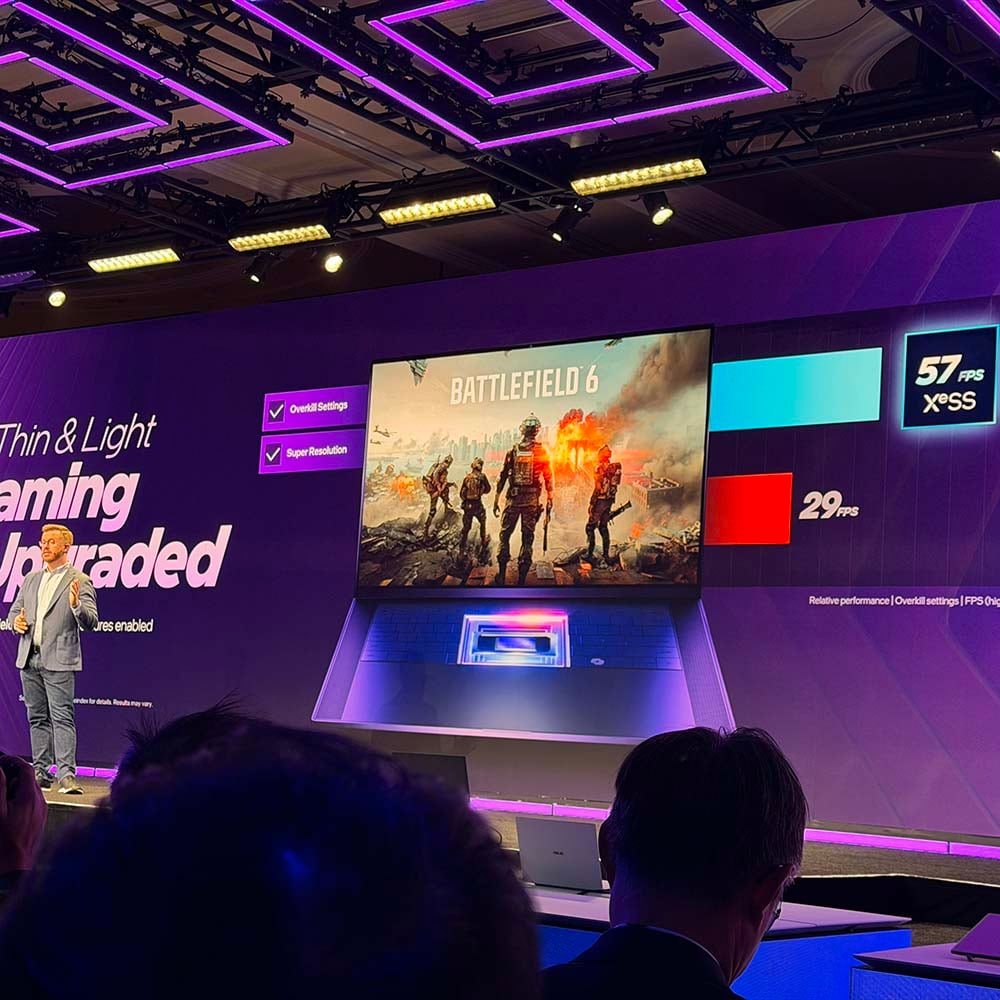
Intel provided me with an AMD Ryzen AI 9 HX 370 Strix Point laptop for comparison testing at CES, and it’s fair to say that Panther Lake made a mockery of it. Yes, an AMD Strix Halo rig would have been even faster, but only by using brute force, and with the extra cost of all that extra silicon. A Strix Halo GPU might have loads of compute units, but it’s still based on last-gen tech – Intel’s Panther Lake GPU is a more elegant alternative.
Panther Lake isn’t perfect, of course, especially in these early pre-release days. I found multi frame gen problems when I tested the tech in Assassin’s Creed Shadows, for example, after which Intel readily admitted that it still has work to do. In terms of new gaming hardware, though, Intel stole the show. It showed us new silicon built on its 18A process that genuinely moves the goalposts.
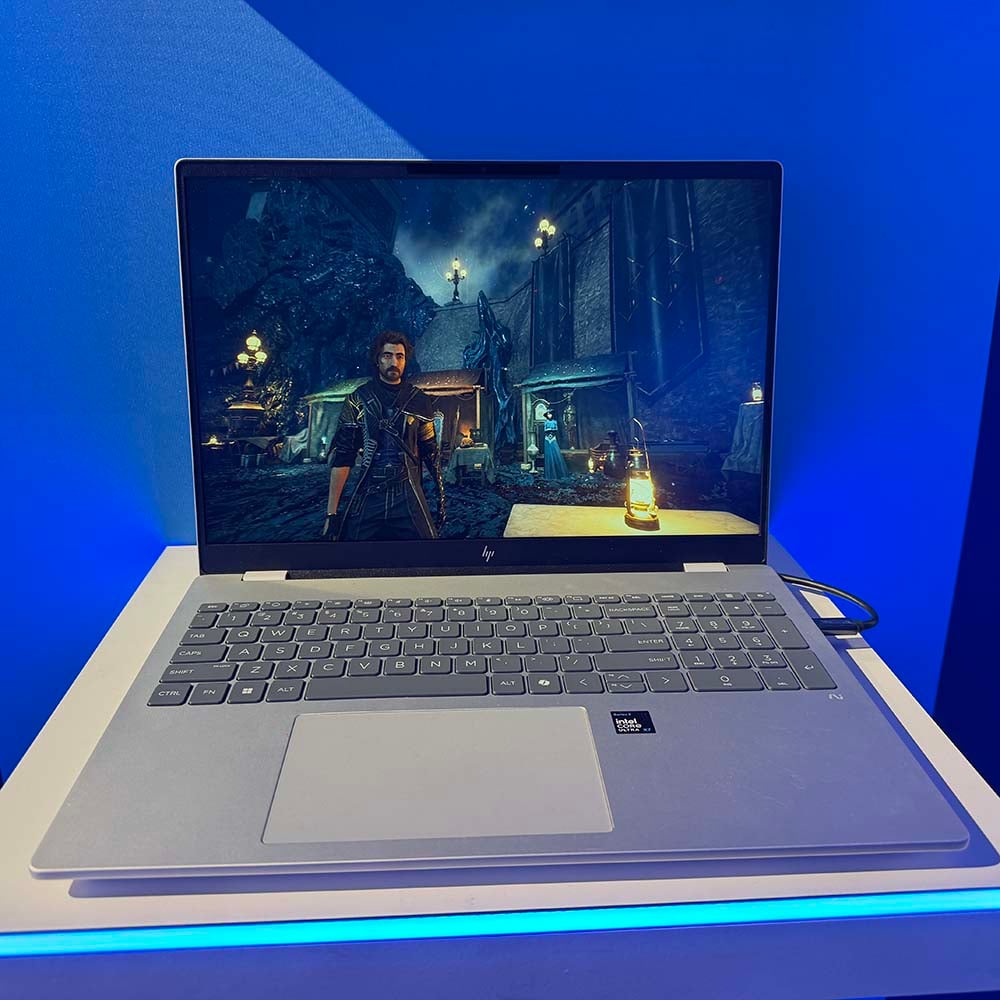
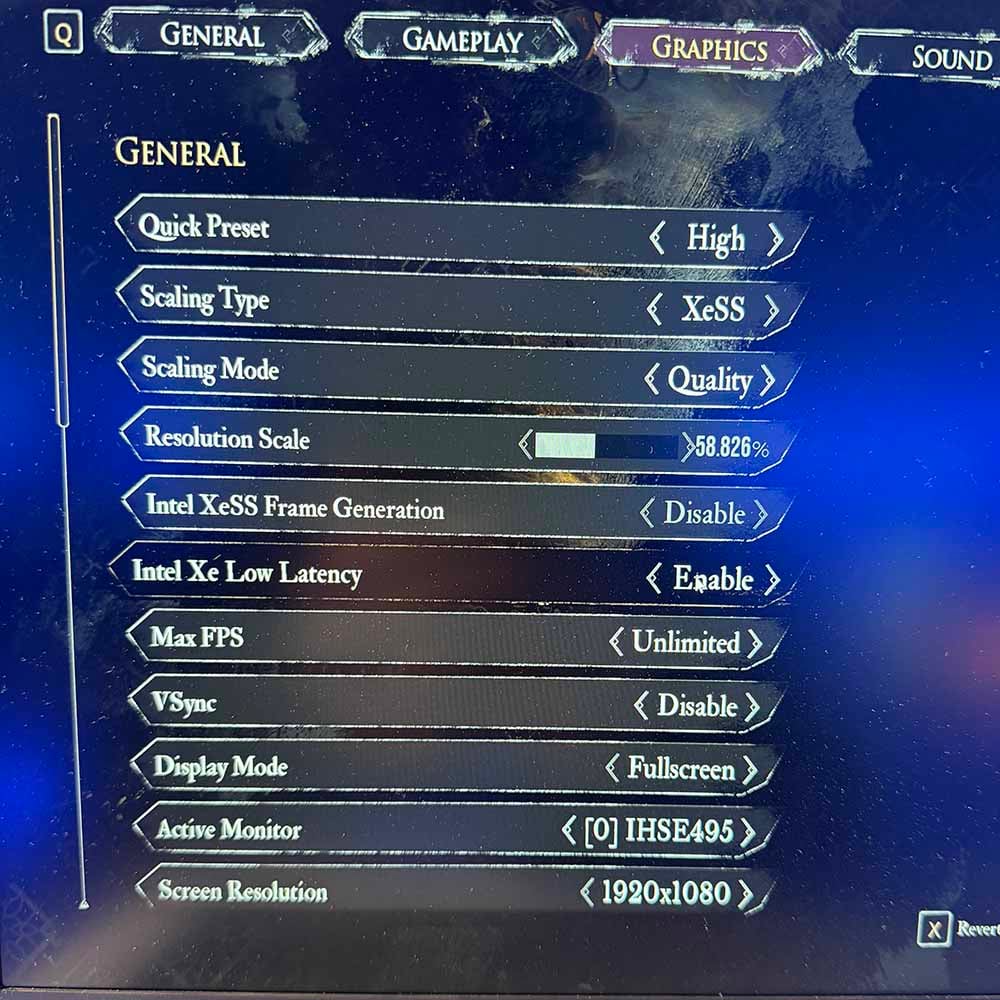
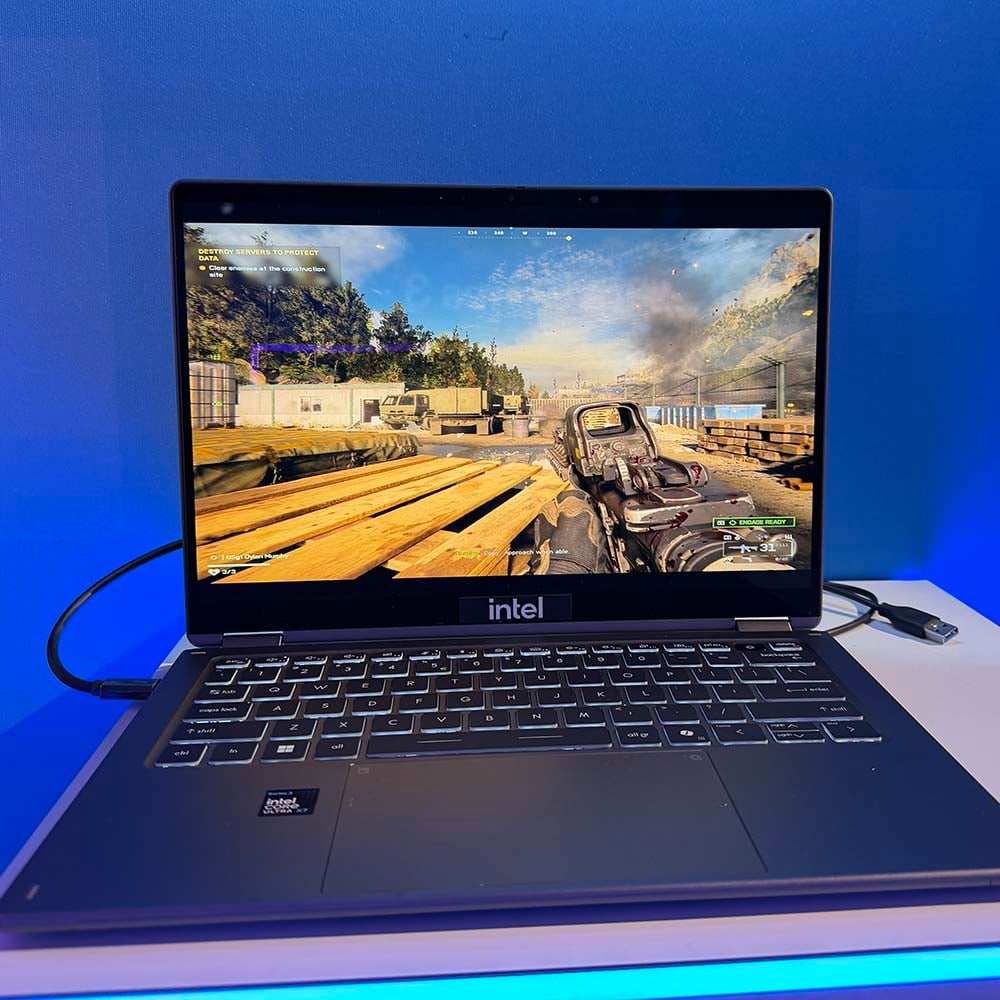
The gaming demos were outstanding. I was able to play the fantastic Clair Obscur Expedition 33 on a Panther Lake machine, running at 1080p with High settings and XeSS on the Quality setting, and it looked and played fine. You genuinely don’t need a discrete Nvidia GPU in a thin and light laptop to run games at half-decent settings any more.
Several other big games were shown running well on Panther Lake’s integrated Arc B390 GPU as well, including Marvel Rivals and Battlefield 6. Intel even said it’s working on a Panther Lake handheld chip, which could be amazing if its GPU performance is in a similar league to Intel’s laptop chips – it’s possible AMD could lose its handheld stronghold if Panther Lake delivers.
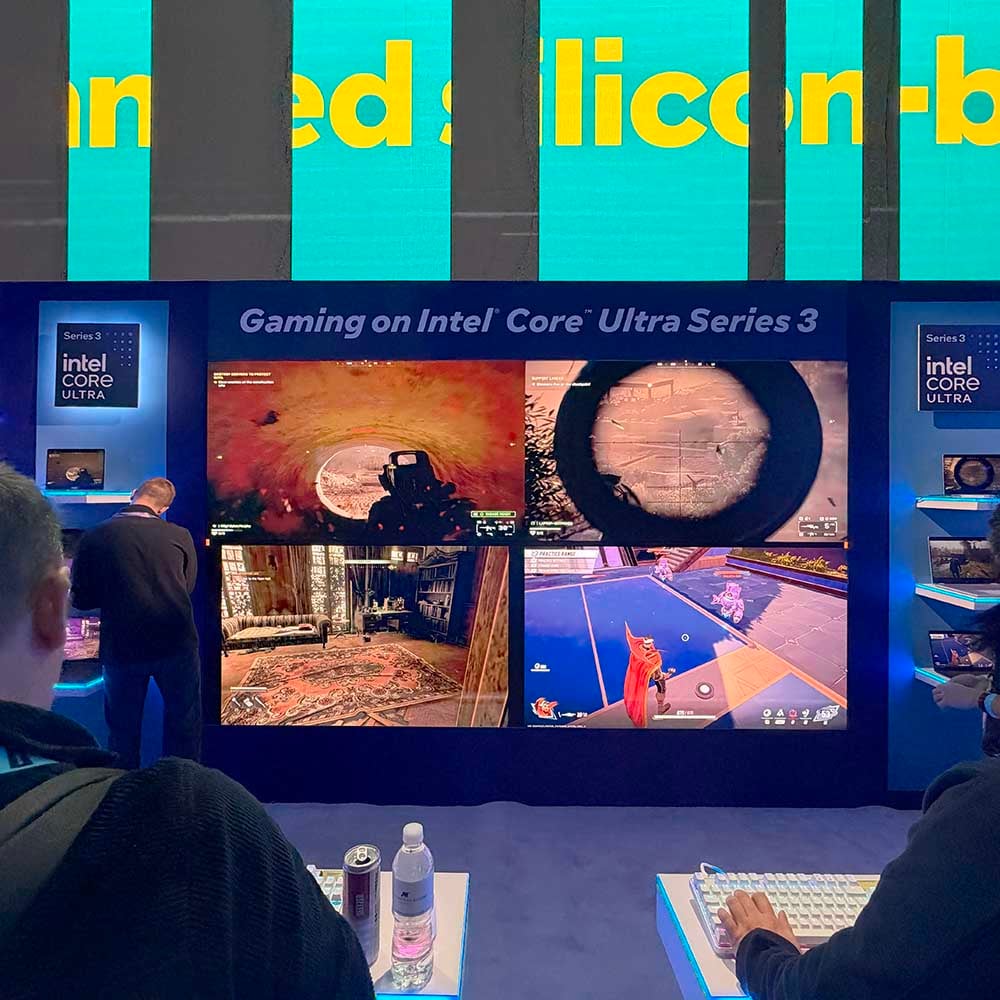
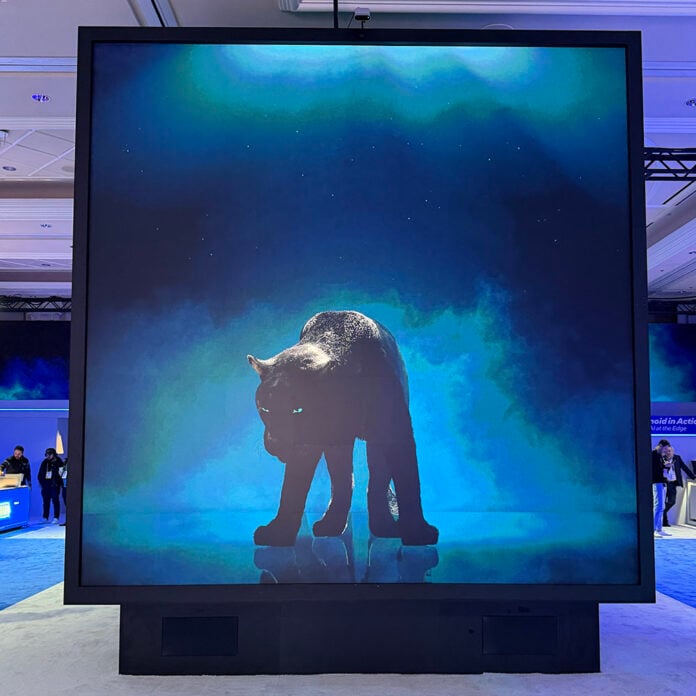
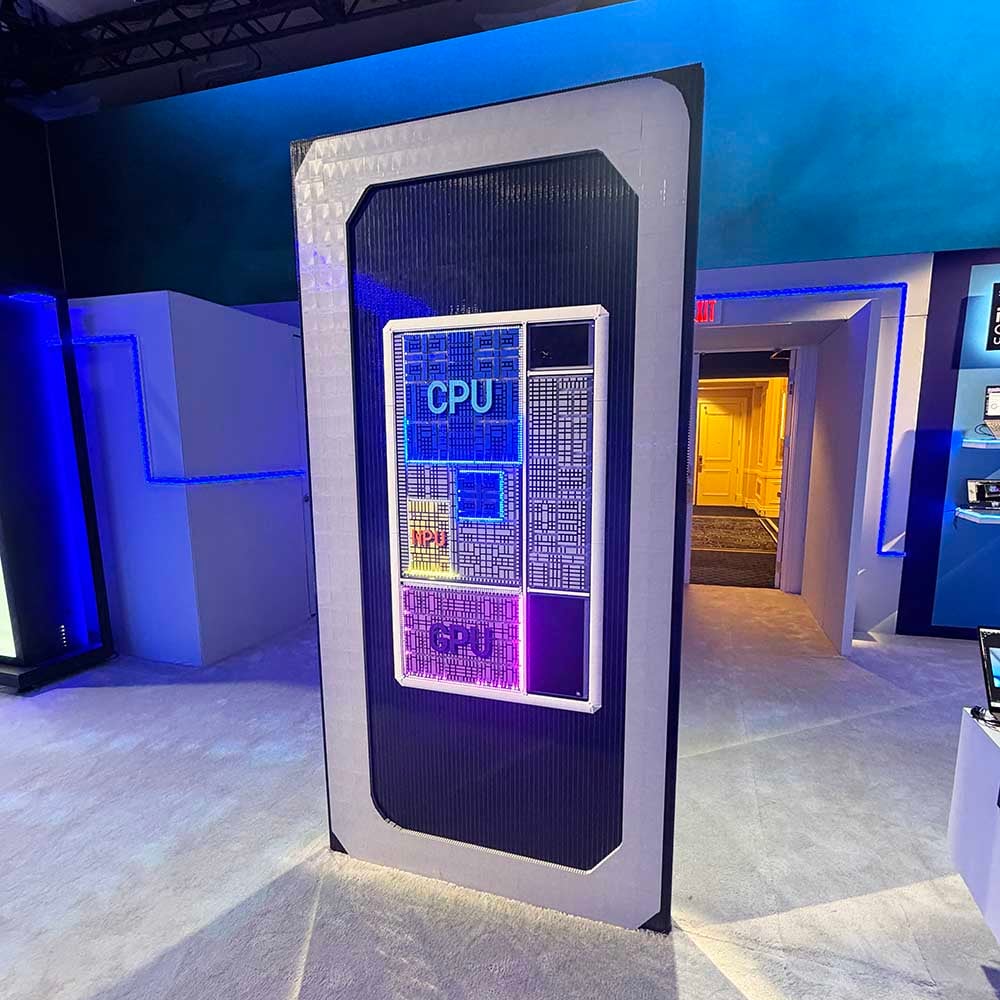
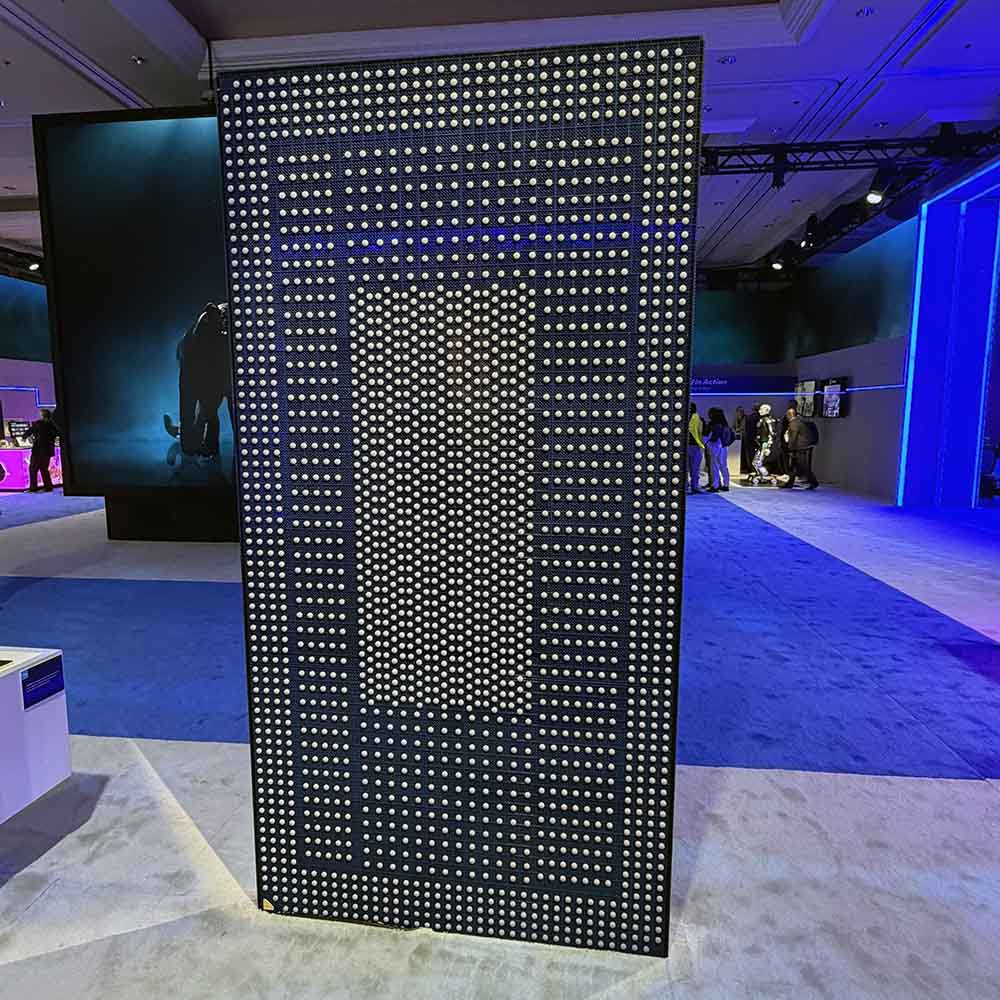
On a side note, Intel’s whole Panther Lake demo area was also packed with really cool stuff. A huge four-sided screen in the middle showed a panther snarling at you in various poses, and there was a Lego recreation of a Core Ultra 3-series chip. Intel told me this structure took several people over 280 hours to build, using around 42,000 bricks. Even the connections on the back are accurate, and the LEDs are linked to a Panther Lake laptop, with the appropriate parts lighting up when those bits of the chip are enabled.
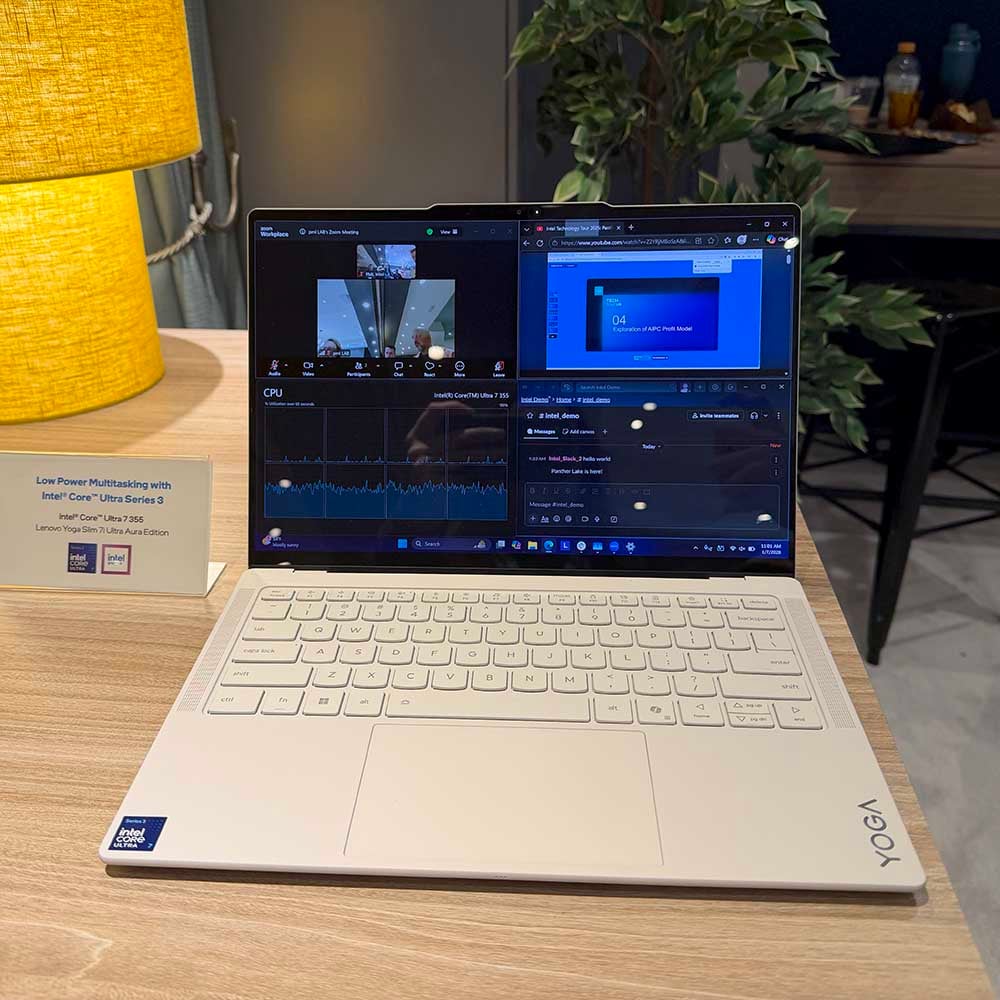
Intel is making big claims about battery life as well, promising 27 hours of general use. Intel demonstrated some of the power wizardry to me, showing that a laptop could simultaneously host a Zoom call, play a YouTube video, and run Slack, all without even calling on the CPU’s P-Cores and E-Cores – the whole lot could be run on Intel’s ‘low-power island’ of LP E-Cores. I’ll have to wait until I’ve got a Panther Lake machine in the labs to give its battery a proper workout, but the demo machine was happily running for several hours without being plugged into the mains while I was there.
What did we get from AMD and Nvidia? A lot of very impressive AI data centre tech, yes, but, as many others have pointed out, CES is all about consumer electronics – the clue is in the name. For gaming from AMD, we got the same CPU AMD released over a year ago, but with a higher clock speed. Yes, the Ryzen 7 9850X3D is likely to be the best gaming CPU when it comes out, but it’s hardly new and exciting.
Meanwhile, Nvidia G-Sync Pulsar really impressed me in the time I had with it, and DLSS 4.5 is good too. Again, though, it’s not exciting new hardware. We were hoping for RTX 5000 Super GPUs, but rocketing memory prices appear to have put the kibosh on that idea. Let’s also not forget that the main reason why memory prices are reaching ridiculous heights is because of the outlandish demand for DRAM from AI companies, mainly fuelled by Nvidia hardware.
I found Intel’s focus on gaming performance refreshing amid all the big AI announcements, and it’s good to see the PC grandaddy hopefully getting back on track again. After all the problems with Arrow Lake gaming performance and Raptor Lake stability, Intel really needed this. There are still questions, of course. I haven’t benchmarked Panther Lake’s CPU cores in demanding desktop applications yet, and Intel will need to work really hard on fixing bugs and driver issues with the latest games. Drivers haven’t always been Intel’s strong point when it comes to GPUs.
Either way, I’m looking forward to having a proper play with Panther Lake when we get a machine in the Club386 labs – integrated graphics just got a whole lot better, and that’s great for mobile gaming.