

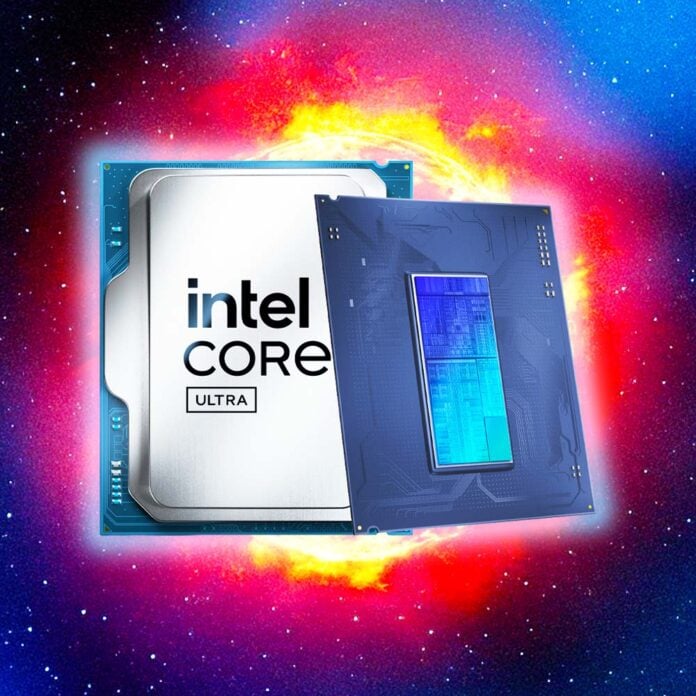
Intel has lifted the lid on its new range of Core Ultra 200S Plus CPUs, and is promising a big boost in gaming performance compared to its previous lineup. Two desktop chips have been announced, the Core Ultra 7 270K Plus and the Core Ultra 5 250K Plus, which Robert Hallock, VP of Intel’s Client Computing Group, describes as “the fastest desktop gaming processors Intel has ever built.”
Improved gaming performance
We’ll be able to share more details about the technology behind this claim over the next few weeks, but one key factor is a huge 900MHz boost to the die-to-die interconnect compared to first-gen Arrow Lake desktop chips. As Intel’s latest chips are made up of several tiles, a bit like AMD’s chiplets but all in one package, this should significantly reduce latency when, for example, your CPU cores need to communicate with the memory controller.
One key factor is a huge 900MHz frequency boost to the die-to-die interconnect.
“This increases the speed of the CPU/memory controller link by nearly one gigahertz,” says Intel, “driving system latency down and gaming performance up.” The company has provided some of its own figures for reference, comparing the gaming performance of a 270K Plus with the previous 265K.
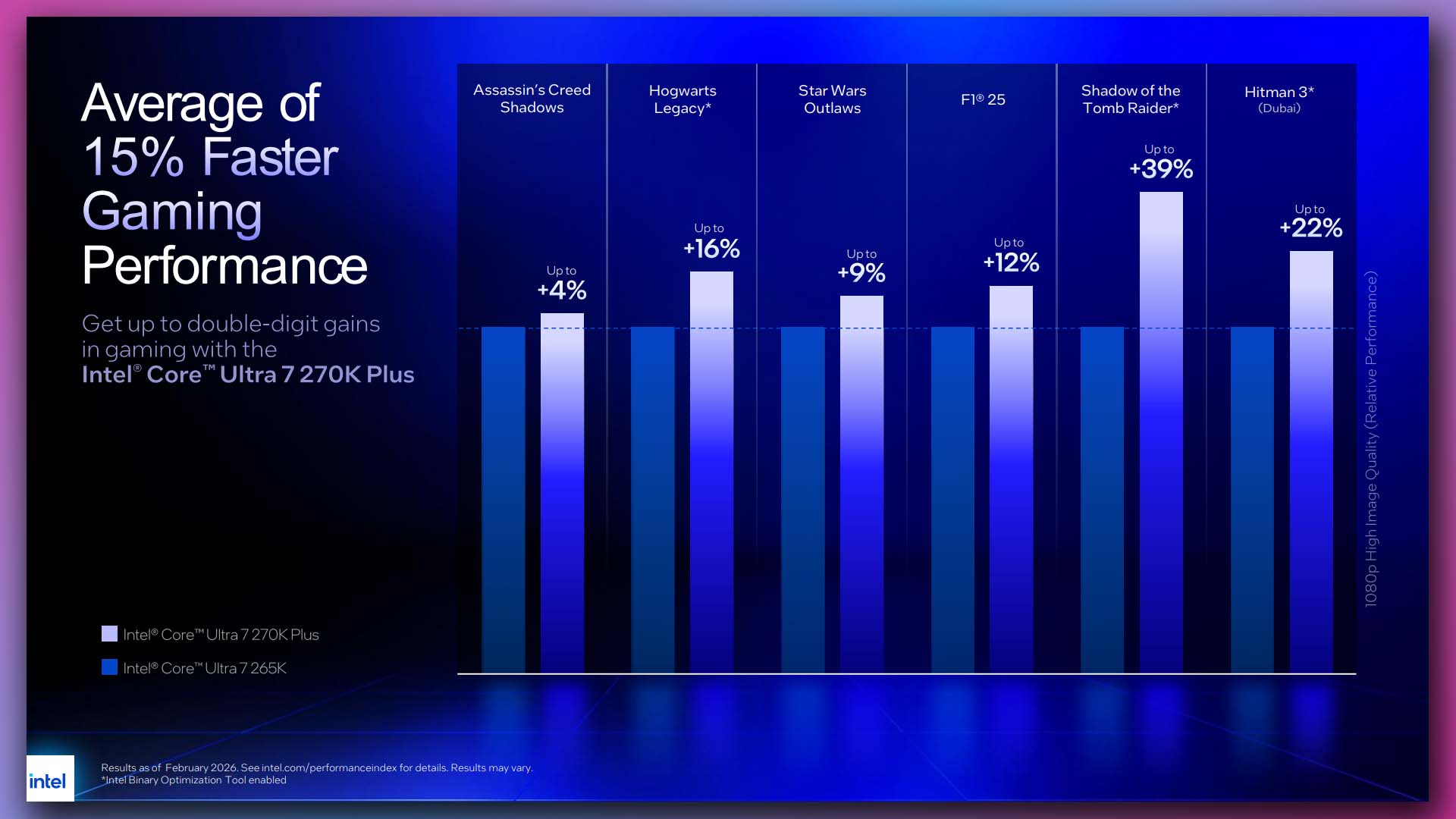
According to Intel, the 270K Plus is up to 39% faster in Shadow of the Tomb Raider, up to 12% quicker in F1 25, and up to 16% faster in Hogwarts Legacy. These figures are achieved when running the games at 1920×1080 with high graphics settings.
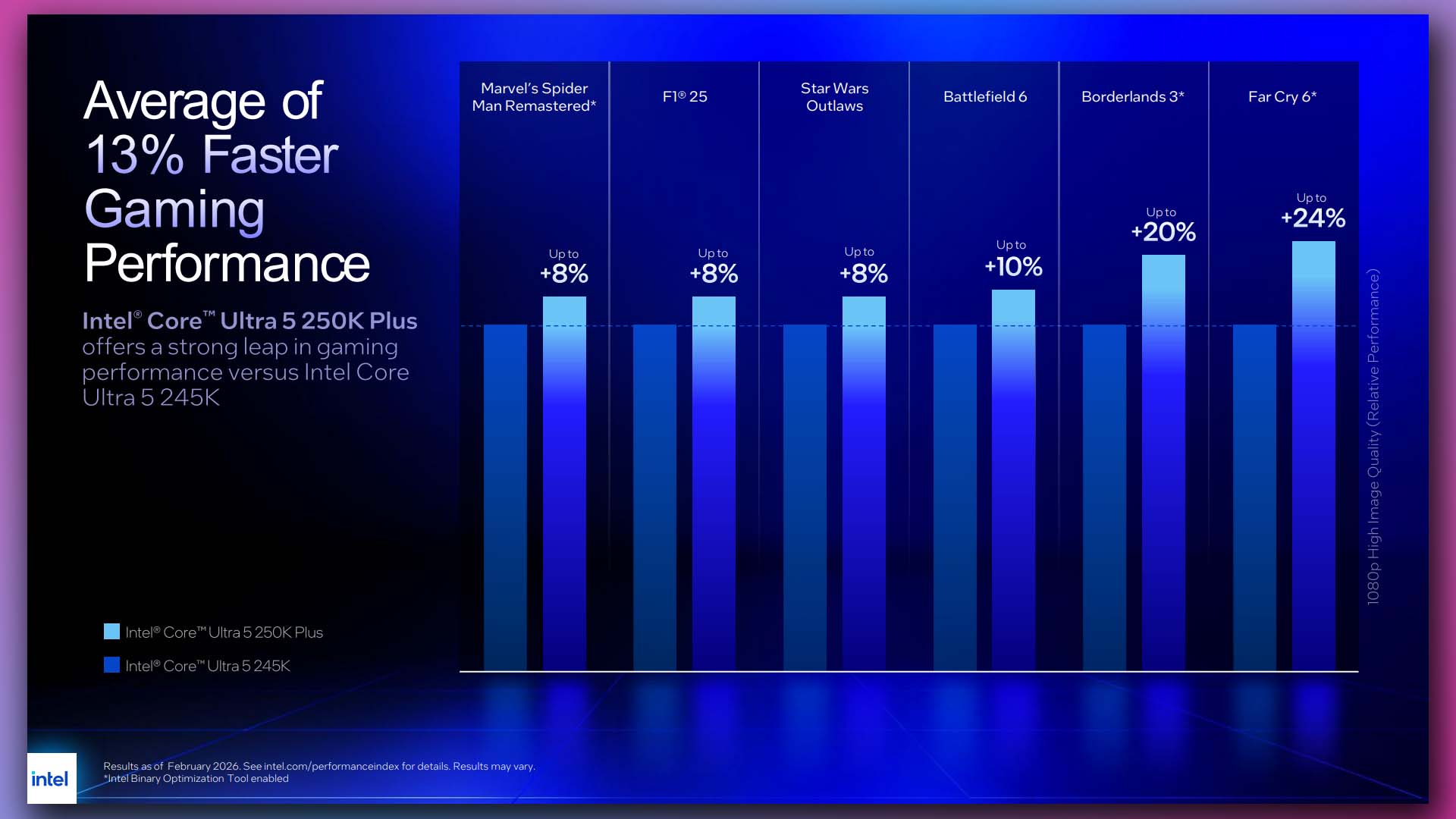
Intel has provided some figures for other games running on the 250K Plus as well. The second-rung chip is said to be up to 24% faster than the existing 245K in Far Cry 6, a title that was a notable struggle for the original Arrow Lake chips to run, with a 20% boost in Borderlands 3, and 10% in Battlefield 6.
It looks as though Intel has worked hard to resolve the latency issues prevalent in the original Arrow Lake chips to boost their gaming performance. However, it’s also notable that Intel’s gaming figures only compare the 200S Plus chips to their predecessors, and not to any AMD Zen 5 CPUs, with or without 3D V-cache, or even Intel’s earlier Raptor Lake CPUs.
Arrow Lake Refresh specs
In addition to the die-to-die interconnect frequency boost, Intel has taken the opportunity to bolster specifications elsewhere, with bumps in both core counts and clock speeds. Let’s bring up the Table of DoomTM.
| Model | P-Cores | E-Cores | Threads | Boost clock | Launch MSRP |
|---|---|---|---|---|---|
| Ultra 200 Plus (2026) | |||||
| Ultra 7 270K Plus | 8 | 16 | 24 | 5.5GHz | $299 |
| Ultra 5 250K Plus | 6 | 12 | 18 | 5.3GHz | $199 |
| Ultra 200 (2024) | |||||
| Ultra 9 285K | 8 | 16 | 24 | 5.7GHz | $589 |
| Ultra 7 265K | 8 | 12 | 20 | 5.5GHz | $394 |
| Ultra 5 245K | 6 | 8 | 14 | 5.2GHz | $309 |
| 14th Gen (2023) | |||||
| i9 14900K | 8 | 16 | 32 | 6GHz | $589 |
| i7 14700K | 8 | 12 | 28 | 5.6GHz | $409 |
| i5 14600K | 6 | 8 | 20 | 5.3GHz | $319 |
| 13th Gen (2022) | |||||
| i9 13900K | 8 | 16 | 32 | 5.8GHz | $589 |
| i7 13700K | 8 | 8 | 24 | 5.4GHz | $409 |
| i5 13600K | 6 | 8 | 20 | 5.1GHz | $319 |
As you can see, the Core Ultra 5 250K Plus gets a small 100MHz boost to its P-Core clock speed compared to the 245K. However, the 270K Plus still peaks at 5.5GHz, the same ceiling as its predecessor. There have been some substantial changes to core counts, however, as well as launch prices.
In terms of the number of cores, the Core Ultra 7 270K now matches the spec of Intel’s flagship Core Ultra 9 285K, with four more E-Cores than the previous 265K. There were some rumours about a Core Ultra 9 290K Plus being introduced in this lineup to take over from the 285K, but Intel hasn’t mentioned this CPU at all in its launch materials.
The 270K Plus specification does look really competitive for its price, though. It gives you 24 cores, comprising eight P-Cores and 16 E-Cores, with a top boost clock of 5.5GHz for the former. That’s only 200MHz lower than the 285K, and with an MSRP of $299, it’s potentially going to give AMD’s 8-core Ryzen 9 9700X (currently $307 on Amazon) something to worry about.
More cores and faster multi-threading
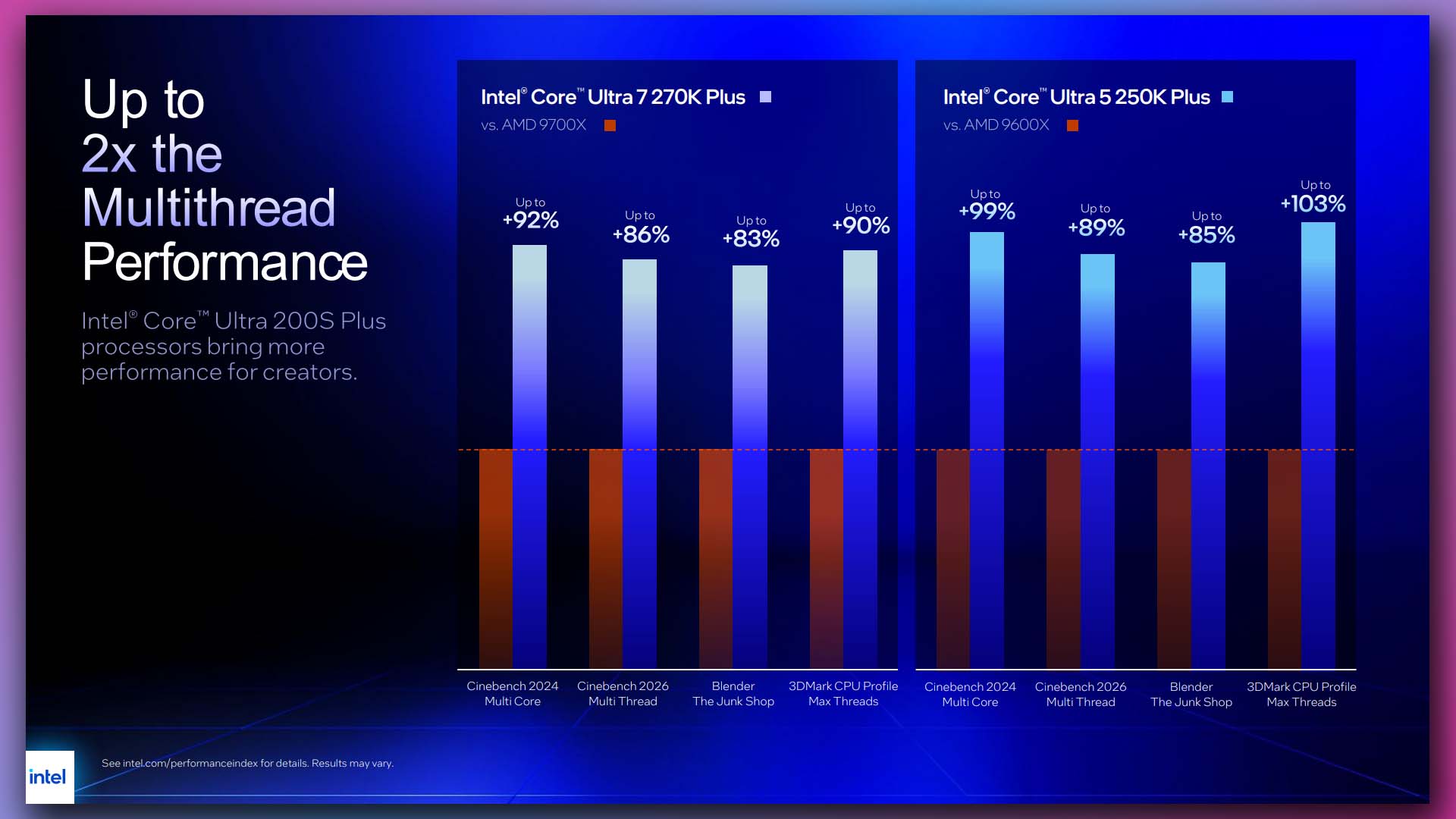
Indeed, Intel has shared some figures that show the 270K Plus battering the 9700X in multi-threaded workloads, which is unsurprising given the huge number of cores available. According to Intel, it’s 92% faster than the 9700X in Cinebench 24’s multi-threaded test, and 83% quicker in the Blender Junk Shop benchmark. If you’re looking for a good-value productivity chip for rendering workloads, Intel is going after this market hard.
Similarly, the Core Ultra 5 250K Plus is priced at $199 to challenge AMD’s 6-core Ryzen 5 9600X ($189 on Amazon). Intel says it’s up to 99% faster than the AMD chip in the Cinebench 24 multi-threaded test. It will be interesting to see if AMD drops the prices of these Zen 5 chips to better compete with Intel.
One other boost is official support for 7,200MT/s DDR5 memory, a significant increase from 6,400MT/s on the original Arrow Lake lineup. Intel says it’s also going to continue providing support for 200S Boost, including maintaining warranty support for 8,000MT/s overclocked RAM speeds.
Finally, Intel has announced a new Binary Optimization Tool designed to increase the number of instructions per clock (IPC). The company goes on to say that it will do this “even if the workload has been optimised for another x86 processor, a game console, or an earlier architecture.”
Arrow Lake Refresh release date and price
Mark your calendars, the Arrow Lake Refresh release date is officially set as 26 March, 2026, with the Intel Core Ultra 7 270K Plus arriving at $299, while the Core Ultra 5 250K Plus sits comfortably at $199.
Intel says there will be 12 new motherboards based on its 800-series chipsets on the way from the usual players as well. Keep an eye on Club386 over the next few weeks for more information as it comes in – we’re really looking forward to testing these chips for ourselves and seeing how Intel’s claims hold up to scrutiny. In the meantime, check out our guide to buying the best CPU to get a good idea of the current processor landscape.