
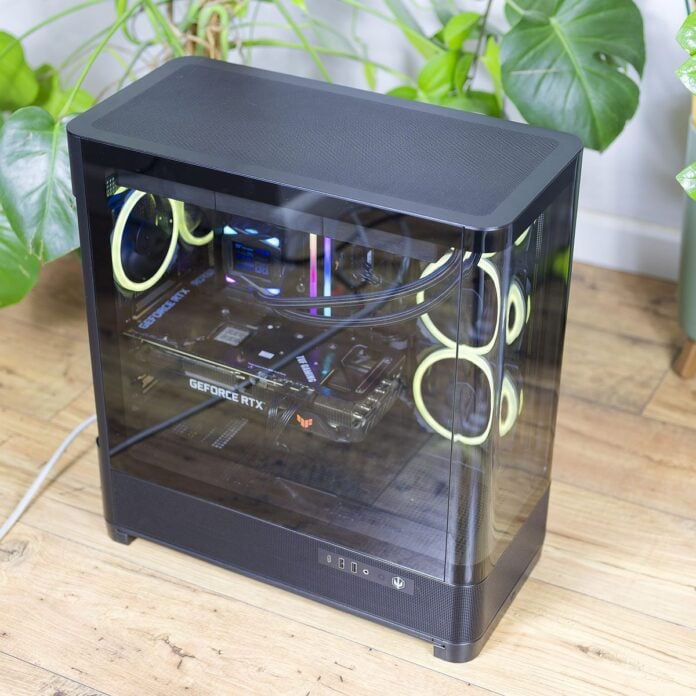
Showcase PC cases often ask you to choose between style and substance. The Endorfy Aquarius 8000 Corona is more interesting because it aims for both, pairing curved glass and a slim silhouette with the kind of compatibility that usually gets lost in the pursuit of looks.
The result is a chassis that feels deliberate rather than decorative. It is built to display a powerful system, but it also leaves enough room for that system to be genuinely ambitious.

Endorfy Aquarius 8000 Corona
€129
Pros
- Distinctive panoramic design
- Excellent CPU cooler and GPU clearance
- SSI-CEB and back-connect mobs
- Convenient side-mounted front I/O
- Huge fan and cooling potential
- Strong out-of-the-box airflow
Cons
- Good airflow but not as aggressive as a mesh-first tower
- No rubber grommets
Club386 may earn an affiliate commission when you purchase products through links on our site.
How we test and review products.
The Endorfy Aquarius 8000 Corona is priced at €129. The Flex edition, meanwhile, without four Corona ARGB fans, which you can buy separately for €12.90 each, is available for €99.
Specifications
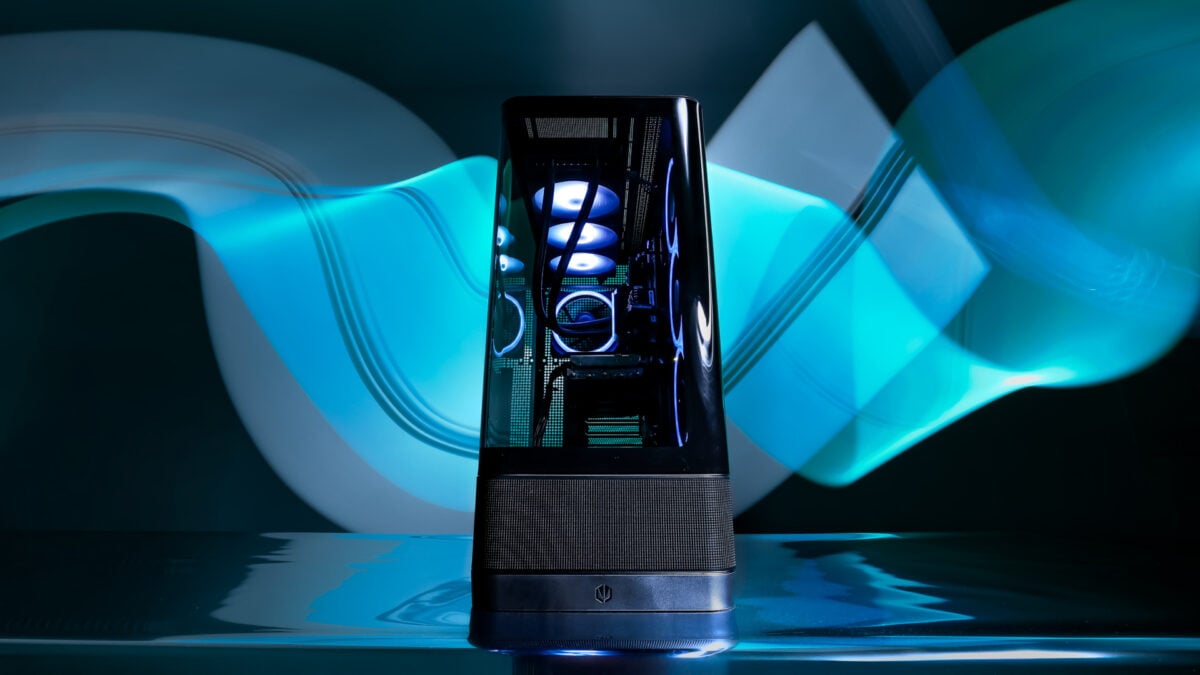
Aquarius 8000 measures 497 x 520 x 239mm and supports microATX, Mini-ITX, ATX, and SSI-CEB boards, with E-ATX compatibility up to 280mm wide. It uses an ATX PSU layout, supports power supplies up to 440mm long without the HDD cage, and offers 450mm of graphics card clearance plus 179mm of CPU cooler height. Enough to build a tasty system.
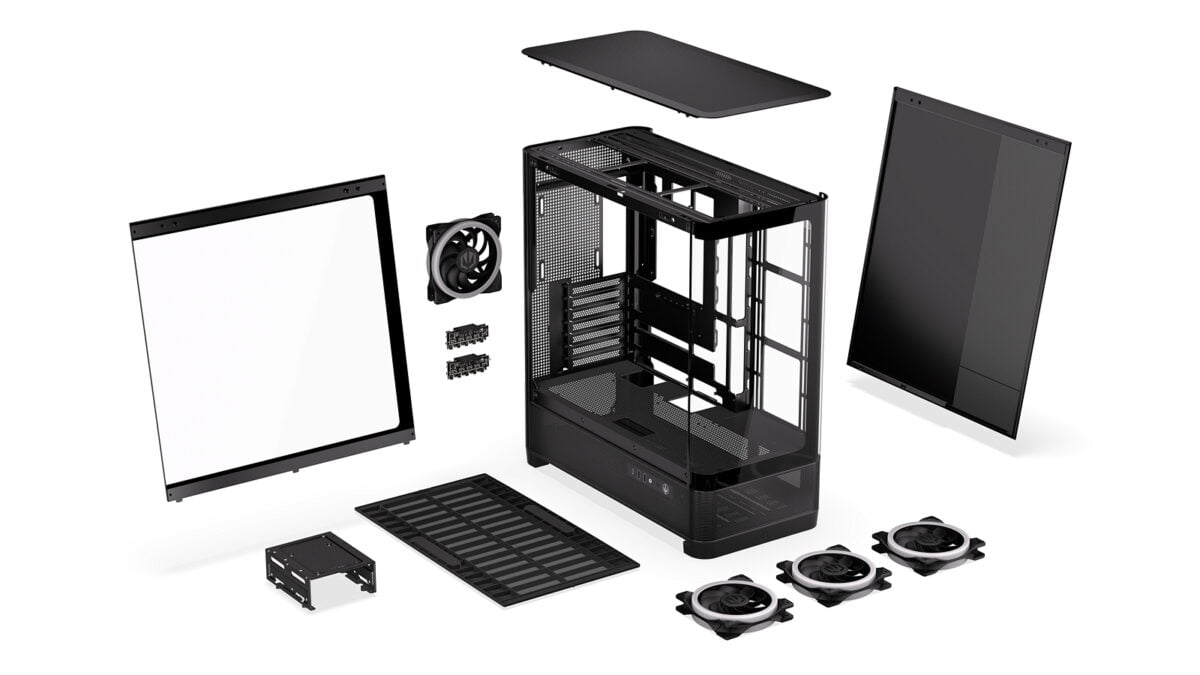
Storage support covers three 2.5in drives and two 3.5in drives, while the seven expansion slots leave enough room for a serious graphics card and add-in hardware. Front I/O is sensibly specified, with USB-C, two USB-A ports, and a combo audio jack, and it is placed on the bottom-left side of the chassis.
| Specification | Aquarius 8000 |
| Dimensions | 497 x 520 x 239mm |
| Motherboard support | microATX, Mini-ITX, ATX, SSI-CEB |
| E-ATX support | Up to 280mm wide |
| PSU support | ATX |
| Max PSU length | 440mm without HDD cage |
| GPU clearance | 450mm |
| CPU cooler clearance | 179mm |
| Expansion slots | 7 |
| 3.5in bays | 2 |
| 2.5in bays | 3 |
| Fan support | Up to 10 120mm or nine 140mm |
| Top radiator support | Up to 420mm |
| Side radiator support | Up to 360mm |
| Rear radiator support | 120 / 140mm |
| Front I/O | 1 x USB-C, 2 x USB-A, combo audio jack |
Cooling support is broad, with room for up to 10 120mm fans or nine 140mm fans, and radiator support reaches 420mm on the top, 360mm on the side, and 140mm at the rear, depending on configuration. The headline numbers matter because they show this is not just a styling exercise. Aquarius 8000 has the dimensions and internal volume to handle the kind of hardware that usually pushes showcase cases into compromise.
Unboxing
The package weighs 11kg, with 9.5kg net for the chassis, so it’s not as heavy as you might think. The box is rather plain brown, with a printed picture of the chassis on both main sides.
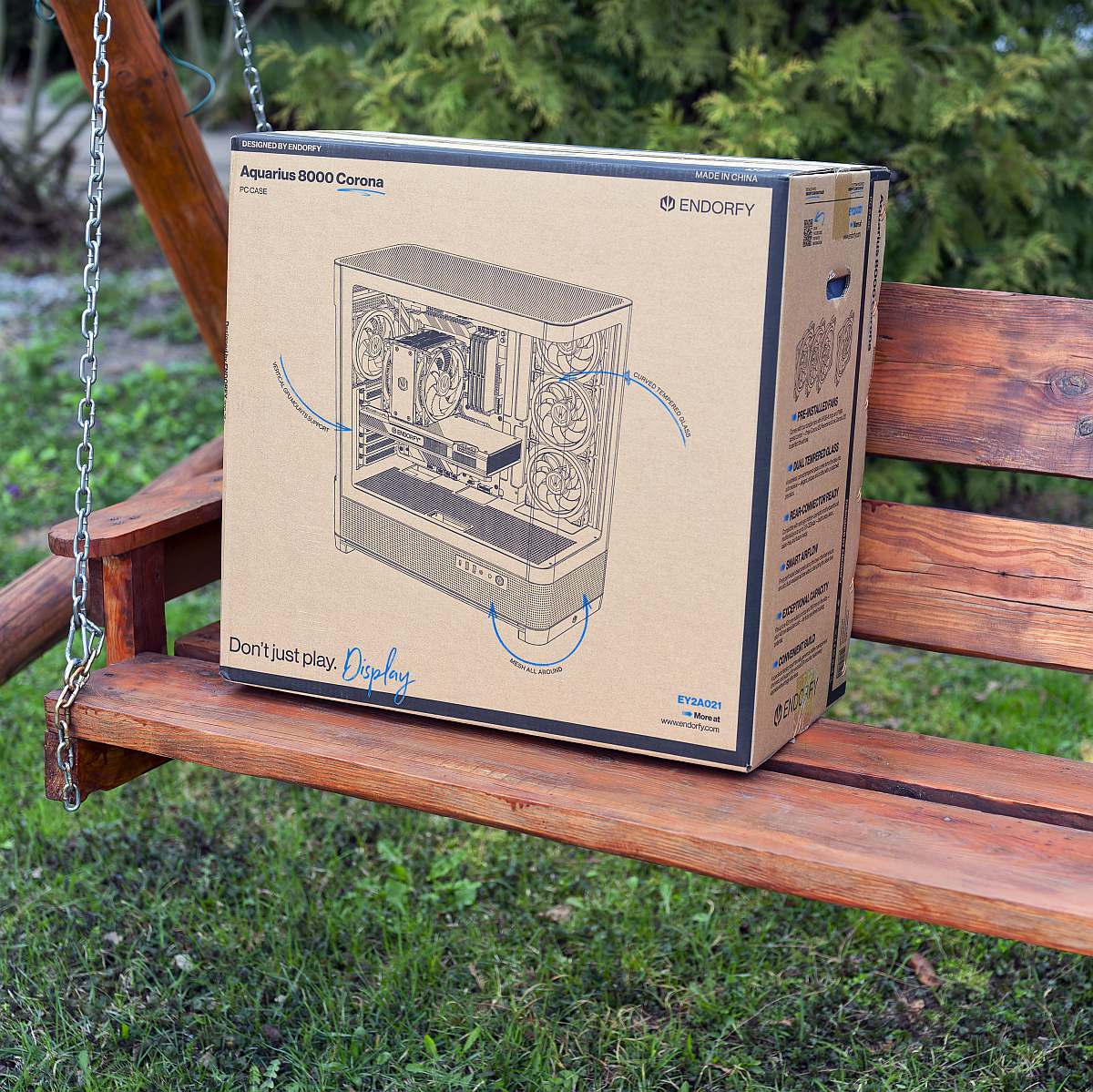
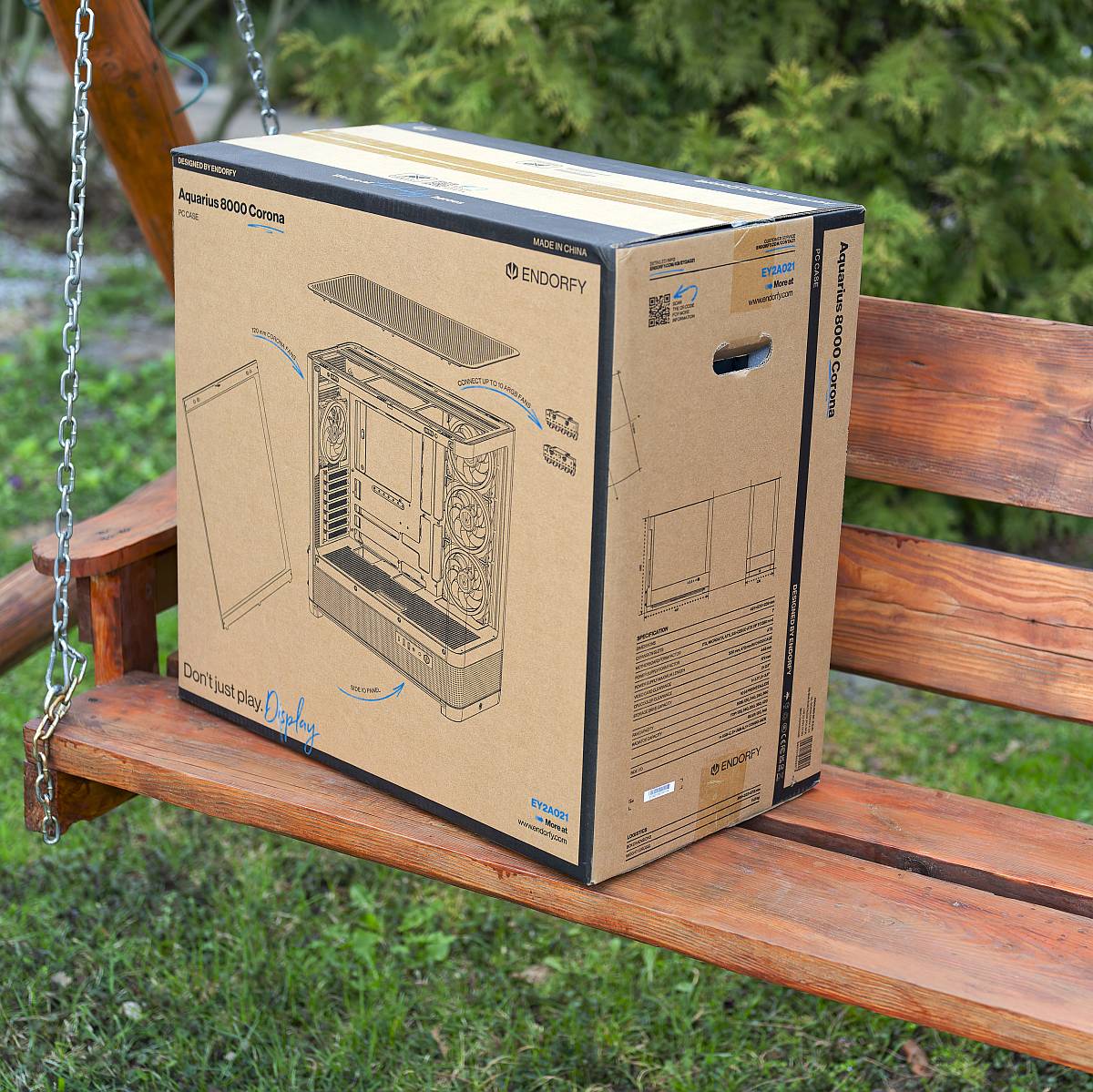
I must say that its packacing is very well-protected. Top marks to Endorfy here.

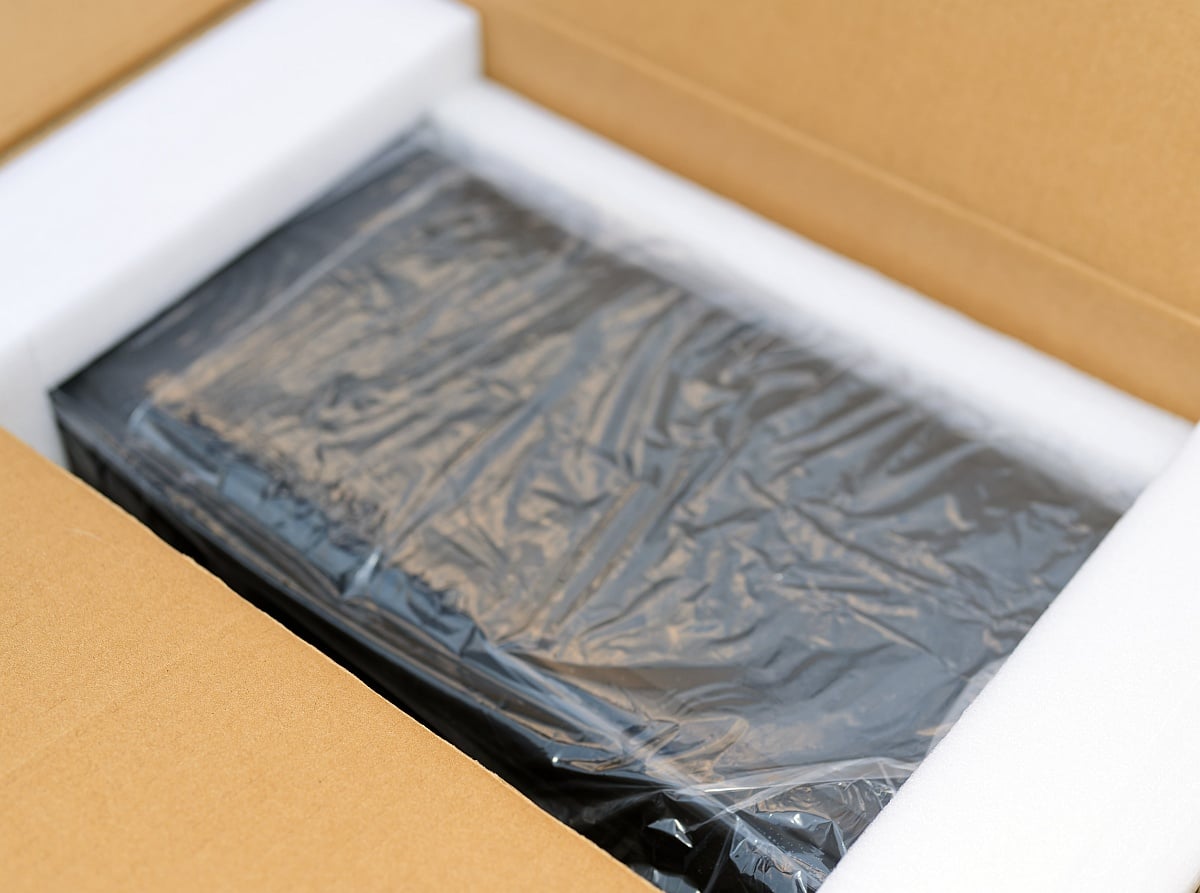
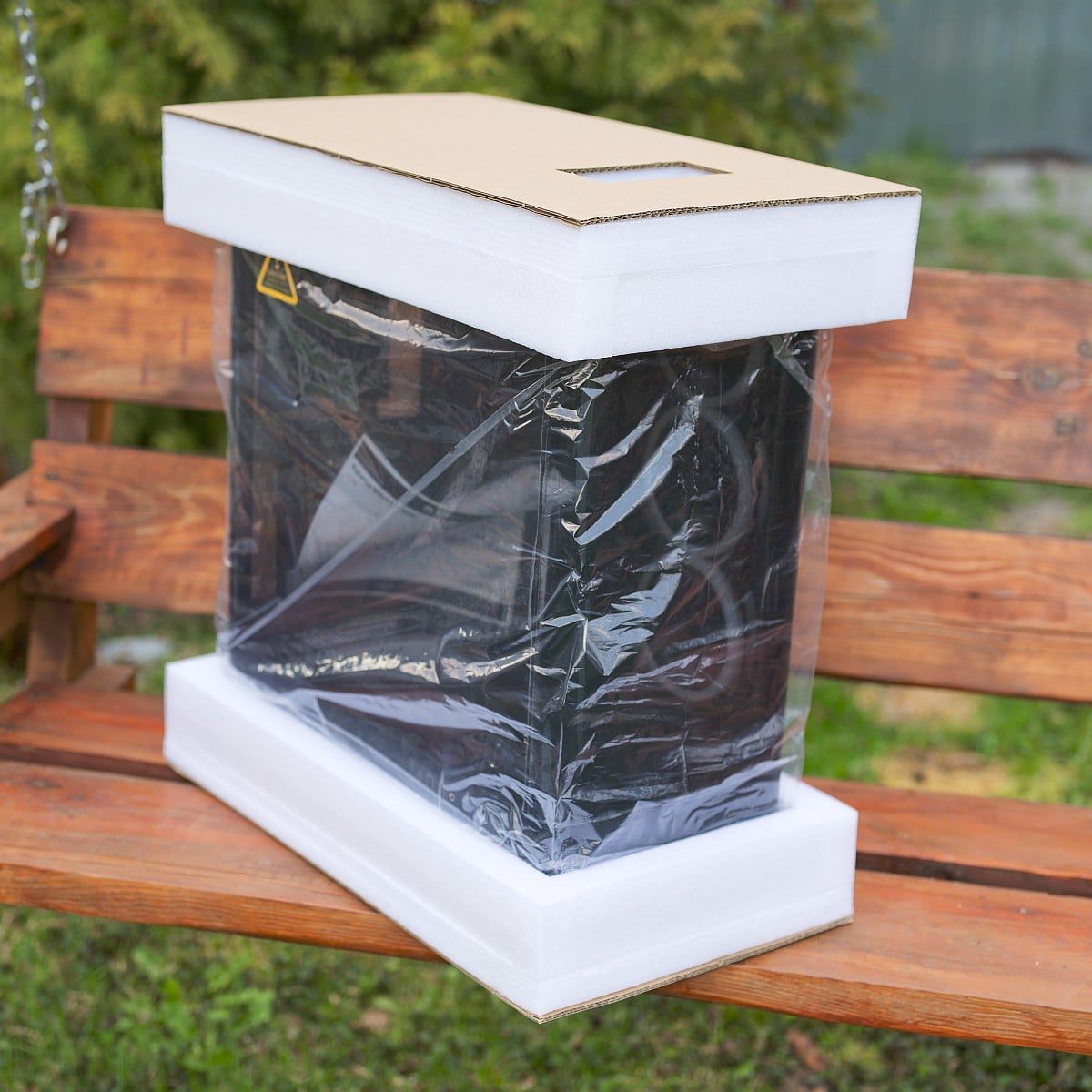
The accessory package is sensible rather than flashy, which suits the product. In the Corona bundle, you get the case itself, a simplified manual, mounting screws, cable ties, and a microfibre cloth. That is enough to get moving immediately, and it reflects the broader design philosophy here. Endorfy has not tried to turn the unboxing into an event; instead, it has focused on putting the right essentials without inflating price. A sensible approach in these times.
The difference between the two variants is important to describe at this stage. Corona is the more complete package for a first-time build, while Flex is better for users who already have a fan-and-radiator plan in mind, because you save money into the bargain.
Exterior Tour
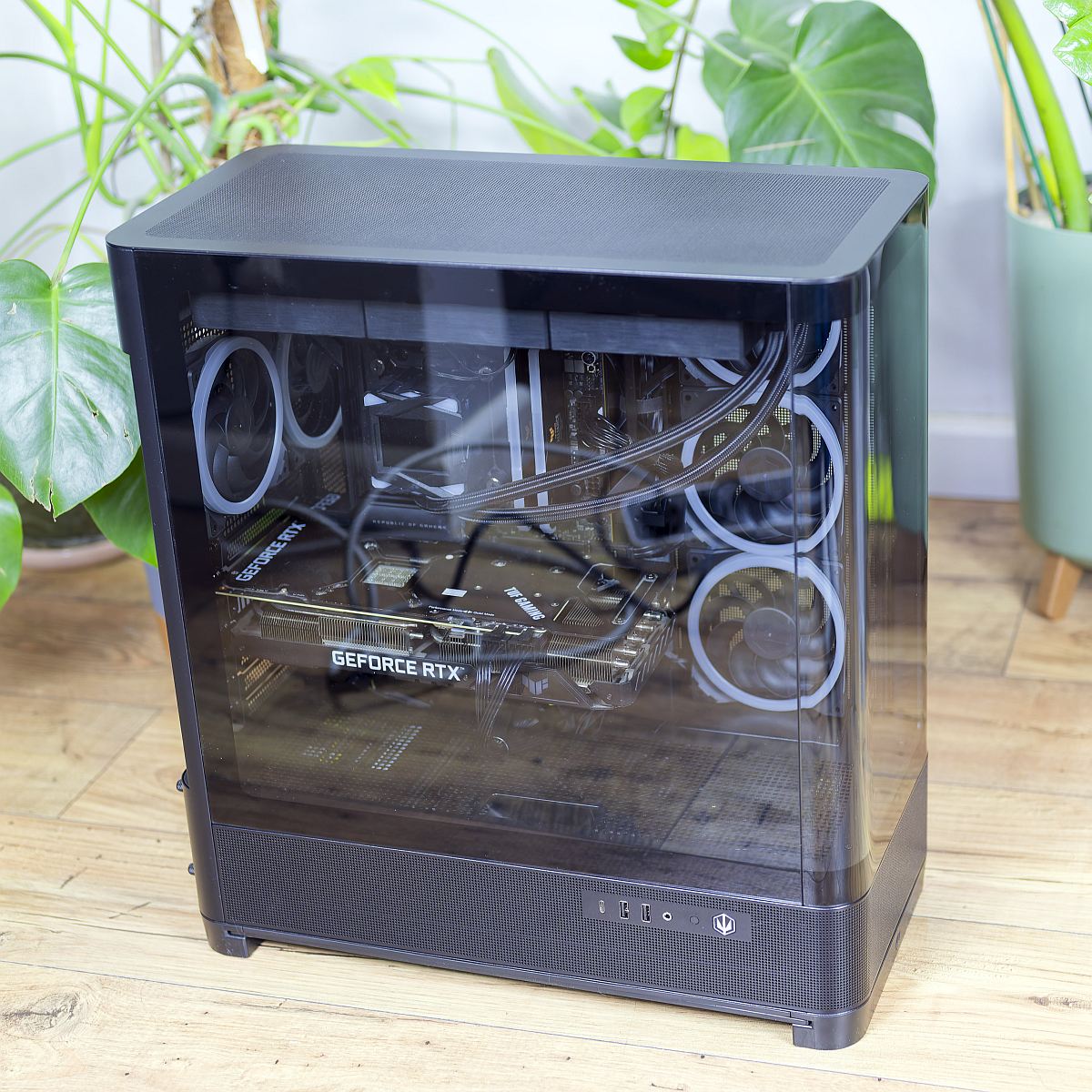
The Aquarius 8000 makes a confident first impression. The curved front glass is the defining element, giving the chassis a more refined presence than a typical flat-panel showcase tower.
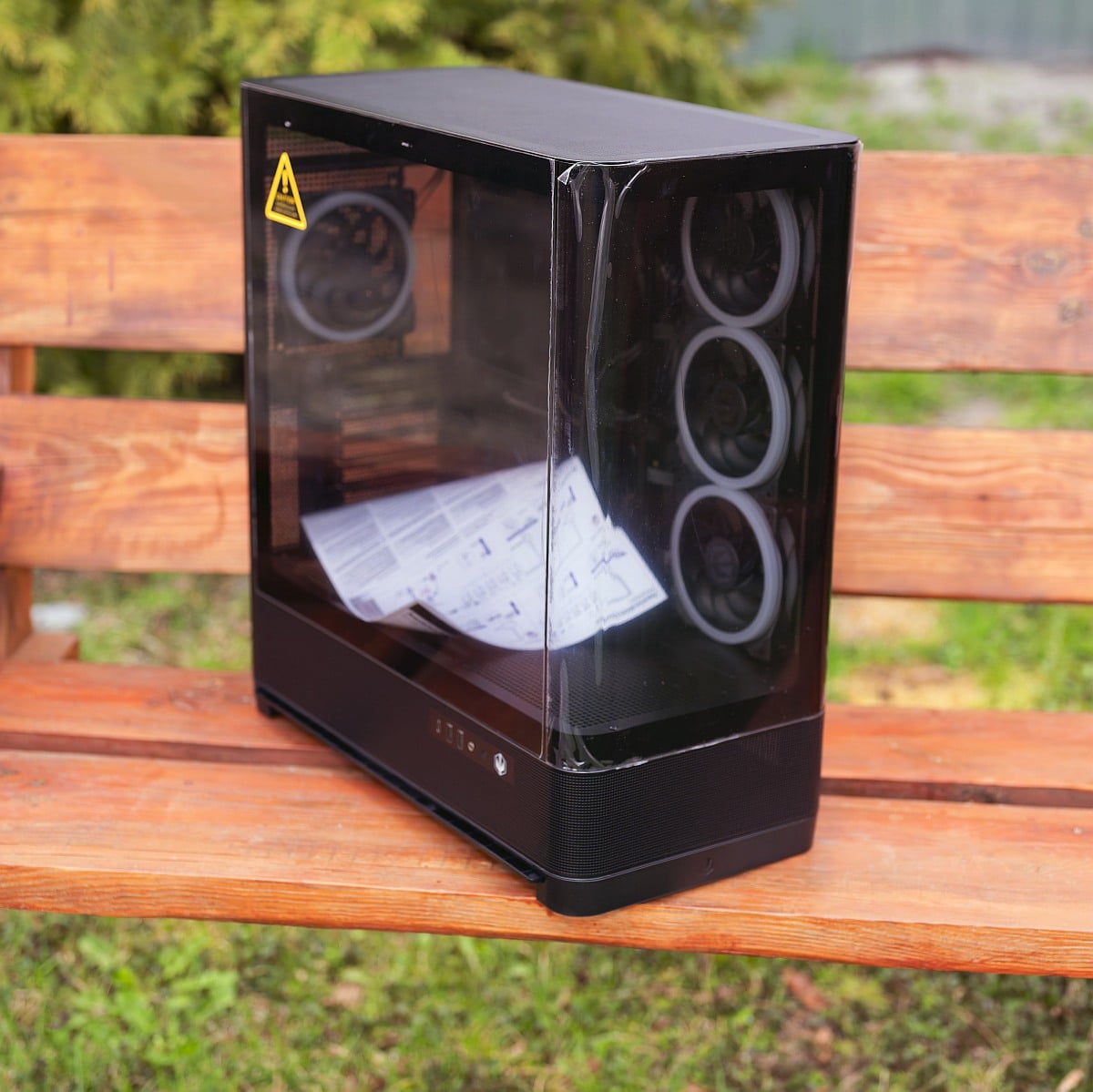
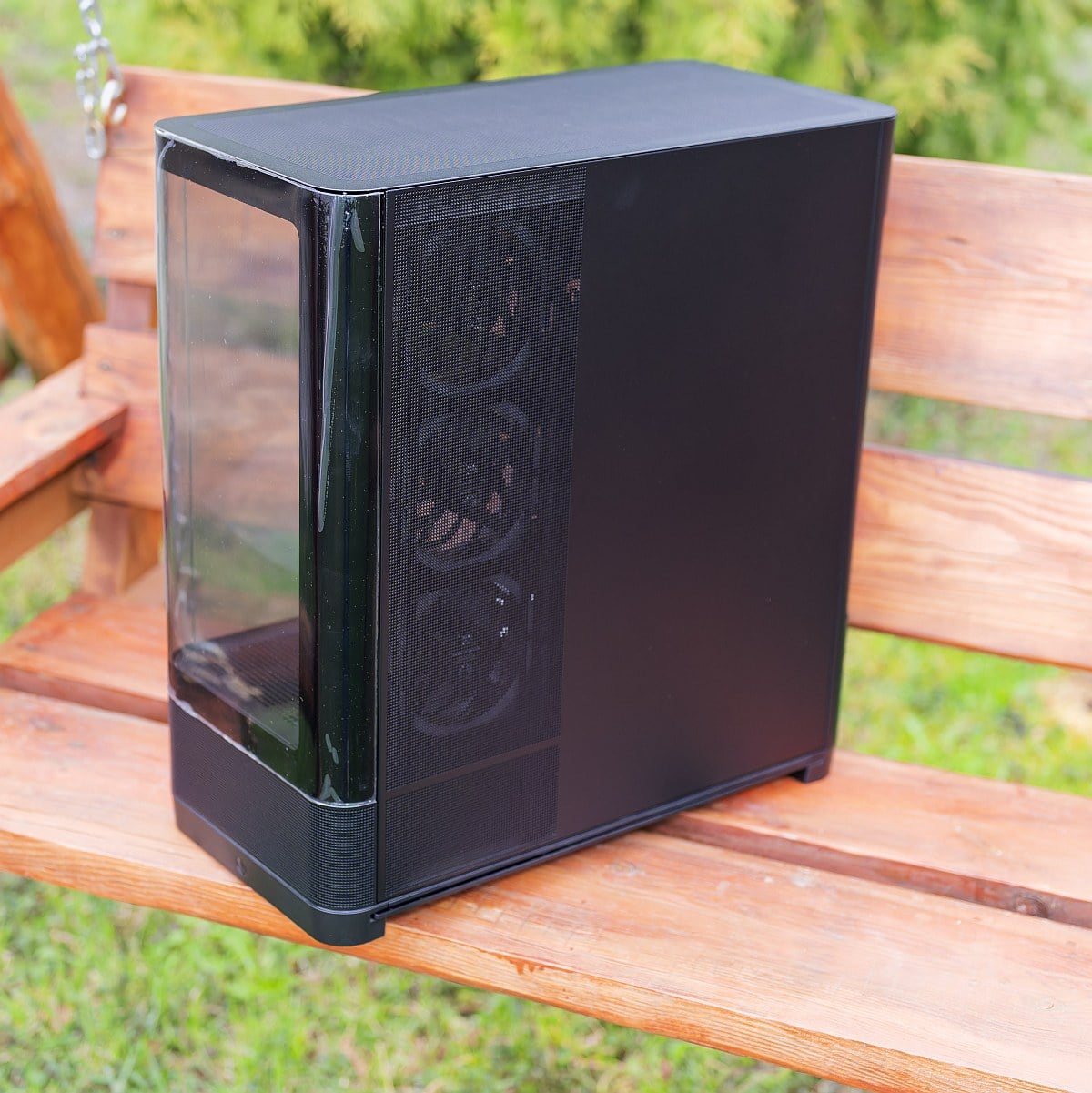
The side glass panel reinforces that effect, but the surrounding structure keeps the design from feeling fragile or overdone. The chassis still reads as a serious desktop case, not merely a display cabinet with hardware inside it.
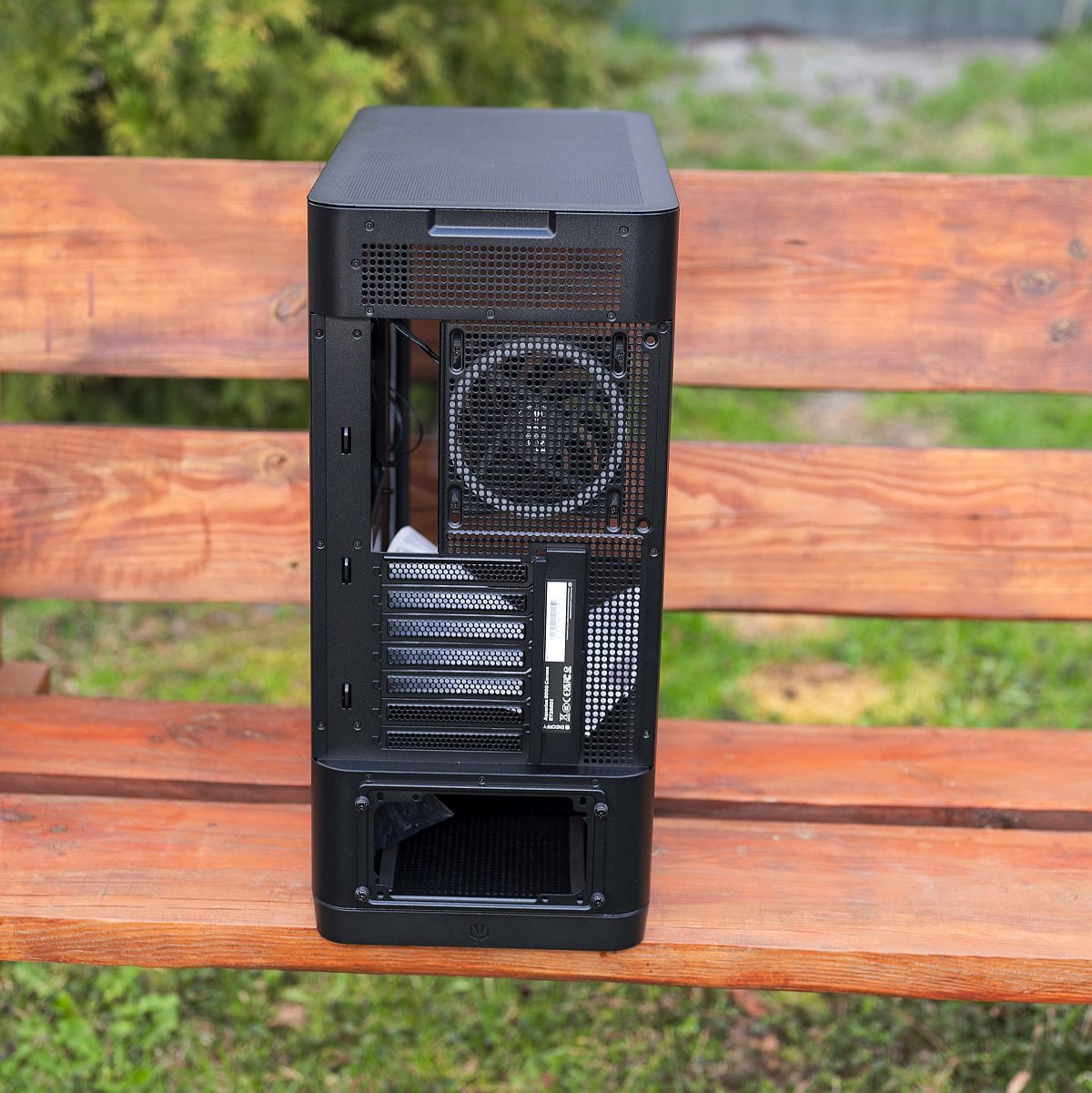
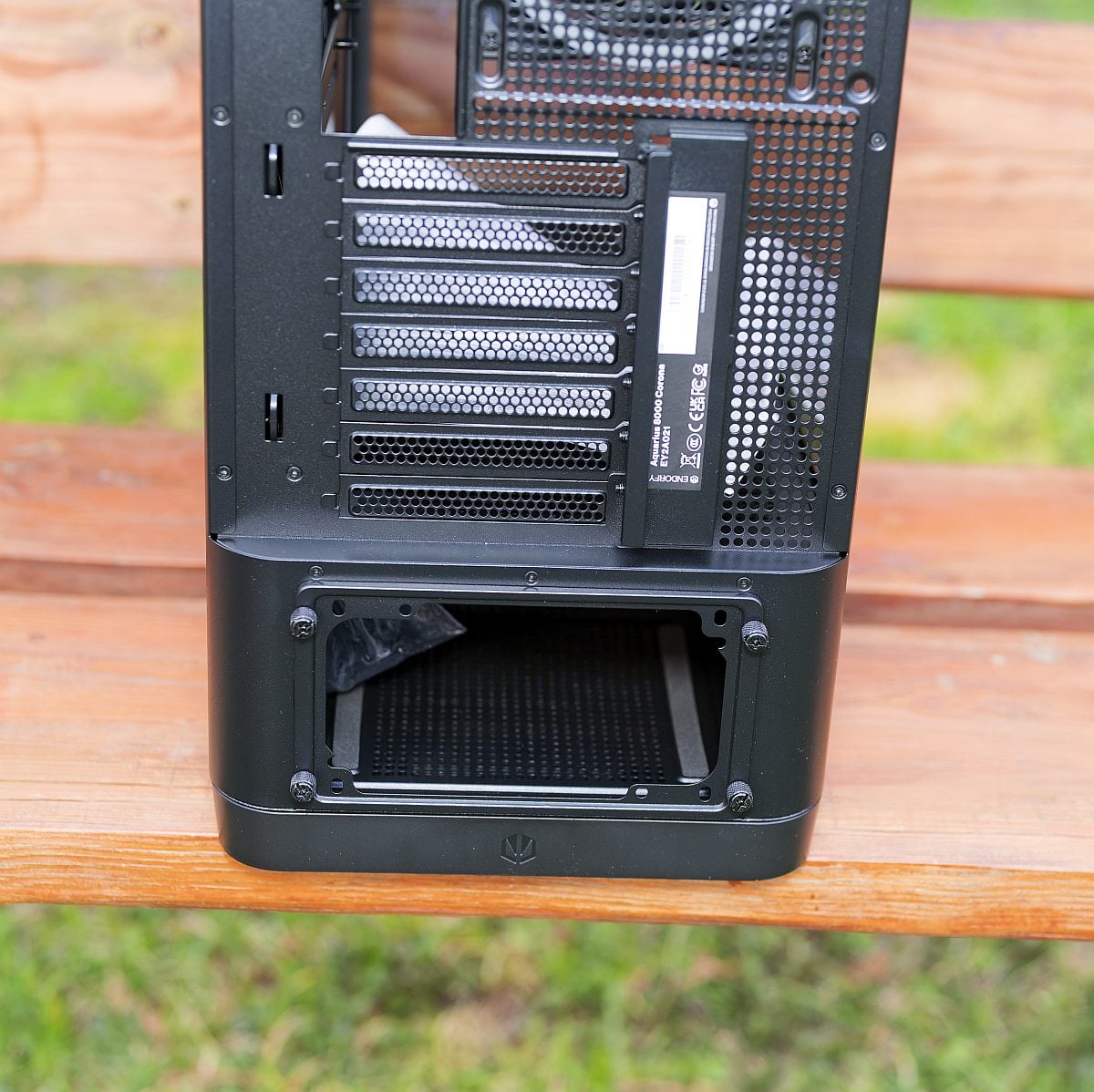
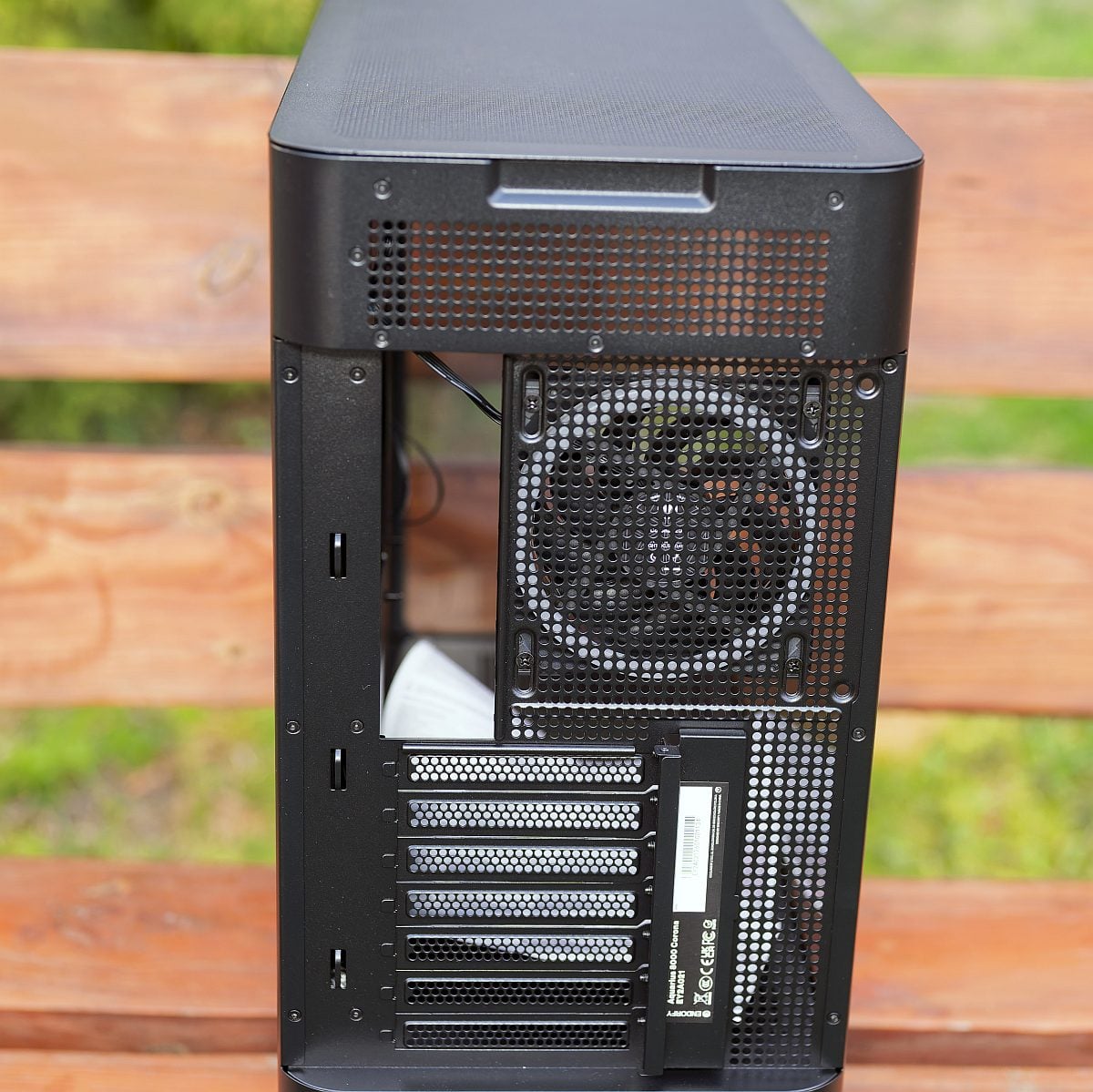
The PSU mount is removable. You can also see one of the four pre-installed 120mm Corona ARGB fans and seven expansion slots.
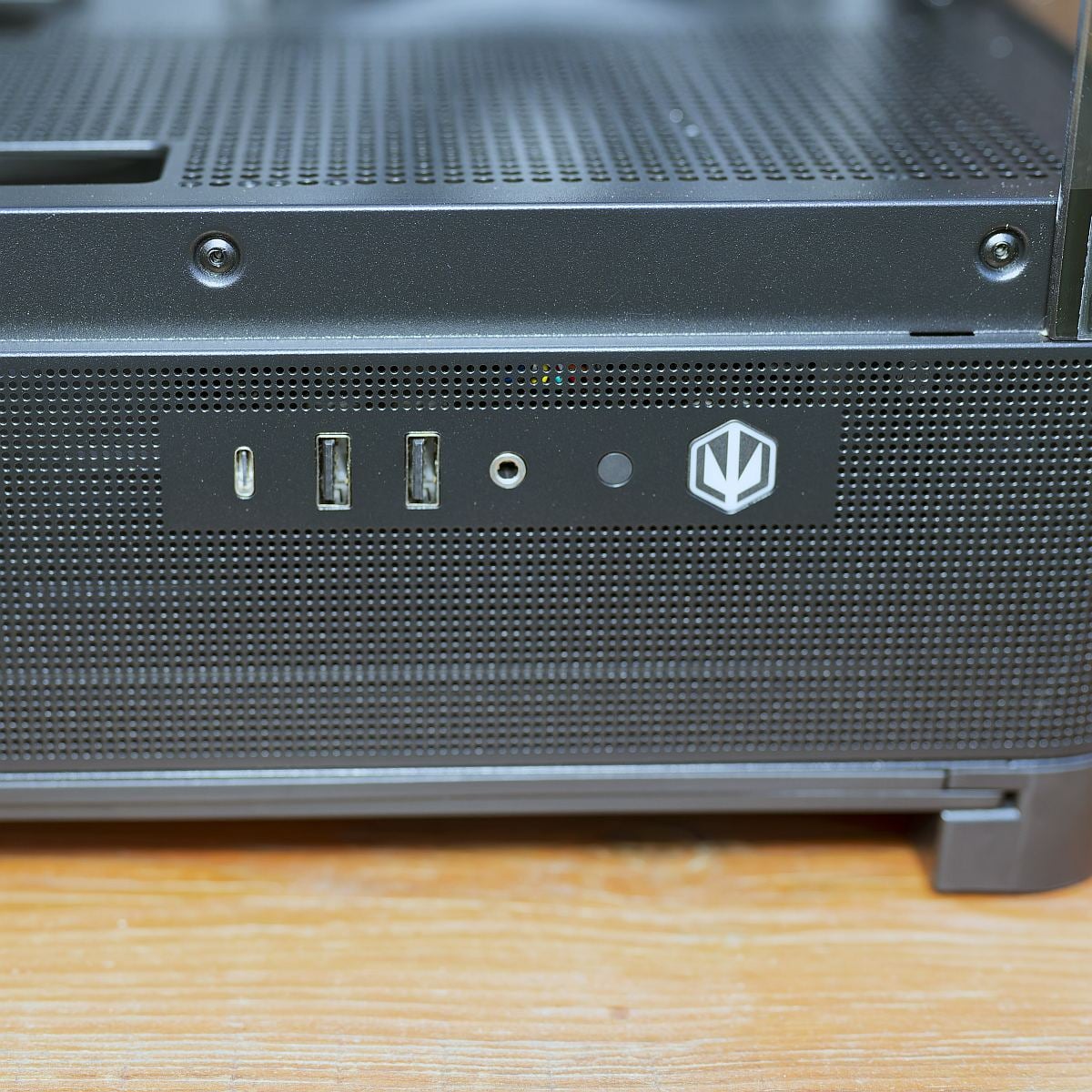
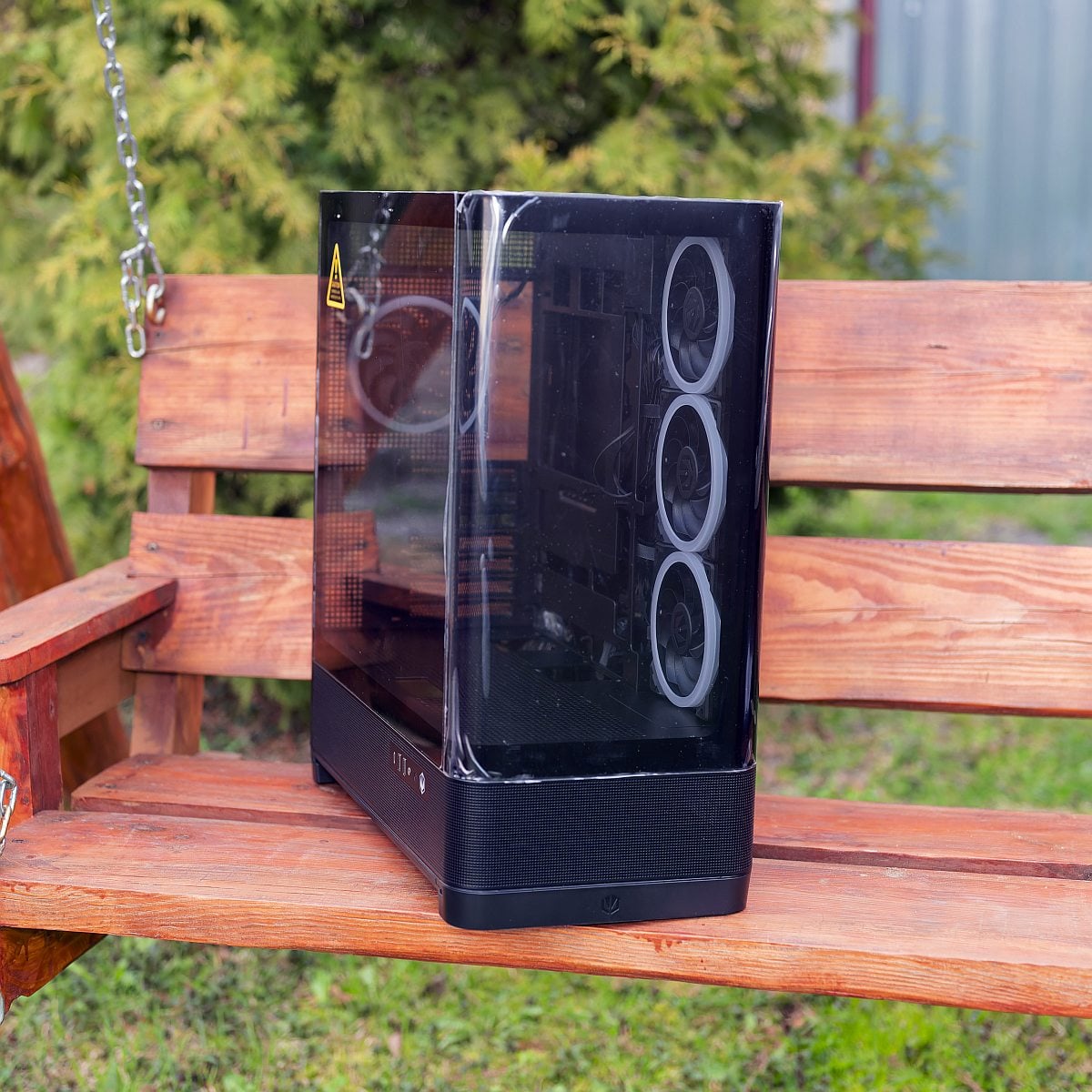
The side-mounted I/O panel is one of the smarter practical decisions in the design. When a case is intended to sit on a desk and be seen, easy access matters, and placing USB-C, USB-A, audio, power, and reset controls at the side makes daily use noticeably more convenient.
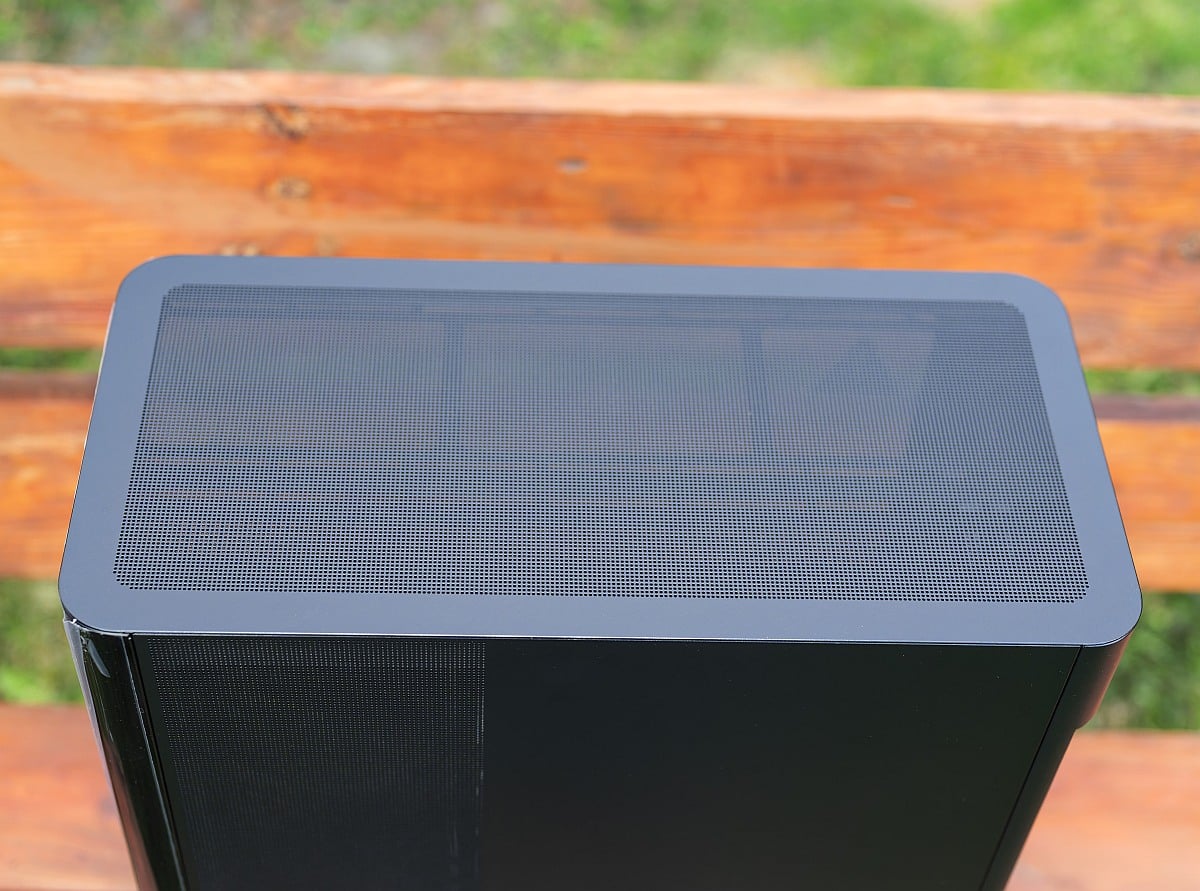
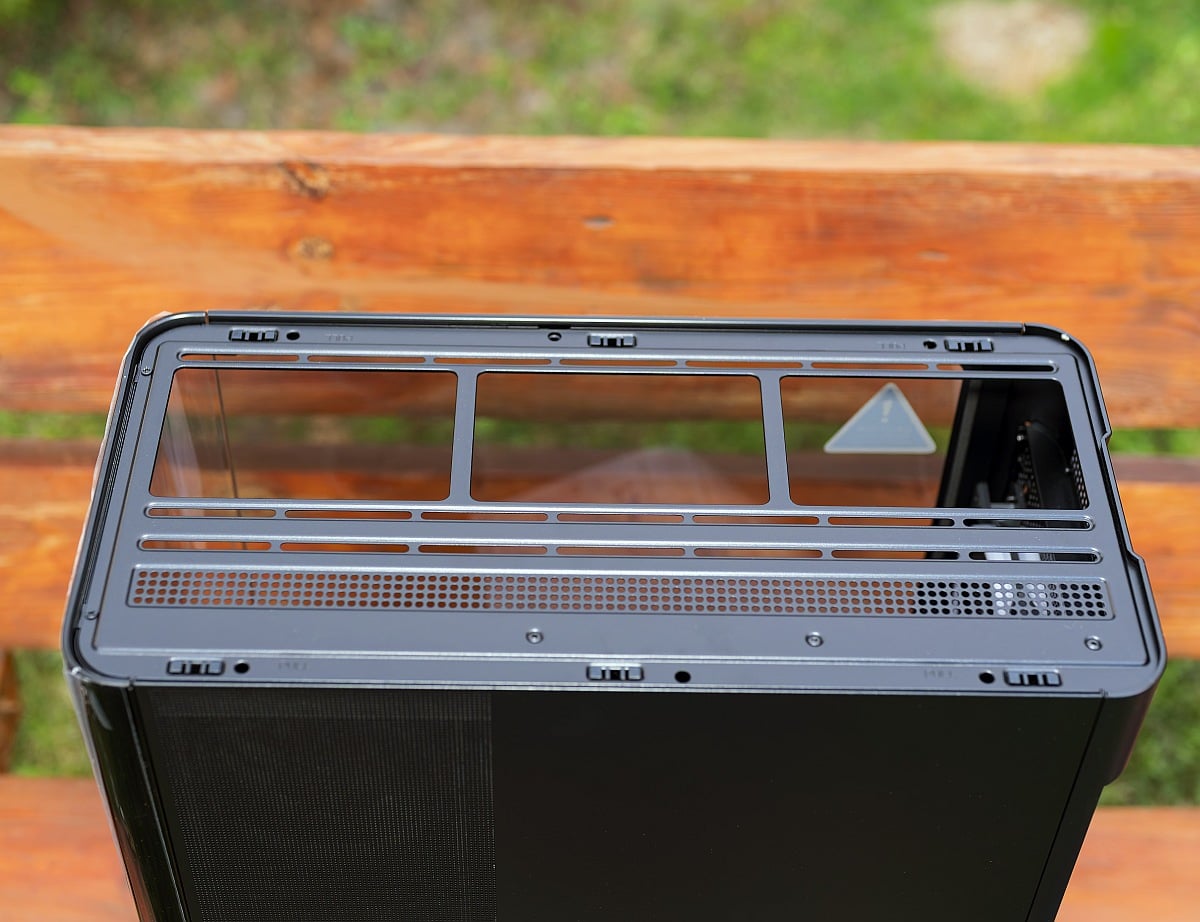
Dust management is also stronger than the styling suggests. The side and top panels use mesh/integrated filters.
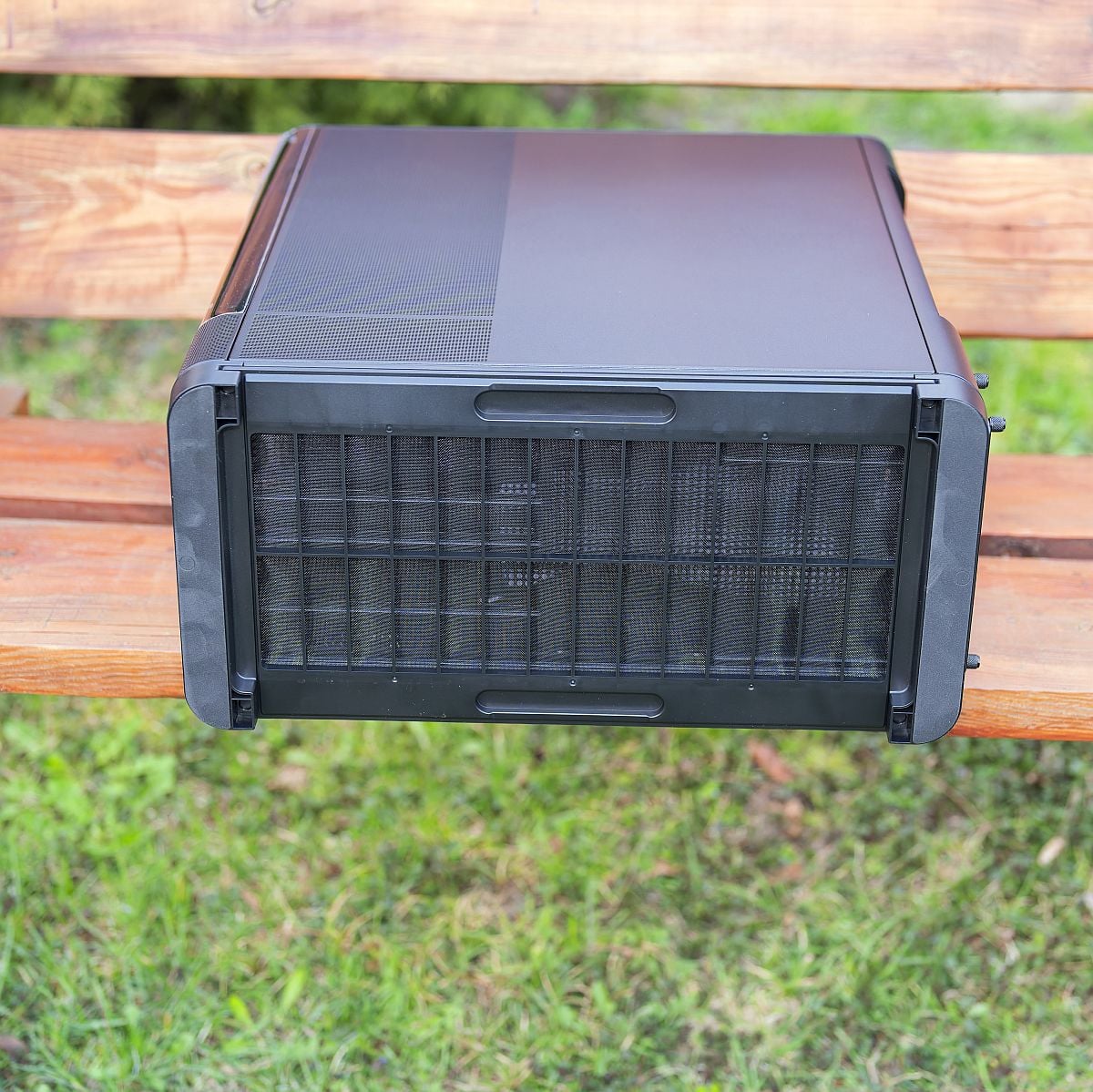
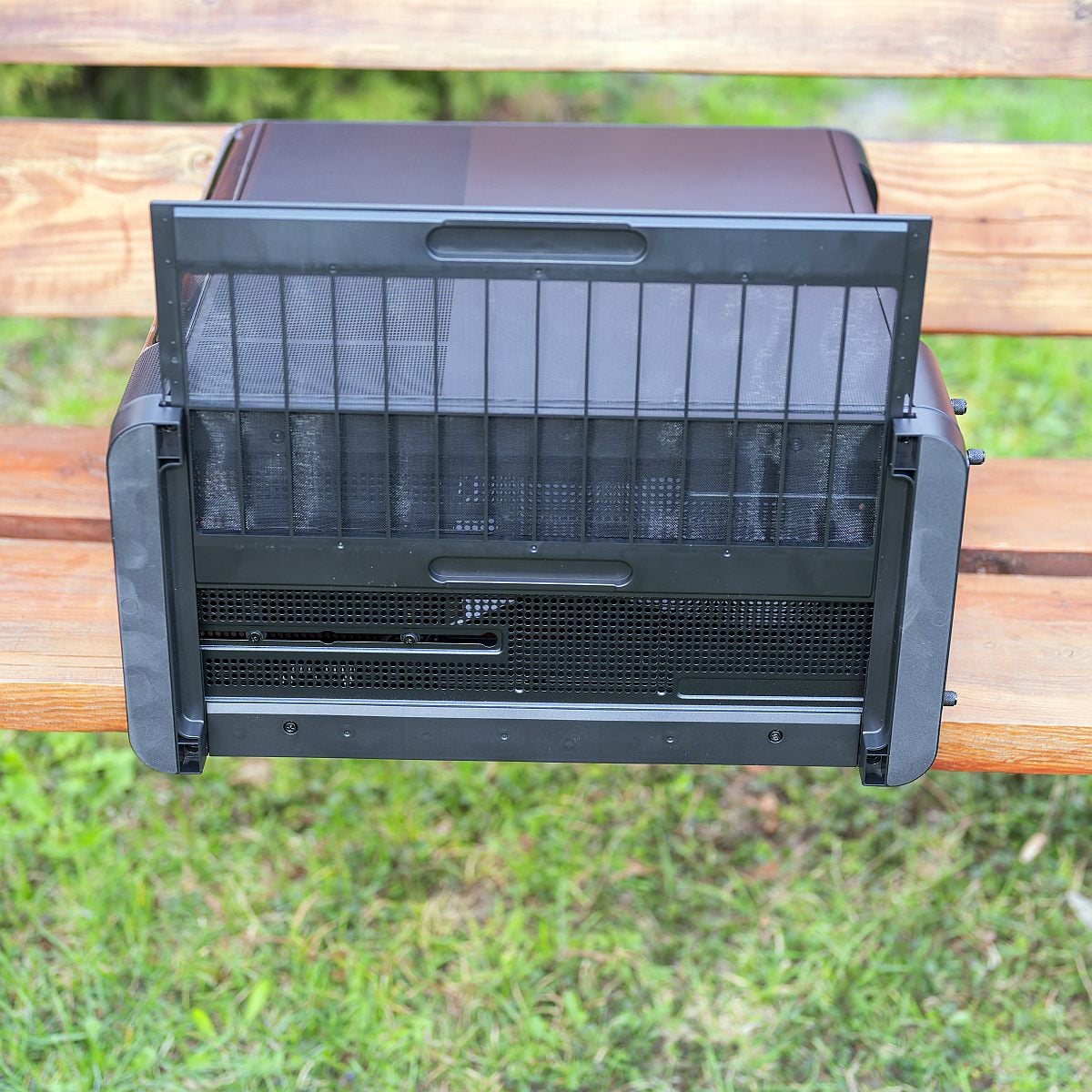
The bottom filter can be removed from either side, making maintenance far less awkward than it often is in cases like this.
Interior Tour
The main chamber is dominated by a wide motherboard tray with plentiful cutouts, though without rubber-grommeted passthroughs, which is likely a cost-balancing measure. There’s a spacious GPU area that easily accommodates triple-slot cards without blocking front-to-rear airflow.
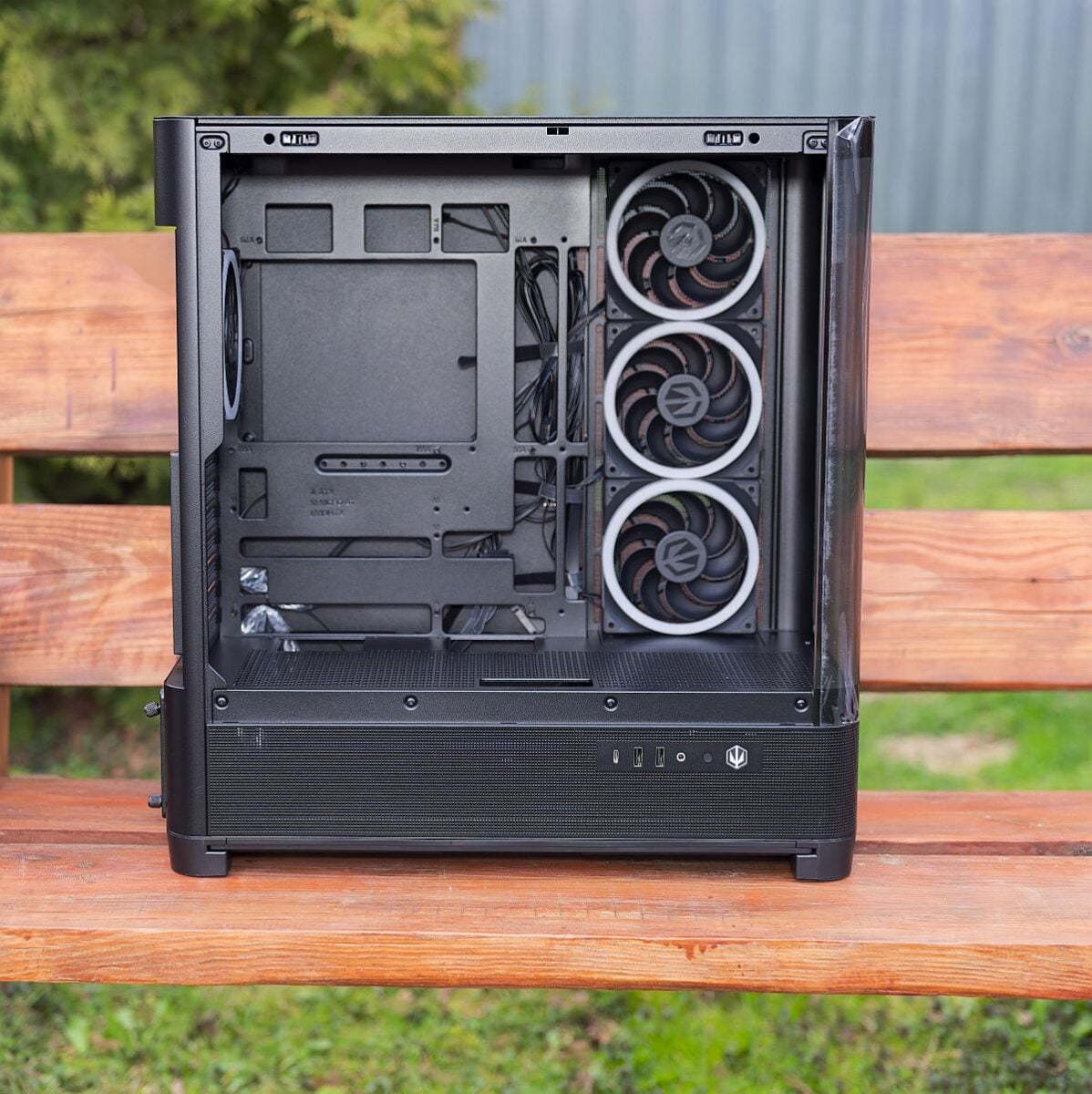
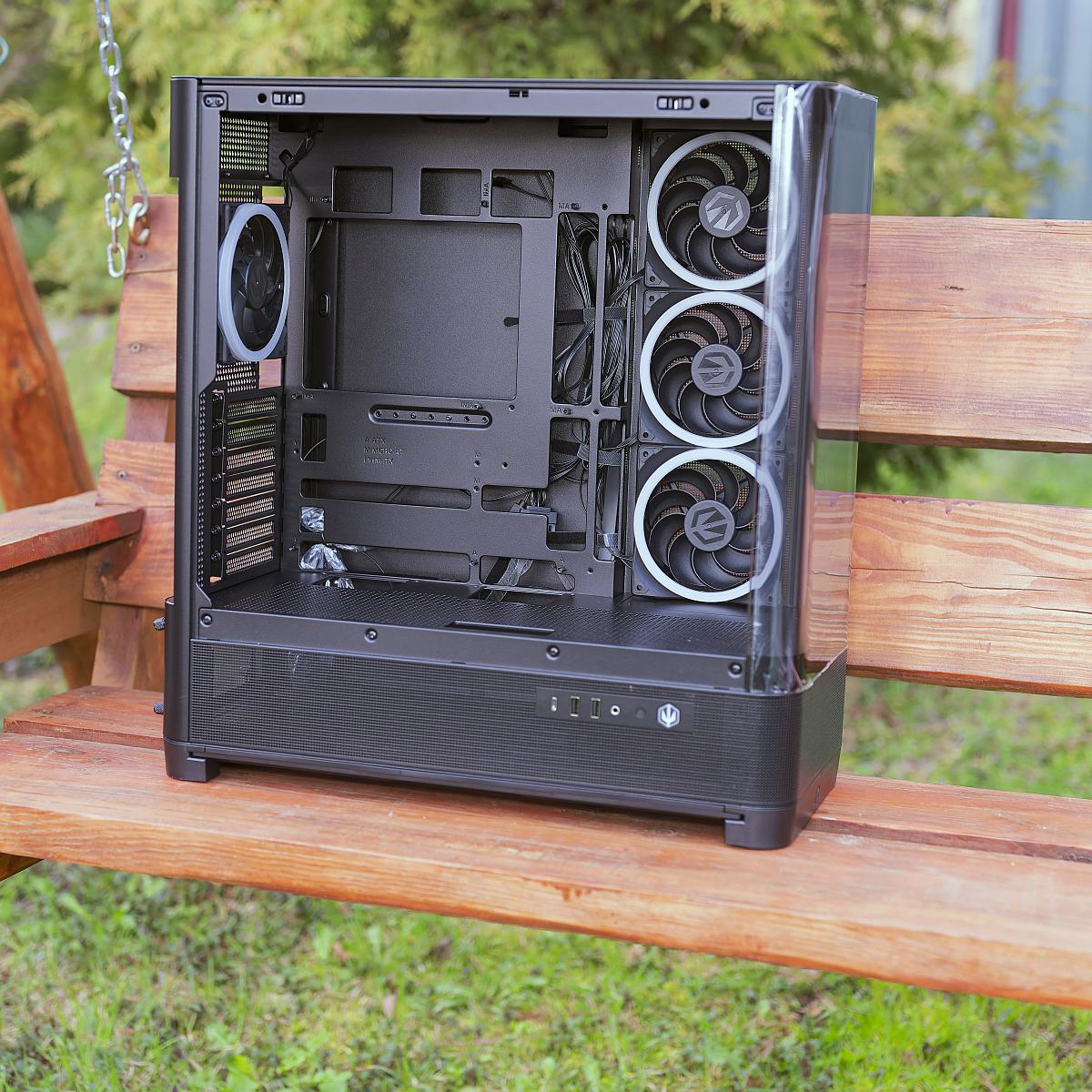
Inside, the Aquarius 8000 is better proportioned than its appearance might suggest. It offers enough room for large motherboards, long graphics cards, and substantial cooling hardware without forcing the builder into an obviously compromised layout.
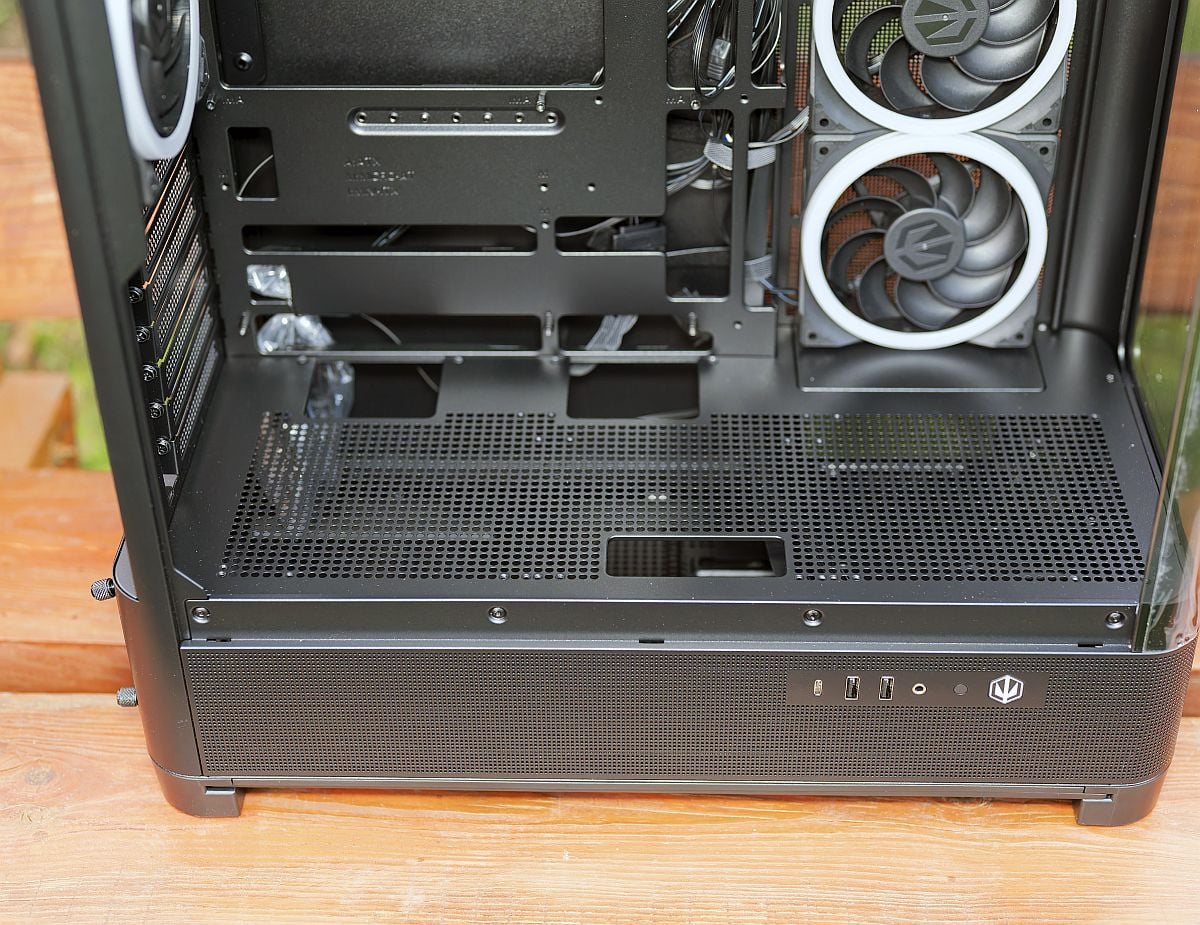
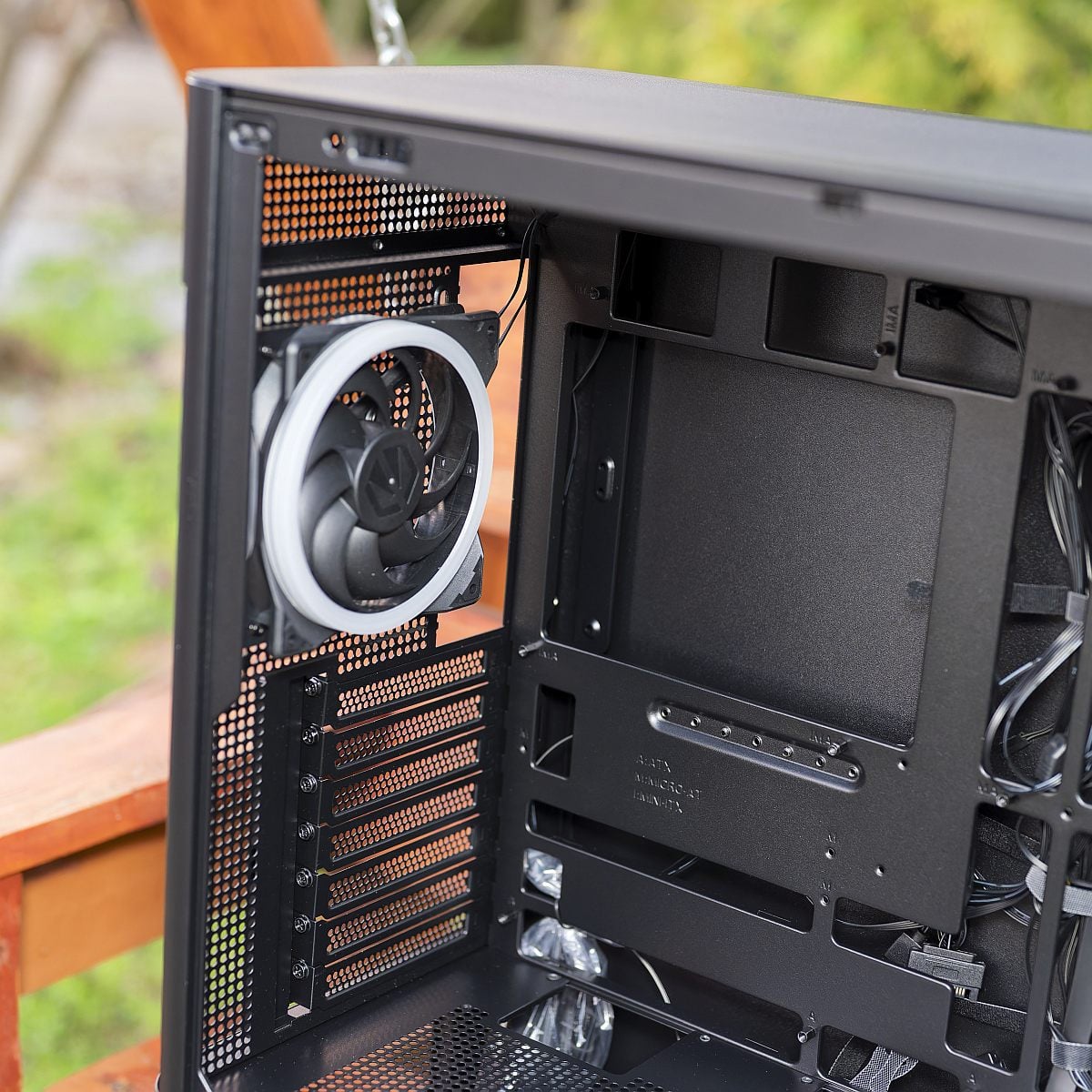
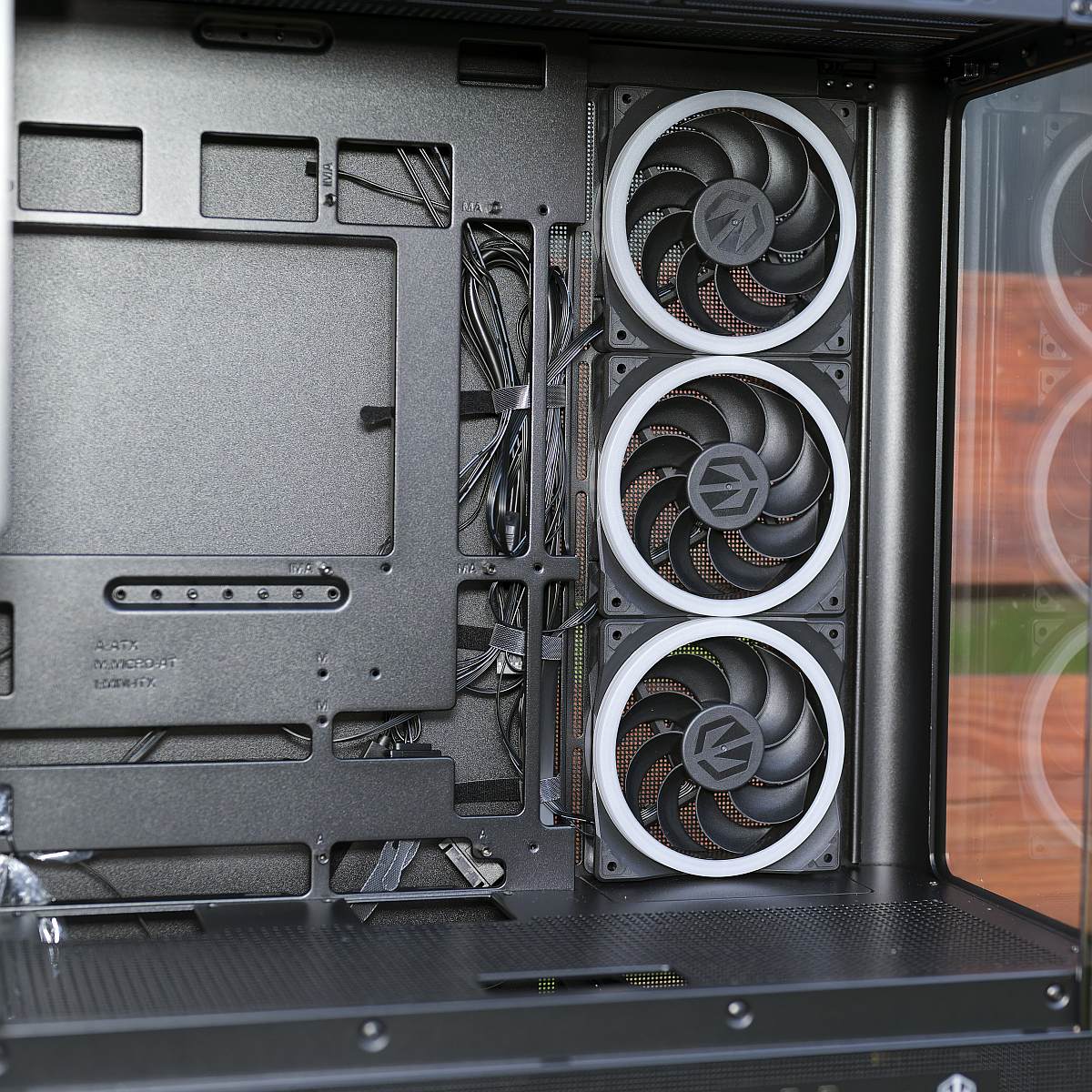
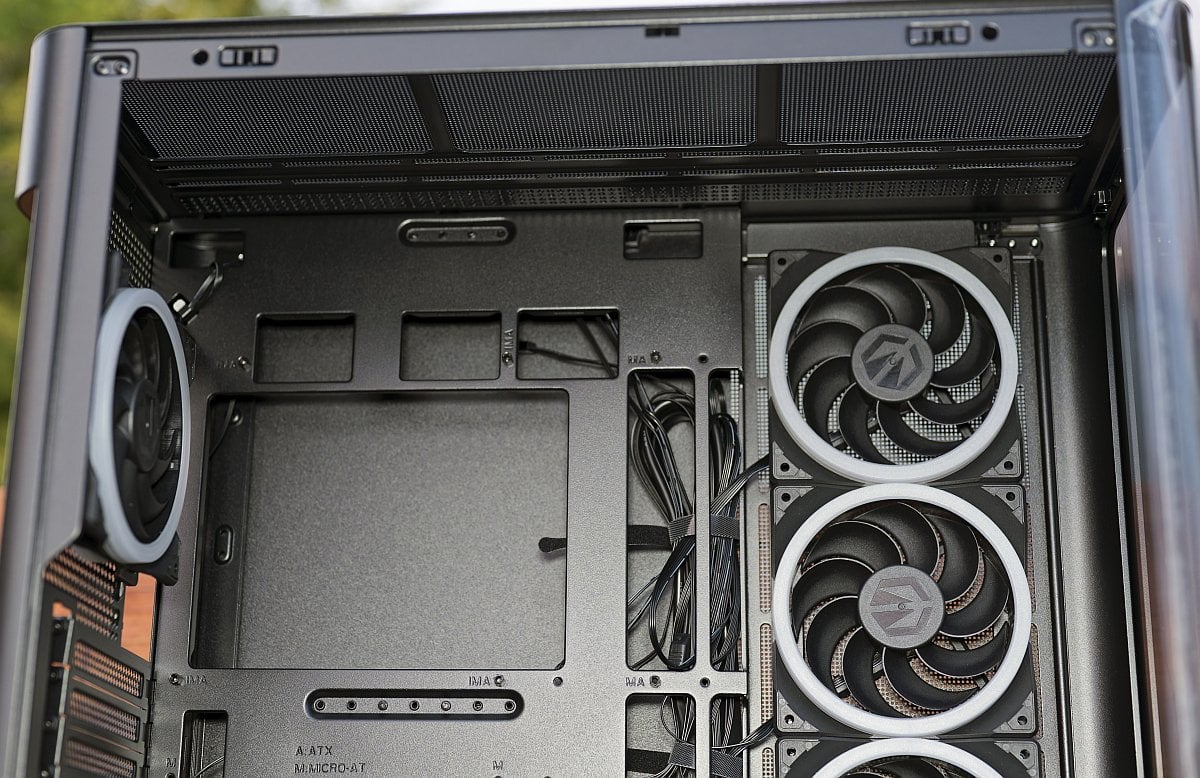
The rear of the motherboard tray has plenty of space for cable routing, and the additional tie-down points make clean installation easier. That is especially useful in a glass-heavy chassis, because every visible cable run has a bigger impact on the final presentation.
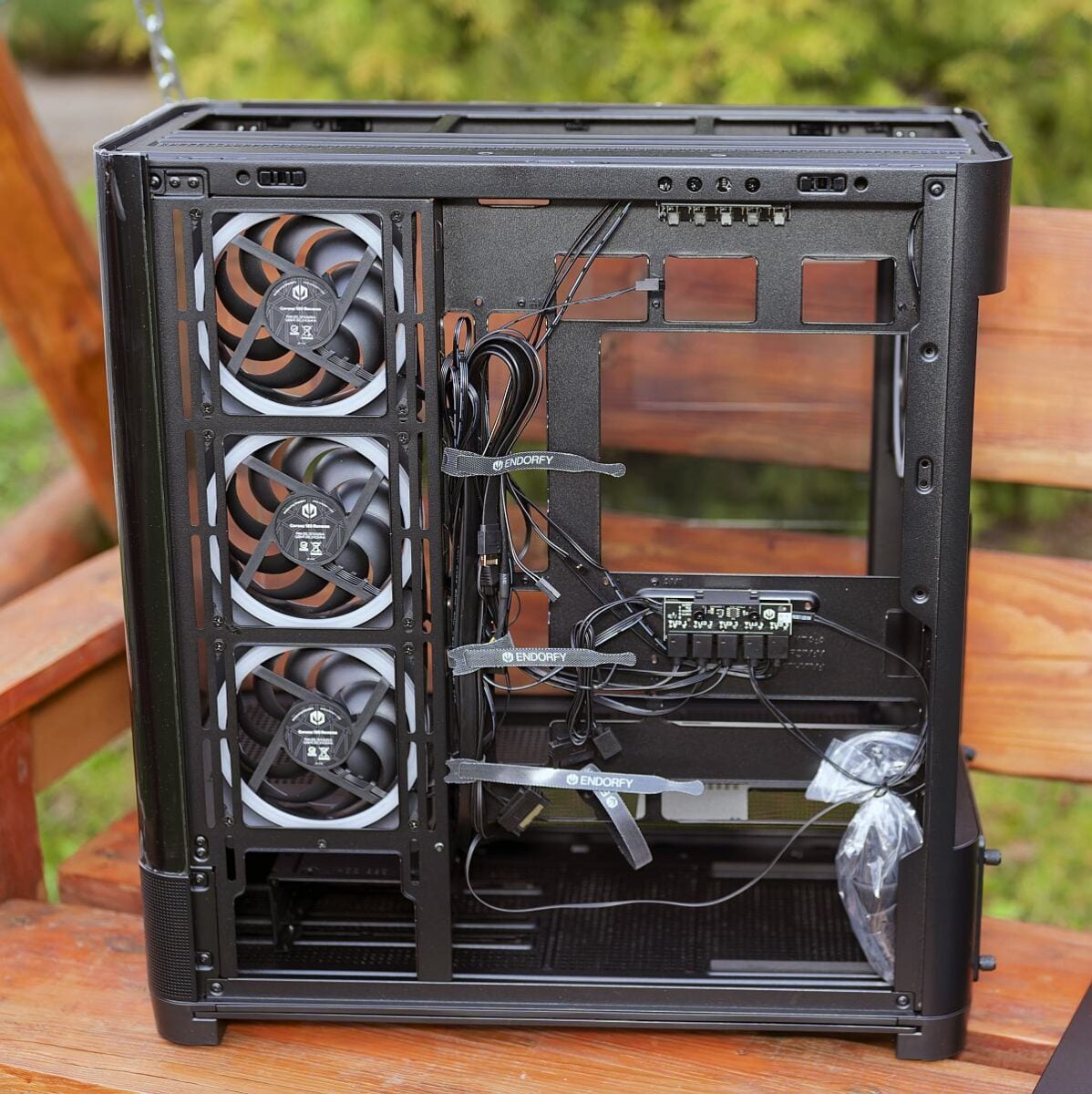
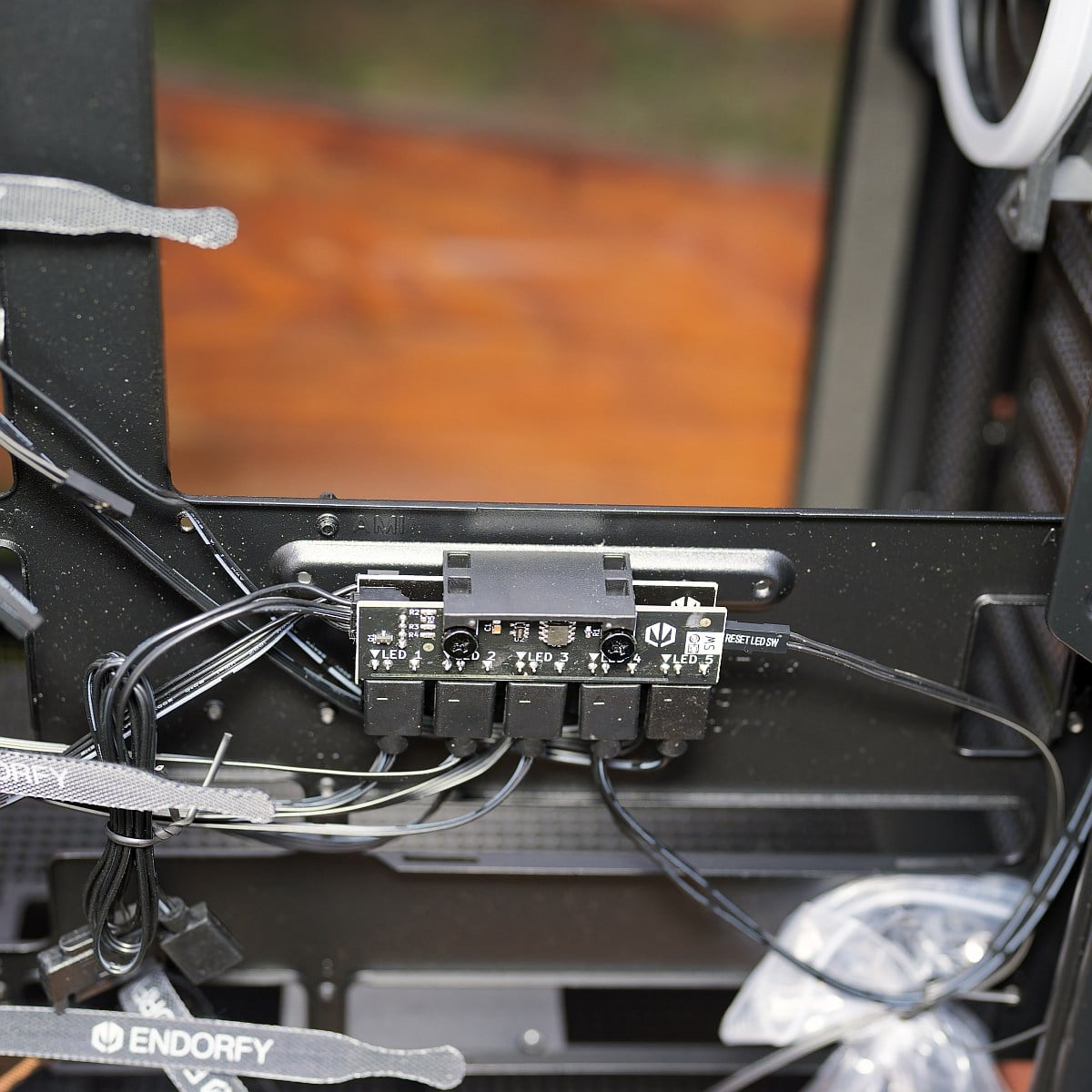
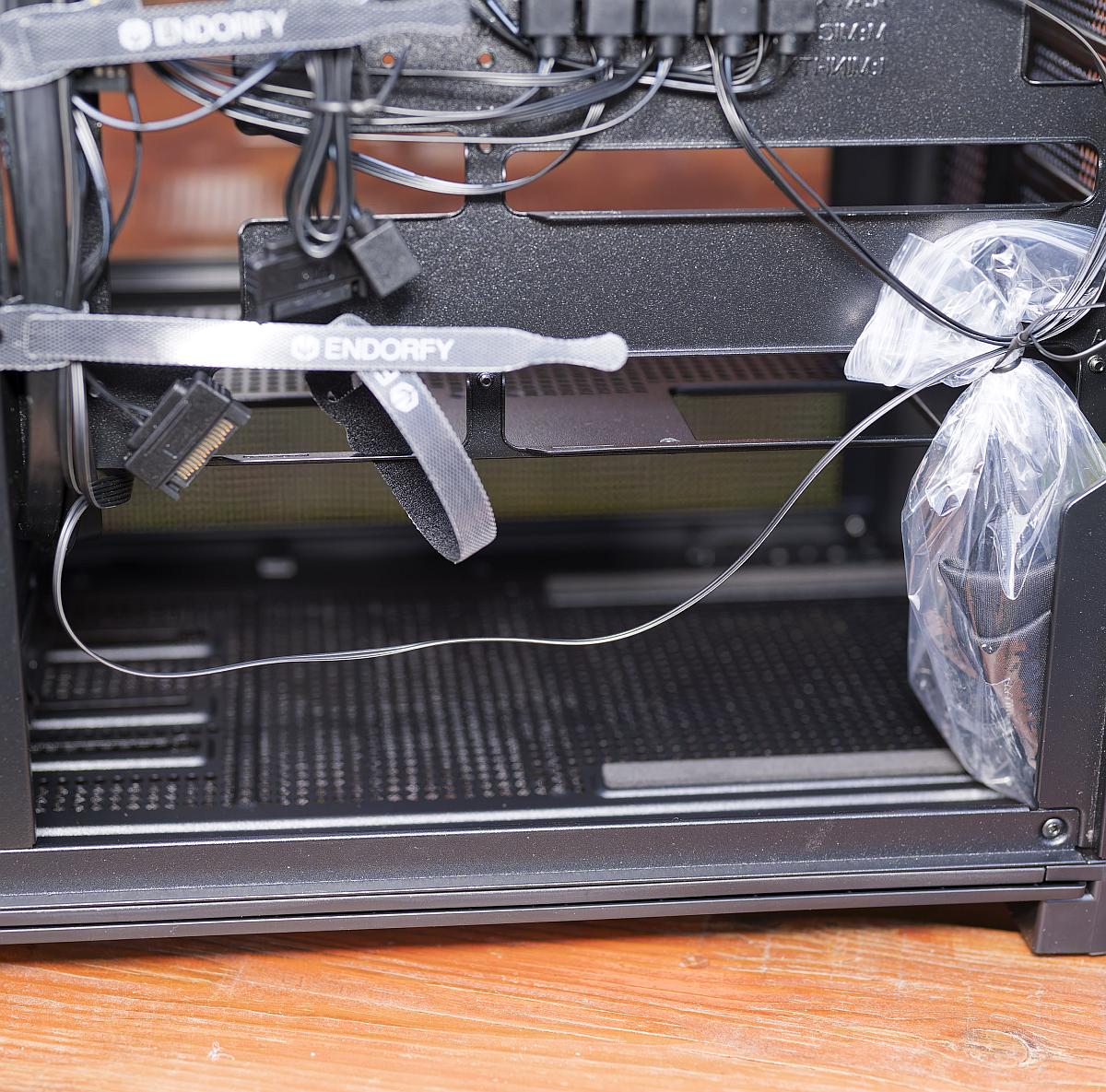
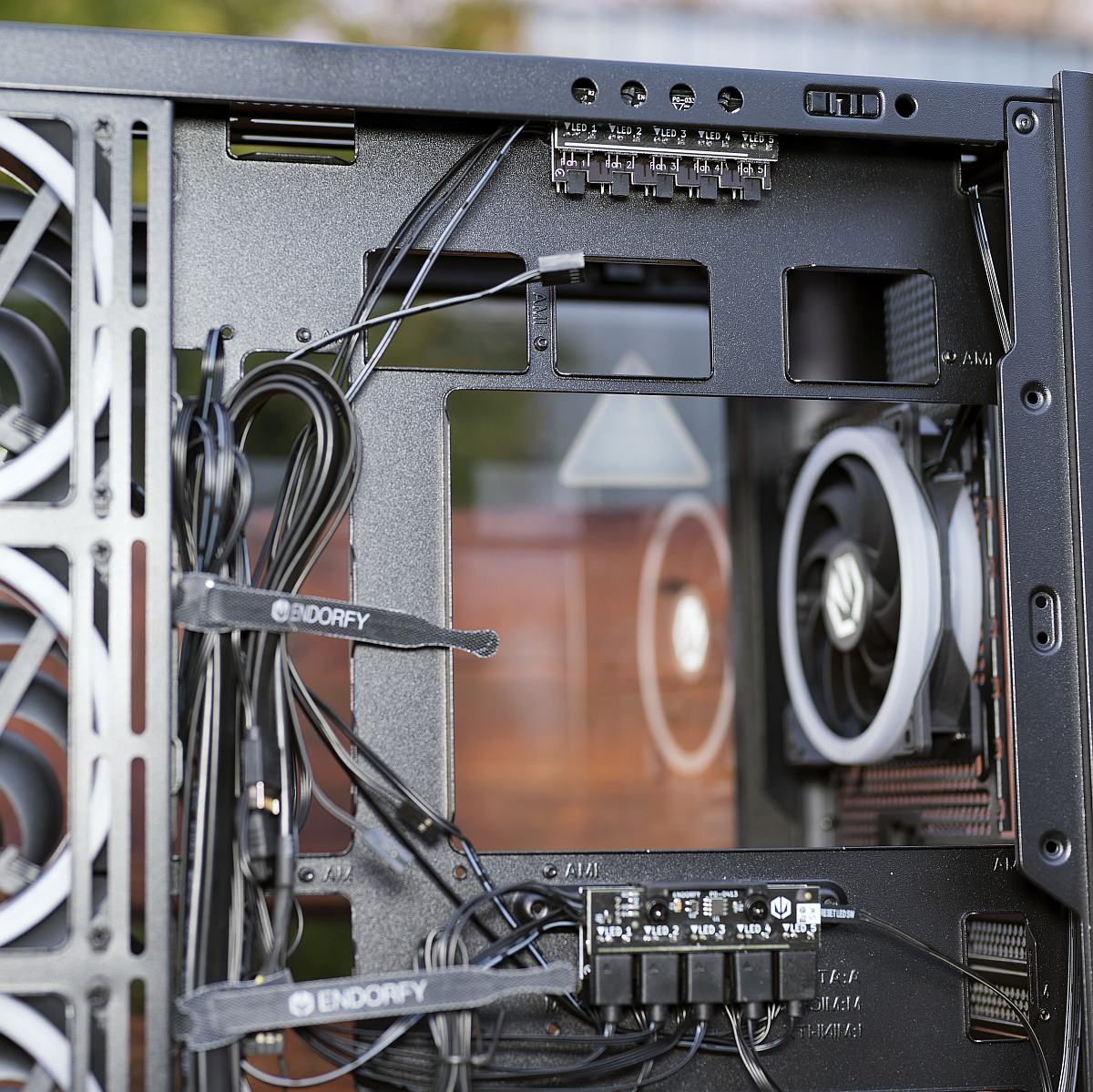
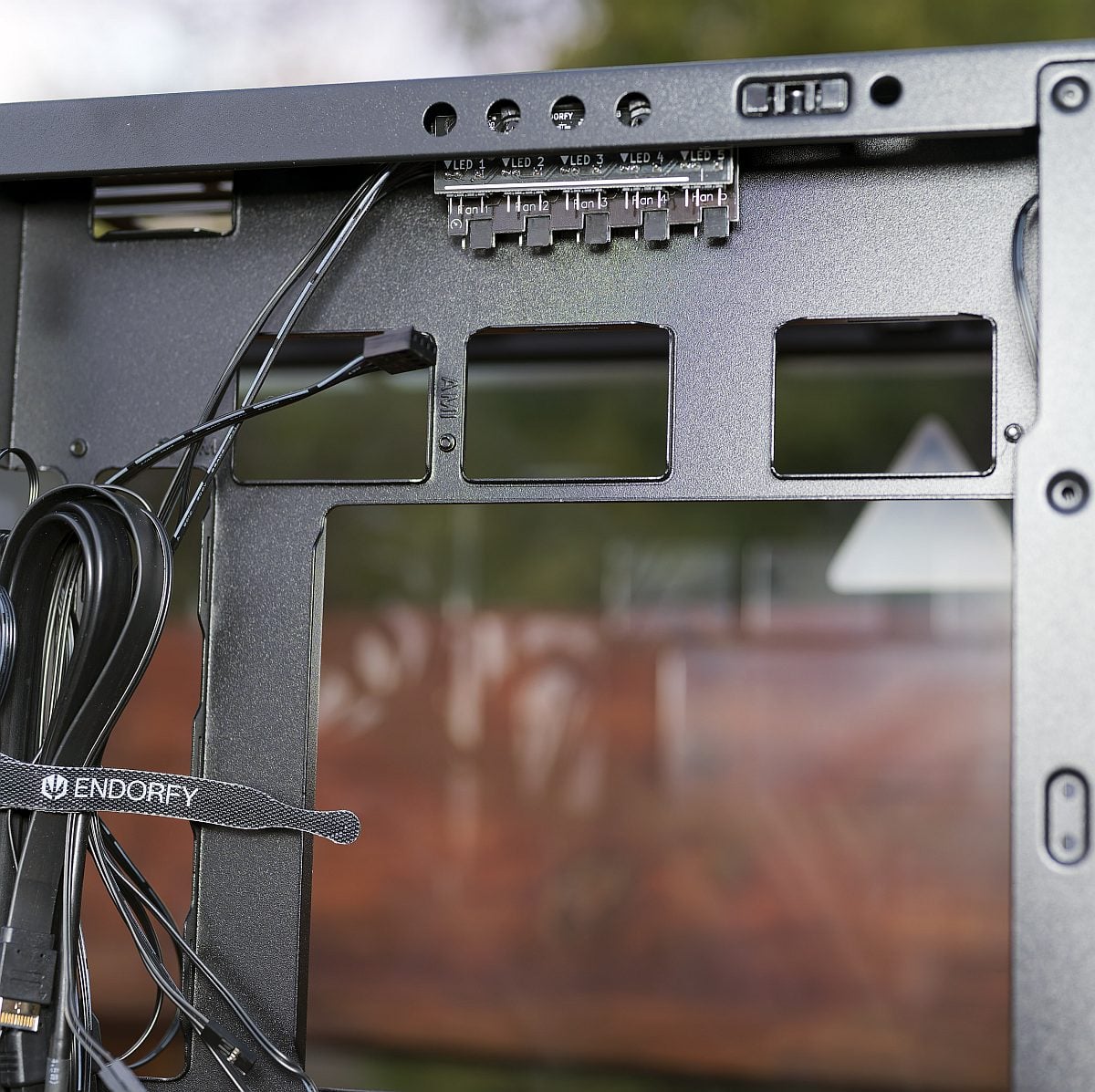
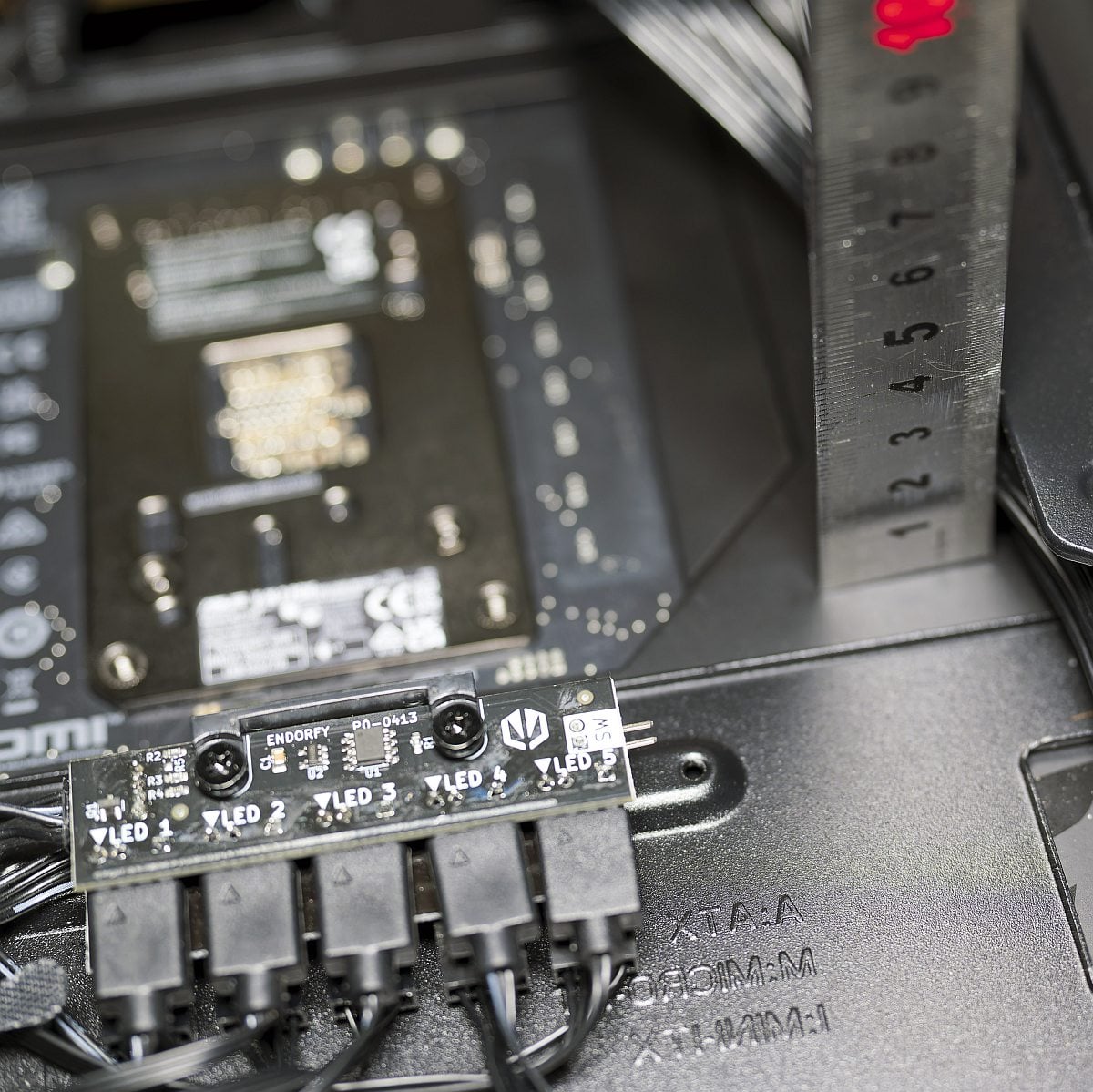
The bottom-mounted PSU chamber helps the case feel more conventional in the best possible way. It separates the power supply from the main chamber, improves the layout’s visual cleanliness, and keeps the build process more manageable when working with longer cables or bulkier hardware. You can see the ARGB/PWM hubs; one is occupied by the pre-installed fans, while the other is at your disposal.
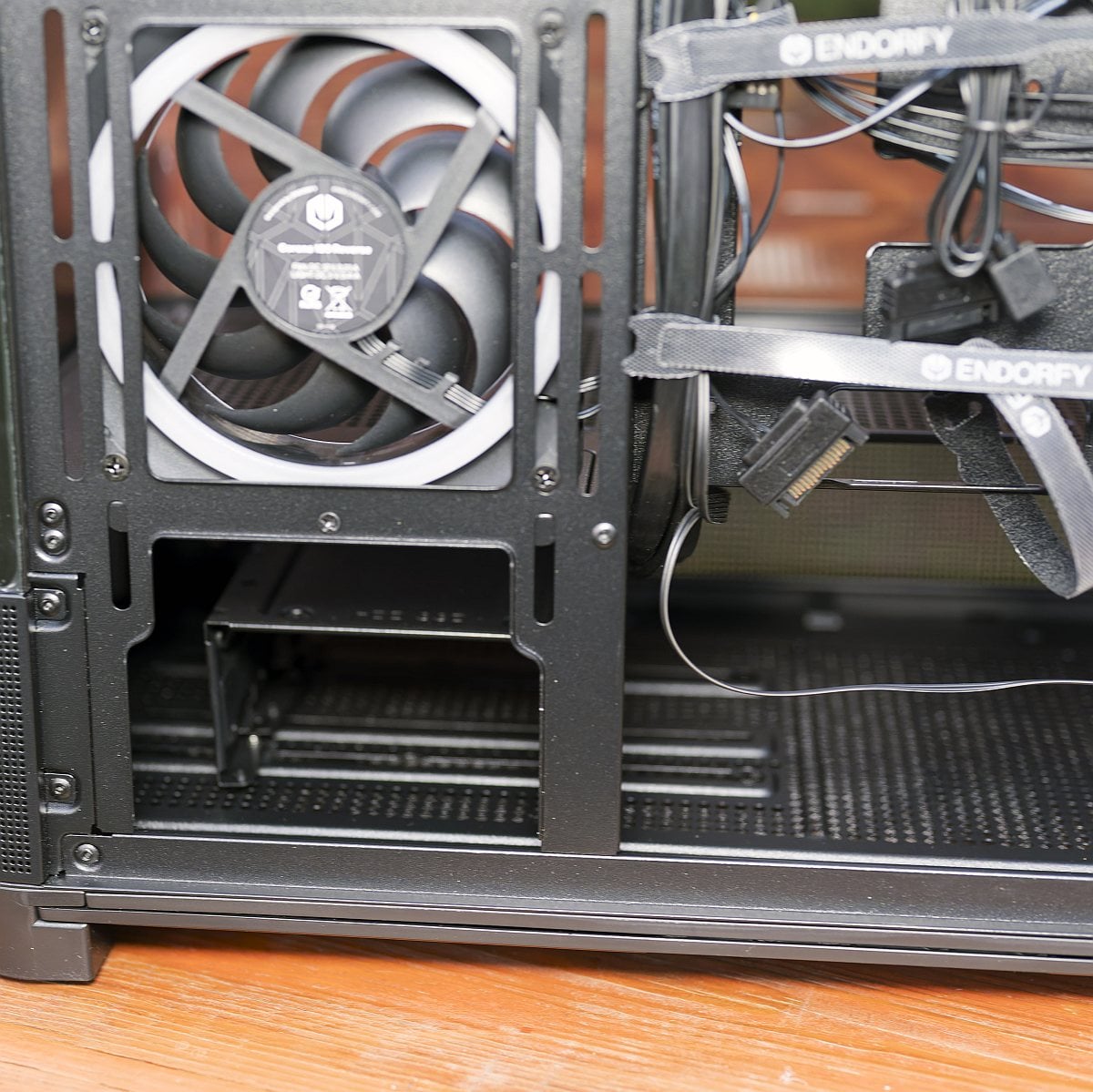
The adjustable HDD cage adds flexibility, which is more valuable than it sounds in a case like this. If you want to prioritise cable space, radiator clearance, or simply a cleaner, more visually appealing interior, you are not locked into a fixed storage layout.
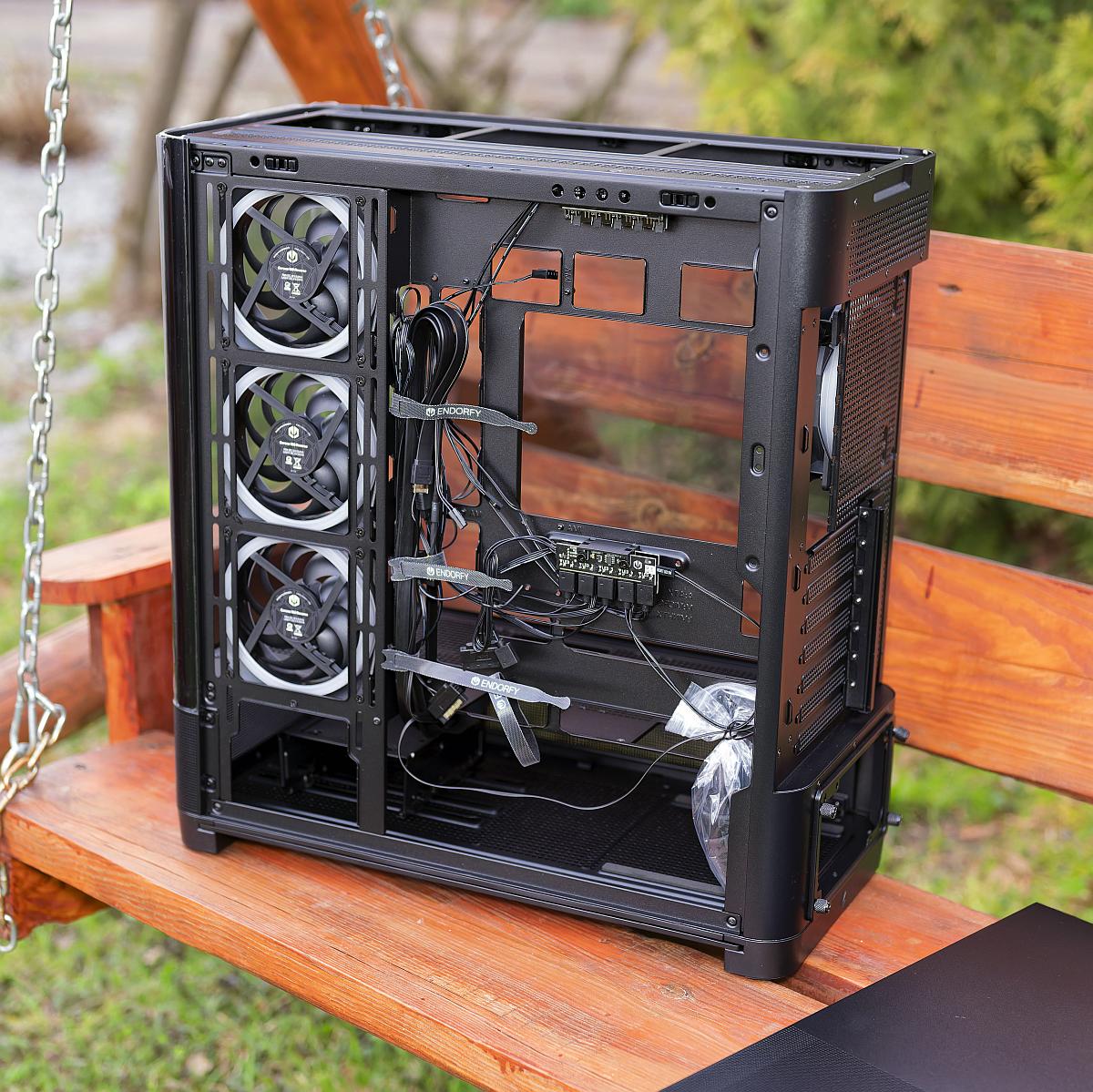
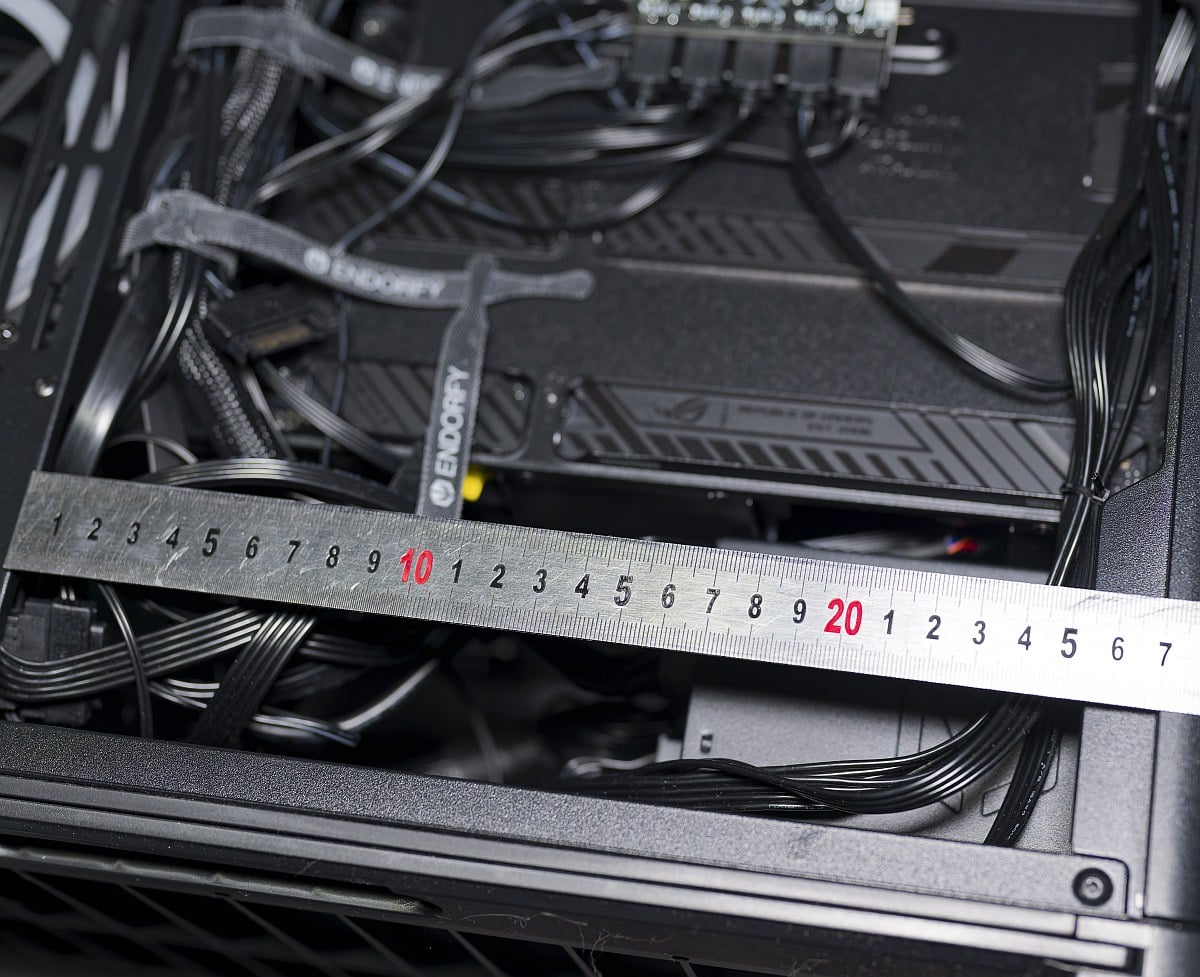
As for the PSU space, there’s plenty of it, and even powerful, 200mm-long units should fit without hassle. Regarding the space for the cables, there’s 30mm clearance, which is handy because it means you are not pushing and pulling them to fit. It’s little touches like these that makes the Aquarius 8000 good to work with.
Build Process
Here’s a list of the parts I used for my fully-functioning sample build:
- CPU: AMD Ryzen 9 9950X3D
- CPU cooler: Thermaltake LA360-S ARGB
- RAM: 2×16GB Geil Gemini RGB TUF 6,000MT/s CL34
- Motherboard: Asus ROG Crosshair X870E Hero
- GPU: Asus TUF Gaming GeForce RTX 3080
- SSD: Lexar NQ790 2TB
- PSU: Endorfy Supremo FM6 1000 W
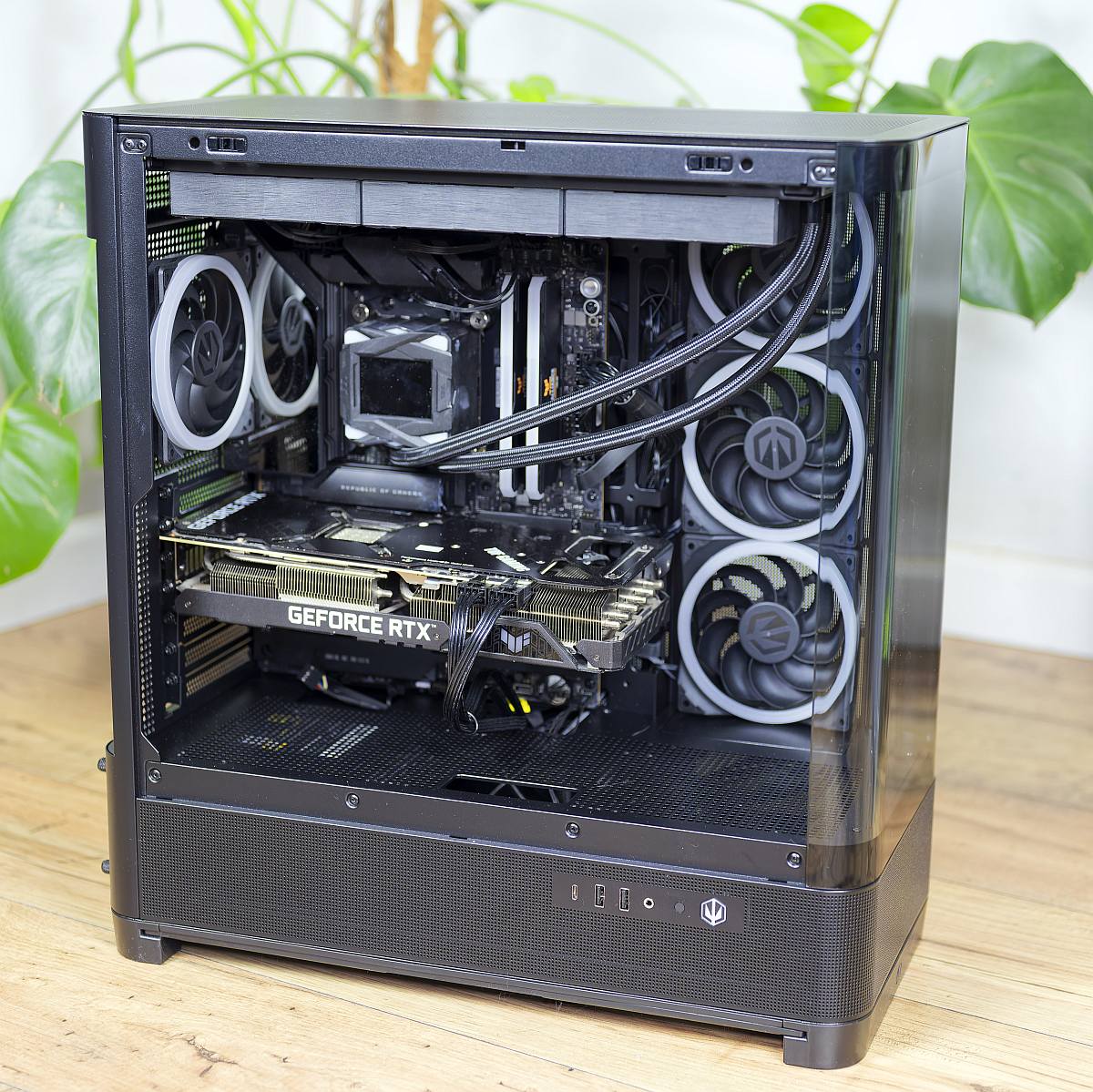
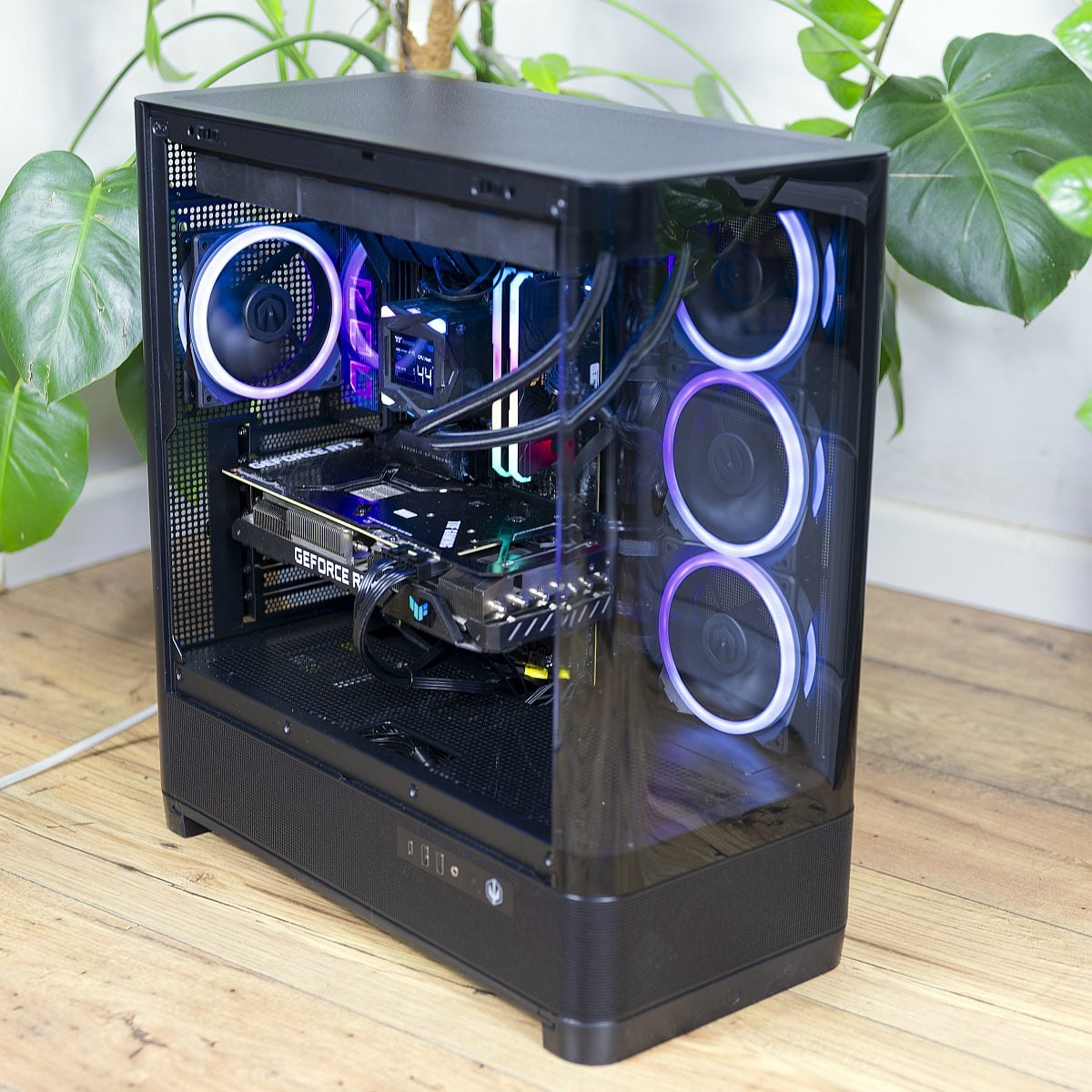
The Aquarius 8000 suits a build that aims high without being extreme. A strong choice would be a high-end CPU, a triple-fan GPU, a 360mm or 420mm AIO (at the top), and a modular ATX power supply with enough headroom for tidy cable routing. Lo and behold, that’s exactly what I’ve got.
Furthermore, the case’s compatibility gives you room to think beyond basic layouts. Back-connect motherboards fit the concept well because the rear routing space and clean interior lines are clearly intended to support that build style. Unfortunately, as I have mentioned above, there are no rubber grommets.
Corona is the more straightforward version to assemble because the included fans reduce the number of decisions you need to make up front. Flex, by contrast, rewards more experienced builders who want to define the airflow strategy themselves rather than inherit one.
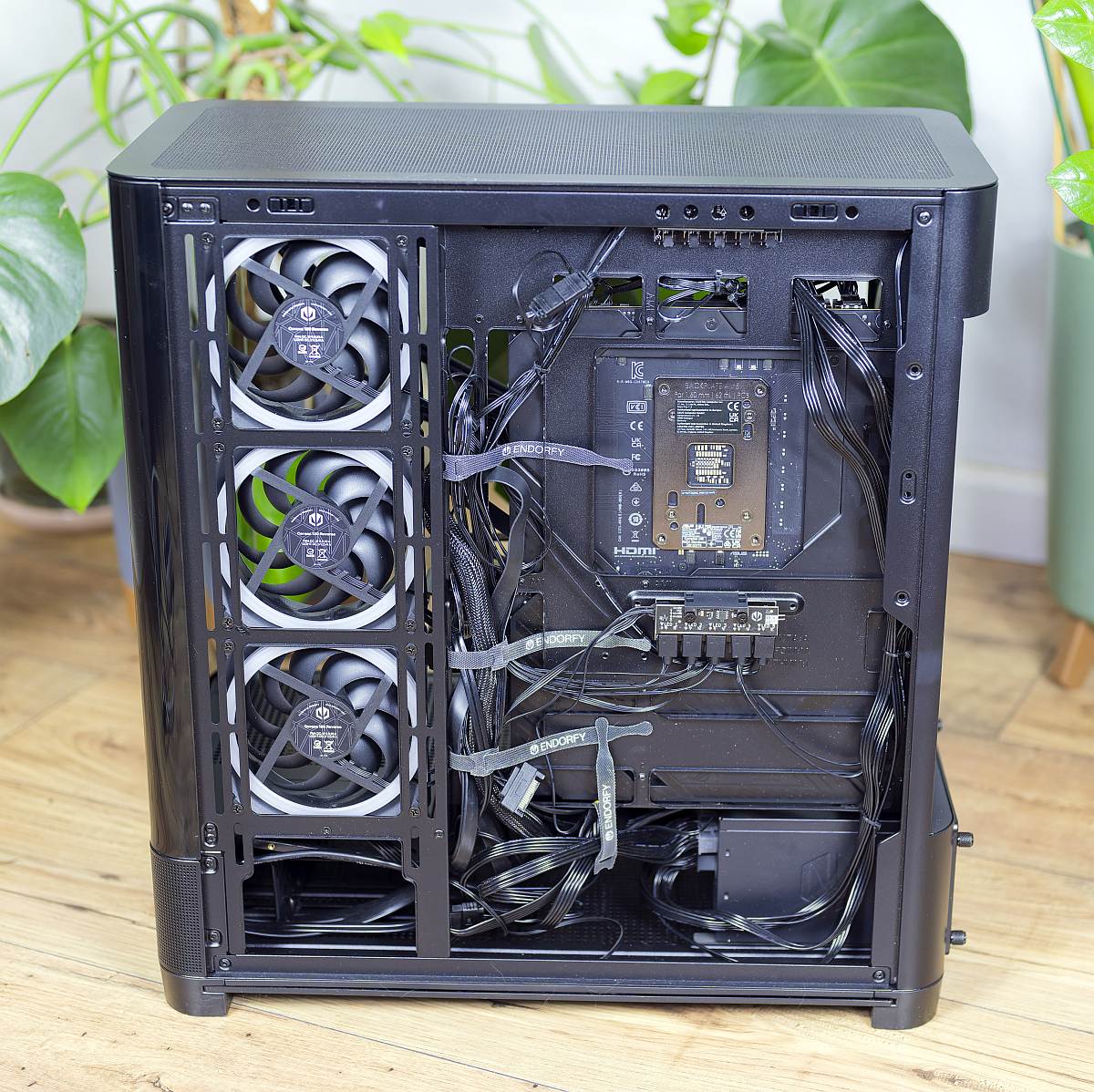
The full-length PSU shroud and side-mount options leave ample room for the Endorfy Supremo FM6 1000W unit, even with modular HDD cages installed, while wide channels and plentiful tie points behind the tray aid cable routing.
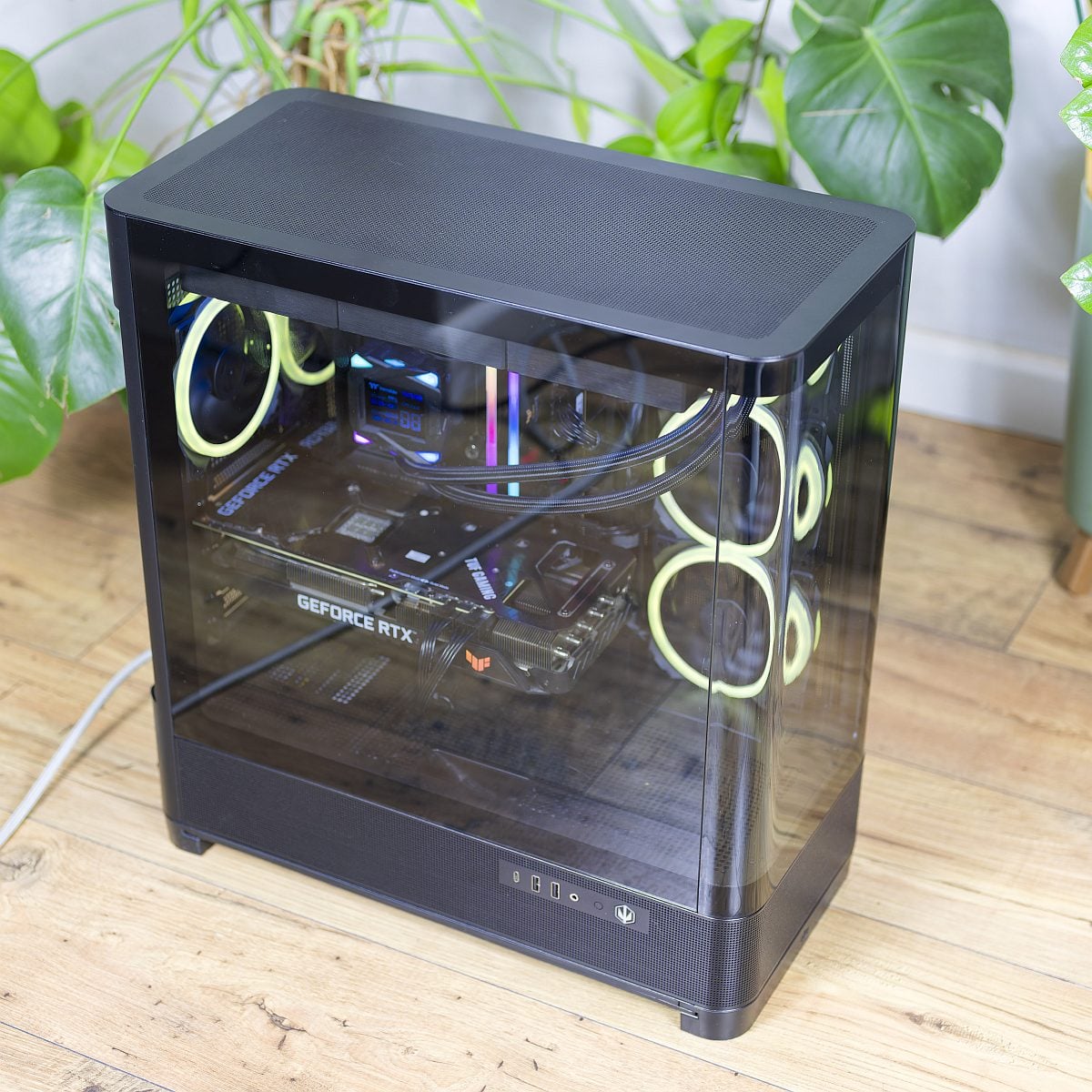
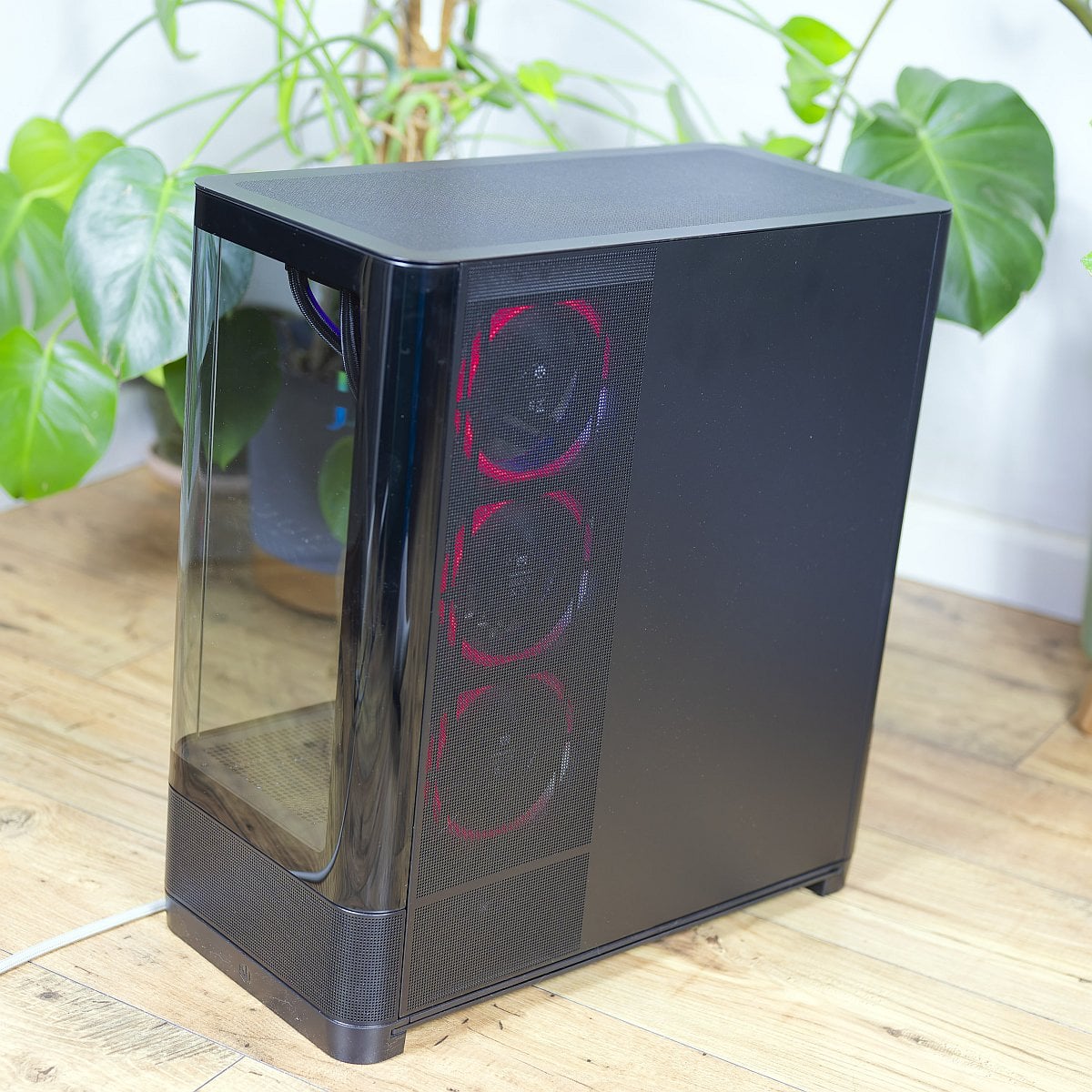
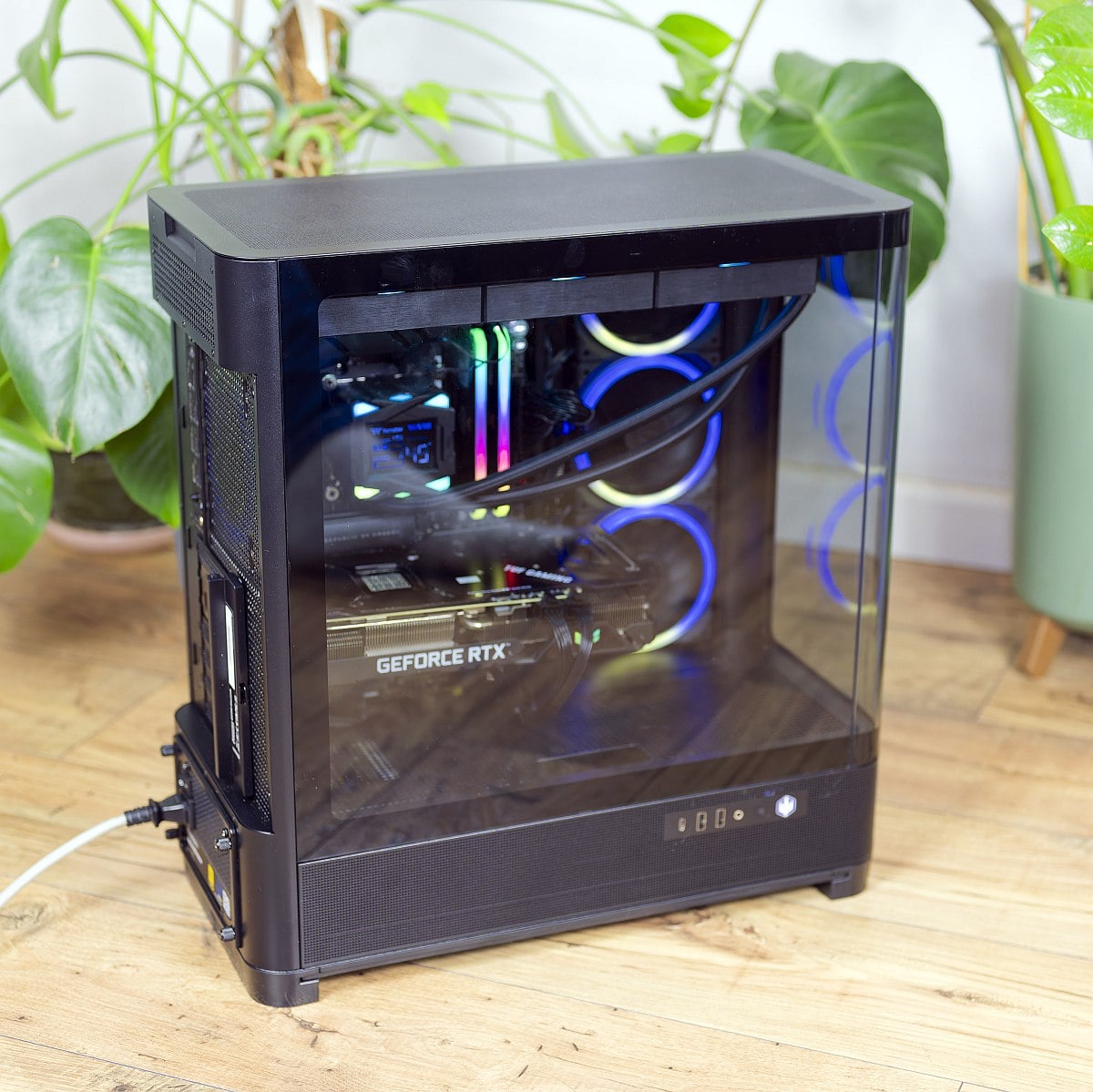
A vertical GPU setup also fits naturally here. The necessary bracket and riser are not included, but the slot design cleanly supports the idea, which is exactly what you want in a chassis that is as much about presentation as airflow. All four Corona fans plug into the hub, which in turn connects to a single PWM header on my X870E motherboard, allowing unified fan control curves based on CPU or motherboard temperature. It is great that you have the second PWM/ARGB hub for potential fan upgrades, as you can fit up to 10 120mm or nine 140mm units.
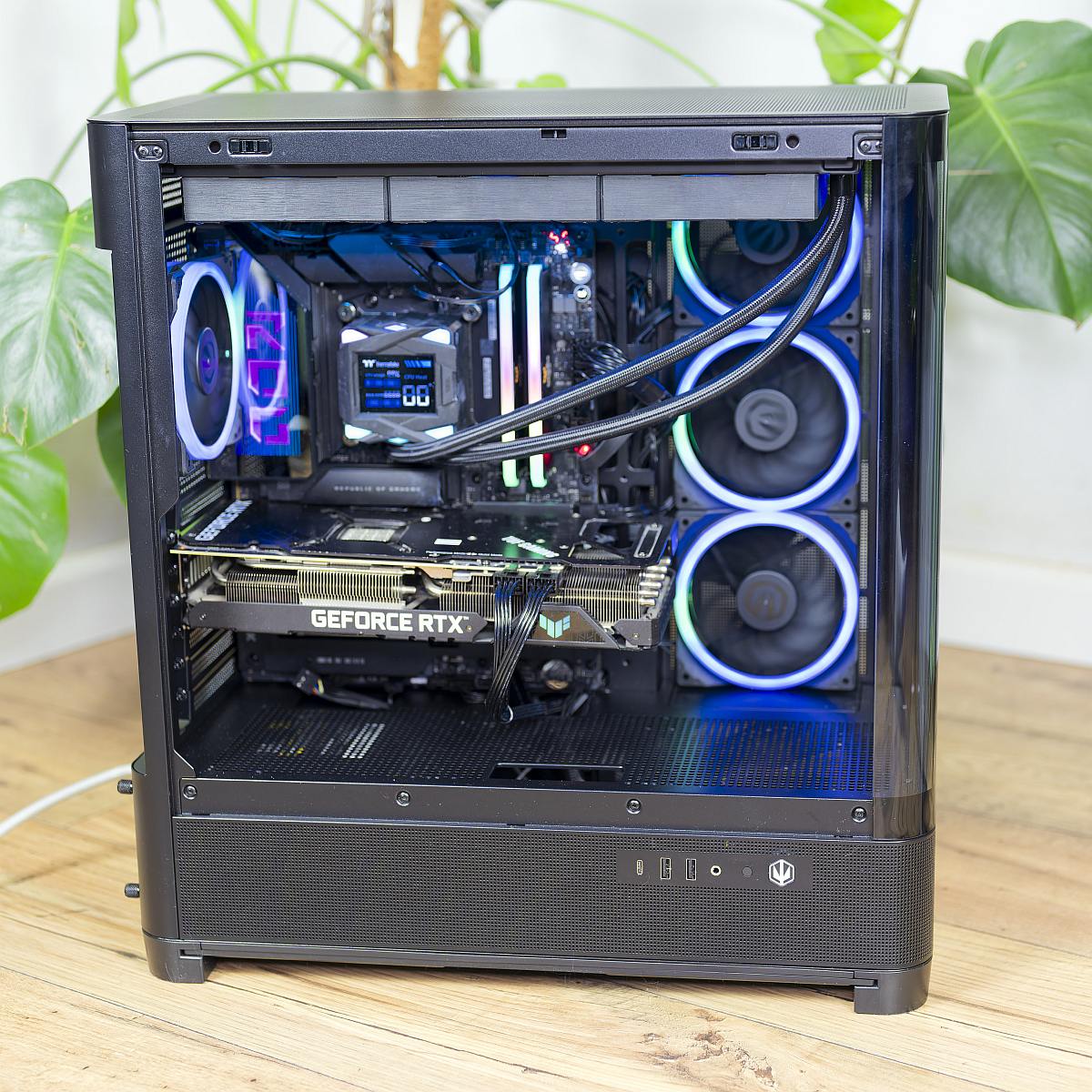
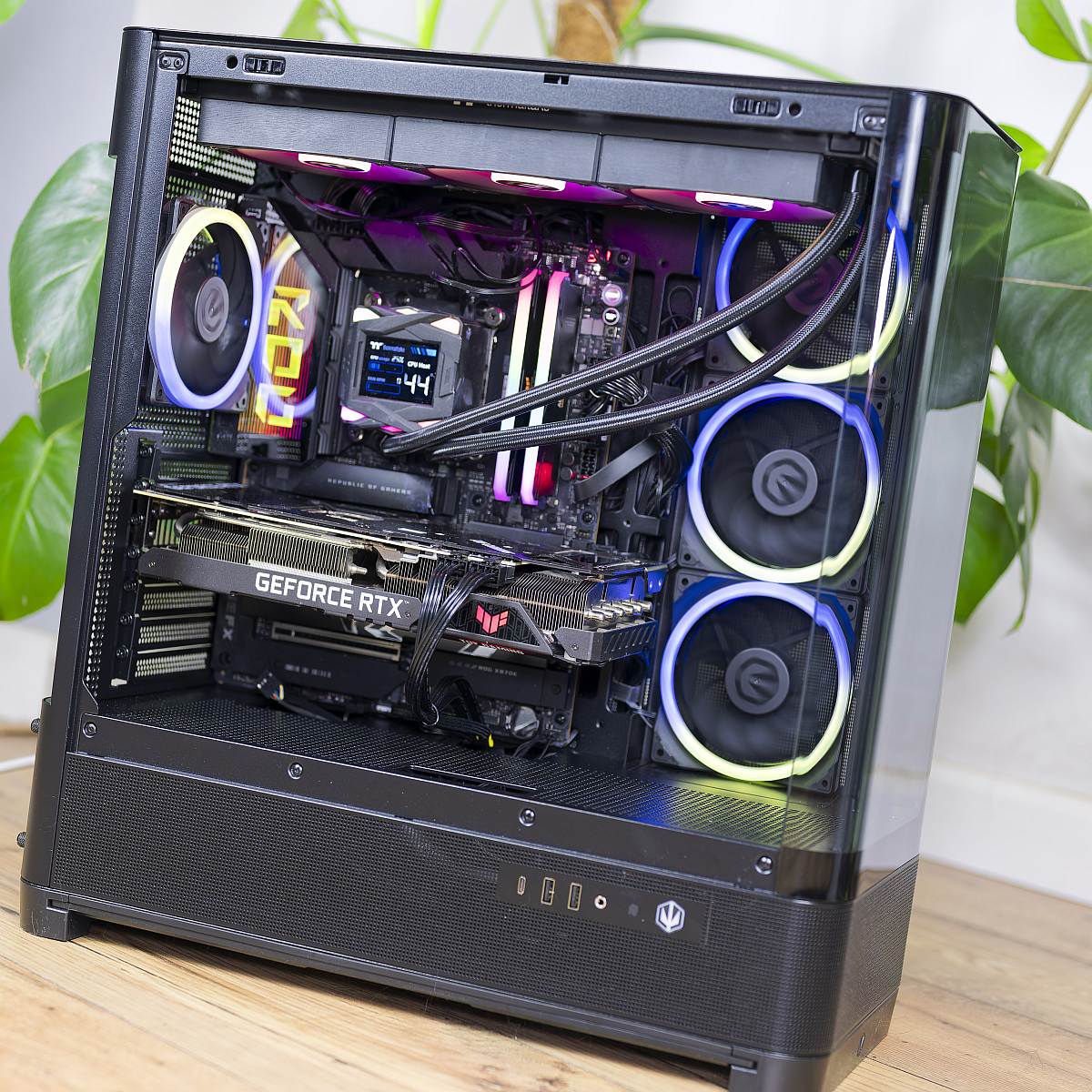
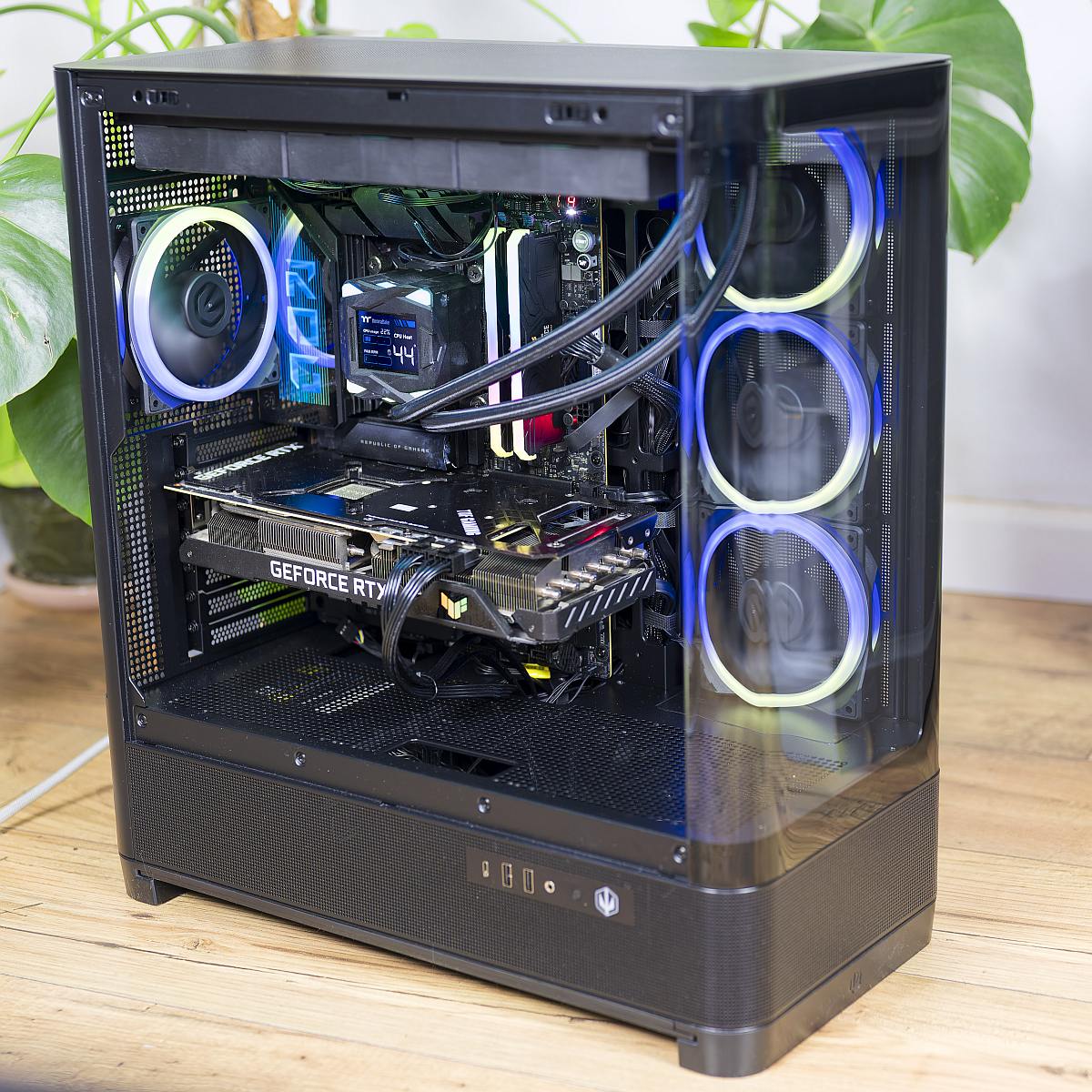
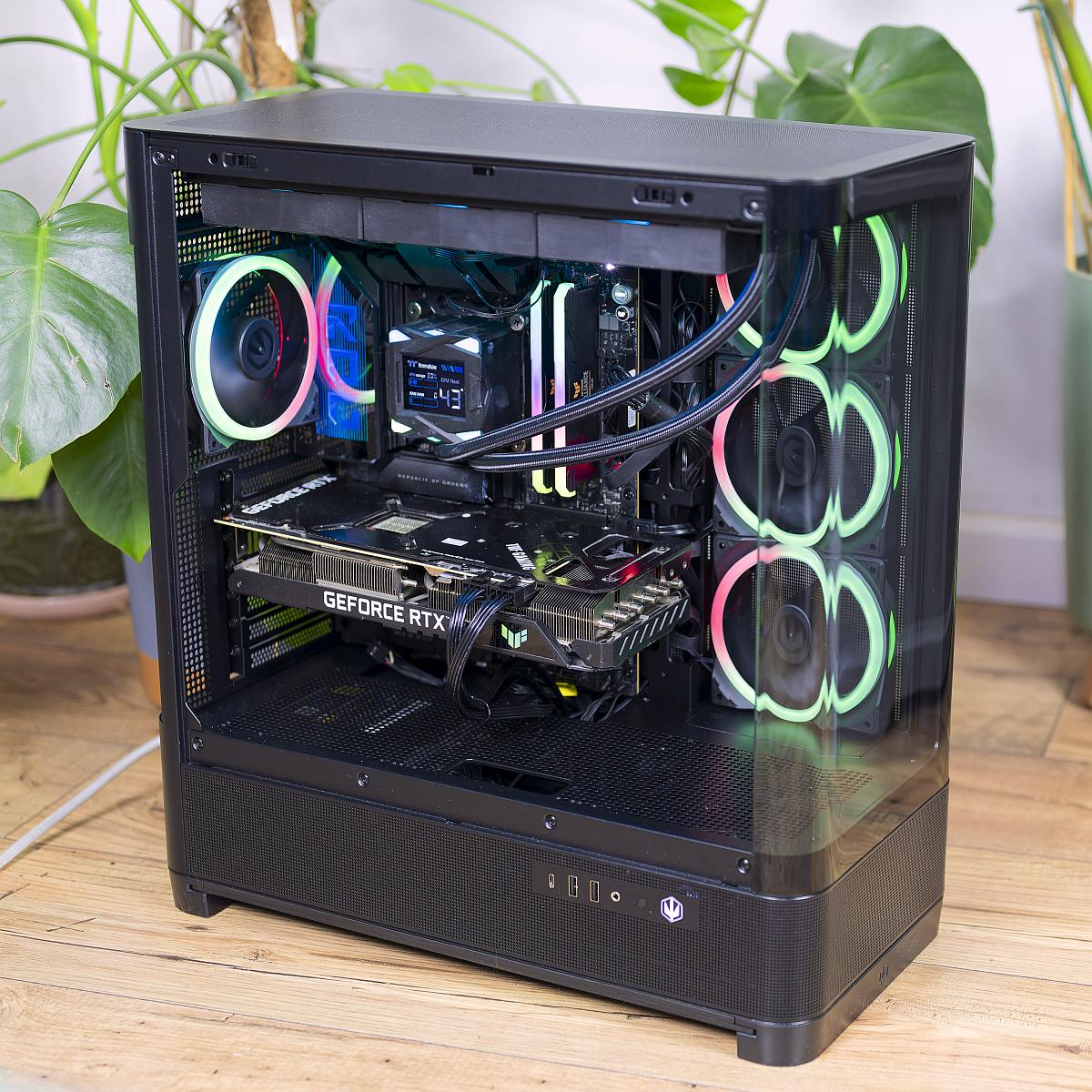
As for internals, everything installs smoothly, with tool-free access where you’d expect to find it, and side panels that line up effortlessly. The final result looks attractive, especially if you like the fish tank type of chassis.
Performance
Careful installation ensures Endorfy Aquarius 8000 Corona delivers not just visual flair but also reliable cooling. Up to ten fans, with the pre-installed four units, deliver quiet, effective baseline cooling. Thermal tests with demanding hardware, such as an AMD Ryzen 9 9950X3D and RTX 3080, confirm that system temperatures remain relatively low and noise is minimal when fans run at moderate speeds.
Noise levels remain barely audible up to approximately 45% fan speed. Running them at full speed, of course, generates significantly more noise, making it suitable only for heavy rendering sessions or gaming with a headset on.
Temperature
The charts below show Endorfy Aquarius 8000 Corona’s thermal performance compared to other cases. Temperatures were recorded in idle and under 2D and 3D loads using Cinebench 2024 and Fortnite, respectively.
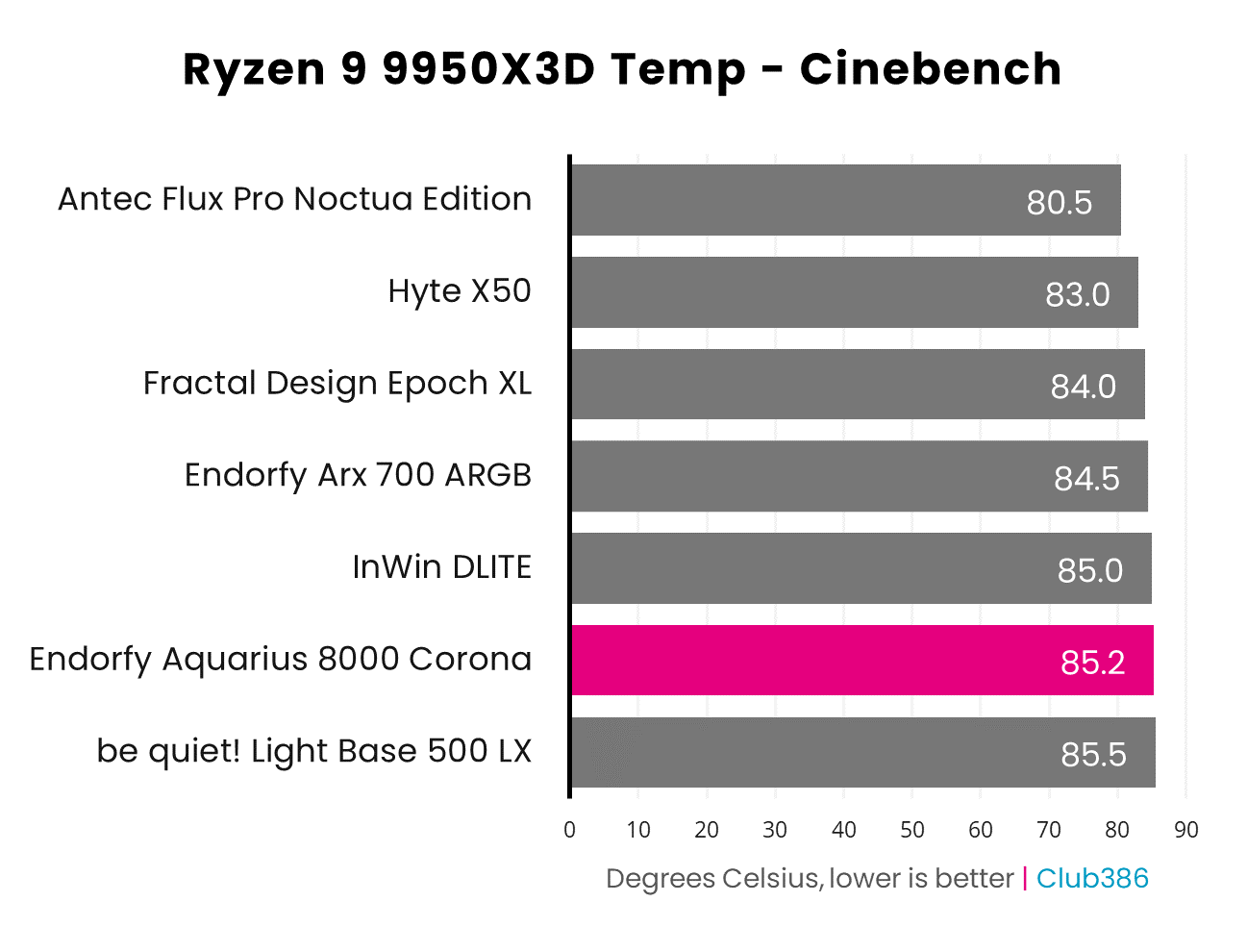
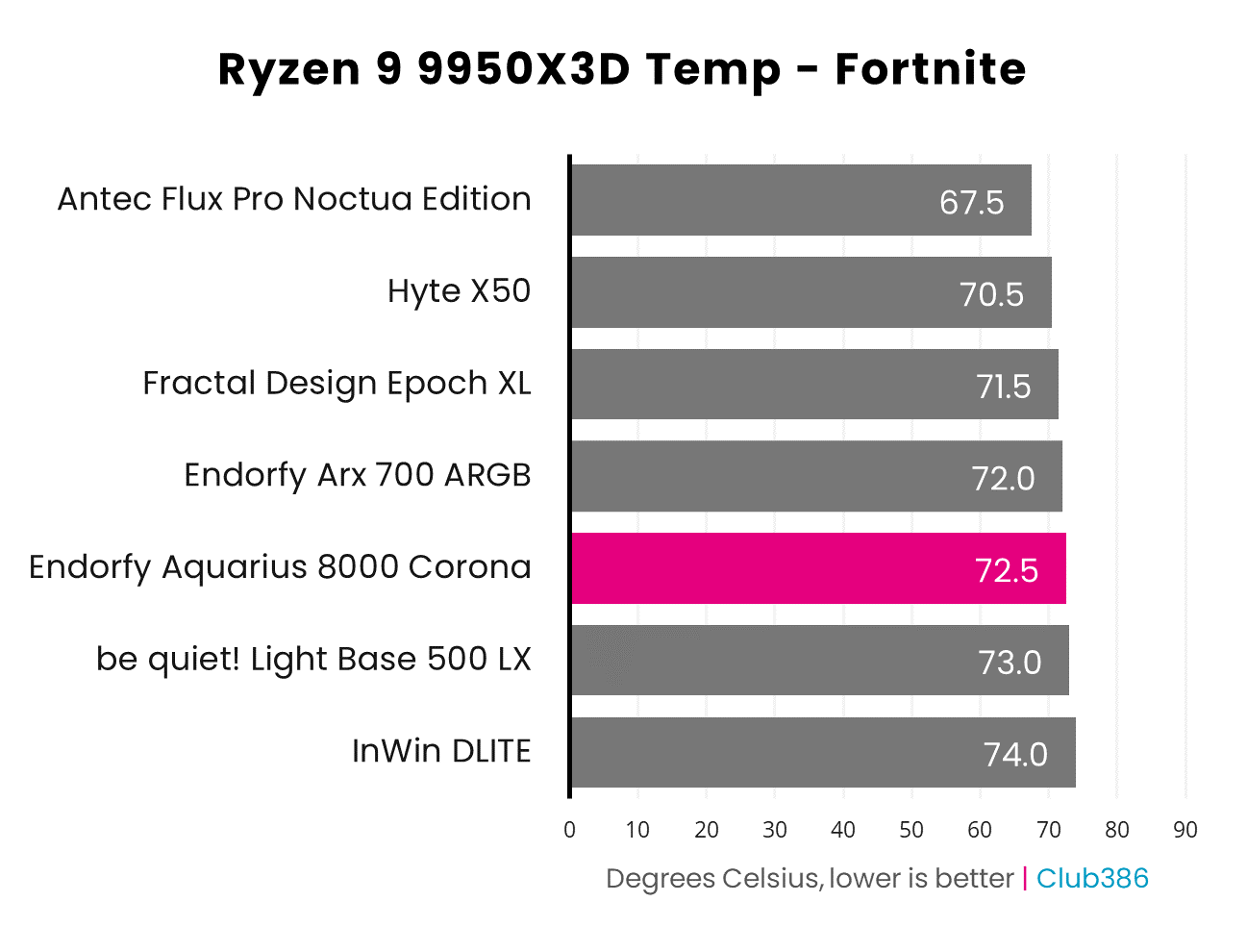
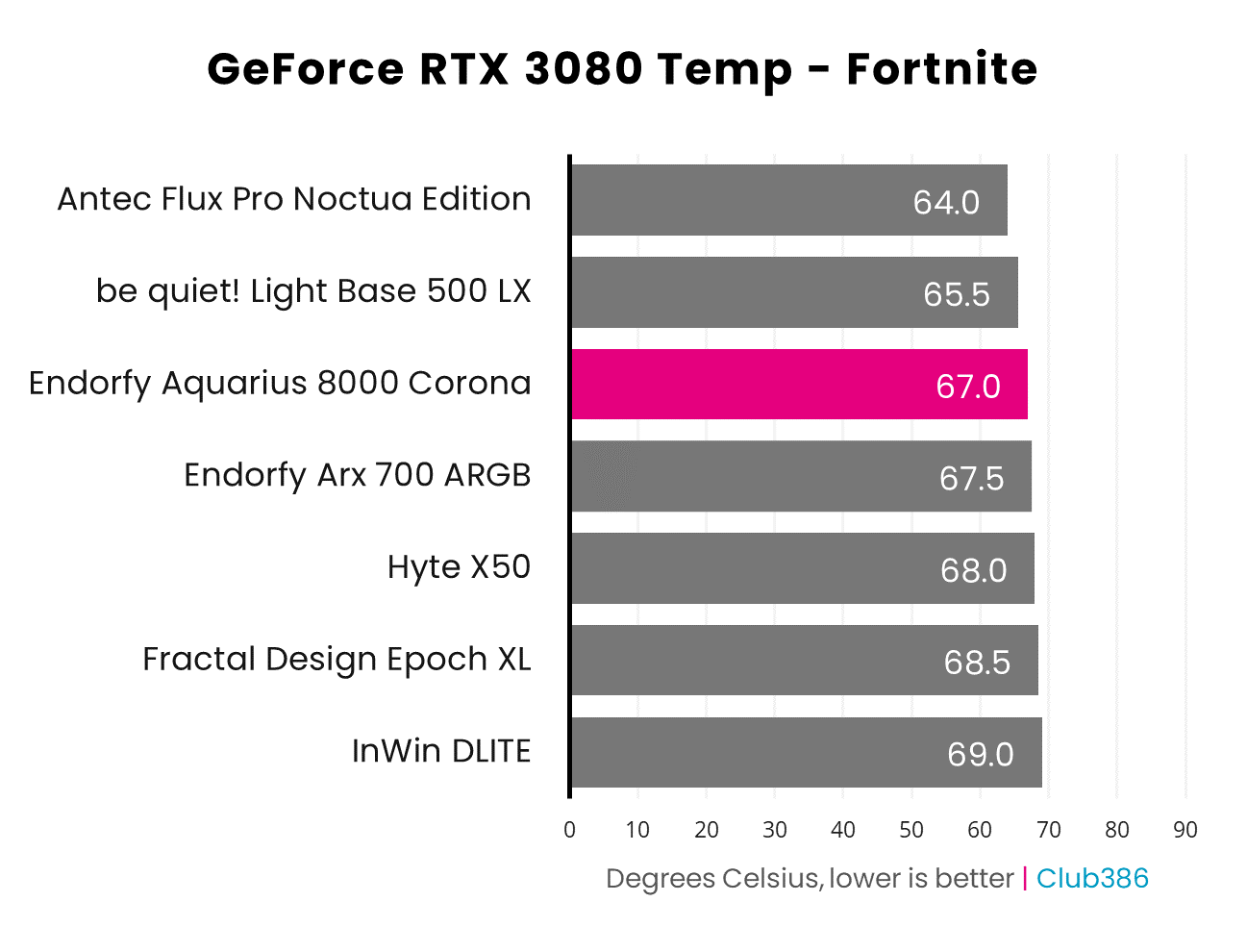
Thermal performance of the Endorfy Aquarius 8000 Corona compares favourably with that of other mid-tower competitors. CPU and GPU temperatures remain in check, aided by the mesh intake and four pre-installed fans. Adding a rear exhaust would be the simplest way to further expel hot air from the cavernous interior.
Noise
Noise levels were recorded in a completely enclosed room with a set ambient temperature of 22°C. The lowest dBA level I can measure in this room without equipment activated is just under 30dBA. I measure system noise 40cm from the side panel. The automatic fan profile was used for testing.
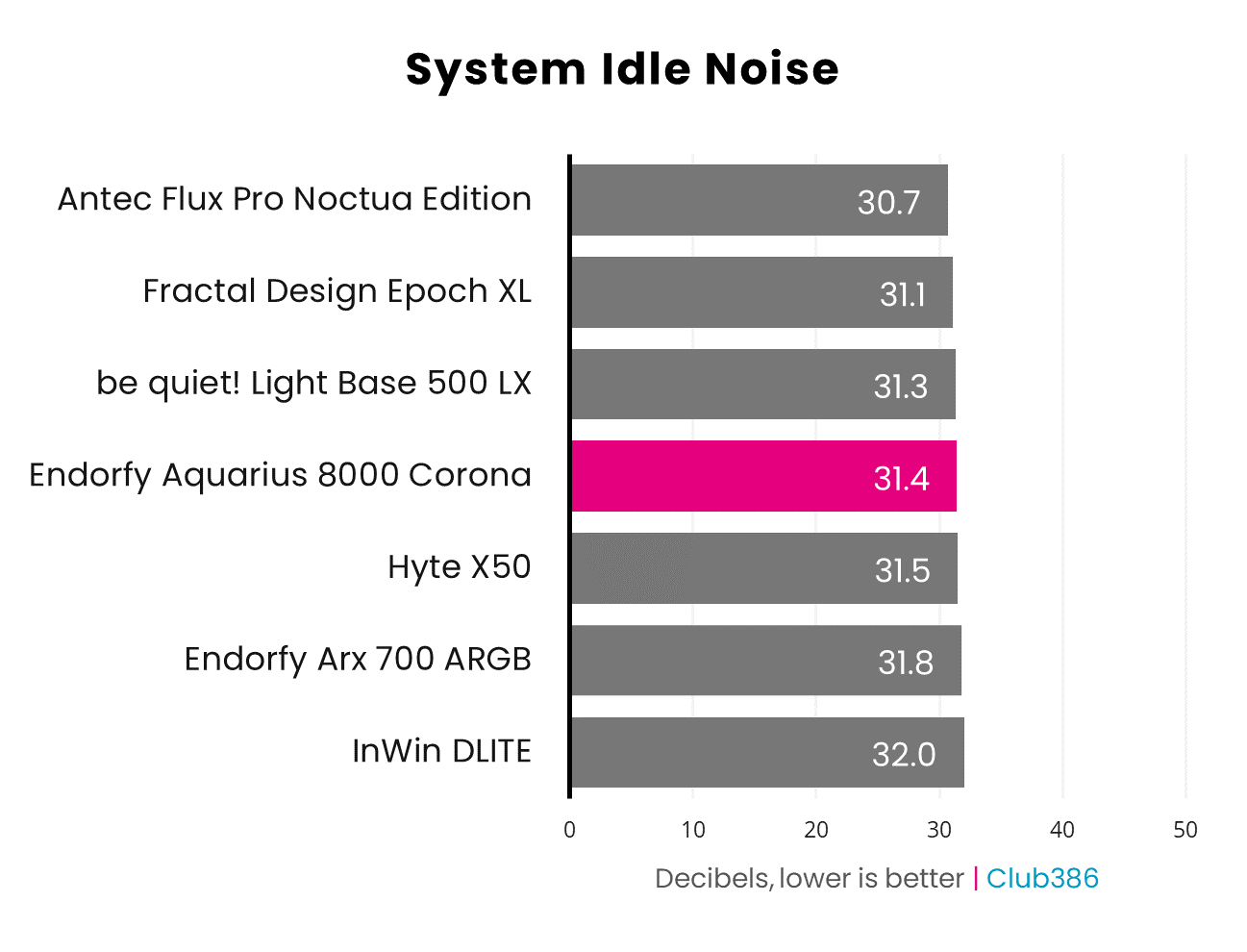
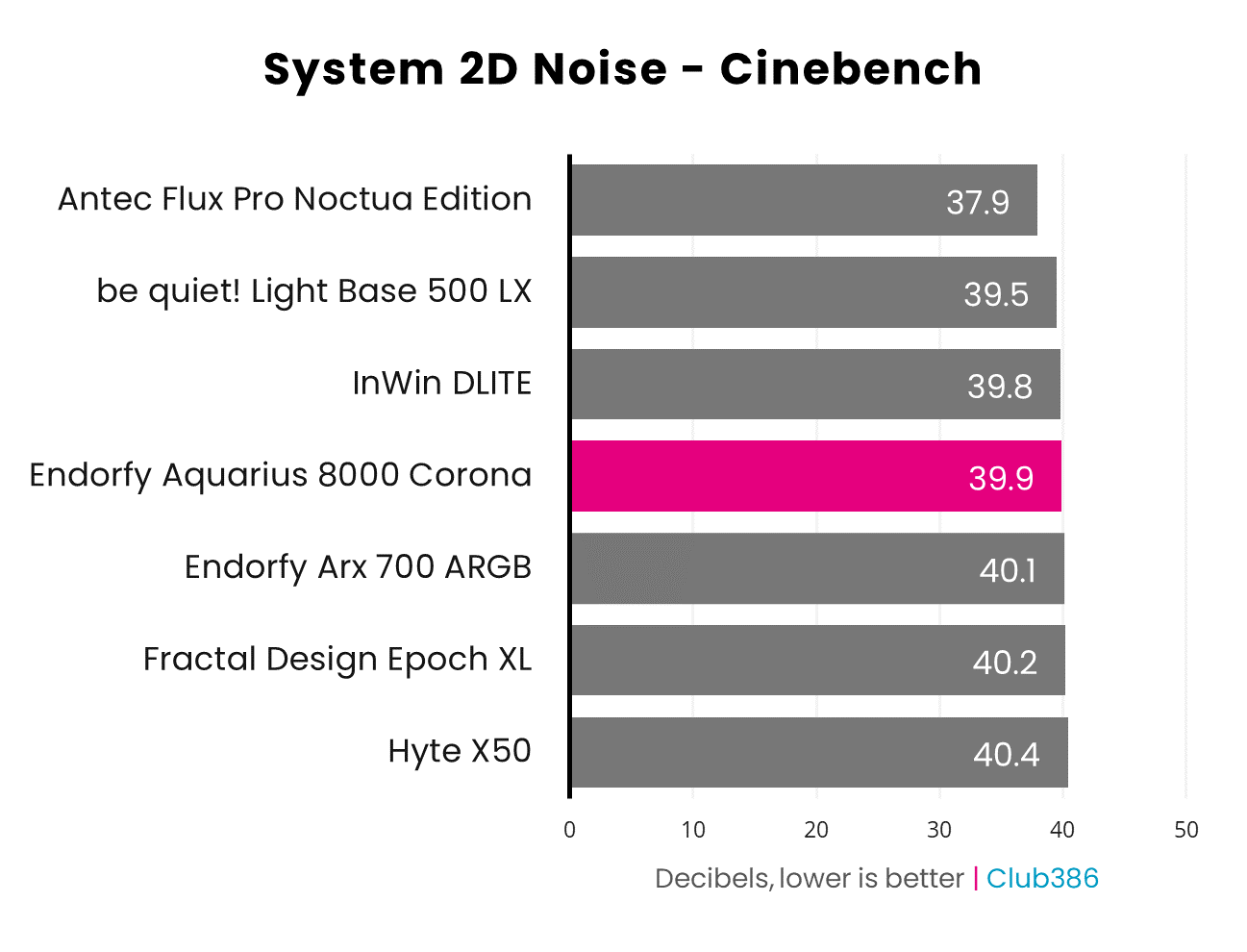
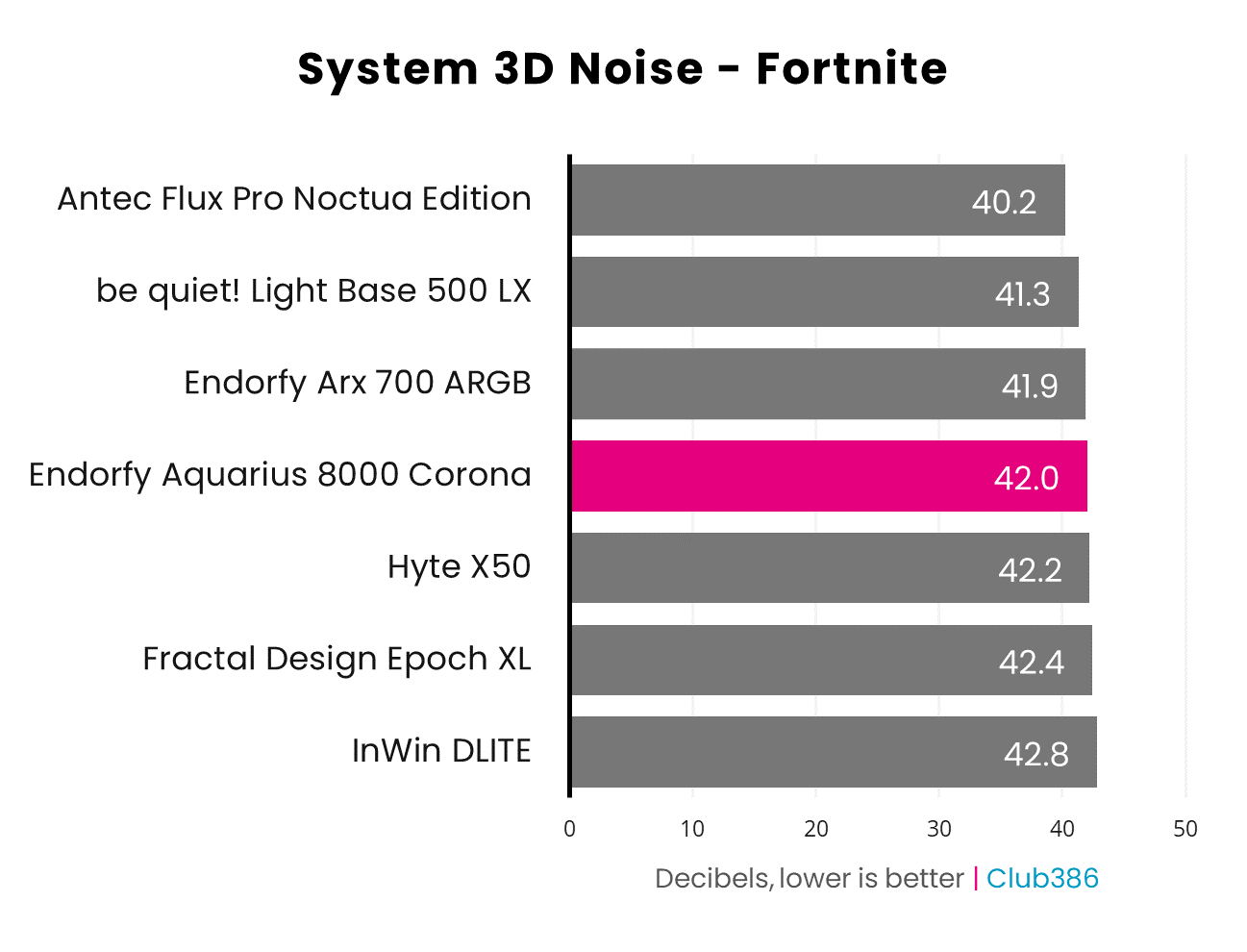
At idle, the Endorfy Aquarius 8000 Corona is practically silent, with noise rising only during intensive gaming or rendering, mostly from the GPU cooling.
Conclusion
Aquarius 8000 succeeds because it treats aesthetics as one part and not the entire brief. It is designed to be seen, but it is also engineered to house ambitious hardware without making the builder pay for the looks in obvious compromises.
The Corona version is the easier recommendation, simply because the included fan package gives it a more finished out-of-the-box identity. Flex remains appealing, though, particularly for builders who already know exactly how they want to cool their system.
What makes the chassis compelling is the balance between volume, compatibility, and presentation. You get the visual drama of a panoramic glass case, along with the clearances and mounting support that make it a genuinely usable high-end enclosure.
Aquarius 8000 therefore succeeds by blending elements of both variants into a well-rounded tower better suited to high-end users. Rather than prioritise one extreme, it fuses striking aesthetics with strong radiator support and thoughtful layout choices, creating a highly versatile case that turns heads while delivering a smooth build from start to finish.
As one of the more complete premium panoramas in Endorfy’s lineup, Aquarius 8000 Corona packs serious value with four included ARGB fans. The design encourages ambitious layouts, offering 450mm GPU clearance and top radiators up to 420mm. Furthermore, good value shines through in the side I/O convenience and dust filters.
For a panoramic, well-specced and no-nonsense chassis, Aquarius 8000 ticks more than enough boxes at a compelling price. That combination is what makes Aquarius 8000 stand out. It does not just look like a premium case; it behaves like one, too.