

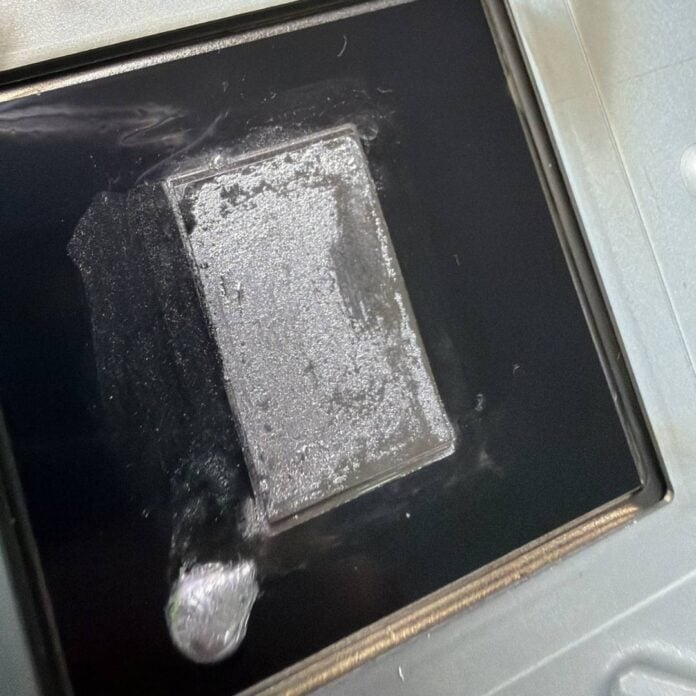
A repair technician has discovered a concerning problem on an old PlayStation 5 console, where the liquid metal thermal interface reacted with the cooler’s base plate. The reaction was so severe that it transformed the liquid metal into a dry crust.
Polish console and controller repair technician Modyfikator89 shared pictures of the PS5 on X. In an accompanying video, we can see the technician trying to scrape off liquid metal using a cotton swab, but to no avail, since the liquid metal has turned rock solid. There was even discolouration around the chip perimeter on the heatsink side, which could be due to continued cycles of chip overheating.
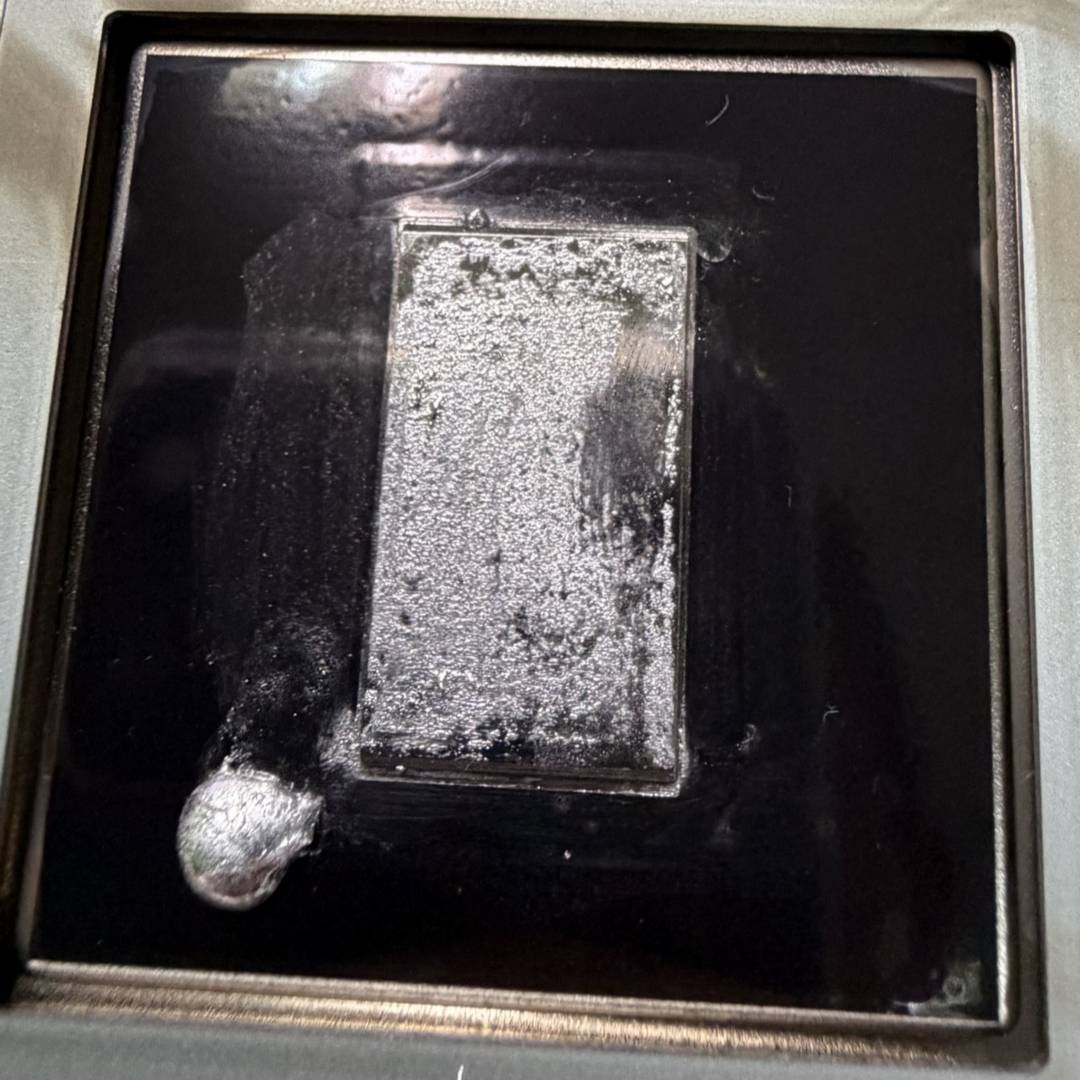
Since the crusty liquid metal residue was impossible to remove using gentle methods, Modyfikator89 was forced to scrape it as much as possible, which left permanent scarring on the heatsink’s base plate. While this wouldn’t be a concern with traditional silicon-based pastes, reapplying liquid metal to this damaged cooler may exacerbate the chemical reaction, which would result in the same problem after a shorter time span.
This is the exact dilemma Modyfikator89 pondered in a follow-up tweet, where he questioned the potential of using PTM7950 phase-change material. The latter has gained a lot of interest from PC users lately, due to its ease of application and similar performance to traditional pastes. The PTM7950 patch remains solid at room temperature, which makes it easy to handle, but melts into a high-performance liquid paste when it hits 45°C, after the first high chip load.
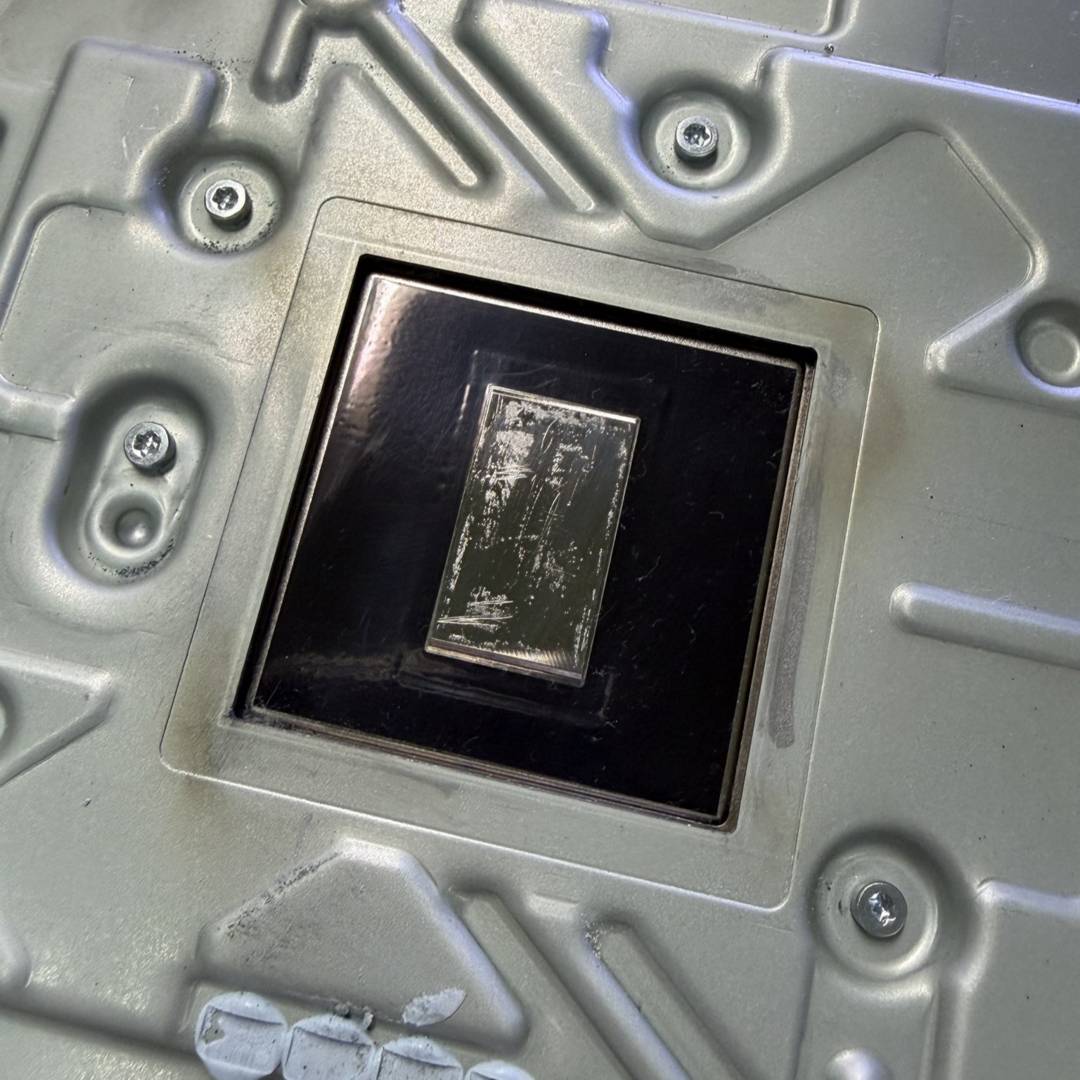
As for why this happened, the most plausible explanation is that the Gallium used in the making of liquid-metal compounds somehow managed to react with the metals in the cooler. Gallium is known to react with aluminium, and to a certain degree with copper, hence why most liquid metal-equipped devices use some sort of nickel plating to protect the contact area.
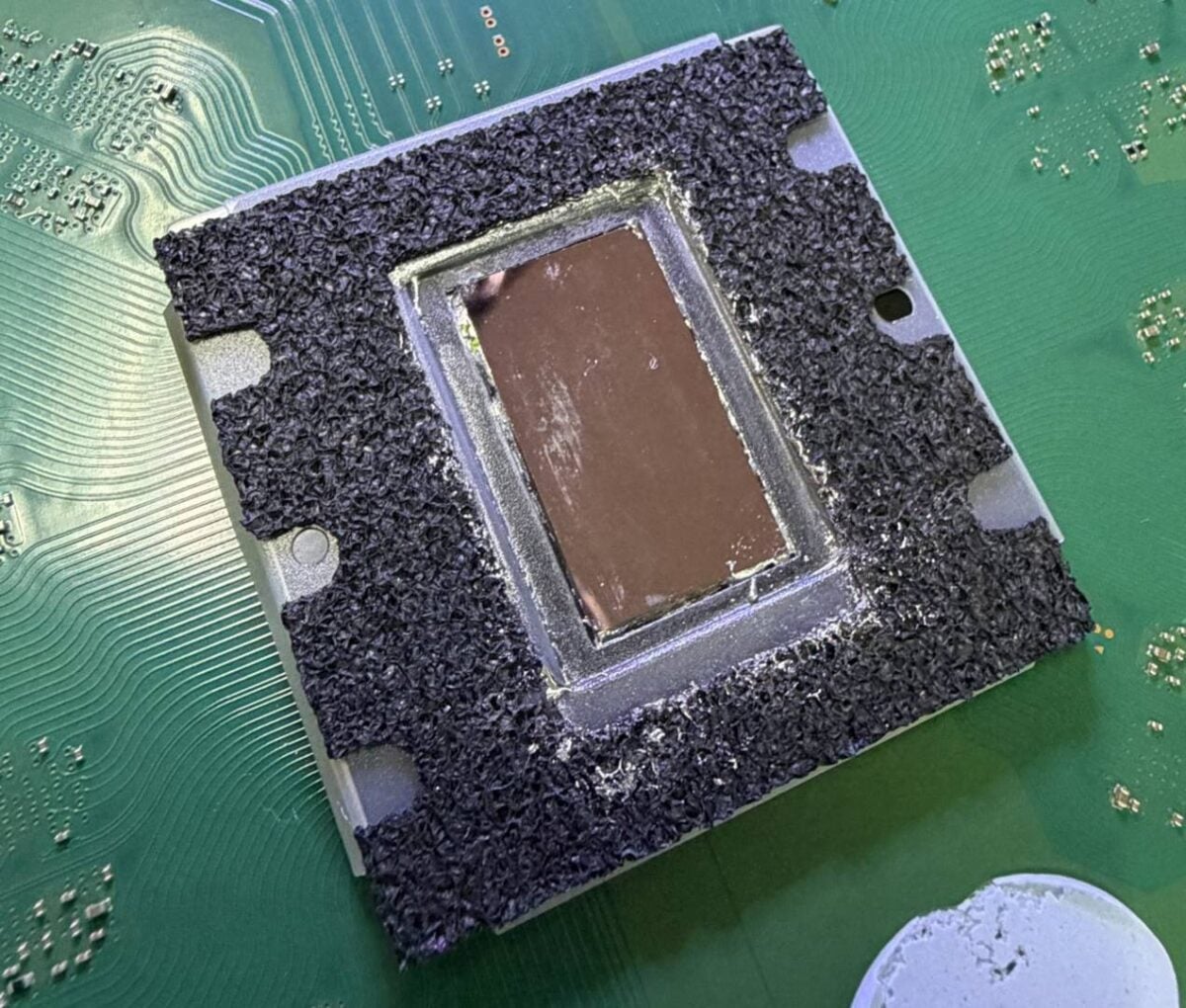
According to the technician, this particular console is from the CFI-1116 series, which is part of the CFI-1100A revision released back in August 2021 as part of Sony’s first major internal hardware revision, featuring a redesigned lighter heatsink. Maybe there was a change to the plating thickness or material at this point, which resulted in this reaction.
The most concerning part is that this revision is five years old, meaning that, if this turns out to be a widespread issue, thousands of users could end up with overheating consoles at some point, without the possibility of an RMA. Hopefully, this is just part of a small bad batch or a random defective unit. The good news is that, according to Modyfikator89, later revisions, such as the PS5 Pro and Slim CF-2116, have been improved in this area. So, if you have a recent-ish console, you shouldn’t need to worry.