

Worldwide PC shipments fell 20.1% year-on-year (YoY), from last year’s 78.5 million to 62.7 million units in the third quarter (Q3) of this year, according to preliminary results from IDC Research. Compared to Q2 2026, shipments have also slipped 9.1%, which is abnormal for this quarter.
According to IDC, the earlier inventory pull-in period when PC brands encouraged customers to buy new machines before available memory supply dried up, is now biting back. By trying to get ahead of the price hikes, vendors inflated Q2 shipments, which is now starving Q3 of demand. As a result, Q3, which is usually one of the best seasons for sales, is now lagging behind Q2 and substantially off the pace of the same period last year.
In addition to the aforementioned figures, Q3 2026 also shows the second straight quarterly decline compared to last year, as Q2 marked a 3.8% drop compared to Q2 2025.
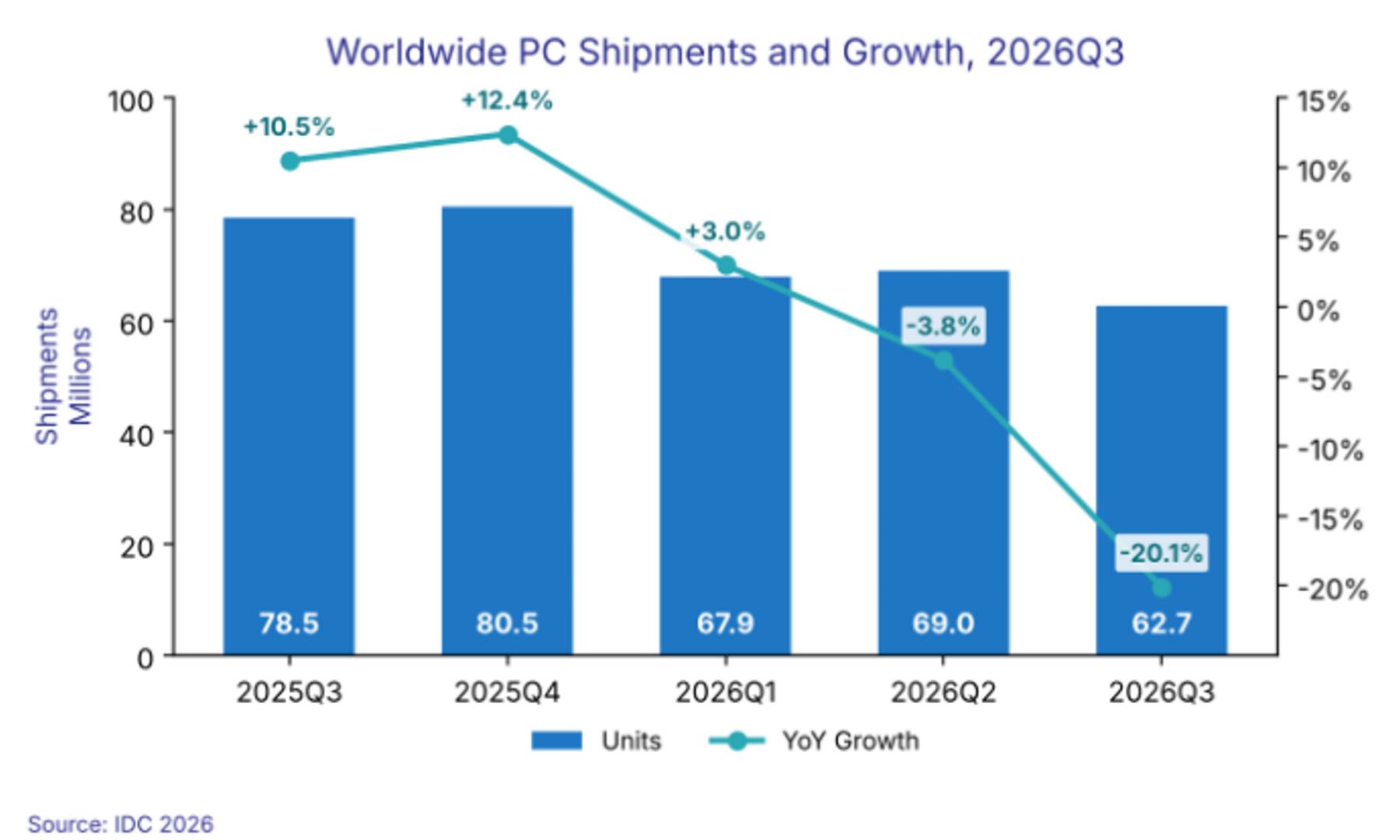
The combination of pulled-in volume and growing supply constraints pushing up prices shrank demand in Q3, according to IDC, resulting in only 62.7 million units being shipped compared to 78.5 million in Q3 2025. While the hit was shared by all major PC vendors, some brands fared better than others.
Among those who took the biggest hits, HP’s shipments fell by 30.9% to 10.3 million units, Dell took a 25% drop to 7.6 million units, and Lenovo endured a 22.6% drop to 14.9 million units. This puts Lenovo as the biggest PC vendor in Q3 2026, followed by HP and Dell. No one seems to be spared; even Apple has marked an 11.3% drop.
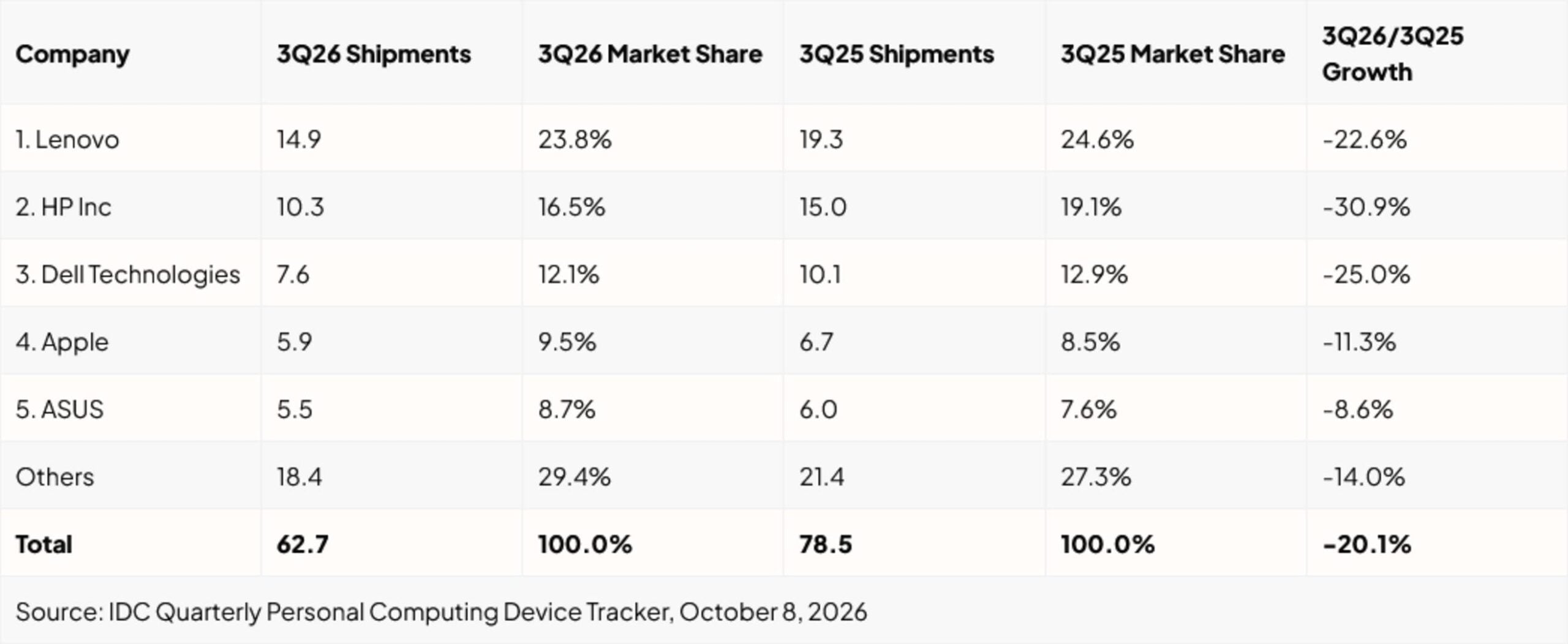
That said, this report doesn’t take the prices at which these machines are sold into consideration. As much as shipments have dropped, prices have also gone up, and lots of these firms are also making a lot of money from the AI boom. To give you an idea of how well the most hit out of the bunch are doing, HP’s latest earnings report indicates that the brand has recorded a 12.5% YoY revenue increase ($15.7B vs. $13.9B in Q3 FY25). The same goes for Dell, with the company’s revenue up 58% YoY in Q2 FY27 ($47B vs. $29.7B in Q2 FY26).
IDC’s research director for consumer devices, Jitesh Ubrani, said that “channels are now worried about carrying too much inventory into a market where high prices are suppressing demand.” According to Ubrani, “That could translate into promotions and some short-term relief for consumers, but we don’t expect pricing anywhere near what it was a year ago. Prices will remain elevated.”
The general outlook still looks bleak for consumer PC hardware. “With macro conditions worsening, the risk is that the outlook for the next few quarters gets worse before it gets better,” says Ubrani.