
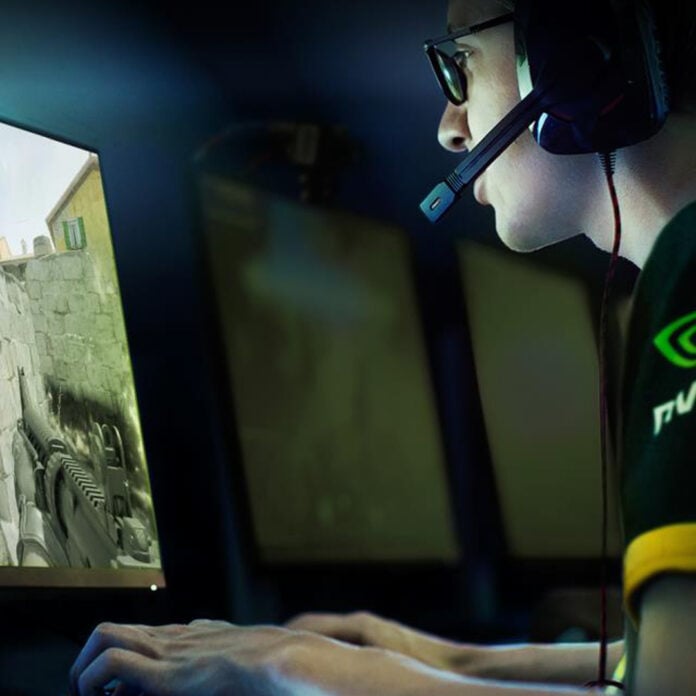
It’s been two years since Nvidia first debuted G-Sync Pulsar, but the feature is finally ready for primetime with an imminent release as part of several new gaming monitors. The technology promises to massively improve perceived motion clarity on backlit displays, providing an experience akin to 1,000+Hz without the need for a panel of that refresh rate. Suffice to say, this should be something esports aficionados will want to watch out for.
For those understandably in need of a refresher of what G-Sync Pulsar is, the feature essentially marries Variable Refresh Rate (VRR) and backlight strobing A.K.A black frame insertion, often packaged as Ultra Low Motion Blur (ULMB). Until now, the features have been mutually exclusive on LCD panels, but Nvidia believes it’s finally cracked how to pair the two without the issue of noticeable flickering.
The video above is a demo of the feature in action, running on two identical gaming monitors with the only difference being whether G-Sync Pulsar is active or not. As you can see, the motion clarity of the counter-terrorist in Counter-Strike 2 is far greater on the display using Nvidia’s new tech, making them easier for your eyes and mouse to track.
Nvidia claims this results in 1,000+Hz motion clarity, which would be just shy of tripling that of the 360Hz panels G-Sync Pulsar will arrive on. It’s difficult to verify this claim without such a high-refresh panel to hand, but these screens at the very least promise better than native performance using the feature.
Note that G-Sync Pulsar eliminates motion blur caused by pixel response times and won’t affect post-processing effects baked into game settings. This is a good thing, as the technology helps mitigate an inherent shortcoming of LCD panels while respecting artistic intent. Yes, I happen to think not all motion blur is evil, come at me.
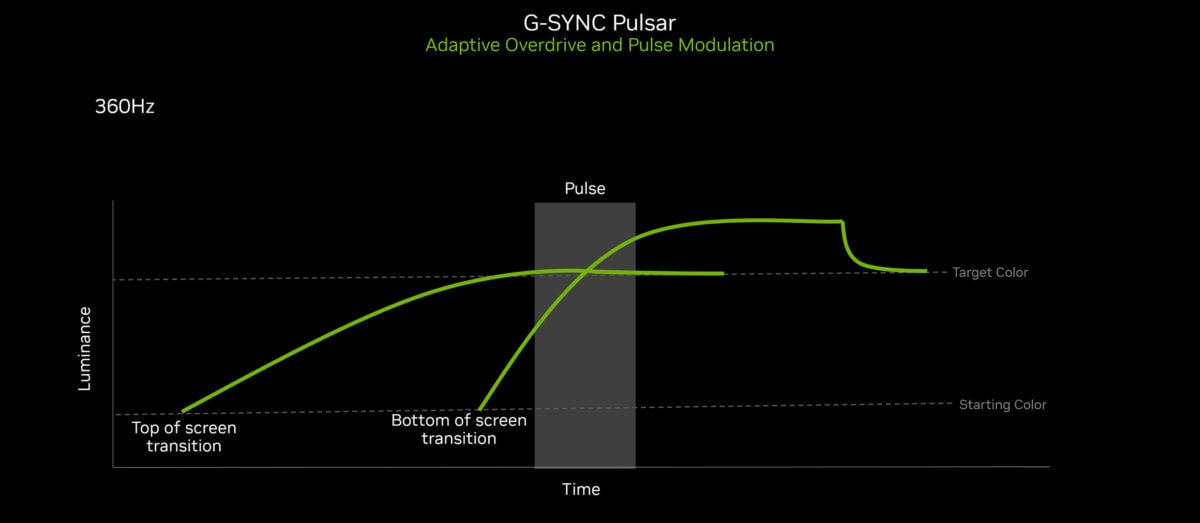
Explaining how G-Sync Pulsar operates isn’t exactly straightforward, and requires some background knowledge of how LCD panel refresh rates and pixel response times work. Nvidia has provided a detail explanation on its original blog post, which can you read here.
In short, though, the feature dynamically adjusts the rate and length of backlight pulses and pixel response times, in response to the given refresh rate which the graphics card dictates via its frame rate. It’s clever engineering, that requires absolute precision.
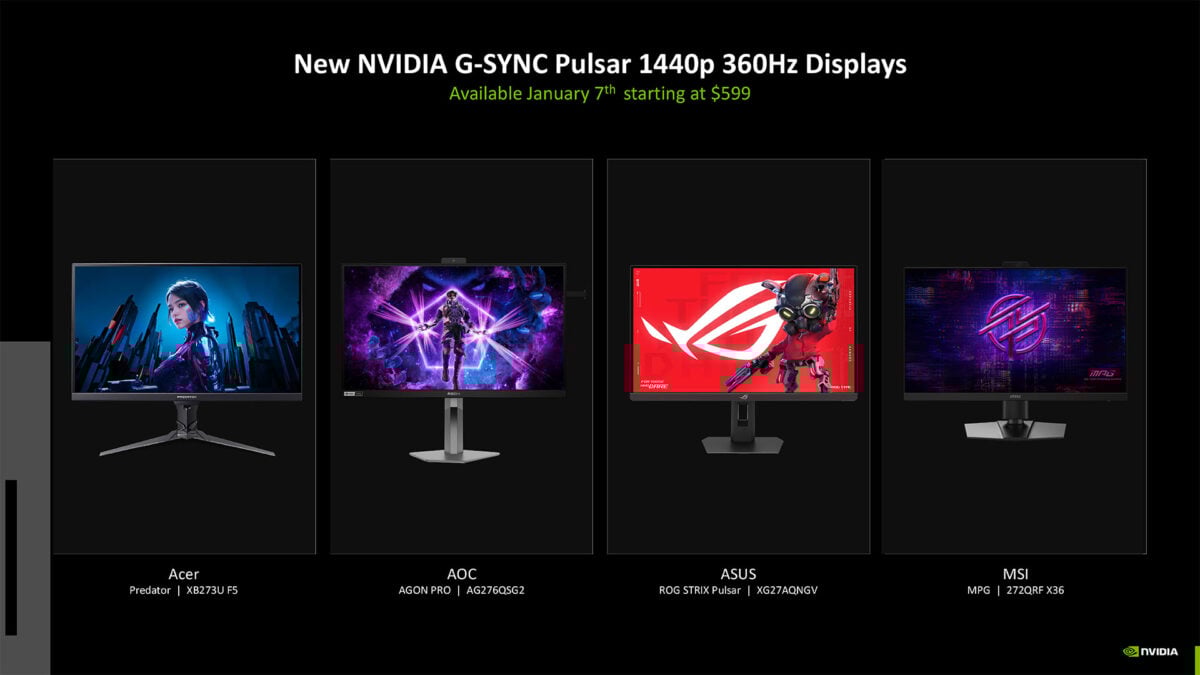
The first batch of G-Sync Pulsar gaming monitors will be available for purchase from January 7, sporting 27in IPS panels with a QHD resolution and 360Hz refresh rate. You can expect models from Acer, AOC, Asus, and MSI to lead the charge, with other manufacturers likely joining them in the future with their own similarly-specced contenders.
I’m keen to see how G-Sync Pulsar stands up in real-world testing, as this is quite literally a feature that must be seen to be believed. As much as I intend to judge the feature on its own merits, I’m especially curious to see how motion clarity on these LCDs compares to the near-instant pixel response times of OLED panels.
In the meantime, check out my write-up on Nvidia DLSS 4.5 and all the benefits it promises to bring GeForce GPUs now and into the future.
For more CES 2026 coverage, please consider making Club386 one of your Google Preferred Sources and dropping us a follow on Google News by clicking both buttons below.