

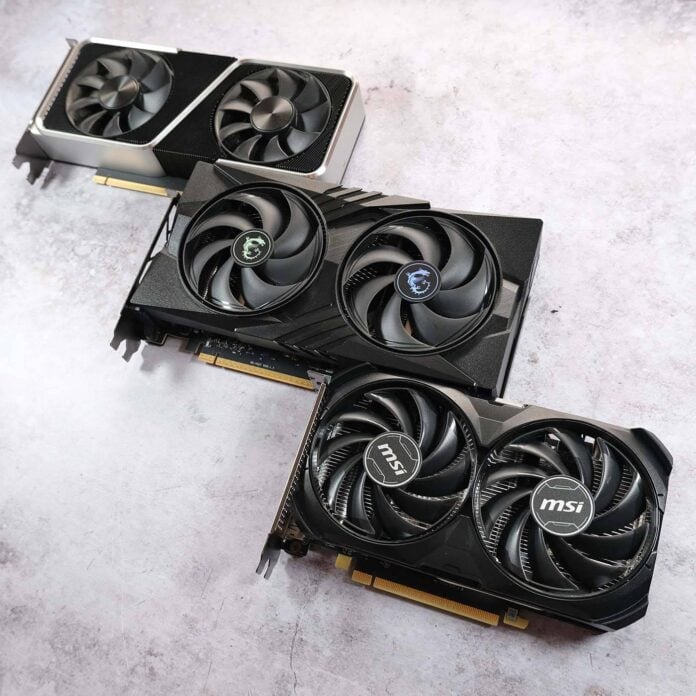
Nvidia is reportedly planning some changes to its GeForce production strategy due to the ongoing memory crisis. According to insiders at Board Channels, the company is set to shift its focus toward mainstream graphics cards such as the RTX 5060, prioritising allocation and logistics accordingly.
The report indicates that Nvidia will focus more on its RTX 5060 8GB and RTX 5060 Ti 8GB, due to their lower DRAM requirements. Considering the increased difficulty of procuring GDDR7 modules in current market conditions, this strategy will allow Nvidia and its partners to produce two 8GB cards in place of each 16GB card. Whether this will be popular among gamers who have been vocal opponents of these low VRAM models remains to be seen, but there’s clearly merit in certain markets as the 8GB RTX 5060 and RTX 5060 Ti are proving popular in China.
In addition to maintaining a steady manufacturing rhythm, using less memory should translate into a controlled price increase, which should boost said cards’ appeal among end users. It is a recurring trend throughout the PC market in early 2026, with manufacturers having little choice but to lower the RAM and storage capacity on all manner of products, including entry-level laptop and desktop offerings.
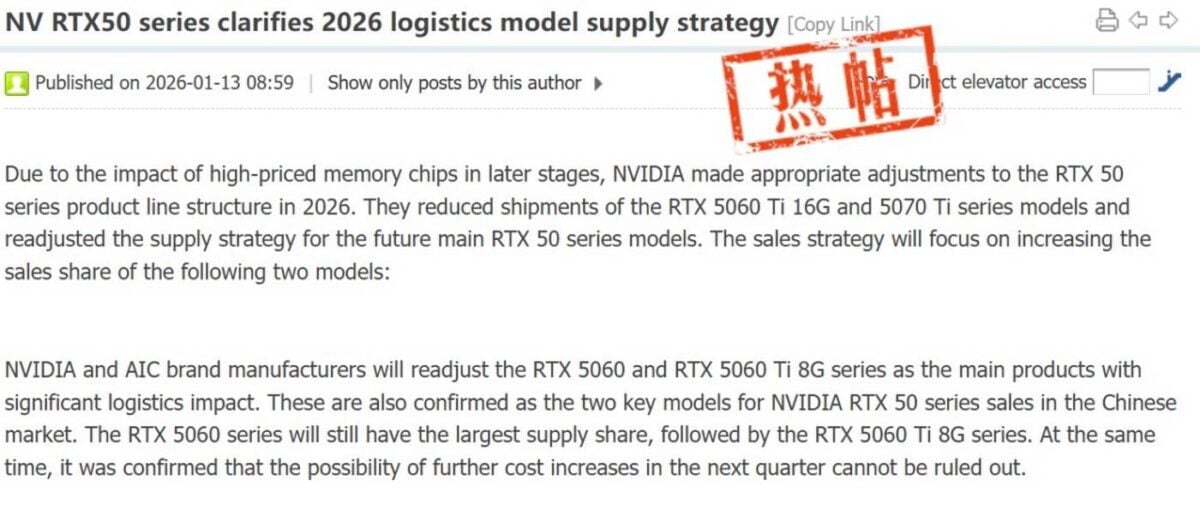
Today’s news comes after previous whispers of Nvidia cutting shipments of the RTX 5060 TI 16GB and RTX 5070 Ti 16GB, which could result in extreme scarcity and inflated prices. Whether planned or a consequence of the DRAM crisis, some markets have already started seeing the impact of this shortage, with models such as the RTX 5070 Ti and RTX 5080 asking for at least a 10-20% markup over MSRP. Things get even worse for the flagship RTX 5090 and its 32GB of GDDR7, which is now typically found above $3,000, a far cry from the $1,999 MSRP.
As if this wasn’t enough, Board Channels’ report also indicates that further cost increases are not ruled out, which would push mid- to high-end GPUs even further out of reach for most users. Some estimates expect the RTX 5090 may hit a staggering $5,000 before the end of the year.
Either way, we can’t do much about this unfortunate situation but wait it out. Unless you really need a new GPU or PC, making do with what you have seems to be the smartest move. Perhaps a little overclock may give your hardware a new lease of life until things get straightened up. For my part, I would rather lower the graphics settings than pay these exorbitant prices.