
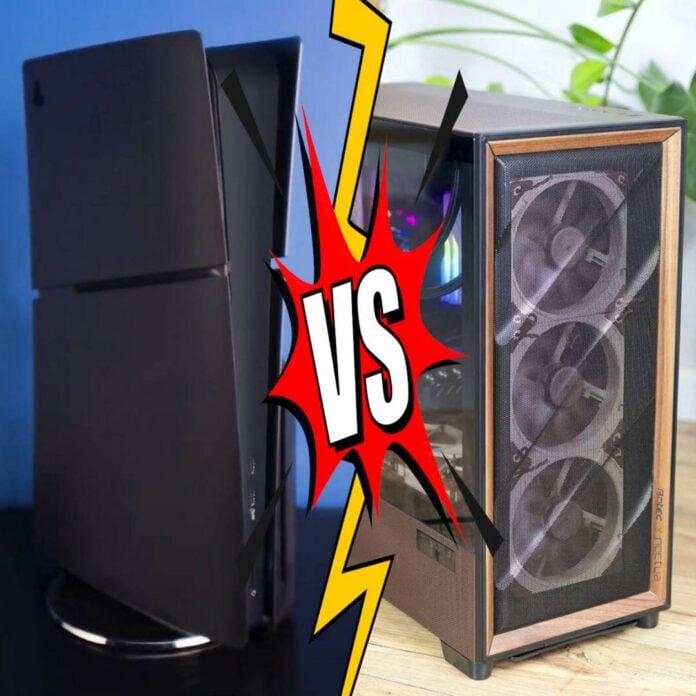
Depending on how you want to look at it, gaming started on computers, or whatever was considered to be one at the time. Some acknowledge Spacewar! (1962), which ran on the MIT mainframe computers to be the true first game, while others claim that Tennis for Two (1958) offered the inaugural gaming experience.
It wasn’t until years later that we saw the release of The Magnavox Odyssey (1972), which is generally considered the first home video game console. Though it ran simple games such as Pong and tennis, this machine showed the potential of dedicated gaming hardware. 54 years later, games are still releasing on both platforms, with PCs and consoles continuing to serve as the primary playground for the majority of gaming enthusiasts.
From smoother gameplay to extensive customisability, PCs have a lot to offer, and the technical entry point has never been lower.
As is human nature, many started favouring one over the other, be it due to cost or game availability, especially entering the Xbox/PlayStation era, which saw the appearance of many exclusive titles on each platform. Nowadays, the line between a console and PC is starting to vanish as some previously exclusive titles are coming to PC, and vice versa. This line is expected to blur further with the release of next-gen Xbox, which is rumoured to be a PC disguised as a console.
The platform that stands to benefit most is PC, thanks to its inherent strengths, which result in a much better overall gaming experience. From smoother gameplay to extensive customisability, PCs have a lot to offer, and the technical entry point has never been lower. As a seasoned gamer who today owns both a PC and an Xbox Series X, let me tell you more about what makes PC gaming the superior way to enjoy your favourite titles.
Performance (fps, resolution, and latency)
Let’s start with the obvious, raw performance. There is no doubt that PCs stomp consoles when it comes to hardware capabilities, which isn’t surprising since the latter often base their CPUs and GPUs on existing PC technologies. Even on day one, consoles carry less impressive hardware than PCs for a simple reason; cost. Unlike PCs, which can be upgraded slowly throughout the years, consoles must be paid for straight away, and therefore the price must be obtainable for the largest demographic possible.
Take the PlayStation 5 for example; the machine was powered by a GPU equivalent to a Radeon RX 6700 XT or GeForce RTX 3060 Ti, at a time when PC users had access to a GeForce RTX 3090. Yes, the PlayStation 5 cost $499 at launch ($399 for the Digital Edition) where the RTX 3090 alone demanded $1,499, but the latter’s performance was in another league. As a result, enthusiasts who could afford it were able to enjoy much higher graphic fidelity and smoother gameplay.
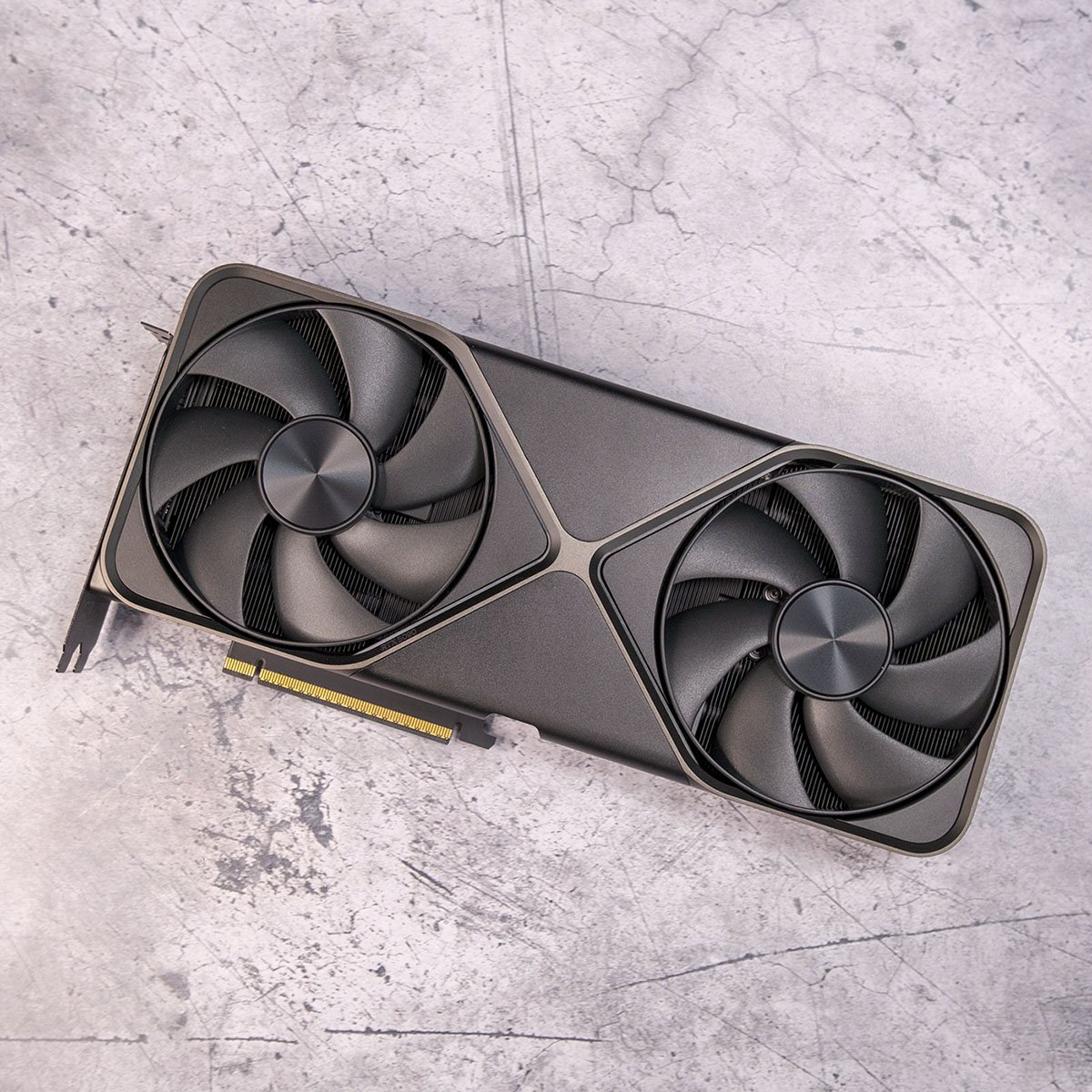
Better still for anyone who’s all about visuals, PCs can configure graphics settings in a much more granular manner, enabling higher frame rates, and often without impacting image quality all that much. Sprinkle some DLSS upscaling on top, and you can witness the PlayStation 5’s graphical prowess fade away in your rearview mirror.
Higher raw performance and settings customisation also allow PCs to take advantage of much faster displays, which nowadays reach 240Hz at 4K and 500Hz at 1440p resolution. Faster monitors mean lower latency and better responsiveness, which helps you feel more connected to the game. Consoles on the other hand, be it Nintendo, Xbox, or PlayStation, can’t currently exceed 120fps, and their wireless controllers have a higher input latency than most gaming keyboards and mice. And that’s assuming your preferred game features a 120fps mode on console, because otherwise you will be stuck at 60fps or worse. To give you an idea, of all the games available on the PlayStation 5, only 139 come with a 120fps mode.
Though popular belief suggests console games are better optimised, if your PC graphics card or CPU isn’t up to snuff, simply dial down the graphics settings, and you should be good to go. You have plenty of options, from texture quality to post-processing effects, not to forget resolution and shadow detail. Like to play online shooters? Drop those settings to low and push the field of view slider to the max. Just purchased the latest Cyberpunk DLC? Crank everything to the max and witness the game change entirely. Point is, the choice is yours.
Hardware upgradeability and longevity
PCs, and especially desktops, are modular by nature. This gives them outstanding versatility both in terms of hardware configuration and future proofing. You could start small, using the cheapest CPU and GPU on a given platform, and upgrade as more funds become available. For example, you could have built a cheap Ryzen 5 1600 plus GeForce GTX 1060 system back in 2017, and upgraded it to a Ryzen 7 5800X3D plus GeForce RTX 4070 five years later without changing the underlying foundations of the system. This reasonably priced upgrade would have netted a 4x improvement in fps. At the same time, your old components could be sold for some cash or kept as backup. On console, you can only buy a new next-gen machine or stay as you are.
But lack of upgradability isn’t the biggest inconvenience about console hardware design. That trophy goes to reparability. If a part turns bad on a desktop PC, you simply replace it with a new one; there’s no need to throw away the whole system. Consoles on the other hand are non-serviceable proprietary boxes that require specific tools and experience, not to mention potentially hard-to-find parts such as the processor. Even if your machine is still under warranty, with a PC you only need to send the faulty part, which in some cases means that you could still use it to a certain degree, for example with an iGPU instead of a dedicated GPU.
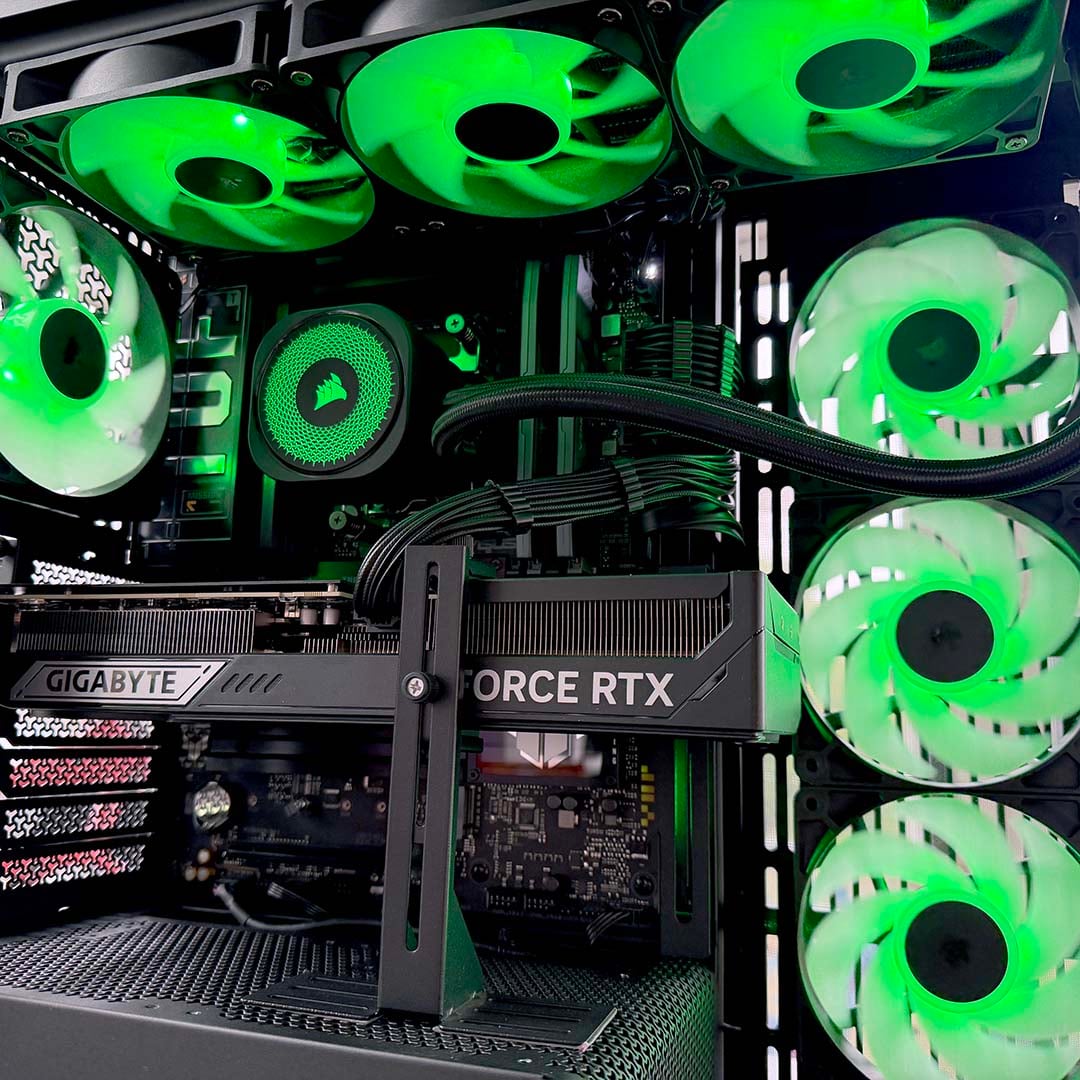
PC longevity doesn’t concern hardware alone, it also applies to games. PCs don’t typically have to worry about backward compatibility; a game from the 2000s would still work on a brand-new RTX 5090 system from 2026. Even very old ones, like those from the MS-DOS era, can run, and if not, it’s just a matter of finding and downloading the correct emulator. I love running old games on powerful modern hardware, just to max-out all settings and experience the game at its best. For instance, my current system can’t max out Cyberpunk 2077 with Path Tracing, so I intend to go back to it in five years or so when I upgrade my machine.
Game library and exclusives
PC is estimated to exceed 200,000 games. Even if you play a different game per day, you’ll need multiple lives to go through all of them.
With over 30 years of backlog available to play, PC is on a whole different level when it comes to game library. From early 3D games to the latest Call of Duty, there is no shortage of choice. To give you a feel of the gap between PC and console, according to Moby Games, there are currently 4,334 games on PlayStation 5, released since 2019, excluding retro-compatible titles. On the Xbox side, the official store lists some 12,168 games, including Xbox 360, Xbox One, and Xbox Series titles. In contrast, PC is estimated to exceed 200,000 games – with Steam alone accounting for over 117,000. Even if you play a different game per day, you’ll need multiple lives to go through all of them.
On top of that, PC gives you the freedom to buy your games from the store you like, be it Steam, Epic Games, GOG, or your local physical shop. With consoles, you either buy a disc or download the game from the official Sony/Xbox stores. As a result, PC gamers get access to much better prices and discounts, which in the long run can make the entire experience cheaper than owning a console. Consoles may be cheaper to buy up front, but are expensive to maintain when you factor games and subscriptions. PCs, on the other hand, require a larger initial outlay, but demand less to operate.
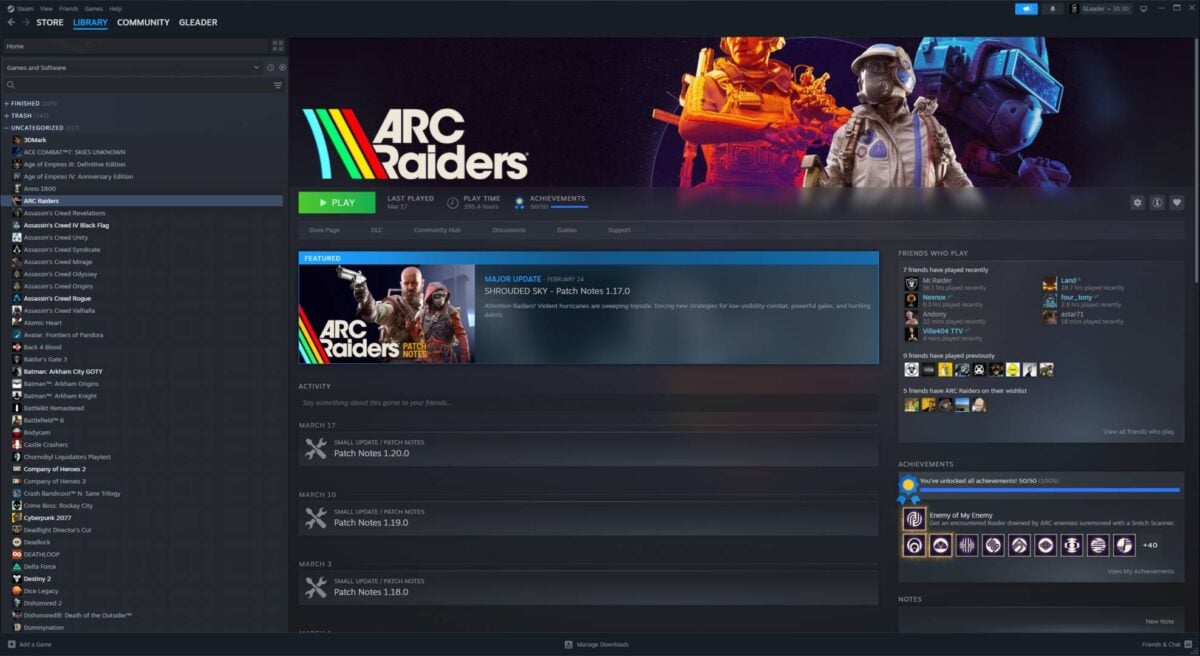
Exclusives, however, are where consoles gain some points. Be it Sony, Nintendo, or Microsoft, all console makers invest heavily in exclusive AAA titles to encourage players to choose one platform over the other. As a result, some excellent titles remain playable solely on Xbox or PlayStation, e.g. Fable II and The Last Guardian. That said, the trend has slowed somewhat in recent years, with Microsoft releasing the majority of Xbox games day one on PC and Sony releasing its big licences on PC a year or two after PlayStation. Now you can play God of War, Spider-Man, and Helldivers 2 on PC, though Nintendo is still holding Zelda close to its chest.
Exclusives would have been a much bigger downside to PC if not for the clever and persistent emulation community. Remember Fable II and The Last Guardian? Well, you can technically play both on PC, using console emulation software. While this translation layer comes with a performance overhead, modern hardware has enough horsepower to deliver playable experiences, often with room to improve graphics beyond the original release.
Modding and community content
Modding lives and thrives on PC, allowing games to be constantly tweaked and tuned to fit the users’ vision. Be it to make the game look nicer by unlocking hidden graphics settings, to add more content and story to an old title like Skyrim, or simply to customise characters with funny outfits; mods can do that and more. Have you ever thought of surviving a zombie apocalypse as Homer Simpson or having My Little Pony as a companion in an RPG? Well, mods can make that happen right now in Left 4 Dead and Skyrim. All you need to do is download some files and follow the installation instructions.
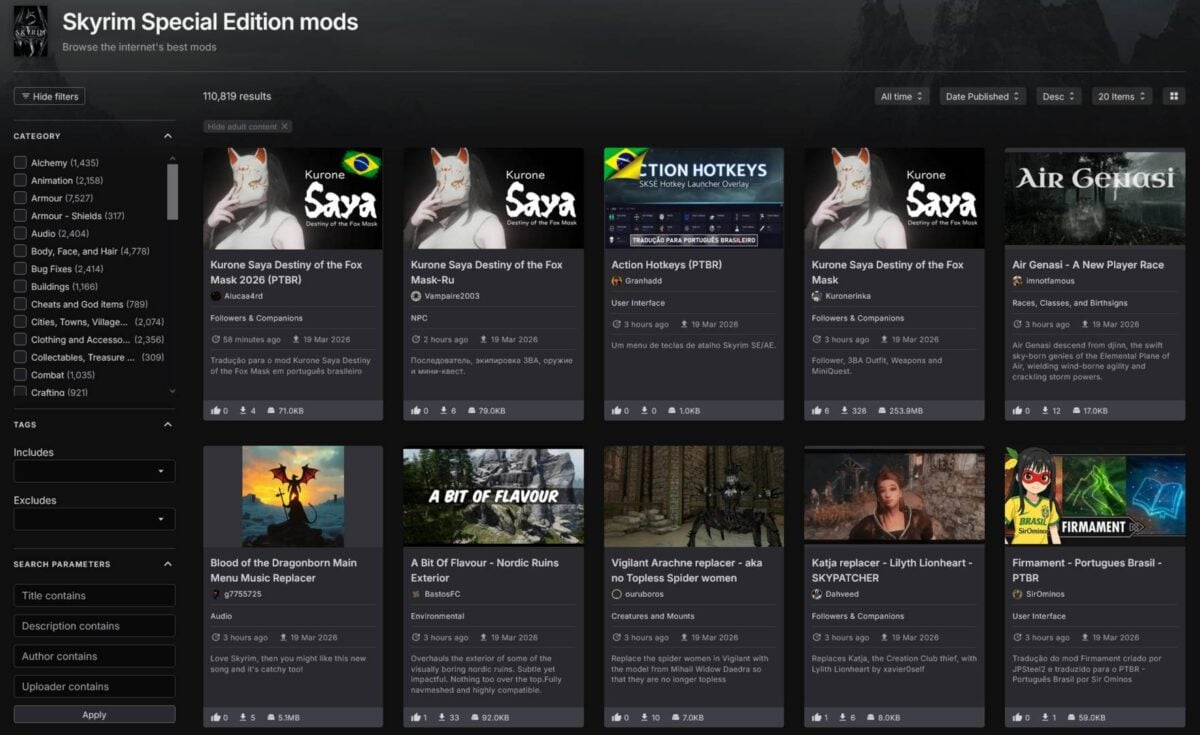
Many mods become so huge that they demand the game developer’s attention. Just to name a few, you have Counter-Strike, which started as a mod for Half-Life, Dota 2, which was a mod for Warcraft III, not to forget FiveM, which brought deep Role Play to GTA V, and WoW Classic, which forced Blizzard to reintroduce a vanilla WoW experience. Then there’s Skyrim, one of the most modded games of all time, with more than 110,000 modifications to choose from on Nexus Mods alone. And the best part, since these projects stem from gamer passion, they are often provided free of charge.
While consoles have some mod support for a small number of games such as Skyrim and Fallout 4, it’s extremely limited by comparison, mainly featuring developer-approved content. This is understandable since you don’t want any content that may be harmful or inappropriate, but saucy content is a big part of modding. By restricting it, you end up with a minuscule portion of what is available on PC.
Control options and accessibility
In addition to controllers, PCs naturally support keyboards and mice, which are undoubtedly superior for games that require precision. There’s also a wide range of steering wheels and joysticks for racing and flight sims, not to mention the plethora of accessibility controllers.

While consoles have evolved a lot in this department with recent hardware generations, even supporting mice and keyboards to a limited degree, PC remains ahead of the curve due to its open nature. Anyone can develop a new way to control a game and bring the product to market, without the need for Microsoft, Sony, or Nintendo’s approval. This opens the way for small shops and enthusiasts to build their own peripherals from scratch, like what Optimum did with his 22g ZeroMouse.
This variety allows PCs to host many different game genres that would be impractical or impossible to play on consoles. For instance, strategy games often launched exclusively on PC given older consoles lacked support for mouse input, which was essential in navigating their complex interfaces.
Streaming, recording, and content creation
If you are a serious content creator, there is no way around owning a PC. Yes, consoles are able to record and stream content, at decent quality no less, but none have the level of recording customisability and versatility of a PC. For example, there are no advanced multi-track or high frame rate recordings. You can’t customise your set with add-on overlays or add multiple cameras at the same time. While you can get all of this using a capture card, you will still need a PC or Mac to process the data.
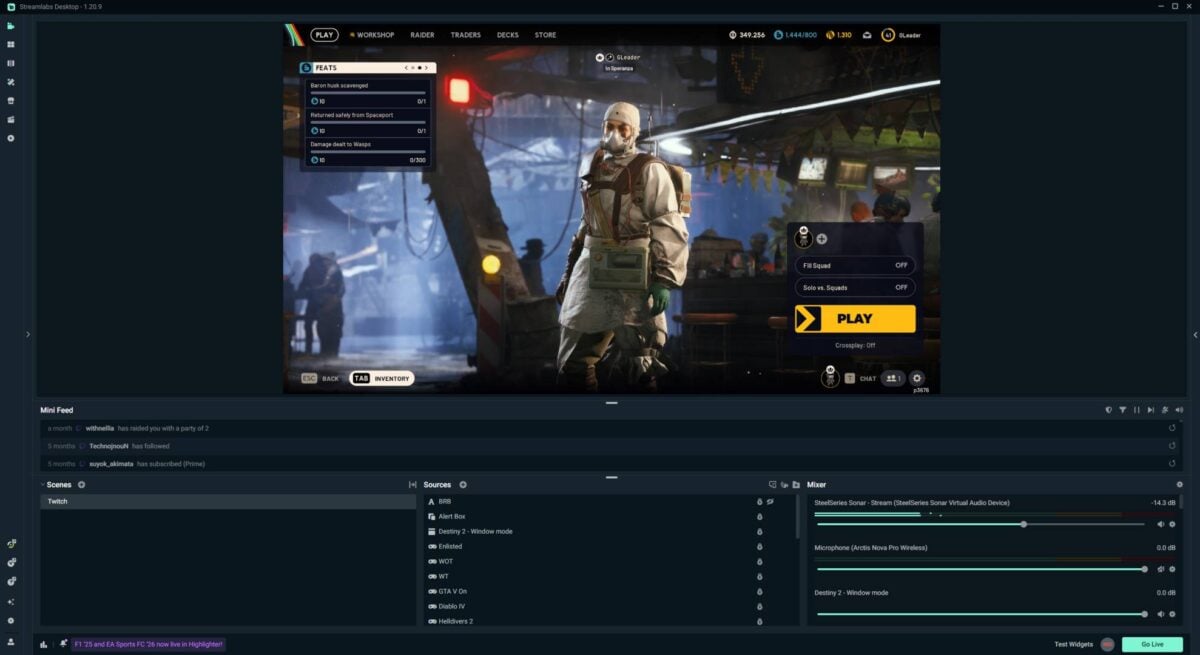
Furthermore, consoles only support a limited set of streaming platforms, typically mainstream services such as Twitch and YouTube, leaving new or niche solutions aside. Furthermore, on PC, you can record at any bitrate, resolution, or frame rate within the encoder limits, far exceeding what is available on today’s consoles.
Multiplayer ecosystems and cross‑play
Online multiplayer is probably the part that all gamers agree has no reason to be a paid subscription on console. You already pay more for your games than on PC, yet you still need to shell out another £6.99 to £9.99 a month just to have access to online play. Nintendo for instance went as far as locking cloud saves behind said subscription, which in my opinion is borderline extortion.
And your reward for being a valuable console customer? Lower quality voice chat, little or no cross-play with competing consoles, and even more frustrating, worse multiplayer servers than PC. I’ve often heard my friends complain on Discord about lags and disconnects while playing FIFA on PlayStation. In stark contrast, both online play and cloud saves are free on PC.
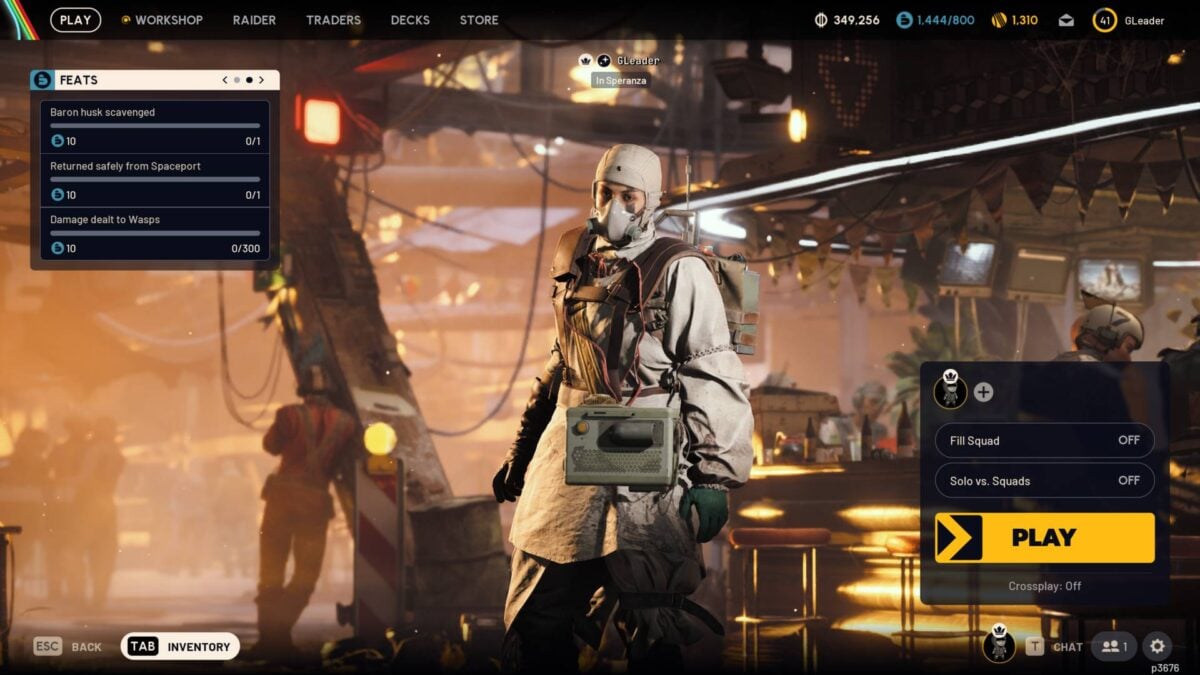
Free doesn’t mean second-class, mind. PC gamers can play with both PlayStation and Xbox on supported games, without restriction. On consoles, this is rare as only a few games, like Fortnite and Call of Duty: Warzone, allow PlayStation-to-Xbox cross-play. Voice chat can be as good as your microphone, or better if you don’t mind tweaking it using third-party software. As for servers, many games use dedicated servers that are stable more often than not, with some even allowing players to host their own parties on third-party providers.
Paid online subscriptions weren’t the norm back in the day, when hugely popular consoles such as the PlayStation 3 and Wii offered online play for free. The business model changed with Microsoft’s hugely popular paid service, Xbox Live Gold, and others followed suit. With the industry’s growing insistence on live-service games, who knows what subscriptions might be tied into next-generation consoles.
A case for consoles
While there’s plenty to love about PC gaming, all self-proclaimed members of the PCMR would admit that the last few years haven’t been kind. Market conditions are such that top-end graphics cards now cost thousands of pounds, putting the best of our cherished hobby out of reach for most gamers. Following the crypto boom, pandemic shortages and current memory crisis, it’s easy to see why some may have switched allegiance during these trying times.
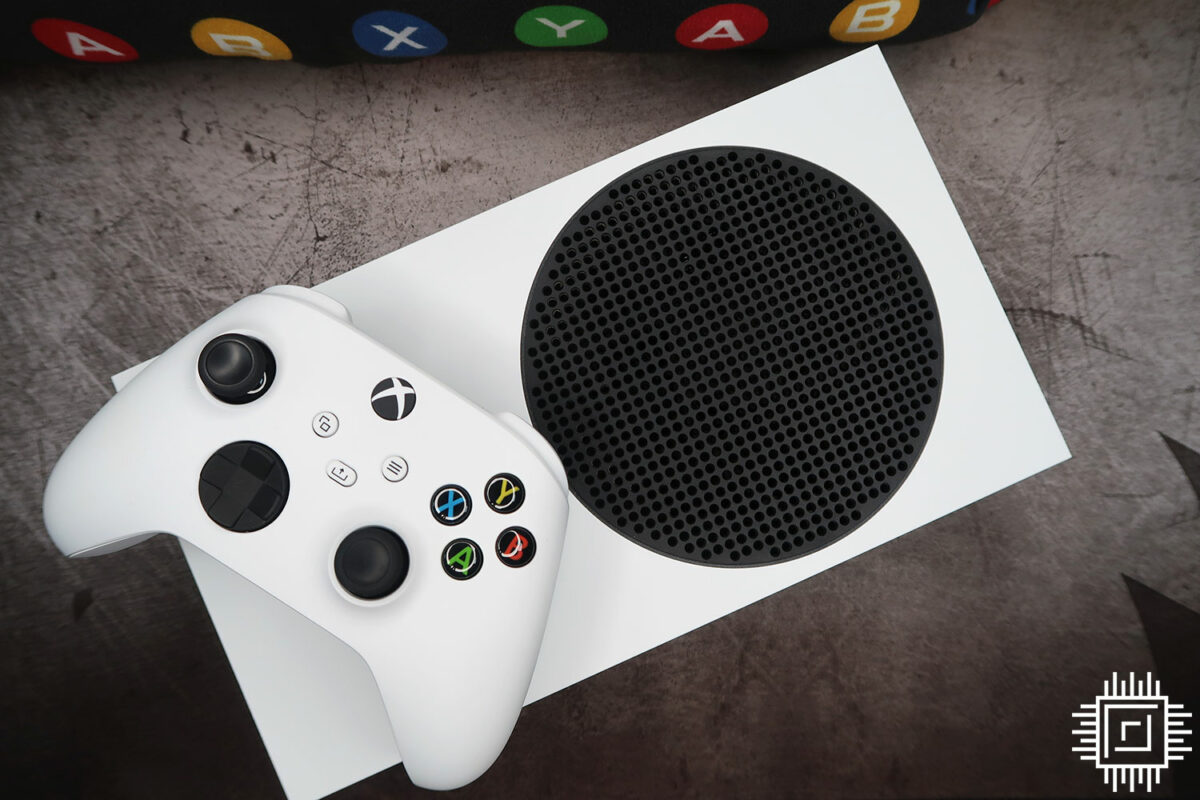
There’s also a case to be made for plug-and-play simplicity. Consoles aim for a more streamlined experience that demands little to no prior experience, while PCs demand at least a basic knowledge of how to tweak games and system parameters, especially if you want to unlock the full potential of your hardware.
It’s also fair to say that consoles, often hooked-up to a big-screen TV, are better suited to couch co-op and split-screen games. And with a console generation lifespan of five-or-more years, there’s no need to contemplate regular upgrades in order to keep up with the latest advancements. While PCs are superior in most regards, consoles do have their place.
Summary
While the entry point to PC gaming is typically higher than console, especially during the first years following a new build, in the long run, you can recoup the difference and then some by saving on subscriptions and games.
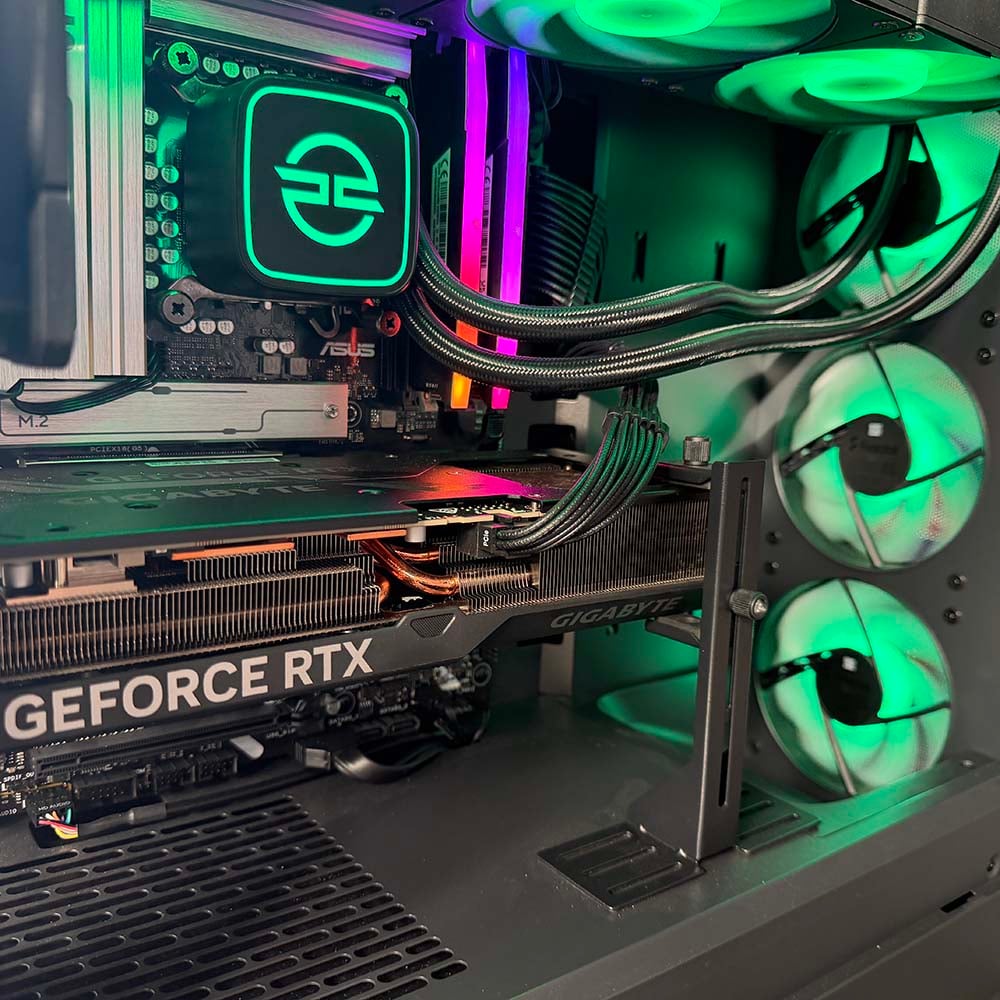
Even exclusives that were previously used to lure players are starting to launch on PC, strengthening its already extensive lineup. And at a time when everyone is moving towards full digital delivery, physical game ownership is slowly leaving consoles, too. Heck, even physical discs are no longer a guarantee to play the game offline, with examples like The Outer Worlds 2 hosting just a fraction of its game files on the Blu-ray disc.
To put it simply, while there’s something to be said for the plug-and-play nature of a console, any gamer serious about performance and flexibility will find that PC is unbeatable in many regards. I’ve been building, tinkering and enjoying my own rigs for many years, and if you’re contemplating taking your first steps into PC gaming, I wholeheartedly recommend giving it a shot. I’m willing to bet you won’t regret it.