
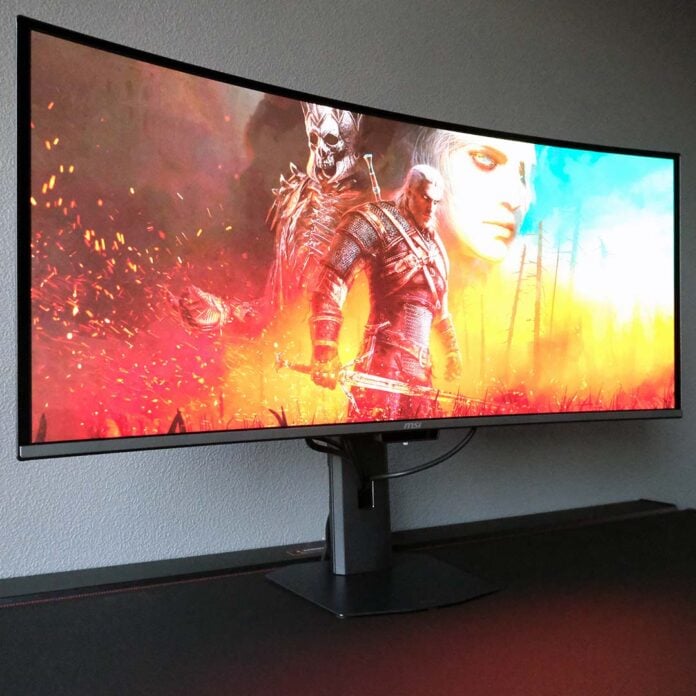
According to the latest data collected by TrendForce, 2025 was a breakout year for computer OLED monitors, as shipments surged by 92% compared to the same period in the previous year. Though demand spanned all monitor sizes, a good amount was focused on 27in high-refresh gaming models.
TrendForce reports that global shipments of OLED monitors hit 2.735 million units in 2025, marking a 92% year-over-year increase, with the five top brands accounting for 76.5% of the total market share. The analyst firm indicates that this impressive growth was mainly fuelled by aggressive promotional efforts from display brands in the fourth quarter, representing a 12% increase from the previous quarter.
Back in November 2025, TrendForce reported that OLED monitor shipments reached 644,000 units in Q3 2025, forecasting that the total for 2025 could reach 2.62 million units, i.e. 84% YoY. The new report paints an even better picture as the Q4 performance turned out to be better than expected.
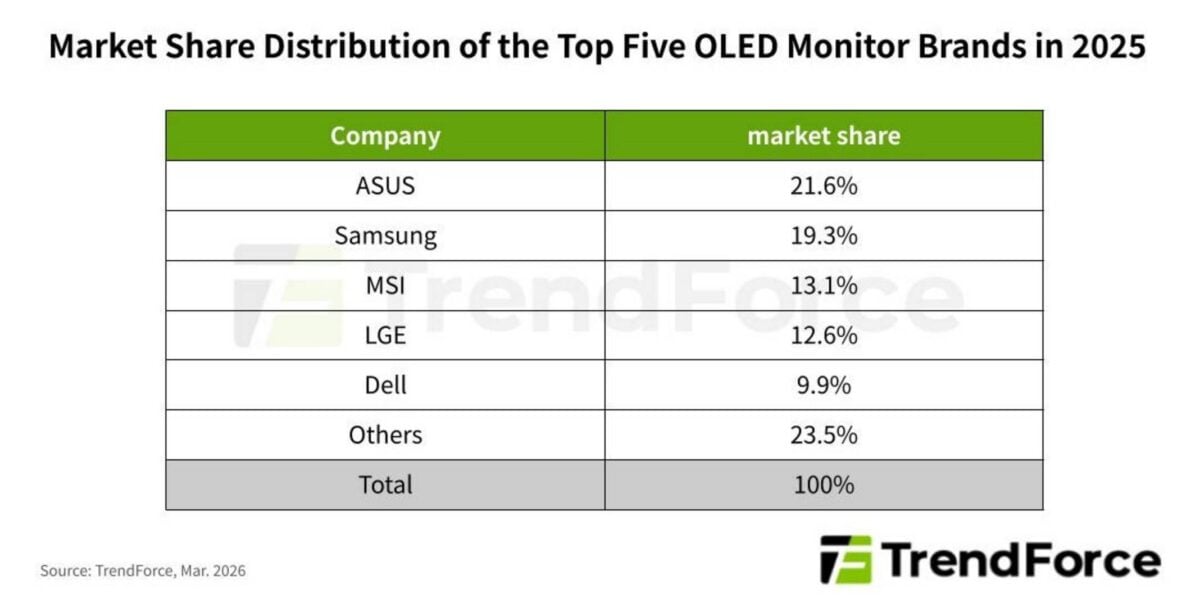
According to this new data, Asus is leading the charge, representing 21.6% of the market, surpassing Samsung by 2.3%. The brand’s ROG, ProArt, and ZenScreen lineup’s strong competitiveness across high-end gaming, professional, and mobile is put forward as the reason behind this success.
Second place is captured by Samsung with a 19.3% share, driven by strong shipments of new 27in 180Hz models and aggressive holiday promotions targeting 49in and 27in 4K UHD products, according to TrendForce.
MSI sits further in third place with 13.1%, followed by LG Electronics with 12.6%, and lastly Dell at 9.9%. MSI’s rapid product iteration and broad lineup price tiers, LG’s UltraGear brand recognition and near monopolistic position in the 39in/45in segments, plus Dell’s strong product reliability and leading after-sales service are highlighted as a foundation for this performance. The remaining brands share the 23.5% left.
Looking ahead to 2026, TrendForce anticipates total shipments to grow by 51% YoY as brands continue to roll out new products. A good portion of these will likely feature the new high-refresh panels that exceed 500Hz. Either way, Samsung Display and LG Display, which actually manufacture the OLED and QD-OLED panels powering Asus, MSI, and Dell monitors, will be the biggest winners.