

The following text is provided by Philips and published verbatim.
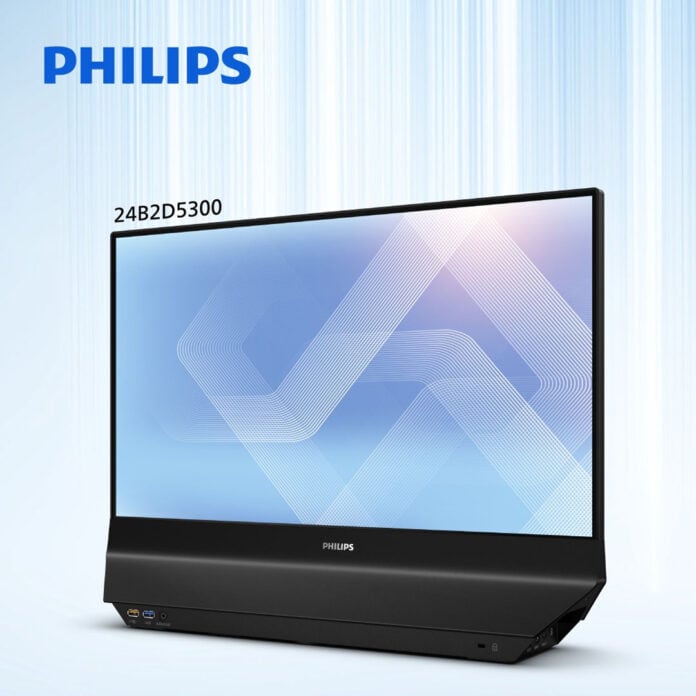
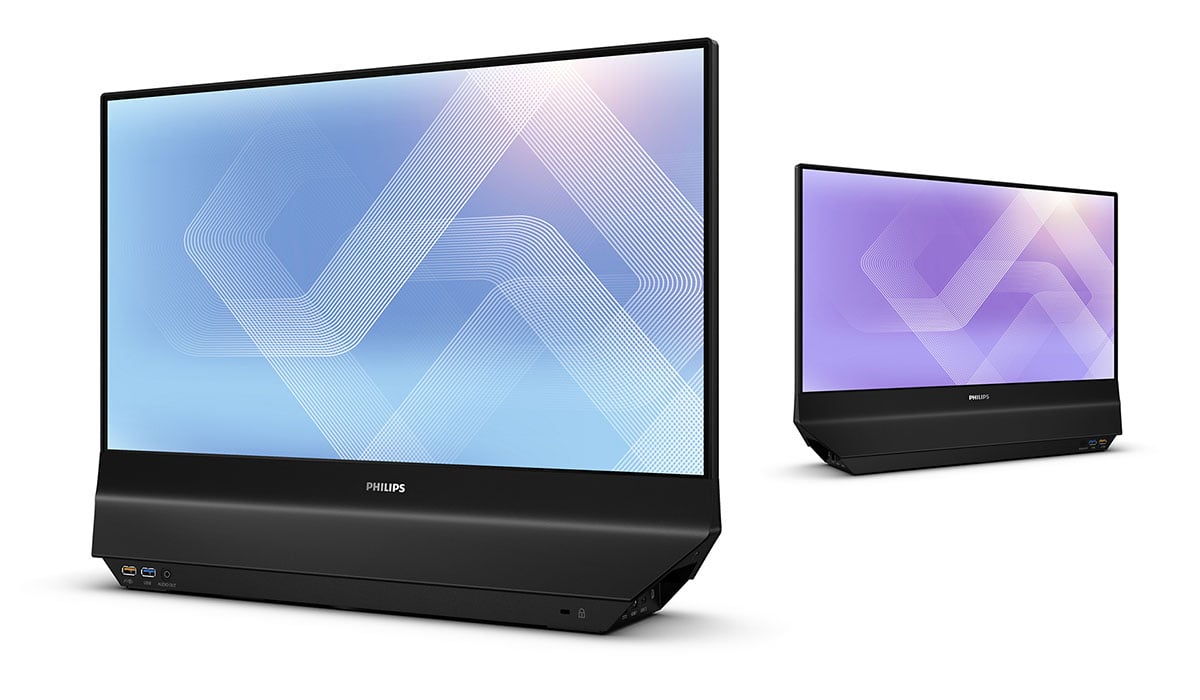
Most monitor launches in 2026 are a numbers game: more pixels, more nits, more hertz, more curve. The Philips 24B2D5300 is doing something different. It is a 23.8-inch Full HD business display with one fairly conventional spec sheet and one unconventional decision — there is a second screen on the back. Same panel, same resolution, same refresh rate, facing the opposite direction.
It is the kind of product that sounds gimmicky for about five seconds, until you start thinking about all the moments a single-sided screen quietly fails you.
A design idea, not a feature checkbox
Dual-display setups are not new. Plenty of us run two monitors, some of us run three, and ultrawides have spent the last few years collapsing that footprint back down to a single panel. What the 24B2D5300 proposes is something the market has not really tried before: instead of giving you more screen on your side of the desk, it gives someone else a screen on theirs.
That distinction matters. A second monitor next to your main one extends your own workspace. A second screen on the back of your main one extends the workspace outward, toward whoever is sitting opposite you. The desk stops being a one-way surface and starts behaving more like a shared one. Philips picked up a Red Dot 2025 design award for the concept, and the jury called out the space-saving aspect, but the more interesting part is the conceptual move: turning a personal device into a shared one without adding a second device.
Where the design earns its keep
Once you start looking for them, the situations where a rear-facing screen would actually help are everywhere. A freelance designer talking a client through revisions. A small accountancy practice walking a customer through their numbers. A bank branch adviser opening a new account and showing the applicant exactly what they are signing. An insurance broker walking a policyholder through a quote comparison without turning the screen around. A council benefits officer guiding a resident through a form they have never seen before. A two-person studio sharing a desk and currently running two monitors back-to-back to do it. A library help desk where a patron and a librarian need to look at the same catalogue entry. None of these are dramatic use cases. They are just normal interactions where the conventional monitor layout creates a little bit of friction every time.
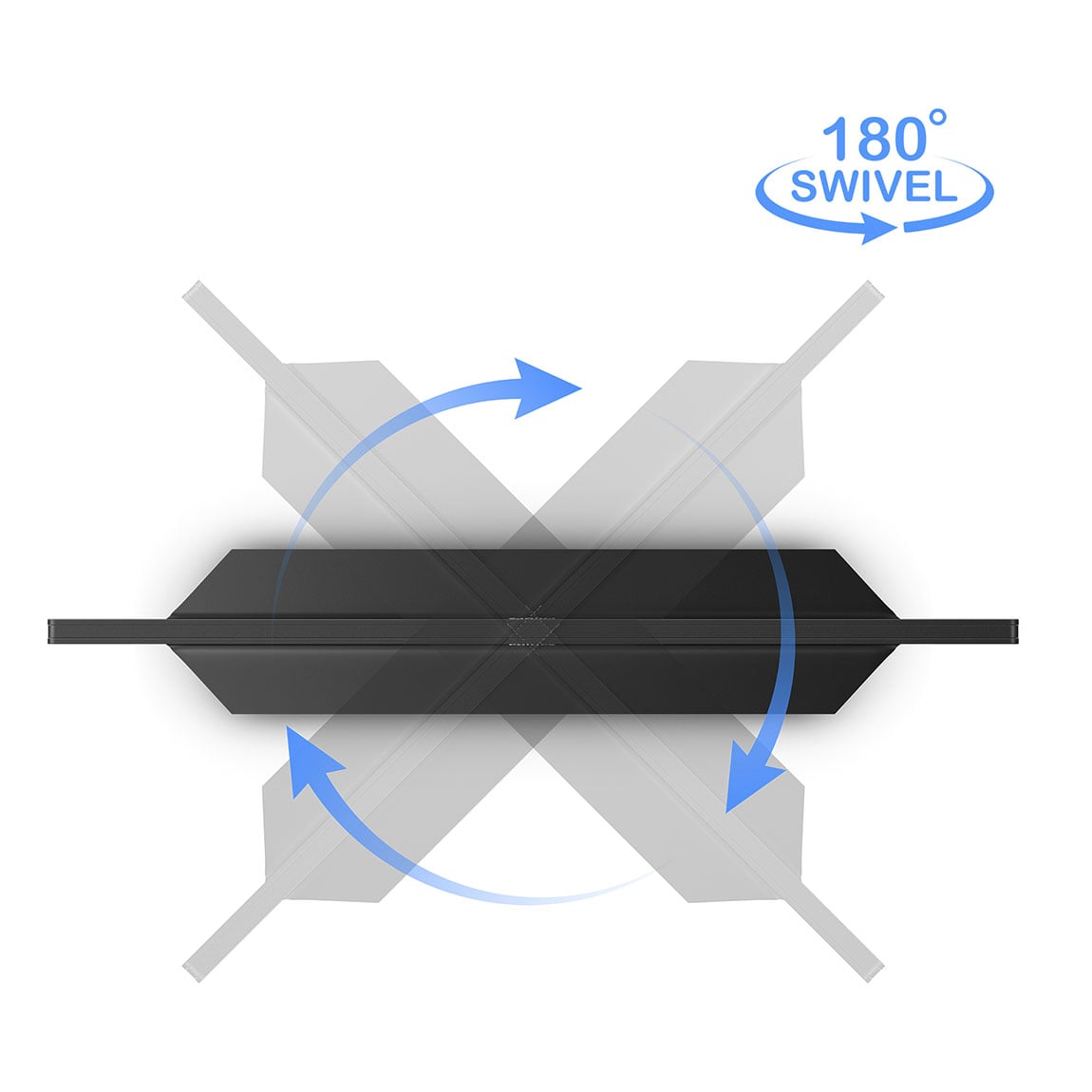
Philips has built two pieces of software to take the rough edges off. DualView treats the rear screen as a true second display from a single PC, so the operator can extend or mirror their workspace at will. SmartView lets either side of the monitor split into two halves, and crucially, lets the front-facing user preview what is showing on the rear so nothing goes out unsupervised. There is also a 180-degree swivel in the stand, which sounds trivial until you imagine using it ten times a day.
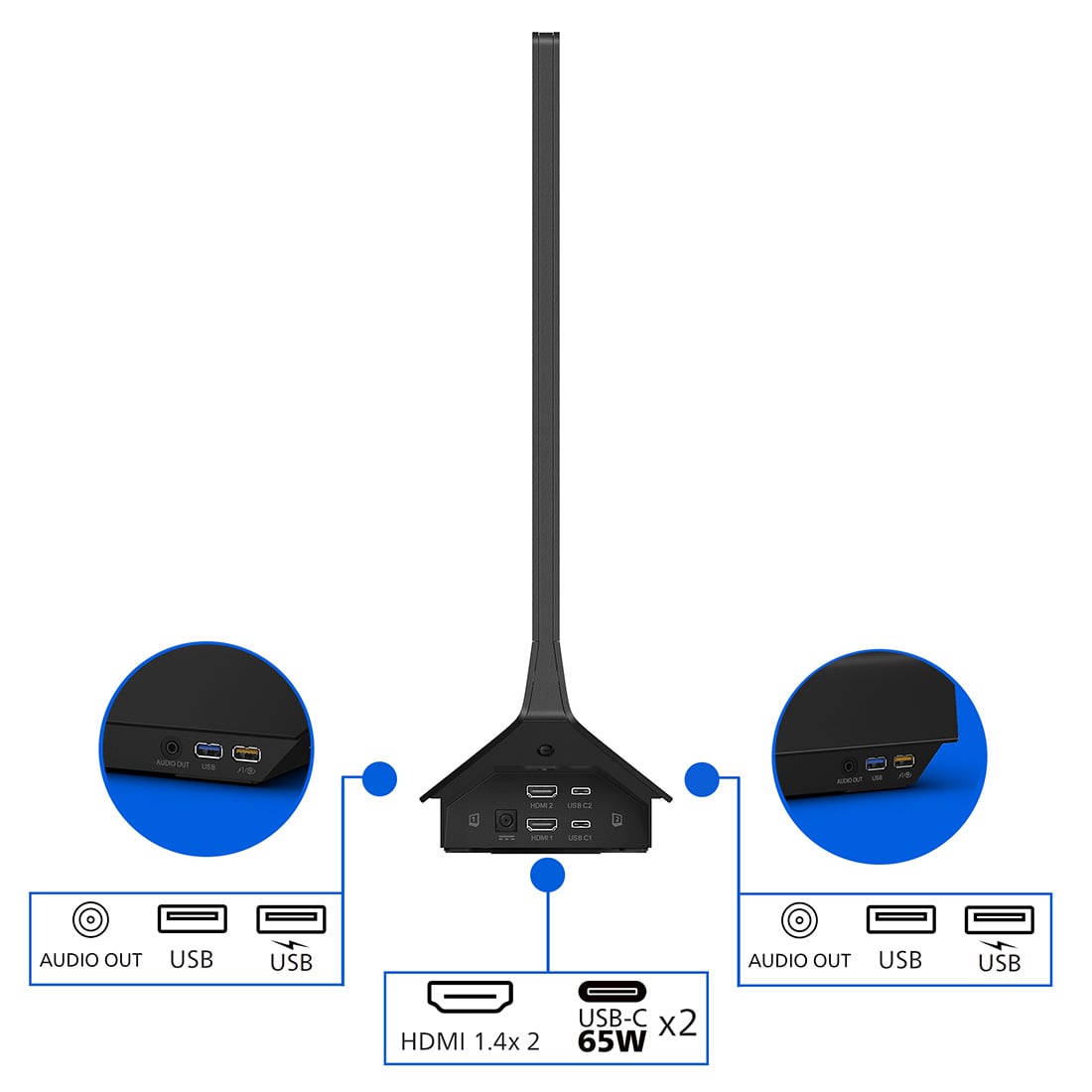
For setups where two people each bring their own machine, each side of the monitor has its own dedicated HDMI and USB-C input. The two screens become two independent workstations sharing a single chassis, with up to 65W of USB-C power delivery on each side so laptops charge through the same cable carrying their picture.
The bits that have to be right
A clever idea is only as good as the panel behind it. The 24B2D5300 uses 23.8-inch IPS at Full HD on both sides, with a 120 Hz refresh rate, 4 ms response time, 178-degree viewing angles and 110% sRGB coverage. Eye-comfort credentials are thorough: SoftBlue, Flicker-Free, Eyesafe 2.0 certification and a D-Mode greyscale preset for shadow-heavy content. Sustainability follows the current Philips business line: 85% post-consumer recycled plastic, 100% recyclable packaging, Energy Star and EPEAT registered, TCO Certified Edge. Five-year warranty as standard.
None of that is the headline. The headline is the second screen, and the small but meaningful change in how a desk works when a dual-screen sits on top of it.
The Philips 24B2D5300 launches across Europe in May 2026.
