

Valve has announced a restocking of its Steam Deck gaming handhelds, but with a huge catch. The new batch comes with a massive price increase of up to $300, transforming what was previously considered an affordable handheld into a premium piece of kit.
In a blog post on its Steam community forums, the company announced the return of the Steam Deck, alongside revised prices that reflect the evolution of component costs, especially RAM and SSDs, which have seen massive inflation. Due to the high demand for memory-related products by AI datacentres, RAM chips have more than quadrupled in cost, forcing everyone in the industry to adjust, including Valve. As a result, the company has increased pricing for the Steam Deck OLED 512GB from $549 to $789 and the Steam Deck OLED 1TB from $649 to $949. This represents a $240 / 43% and $300 / 46% increase, respectively.
For reference, not long ago, $300 represented 75% of the price of a Steam Deck LCD. Yes, you missed out on the great OLED screen and higher capacity SSD, but gaming performance was pretty much identical. The affordable LCD model is no longer available to purchase, putting the price-hiked OLED variants even further out of reach. To get an idea of how expensive the new prices are, a Steam Deck OLED 1TB now costs $50 more than a PlayStation 5 Pro.
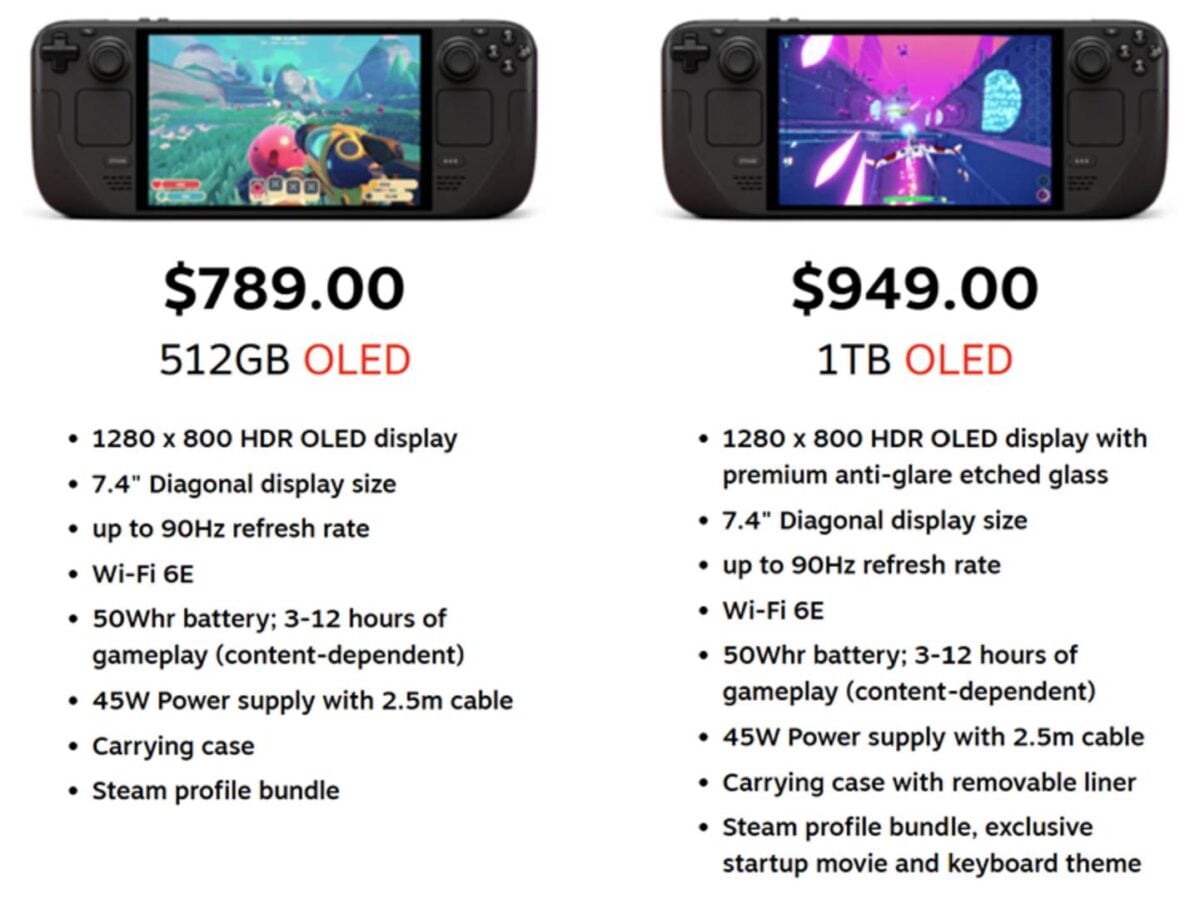
In the UK, the Steam Deck OLED 512GB and 1TB have jumped nearly 40% from £479 to £649 and from £569 to £779, respectively. Again, for comparison, the baseline Steam Deck originally cost £349; today, the entry point is the 512GB OLED at £649. A £300 uptick will leave many users without a viable option, and though the adjustment isn’t necessarily Valve’s fault, it underscores how difficult it has become to make and sell such devices.
Valve will likely have been feeding from long-term contracts dating prior to the AI craze, which allowed it to maintain competitive prices while other brands increased prices gradually. With the global memory shortage showing little sign of slowing, rising Steam Deck costs were merely a matter of time, and have now inevitably multiplied.
Regardless of the reason, this price jump will significantly dampen the Steam Deck’s value proposition, reducing or outright nullifying the advantage it had over the ROG Ally, ROG Xbox Ally, and Legion Go. Depending on how long Asus can keep the ROG Xbox Ally at $599, it may become the go-to option for budget handheld gaming.

The ramifications of these latest price hikes are almost certain to be felt throughout Valve’s upcoming releases. Considering the eagerly anticipated Steam Machine is set to carry much more powerful hardware, and more overall memory capacity (16GB for the system + 8GB for the graphics), I wouldn’t be surprised to see it surpass $1,500. At this point, it feels as though our hopes of a sub-$600 console killer have been dashed. Unless Valve absorbs part of the cost, the Steam Machine is likely to be a pricey affair.