
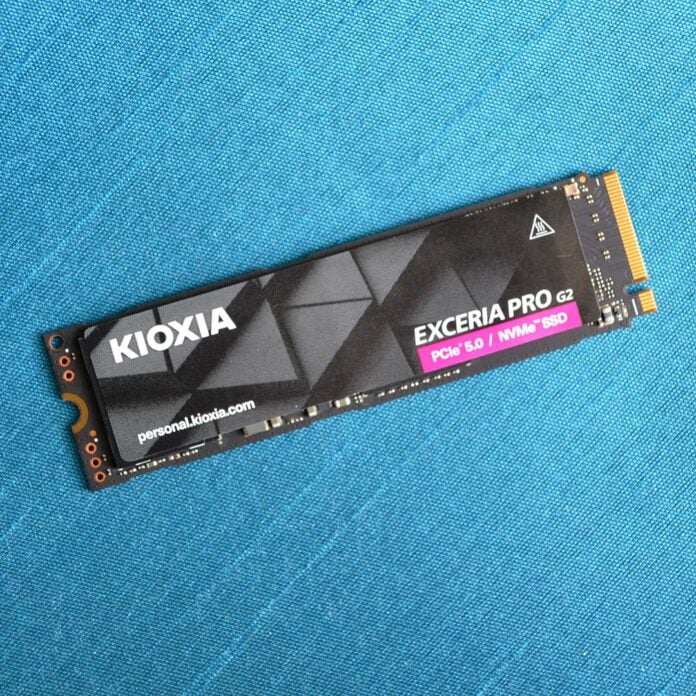
After spending several years outfitting other manufacturers’ flagship drives with its sought-after NAND flash, we finally have an impressively fast SSD straight from Kioxia itself, the Exceria Pro G2. This effort is expectedly excellent in the terms of performance, but also offers fair value in the current market.
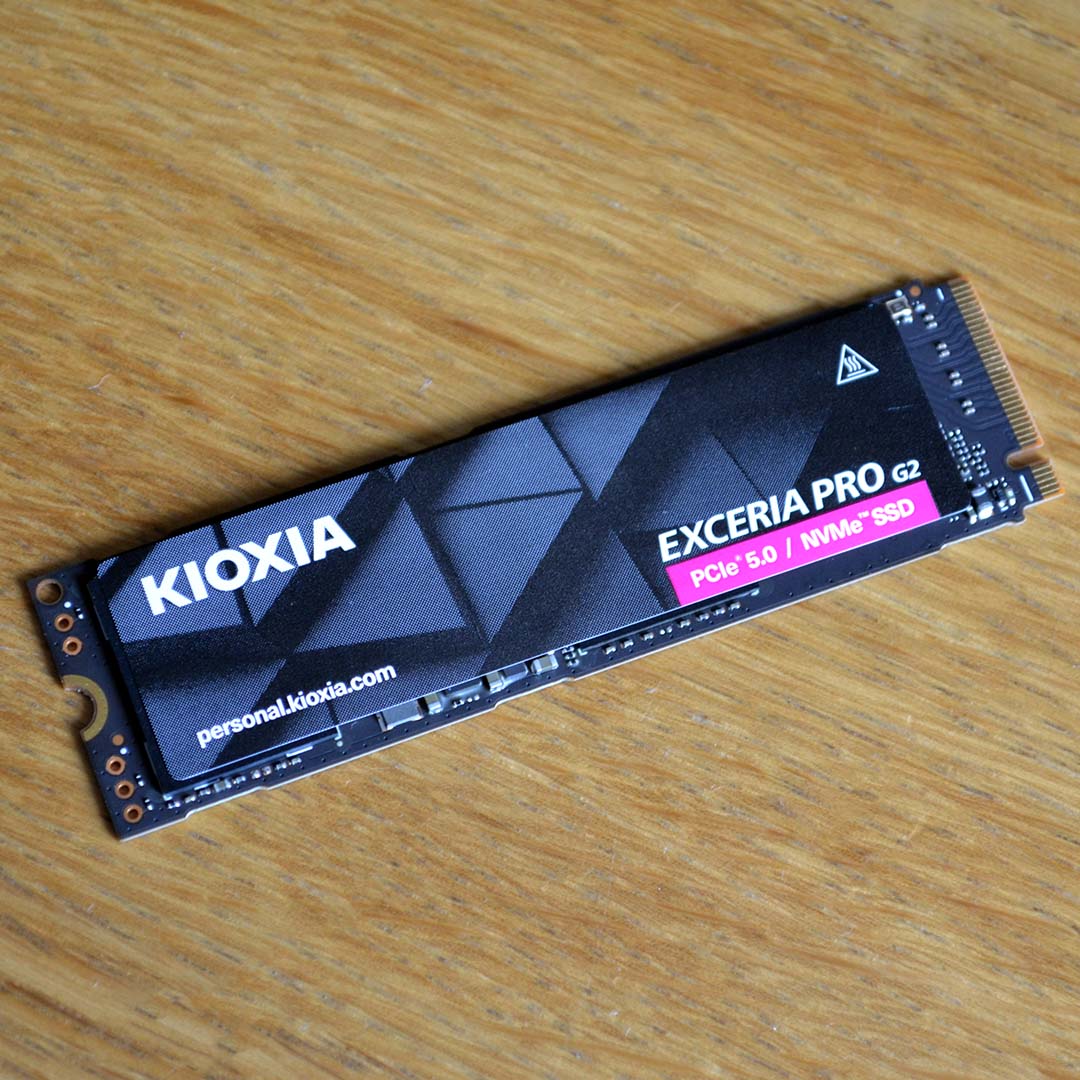

Kioxia Exceria Pro G2 2TB
£299
Pros
- Fast sequential speeds
- High read and write IOPS
- Solid thermals
- Fair price
- Five-year warranty
Cons
- Lacks heatsink version
- No 8TB model
Club386 may earn an affiliate commission when you purchase products through links on our site.
How we test and review products.
You’ll find our 2TB review unit on store shelves for £299 at the time of writing, but 1TB and 4TB options are also available for £179 and £628, respectively. The prices of the two smaller capacities sit competitively against alternatives, but such accolades are fleeting when the market is so volatile.
Specifications
Rather than relying on an external supplier for flash storage, Kioxia is one of the few companies in the world that benefits from in-house stock, theoretically allowing it to maintain better price controls. In this case, the Exceria Pro G2 is rocking the firm’s 218-layer BiCS8 TLC NAND, the same chips you’ll find inside the likes of the WD_Black SN8100 and other class-leading SSDs.
This NAND offers 600TBW (terabytes written) of endurance per terabyte of capacity, giving our 2TB review unit a hardy total of 1,200TBW (600TBW x 2TB). This makes the Exceria Pro G2 50% more resilient on paper when compared to QLC alternatives, such as the Micron 3610, which cap out at 400TBW. While such credentials aren’t as important for casual use, professionals who regularly write data to their storage will appreciate this advantage.
| Kioxia Exceria Pro G2 | 1TB | 2TB | 4TB |
|---|---|---|---|
| NAND | BiCS8 Flash TLC | BiCS8 Flash TLC | BiCS8 Flash TLC |
| DRAM | 1GB | 2GB | 4GB |
| Controller | Silicon Motion SM2508 | Silicon Motion SM2508 | Silicon Motion SM2508 |
| Interface | PCIe 5.0 x4 | PCIe 5.0 x4 | PCIe 5.0 x4 |
| Seq. read speed | 14,400MB/s | 14,900MB/s | 14,900MB/s |
| Seq. write speed | 12,700MB/s | 13,400MB/s | 13,700MB/s |
| Random read speed | 2,000,000 IOPS | 2,250,000 IOPS | 2,300,000 IOPS |
| Random write speed | 1,900,000 IOPS | 1,950,000 IOPS | 1,950,000 IOPS |
| Power draw | 9.6W | 8.4W | 8.5W |
| Form factor | M.2 2280 | M.2 2280 | M.2 2280 |
| Endurance | 600TBW | 1,200TBW | 2,400TBW |
| Hardware encryption | No | No | No |
| Heatsink version | No | No | No |
| Warranty | Five years | Five years | Five years |
| Price | £179 | £299 | £628 |
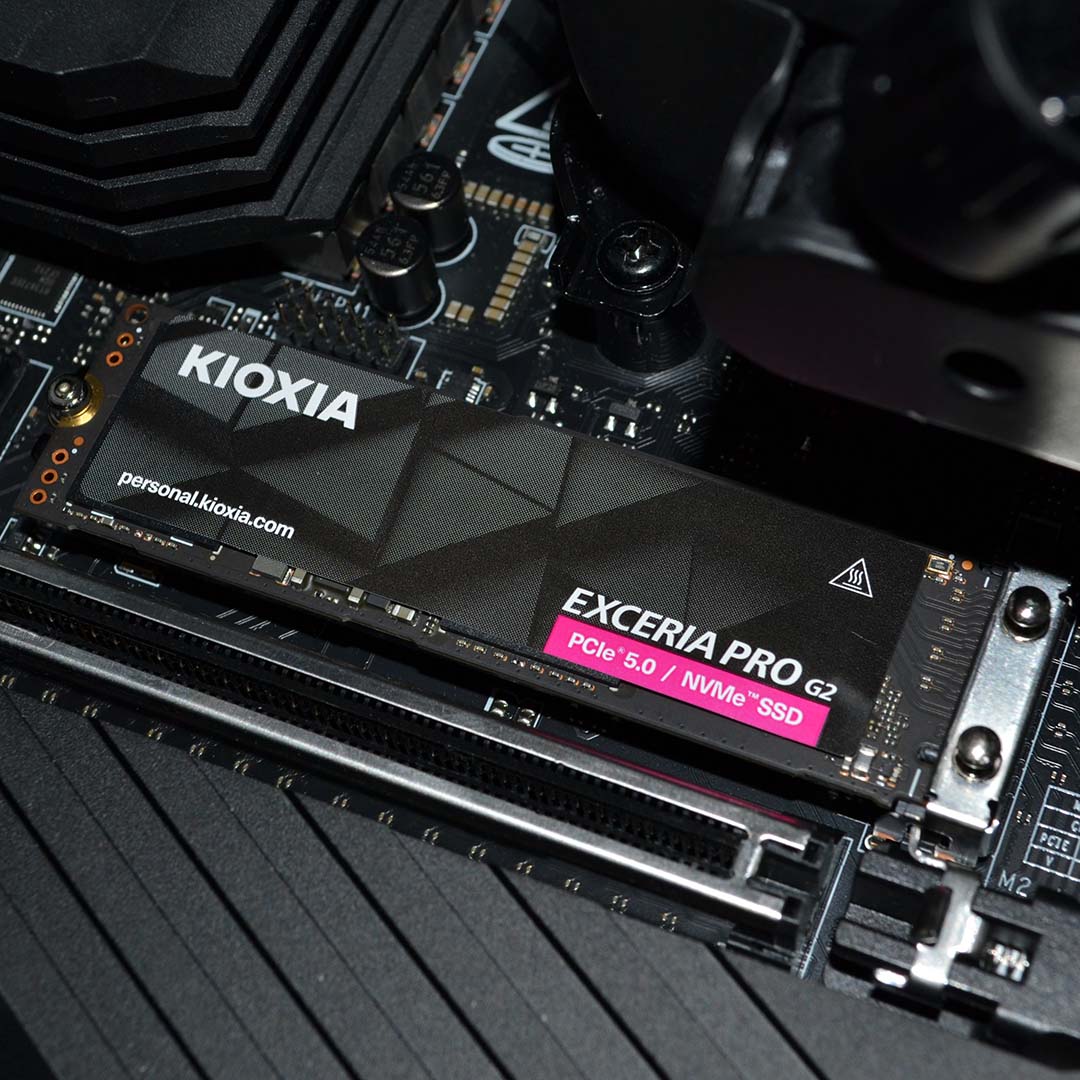
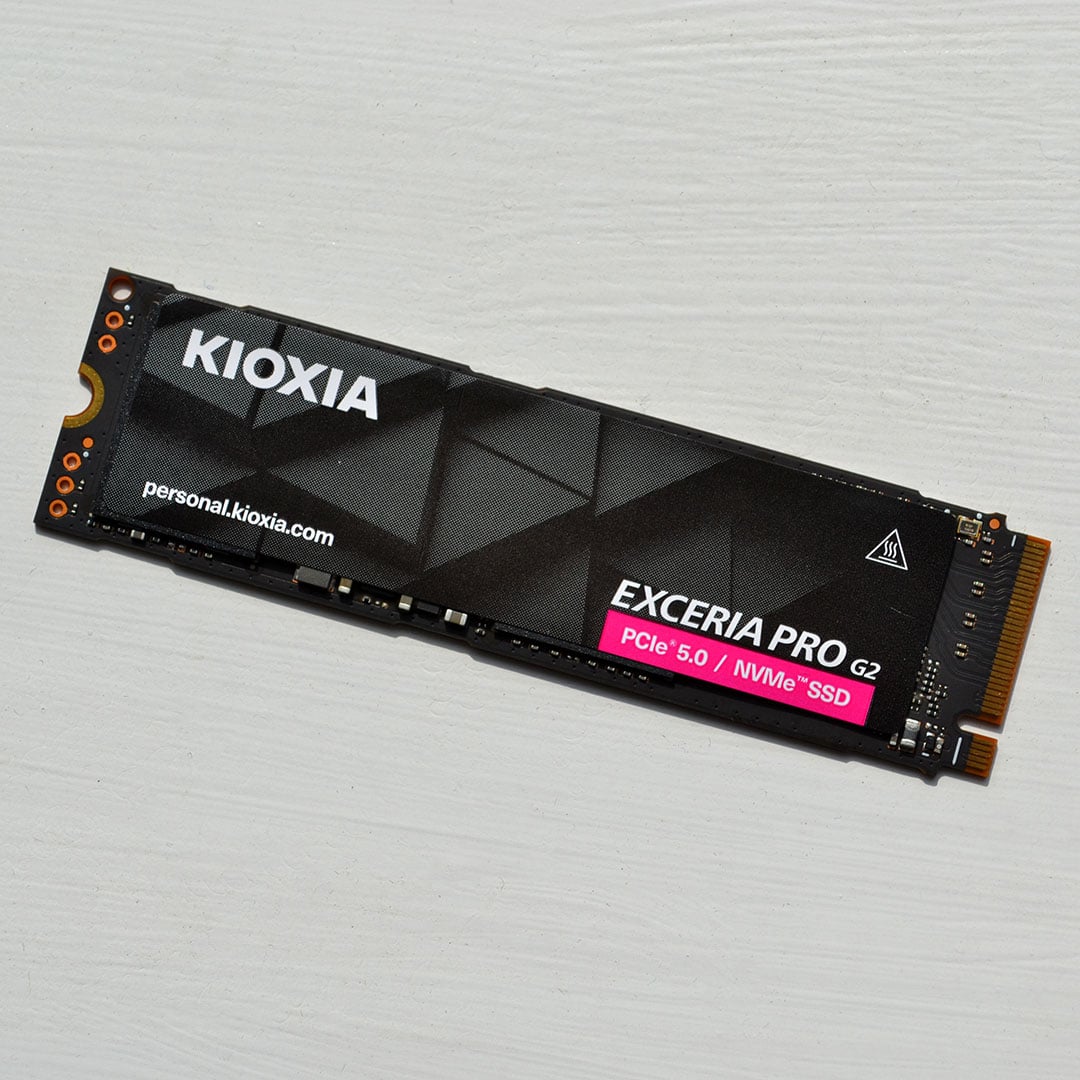
Like most modern PCIe Gen 5.0 SSDs, the Exceria Pro G2 uses a Silicon Motion SM2508 controller. This chip is far more efficient than the Phison E26 we saw from early drives using this interface, such as the Corsair MP700 Pro, which necessitated unsightly large heatsinks to stay cool in the face of high heat output and power draw. There’s sadly no version of the Exceria Pro G2 with a built-in heatsink, so you’ll need to pair this drive with your motherboard’s cooling system, or use a third-party design.
2GB of 4,266MT/s LPDDR4X memory sits alongside the controller and NAND on the 2TB model, further strengthening performance. While DRAM-less designs have become more common in the storage space in recent years, and are likely to continue to grow in prevalence in the wake of today’s memory crisis, Kioxia is arming its flagship offering with every edge possible.
A decent allocation of memory improves several key SSD performance metrics, including lower latency and faster random read and write performance. Onboard memory also benefits high-IOPS workflows, with the Exceria Pro G2 2TB offering a welcome maximum bandwidth of 2,250,000 and 1,950,000 IOPS for reads and writes, respectively.
Kioxia offers the Exceria Pro G2 in 1TB, 2TB, and 4TB capacities, exclusively in an M.2 2280 form factor. While a scarce few individuals can afford 8TB models in the current market, it’s worth noting that similarly speedy storage devices, such as the Sandisk Optimus GX Pro 8100, are available in such large sizes if you have the needs and purchasing power.
Regardless of which version of the Exceria Pro G2 catches your eye, Kioxia offers a five-year warranty with each drive, which is in line with competitors. Of course, exceeding the SSD’s 1,200TBW endurance rating will supersede this guarantee, but you’d need to fill the available 2TB capacity 600 times over in order to face this scenario.
Performance
This is the first storage review we’ve conducted on our Ryzen 9 9950X3D test benches. As such, in addition to benchmarking the Exceria Pro G2 2TB, I’ve thrown several other PCIe Gen 5.0 SSDs into this system. Don’t you just love the smell of fresh data?
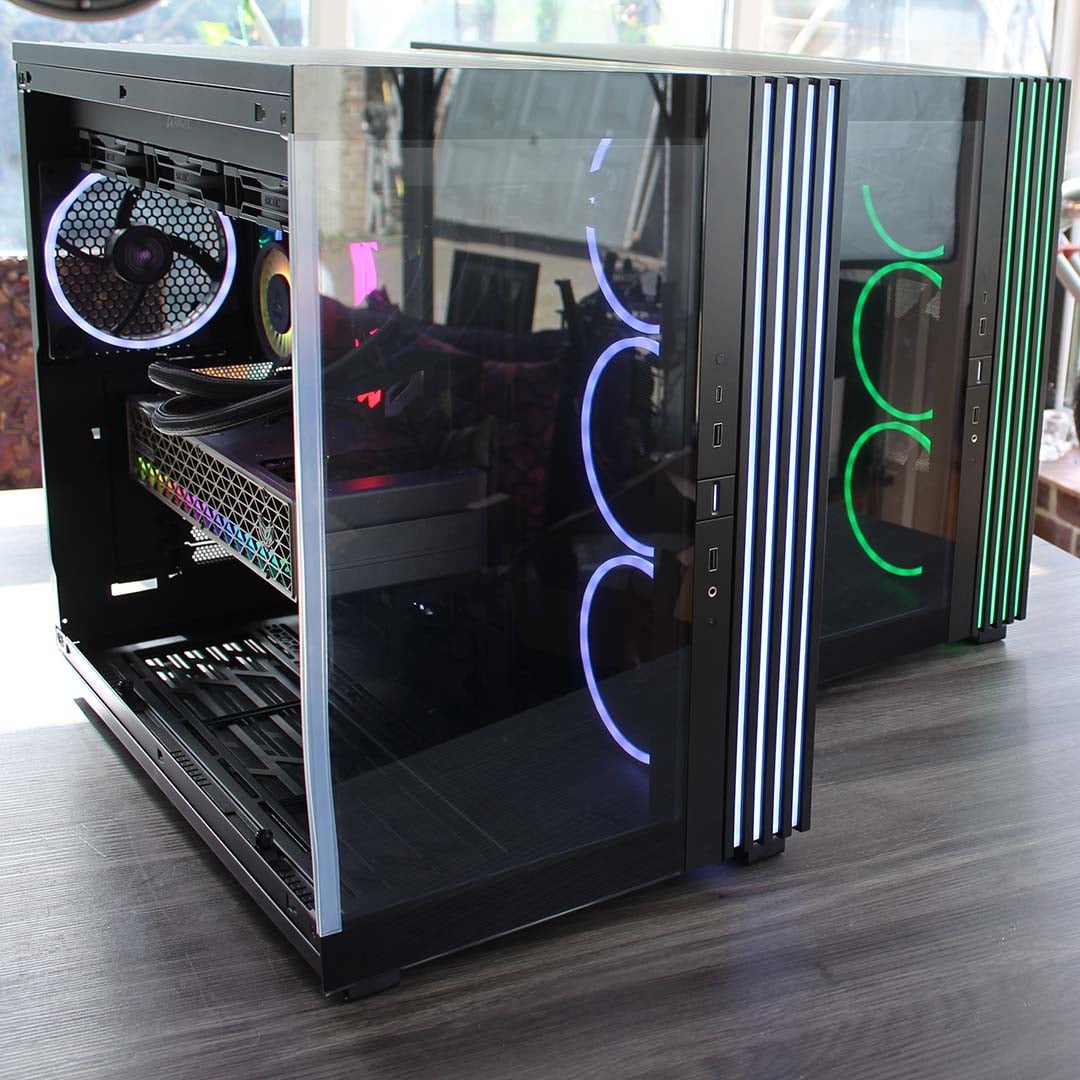
Our 9950X3D Test PCs
Club386 carefully chooses each component in a test bench to best suit the review at hand. When you view our benchmarks, you’re not just getting an opinion, but the results of rigorous testing carried out using hardware we trust.
Shop Club386 test platform components:
CPU: AMD Ryzen 9 9950X3D
Motherboard: MSI MEG X870E Ace Max
Cooler: Arctic Liquid Freezer III 420 Pro ARGB
GPU: Sapphire Nitro+ Radeon RX 9070 XT
Memory: 64GB Kingston Fury Renegade DDR5
Storage: 4TB Sandisk Optimus GX Pro 8100
PSU: be quiet! Dark Power 14 1,200W
Chassis: be quiet! Light Base 900 FX
As a reminder, there’s no version of the Exceria Pro G2 available with a built-in heatsink. As such, you’ll need to call on the cooling capabilities of your motherboard’s thermal pads and heatsinks to maintain optimum performance with this drive.
Our MEG X870E Ace Max is more than up to keeping any SSD cool, with a large heatsink and two thermal pads. This is how we’ve tested the Exceria Pro G2 2TB and other comparison points mentioned in this review (bar the Sandisk Optimus GX Pro 8100 4TB).
CrystalDiskMark
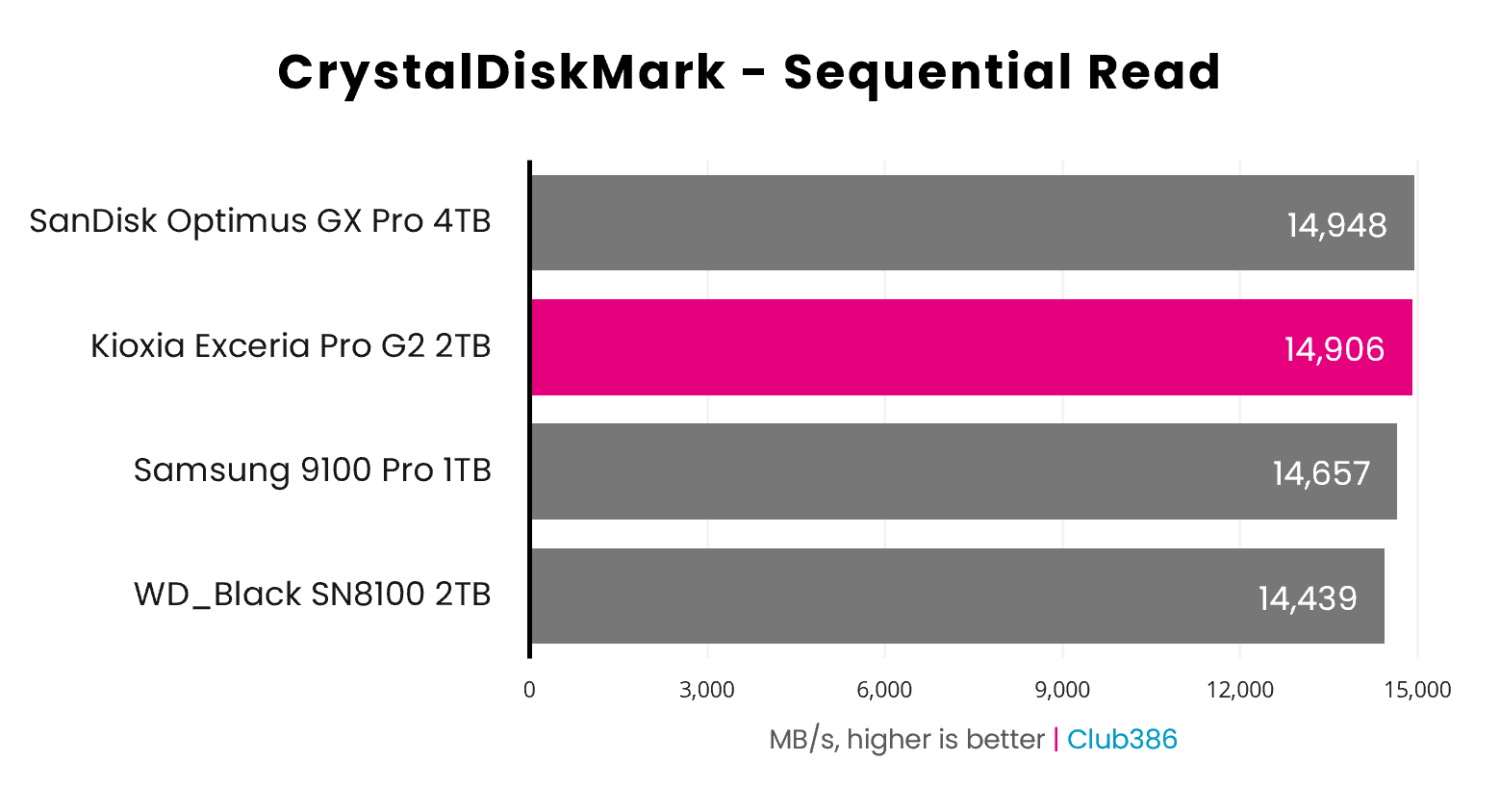
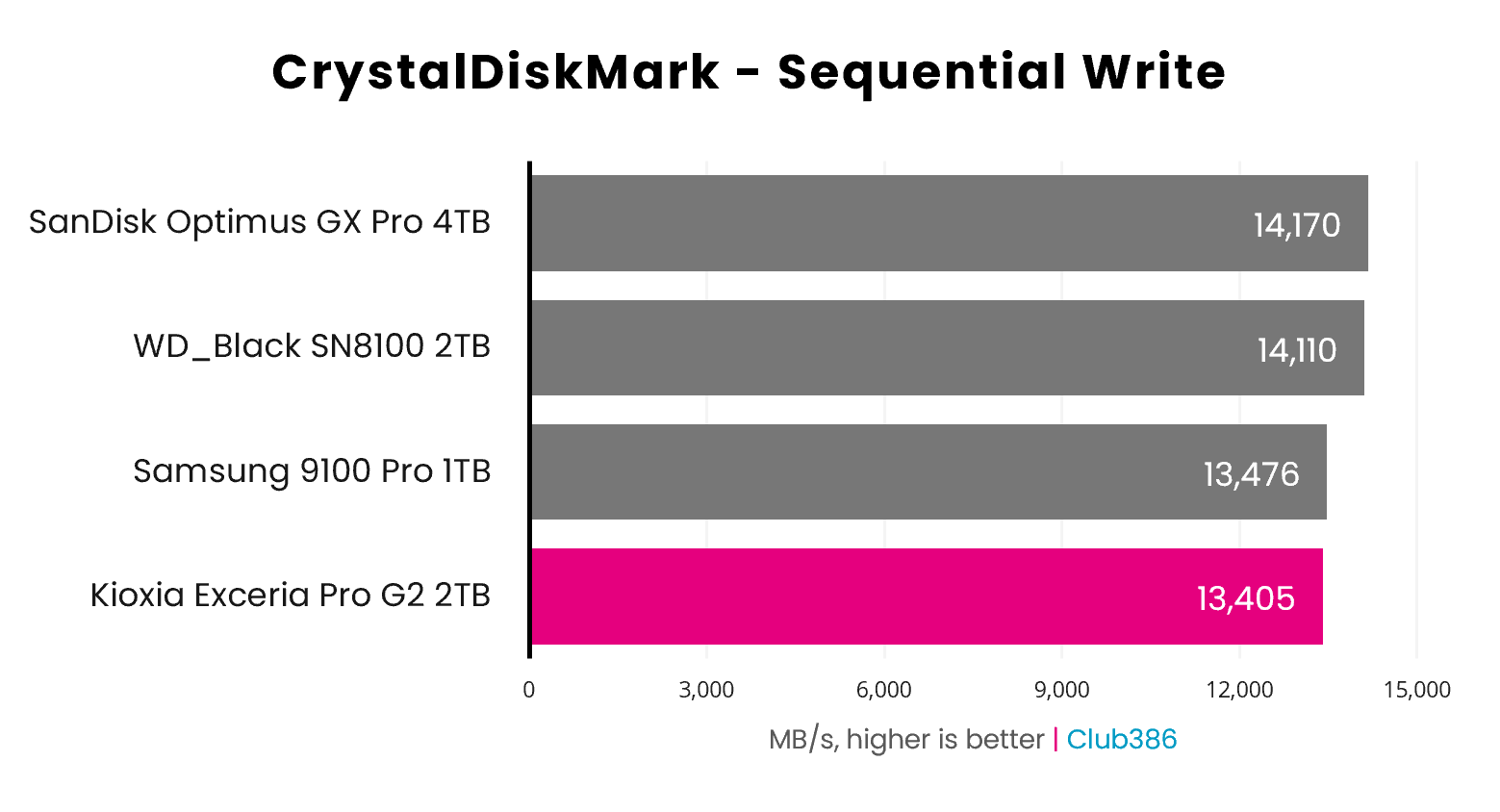
Sequential speeds are right where they should be running CrystalDiskMark. The Exceria Pro G2 2TB is among the fastest on the market in terms of read performance (14,906MB/s), but a little more conservative for writes (13,405MB/s).
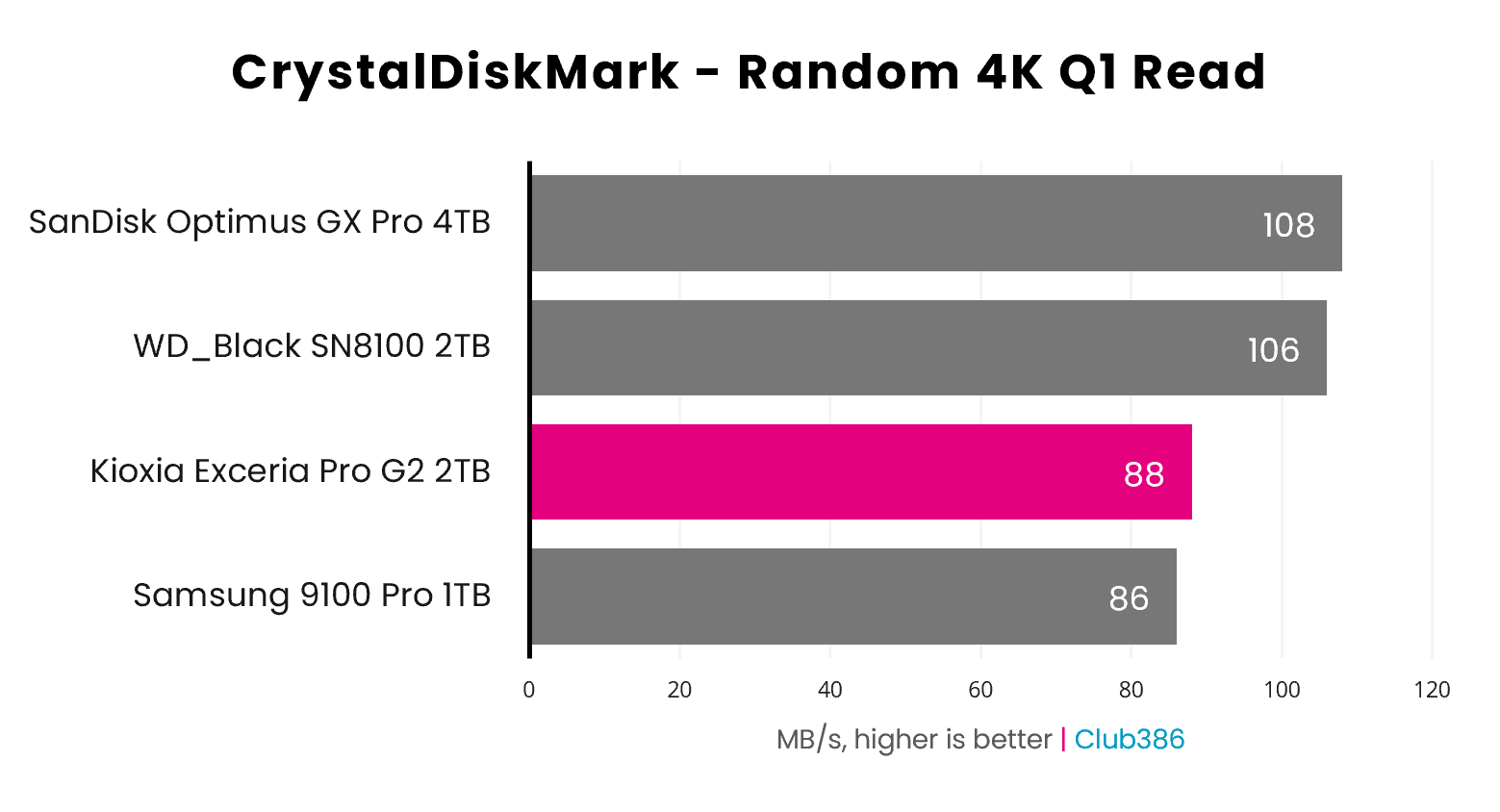
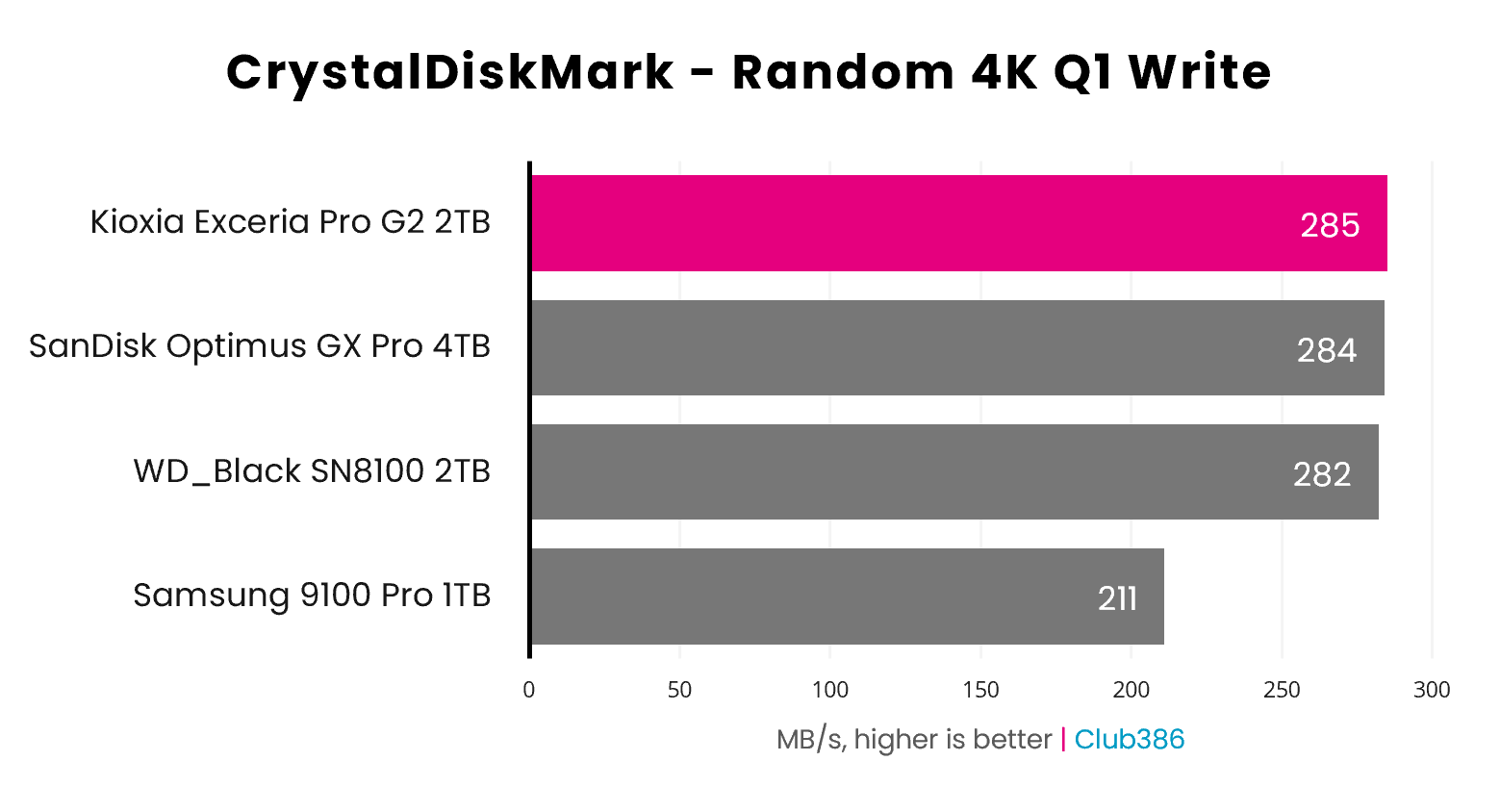
Switching over to random performance with a queue depth of one, the story of the Exceria Pro G2 2TB changes. Write speeds emerge fastest this time around (285MB/s), while reads remain plenty fast (88MB/s) but fall behind some competitors capable of just over 100MB/s.
Iometer
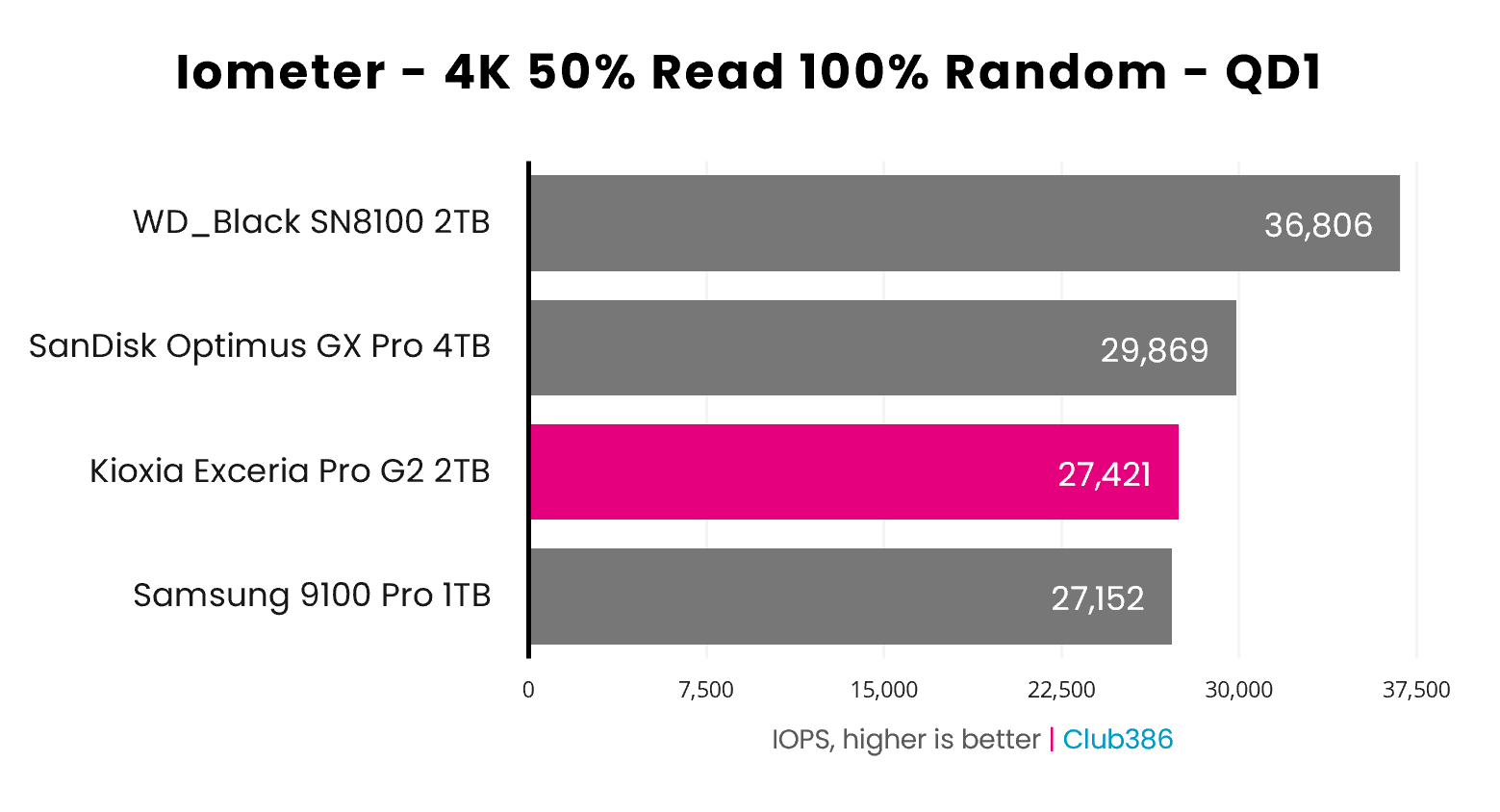
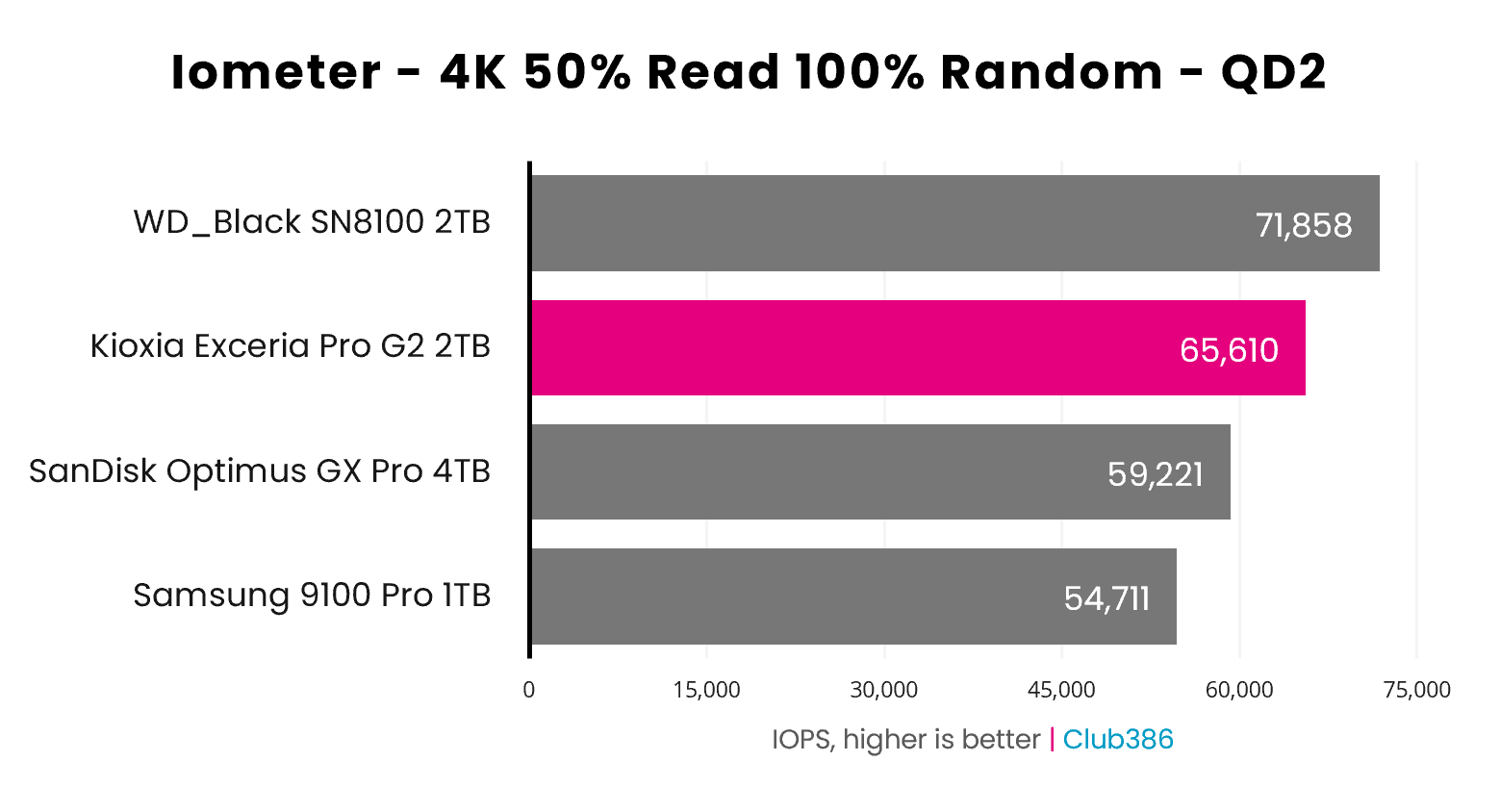
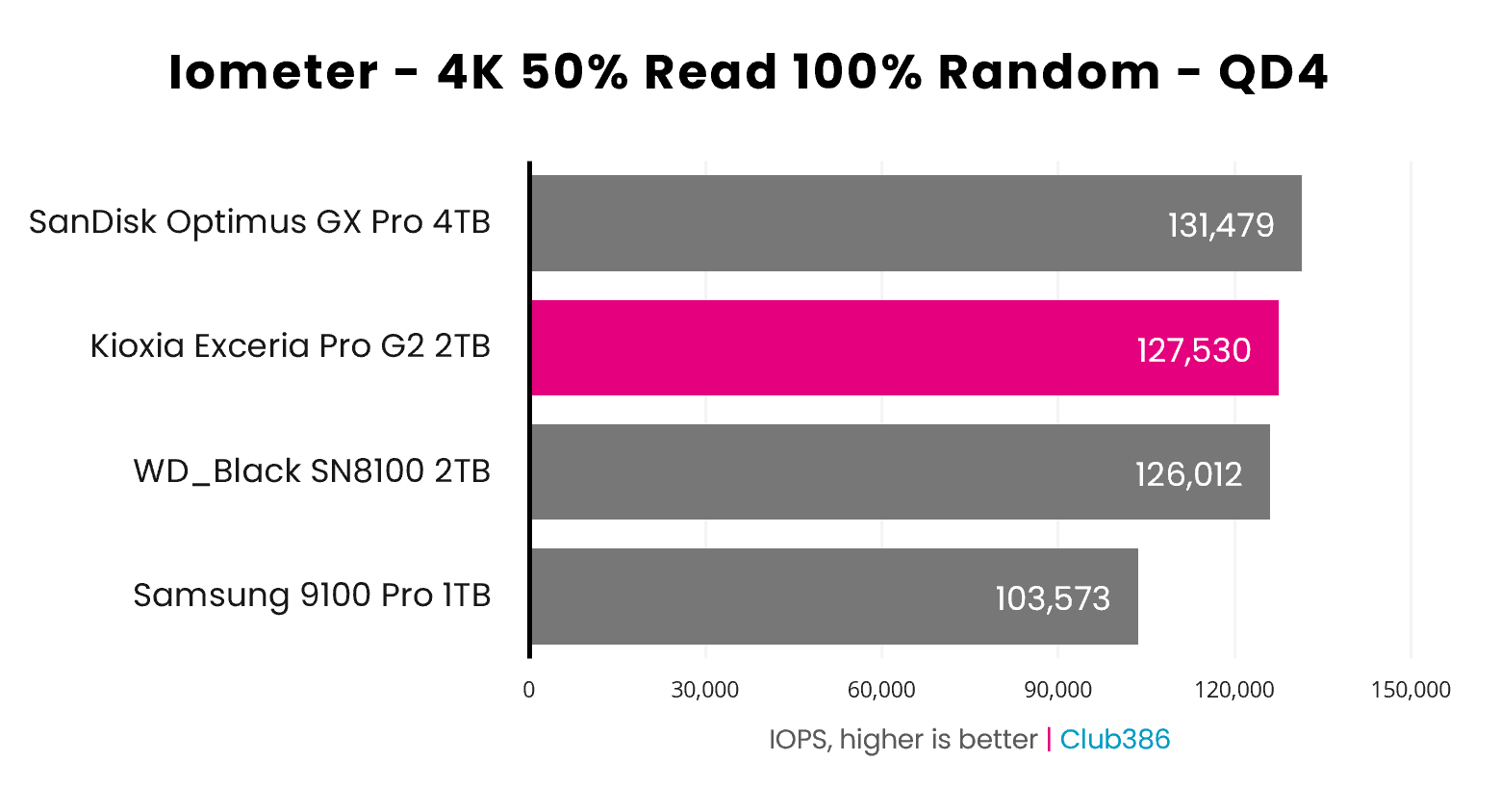
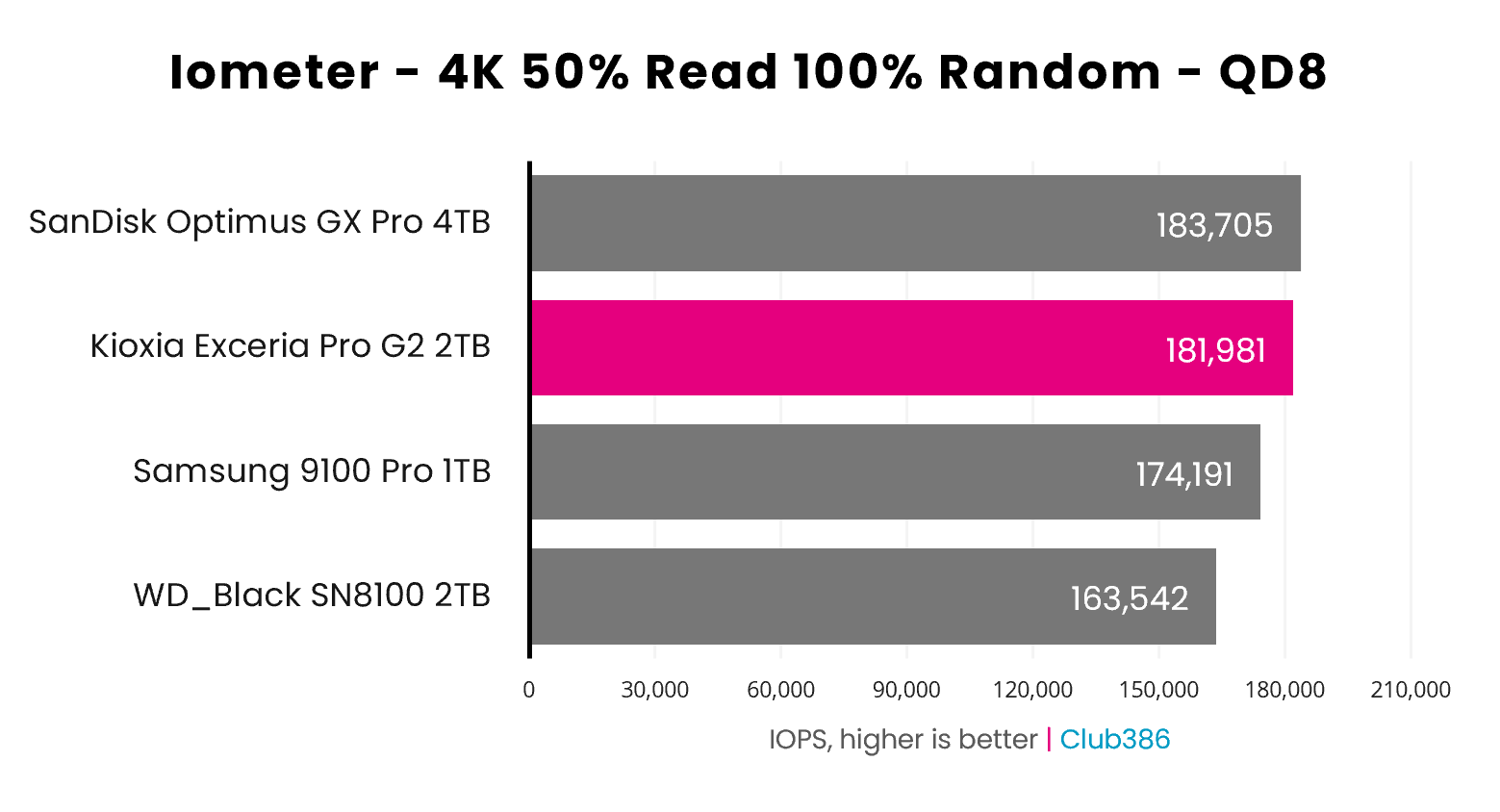
As queue depth increases, the Exceria Pro G2 2TB doesn’t manage to take prime podium position but cements itself as a consistently fast performer. Kioxia’s offering takes silver from QD2 onwards, while competitors scramble between the remaining positions.
PCMark 10
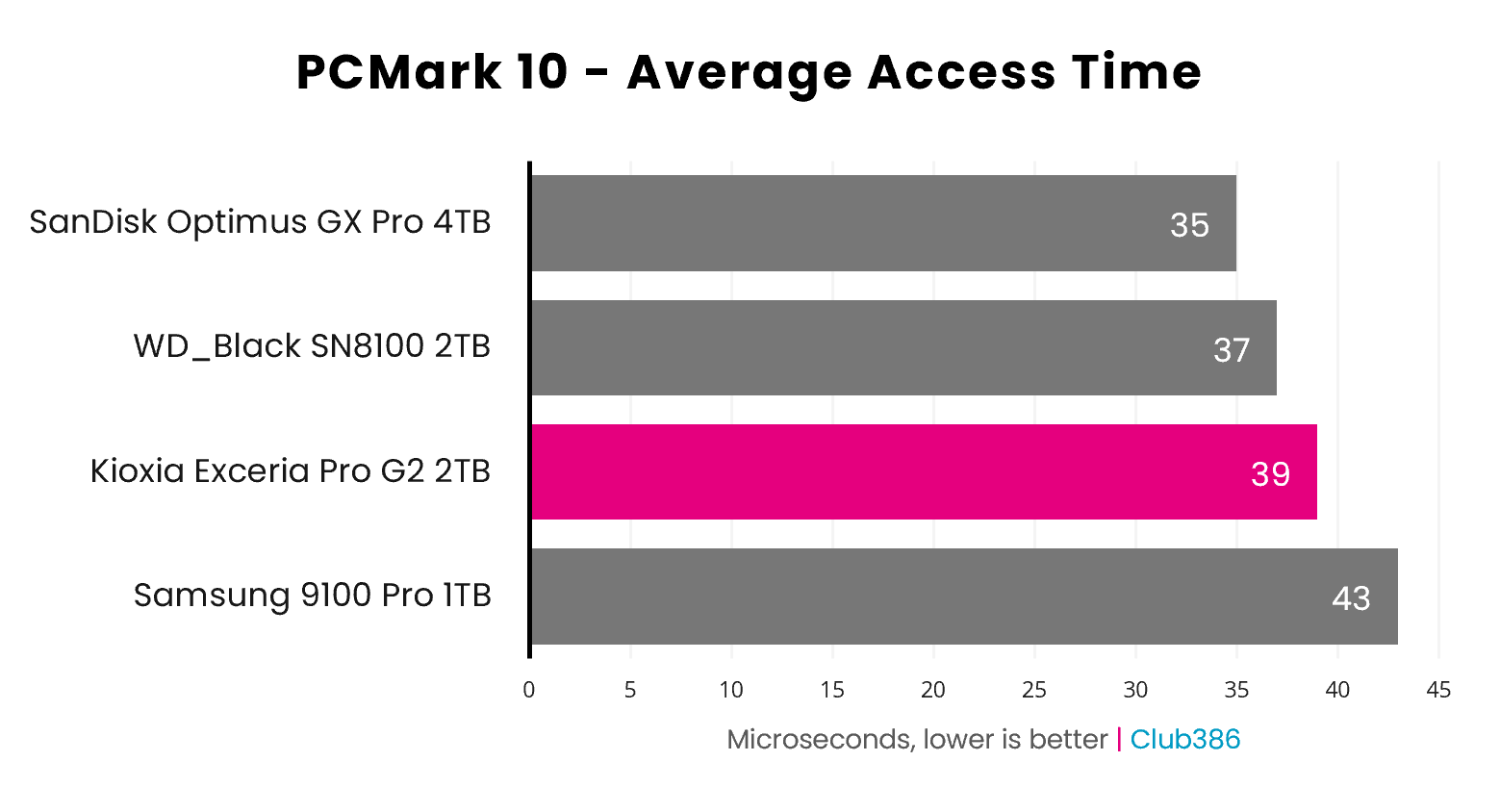
With a mere 8μs separating the top and bottom of the chart, it’s a close battle between the SSDs in PCMark 10’s access time benchmark. The Exceria Pro G2 2TB finds itself in the middle of the pack at 39μs, but it’s difficult to appreciably separate any of the drives here.
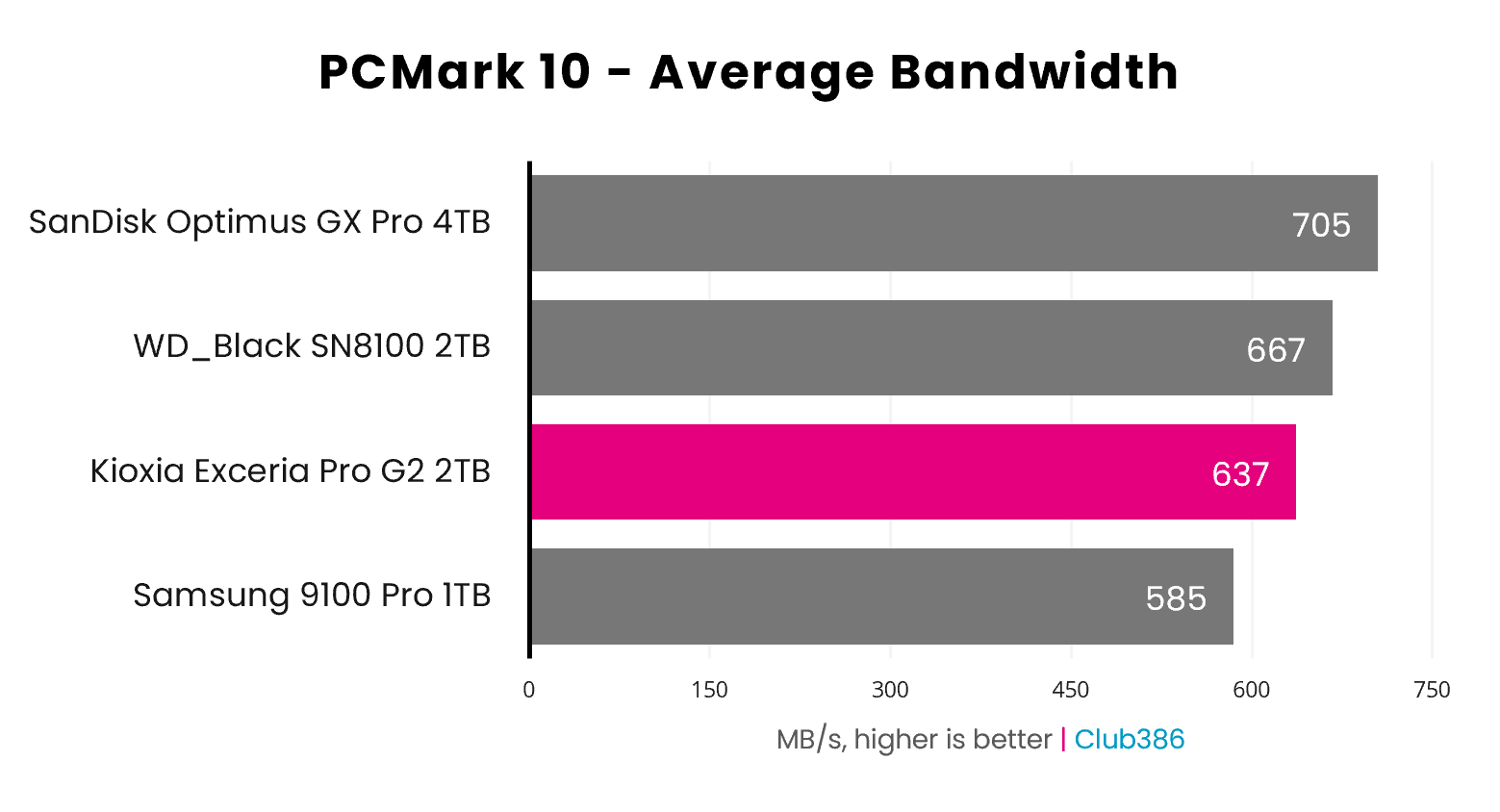
The storage hierarchy remains much the same when examining the average bandwidth of each drive. It’s a tight race between the WD_Black SN8100 2TB and Exceria Pro G2 2TB, with just 30MB/s between these two SSDs.
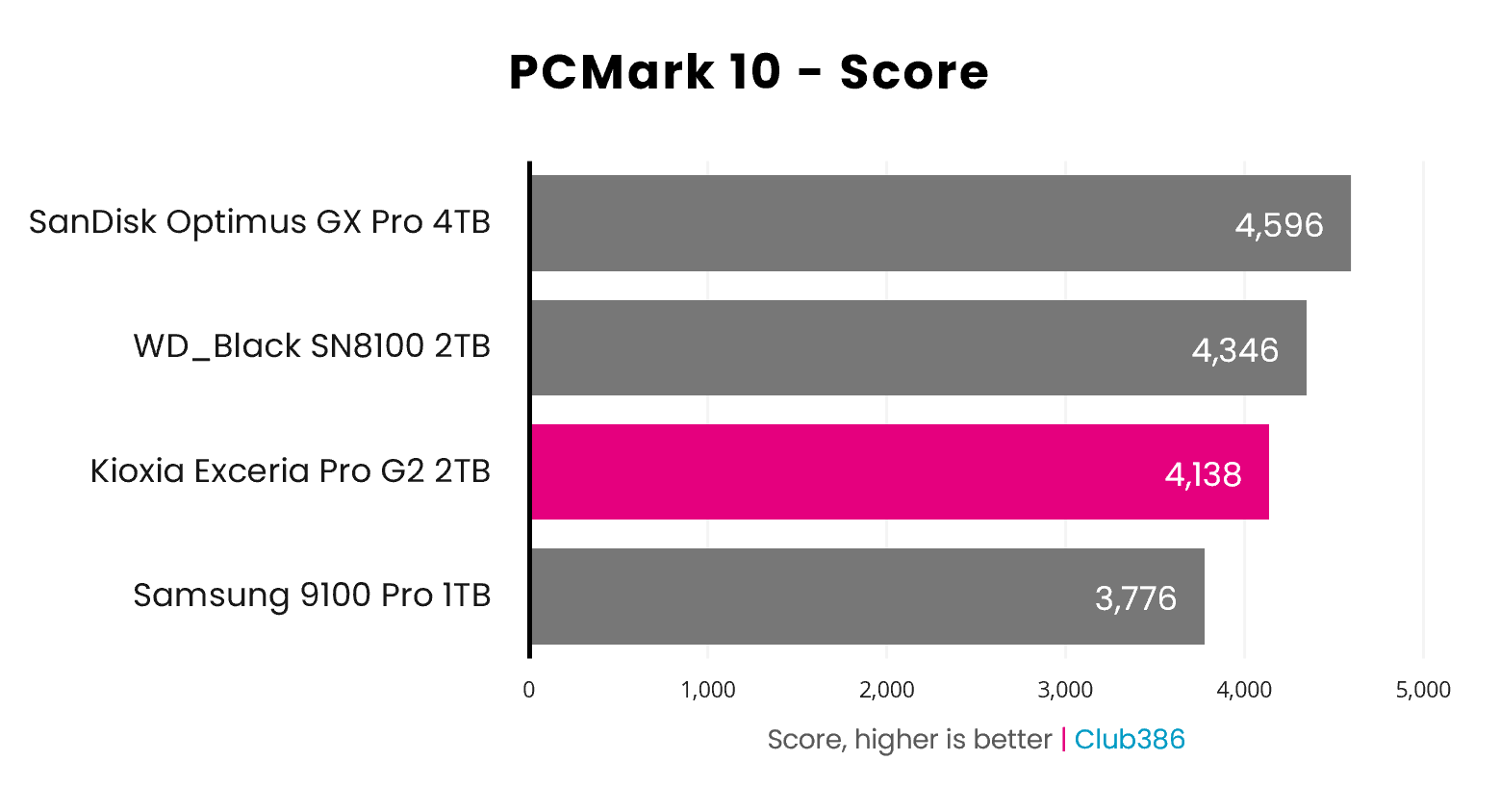
Third place for latency, third place for bandwidth, third place for score. That’s no bad result for the Exceria Pro G2 considering the closeness of these final results, and particularly once current prices enter the equation.
Gaming
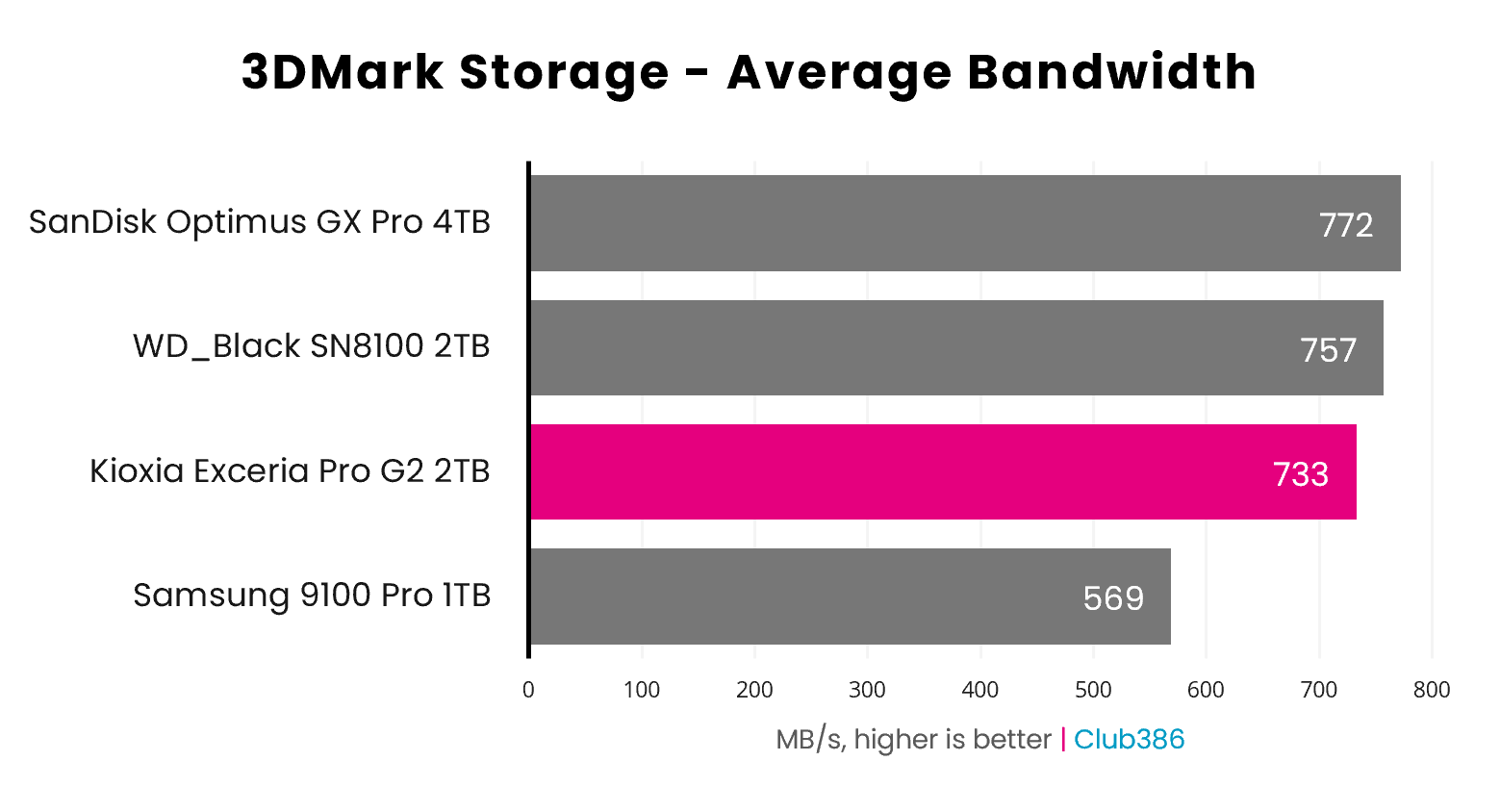
Across 3DMark’s various gaming storage benchmarks, the Exceria Pro G2 puts in an excellent effort. Its average bandwidth of 733MB/s isn’t the fastest on the board, but it’s also not far behind the more-expensive drives with faster write speeds.
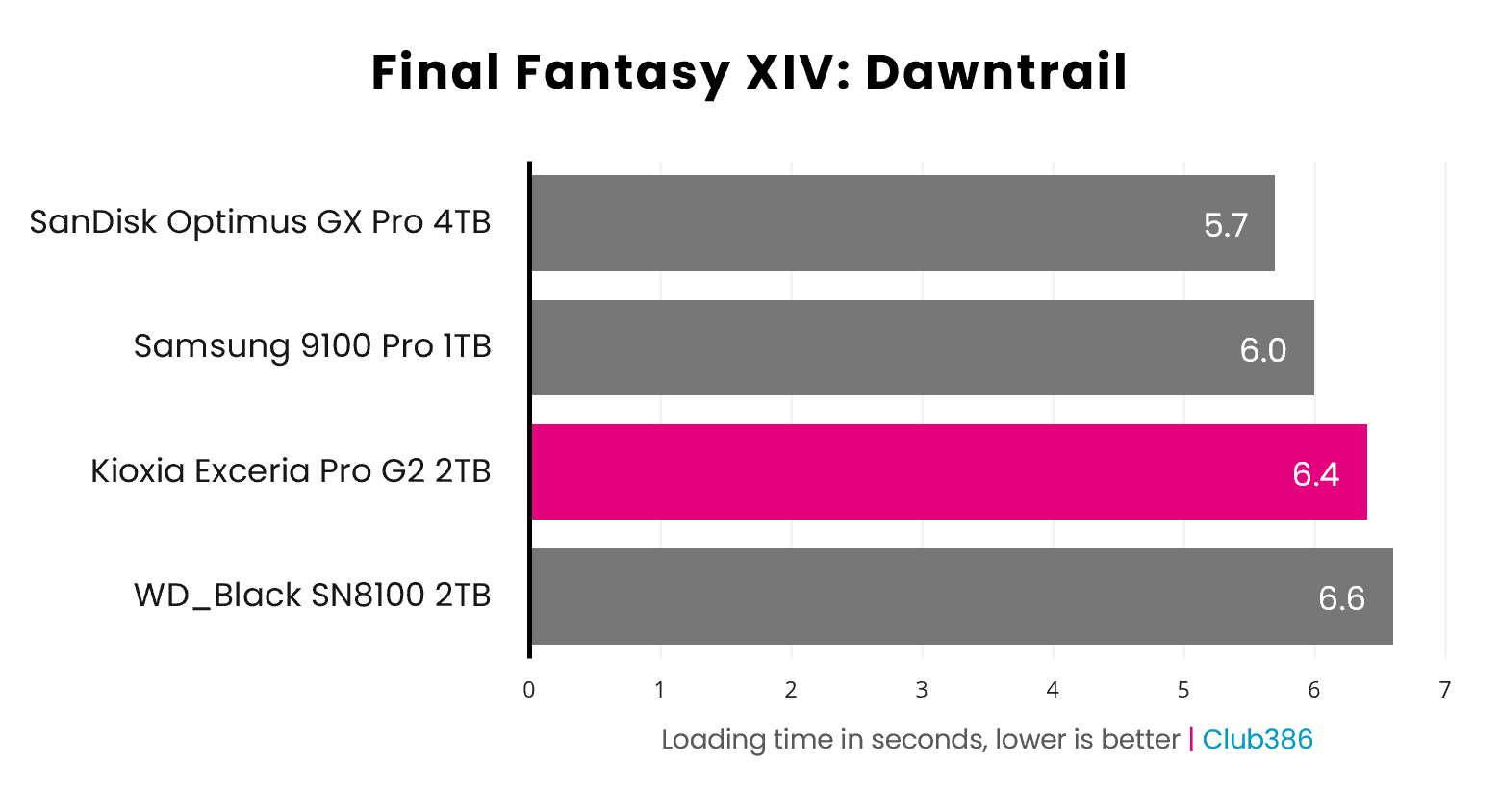
The Final Fantasy XIV: Dawntrail benchmark makes for another tooth-and-nail bout between SSDs. We’re talking about loading time differences of 0.9 seconds at most across the board. This comes as no surprise, as PCIe Gen 5.0 storage is typically overkill for gaming.
Temperature
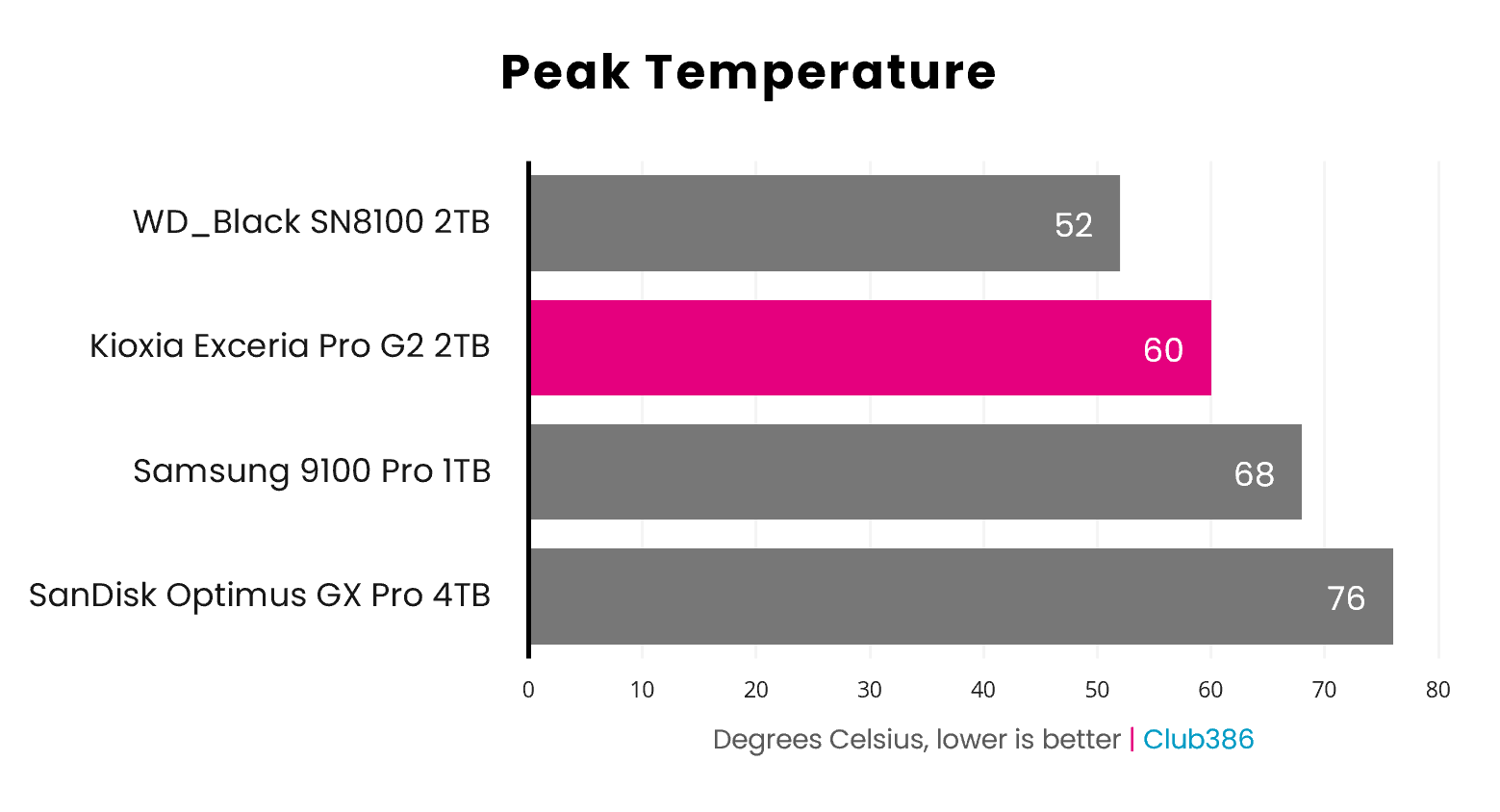
We’ve come a long way when it comes to reducing PCIe Gen 5.0 storage temperatures, as the Exceria Pro G2 nicely demonstrates. Running at a 60°C maximum with our motherboard’s heatsink, Kioxia’s SSD is one cool drive.
As a reminder, you can’t pick up this SSD with a built-in heatsink. As such, you can expect broadly similar temperatures with a motherboard heatsink and thermal pads in tow.
Conclusion
There’s little in the way of obvious weakness in the Exceria Pro G2’s capabilities. This SSD delivers consistently high-speed performance across sequential and random loads, in both reads and writes, all without bothersome high temperatures.
At £299, the Exceria Pro G2 2TB only has one major competitor in terms of price and performance, namely the Crucial T710 at £288. However, I wouldn’t expect that alternative to be around for too much longer, given that Micron has announced plans to shutter its consumer arm.
The usual considerations of whether your workflows will benefit from PCIe Gen 5.0 speeds apply with the Exceria Pro G2. Opting for a 2TB Gen 4.0 drive, such as the Silicon Power UD90 or WD_Black SN7100, can save you up to £100, and will provide more than enough throughput for gaming or general computing.
For those who will benefit from the faster throughput, though, and have some form of cooling at the ready, there’s little reason not to pick up the Exceria Pro G2 2TB if you can afford it. This drive isn’t far off the pace of the Sandisk Optimus GX Pro 8100, but it’s considerably cheaper, at least for now.