

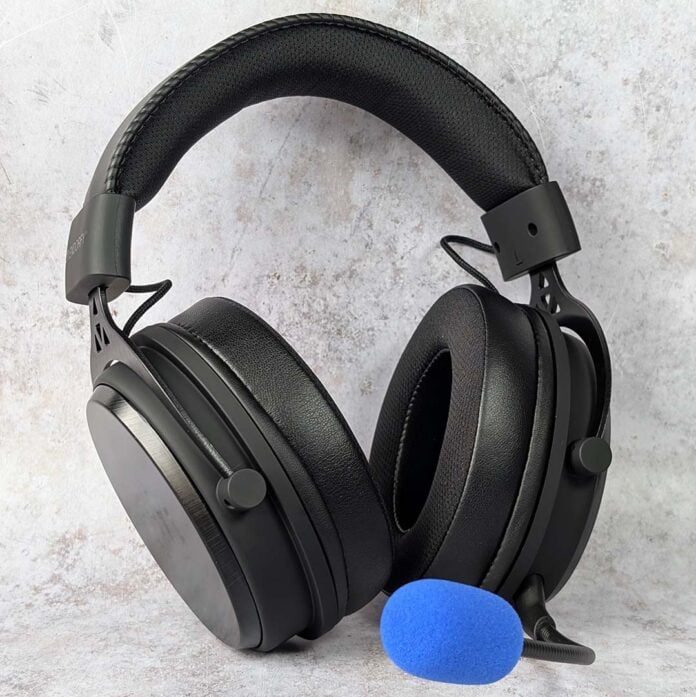
Endorfy is finally cutting the cord from its audio offerings, with the Viro Wireless serving as the firm’s flagship foray into the world of cable-free gaming headsets. These cordless cans impressively hit most of their marks, with strong audio, voice capture, and features, all while arriving at an enticingly low price relative to long-established competitors.
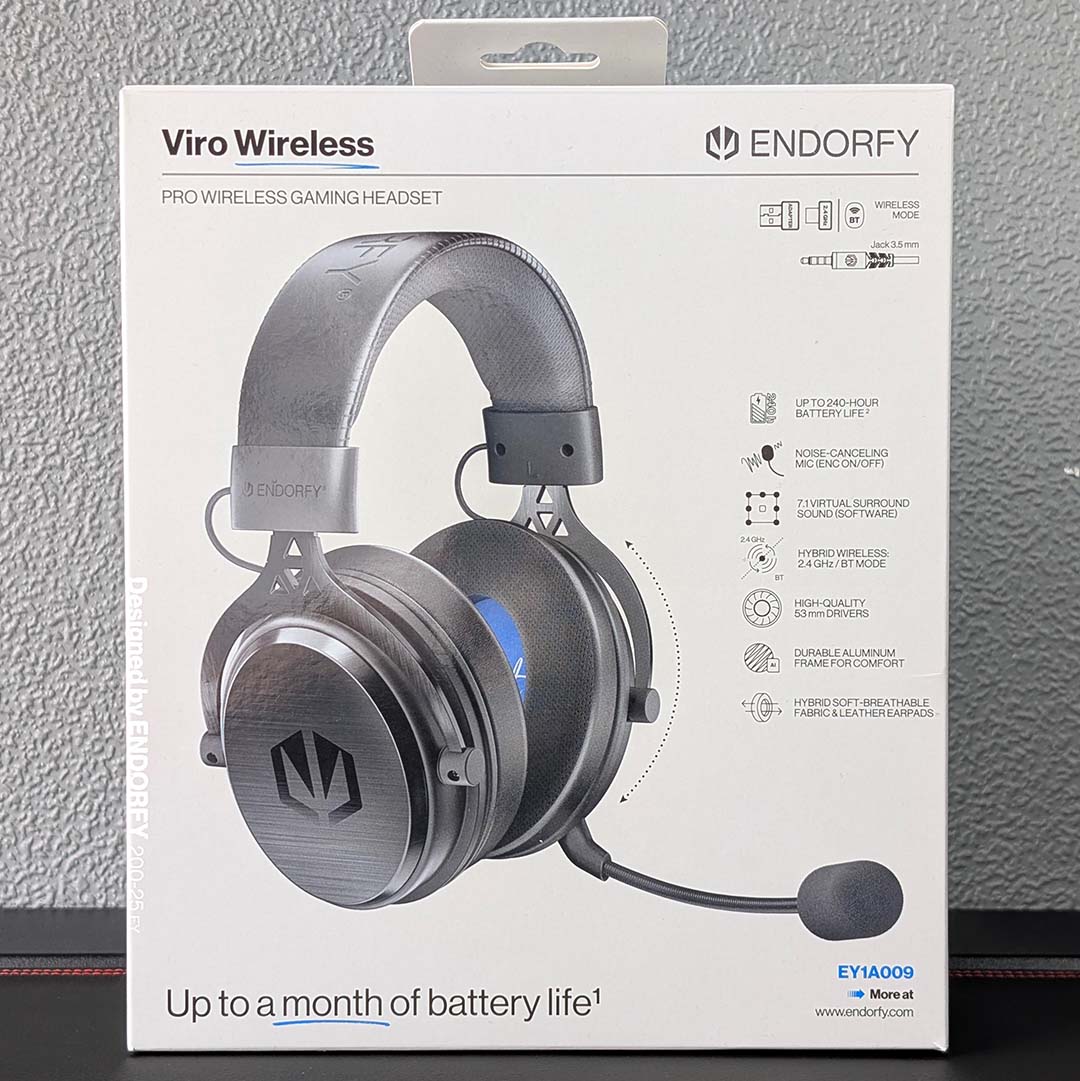

Endorfy Viro Wireless
€86.90
Pros
- Solid sound quality
- Great microphone
- 130 hours of battery life
- Well-rounded connections
- Solid build quality
Cons
- High clamping force
- Hard to find outside continental Europe
Club386 may earn an affiliate commission when you purchase products through links on our site.
How we test and review products.
Hitting shelves in Europe for €86.90 (~£75), the Viro Wireless isn’t asking for extraordinary sums for the pleasure of its features and quality – far from it. Better still, this is the same price you’ll pay for all three colourways, whether you’re eyeing the stock black model in this review, or would prefer an Alt Gray or Onyx White paintjob.
For those in need of a more budget-friendly option, though, it’s worth noting that Endorfy is also realising the Viro Infra Wireless for €59.90 (~£51). That headset features smaller drivers and battery life, as well as other feature cutbacks, relative to its more feature-rich sibling, in service of affordability.
Design
Sat on my desk, the Viro Wireless looks more like a pair of headphones than a wireless gaming headset. I mean this in a wholly complimentary sense, as I prefer my peripherals to rock a stealthy appearance. You could easily take these cans out and about without a second thought.
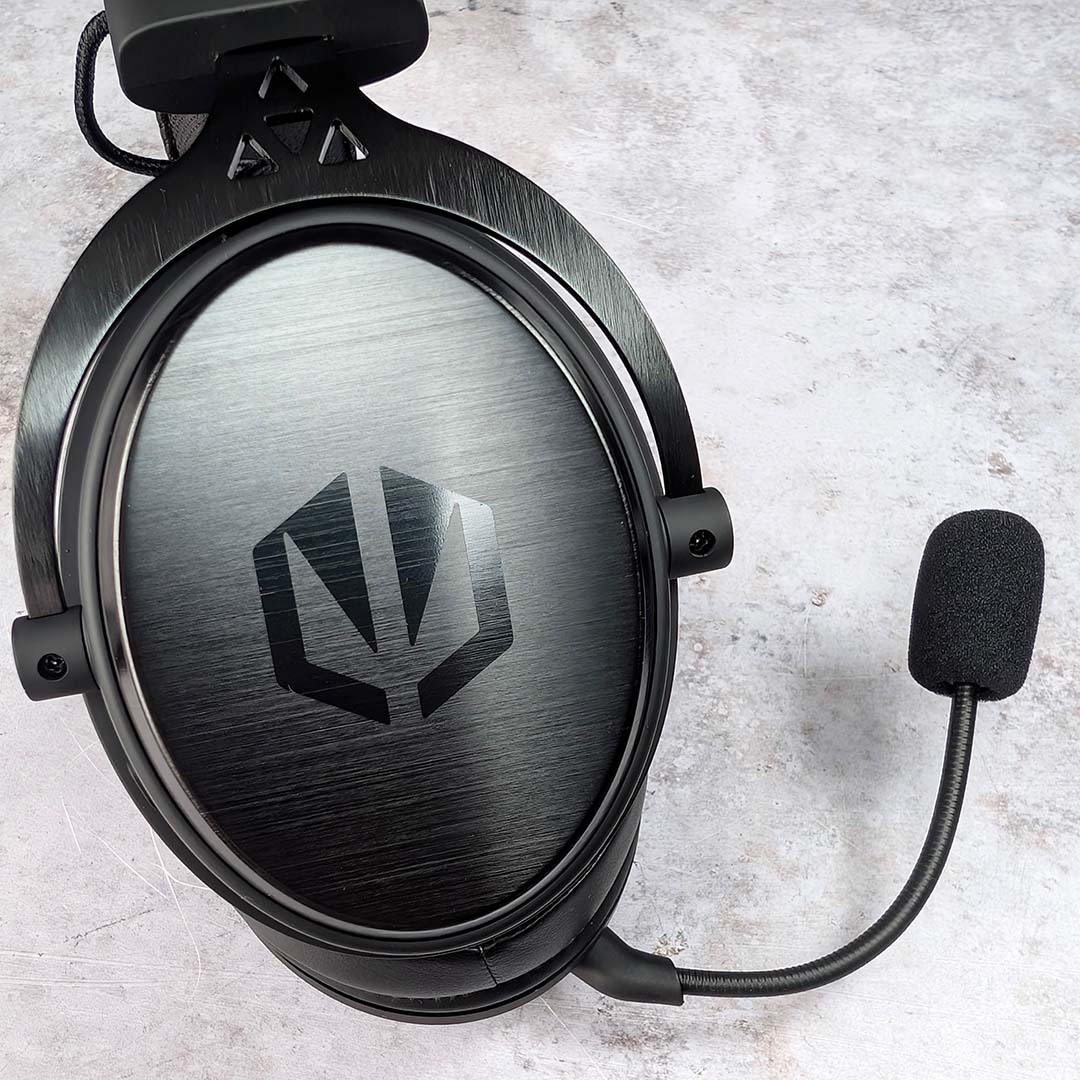
Endorfy hasn’t cut any corners when it comes to build quality, forgoing an all-plastic construction. The leather wrap for the outer headband, metal yokes, and brushed aluminium covers all give this headset a more premium feel than its price might suggest.
These material choices do contribute to an overall weight at 354g. While that’s not the lightest on the market, this headset isn’t the heaviest either, with plush fabric padding on the headband and smart weight distribution ensuring you don’t feel the force of all those grams on your head.
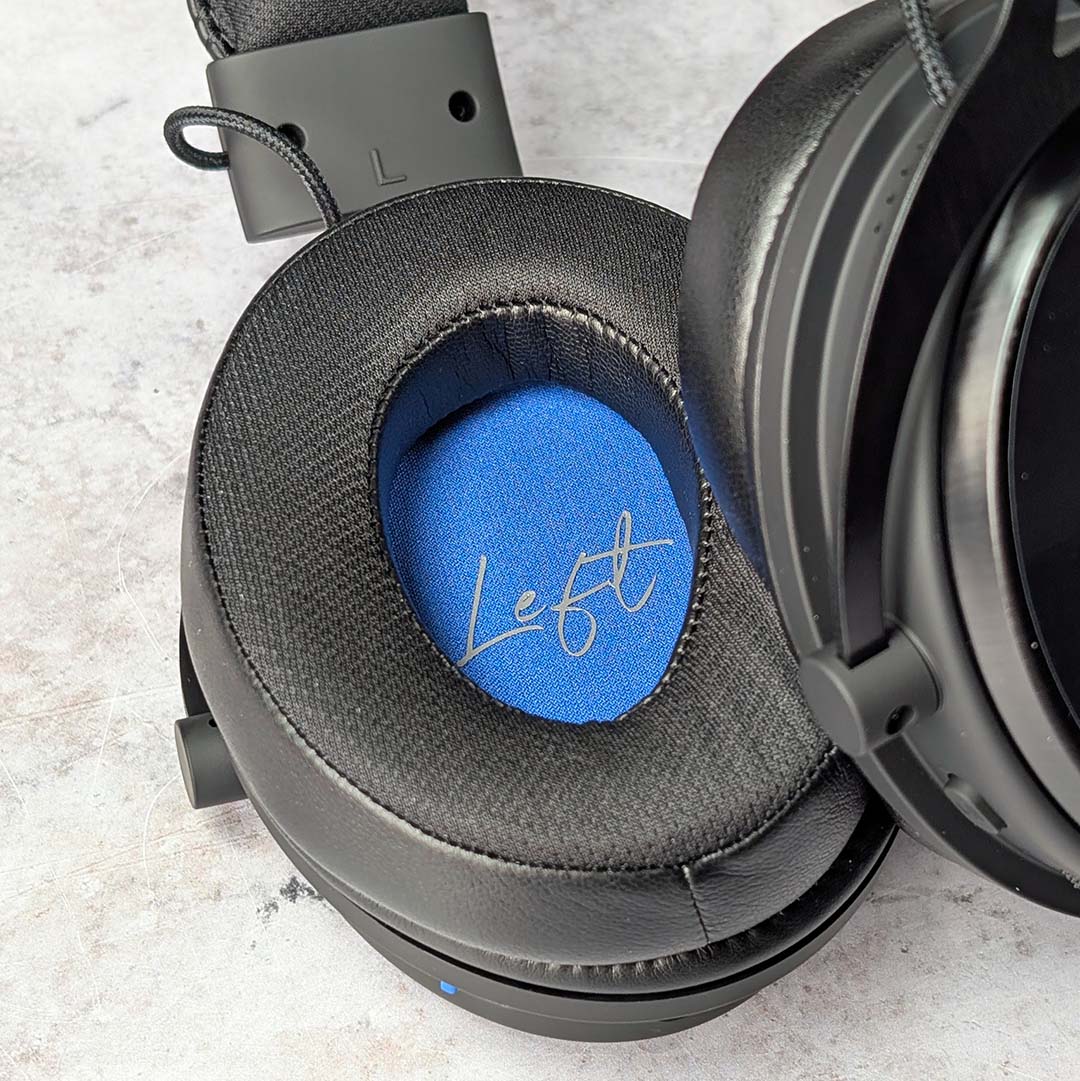
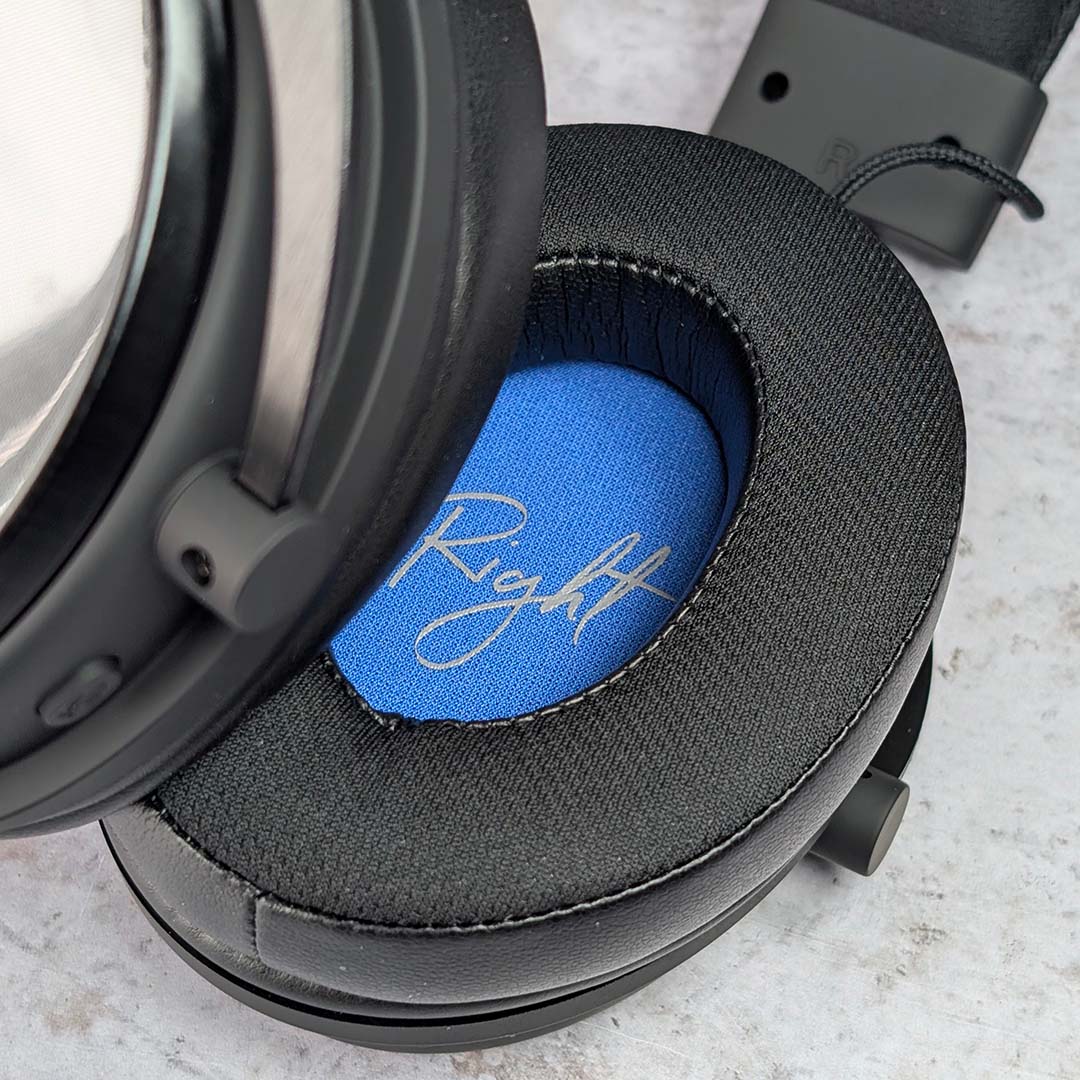
Nestling in each earcup, you’ll find a 53mm dynamic driver. Size isn’t everything when it comes to audio, but larger form factors can typically move more air, enabling higher volumes and potential for a warmer, deeper, sound signature.
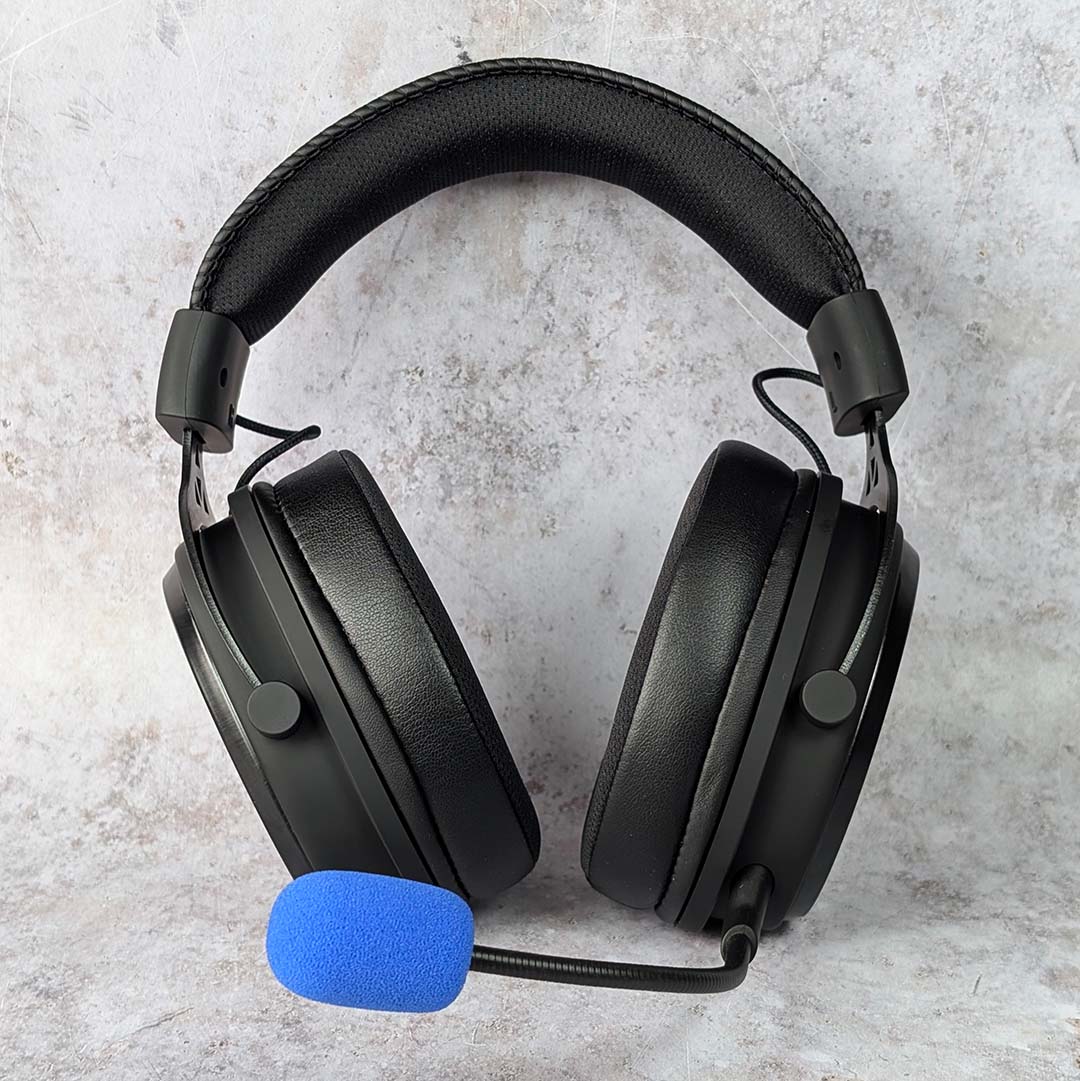
The earcups themselves feature a hybrid material design, combining memory foam PU leather on the outer ring and breathable oval-shaped fabric that sits on your ears. I’ve come to prefer wholly leather finishes on my cans, so I never stopped noticing the Viro Wireless on my ears and head, but this headset feels neither scratchy nor uncomfortable in this regard.
There’s no hinge on the metal yoke, however, meaning it isn’t possible to rotate the earcups. As someone who frequently rests their cans’ cushions on their chest, I did miss this convenience, but the headset sits fine if noticeably close around my neck anyway.
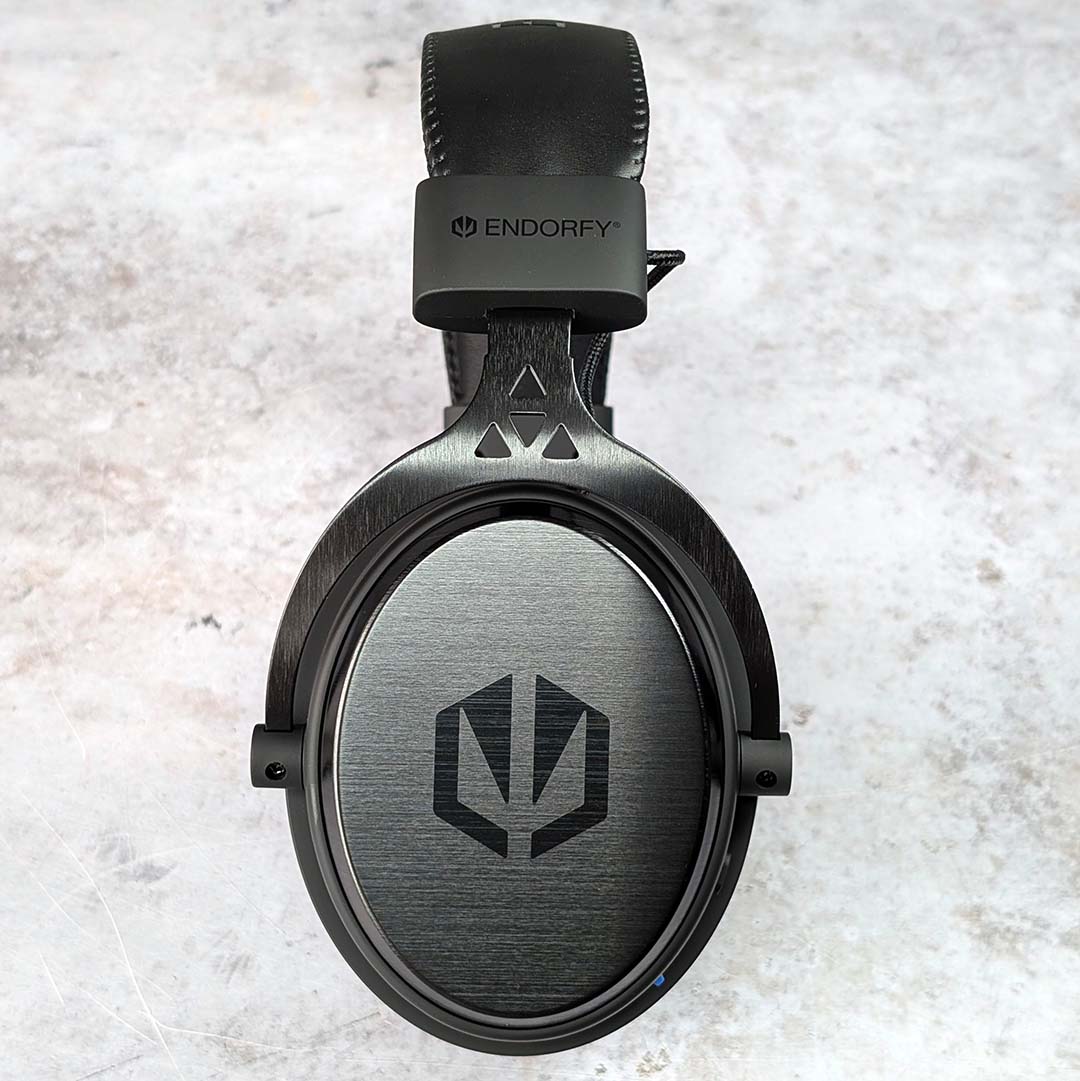
If, like me, you generally prefer wholly leather finishes, the pads are removable and pull away from their housing with ease. Endorfy does offer alternative material designs for the headset, but you’ll need to purchase those separately.
While I’ve been able to adjust to fabric cushions, the headset’s clamping force has given me some small discomfort. I’ve felt this more keenly while wearing glasses, but the problem persists sans spectacles, with notable pressure on my ears.
This has either lessened with time, either through the memory foam accommodating my ears and head shape, or because I’ve simply grown more accustomed to the force. Regardless, you should be aware that there may be an uncomfortable breaking in period. I’d love to see if leather earcups make this pressure more tolerable.
Features
The primary method of communication for any wireless headset is 2.4GHz wireless, providing the lowest latency and highest sound quality, and the same goes for the Viro Wireless. Finding a suitable place on the back of your motherboard for the shallow-but-tall USB-C receiver can be difficult as its form factor can unintentionally block other ports. Thankfully, it’ll work just fine via front I/O, or via the supplied USB-C-to-A extension.
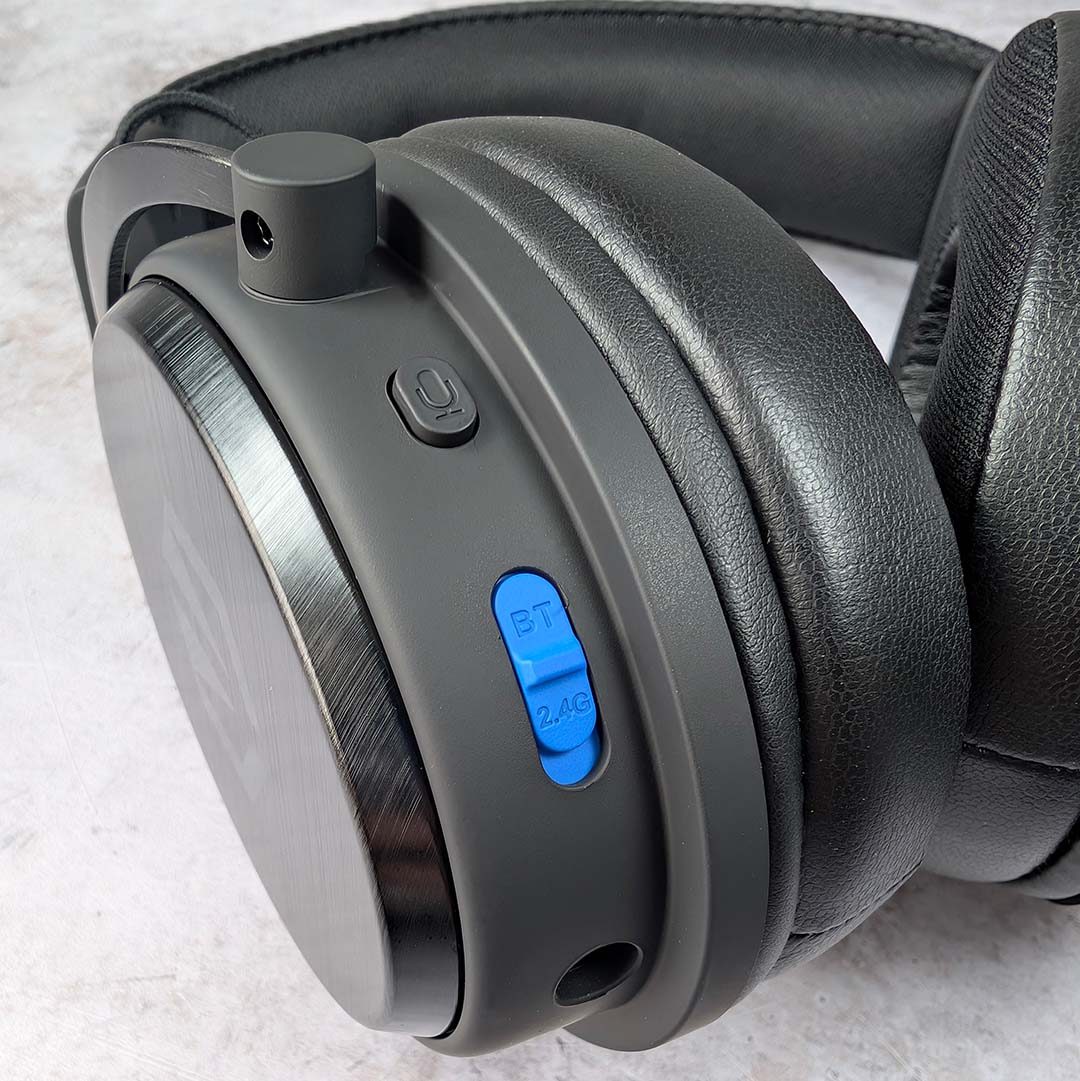
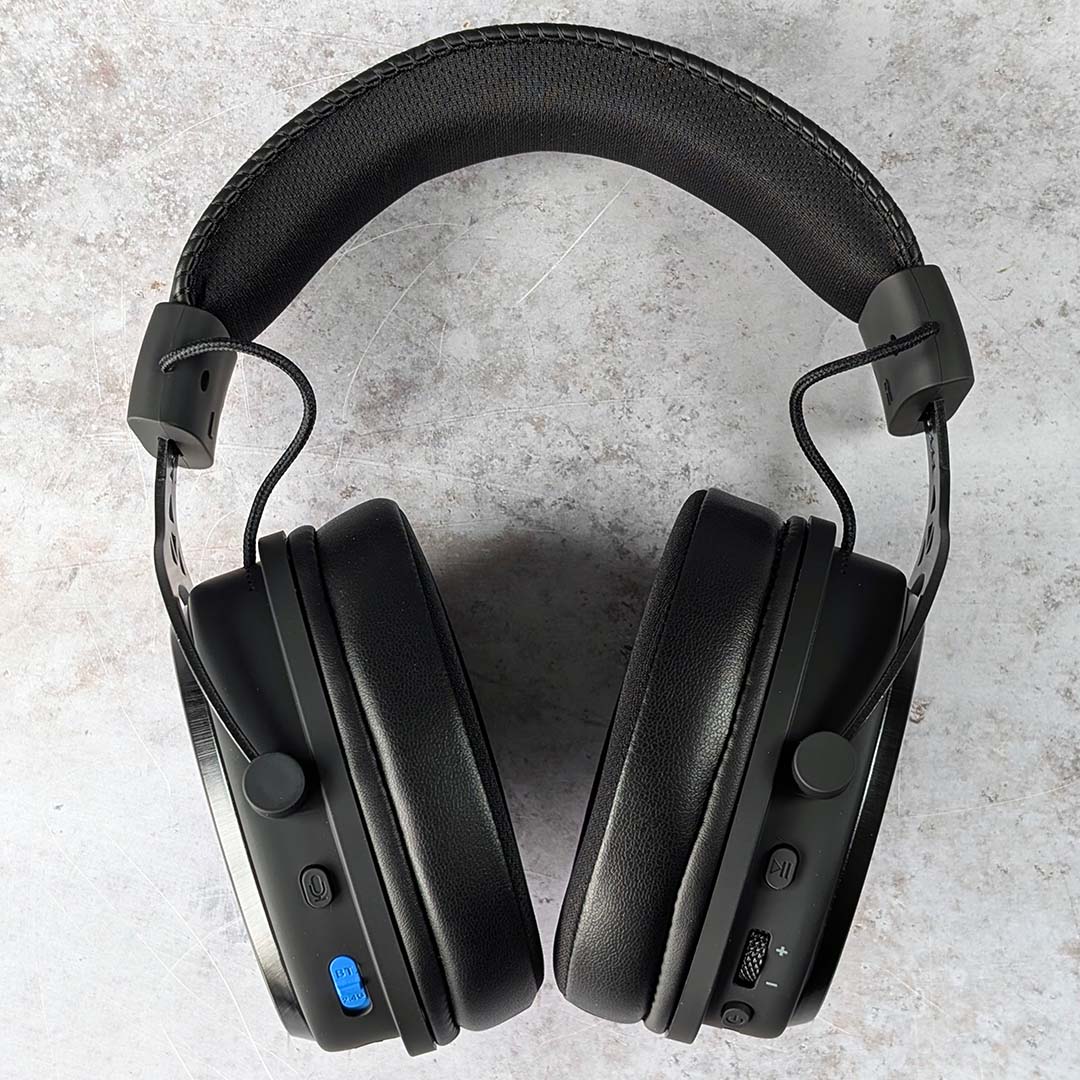
You also have a simultaneous Bluetooth connection at your disposal, which will automatically take priority if you’re receiving a call from your smartphone. Alternatively, you can manually switch between modes using a physical switch on the left earcup, just below the microphone mute toggle. This is a handy feature so you don’t miss calls, or fancy using a less battery-intensive connection for music. However, the mic is supplied on a detachable boom, rather than being built into the core headset, so you’ll need this to hand if you want to quickly take a call.
Wrapping up the connections, Endorfy also outfits the headset with a 3.5mm output. The included cable is pleasingly long and braided, featuring in-line controls for the microphone and a volume wheel. While I’ve personally made the switch to an entirely wireless life for my audio, I greatly appreciate the option of a classic cord, if only to facilitate compatibility with Xbox devices via the controller’s 3.5mm port. It’s also handy if you want to plug your headphones into an older device.
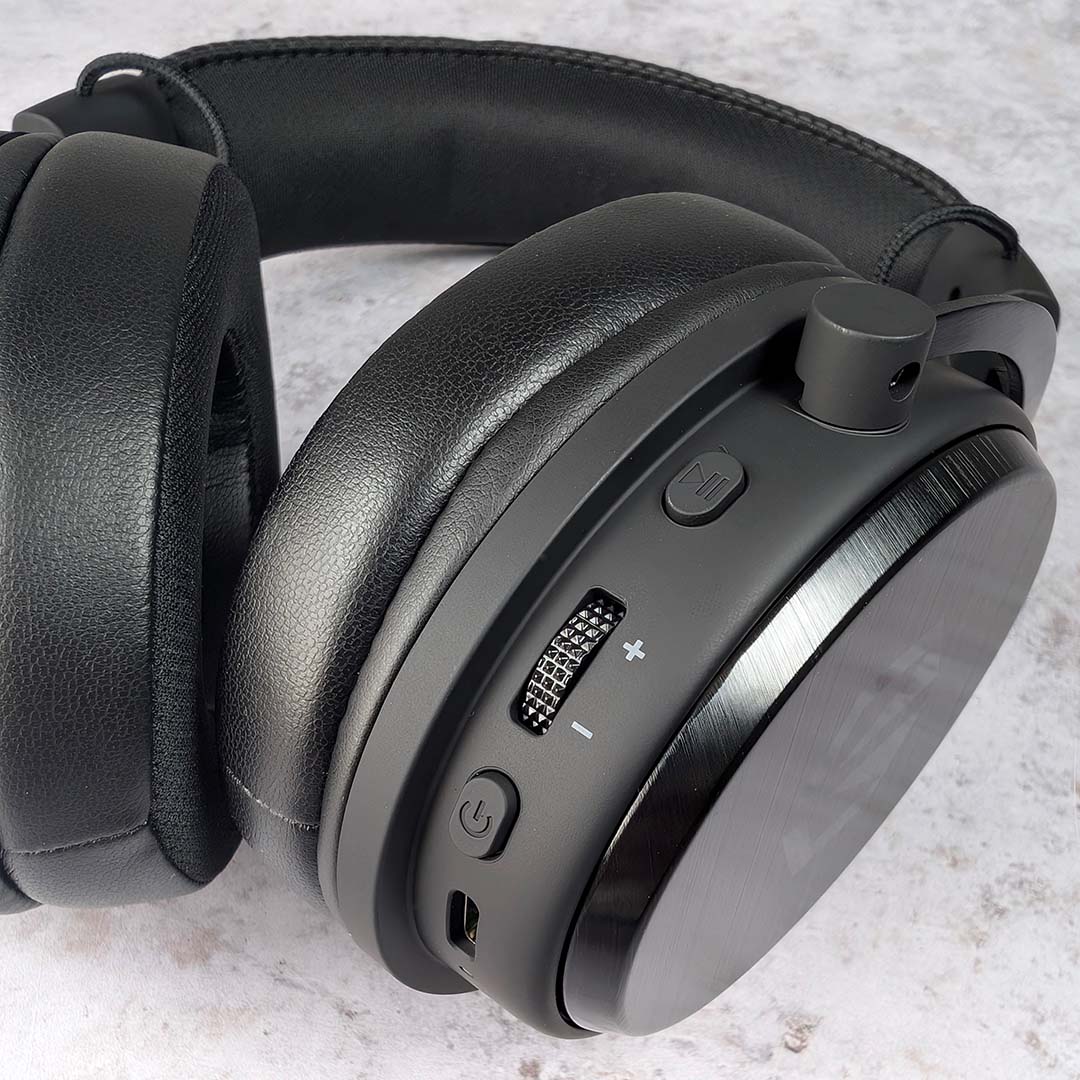
On the right earcup, you’ll find a single button that serves as all your playback controls. One press will either pause or resume media, while two moves to the previous track, and three to the next. This function has good tactility and responsiveness, with a satisfying click following each button press with near-instant responses from your device.
Underneath those controls is the Viro Wireless’ built-in volume wheel, made from hard plastic with small protrusions for easier grip. There’s no end to either end of the wheel, meaning you won’t have to awkwardly readjust positioning if you switch between devices. However, the headset will beep to let you know when you’ve reached the lowest and highest volumes.
Joining this ensemble is the power button, which also serves as your means to Bluetooth pairing via two clicks. Then there’s the USB-C charging port, which you can use to juice up the headset while you’re using it. However, this doesn’t serve as another means of connection, which feels like a missed opportunity, particularly when this feature is present on the less-expensive Viro Infra Wireless.
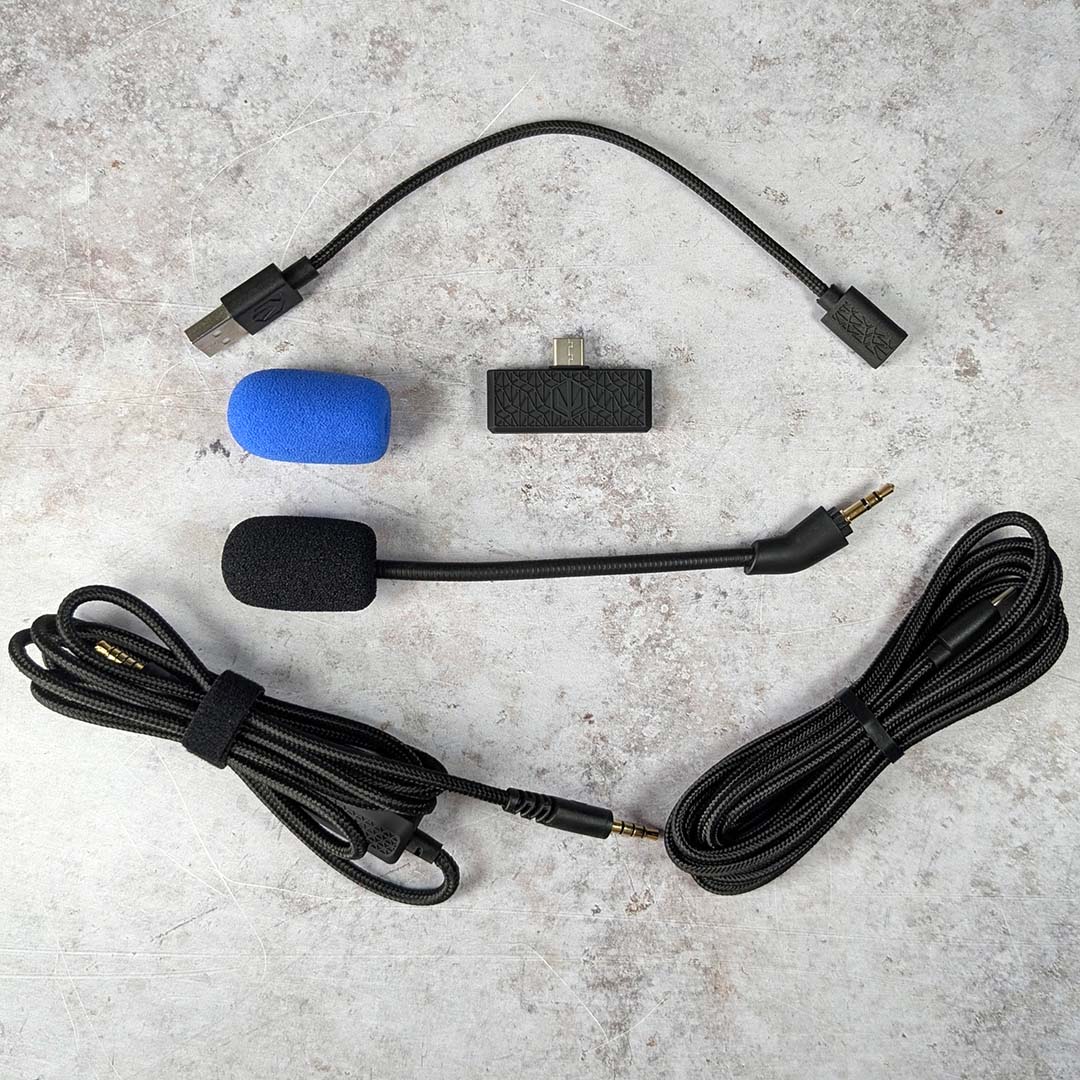
Alongside the headset, a small assortment of accessories arrives in the box. This pack mainly consists of various wires for the Viro Wireless, including a USB-C-to-A charging cable, a 3.5mm-to-3.5mm wire, and a USB-C-to-A extension for the 2.4GHz wireless dongle. The detachable boom microphone completes the ensemble.
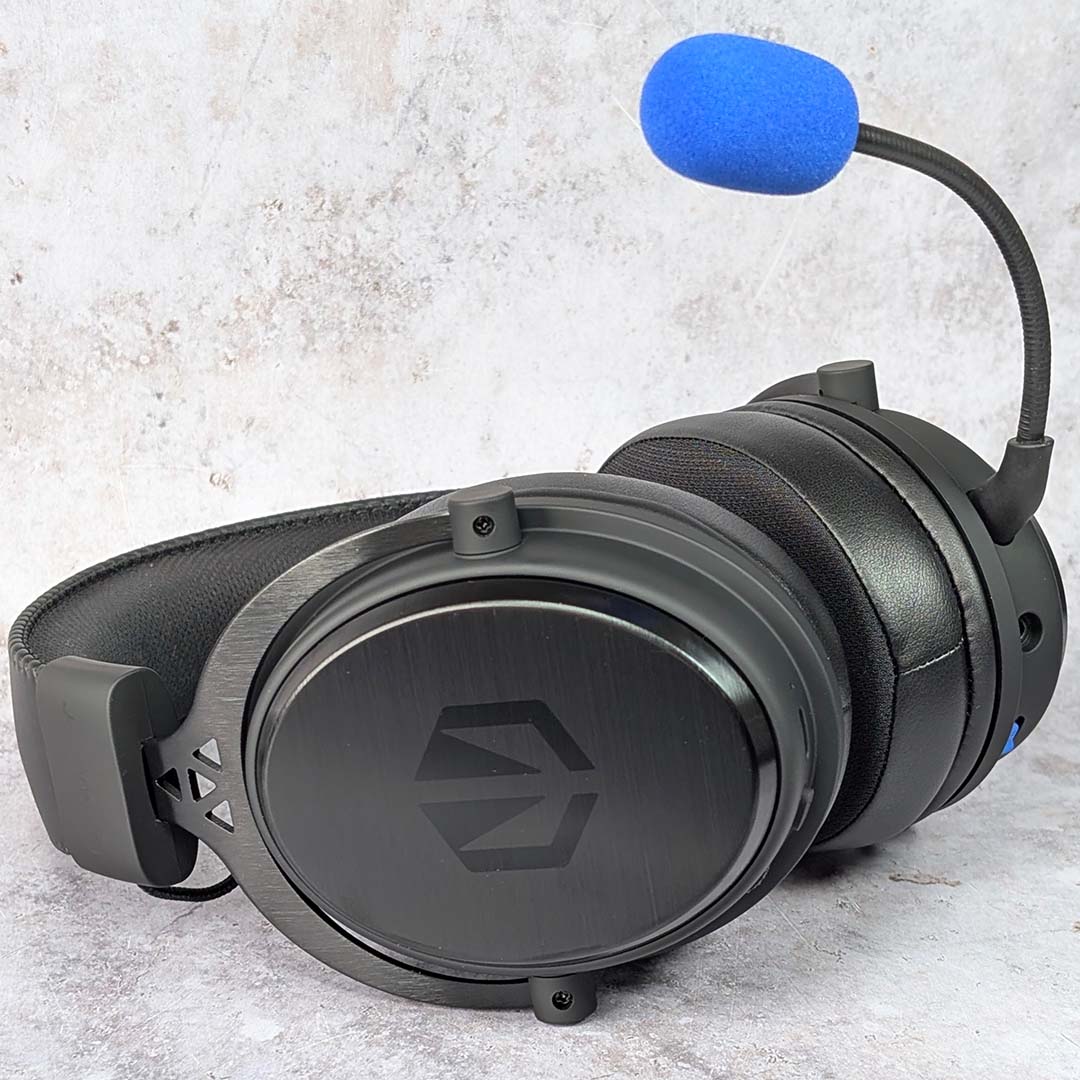
The microphone slots on to the left side of the headset, via its own 3.5mm mic-in connection. The arm is mouldable and maintains its position with expectedly stiff resolve once you’ve positioned it as you like. You can swap the stock black foam cover to an alternative blue as a neat aesthetic touch, but there’s no performance difference between the two.
All in all, the Viro Wireless has a solid set of physical features. About the only room for improvement I could think of would be offering somewhere to store the mic and 2.4GHz dongle for travel purposes, via a removable backplate. The latter would make on-the-go use of a Steam Deck or gaming laptop more convenient, for example.
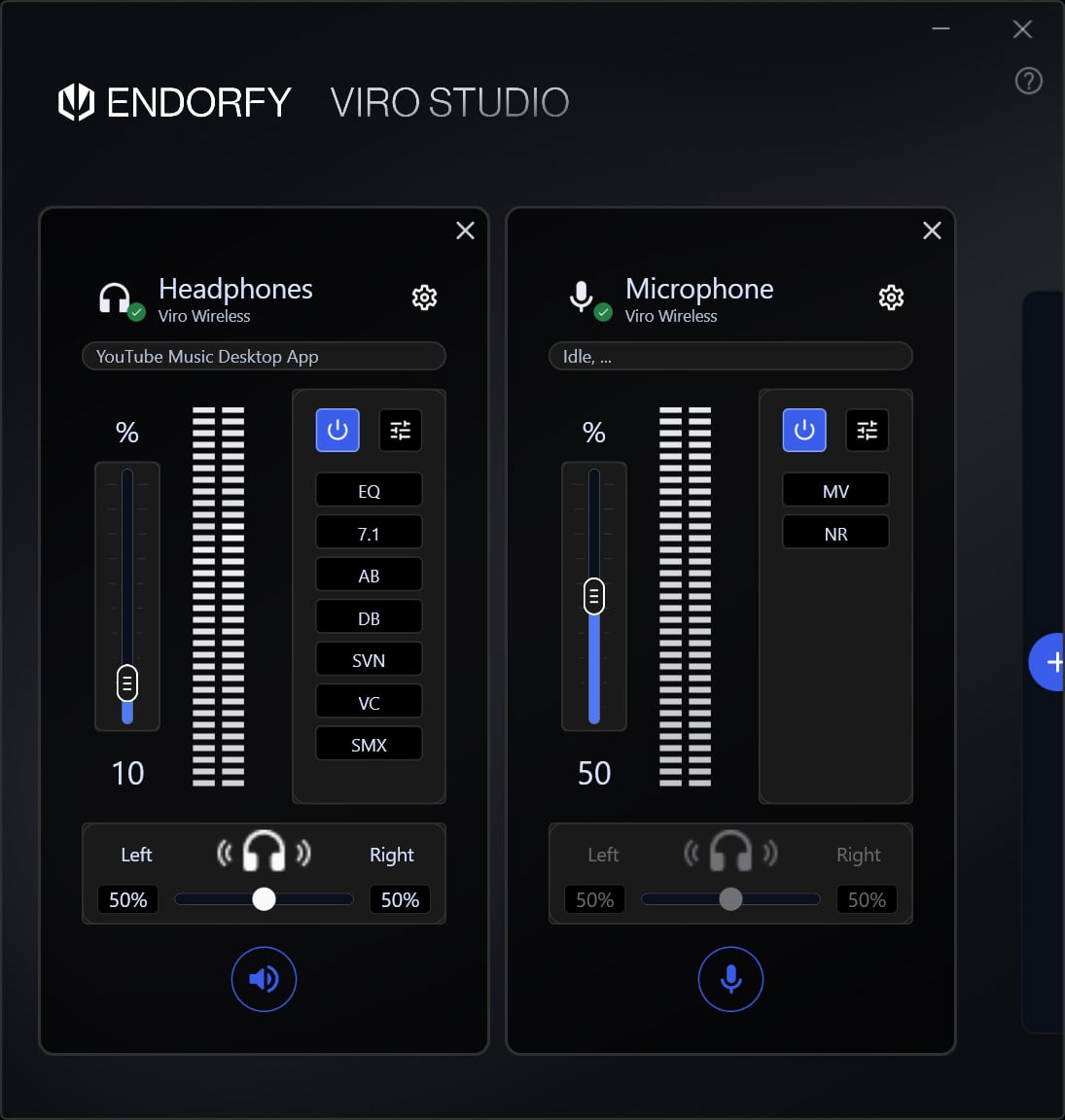
You can use the headset completely devoid of any software, but Endorfy does offer an application accompaniment in the form of Viro Studio. Through the controls here, you can tweak left-right balance of the headphones and volume, and see a readout of output and input applications.
There’s also an assortment of effects and 10-point equaliser controls available via this software package. While I welcome the ability to tweak the sound signature of these cans, the out-of-the-box EQ is actually fine, and you shouldn’t need to touch this feature.
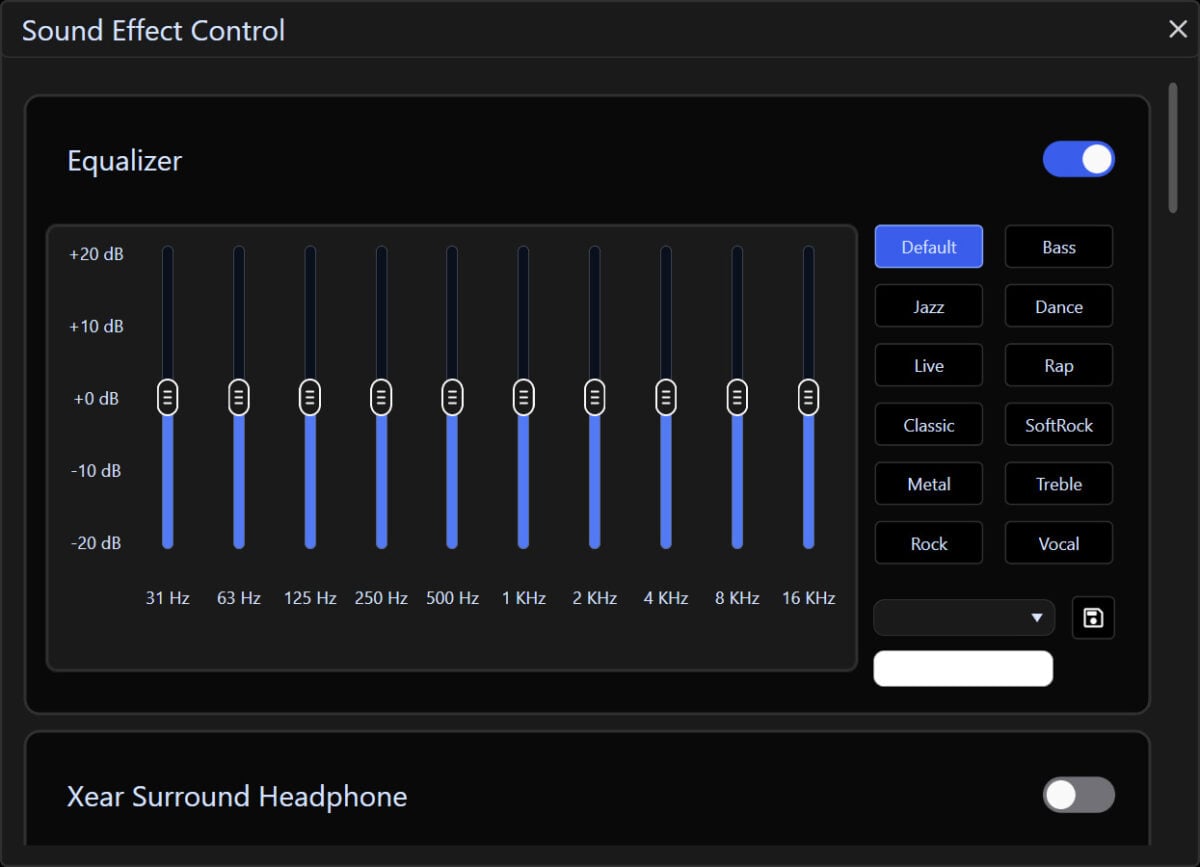
I’ll also note that you can enable a form of 7.1 virtual surround sound on the Viro Wireless from this application, using C-Media’s Xear Surround tech. Don’t get your hopes up, though, as this isn’t a Dolby Atmos setup that kicks in when you fire up a supported movie. Instead, it’s a basic surround-style effect that’s universally applied to the stereo signal.
Under the Xear Surround Headphone widget, you can choose between music/game and film effects modes, depending on the content you’re watching. There are also three presets – small, medium, and large – which tweak the virtual room size effect.
I’ve personally never liked how these kinds of virtual surround modes affect the sound of stereo signals, lessening their kick and making them sound more distant than they should in an attempt to widen the soundstage, and the same is true on the Viro Wireless. As such, a two-channel setup remains king for me, but the option is there if you fancy it.
Audio quality
As the first Endorfy headset to don my head, I didn’t know what to expect from the Viro Wireless. Thankfully, these cans have proven a pleasant surprise, delivering a solid, punchy, and warm listening experience across games and music.
I spent the majority of my time with this headset playing The Witcher 3 or listening to music on my PC via a 2.4GHz connection, with small stints of Bluetooth on my smartphone too. Both modes maintained stable connections throughout all my hours of testing, with no drops or audible artefacts.
As you might expect from a closed-back headset with dynamic drivers, the sound signature leans warmer, with a slight emphasis on bass. However, this doesn’t come at great expense to mid or high frequencies, with good separation across the spectrum.
Trapsing the rocky landscapes and settlements of Skellige, I was able to easily envelop myself in the surrounding soundscape. Sea, wind, and inane chatter of villagers remain distinct in the mix, as does Marcin Przybyłowicz’s beautiful score.
Soundstage isn’t enormous, owing to the headset’s closed-back design, but the Viro Wireless does a decent job of providing discernible directionality. Just to be sure, I loaded up a few games of Counter-Strike 2, and could never blame audio for anytime I was caught unawares.
Eclectic music listeners like myself will be happy with this headset doubling as headphones for the most part. Rock and metal benefit most from the stock tuning, but drum-and-bass heads may find the lack of deep rumble a touch disappointing. Similarly, pop and classical tunes sound fine, but mid-bass can feel a little overbearing at times.
Microphone
Using the Viro Wireless’ microphone in Discord, neither I nor my friends had to make any adjustments from our existing settings to hear me clearly for chatter or comms. Suffice to say, the stock volume is plenty, but you can increase or decrease this via Viro Studio.
Listening back to recordings of my voice, the microphone quality is good if largely unremarkable. The capsule captures a decent representation of my voice, and the felt cover does a similarly decent job of eliminating plosives and sibilants, but does sound more compressed than I’d like.
Endorfy bakes an Environmental Noise Cancellation (ENC) feature into the microphone, which you can toggle by pressing the mute button on the left earcup twice. This does reduce background noise a touch but also increases compression – I’d only advise using it if absolutely necessary.

Battery life
Endorfy claims the Viro Wireless can run for 130 hours on 2.4GHz on a single charge. I’ve been using the headset for around eight hours a day for a little over a week, making for an estimated total of ~60 hours. Sure enough, the battery life reads as a little over 50% when connected to my smartphone.
As I mentioned earlier, Bluetooth will be far less draining on the battery, with uptime pushing towards a staggering 240 hours. While this measurement is far less important for gaming headsets than 2.4GHz performance, it’s fantastic for listening to music while you’re away.
Despite my heavy usage, I haven’t needed to charge thus headset yet and Endorfy doesn’t provide estimated charging times. So long as you’re disciplined in keeping a cable nearby, on your setup or on the move, you’ll rarely hear any signs of the battery running low.
Conclusion
Outside of wishing the clamping force was a little less egregious out of the box, there’s little I’d want to improve about the Viro Wireless. This headset offers a well-rounded feature set and good quality audio across its drivers and microphone, with great battery life and build quality to boot.
This is a compelling high-value choice for European shoppers at €86.90, challenging the more-expensive HyperX Cloud II Wireless, Logitech G Pro X, and more. Sadly, however, those outside the continent may struggle to get their hands on the Viro Wireless for the moment. Still, if you do find this headset for ~£75 in the UK in the near-future, my recommendation still stands.