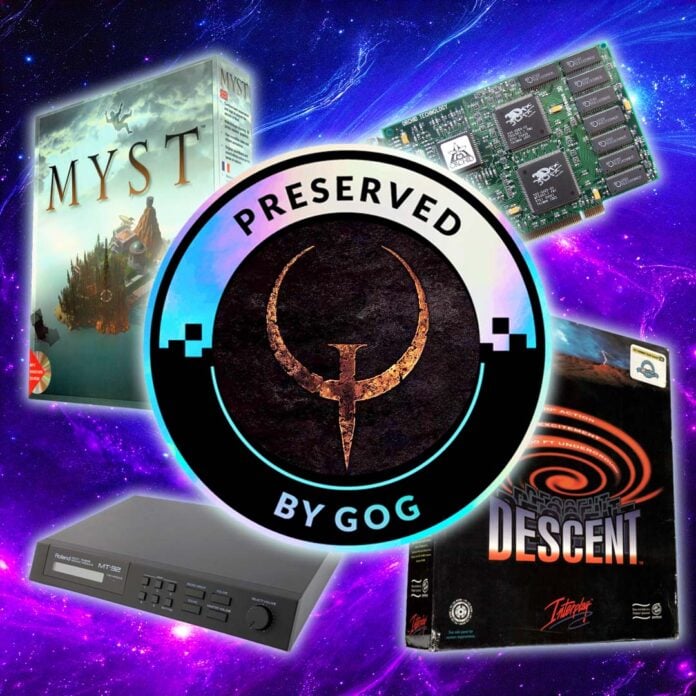
GOG may now be best known as an online storefront for the latest games, much like Steam, but back in 2008 it started with a very different mission – getting the PC’s expansive, and much beloved, catalogue of classic games running on modern machines. The acronym GOG actually stands for Good Old Games, which was the original name of the project, and the folks at GOG are still very much committed to persuading ageing games to cooperate with the latest rigs.
Whether they’re battling with old 3D graphics APIs, CD soundtracks, MIDI music, or even archaic gamepads, the team has a lot on its plate, but it’s dedicated to the cause. I sit down with the GOG guys shortly after they announced their big box gaming packages, which give you the files needed to print boxes for some games, using 3D scans of the original packaging. The retailer has also launched its GOG Preservation Programme, complete with little badges to show which games have been given a full refurbishment.
Will big boxes ever make a full comeback? What’s involved with getting old games running on new gear? I caught up with technical producer Adam Ziółkowski, and senior business development and partnerships manager Marcin Paczyński, to find out.
I like big box and I cannot lie
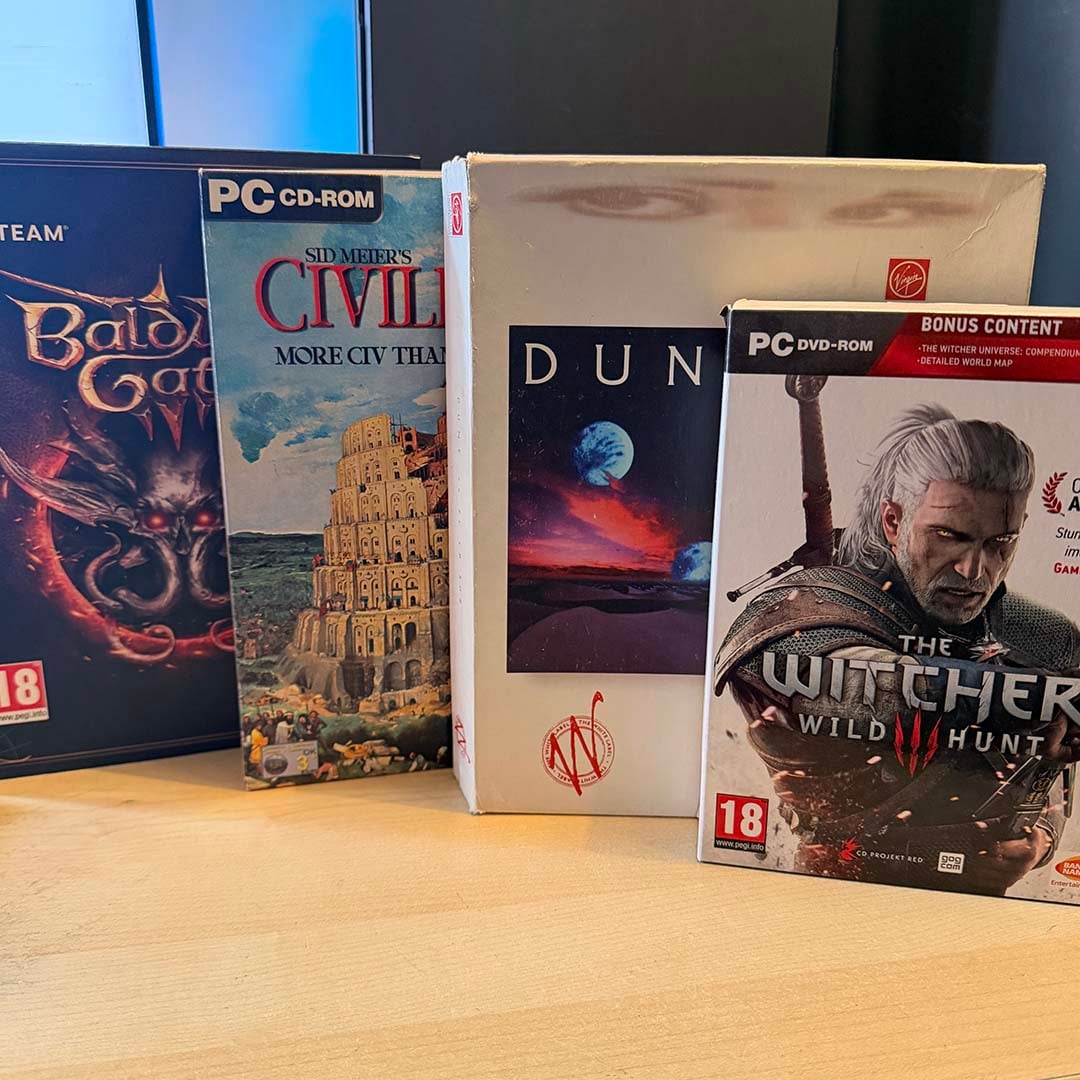
With the notable exception of Baldur’s Gate 3, PC games haven’t come in proper big boxes for a very long time, at least not ones that contain physical media. There’s clearly demand for them when it comes to old games, though. “We had a topic on the forum about this,” says Paczyński, when I ask about what inspired GOG to start producing printable files for game boxes.
“At some point in the future, I would love to have the physical versions available on GOG somehow.”
“That’s how it started. People started to print out their versions of the big boxes. They even went as far as creating mock GOG editions with the GOG logo and stuff like that. This gave us the idea that the desire might be there.”
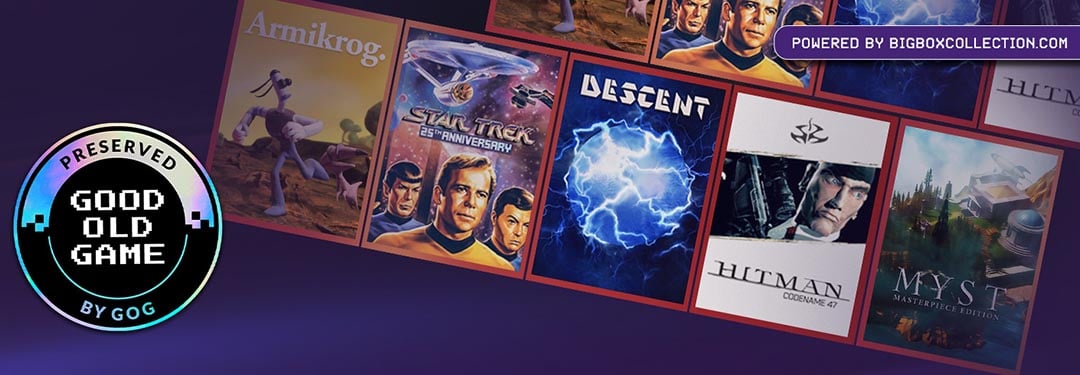
Currently, only five games have been given the big box treatment – Descent, Myst, Hitman: Codename 47, Armikrog, and Star Trek 25th Anniversary. The project was developed in conjunction with Big Box Collection, a personal passion project by Benjamin Wimmer.
“This was testing the ground to see if there will be more desire for that,” explains Paczyński. “Actually people are quite enthusiastic about it, so we’ll probably be adding more in the future, and maybe make it our default whenever we can.”
Printing your own boxes is one thing, but could we ever see retro games being fully reissued by GOG with ready-made boxes, complete with a CD inside it?
“Actually, this is actually something that I would love to have at some point,” enthuses Paczyński, “but that would also open a separate business, with the logistics, manufacturing, storage, support, and so on. That would be a huge leap for us.”
It’s clearly not out of the question, though. “That that would be absolutely amazing to have at some point,” says Paczyński. “You know, being able to click on any of the games in your library, and order a physical copy that would be delivered to you with the CD inside, with the box and everything.
“Those printouts are like a small step in that direction, meaning we’re also looking at how much people are actually interested in this. It’s hard to do it yourself because those are a big form of prints. But yeah, at some point in the future I would love to have the physical versions on GOG available somehow.”
It’s really just a question about justifying the costs. “It’s a big separate business that we would need to realign with the platform, so it would need to be worth it.”
Get with the GOG Preservation Programme
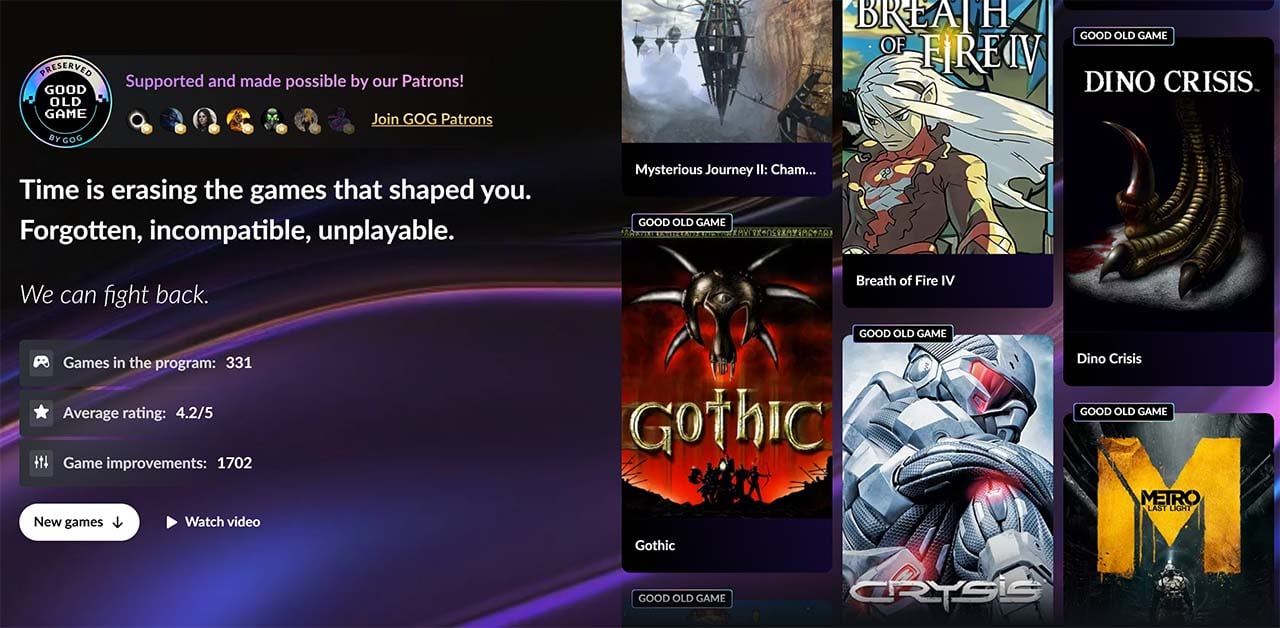
All the games with printable boxes have the Preservation Programme badge on them, which makes me wonder what’s different about these games from all the other vintage classics you can buy on GOG.
“Around three years ago, we noticed that, in some of the games we brought back, compatibility was deteriorating,” explains Paczyński. “But practically speaking, it was impossible for us to update thousands of games at once.” In the meantime, “our tools became mature enough for us to be able to start doing it [retesting] at scale and actually take one step further.
“This means that, when a game is currently added to the Preservation Programme, it’s not only working here and now, but we’re also committing ourselves and making a promise to our users that, as long as GOG exists, this game will be maintained. It will be updated. If something breaks, we will fix it as soon as possible.
“We’re making a promise to our users that, as long as GOG exists, this game will be maintained.”
“All of it’s DRM-free, with a sense of ownership. You can buy it, download it, put it on your own CD storage.” The obvious question this answer raises is, “what about all those other games?” Are they not going to work? “That’s far from the truth,” says Paczyński. It’s more to signify that “the games in the Preservation Programme have been retested right now.”
Games in the Preservation Programme have some quality-of-life improvements that aren’t a given on the other titles, though. “Our quality expectations have risen during that time,” explains Paczyński. “Things that we did not consider a blocker 10 years ago, right now are not acceptable. As an example, we’re trying to get all of our games to support all the newest controllers, and that all the sliders in games are working as they should.”
It all involves a lot of testing, and that’s not easy when it comes to budgeting from a business perspective. “We at GOG are operating on a razor-thin margin, like 70/30, 80/20,” says Paczyński. “On top of that, we are bearing all of those costs related to maintaining a platform, plus many of the games in the Preservation Programme are very, very old titles that are usually sold for like $2 or $3, or on promo.”
The pricing is mainly down to the decisions of game publishers, according to Paczyński, as they often make their games available on other platforms and need to maintain consistency. It’s too much for a small team to handle, which is why GOG also enlists help from its community. “We have very committed users at GOG who are passionate about game preservation and are willing to help us in that endeavour,” says Paczyński.
Who decides which games to resurrect?
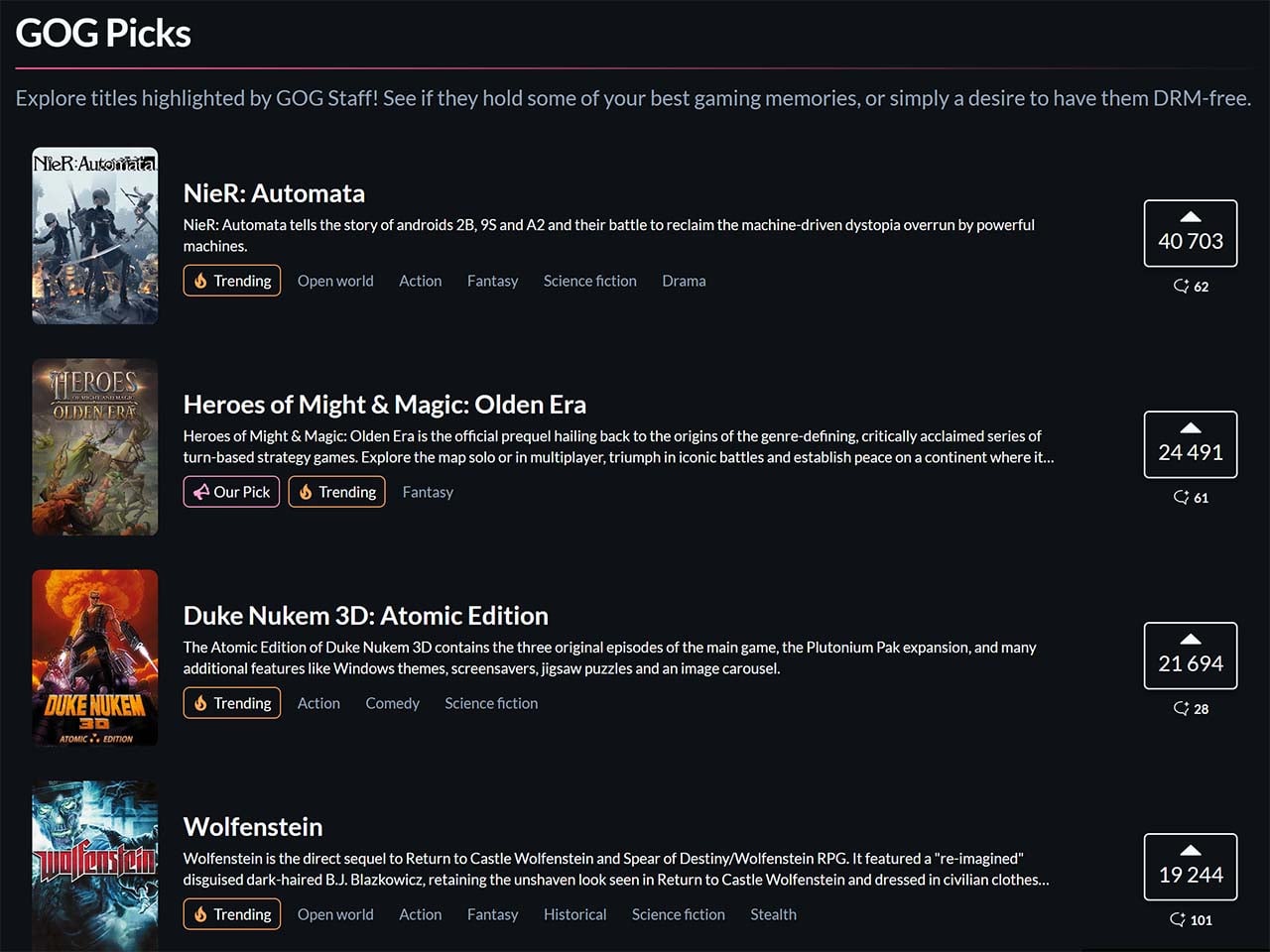
One area where the community is very involved is the GOG Dream List, a way of signalling that you’d be interested in a specific game coming to the platform with an upvote. It’s thrown up some surprises for the team, particularly when it comes to which games people really want. “One of the examples is Digimon World,” says Paczyński, “which is very, very high on the wish list, and we had no idea that this game existed. Well, in Poland, it was not that popular, right?
“So we were like, ‘What the hell is happening here?’ Because on the previous GOG Wish List, it was not available. But with the launch of the Dream List, we reached a community that was not really on GOG before. It turns out there is a huge amount of people who would love to see this game back. To be perfectly honest, our first reaction to seeing the numbers was, ‘This cannot be right, we’re talking about bots here, right?’
“So we checked who was voting, looking for those dummy accounts or whatever. And actually, no. Well, there were some, so we removed those votes. But the percentage of accounts for paying customers in the total votes was similar to the percentage across all the games on the Dream List. That’s a very good indication for us that actually all of it is legit.”
There are some games on the list with very high numbers that still aren’t on GOG, though, and I ask what threshold a game has to reach before it will make it onto the platform. “If a game is in the top 1,000 on the Dream List, we’ll have approached the publisher at least once,” claims Paczyński. “The higher the game is on the Dream List, the more times we’ll try it again.”
“If a game is in the top 1,000 on the Dream List, we’ll have approached the publisher at least once.”
A lot of the time, it’s not a lack of willing on GOG’s part, but a case of convincing publishers and rights holders. “It’s all about trying again and again, waiting for the right moment, trying different things, increasing the business incentive for the publisher and so on,” says Paczyński. He also adds that the list itself can be “extremely helpful” in these discussions.
“In a lot of the business cases we’re building for our partners, we come to them and say, ‘hey, there are actually a lot of users who would love to bring this game back.’ This is a big, very important part of our pitch to the publisher. In some cases, it resonates really strongly because, even with the biggest, most popular publishers out there, you still have very passionate people who work there.
“We had a couple of examples of games that moved in the right direction because someone was really moved by the testimonies.” I ask for examples, but due to legal restrictions, Paczyński is unable to elaborate as big publishers are involved and the deals aren’t finished yet. It sounds promising, whatever it is.
Getting old 3D games working
Today’s PCs might be fundamentally based on the same core x86 instruction set as the very first IBM PC 5150, but that doesn’t mean you can run any game from the last 40 years in Windows 11 on your current rig. Sound cards with hardware synthesizers for MIDI soundtracks have disappeared, optical drives are rare now, and 3D graphics APIs are very different from the early versions of Glide and OpenGL used by games in the 90s.
What are the challenges in getting these vintage games running on new PCs? I started by asking GOG’s technical producer, Adam Ziółkowski, about persuading games based on old 3D graphics APIs to run on today’s DirectX 12 systems.
“It actually makes releasing 3D games much easier than some of the 2D games.”
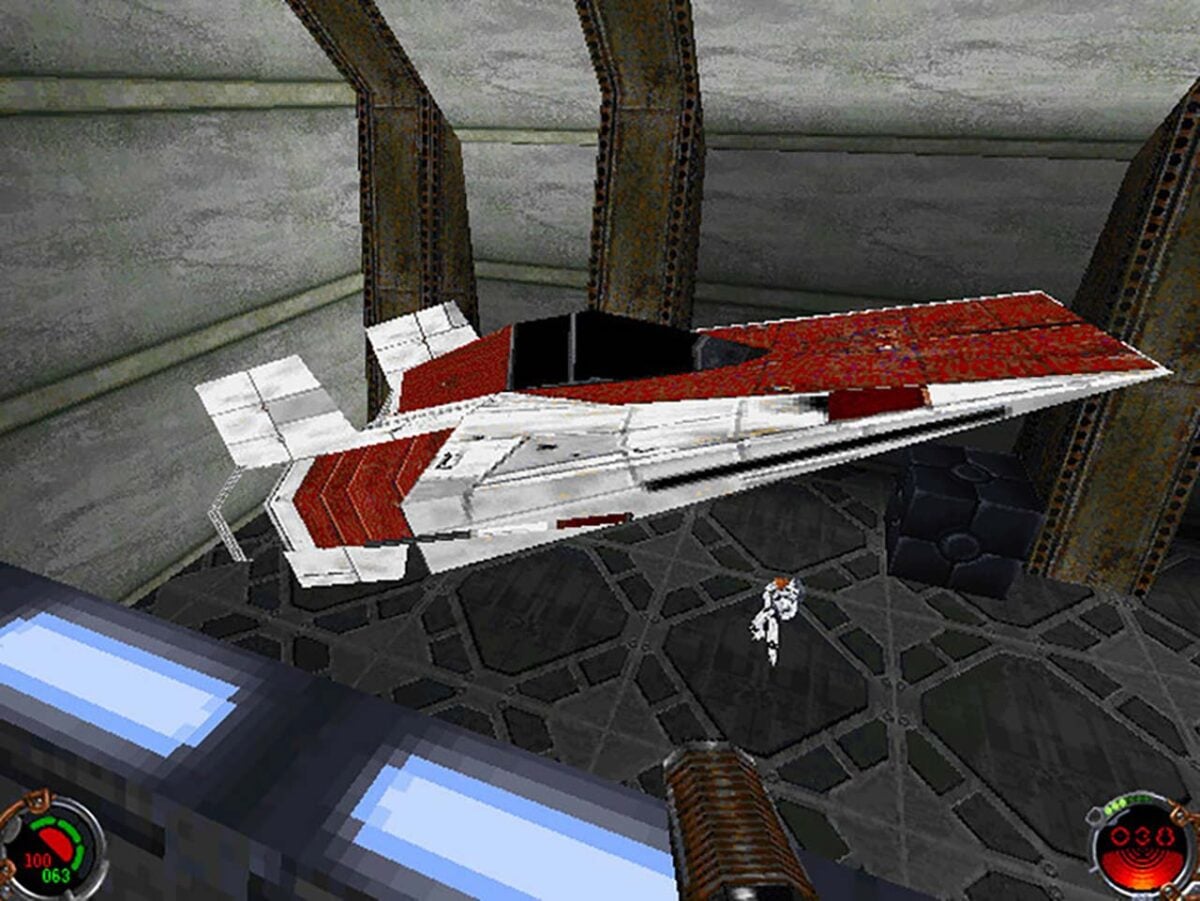
“This is actually something that we’ve been working for a lot of years to achieve,” he says, but the process is now pretty smooth, thanks to the team developing its own in-house tooling. “We have our own DirectX wrapper that actually does that,” explains Ziółkowski, “which we actually own and can upgrade and update, as every time DirectX updates, it usually comes with a new set of issues. The wrapper sits on top of it [the game] and makes sure that everything is targeted correctly.”
Ziółkowski describes this process as now being so smooth that it “actually makes releasing 3D games much easier than some of the 2D games. When a game is fully 3D, you can force it into modern resolutions, make it widescreen, and then fiddle with the UI so it’s translated correctly. In 2D games, you cannot really do that without some upscaling that will probably destroy the game or its looks.”
How about CD soundtracks?
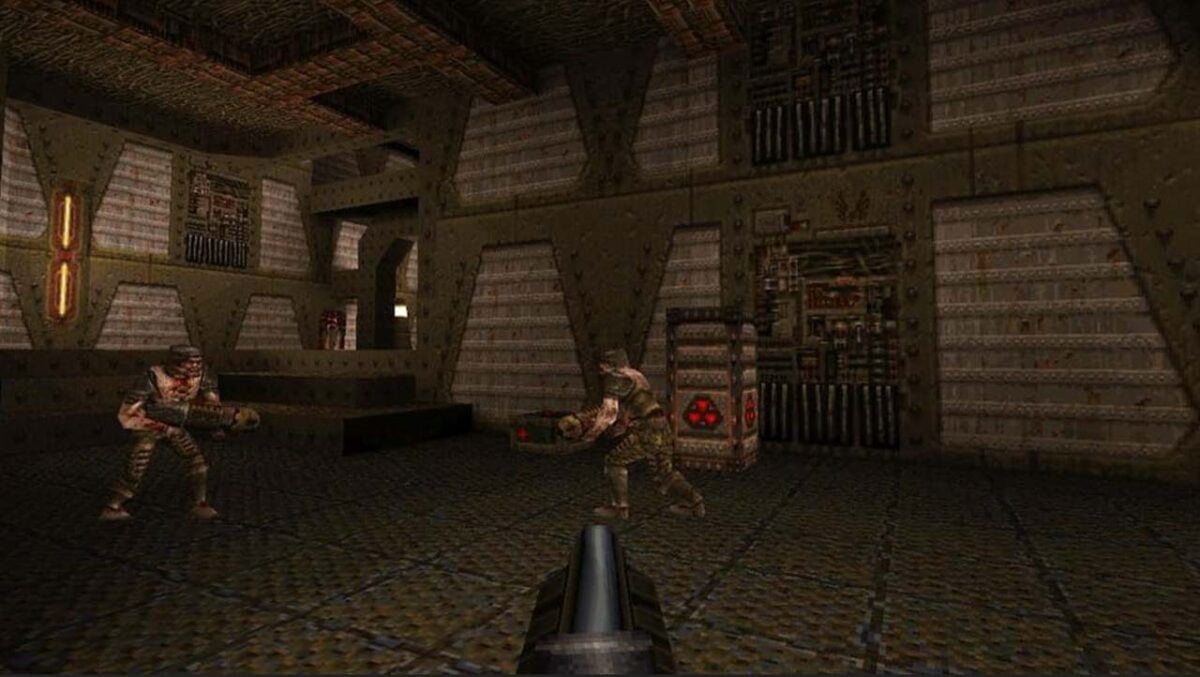
My next question concerns music on CD. Back in the 90s, having a full digitally-sampled game soundtrack would take up too much space on the hard drives of the time. This meant that many games, such as Quake and its sequel, as well as Jedi Knight II, stored their soundtracks on the CD media.
You were expected to play the game with the CD in your drive, and it would then play the audio track from it in sync with various levels of the game. As an added bonus, some of these discs could also be played on a standard CD audio player.
Again, GOG has its own tools for this. “We have a CD wrapper, or whatever you call it, that actually allows us to download the soundtrack in OGG format,” explains Ziółkowski. Then the game will play it, thinking it’s actually a CD track.” Game soundtracks often have their own licensing complications, though.
“If a game is missing that, it might be more to do with copyright and licensing than a technical limitation,” says Ziółkowski. Marcin Paczyński points to Nine Inch Nails’ Quake soundtrack as a key example. “There was a very weird legal thing related to Red Book,” he explains. “It’s something to do with how the tracks from the artist in the States are regulated. It was something very weird.”
The solution was to include the soundtrack as a bonus feature that you can choose to mount yourself. “It was like a workaround,” explains Paczyński, “as that weird licensing law in United States did not allow us to get the soundtrack to the game, but allowed us to have the image of the CD added as a bonus goody.”
MIDI music
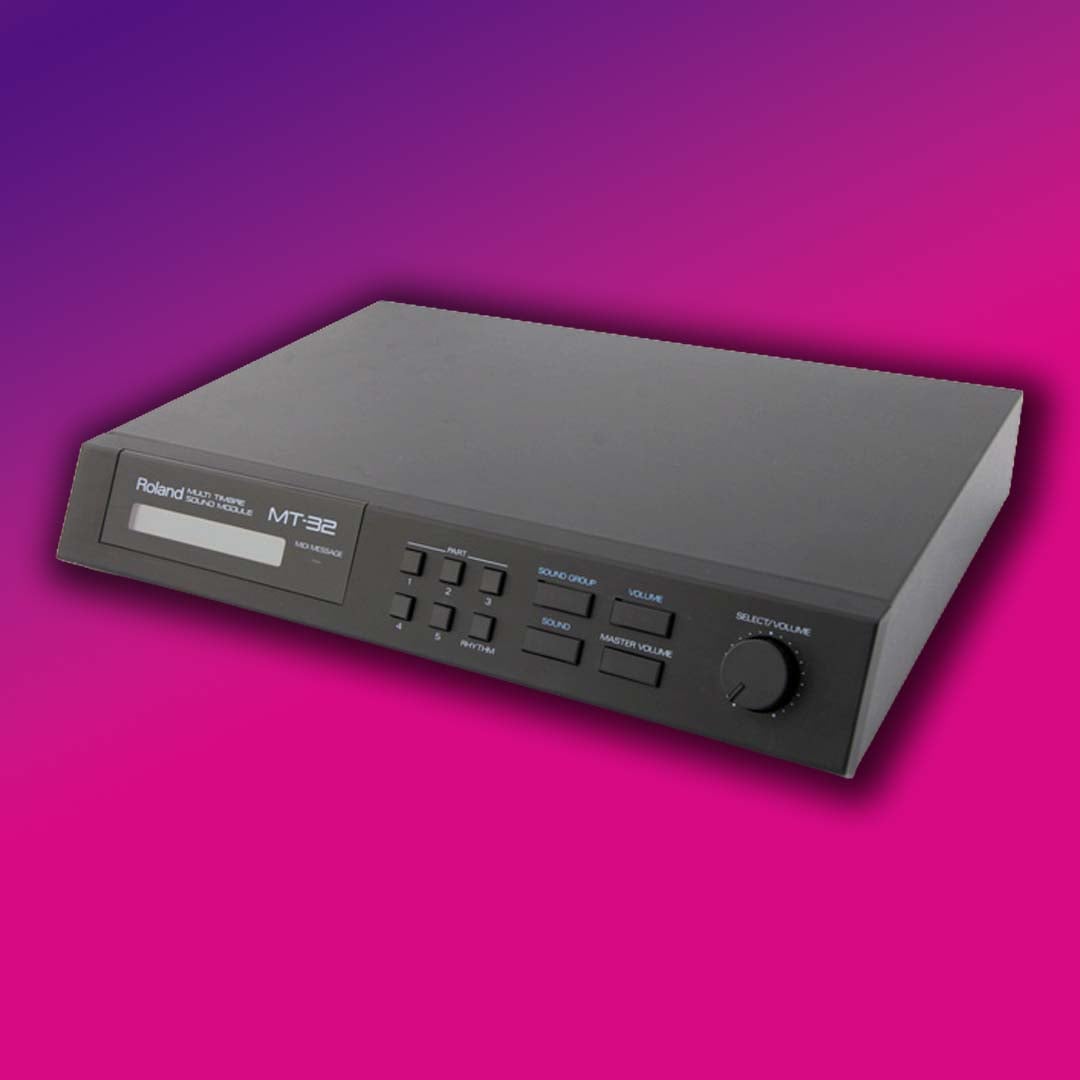
Sticking with the soundtrack theme, I bring up one of my personal bugbears with a lot of resurrected vintage PC games for new systems. Most games in the early to mid 90s had MIDI soundtracks, so the music didn’t take up much storage space. The musical information was basically recorded like a text file, and then played back through a hardware synthesizer on your sound card.
“Roland MT-32 is the gold standard, but It’s actually copyrighted.”
The standard at the time was a simple FM synthesizer popularised by early Ad-Lib cards, as well as the first few Sound Blasters. Hardware enthusiasts such as me, though, spent extra money on wavetable daughterboards, external tone generators, and cards with advanced synthesizers. Run your game through a Roland MT-32, and it sounds almost like a proper orchestra, rather than a cheesy home keyboard.
But when you download an old game with a MIDI soundtrack, you usually just get an emulation of the basic FM synthesizers. Why don’t we have the option for emulated MT-32 audio?
Ziółkowski agrees, describing the Roland MT-32 as the “gold standard,” but there’s a problem. “It’s actually copyrighted,” he explains. “There is a way make it work if you know where to download it, but we cannot include it in our versions.” Other options are available, though – might we see some superior soft synths used in future?
“There are other sound fonts that we might consider doing,” says Ziółkowski, “because we live by doing. We learn by doing more and more games, so we look back into all the comments and see what we can still add. This is now actually something that we are looking into, because the staging actually supports different samples, so we might be doing this in the future.”

New controllers
One area that Ziółkowski is very keen to discuss is getting old games to work with a variety of new controllers through GOG. “We have maybe a unique approach,” he says, “because we have our proprietary tool that allows us to map controllers to be recognised by older games.”
It’s called the GOG Input Wrapper, and Ziółkowski says it “actually takes all the APIs for controllers, like the inputs, ties them together, and translates them into a modern example. We also created something that we call One Layout, which actually maps all the controllers into the mapping of an Xbox controller to make it easier.
“This allows us to make a very lightweight DLL library that just sits there in the game folder and allows you to translate seamlessly. But the caveat is that we usually need to map the controllers physically to make sure everything is read correctly.”
“Platform games that you usually would need to play with a keyboard, you can now play easily with a gamepad.”
Ziółkowski describes himself as a “controller collector” and shows me some of the examples sitting around his desk. “We’re also now able to map the keyboard directly into controllers,” he enthuses. “This unlocked some very cool gameplay options in, for example, platform games that you usually would need to play with a keyboard, you can now play easily with a gamepad, and it’s actually seamless without too much latency.”
A modern PC has a huge choice of controllers available, but Ziółkowski is confident that you should be able to play old games on GOG with most of them. “We basically have all the modern ones,” he says, though there might be a few occasional quirks. He gives the example of Nintendo’s latest Switch 2 Pro controller, which works with a wired connection, but not wirelessly yet. Even the Google Stadia controller is supported.
How about the new Steam Controller? “This will probably take some time,” says Ziółkowski, but the team has started work on it.
CGA, EGA, and VGA
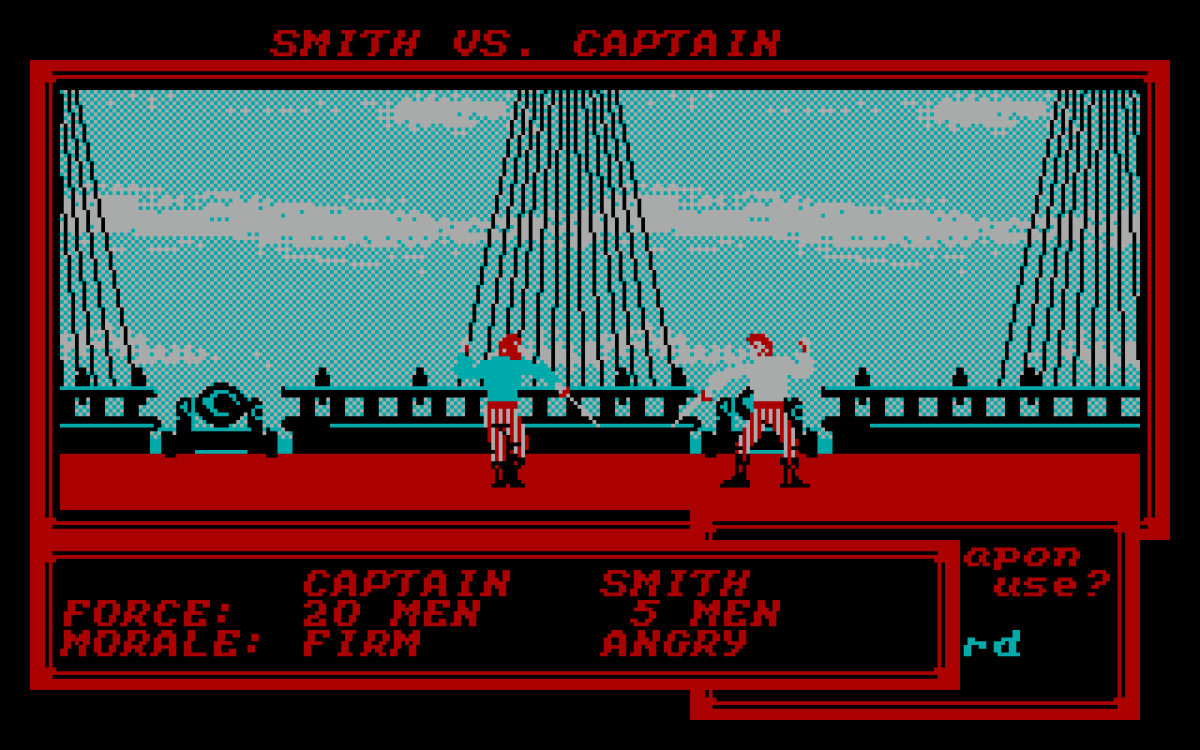
There’s one more area that Paczyński is keen to discuss, and it’s a personal favourite of mine too. Those of us of a vintage old enough to remember PC gaming in the 80s, will recall the time before 256-colour VGA graphics. Our family PC had a CGA graphics card, and could only display games in four-colour CGA, while other EGA cards could often only display games in 16 colours.
Until recently, you were usually stuck with the VGA versions of these games in their resurrected form. They undoubtedly look good, but you might want to play them in the colours you remembered from before, or with the correct CGA palette.
“You can launch them in the VGA mode, but it could also go EGA or CGA mode.”
“This isn’t in the spotlight yet,” says Paczyński, but there’s a “configurator that we started including into GOG games.” The idea is that you’ll be able to switch between modes and enable graphical features. The configurator is tailored to each specific game, says Paczyński, and it will “allow you to turn on some features that you wouldn’t totally know if you weren’t living in the era the games were released.”
Paczyński gives the example of Pirates! as one of the games – Pirates! Gold is already available on GOG in 256-colour VGA, but it sounds as though the original 1987 Sid Meier’s Pirates may be coming back too. “You can launch them [the games] in the VGA mode, so that would be the normal colours that you’re used to, but it could also go EGA mode or CGA mode. And in the CGA one, you have those old cyan and red colours.”
I point out that GOG’s version of Trantor the Last Stormtrooper currently uses the wrong CGA palette, and Ziółkowski invites me to send them a message with the details so they can fix it. It sums up the project, led by a small, passionate team that does its best to listen to its community and preserve the PC’s rich gaming heritage properly.
We hope you’ve enjoyed this interview with the GOG team about the challenges involved with getting vintage games running on today’s PC’s. For further reading, you can also explore GOG’s struggle to get the classic Dune games onto its storefront, and check out our recent interview with 3dfx cofounder Ross Smith about the legendary Voodoo Graphics chipset.