
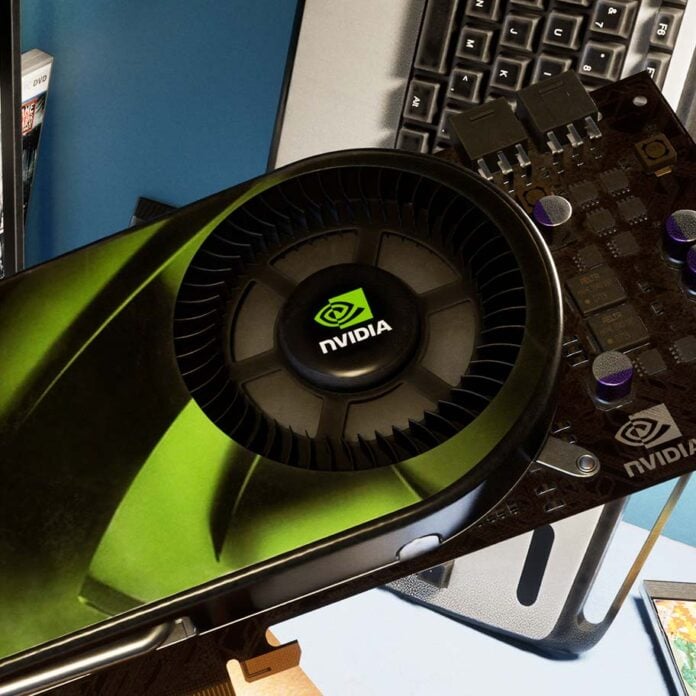
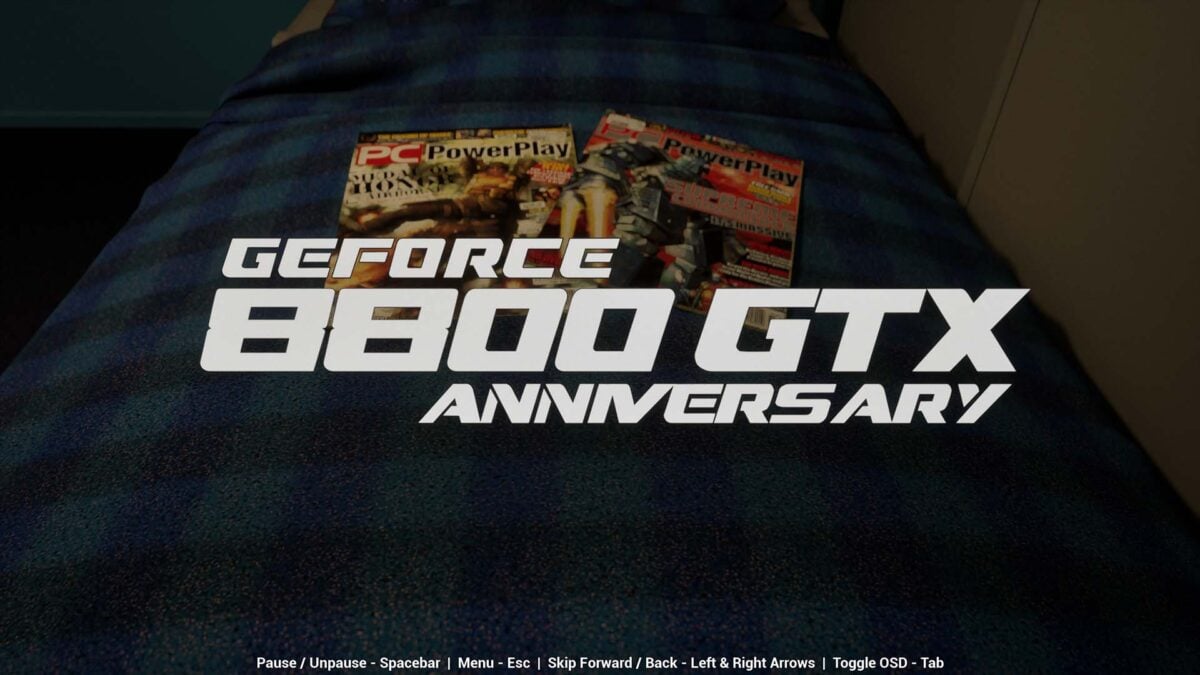
Believe it or not, two decades have now passed since Nvidia first brought us the legendary GeForce 8800 GTX, and the company is celebrating with the release of an interactive demo that lets you relive installing the card and playing Crysis in a room full of nostalgic Easter Eggs. As someone who remembers this period like it was yesterday, and was at this GPU’s pre-launch press event in Paris, I was keen to give GeForce 8800 GTX – 20 Years of a Legend a go, and Nvidia kindly granted me early access to the demo.
Before we get to the demo, though, it’s worth taking a step back to recall this time, as there’s a good reason why the 8800 GTX is widely considered one of the GPUs that changed gaming forever. Up until this point, shaders were still a relatively new idea, and they were limited to fixed function designs with your GPU having dedicated pixel and vertex pipelines. Nvidia’s Tesla architecture changed all that, bringing a unified shader design, where the G80 GPU’s 128 stream processors could function as simple pixel processors, team up for vertex operations, and also work on compute work.
The latter eventually heralded the introduction of CUDA, and the benefits of using GPUs for large-scale parallel computing outside of graphics. Today’s compute landscape, where GPUs are stacked up in data centres, would look very different if it weren’t for this GPU. G80’s power was phenomenal at the time. I remember hearing audible gasps as we were given our first glimpse of a soldier tramping through the Crysis jungle at the Paris press event. We’d seen good graphics with shaders before, but nothing on this scale. It looked simply phenomenal.
Anway, I digress, let’s get to the demo. Built in Unreal Engine by Dylan Browne, it naturally supports a lot of Nvidia’s latest graphics tech, including Mega Geometry, Ray Reconstruction, DLSS, and frame gen. The idea is that you can recreate the time of 20 years ago with the latest graphics.
You start off looking round your room, where there are a couple of old school PC gaming mags, a nice touch I appreciate as someone who was a print journo at the time. Why isn’t there a copy of Custom PC on the shelf, Nvidia? You then swing round to your desk, where an 8800 GTX lies in wait in its box.
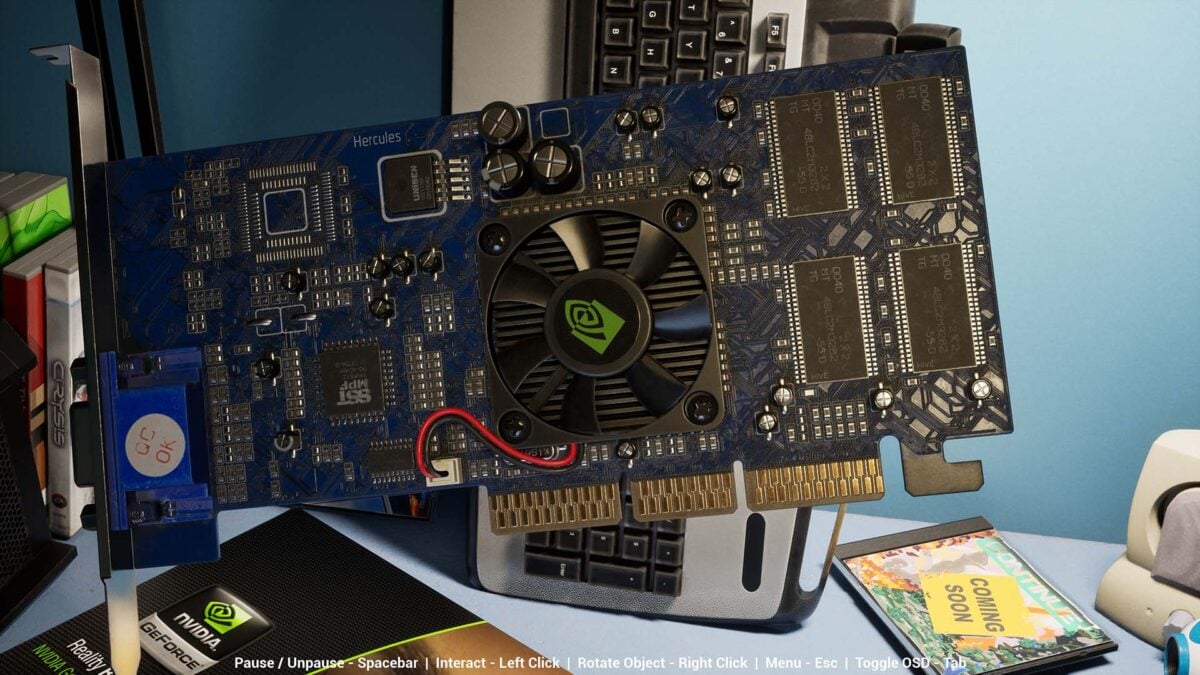
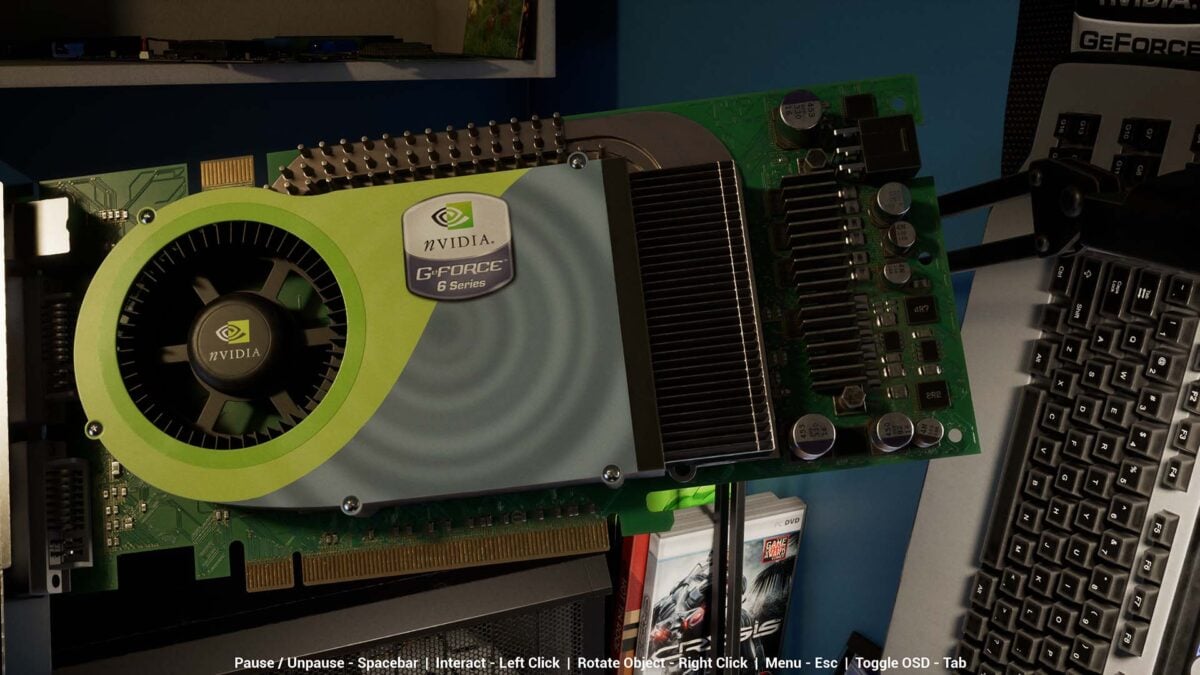
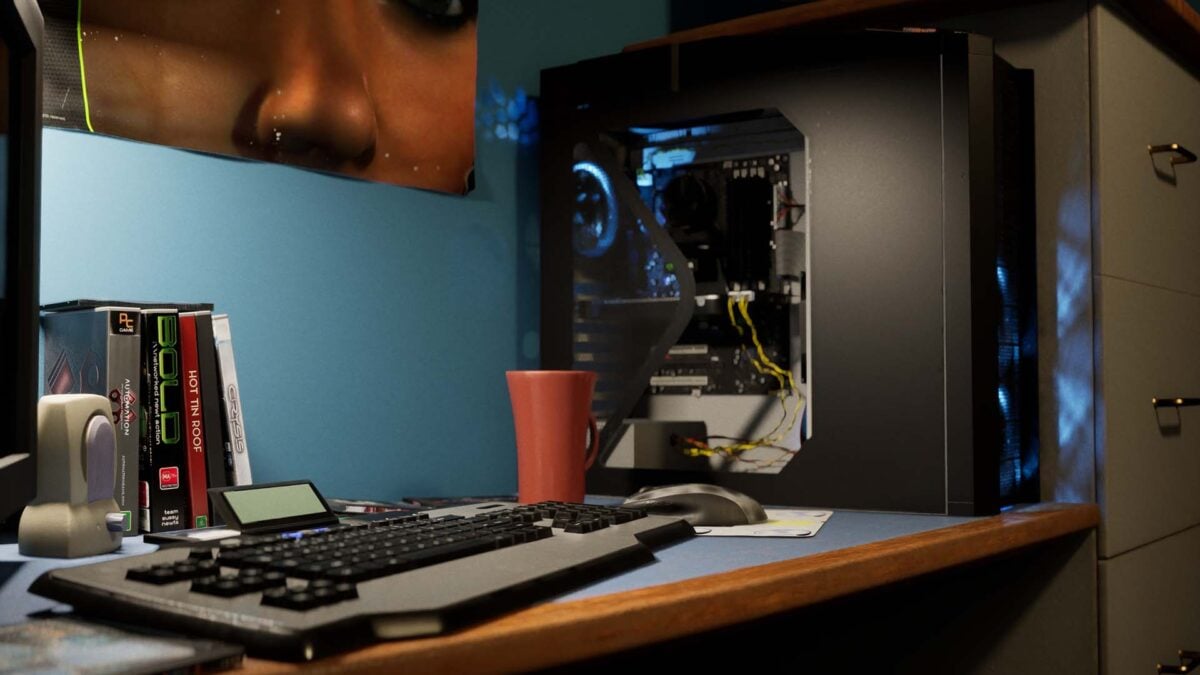
Before you get it out, though, take a look around at some of the other goodies. On the shelf, you’ll find a blue Hercules GeForce 2 card, for example, as well as a GeForce 6800 Ultra, and what looks like a Riva TNT. You can take these cards off the shelf, and spin them round in front of you, taking a look at the ray-traced circuitboards in their full glory. You’ll also find several disc boxes on the desk, naturally including Crysis. Look up, and you’ll find a PC magazine demo disc containing Quake 3 Arena, and a few floppy disks. You can even take a dirty old beige keyboard off the shelf and spin it round.
When you’ve finished exploring, you can tug the 8800 GTX’s box open, pull out the padded inner and remove the card. I’ll note that the movement and interaction interface is a bit clunky here, and it can take a while to get it to do what you want. Once it’s out, you can remove the card’s cooler to peek under the heatsink, and look all over the PCB.
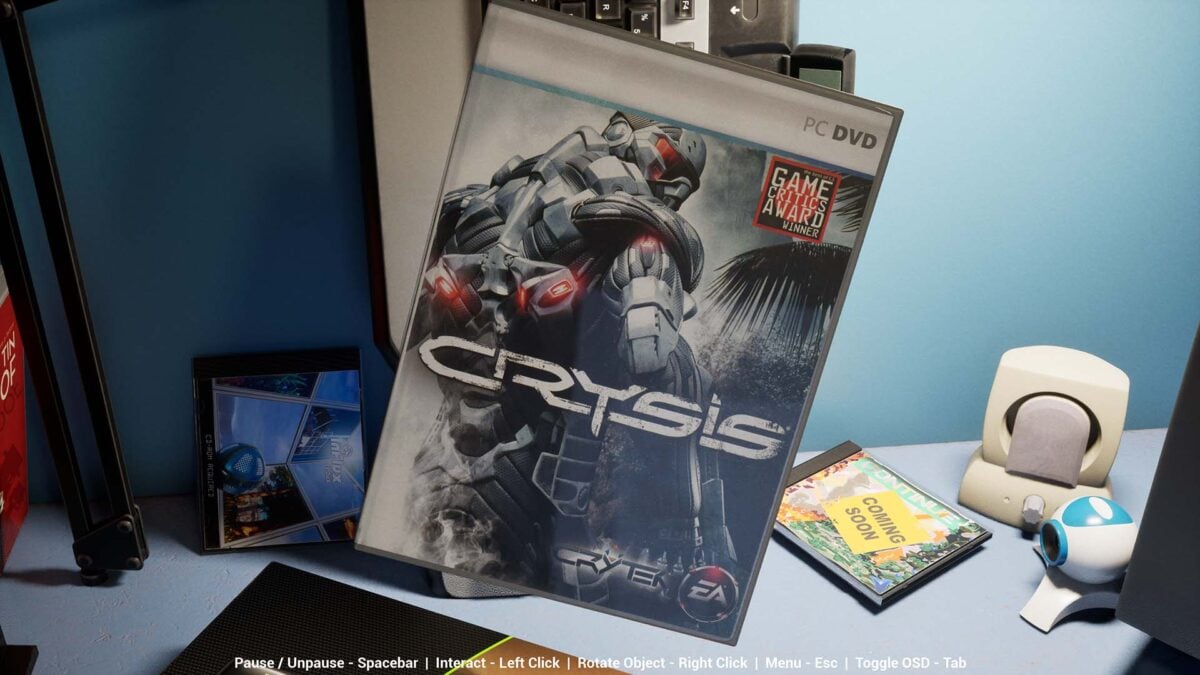
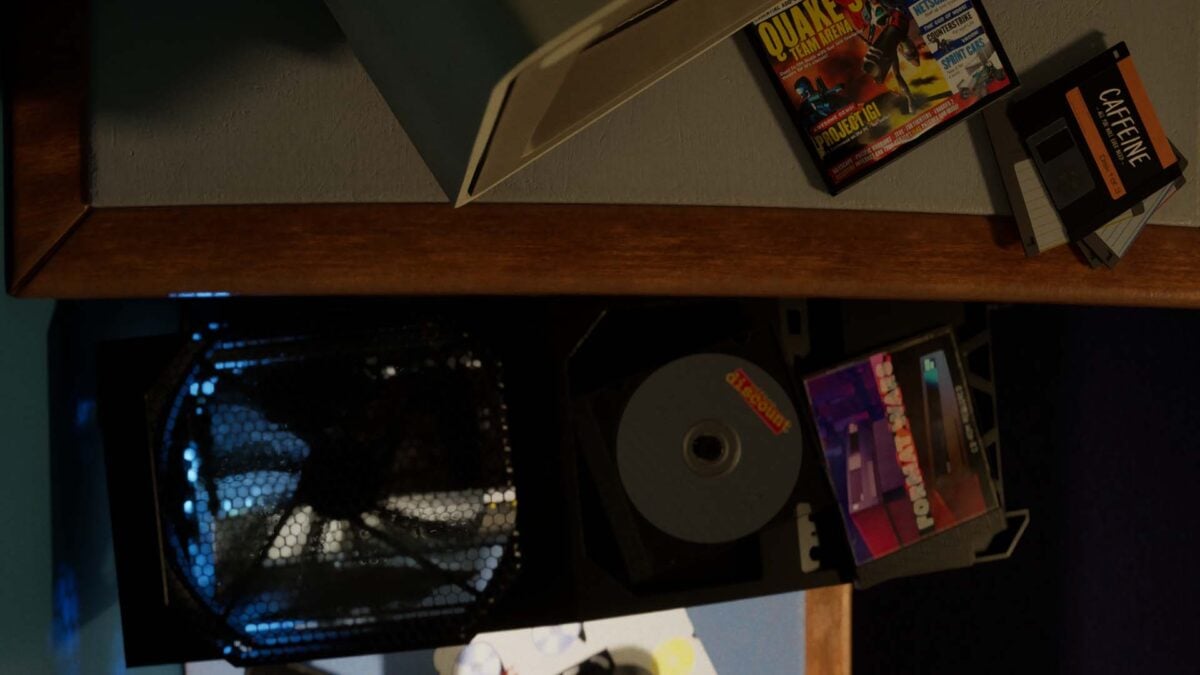
Your next job, naturally, is then to slide the side panel off your retro PC, install the card and watch it go. That’s when the interaction largely stops, and you’re taken on a journey as the camera looks through your old school PC, complete with unsleeved yellow and black power cables trailing around. There are also posters of some of Nvidia’s classic tech demos. The classic POST screen then appears on your CRT monitor, which is a bit of an anomaly – as I recall, most of us PC hardware enthusiasts had made the jump to LCDs by this point.
On a side note, there are a few noughties Easter eggs to spot in the boot-up screens, including a reference to Strongbad’s Trogdor the Burninator. You’re then taken to Windows Vista, where you load up Crysis and watch the jungle violence explode, as well as all the cool Nanosuit visuals.
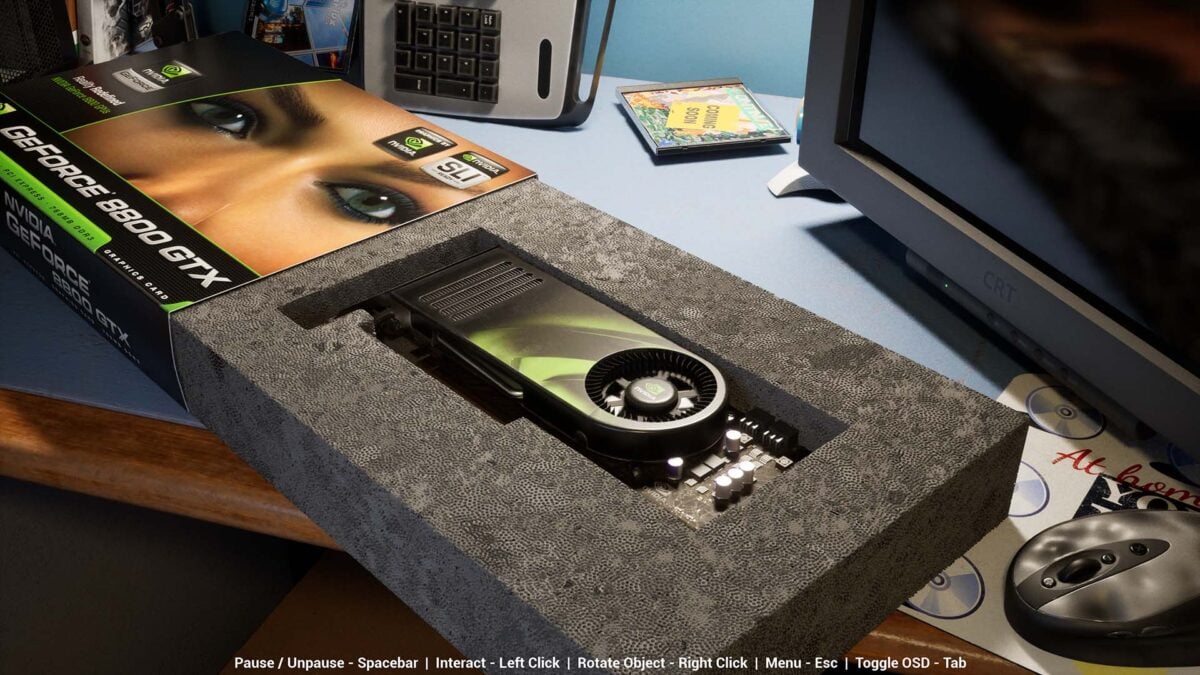
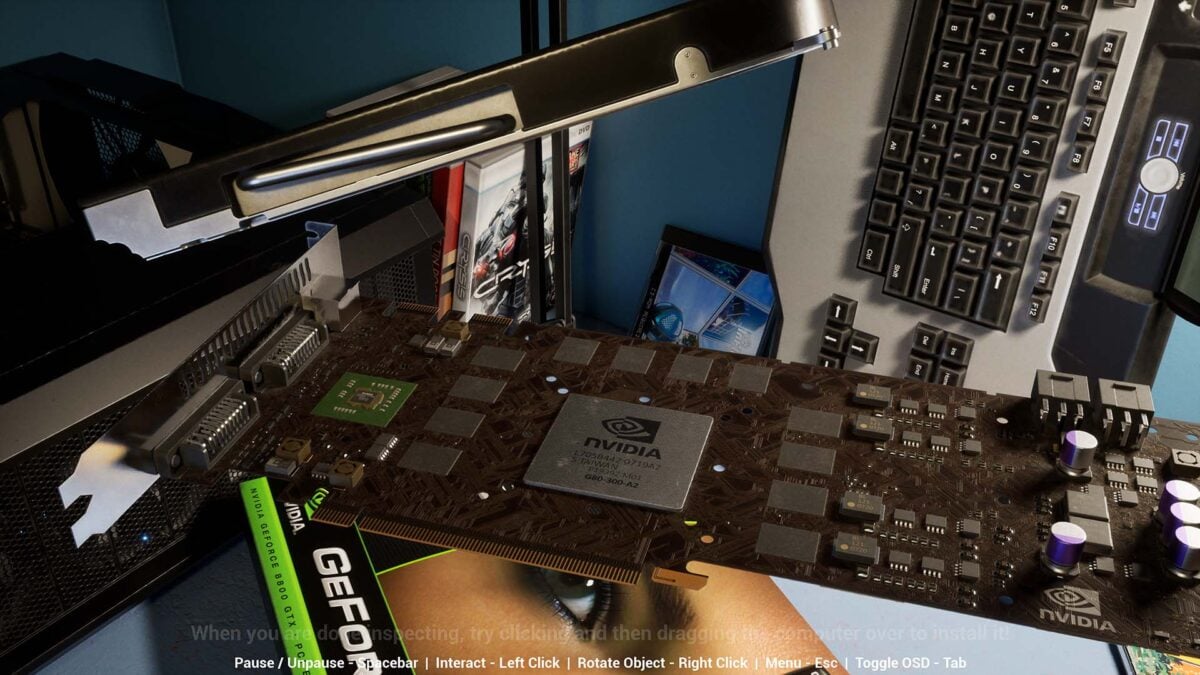
Naturally, given this is an Nvidia demo, the Crysis action is played out in the reflections on surround discs and plastic boxes, via ray tracing. It’s a nostalgic nod to a time when PC gaming tech was developing at an astonishing rate, and hardware enthusiasts couldn’t wait to get their hands on the latest GPUs. Remember when Nvidia was primarily a gaming graphics firm, and you could actually buy GPUs at reasonable prices?
When it launched on 8 November 2026, the GeForce 8800 GTX cost around £480, the equivalent of around £850 in today’s money. That’s a bit different from the silly prices you have to pay for even an RTX 5070 Ti today.
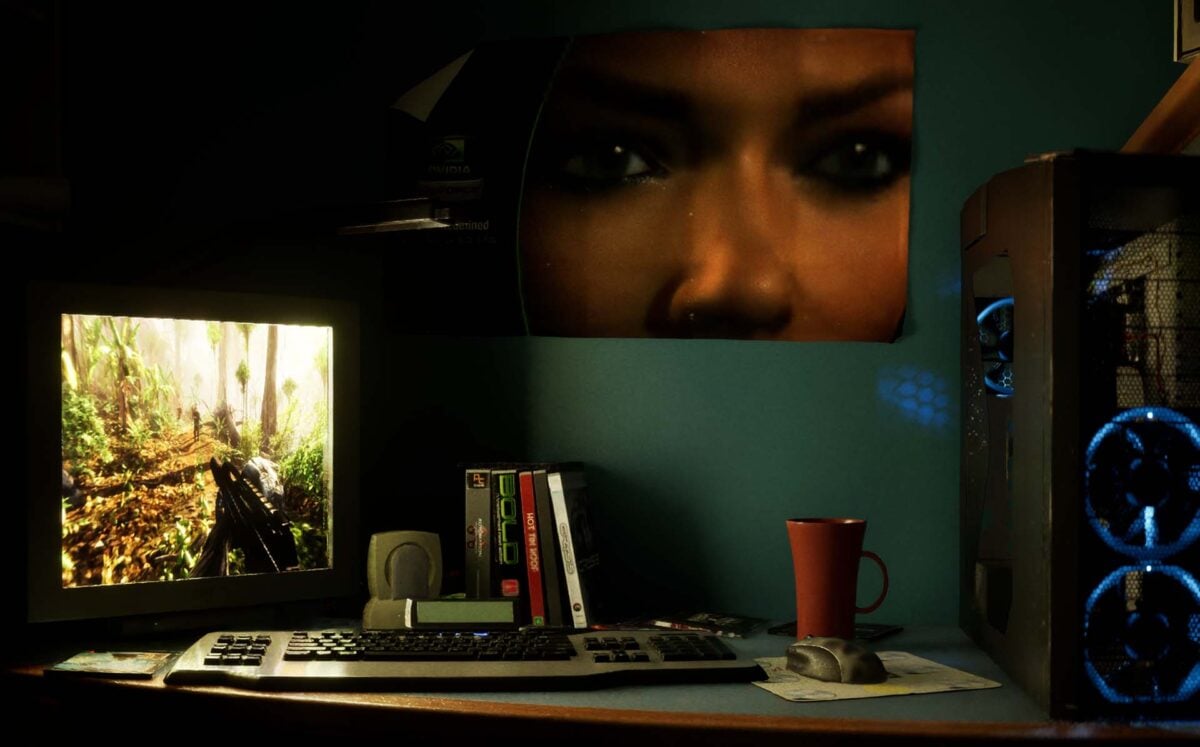
Even so, it was nice to be reminded of these days. Crysis was incredible when it came out, and the unified shader architecture ended up completely transforming the world, let alone gaming graphics. Happy 20th birthday, GeForce 8800 GTX, that was a great time to be a PC gamer.
You can download GeForce 8800 GTX – 20 Years of a Legend from Steam here, and give it a try for yourself. Be warned – it might be just a demo, but it’s still a 14.6GB download.