
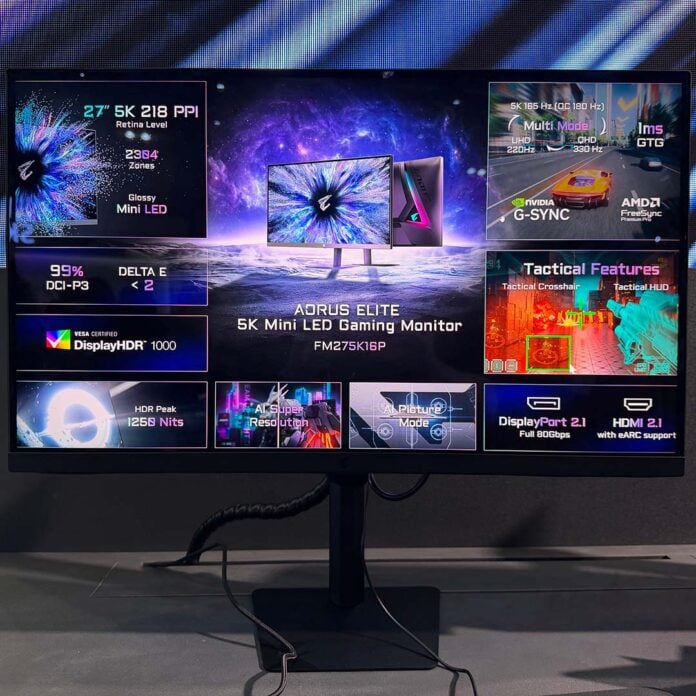
At Computex 2026, Gigabyte has launched a new flagship screen, the Aorus Elite FM275K16P, the world’s first 5K Multi Mode Mini LED glossy gaming monitor. This display marks the beginning of a new line of premium panels from the company, all flying under the Aorus Elite branding.
In terms of raw specifications, the FM275K16P arrives with a native 5K resolution and 165Hz refresh rate (which can rise to 180Hz via overclock). That pixel count on a 27in glossy panel nets a pin-sharp 218PPI (pixels per inch), and there’s a welcome 2,304 dimming zones spread across the screen for enhanced contrast, particularly for HDR content.
The FM275K16P arrives with not two, but three modes of operation. Outside of the native 5K/165Hz configuration, you can drop down to 4K/220Hz or QHD/330Hz, if you’d prefer to prioritise motion clarity and frame times over raw resolution. Naturally, Gigabyte equips this monitor with both DisplayPort 2.1 UHBR20 and HDMI 2.1 ports, providing sufficient at these settings with a smidge of Display Stream Compression (DSC).
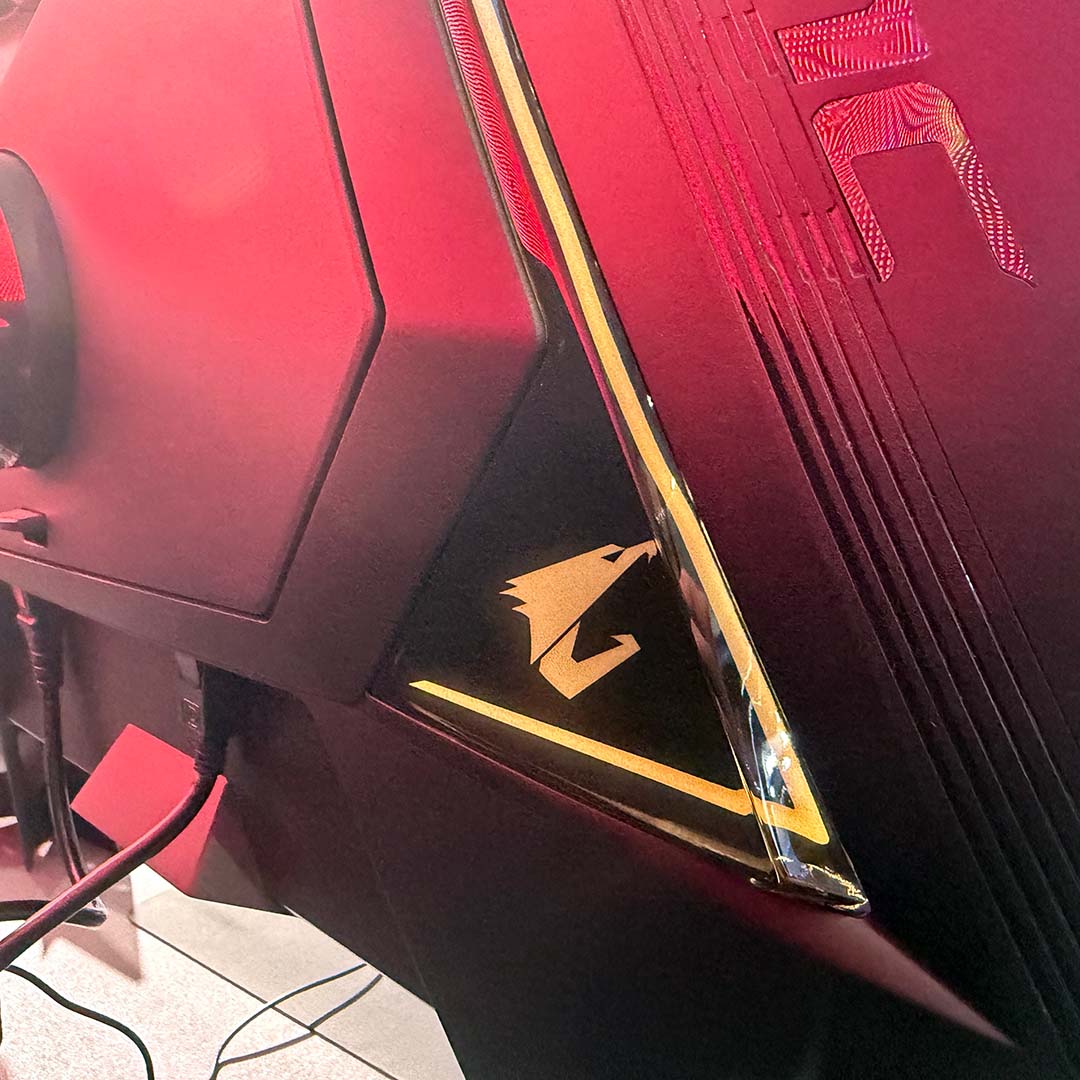
While the FM275K16P can’t compete with the true blacks of an OLED, it can get much brighter, with enough lumens to crack DisplayHDR 1,000 certification. In real-terms, this means you can expect 600nits minimum full-screen brightness, with a peak of 1,00nits, for a brilliantly blinding viewing experience.
As one should expect from a premium monitor, the FM275K16P boasts a brilliant gamut and solid colour accuracy out of the box. Gigabyte tells us we should expect 99% coverage of the DCI-P3 colour space, with a delta E average of <2. In short, this promises to be a vibrant and accurate display.
Gigabyte is also shipping the FM275K16P with a suite of technologies to enhance picture quality. For example, HyperNits aims to dynamically boost HDR brightness, while AI Picture Mode aims to optimise SDR content. We’re most curious about AI Super Resolution, though, which promises to upscale lower resolution content.
We should learn more about pricing and availability in the coming months, but we’ll certainly be keeping an eye out for this promising OLED alternative.
For more Computex news, visit our dedicated page here. In the meantime, make sure Club386 is one of your Google Preferred Sources, so our coverage shows up more frequently in your search and Discover pages.