
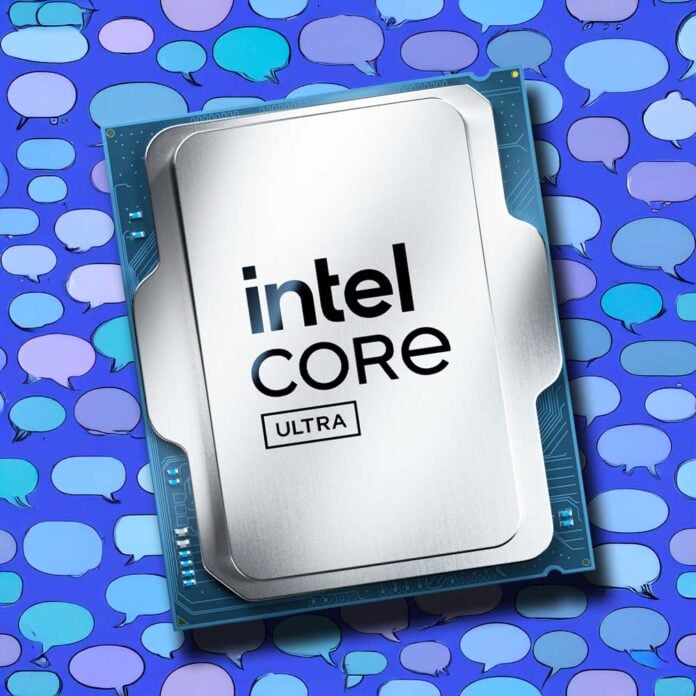
The last couple of years haven’t been an easy ride for Intel. The previously undisputed king of the x86 CPU world has seen its Steam Survey share plummet over the last few years, while Amazon’s best-selling CPU charts are now dominated by AMD. The infamous stability problems of Raptor Lake have dented the firm’s desktop reputation hard, while Arrow Lake’s disappointing gaming performance left the door wide open for AMD’s X3D CPUs.
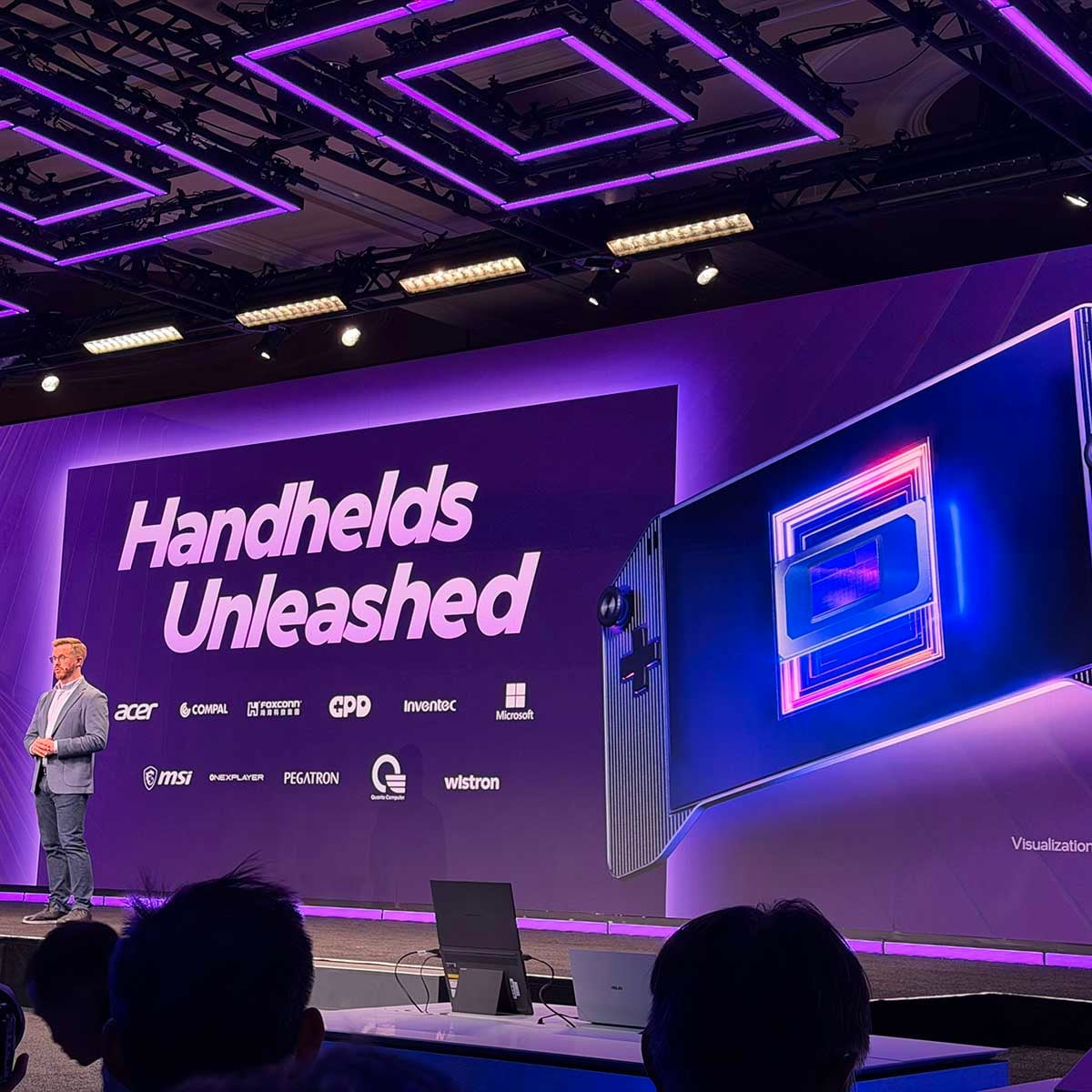
Intel has had a recent media success story, though, in the form of Panther Lake. We made it our CES 2026 winner, while Nvidia and AMD mainly wittered about AI at this show, which should have been all about consumer electronics. Panther Lake’s Arc B390 GPU demonstrated incredible gaming performance for an integrated graphics tile, and battery life was phenomenal. When I caught up with Simon Wilyman, Intel’s general manager of UK, Ireland, and Northern Europe, the first question I asked is how it’s going with that Panther Lake handheld chip.
Panther Lake handhelds
“The great thing about the Core Ultra Series 3 – Panther Lake – is that it takes all the best bits of our previous Core Ultra Series 200V and 200H – Lunar Lake and Arrow Lake,” Wilyman visibly enthuses. “Things like an architecture focused on efficiency, low power island, which combined with our 18A process node gives you that ability to drive impressive battery life – but it also then dials up the performance with high core counts and much-improved integrated graphics.”
It’s a platform that really lends itself to making a good chip for gaming handhelds. This arena is currently dominated by AMD, which not only makes the Steam Deck chip, but also manufactures the Z2 Extreme processor found in Asus ROG Xbox Ally X and Lenovo Legion Go machines. But AMD has also dropped the ball here, with its integrated GPU tech still based on the last-gen AMD RDNA 3.5 architecture. An Intel Panther Lake handheld chip could be extremely competitive.
There are going to be products coming to market sooner rather than later.
“We are absolutely committed to the handheld space,” confirms Wilyman, reconfirming that there’s “a dedicated platform” coming for portable gaming devices. “We’re committed, we’re excited, we’re working with the ecosystem, and there are going to be products coming to market sooner rather than later.”
Wilyman also gives us a timeframe off the record, but an embargo means we’re unable to share it. What we can say is that “sooner rather than later” is definitely a fair description if this timeframe holds true.
Is Bartlett Lake coming to the desktop?
Given the disappointing gaming performance of Arrow Lake, there’s been a bit of buzz about Bartlett Lake in hardware enthusiast circles lately. Bartlett Lake is based on Raptor Lake, but without the E-Cores, enabling Intel to put up to 12 P-Cores in a single LGA1700 chip. If Intel brought it to the desktop, the firm could arguably be in a better position to fight AMD in the consumer desktop arena, as it’s the P-Cores that really impact gaming performance.
Instead, though, Intel is marketing Bartlett Lake as solely for edge computing, and it doesn’t work in consumer motherboards. What’s going on here? “In my previous role a few years ago, I was running the industrial sales for Intel EMEA,” explains Wilyman to set the scene, “and what you have there is x86 in every ATM machine, every point-of-sale machine, in a lot of the fixed-function machines on factory floors. The embedded market requires processors that can handle multiple critical workloads simultaneously, all while maintaining precise timing and deterministic performance. Those needs are very specific to the embedded market.”
Bartlett Lake is not intended to be a consumer SKU.
It’s a very different setup from a Windows desktop PC, where clever thread direction can point Windows to the right cores to use for each job. Suddenly introducing a hybrid model to these markets, where two different architectures are vying for attention, could result in poor performance, or E-Cores being largely wasted. “Bartlett Lake, the Core Ultra Series 2 with P-Cores, has been designed specifically to answer those needs, in mission-critical edge applications,” says Wilyman, adding that it’s “not intended to be a consumer SKU.”
I can understand Intel’s thinking that Bartlett Lake makes sense for edge computing, but I’d argue it could be a decent consumer chip, too. Loads of P-Cores could make for a good gaming CPU, and it wouldn’t necessarily require a motherboard upgrade either. Intel’s reluctance may just be a case of prioritising resources, as the company is focusing production capacity on Arrow Lake for consumer products and there may well not be enough Bartlett Lake silicon to go round.
Intel socket strategy
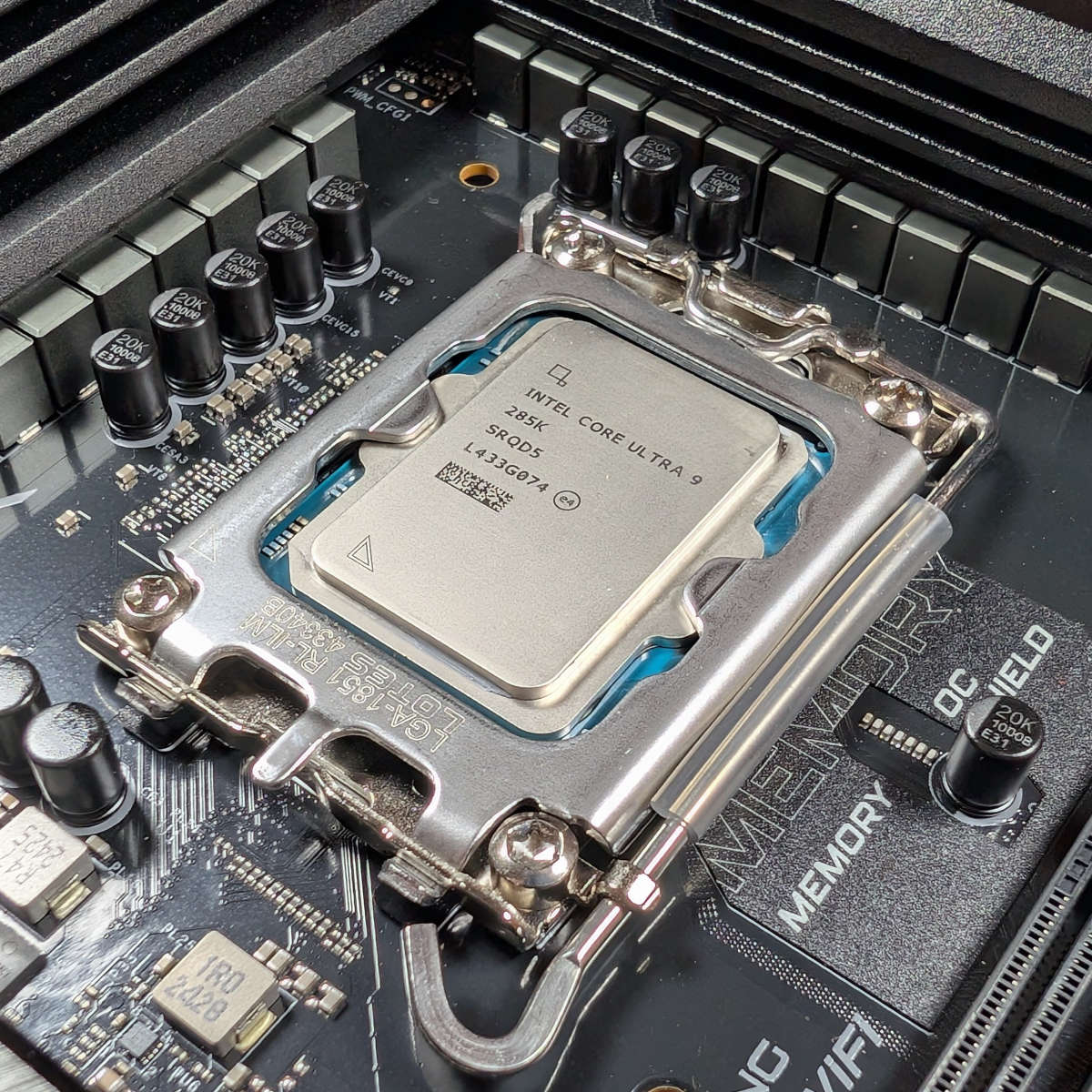
That brings us to my next question, which concerns the lack of longevity of Intel’s motherboard sockets. AMD’s AM4 platform lasted through several Ryzen CPU generations – Zen, Zen+, Zen 2, and Zen 3, as well as X3D upgrades of the latter, and the company continues to make AM4 CPUs today, nine years after the socket first came out. Its current AM5 socket is also widely predicted to support future Zen 6 and even Zen 7 CPUs. Comparatively, in the same timeframe, Intel has burned through two versions of LGA1151, while adding LGA1200, LGA1700, and LGA1851 to the mix.
It’s a strategy that may have worked for Intel in the old tick-tock era, but it seriously dents platform value when it comes to upgrading. An AMD motherboard will see you through several generations of upgrades, while an Intel one will only see you through a couple, and in the case of LGA1851, it looks as though you’ll only get one microarchitecture (Arrow Lake) on that socket. Does Intel understand the problem here, and could we see future Intel sockets supporting more generations of CPU?
We hear our customers’ feedback.
“I cannot comment on our future product generations,” Wilyman says as a preface – Intel is notoriously tight-lipped about future product details – but he adds that “we hear our customers’ feedback” on this subject. “What I can tell you is that, when we are building out a new offering, we are always making choices that we believe would bring the most to our consumers in terms of performance, choice, and new features.”
He gives examples, such as support for the latest “PCI, Thunderbolt, memory or WiFi standards ahead of the market,” but that doesn’t address the core point – there’s only so much Wilyman can say on this subject without revealing future product details. I get the feeling that Intel understands the issue at hand here, though. After suddenly traversing several different production nodes and architectures in a very short space of time, sockets have become a bit of a mess, but all that could be behind the company once Arrow Lake Refresh is out of the way. The forthcoming LGA1954 socket for Nova Lake is rumoured to support several generations of CPUs on one platform – let’s hope that’s true.
Navigating the RAM pricing crisis
One big problem with requiring users to upgrade to a new DDR5-only platform is the crisis surrounding RAM prices. If you’re currently rocking a DDR4 Raptor Lake or Zen 3 rig, then buying a new short-lived motherboard for Arrow Lake is already an unappealing proposition, but the cost of buying DDR5 memory for it makes the situation far worse. It’s a big problem for PC builders too – have we seen the end of the budget gaming PC?
“We’re seeing a desire across the industry to maintain the existing price points of systems,” says Wilyman, “I think the question will be, ‘What’s the memory capacity at those price points?’ as you move forward.” Basically, you’ll still be able to buy PCs for £999, £1,499, and £1,999, but when you would have had 32GB in that £999 rig, you’ll now be looking at 16GB. We’ve seen this in our own reviews – you can buy a gaming PC such as the AWD-IT Kalona for £839.99, but it comes with 16GB of DDR4 memory, rather than 32GB of DDR5.
Nova Lake kept under wraps
Did we talk to Simon Wilyman about Nova Lake? You bet. Did the Intel comms team then veto all his answers with a blanket “no comment” statement that meant we couldn’t publish any of it? Absolutely. This was frustratingly a theme throughout this interview process, where Simon Wilyman often gave much more insightful answers than we’ve been able to publish, about a range of subjects, but Intel then intervened and replaced anything humanly interesting with semi-literate, jargon-packed PR drivel that no one wants to read. Big corporate tech firm is gonna big corporate tech firm, sadly.
What we will say is that Nova Lake looks, really, really cool compared to what Intel is doing at the moment, and we’re very excited to try it out and share more details in the future. Watch this space. In the meantime, check out our guide to buying the best CPU to see which chip will suit your needs.