
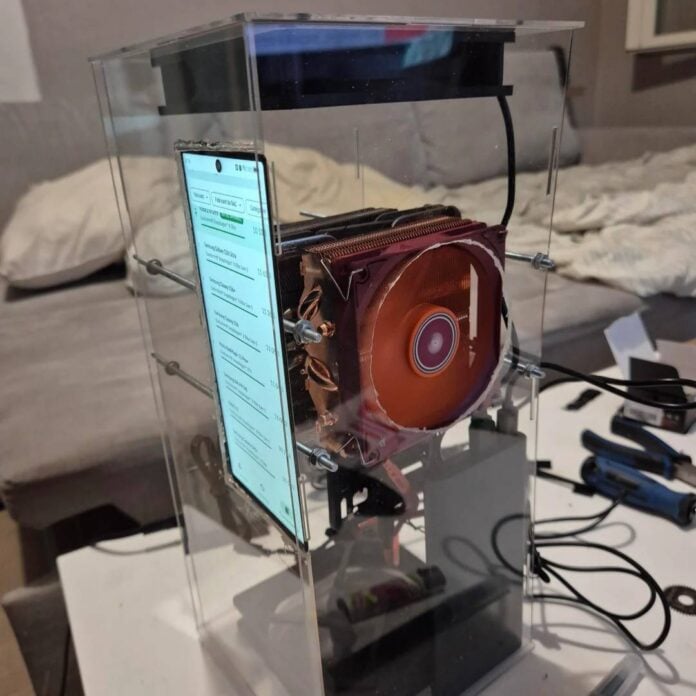
A modder has turned a ZTE Nubia Z70 Ultra smartphone into a custom desktop PC, and it’s capable of running 3D games at high levels of detail. The project takes full advantage of Qualcomm’s Snapdragon 8 Elite chip, by adding plenty of cooling power to avoid thermal throttling.
Despite not featuring the latest Qualcomm processor, the Nubia Z70 Ultra carries a lot of horsepower just waiting to be unleashed. To do so, Reddit user ntsow created a Frankenstein-style cooling apparatus, which sandwiches the smartphone between two low-profile desktop CPU coolers.
That’s a turbocharged thermal management system, considering that each one of these coolers is capable of handling much higher heat loads than this device can ever produce. They also look massive on this pocket-sized device, despite being as small as you can go for desktop PCs.
Thanks to this extra cooling power, the 8-core CPU inside the smartphone was able to constantly maintain its maximum 4.32GHz frequency without any thermal throttling. As a result, the device was capable of rendering 20-30fps in The Witcher 3 at 1080p at the Ultra graphics preset. That’s a nice looking game to run on a smartphone. But that’s not all; ntsow also put this setup to the test in 3DMark, where it scored 6,980 (best loop) points in the Wild Life Extreme test, while remaining 99% stable after 20 loops.
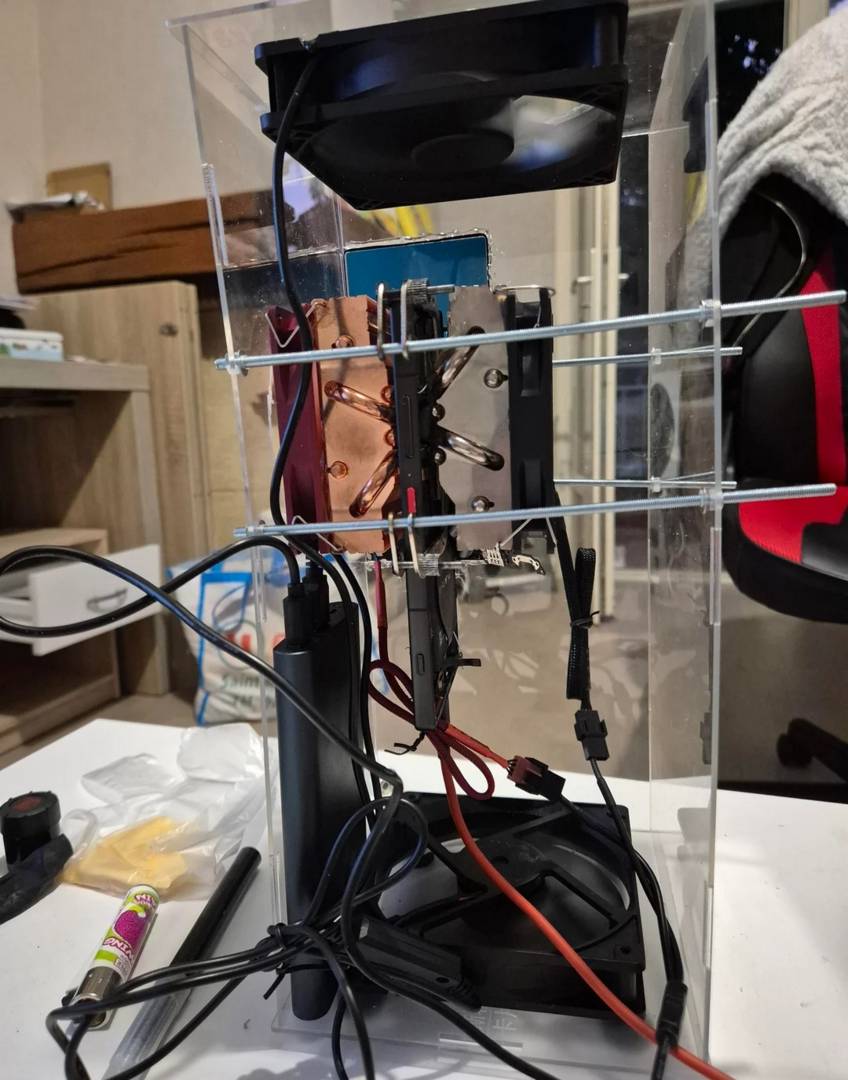
That said, the modder indicated that scoring high benchmark results wasn’t the purpose of this project; the main goal was to build a replacement PC using a smartphone, providing the advantages of both systems in one place. To achieve this vision, ntsow installed the smartphone with its add-on heatsinks inside a makeshift acrylic case, alongside two fans for air circulation and a power bank to avoid power-related throttling. The phone’s original screen was also glued to the case, acting as a second screen/control panel.
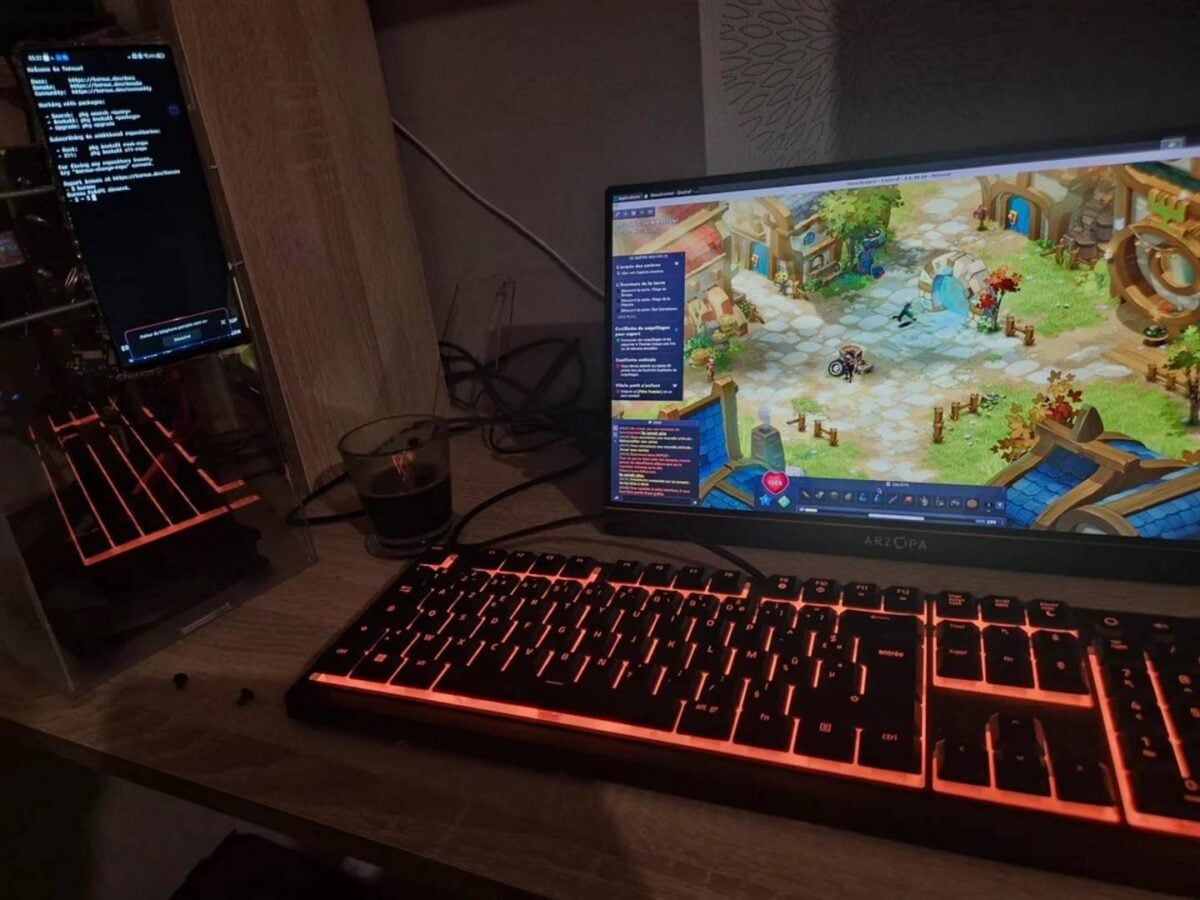
On the software side, the modder managed to run a native Linux/XFCE4 environment through Termux (a terminal emulator and Linux environment app for Android) with GPU acceleration. This is complemented by Wine, plus the ARM/x86 compatibility stack, so it can launch Windows applications and games.
In other words, there’s no Windows on Arm, dual-boot setup, or custom Windows bootloader. This Android system remains fully functional, while having a Linux desktop plus Windows game support. Lastly, the device was connected to an external monitor and peripherals, completing a PC setup.
While this mod is functional, ntsow indicated that the software side still needs a little bit of polishing. The end goal is to have one device that can do everything, including being an Android phone, a gaming device, and a native Linux XFCE desktop with Windows applications support. We wish ntsow the best of luck with this project.