

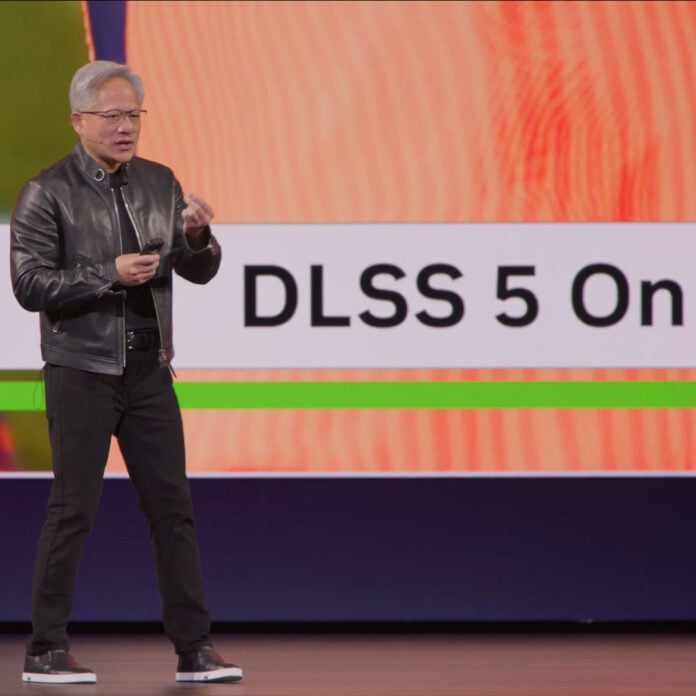
Jensen Huang has pushed back against the negative reception of DLSS 5 following the feature’s surprise debut at the show. During a Q&A session at GTC 2026, the Nvidia CEO called out critics’ lack of understanding of the technology, keen to emphasise that results are ultimately in the hands of developers.
It’s difficult to miss the scathing response to DLSS 5 at present, with mocking images aplenty and many describing the feature as little more than AI slop or a yassification filter. A demonstration of the technology in Resident Evil Requiem has drawn particular ire, given how radically it transforms the appearance of the game’s protagonist, Grace Ashcroft, to resemble AI beautification filters.
There is, of course, more to the upcoming version of the technology. Huang explains, DLSS 5 “is not post-processing at the frame level, it’s generative control at the geometry level.” This echoes Nvidia’s initial press release, which states that source 3D content anchors the technology, which should ensure consistency frame to frame. However, this doesn’t explain its varying effect on Grace Ashcroft in the snippets we’ve seen thus far.
Huang continues by emphasising DLSS 5 doesn’t “change artistic control,” and that it’s up to developers to figure out how they want to configure and implement the feature. While he doesn’t provide fine details about the controls available for the technology, it sounds as if there’s great scope for configurability with suggestions of universal “toon” and “glass” shaders.
From my perspective, Nvidia would better serve the perception of DLSS 5 through a detailed explanation of its inner workings rather than calling out critics’ ignorance that the company itself created through a lack of information. Pulling back the curtain, allowing us to better understand how developers can control the technology, would do wonders for public perception.
I want to understand if the yassified Grace that’s now the poster child for DLSS 5 is the intent or fault of developers, technology, or some combination of the two. Drawing such conclusions is impossible with the information we have to hand, but I’m hopeful that Nvidia will provide more detail on DLSS 5 as we get closer to its Autumn 2026 release. Seeing the technology in action beyond short clips is also something I’m sure many of us would like to see and, better yet, experience.
Perhaps Nvidia’s Computex 2026 keynote will offer all the details about DLSS 5 that we want, but I’d prefer to know more far sooner. In the meantime, check out my DLSS 4.5 analysis, as that’s an uncontroversial technology suite I can wholeheartedly recommend to GeForce graphics card owners right now.