

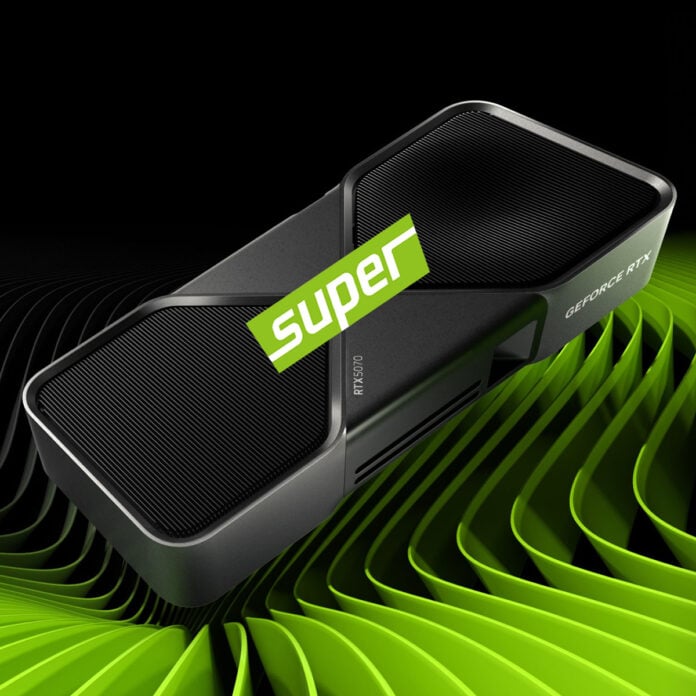
While the GeForce RTX 5070 has its merits, there’s no denying this graphics card is hamstrung by its relatively low memory capacity. Nvidia apparently recognises these shortcomings and has plans to launch a refreshed design, if rumours hold true. However, the current state of the memory market may have placed any ambition of a GeForce RTX 5070 Super on indefinite hold.
I’ve put together all the latest whispers on everything RTX 5070 Super, sourced from the latest rumours and leaks, alongside sprinklings of my own analysis. I’ll update this guide as new information comes to light, official or otherwise, so make sure to check back here following further developments. Now, let’s mull over everything we know about Nvidia’s potential new midrange champion.
Release date rumours
Initial rumours suggested that the GeForce RTX 5070 Super and other cards in the series would be released sometime in 2026. CES seemed like the most likely launch pad, but Nvidia’s announcements at the trade show came and went without any mention of a graphics card refresh. Now, it seems the RTX 50 Super series as a whole is on indefinite hold.
The reason for this change of heart allegedly comes down to insatiable demand for memory from the enterprise market, chiefly from AI data centres. Pressure on supply chains has resulted in a shortage within the consumer market, exponentially increasing GDDR7 prices and those of other types of DRAM.
Given that manufacturers expect high DRAM demand to continue, prices are unlikely to come down for the foreseeable future. This basically dashes all hope for a GeForce RTX 50 Super series, which were expected to lean on 3GB GDDR7 chips that were more expensive than 2GB chips to begin with.
The situation is so dire that it’s apparently affecting Nvidia’s launch plans for the GeForce RTX 60 series, reportedly pushing the launch back to a point where there may be close to a 1,000-day gap between generations. More pressingly, the brand is apparently prioritising RTX 5060 and RTX 5060 Ti 8GB production to combat rising memory costs.
Right now, a launch of GeForce RTX 5070 Super and other Super cards seems entirely unlikely. Nvidia could still launch its long-rumoured refresh, but market conditions simply don’t seem tenable. The next time we’re likely to hear anything official on their future is at Computex 2026, but at this point, I wouldn’t hold out much hope.
Specs rumours
According to leaks, all GeForce RTX 50 Super series cards were set to sport larger amounts of VRAM. However, the GeForce RTX 5070 Super would be the only model in the lineup to receive more CUDA cores, reportedly swapping its current cut-down GB205 GPU for a full-fat version.
Sticking with the same GB205 die would only afford the GeForce RTX 5070 Super an additional 256 CUDA cores, amounting to a 4% increase over the vanilla design. This would by no means be a game-changing increase, but it would afford some additional performance to the card.
| RTX 5070 Super | RTX 5070 | |
|---|---|---|
| CUDA cores | 6,400 | 6,144 |
| Mem. capacity | 18GB | 12GB |
| Mem. clock | 28Gb/s | 28Gb/s |
| Board power | 250W | 250W |
Using newer 3GB memory modules in place of existing 2GB chips, Nvidia could outfit a prospective GeForce RTX 5070 Super with 33% more VRAM without affecting the core design. This seemingly wouldn’t come at the expense of power consumption either, with Seasonic’s PSU calculator most recently describing the card’s TDP as 250W.
Comparing prospective RTX 5070 Super specs to the RTX 5070 suggests this refresh likely wouldn’t have made for a revelatory upgrade. Instead, we’re likely looking at an uplift similar to that of RTX 4070 Ti Super from RTX 4070 Ti, where the attraction here is the larger frame buffer more than anything else.
Price rumours
The GeForce RTX 5070 Super was rumoured to be launching at the same price as its non-Super counterpart, according to 5070 Super leaks. As such, the new card’s price would be $549.
This strategy would mirror the launch of the RTX 4070 Ti Super and RTX 4070 Super, which each matched the prices of the original models. Meanwhile, RTX 4080 Super was actually cheaper than RTX 4080.
However, as discussed earlier, the price of GDDR7 VRAM is much higher now than it was when the GeForce RTX 50 series first launched. Should Nvidia press ahead with releasing Super SKUs, I’d expect them to come with a premium.
Performance rumours
There are currently no credible leaks illustrating RTX 5070 Super performance. Based on current rumours, the graphics card should be marginally faster than RTX 5070 in most cases, but its larger VRAM capacity is also likely to result in huge performance improvements in some scenarios where VRAM was previously maxed out.
The increase in CUDA core count doesn’t provide a 1:1 performance uplift. As such, RTX 5070 Super’s 4% uplift in this respect likely won’t translate into frame rates rising by the same degree.
Where RTX 5070 Super should wipe the floor with RTX 5070 is in meeting the demands of higher resolutions and some memory-intensive settings. A bigger buffer means less reliance on system memory, leading to better performance.
Like other Blackwell GPUs, an RTX 5070 Super would undoubtedly support DLSS 4.5, as well as other Nvidia features like RTX HDR and 9th Gen NVENC, if it makes it out the door.
Check out our best graphics card guide to learn more about the top pixel pushers you can buy today.