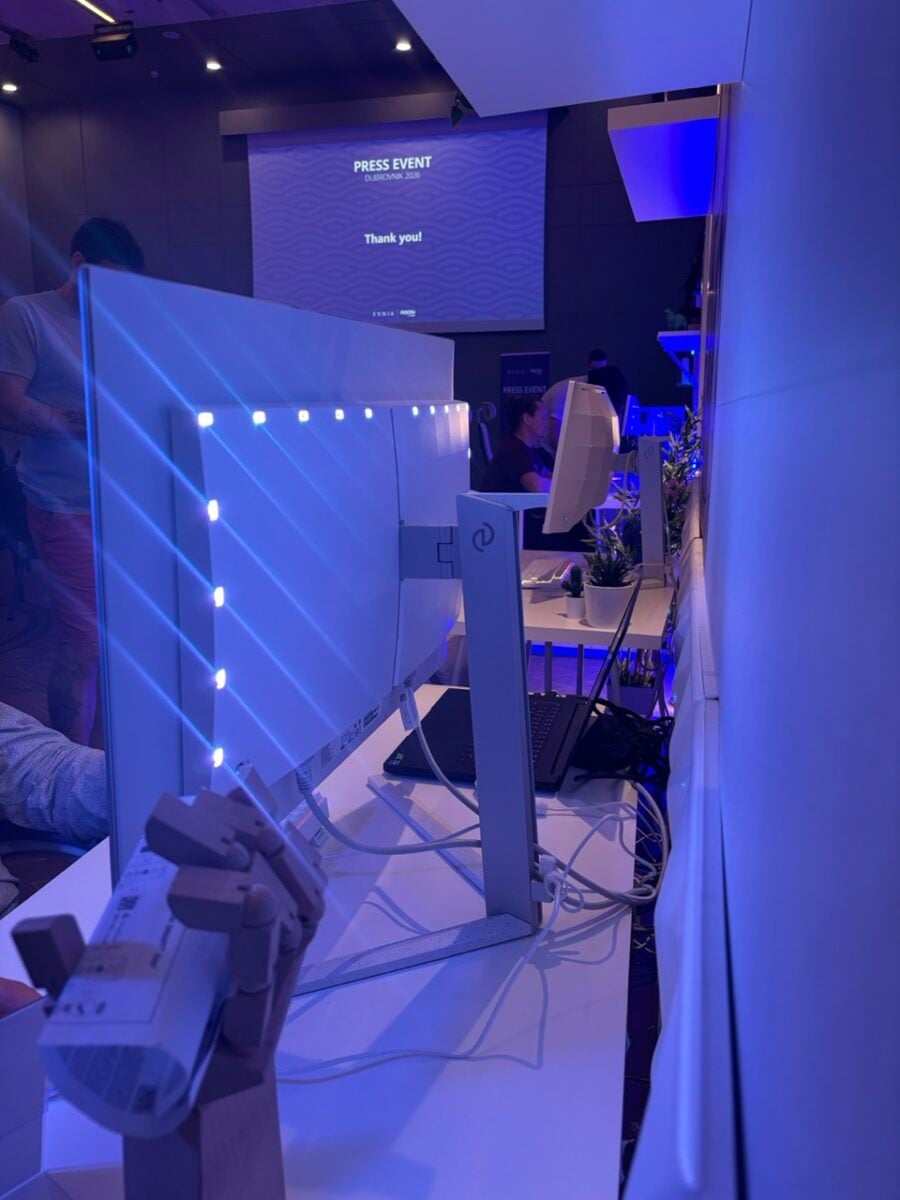

In today’s world of PC building, where memory, storage, and GPU pricing is rising at an alarming rate, perhaps the upgrade bang for your buck rests with improving your display. Monitors are not privy to the price machinations affecting other components, while a relentless pursuit of better performance brings new and improved models out at a rapid rate. Take Philips Evnia as an example. Whilst at a press event in Dubrovnik, I got a first-hand look at a couple of upcoming QD-OLED displays designed to whet the gamers’ appetite. Enter the 34M2C8600P and 32M2N8900P.
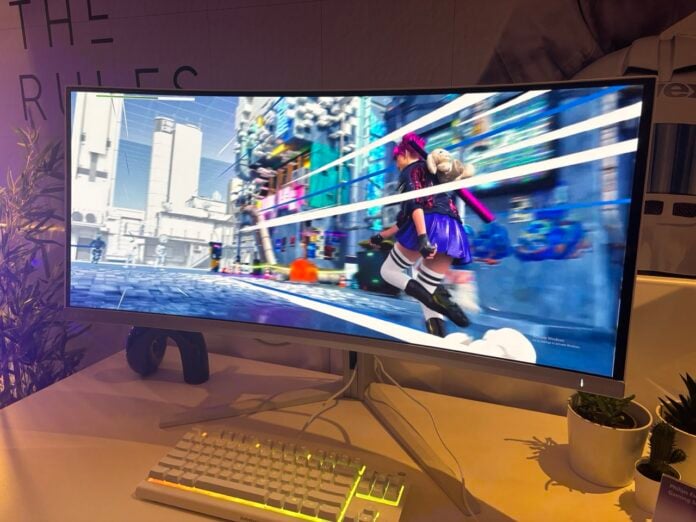
The first is a 34in curved display featuring the latest 5th generation QD-OLED panel technology from Samsung. Key standouts are a vertical RGB stripe pixel substructure designed to combat the text fringing we commonly see on cheaper OLEDs, together with peak brightness reaching 1300 nits at 3% APL and 300 nits full screen. Having looked closely at the one on display, if you excuse the pun, I can confirm that text is sharper and less prone to fringing than on previous models.
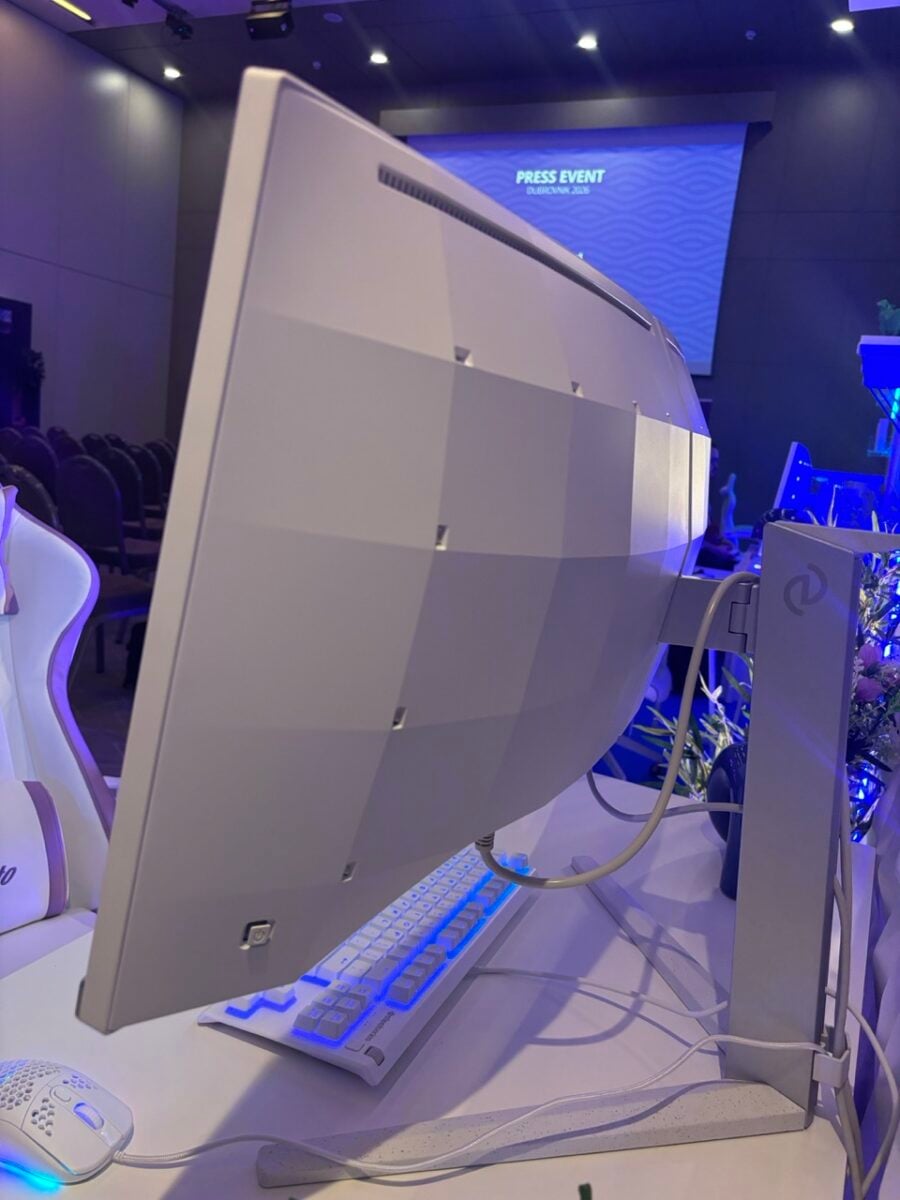
Touting a 34in WQHD resolution at 280Hz and with HDR 500 TrueBlack certification, I can attest it looks rather good when gaming. Other niceties include a KVM, explicit G-Sync support, dual 5W speakers, dual HDMI 2.1 and a single DisplayPort 2.1, along with 15W power delivery for USB-C. That’s a little low compared to most models, so I posed the question as to why. The answer came back as a limitation imposed by tooling and the design in general. Nevertheless, I’d expected 65W on this model, at the very least. Priced at 899 euros and available in Q3 2026, note this one down if you like high-specification curved displays that can, ostensibly, do it all.
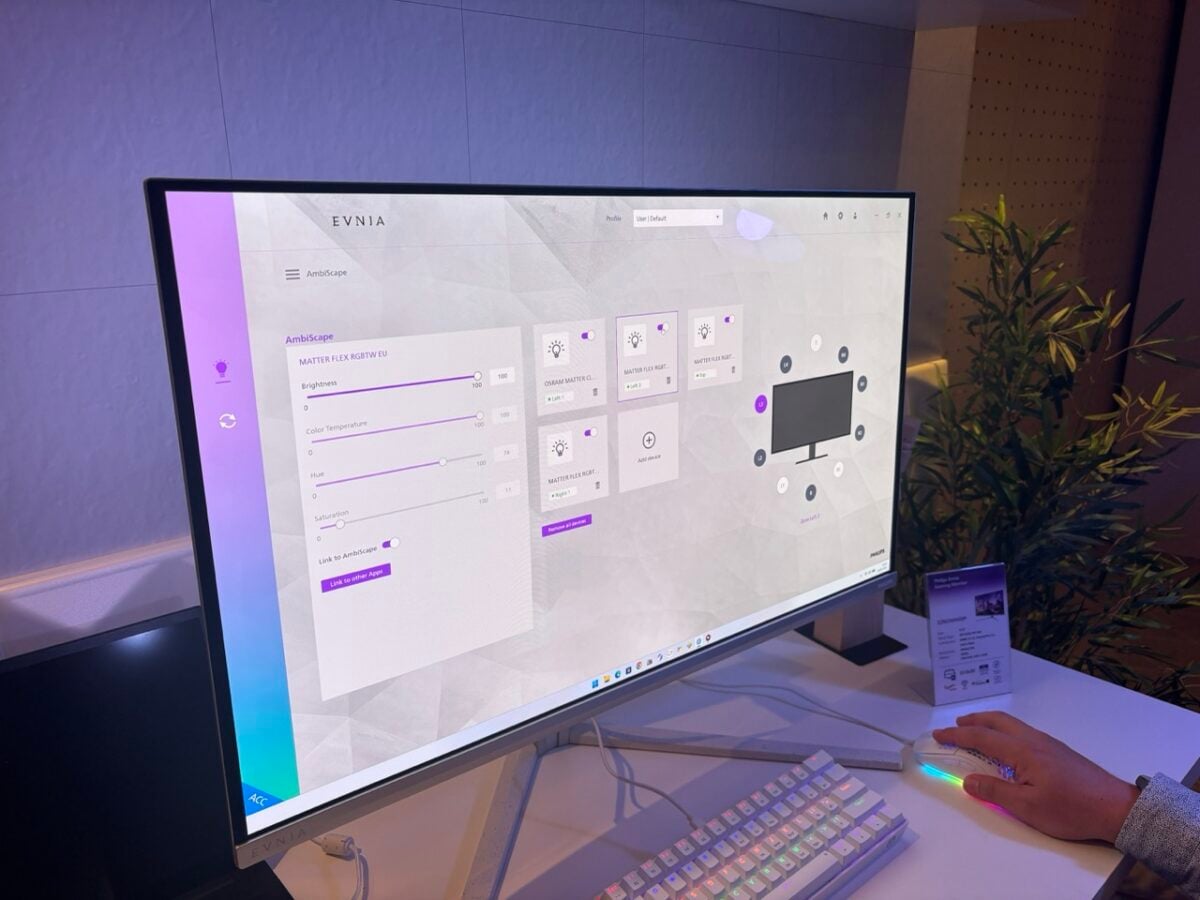
Switching gears and following on from the 32M2N8900X announced recently, the 32M2N8900P is a 31.5in QD-OLED featuring 4th generation QD-OLED technology running at 4K240. It packs the same core specifications as the 34M2C8600P, albeit with 65W power delivery and lower 1000 nit peak brightness. I actually prefer the flat screen and three-sided Ambiglow implementation here. Costing 999 euros and coming to market in May 2026, Club386 is sure to take it for a review spin.