

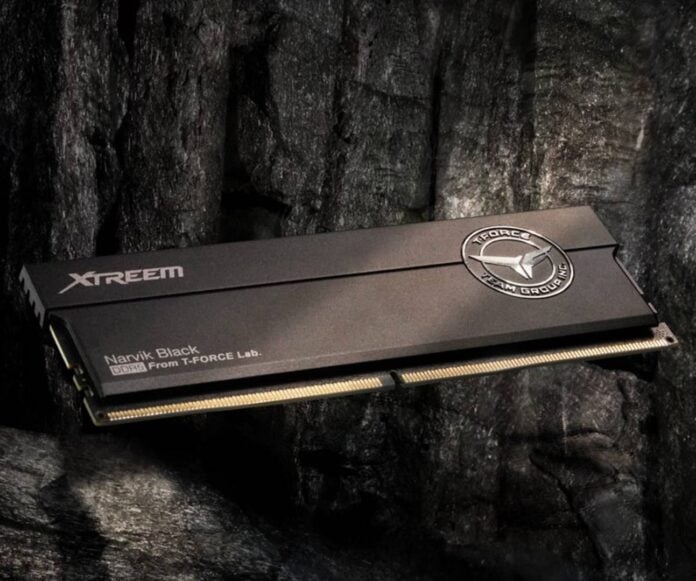
TeamGroup has agreed to pay around $1.1 million to settle a class-action lawsuit in the US regarding the advertised speeds of DDR3, DDR4, and DDR5 memory. The plaintiffs argue that the company’s product packages list speeds, such as DDR5-8800, in a misleading way. The argument is that the RAM should operate at these speeds out of the box, rather than requiring additional configuration in your motherboard BIOS.
This settlement covers allegations of deceptive advertising concerning DDR3, DDR4, and DDR5 purchased in the US between May 3, 2020, and April 8, 2026. That said, the company denied any wrongdoing, stating that the products were appropriately labelled and performed as represented.
While computer enthusiasts already know that DDR kits operate at lower JEDEC frequencies during initial boot to improve stability and compatibility, memory packaging sometimes fails to mention the requirement to enable XMP or EXPO profiles in your BIOS afterwards to unlock the full speed. The plaintiffs claimed TeamGroup failed to clearly disclose this requirement, which can be seen as a violation of consumer protection laws.
Individuals who have purchased TeamGroup’s DDR3, DDR4, or DDR5 memory products during the aforementioned period can claim their part of the settlement, which will depend on the total number of claims. The $1.1 million sum will be divided between those who submitted a valid claim. Individuals can claim compensation for up to five memory products per household without providing proof of purchase.
However, the settlement only applies to individual consumers – businesses of any sort do not qualify for compensation. Payments are expected to be made about 45 days following final approval – set for September 3, 2026 – and after any appeals are resolved. Individuals can also submit an objection or exclude themselves from the lawsuit to keep their right to sue independently.
TeamGroup’s settlement isn’t the first one of this sort in the RAM business, as both Corsair and G.Skill have previously agreed to pay $5.5 million and $2.4 million, respectively. In both cases, the lawsuit argued that average consumers may not realise the requirement for additional configuration steps to unlock the advertised speed of their product.
In the case of G.Skill, the brand was also required to update its packaging to clarify the need for BIOS adjustments. Going forward, we won’t be surprised if RAM manufacturers start proactively mentioning XMP and EXPO adjustments on their packaging to avoid potential lawsuits.