

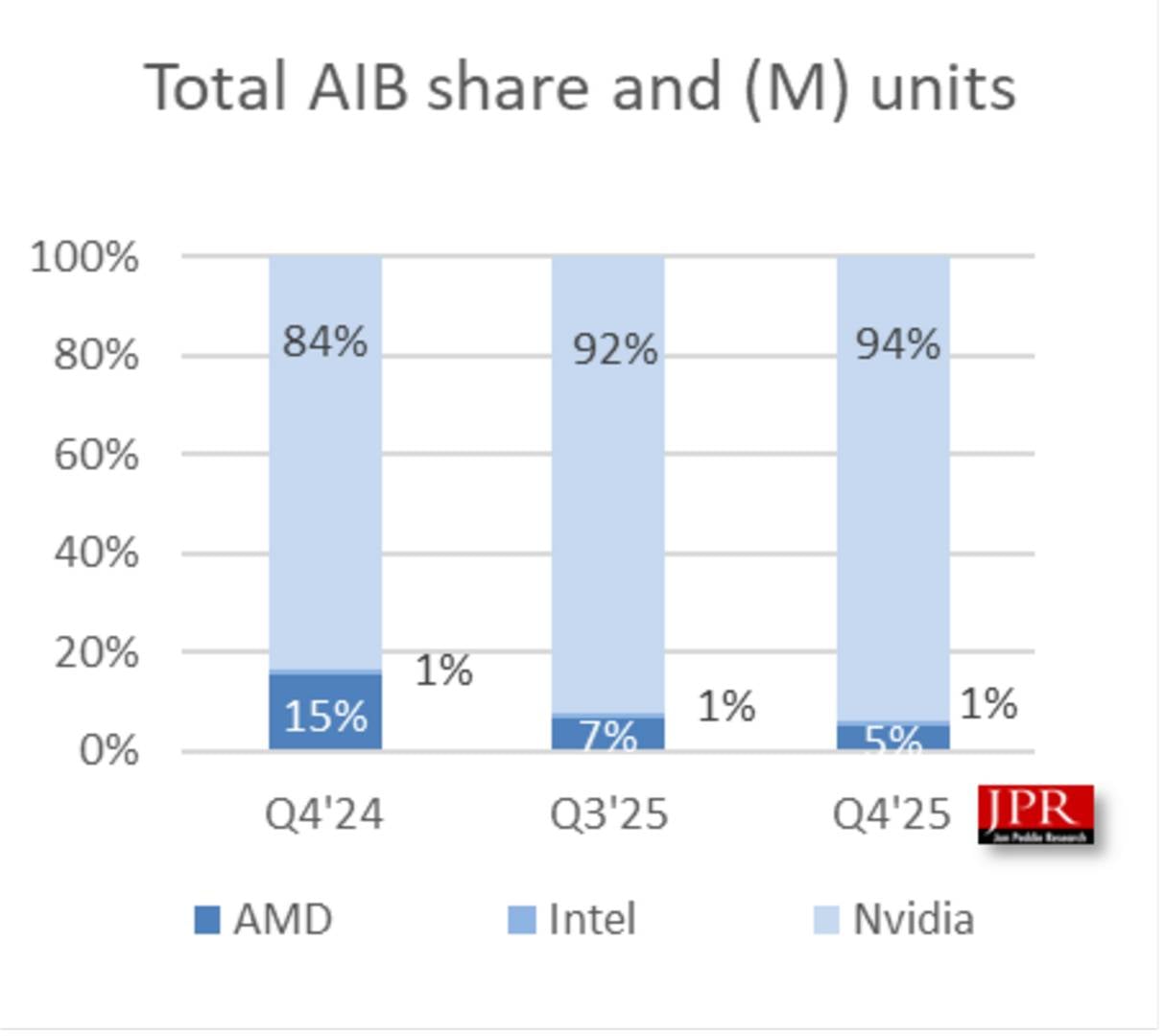
Nvidia is battering the competition when it comes to graphics cards, securing 94% of the GPU add-in board (AIB) market in Q4 2025. These latest figures show Nvidia cementing its grip, while AMD’s has seen its discrete GPU market share drop even lower.
According to the latest market report from Jon Peddie Research, Nvidia has increased its share of the AIB GPU segment by 1.6% compared to Q3 2025, climbing from 92% to 94%. In the same period, AMD lost a 1.6% share, dropping from 7% to 5%. Meanwhile, Intel is still holding on to the 1% share it gained back in Q3 2025. The overall AIB attach rate on desktop PCs has also decreased to 55%, down 12.3% from last quarter.
Looking at the year-on-year direction, Nvidia seems unstoppable, as it grabbed 10% of the market from Q4 2024 to Q4 2025. At the same time, AMD continued its decline, while Intel held steady, albeit with a very small share of the discrete GPU AIB market.
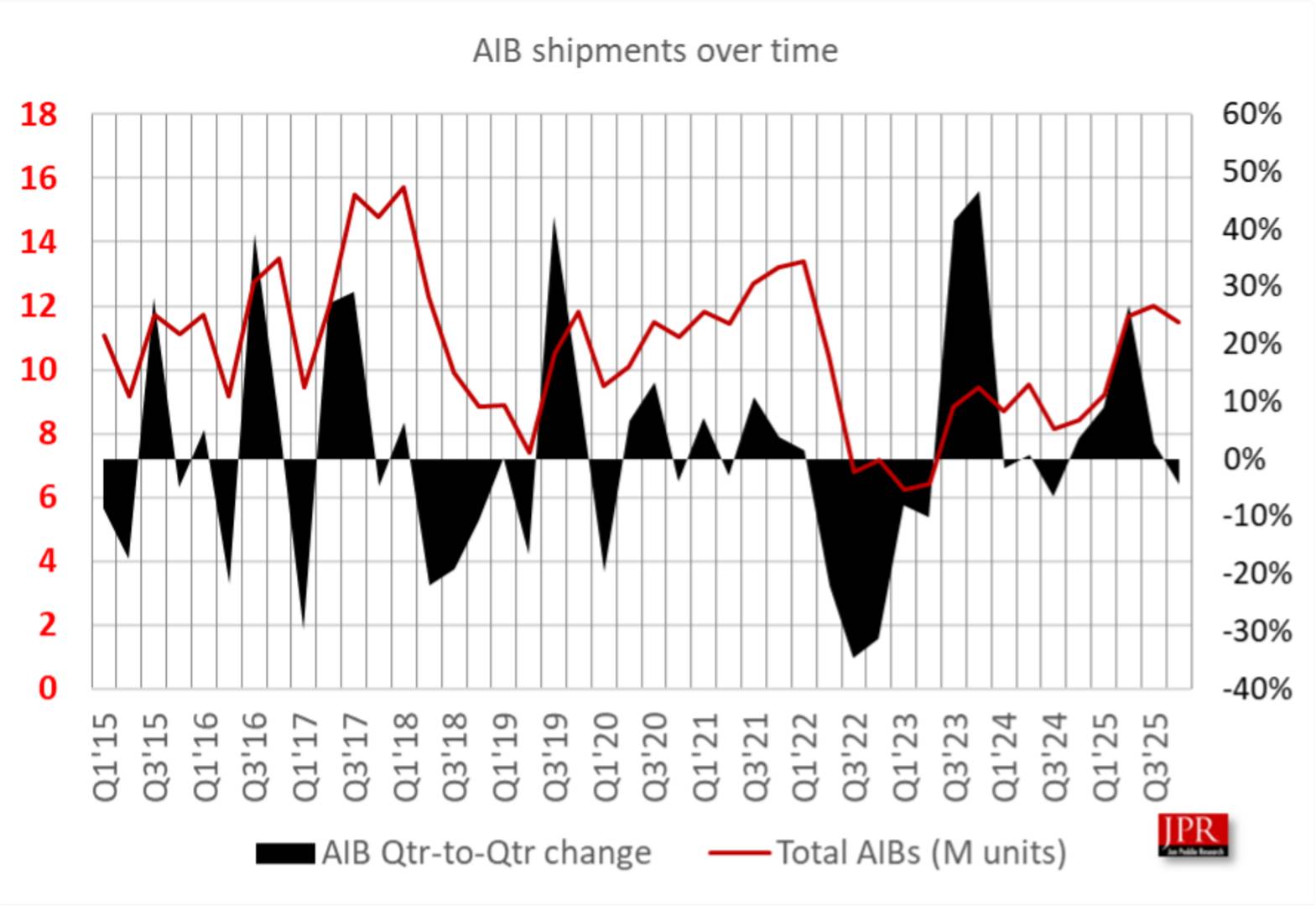
The analyst firm also indicates that total AIB shipments have fallen by 4.4% quarter-on-quarter, down to 11.48 million units, which is less than the historical 10-year average of 10.82% for this quarter. For comparison, data centre GPU board shipments increased by 17% on average compared to last quarter. Jon Peddie Research thinks this decline in desktop card shipments is due to the rising prices caused by memory shortages and tariffs. On the other hand, year-on-year shipments saw a 36% increase.
The firm predicts a tight future for the AIB GPU market, forecasting a negative compound annual growth rate of -5.9% from 2024 to 2028. This represents an install base of 172 million units by the end of the forecast period.
In addition to this GPU report, Jon Peddie Research has also covered CPU shipments, which increased by 9% to hit 21 million units in Q4 2025. That’s an interesting result, considering that DDR5 memory prices have also increased dramatically.
If the current global memory shortage doesn’t improve, the situation may get worse for makers of graphics cards based on all three companies’ GPUs. As Dr Jon Peddie puts it, “the AIB market, largely supported by gamers, is being squeezed from the bottom by powerful new notebooks and CPU integrated graphics, and from the high end by rising pricing due to competition (supply and demand), memory prices, and Trump administration tariffs that bounce around.”