
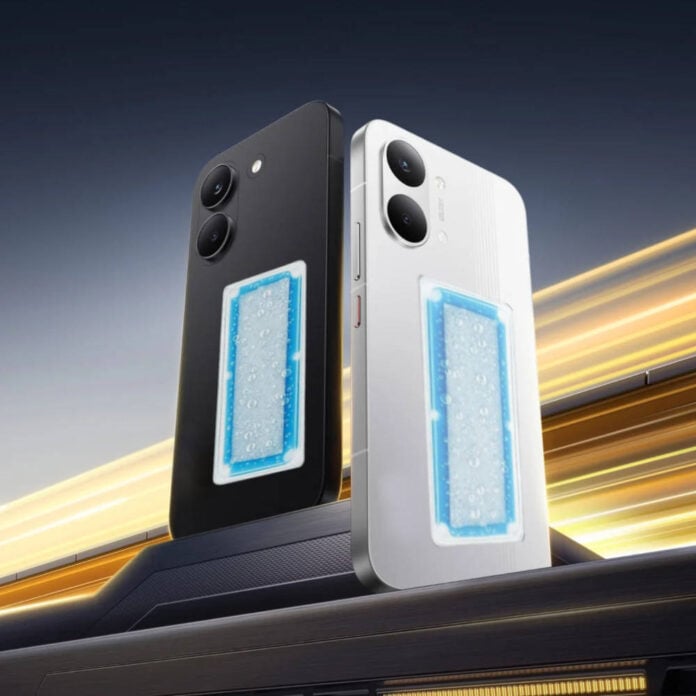
Xerendipity, a newcomer to hardware cooling, has unveiled its Vapor-Pad and non-metal vapor chamber (NMVC) thermal interfaces, aimed at replacing traditional vapour chambers and paste-based materials by combining incredibly high conductivity and ease of application.
The company advertises its Vapor-Pad as a thin vapour chamber engineered for efficient in-plane heat spreading, which makes it ideal for compact and space-constrained electronic systems such as laptops and tablets. The Vapor-Pad combines the heat-spreading properties of a vapour chamber with the convenience of a pad, mimicking how traditional vapour chambers and CPU coolers‘ heatpipes work by transforming the chip’s heat into vapour, which gets transported to be cooled before returning to the hot spot via the capillary effect.
Vapour chambers are very good at spreading heat over a large area, helping to even out the surface temperature. This made them popular on high-end smartphones that need to dissipate a good amount of heat without using fans or creating hot spots that may harm the user. However, unlike thermal pastes and pads, vapour chambers require more R&D and production costs, which impact their final price. On the other hand, thermal pastes are relatively easy to make but fall short when it comes to performance.
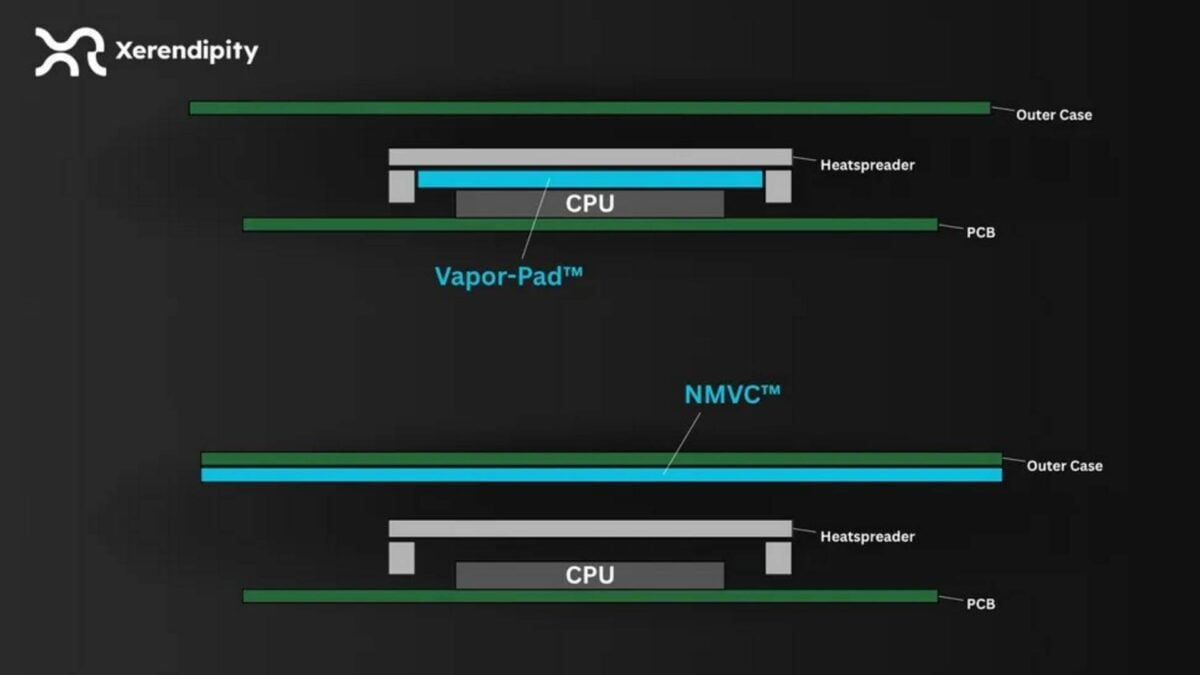
Xerendipity aims to attack all these fronts by offering a thin pad that combines the strengths of vapour chambers and the interfacing role of thermal pastes and pads into a single solution. According to SemiAccurate, which was present at the MWC 2026 show floor, Xerendipity’s vapour chamber and thermal pad hybrid is essentially a sticker that combines the best of both worlds, which results in around two orders of magnitude higher performance than traditional solutions.
Xerendipity advertises its Vapor-Pad as a replacement for the traditional TIMs (Thermal Interface Materials) sitting between the silicon and IHS (Integrated Heat Spreader), claiming enhanced thermal conductivity and an ability to dissipate between 800 and 1,200 W/m-K of heat.
Though not a fair comparison, just to give you an idea, most traditional pastes we reviewed during our roundup sit between 6 and 17 W/m-K – 80 W/m-K when including liquid metal. If we take 15 W/m-K as an average, a Vapor-Pad is reputedly 80 times better, while being as easy to apply as any regular thermal pad or paste. Well, at least according to the official claims.
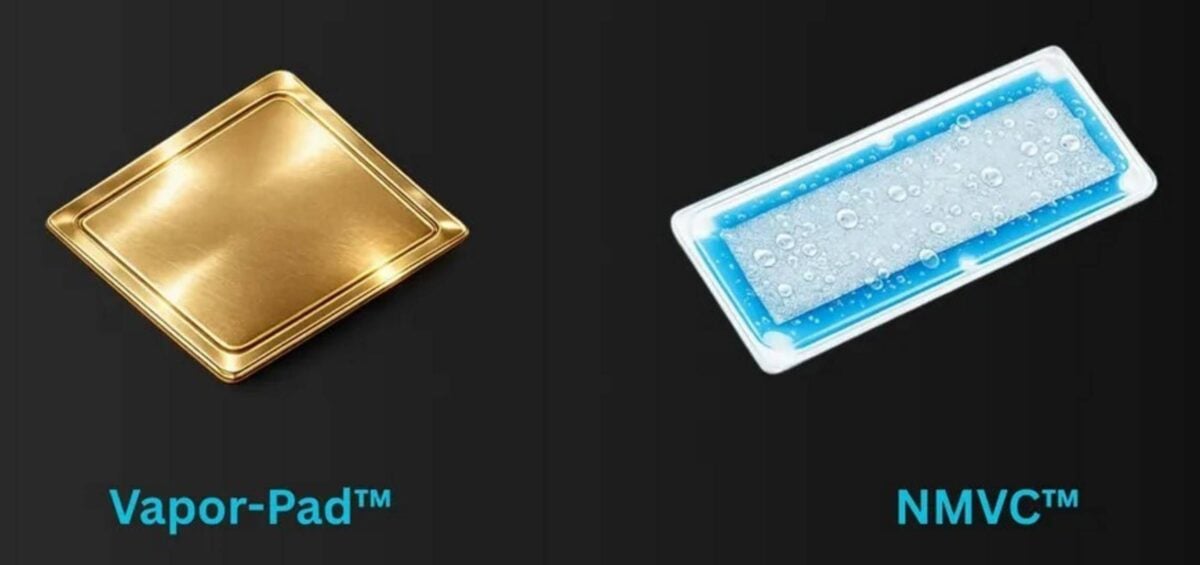
But that’s not all, Xerendipity has also showcased a non-metal vapour chamber (NMVC), which it claims excels at internal XY in-plane heat spreading. The company indicates that this property allows it to act as a thermal barrier that blocks outward heat transfer, effectively improving user comfort by reducing the skin temperature of handheld devices. In other words, it is better at spreading the heat over the device’s surface, reducing noisome heat concentration.
Furthermore, the NMVC’s non-metallic properties allow it to be as big as the device’s surface if needed, without worrying about blocking the Wi-Fi and 5G signals. With the NVMC, there’s no need to route the wireless antennas around a smartphone chassis as with traditional vapour chambers. This immediately translates to a simpler device design and higher user comfort. Xerendipity claims its NVMC boasts 90% of the thermal conductivity of a regular vapour chamber while retaining 100% of signal pass-through rate.
Needless to say, Xerendipity is promising huge potential, especially for mobile devices. Whether this will end up in real products remains to be seen, but the prospect is appealing.