
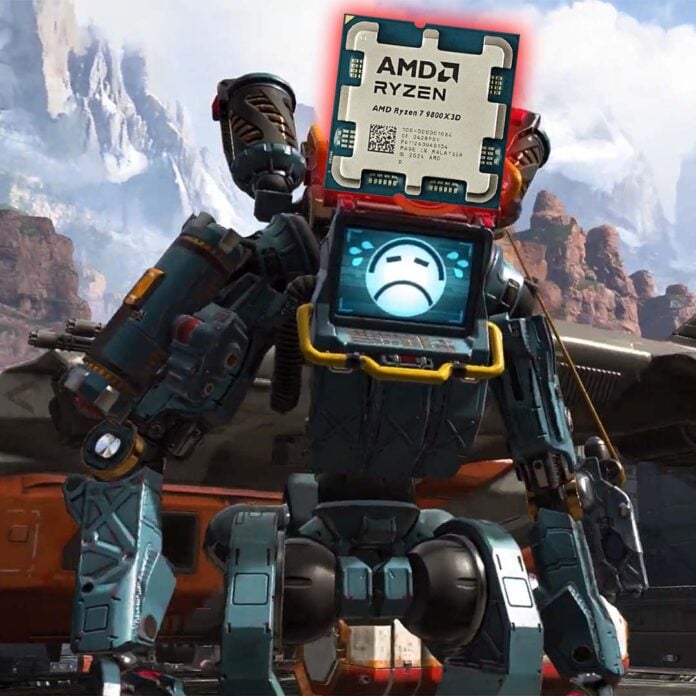
AMD 3D V-Cache is usually a boon for games that demand high frame rates, such as competitive shooters, but the pace of these Ryzen X3D chips was simply too much for Apex Legends. They’re so fast, in fact, that their speed was counter-intuitively causing performance issues.
EA specifically called out Ryzen X3D chips in the most-recent patch notes for Apex Legends as the driving force behind new CPU performance improvements. More specifically, it has addressed buggy physics calculations caused by high single-threaded performance.
According to the patch notes, these improper calculations became a source of stutters on the likes of the Ryzen 7 9800X3D and its ilk. However, given the source of this problem isn’t specifically 3D V-Cache, I suspect Intel CPUs, including the Core Ultra 7 270K Plus, may similarly benefit from these changes.
Curiously, the same patch notes include a fix for an issue that could lead to an occasional frame rate dip when running at over 240fps. It sounds to me as though Respawn’s modified Source engine, the same base that powered Counter-Strike: Global Offensive, might be showing its age after a near-decade of service.
In fairness to Apex Legends, we’ve seen other games such as Mount & Blade II: Bannerlord stutter when running exceptionally high frame rates, using CPUs with 3D V-Cache or otherwise. However, this was in the region of ~500fps, which is far rarer than say ~240fps, which continues to become more accessible and desirable thanks to upscaling and frame generation, as well as the growing affordability of 240Hz monitors.
All that said, the potential for stuttering in games caused by the high single-threaded speed of Ryzen X3D CPUs remains low, and it’s reassuring to see developers address engine shortcomings in response to growing performance. As such, I still have little problem recommending the likes of AMD’s Ryzen 5 7500X3D to anyone in search of a low-cost ticket onto the 3D V-Cache hype train, in addition to other chips with oodles of L3 cache.
For more processor discussion, check out our best CPU list for recommendations on what chips we think should power your next PC.