

A quick glance at the latest Steam Hardware Survey suggests that the 16:9 widescreen monitor army has now successfully vanquished 16:10 screens from gaming desktops for good. Over half of Steam users surveyed use the classic 1920×1080 FHD resolution, while 21.41% have a 2560×1440 screen. Only 2.36% of Steam gamers are apparently soldiering on at 1920×1200. That’s not a victory for progress in my book, though.
16:9 is actually a rubbish aspect ratio for a PC monitor.
The last couple of gaming laptops I’ve reviewed, the PCSpecialist Ionico 16 D and Gigabyte Gaming A16 Pro, have come equipped with 16:10 screens, and I’ve come to the conclusion that 16:9 is actually a rubbish aspect ratio for a PC monitor.
I get why 16:9 is good for watching movies on a widescreen TV, but it’s an impediment to efficiently getting work done. Also, in all honesty, some games are better at 16:10 as well, particularly strategy titles such as Civ, as you can see more of the map. As a side note, we don’t even need a widescreen ratio at all for some computing tasks. BenQ recently announced a high-resolution 3:2 monitor specifically for coding, as a case in point, with a 3840×2560 resolution and a 120Hz refresh rate.
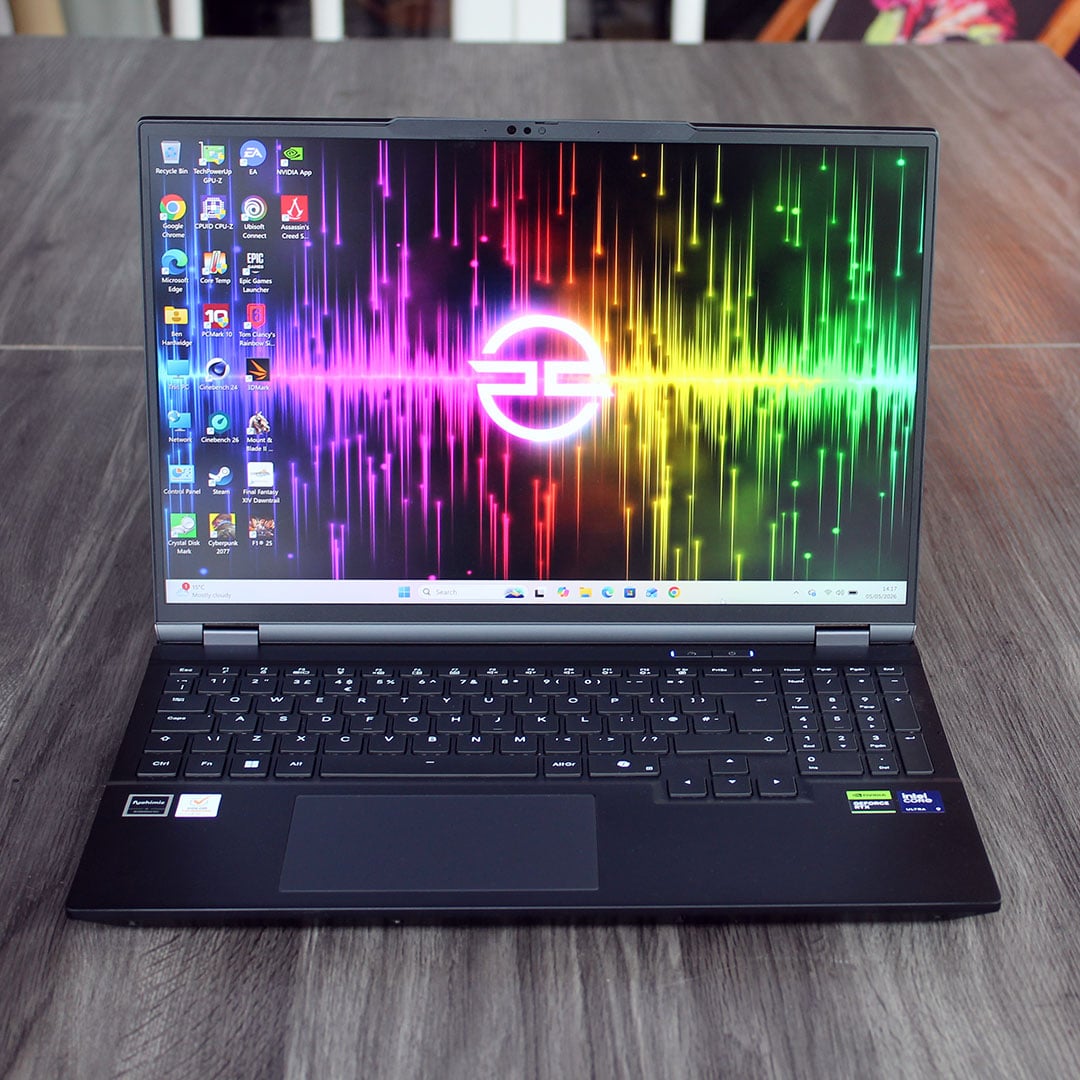
Back to 16:10, that little bit of extra vertical screen space might only account for 120 rows of pixels, but that’s enough to make a serious difference. I notice the lack of vertical screen space distinctly in my working day. I regularly have to zoom in and out of Word documents, as well as our WordPress-based CMS, so I can see parts of my work, and the interface, that would be visible on a 16:10 screen.
Those extra pixels give you several more spreadsheet rows, or a larger workspace for picture-editing in Photoshop. You can also see more of whichever website you’re browsing before you need to start scrolling. I’ve found using a 16:10 screen on a laptop is significantly better for work than my 16:9 monitor.
Now, I generally love my 4K monitor, an AOC U28G2XU that I’ve had for nearly five years. It’s super-sharp, its 144Hz refresh rate makes for smooth motion in games, and its 27in panel is just the right width for my desktop. If it had a 16:10 aspect ratio, it would be perfect. How did we end up here?
Where did 16:9 come from?
Let’s go back to 1984, and not in an Orwellian way. In this year, Kerns H. Powers of the Society of Motion Picture and Television Engineers (SMPTE) calculated a happy medium of all the commonly-used aspect ratios of the time. That goes from the 2.35:1 ratio used in cinemas for widescreen films to the 4:3 ratio used by CRT TVs of the day, along with everything in between.
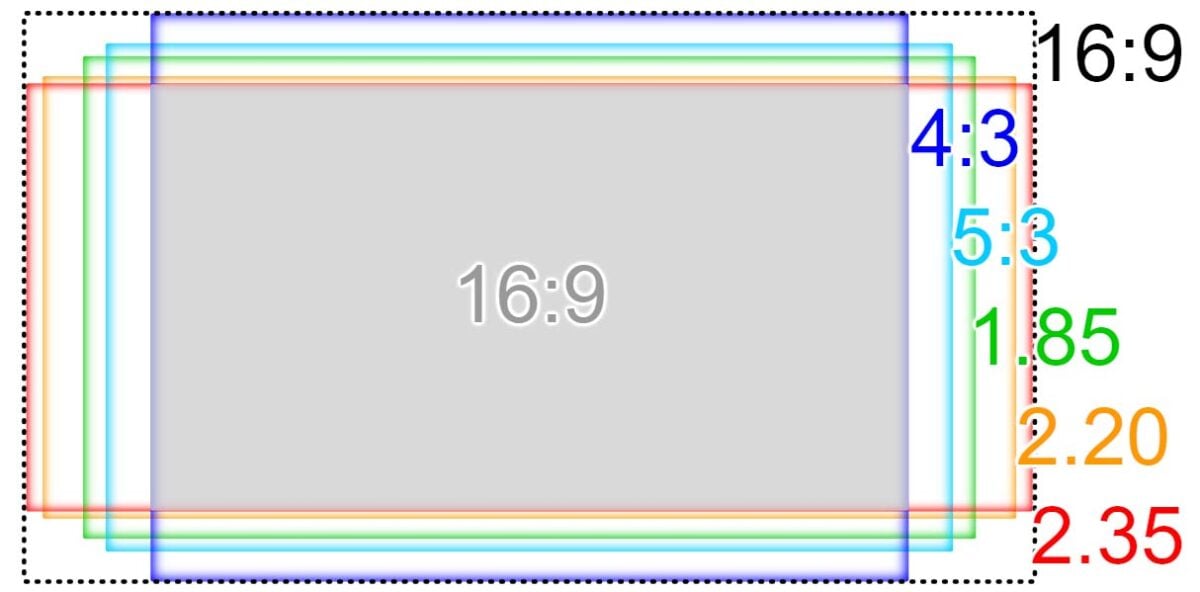
Powers’ proposal was that the rectangles made up by all the many aspect ratios used at the time could fit inside a 16:9 (or 1.77:1, more precisely) rectangle, with 1.77 also being the geometric mean of the two ratios at opposite ends of the scale – 4:3 and 2.40:1. It’s basically a compromise – a format that enables a TV to cover the extreme aspect ratios on either side, while also offering a half-decent widescreen viewing experience itself.
I don’t really care if a movie has black bars on my desktop monitor – I’d rather have the extra workspace.
Once broadcast TV, anamorphic DVDs and Blu-rays adhered to this standard, it was set for victory. That all makes sense for TVs, even if it’s basically a compromise that doesn’t really win in either world. I’m generally happy with my 4K 16:9 TV – it’s just the right size and aspect ratio to mount above my fireplace, and it’s great for watching movies. As I’ve established, though, it doesn’t make as much sense on a desktop monitor.
Yes, widescreen gaming is good at 16:9 (it’s certainly much better than gaming at 4:3), but it’s also good at 16:10. When I buy a monitor, I don’t just want to use it for gaming, as the PC is so much more – it’s also going to be used for work in Windows. Also, I don’t really care if a movie has black bars on my desktop monitor – I’d rather have the extra workspace.
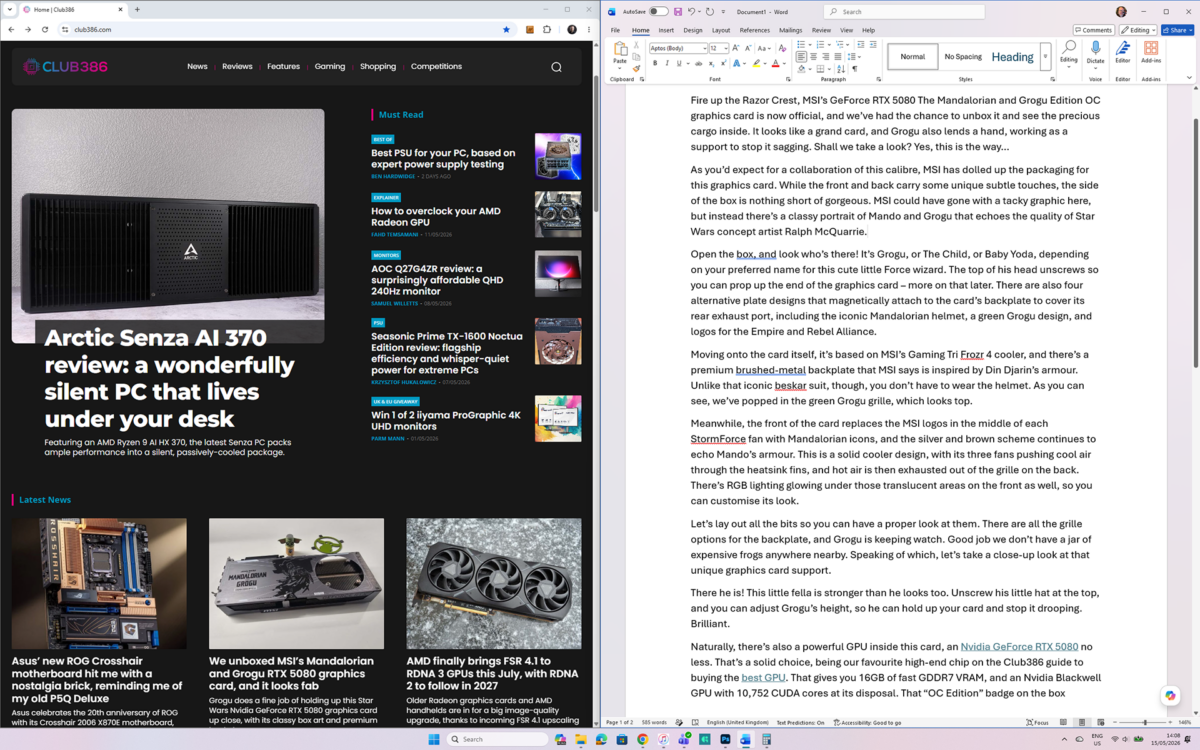
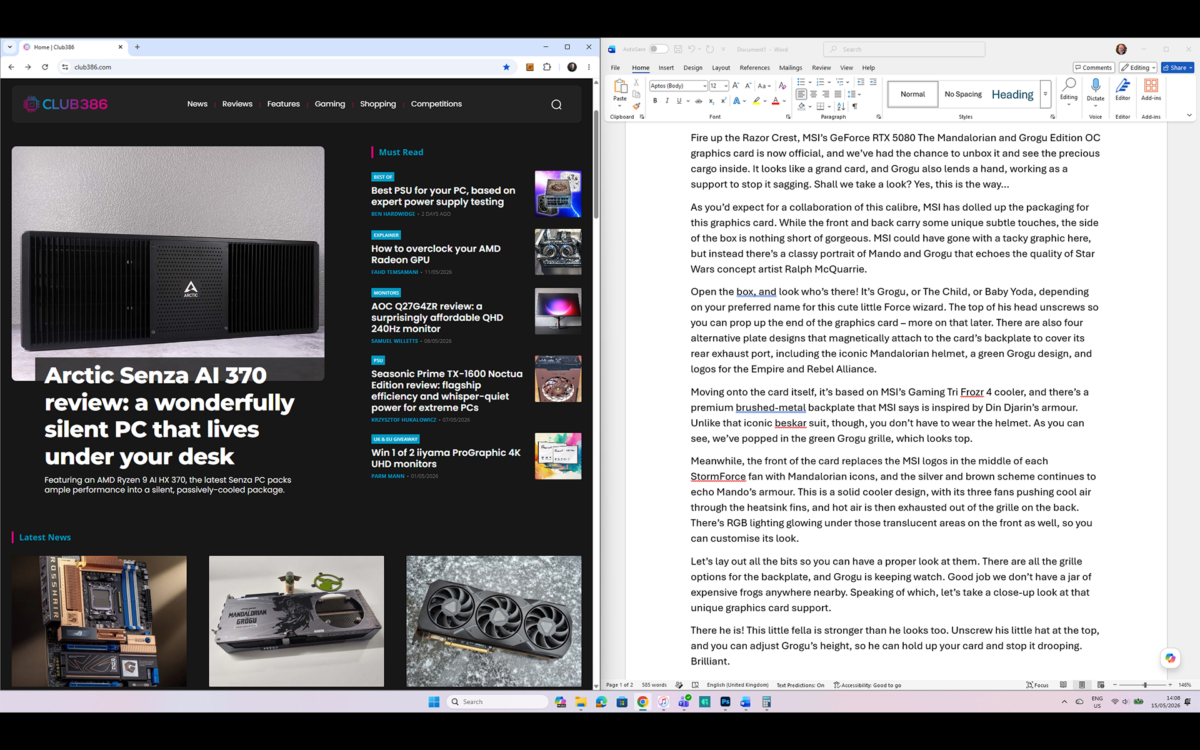
Just to make the point, here are some screenshots of our website with a Word doc side by side, using the same horizontal resolution and scaling. You can read the headlines and summaries of the top three stories on the 16:10 screen, plus an extra four-line paragraph of text. Using a 16:9 monitor for work just doesn’t make sense.
16:10 monitors are more expensive to make
A quick Google search for “16:10 monitors” shows you a barren desert, though. Asus has cottoned on to the benefits of this aspect ratio with its ProArt line of displays, but there’s little else, especially if you want to go above 60Hz. But 16:10 screens where the standard for years, what happened?
One of the main reasons for the dominance of 16:9 monitors is cost. Put simply, you can get more 16:9 panels out of a standard sheet of glass substrate than 16:10 ones, and sticking to the same ratio across the board means you can use these panels across multiple devices.
We’re seeing a bit of a resurgence of 16:10 in the laptop world now, though, and I’ve love to see it make a desktop monitor comeback too. That’s mainly up to the makers of panels, so I’m looking at you, Samsung, LG et al. I’d happily pay a bit more for a 16:10 screen, and I’m sure I’m not alone.