
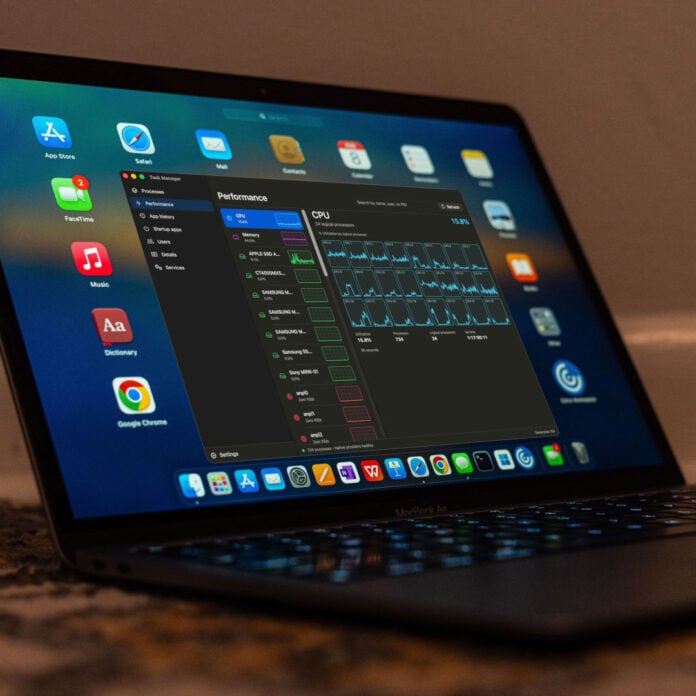
Former Microsoft developer and the man behind Windows Task Manager, Dave Plummer, has started coding a version of this tool for Apple’s macOS, featuring per-core CPU monitoring among other features. Plummer shared a screenshot of this macOS Task Manager, and it looks a lot like the one found on Windows 11.
For those unfamiliar with Dave Plummer, he wrote the original version of Windows Task Manager as a personal project, which ended up being adopted by Microsoft for its operating system. For his new project, Plummer is developing a similar tool for Mac devices, which usually only have access to Apple’s Activity Monitor, a tool that lacks a lot of features compared to Windows Task Manager.
While the Activity Monitor does show important metrics, such as CPU activity and memory usage, for example, it lacks other convenient features such as service and startup app management, not to mention a comprehensive GPU utilisation graph.
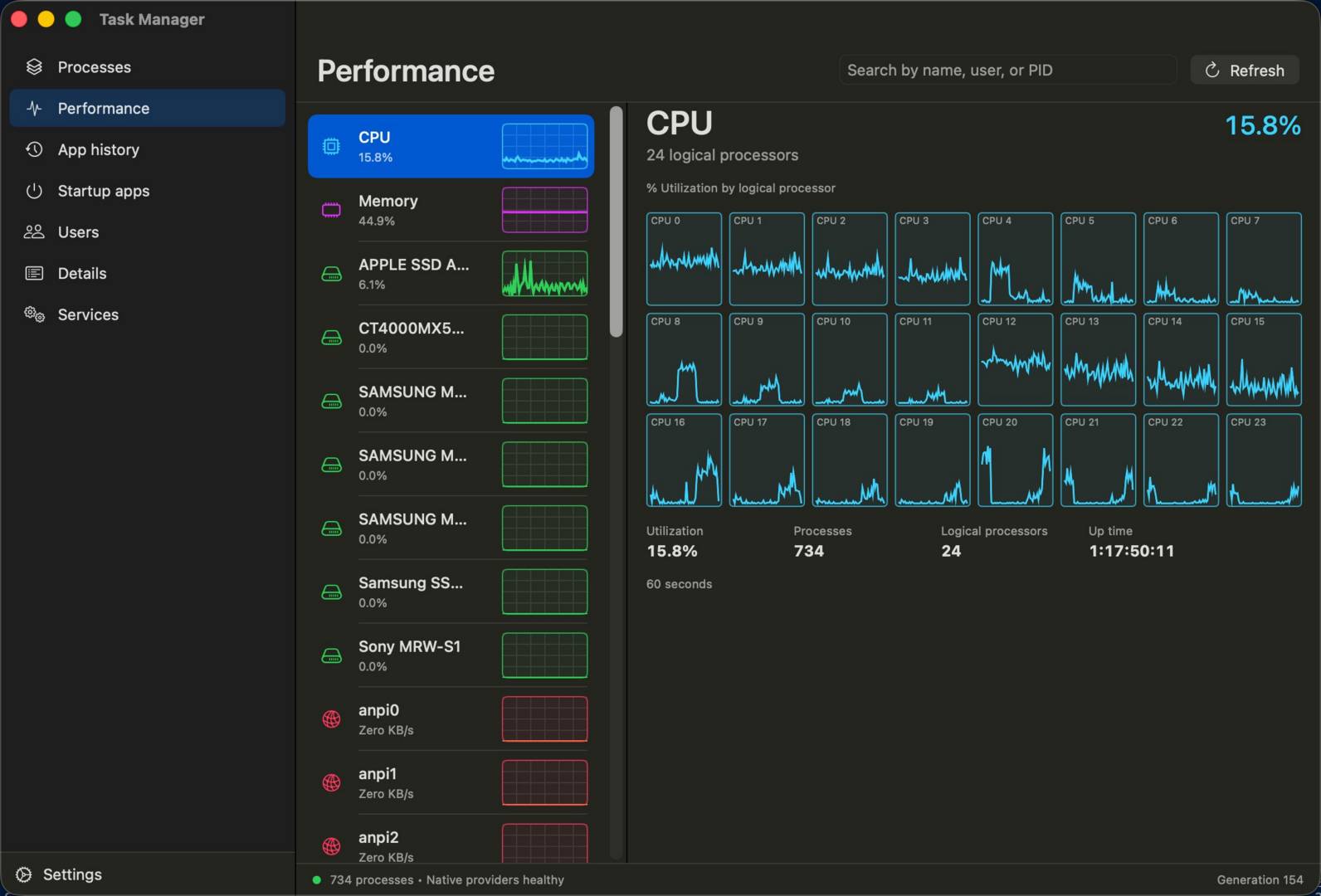
Pummer shared the evolution of his project on X, indicating that his former employer was OK with it. “Microsoft very graciously sent me the source code to XP Task Manager, along with permission to share/demo it on my YouTube channel,” he says.
That said, this new project doesn’t even use that Windows code, and is instead developed in Swift. Currently, this macOS version of Task Manager samples at a rate of 60Hz, but Plummer thinks about reducing it to 30 or 15Hz will make it more stable, even if that means making it less informative.
At first, Plummer intended to distribute this tool via Apple’s App Store for free, at least when it comes to the beta version. However, it turns out that you can’t distribute a Task Manager-like tool via the App Store, since Apple requires developers to use App Sandbox for Mac software sold there. However, sandboxed apps are prohibited from terminating other applications’ processes. Needless to say, being able to force-close unresponsive apps is a key feature of Task Manager.
This doesn’t mean Plummer can’t share his tool via other means, but the App Store would have been more convenient for everyone. He says he’s also considering providing the code for others to finish, if at some point he gets bored. But for now, progress on this tool looks as though it’s up in the air.