
I once dreamed a dream in time gone by of building all-powerful PCs, bursting to the brim with RGB LEDs, but that ambition doesn’t hold the same allure it once did. Whether through ageing or putting together so many brightly-lit rigs, my tastes have shifted towards minimalist, stealthy builds. Now, after a hands-on with the Gigabyte X870E Aero X3D Dark Wood, new ideas are taking root.
Wood accents have steadily grown in popularity across PC cases, but internal components sporting beautiful bark are a relative rarity. This motherboard and its lighter-toned sibling, the X870E Aero X3D Wood, are among the first I’ve seen to hit the market. While both are striking in their own way, I can confidently say I prefer the darker, warmer tones of the Dark Wood model.
Specifications
| X870E Aero X3D Dark Wood | |
|---|---|
| VRM | 16+2+2, 60A |
| RAM support | Slots: 4 Max capacity: 256GB (4x64GB) Max OC speed: 9,000+MT/s |
| Onboard graphics | HDMI (x2) USB 4 Type-C (x2) |
| PCIe expansion slots | PCIe 5.0 x16 (x1) PCIe 5.0 x8 (x1) |
| Audio | Realtek ALC1220 |
| Storage | PCIe 5.0 x4 (x2) PCIe 4.0 x4 (x2) SATA 6Gb (x4) |
| Rear USB | USB 4 Type-C (40Gb) (x2) USB 3.2 Gen 2×2 Type-C (20Gb) (x1) USB 3.2 Gen 2 Type-A (10Gb) (x5) USB 3.2 Gen 1 Type-A (5Gb) (x3) |
| Front USB | USB-C 3.2 Gen 2×2 (20Gb) (x1) USB-A 3.2 Gen 1 (5Gb) (x2) USB-A 2.0 (480Mb) (x2) |
| LAN | Realtek 5Gb (x2) |
| Wireless | Bluetooth 5.4 Wi-Fi 7 |
| Price | £386 / $500 |
Design
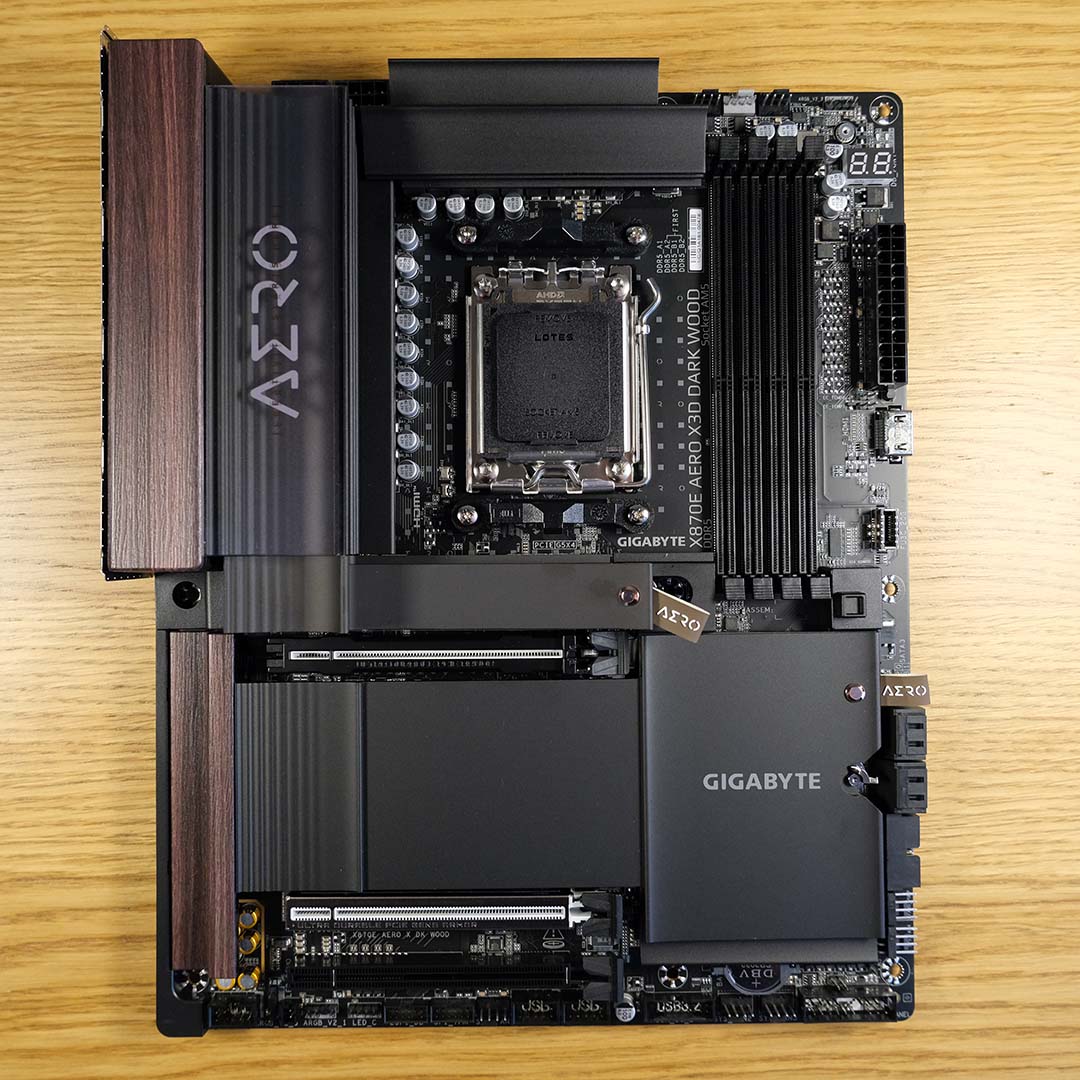
To my pleasant surprise, the X870E Aero X3D Dark Wood isn’t a branch of an existing motherboard. Instead, this board stands alone amongst Gigabyte’s forest of AM5 offerings, both aesthetically and in its feature set.
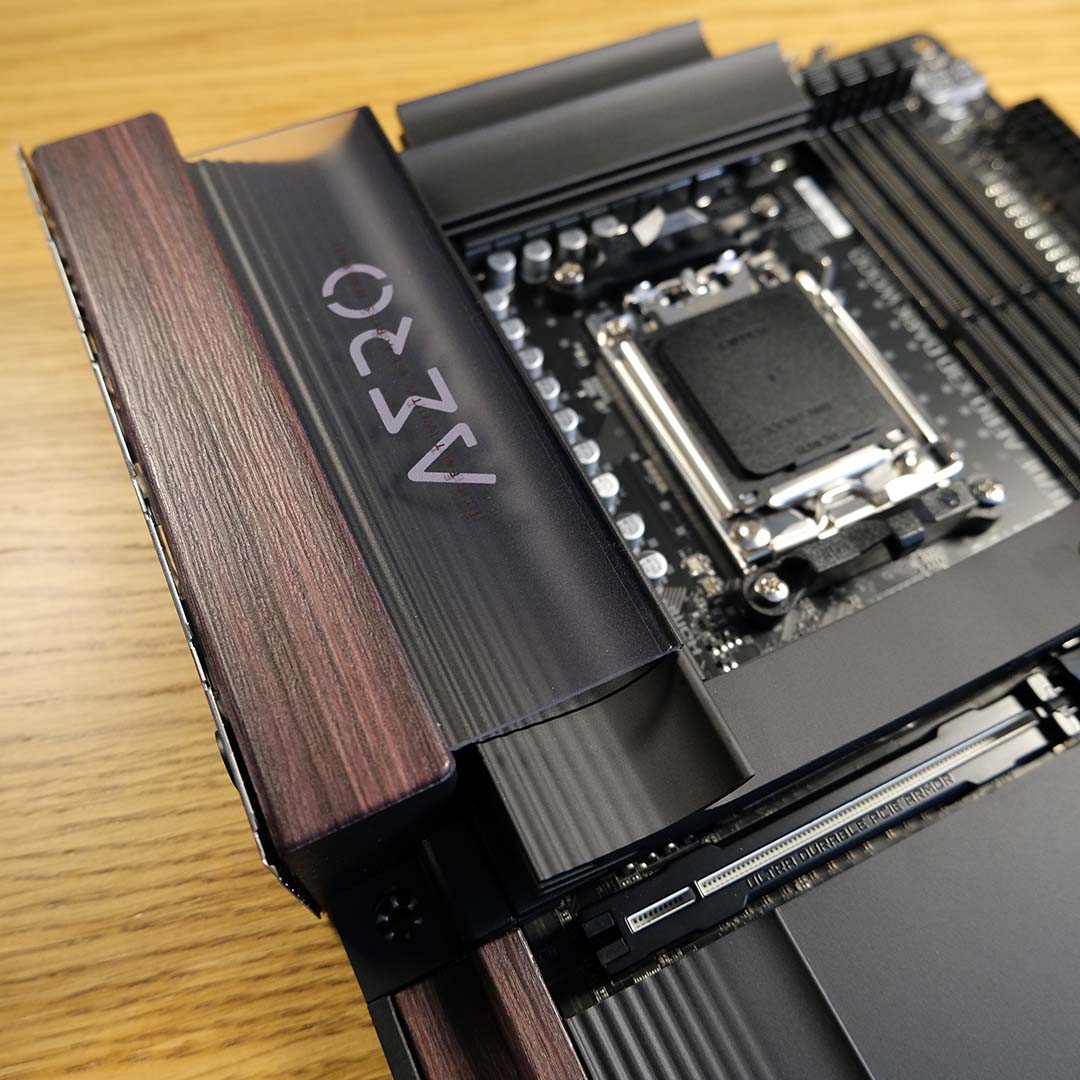
Taking in the motherboard as a whole, this easily ranks among the classiest I’ve ever laid eyes on. A combination of smooth black metals, a sprinkle of leather, and surprisingly eye-catching wood accents all elevate Gigabyte’s design in a fresh, unique, and undeniably premium fashion.
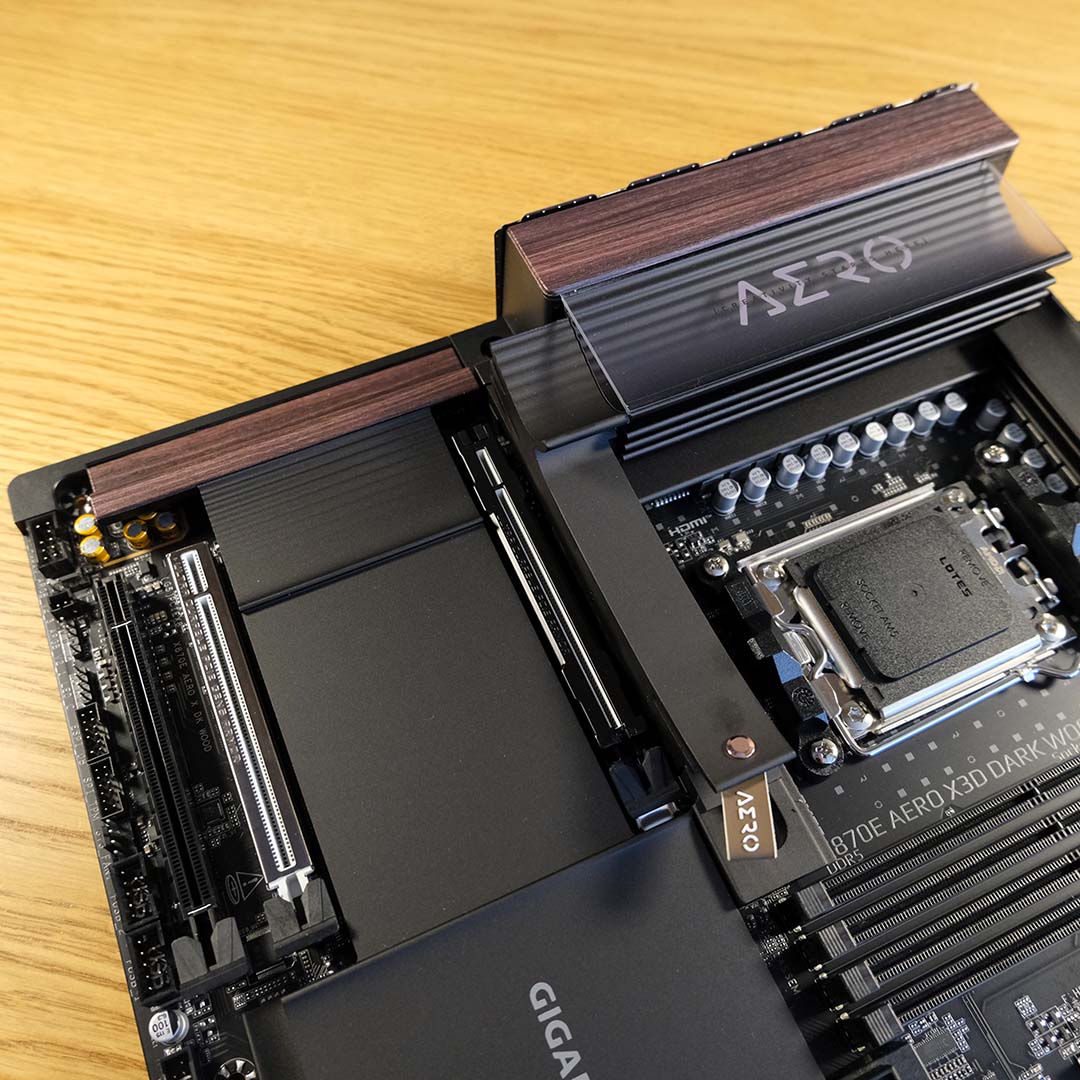
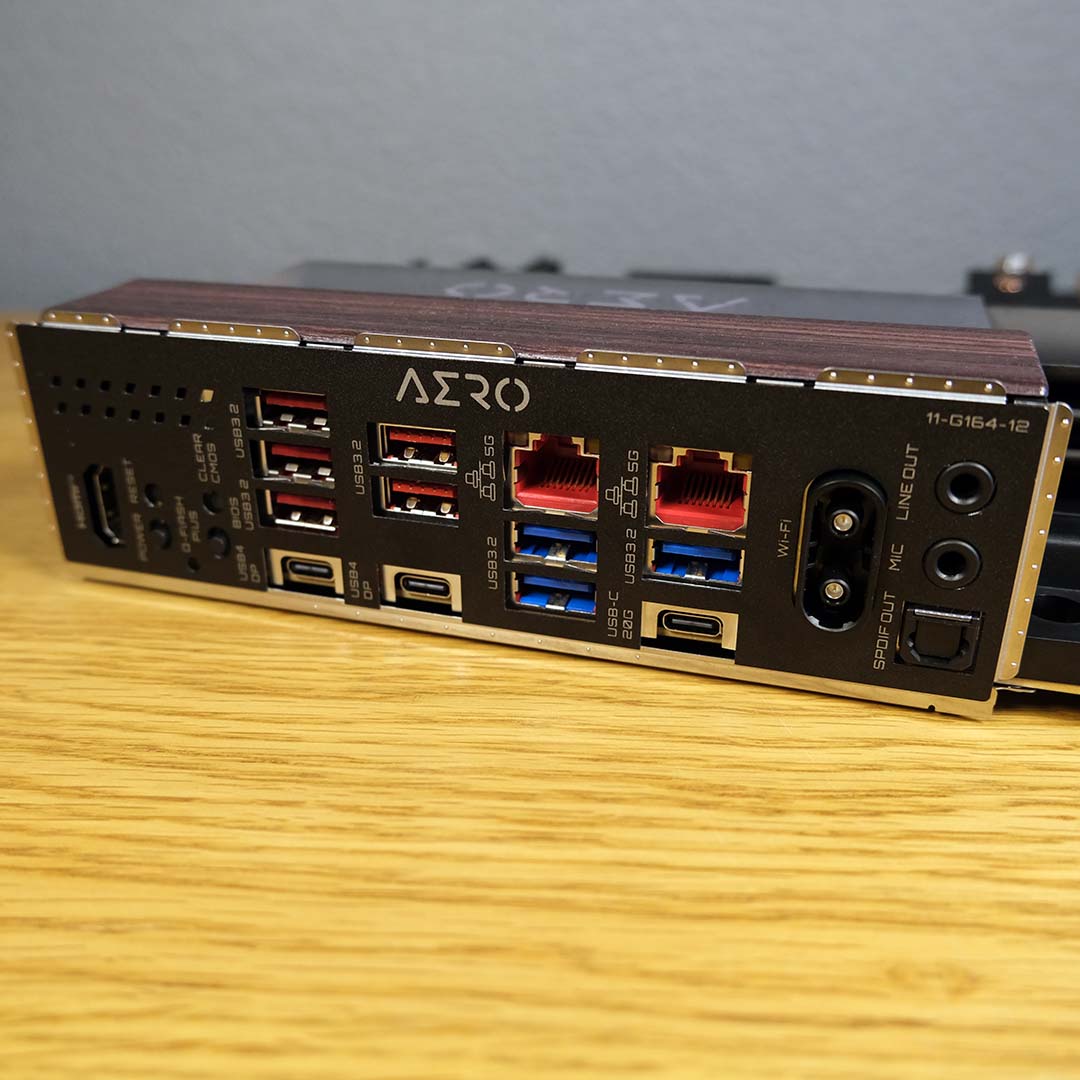
Gigabyte fits wooden accents to the spine of the motherboard, covering a portion of the largest VRM and meeting the lip of the bigger M.2 heatsink. While the proverbial planks don’t cover the entirety, spacing created by the mounting hole metal frame provide contrast that makes the dark grain pleasing pop against the black metals.
It’s this contrast that highlights Gigabyte’s inspiration for the X870E Aero X3D Dark Wood, drawing on the Zen aesthetic principles of wabi-sabi. More specifically, the wood reflects sabi, embracing imperfection and decay, while the metals draw on wabi, subdued beauty.
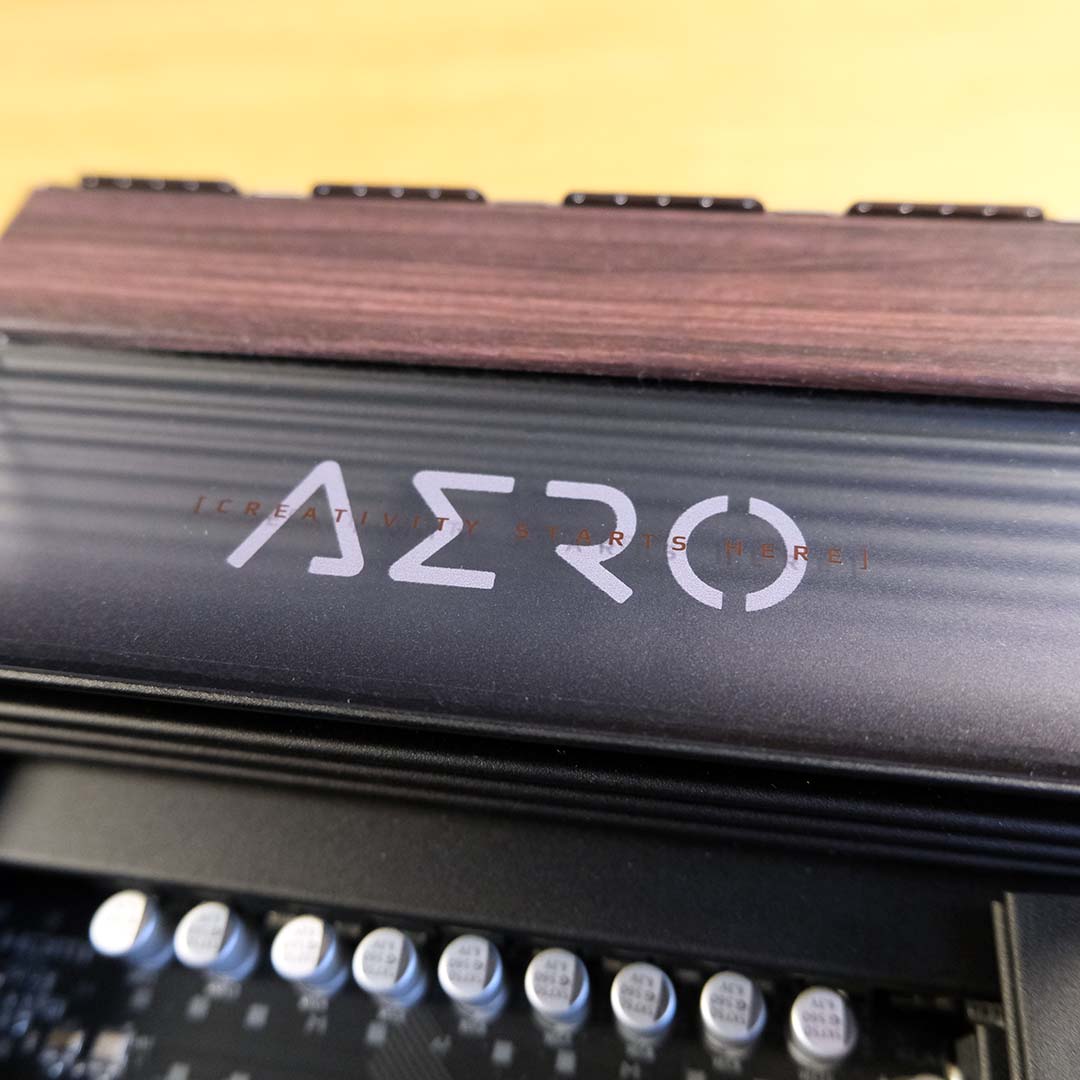
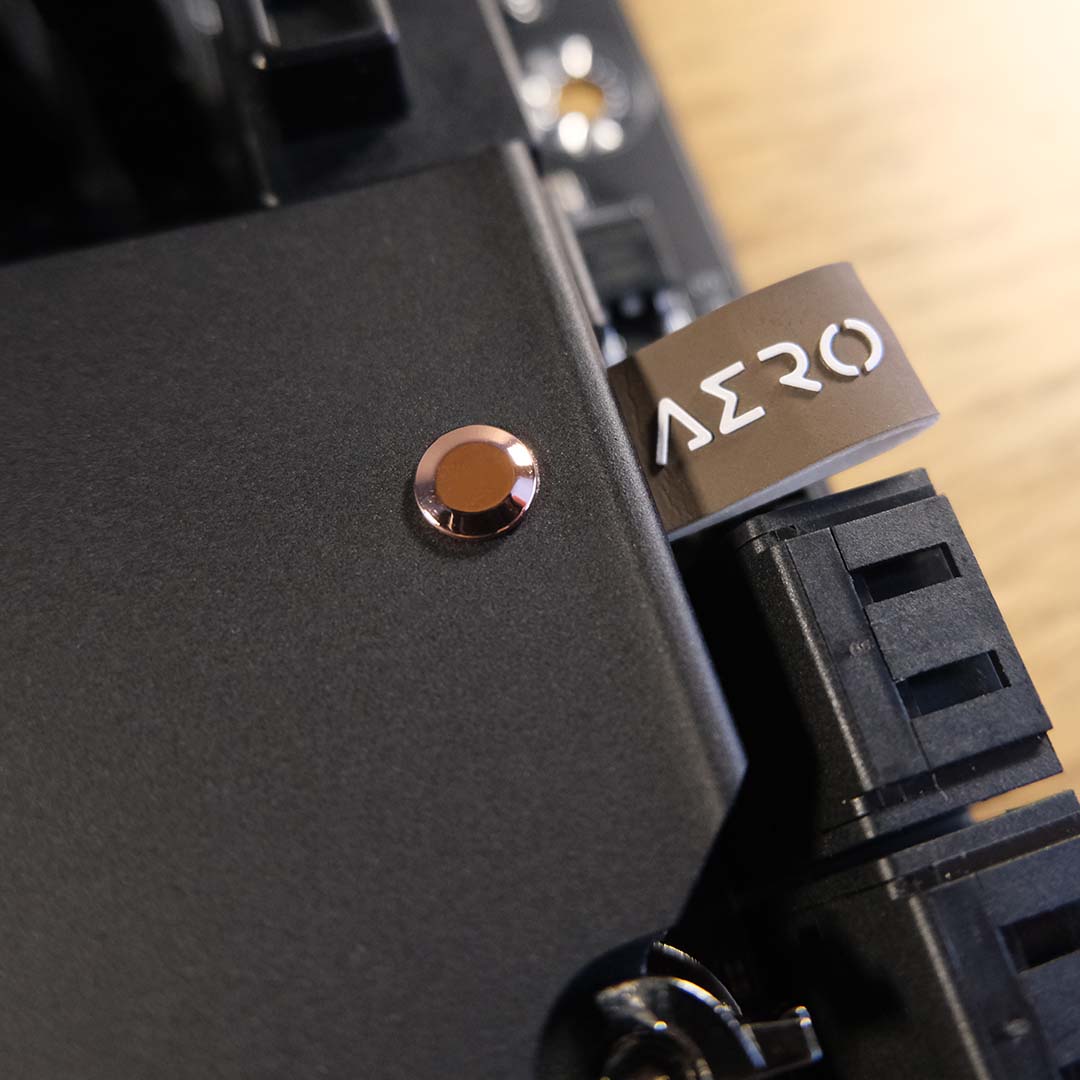
I particularly love Gigabyte’s reserved approach to LED lighting on the motherboard. Semi-transparent frosted plastic, bearing the ‘Aero’ logo, runs alongside the VRM’s wooden cladding, which diffusing warm white light to a pleasingly rich and cosy effect.
Warm tones continue elsewhere on the board, with copper-coloured truncated cones sitting on both M.2 heatsinks, attached the dark-brown leather pull straps. Truthfully, I don’t think these straps are as useful as they should be, as the heatsinks still release via a separate latch mechanism, but they do at least reduce potential unsightly fingerprinting.
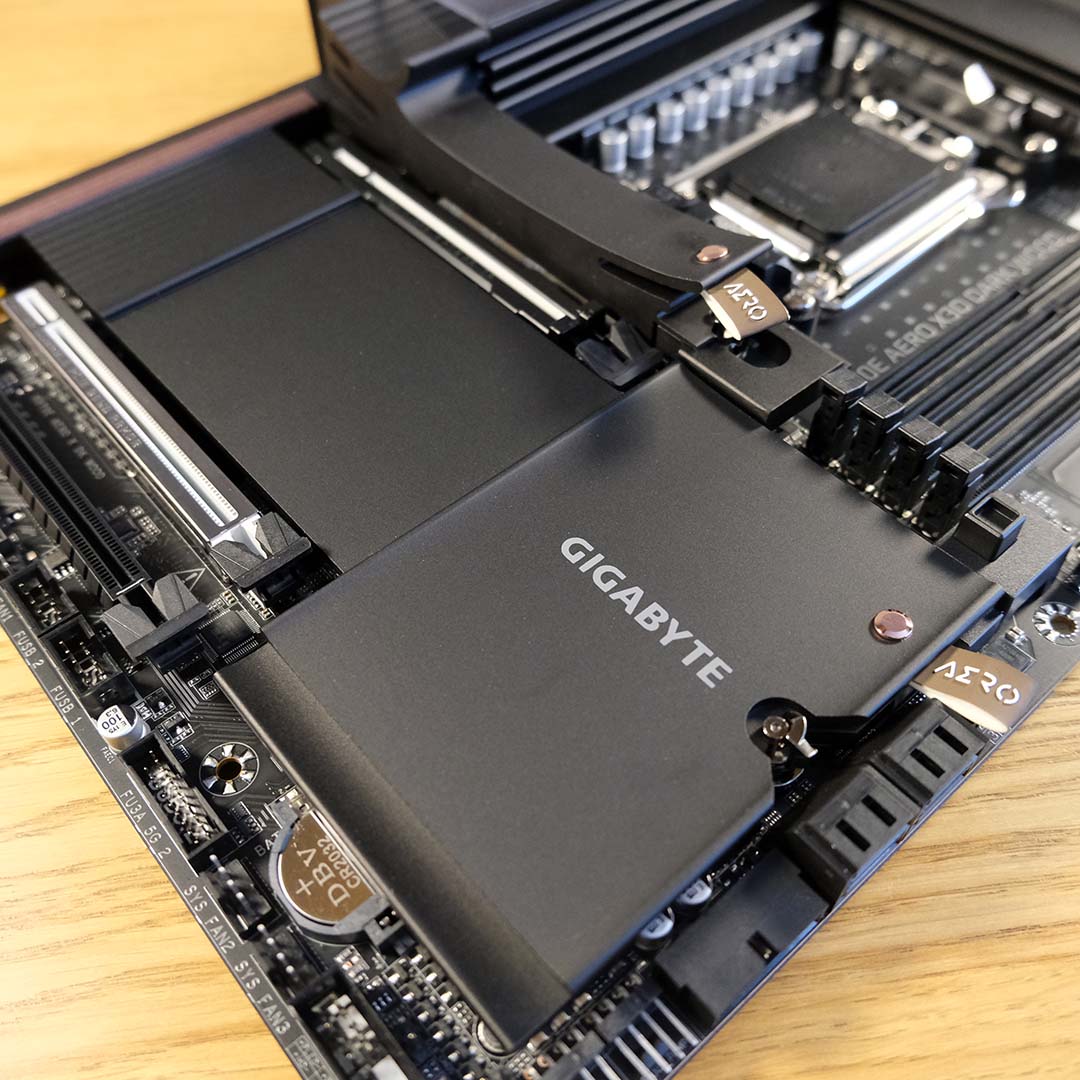
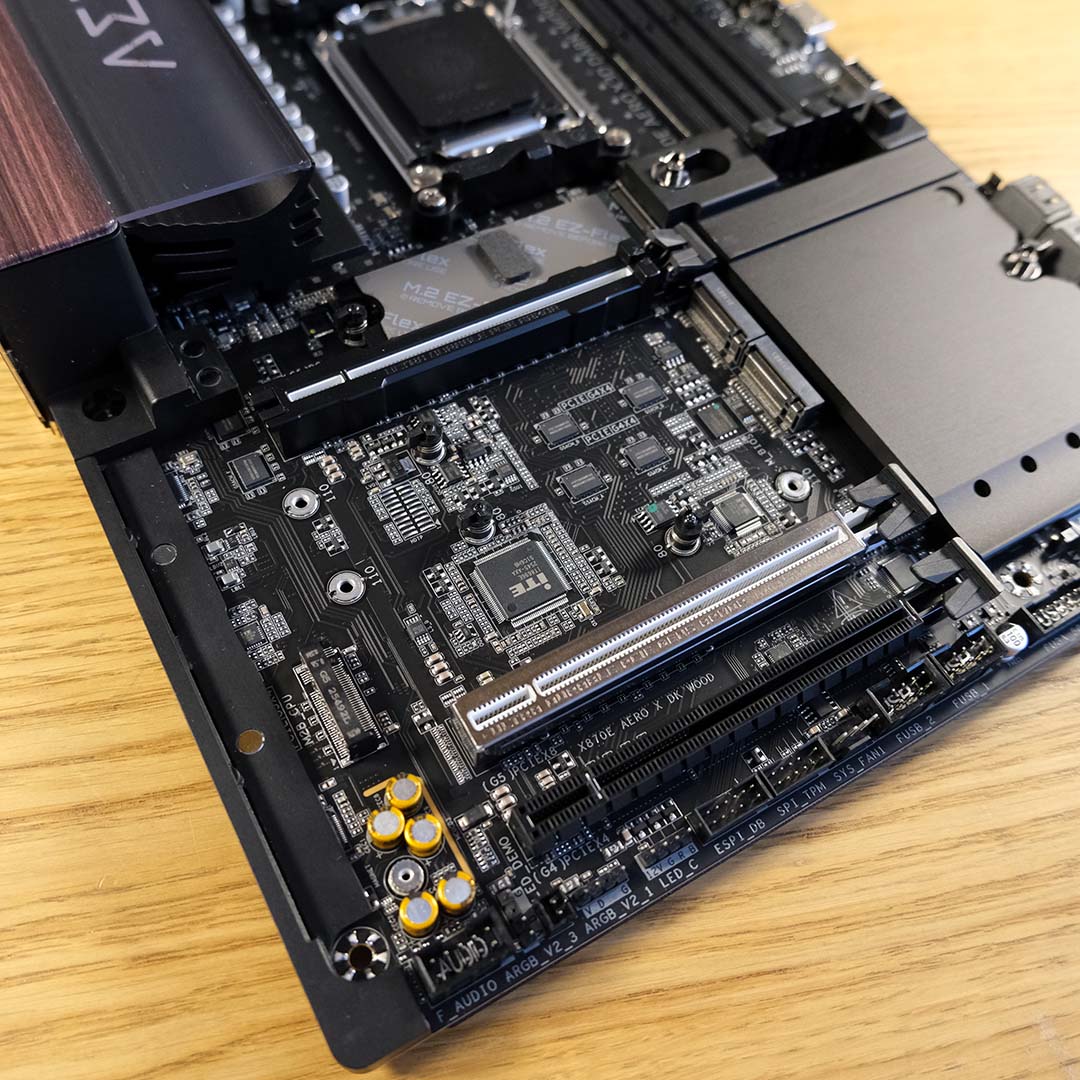
Of course, the X870E Aero X3D Dark Wood’s beauty isn’t just skin deep. As the specifications table above illustrates, there’s plenty of tech to appreciate underneath all these splendid aesthetics, as there should be on a £386 / $500 motherboard.
There’s ample PCIe expansion slots for add-in cards and M.2 storage, almost all benefitting from toolless installation for added convenience. Gigabyte hasn’t skimped on USB bandwidth either, with dual USB 4 ports round the back and not a single USB 2.0 in sight as USB 3.2 Gen 1 inputs set the floor.
All that said, the VRM design is a little on the lighter side for a motherboard of this calibre, at 16+2+2, but particularly where power phases are concerned at 60A. I’d expect closer to 18+2+2 ~100A at this price point, but this setup is still more than suitable for handling high-end Ryzen CPUs.
PC build
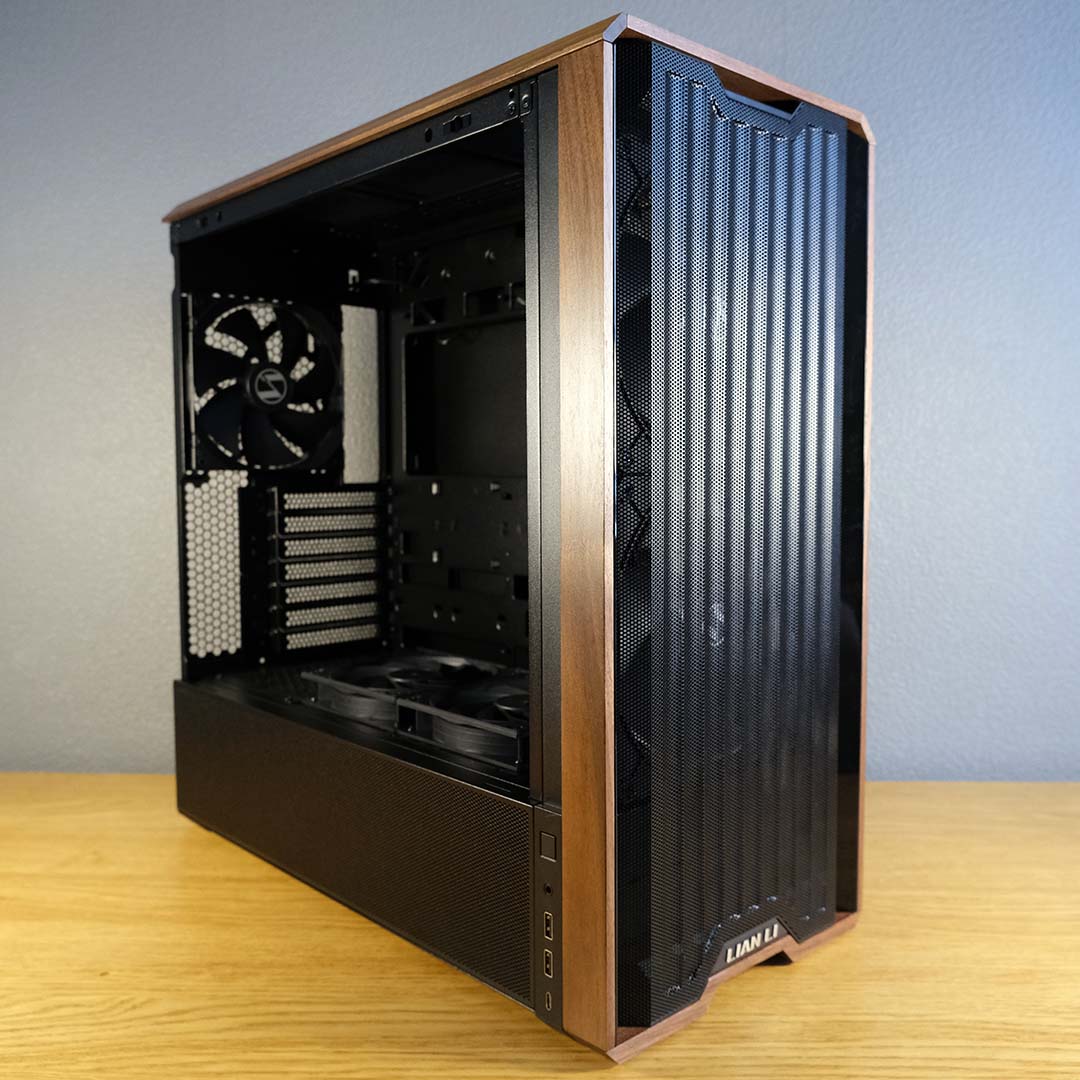
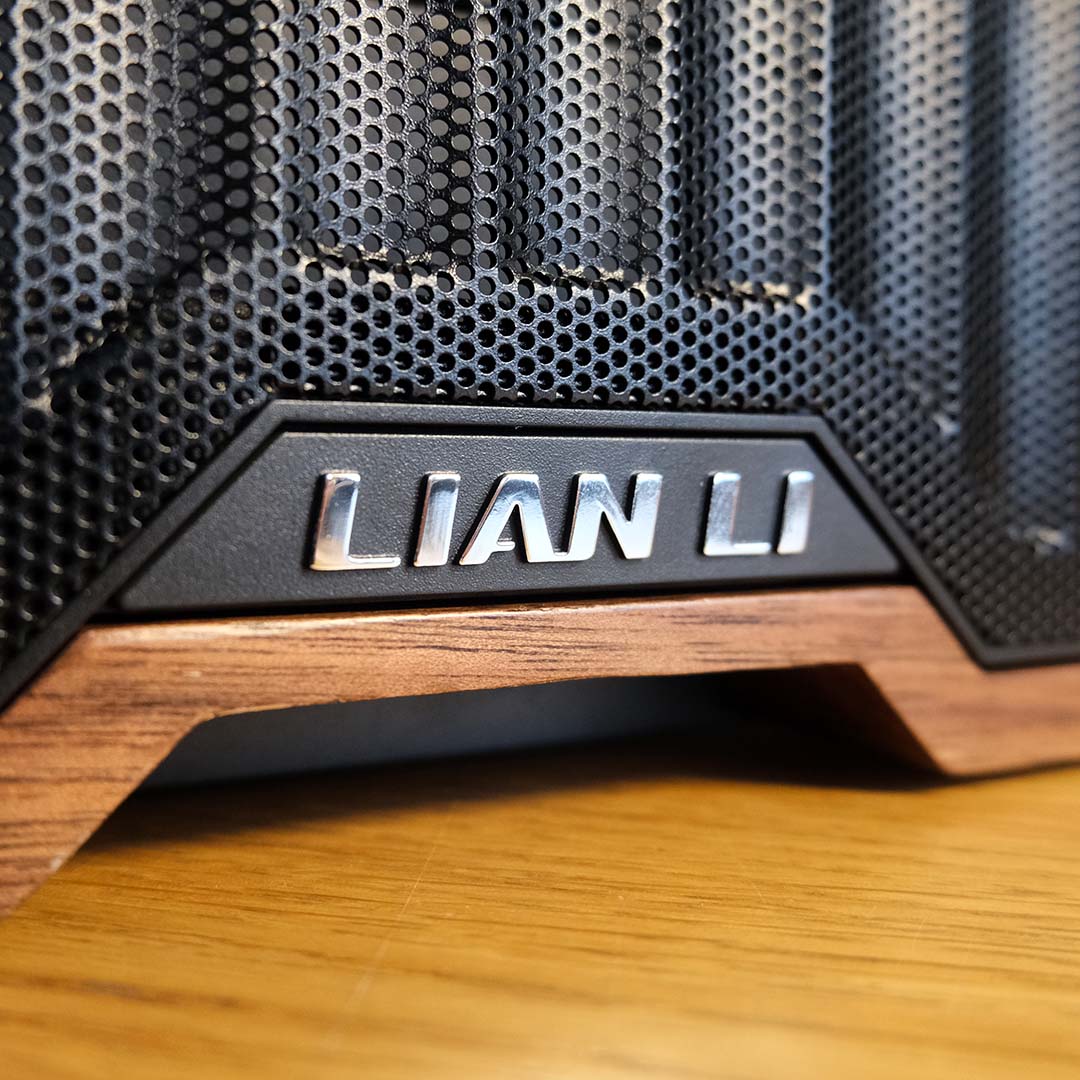
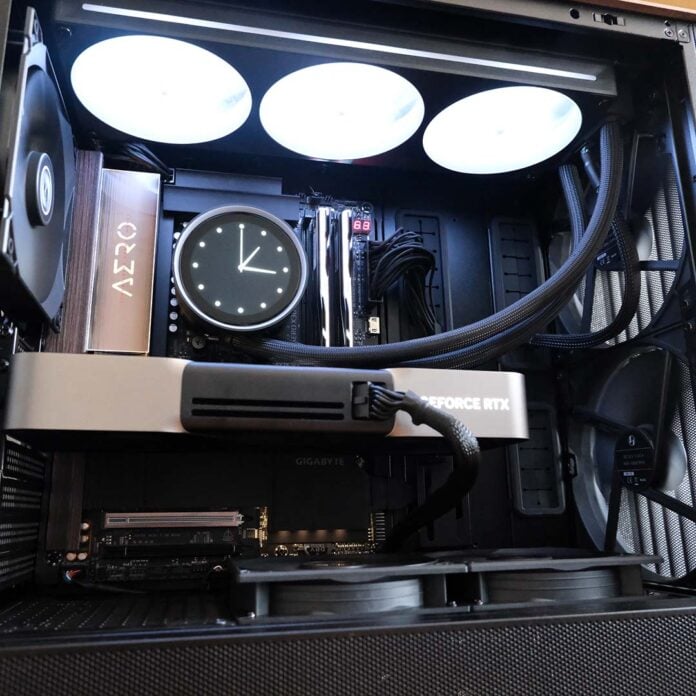
Gorgeous as the X870E Aero X3D Dark Wood is in isolation, I’m keen to see how the motherboard sits in a complete build. Thankfully, I have an appropriately woody chassis ready to plant this board into. Enter the Lian Li Lancool 217.
This mid-tower case is available in white with light wood accents, or black with dark wood accents. The latter naturally serves as an ideal home for my X870E Aero X3D Dark Wood motherboard, even if their respective wood grains aren’t quite a match.
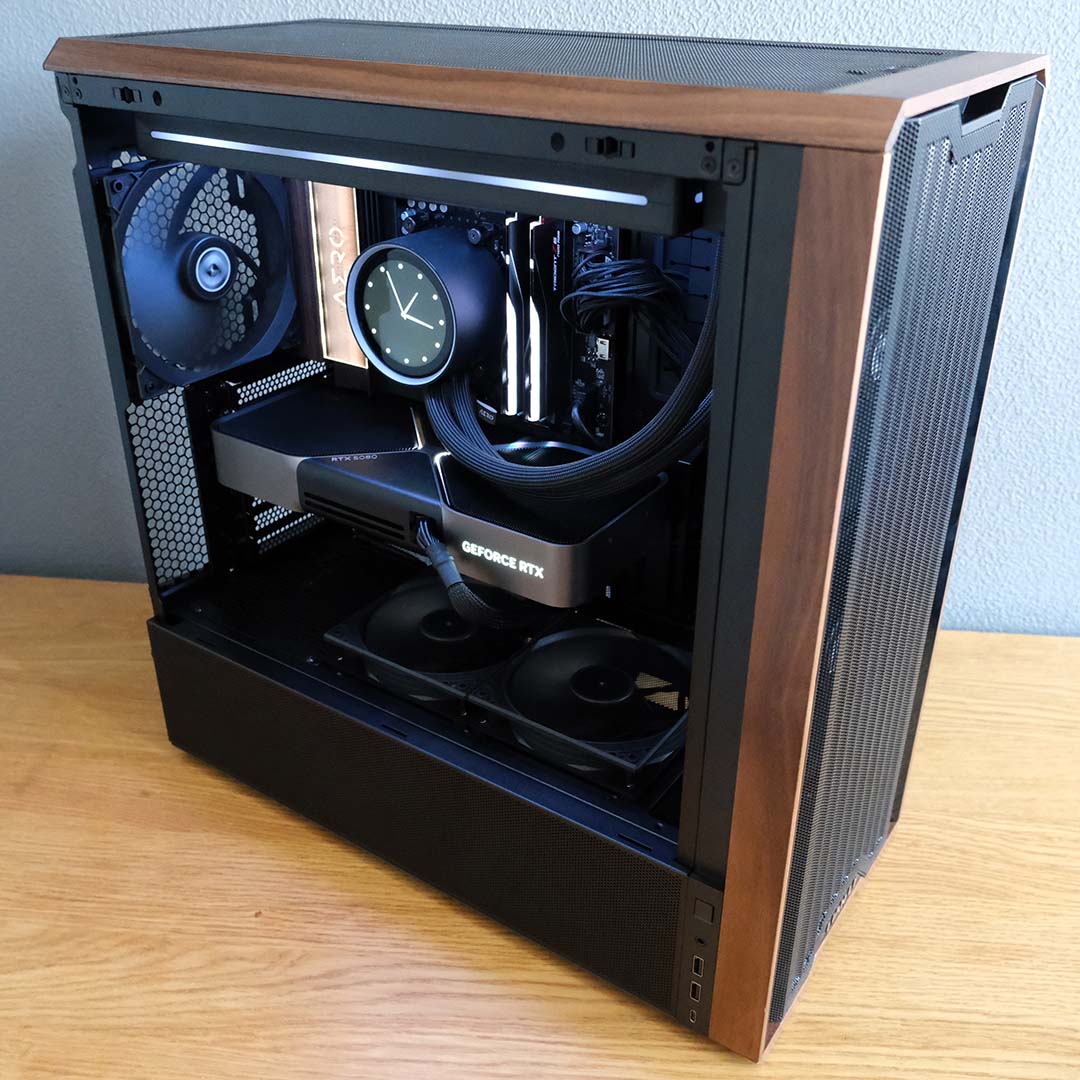

Ideally I’d have other components complete with wood accents to populate this PC. Alas, we live in a world of metallic and plastic surfaces. In lieu of bountiful bark, I’ve gone with such materials, removing RGB where possible.
More specifically, this entails a GeForce RTX 5080 Founders Edition, powerful but importantly slight in its profile. Meanwhile, G.Skill Trident Z5 Neo RGB RAM and an NZXT Kraken Elite 360 RGB AIO cooler round off visible components, of course arriving in shades of black.
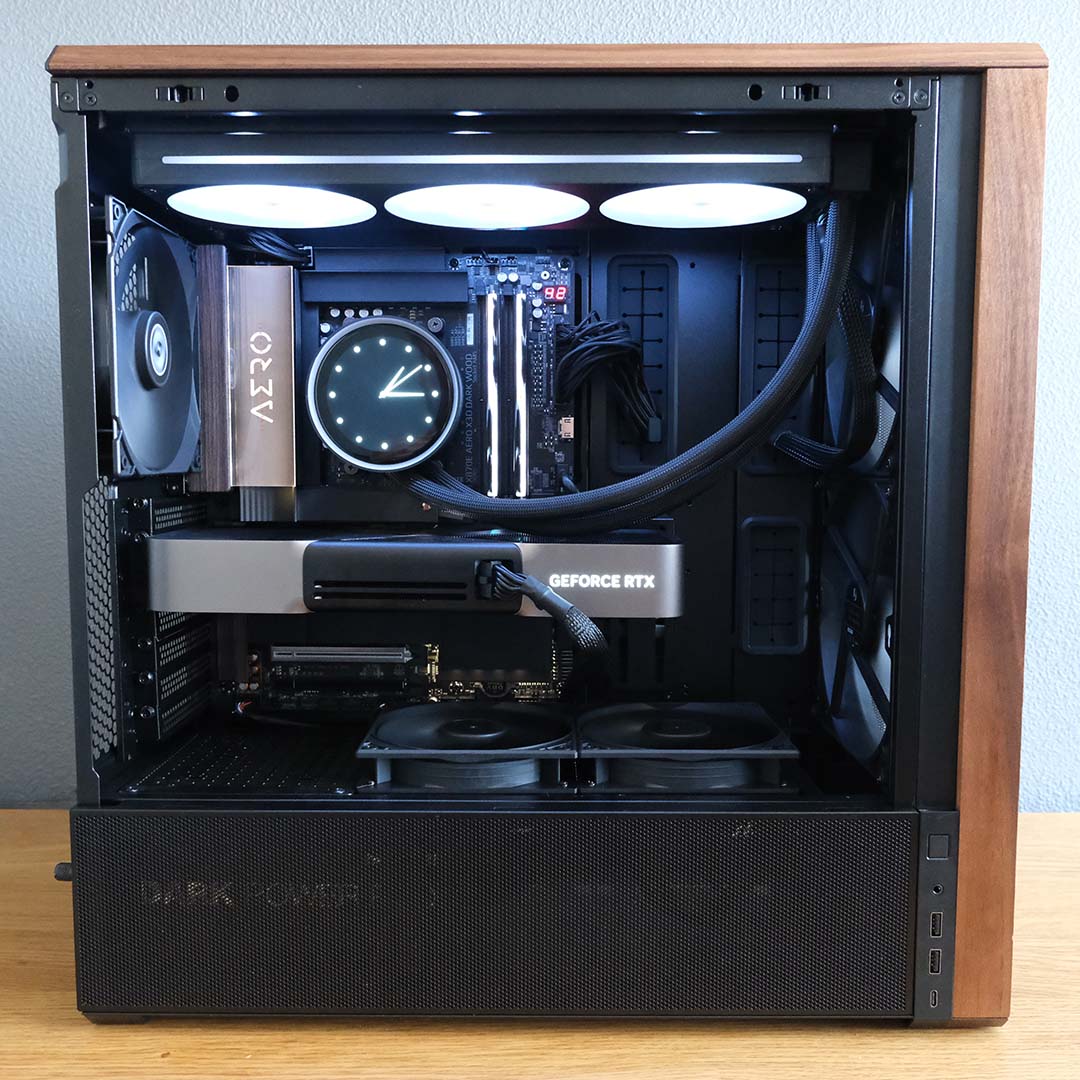
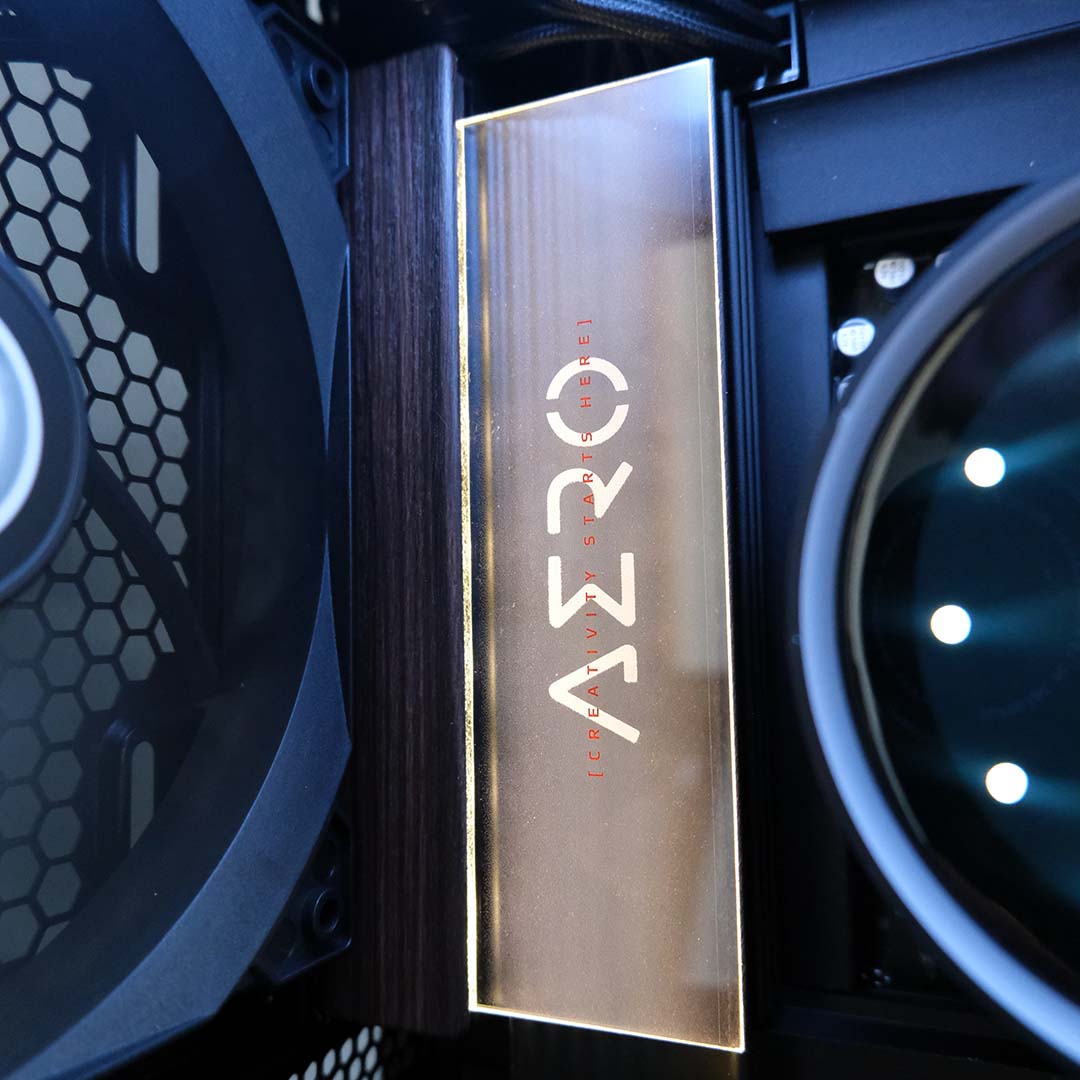
A few hours later and the PC is up and running, coming together beautifully if I dare say so. In fact, I’d go so far as to say this is one of my favourite builds, with the wooden accents truly offering a unique aesthetic that I’ve not been able to appreciate before now. About the only thing I’d changer is a lower profile rear exhaust, to reveal more of the wood.
While I wish there was more dark wood at play in the build, the panels that are present do well to bring out the wabi-sabi in this PC. Sumptuous as this rig is in the summer, part of me wishes I’d built it during the darker, colder months, so its warm white glow and wooden tones could properly bring some unique comfort.
Final thoughts
I’m thankful that Gigabyte’s taken a chance at trying something different with the X870E Aero X3D Dark Wood. Competitors would do well to take notice, as I’m confident the company’s on to a design trend that holds appeal with a large swathe of the tech crowd.
As much as I’d welcome other models embracing a touch of barkskin, a back-connect variant or successor to the X870E Aero X3D Dark Wood is top of my list. Removing all the unsightly headers and wiring from the front of the board would only further elevate its classy status.
Now, what’s it going to take for wooden accents to appear on coolers, graphics cards, radiators, and more? Consider the seed planted.