
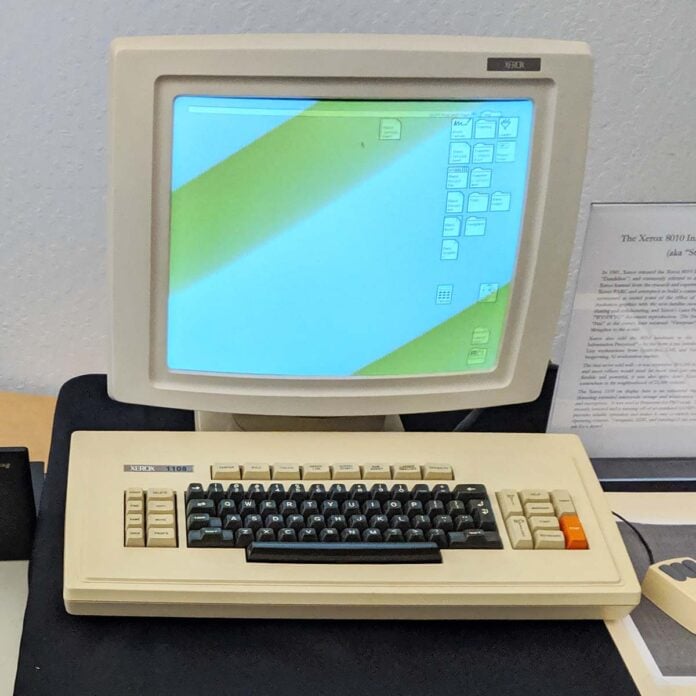
Today, it’s the Xerox Star 8010’s 45th birthday, and while I know most people will have never heard of this landmark computer, I’d like to help put it on the map. In 1981, this amazing piece of computing history gave us a full graphical user interface (GUI), several years before Apple released the Lisa, let alone the first Mac, and well before the first version of Windows came out.
There are often fierce Mac vs Windows arguments played out online, where Apple and Microsoft zealots compare notes on who did what first, and who took ideas from here. That Windows 95 Recycle Bin looked very much like the Apple trashcan, after all. However, the truth is that Xerox was well ahead of the curve here. According to Legend, Bill Gates once said to Steve Jobs, “I think it’s more like we both had this rich neighbour named Xerox, and I broke into his house to steal the TV set and found out that you had already stolen it.”
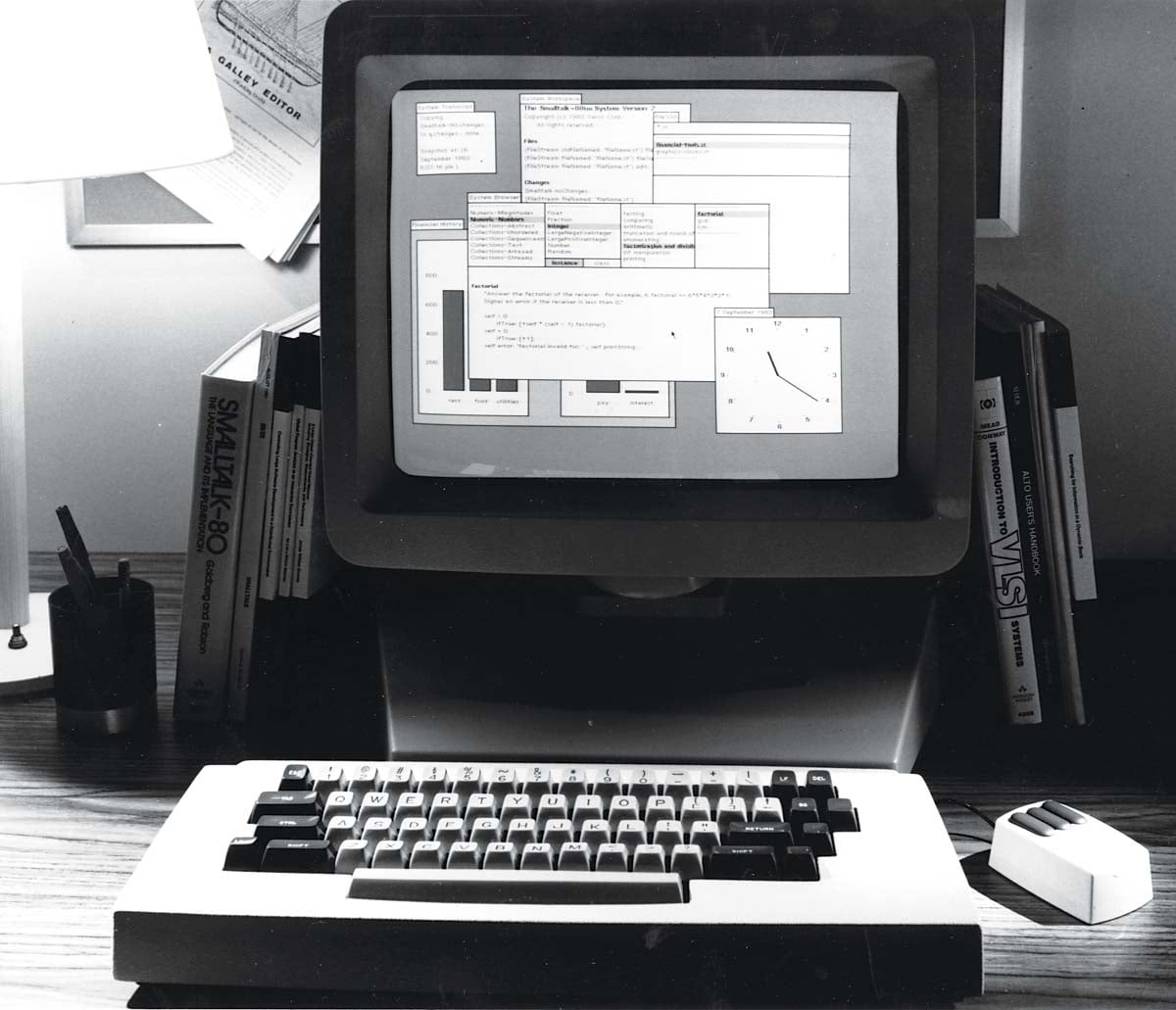
Conducting SmallTalk
Whether this is true or not, it’s worth taking a look at some of the amazing work conducted at Xerox PARC. While the origin of the GUI can be traced back even further than Xerox, with Ivan Sutherland’s Sketchpad from the early 60s being definitely worth a Google, it was Xerox’s work on Smalltalk in the 1970s, spearheaded by Alan Kay, that really laid the foundation for what we now use in MacOS and Windows, and using incredibly basic hardware.
The first version was developed in 1971, and Xerox’s Alto computer even had a primordial GUI as far back as 1974. Lots of the behaviours of operating systems we use today were nailed down in this period, particularly after the development of BitBlt in 1975, which enabled you to pick separate bits out of a bitmap, rather than treating everything as 16-bit words, making for a truly flexible display system.
Back in 2004, I had the pleasure of interviewing one of the guys who worked on SmallTalk at Xerox for Custom PC magazine, a brand that’s now owned by Network-N Media but was run by Dennis Publishing at the time (it’s in the August 2004 issue if you can find it).
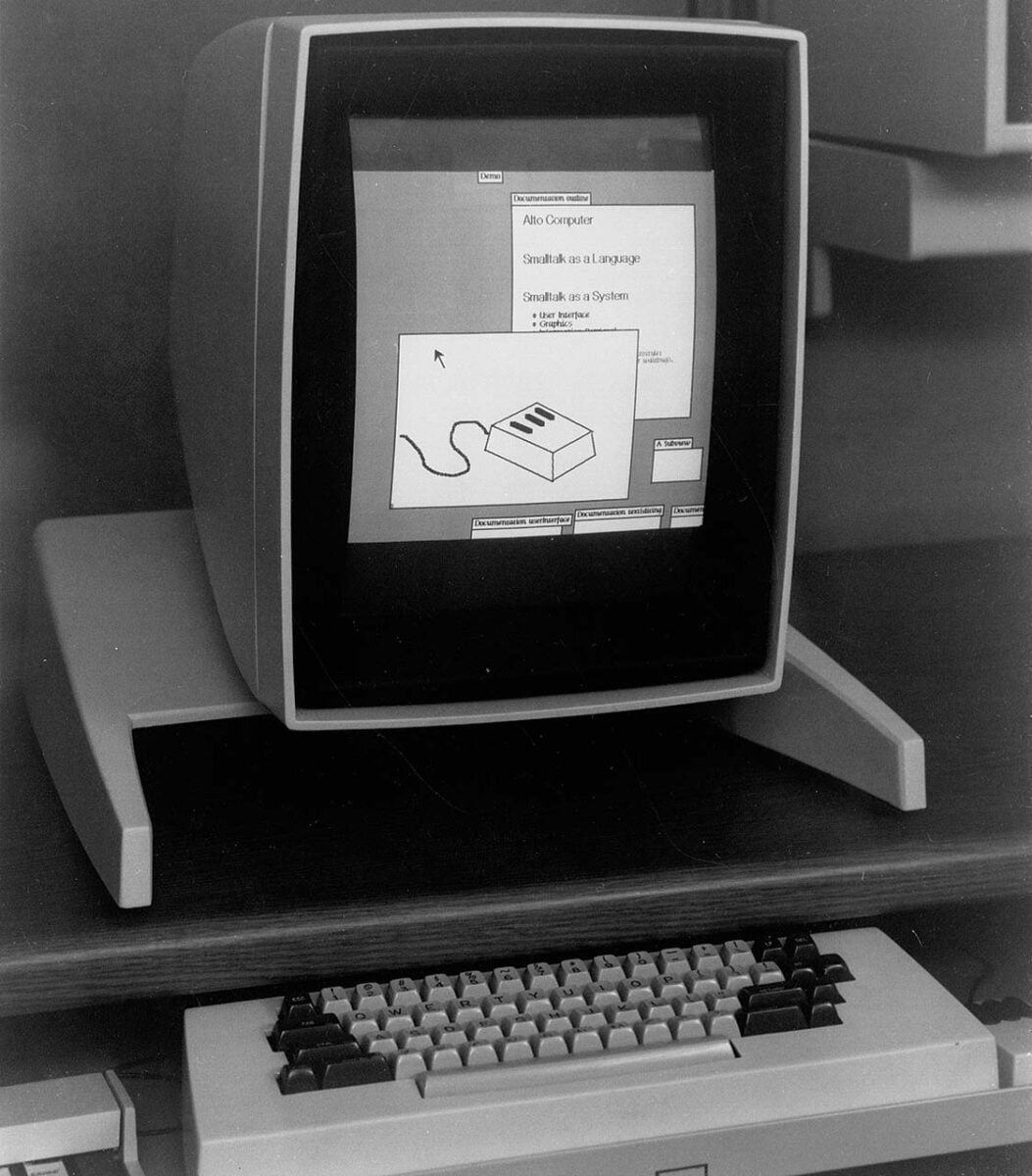
“Smalltalk was the first system to have what we think of as windows,” Robson told me. “In other words, a rectangular area with contents that you could move around to different locations on the screen. You could even do pop-up menus, so whenever you pushed your middle mouse button, the menu would show up underneath wherever the cursor was, and you could then highlight different parts of it by holding it down.”
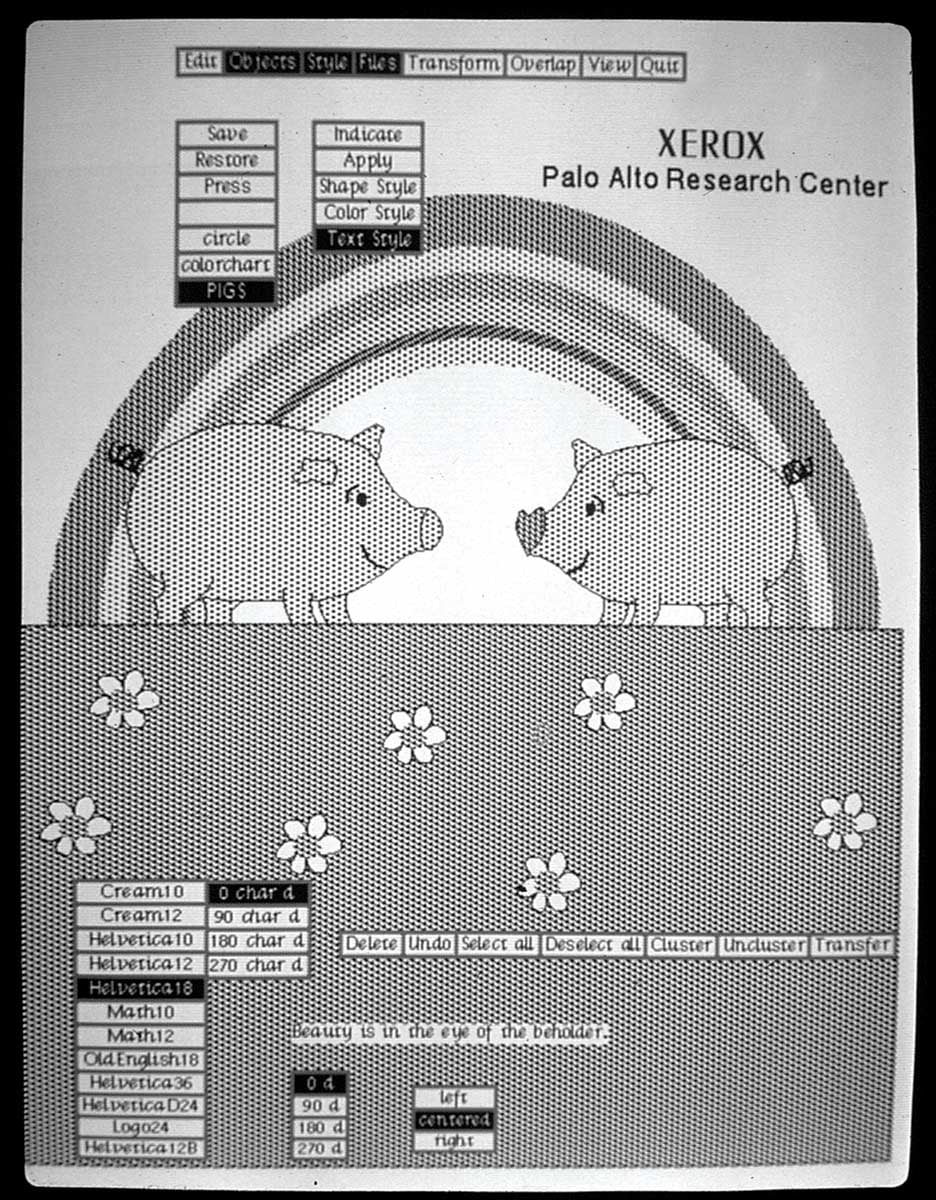
Introducing the Star 8010
Fast forward to the release of the Star 8010, and Xero’s OS (now called Pilot) had a full GUI with icons and scrollbars, and that’s using hardware from 1981. Using an AMD AM2900 CPU, 384KB of RAM (upgradeable to 1.5MB), and offering up to 40MB of hard drive space, as well as a 17in 1024×808 screen, the Star 8010 was amazingly ahead of its time. It makes the first IBM PC 5150 look positively simple.
Unsurprisingly, though, it was also incredibly expensive. It cost $16,595, and that was in the early 80s – that’s about $60,000 in today’s money. It wasn’t until the first Mac arrived in 1984 that a GUI-based computer had a much more palatable price of $2,495.
The next few years must have been incredibly frustrating for Xerox, after all its investment, as it watched Microsoft and Apple’s GUI operating systems take off. Xerox unsuccessfully issued a lawsuit against Apple in December 1989, claiming that parts of the Mac’s graphical user interface heavily used ideas from Xerox, arguing that Apple “intentionally and purposefully concealed” parts of the Mac and Lisa operating systems that were purportedly derived from Xerox’s work, but it was thrown out, coming five years after the Mac’s original release.
All these years later, though, I’d like to take off my hat to Xerox’s work here, culminating in the release of the Star 8010 on 27 April, 1981. Happy birthday, and thanks for all you’ve given us.