
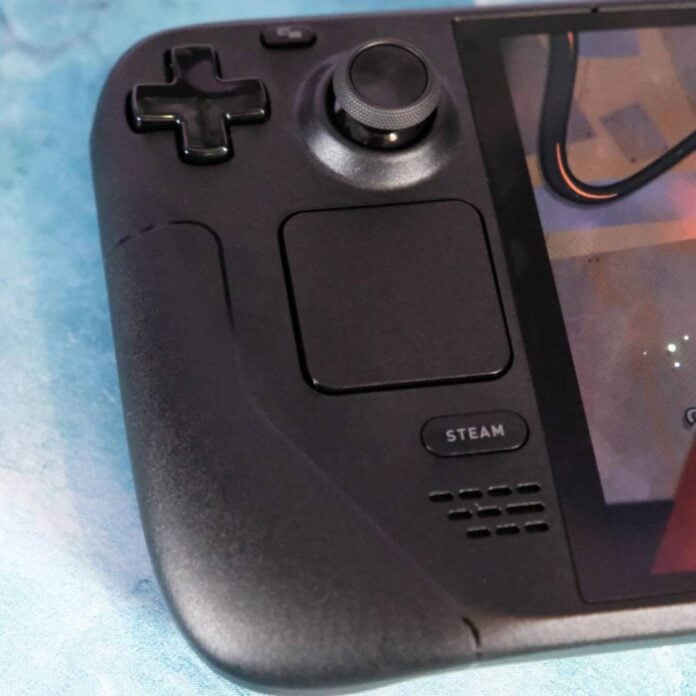
According to serial hardware leaker Kepler_L2, Valve is targeting a 2028 release window for its next-gen Steam Deck 2 gaming handheld. However, this target may shift if the ongoing RAM and flash NAND shortage persists for longer than expected.
Following the great success of the Steam Deck, which proved that portable gaming is possible with PC titles, many have continuously shared their wish for a refreshed model with boosted performance and battery life. Despite the launch of many competing devices, such as Asus’ ROG Xbox Ally and Lenovo’s Legion Go, none have truly satiated gamers’ thirst. I’d argue the Steam Deck remains a prime candidate for many thanks to its better software and hardware integration and friendly user experience. To be fair, the original design has received a couple of slight hardware updates throughout the years, like faster memory and an OLED display, but none has been revolutionary.
Understandably, for such users, the next best thing can only be a Steam Deck 2, which has been rumoured for years. Valve engineers and designers agree with this philosophy, informing that there won’t be a Steam Deck 2 until the performance and efficiency gains are big enough to truly justify a new generation. For instance, Valve software engineer Pierre-Loup Griffais told IGN “We’re not interested in getting to a point where it’s 20 or 30 or even 50% more performance at the same battery life. We want something a little bit more demarcated than that.”

Going back to our leak, when asked by a user on the NeoGAF forum regarding the target release of the Steam Deck 2, Kepler_L2 confirmed that the currently available information points towards a 2028 launch date. Adding that the ongoing RAM and NAND shortage and price hikes could delay the release. That said, this delay won’t be wasted, according to Kepler_L2, as Valve would leverage it to improve the machine’s specs.
Considering that the Steam Deck 2 is expected to be powered by a semi-custom AMD SoC, we can assume Valve would opt for the latest Zen 6 CPU and RDNA 5 GPU architectures. If correct, we can hope for a drastic improvement in performance and efficiency. As a reminder, the Steam Deck 1 is based on Zen 2 and RDNA 2. On top of that, we can expect the latest in upscaling and ray-tracing techniques, potentially optimised enough to allow for handheld ray-traced gaming.