
Better late than never, AMD has finally brought the radically improved image quality of FSR 4.1 upscaling to its last-gen RDNA 3 GPUs. Following a driver update, Radeon RX 7000-series graphics cards and integrated GPUs based on the same architecture can now kick AMD’s definitively worse FSR 3.1 tech to the curb.
However, this implementation differs from the standard model. AMD promises that rendering results on RDNA 3 GPUs will closely match those enjoyed by owners of Radeon RX 9000-series cards, thanks to its optimisation work. In this feature, I’m putting this claim to the test, while also taking a look at the performance impact. In order to do so, I’ll be using both a Radeon RX 9070 XT and a Radeon RX 7800 XT as reference points for RDNA 4 and RDNA 3, respectively.
Background
Before we dive into comparisons, let’s briefly discuss the wider context of FSR 4.1. More specifically, I’ll recount the baffling journey FSR 4.1 has taken to arrive on RDNA 3 GPUs, and what AMD has done to deploy this feature to its prior-generation graphics cards.
FSR 4 launched alongside the Radeon RX 9070 XT and Radeon RX 9070 in March 2025, as an exclusive feature for RDNA 4 GPUs. AMD cited technical reasons for the lack of support for earlier cards, which mainly concerned their lack of hardware support for FP8 (8-bit floating point) instructions.
Several months later, AMD accidentally shared its FSR 4 source code. This leak contained references to ‘i8’ folders, which some rightly interpreted as an INT8 (8-bit integer) version of the upscaler that could run on the AI hardware in AMD’s RDNA 3 GPUs. Soon enough, modders quickly had the feature running outside of RDNA 4 GPUs.
Despite others proving it was possible to run FSR 4 on non-RDNA 4 cards, AMD remained largely silent on the prospect of delivering the upscaler more broadly. That was until May 2026, when the firm announced plans to usher in support on RDNA 3 GPUs come July, with RDNA 2 to follow in 2027.
AMD reiterated that it was impossible to simply port FSR 4.1 straight over to RDNA 3 because of a lack of FP8 hardware, requiring a shift to integer-based computation (INT8) for this model of the upscaler. The specifics of the firm’s “careful tuning, optimisation, and validation” remain under wraps beyond broad platitudes. However, a lot of work has clearly gone into porting the feature over, especially as integers have much less precision than numbers with decimal points.
AMD actually delivered support earlier than advertised, with FSR 4.1 support arriving on RDNA 3 GPUs on June 22, 2026. This brings us to the present day, where the new upscaler overrides FSR 3.1 DLLs by default, via an automatic driver override feature.
Image quality
As I established in my Radeon RX 9070 XT review, the difference in image quality between FSR 4 and FSR 3.1 is nothing short of stark. The list of improvements the machine-learning-based upscaler brings is lengthy, all in service of a sharper, more stable final image.
The same remains true when using FSR 4 with a Radeon RX 7800 XT. While I will provide some context about how FSR 4 improves on its predecessor, my main focus will be on how this INT8 version of the upscaler compares to the original FP8 model.
To my pleasant surprise, image quality across the FP8 and INT8 models are practically identical, to the point where I’ve had to triple-check my screenshots and video capture more often than I’d like. There are some differences here and there between the two models, but they’re ones you’re only likely to spot on a pixel peeping venture such as this one.
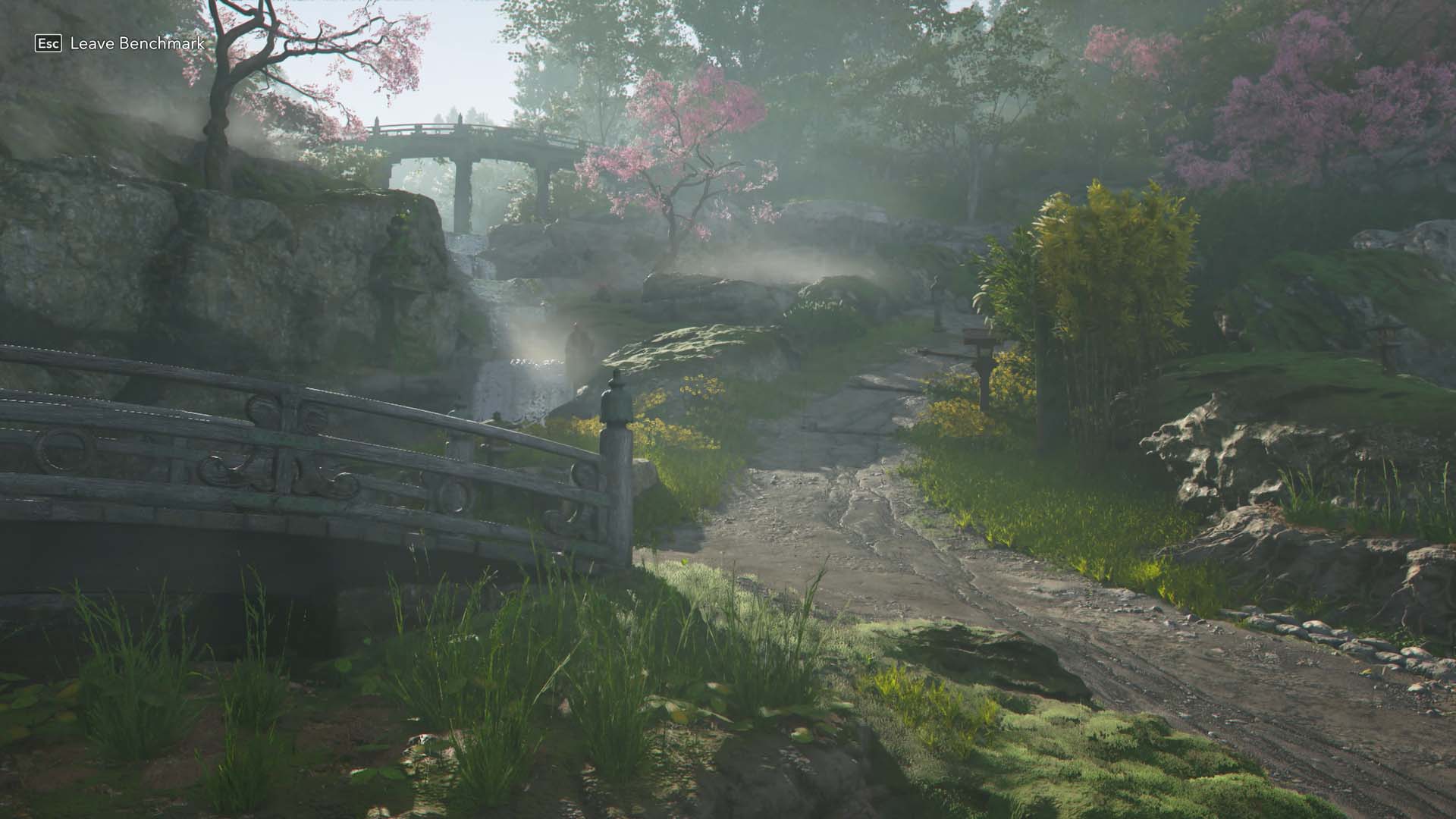
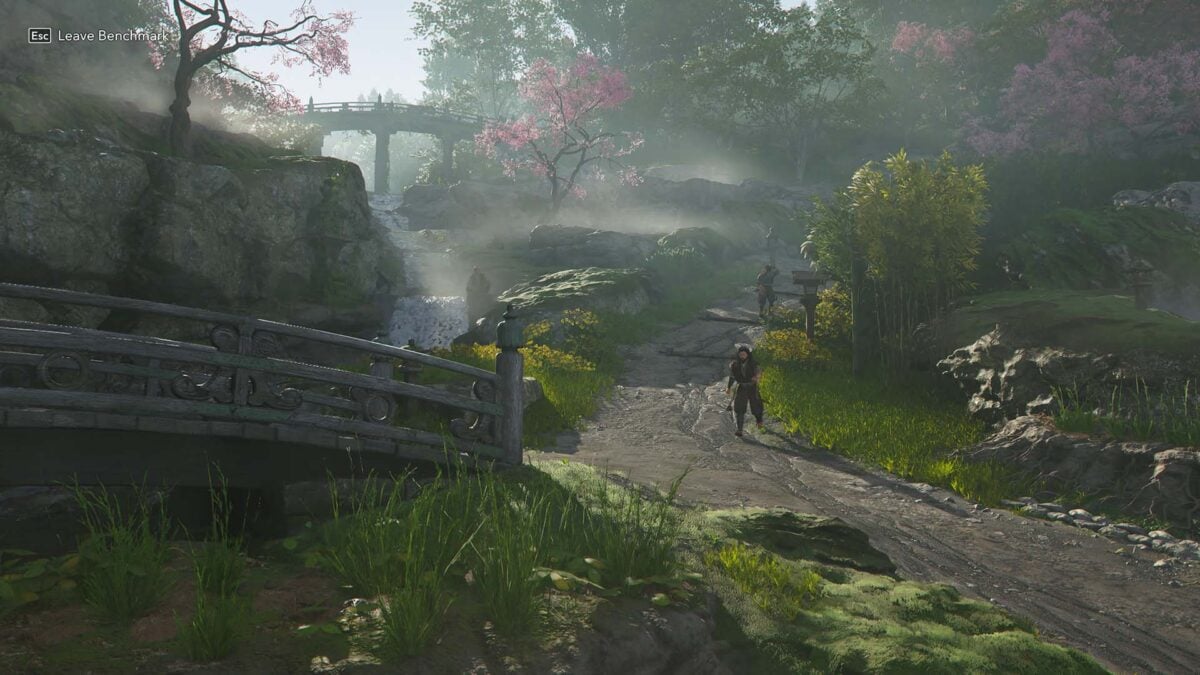
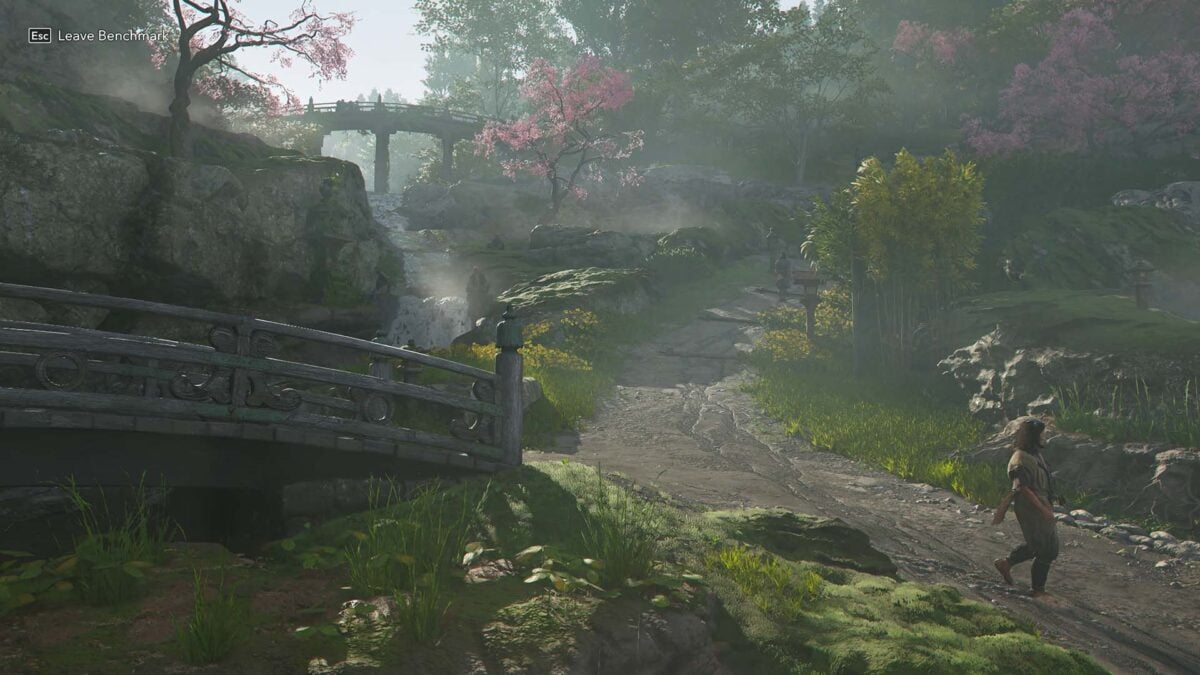
The scene above, taken from Assassin’s Creed Shadows, is challenging for FSR 3.1, with dense foliage complete with fine details aplenty, and other elements. Running the same sequence with FSR 4.1, both on the RX 9070 XT and RX 7800 XT, is like removing a Vaseline smear from the beautiful Japanese landscape, with far greater detail retention and image stability.
The only minor differences I can spot between the two screenshots comes down to anti-aliasing. Jagged edges are slightly more prominent along the wooden beams of the bridge to the left on the RX 7800 XT, compared to the finish the RX 9070 XT delivers. Zooming in on the blossom tree up the hill, the plant’s flowers are also more visibly aliased, thinning out the tree.
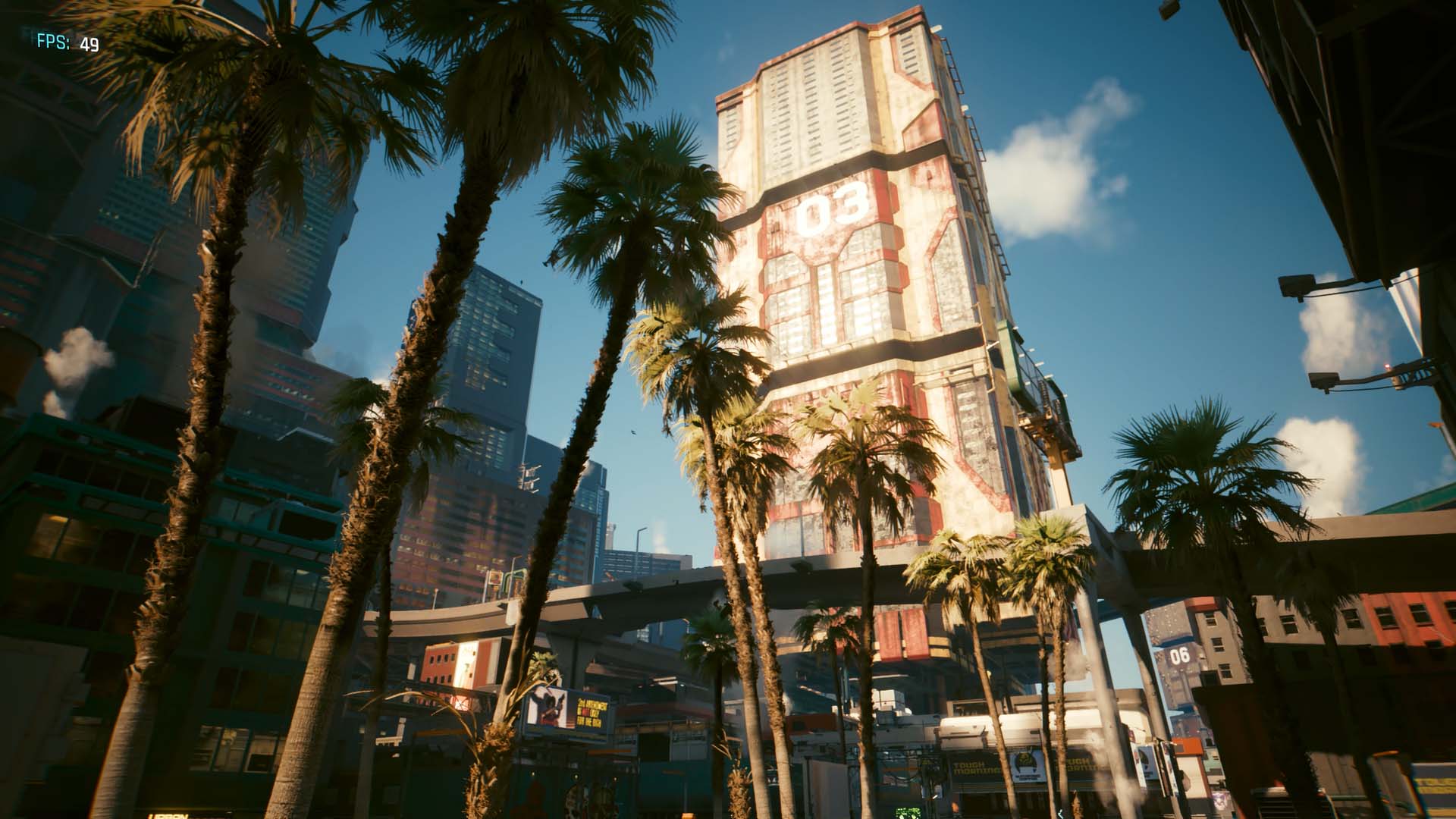
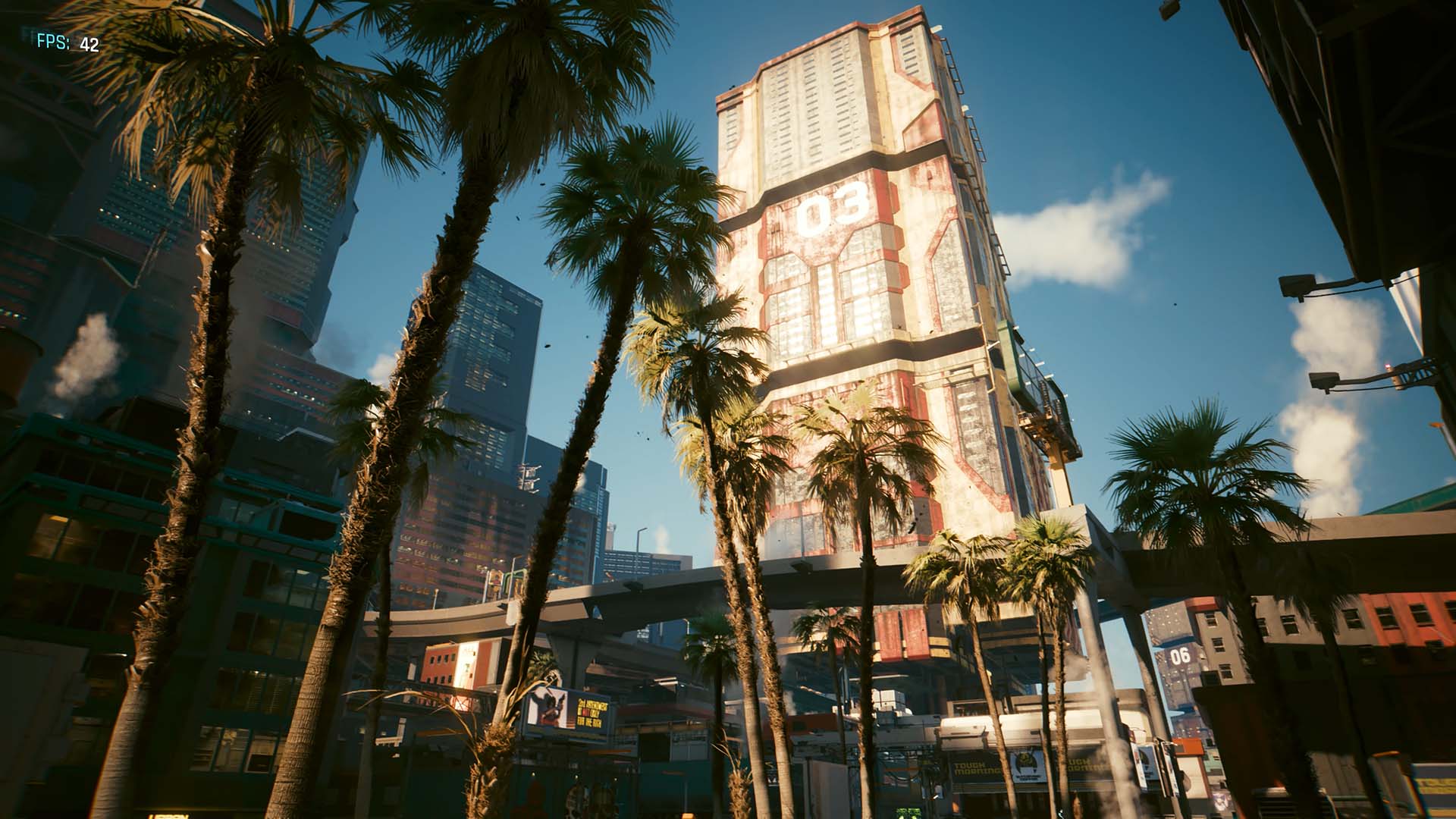
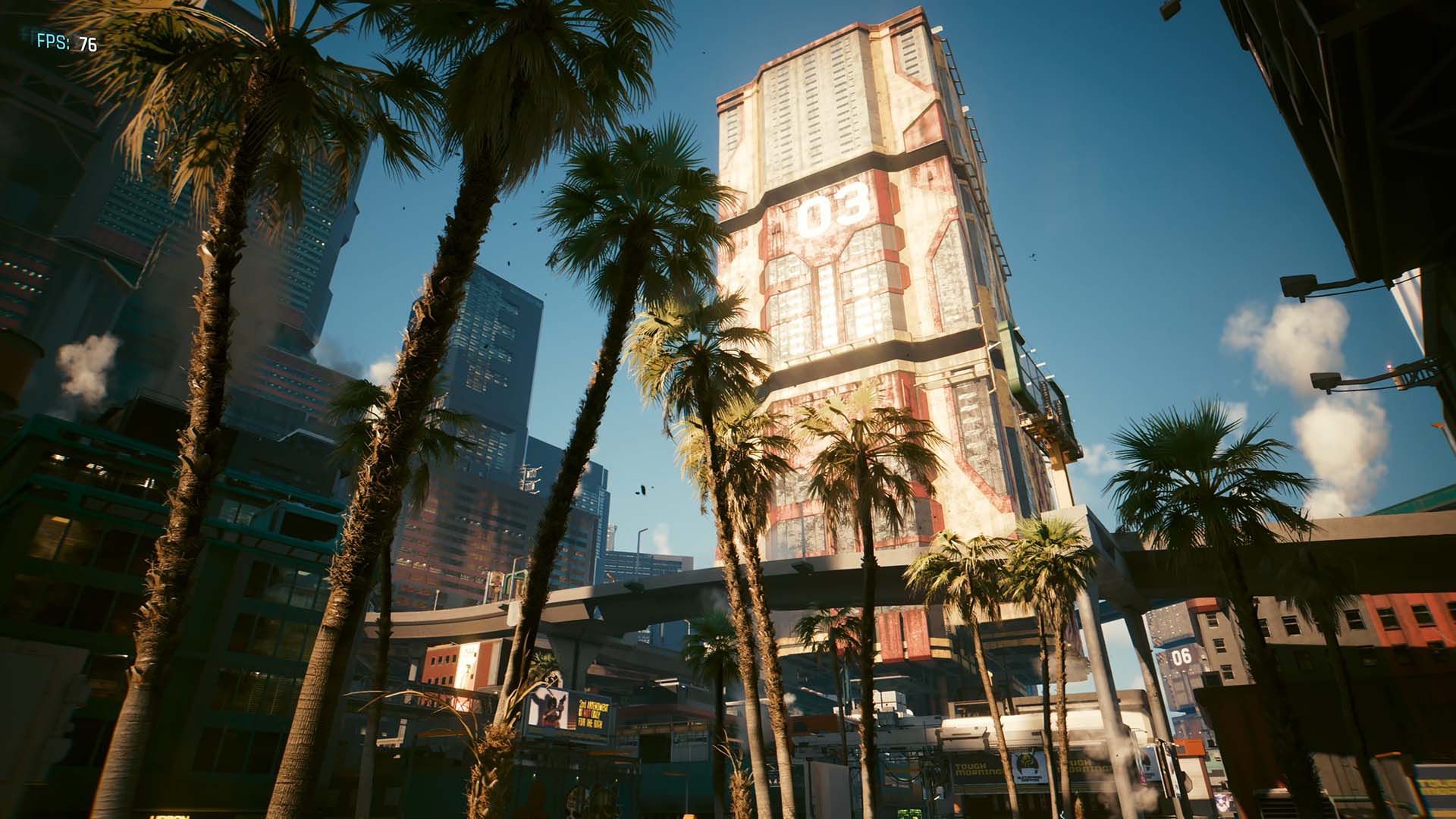
The same differences are also reflected in Cyberpunk 2077. In the scene above, the fine lines of the billboard’s text read more clearly on the RX 9070 XT than on the RX 7800 XT. Meanwhile, the palm tree’s bark, fibres, and leaves all exhibit a touch more fringing on the RDNA 3 GPU.
All that said, the viewing experience with FSR 4.1 on the RX 7800 XT is markedly better than FSR 3.1. Once-distracting shimmering is practically eliminated, while the small black particles flying through the sky don’t disappear into a void after a few frames, retaining their shape and permanence in the scene.
I also compared image quality across Forza Horizon 6 as well as Ratchet & Clank: Rift Apart, and I’m pleased to say the story remains the same. Save for some relatively minor differences in fine line detail and foliage, FSR 4.1 on RDNA 3 appears near-identical to its presentation on RDNA 4.
Performance
During my initial FSR 4.1 analysis, when reviewing the RX 9070 XT, I concluded that this upscaler’s performance impact is negligible relative to FSR 3.1. While this remains the case on RDNA 4 GPUs, the feature carries a heavier footprint on RDNA 3.
Continuing to use the RX 7800 XT, I’ve benchmarked three games across FHD, QHD, and UHD resolutions. Starting from FSR 4.1 with the Quality setting at FHD, I’ve shifted the upscaler preset as the pixel count increases, using Balanced at QHD, and Performance at 4K.
| AC Shadows (D+S E. + Ultra High) | FHD | QHD | UHD |
|---|---|---|---|
| Native | 42 / 49fps | 34 / 39fps | 21 / 24fps |
| FSR 4.1 | 43 / 53fps | 33 / 42fps | 26 / 33fps |
| FSR 3.1 | 48 / 57fps | 44 / 52fps | 34 / 42fps |
Running Assassin’s Creed Shadows at maximum settings, the RX 7800 XT delivers playable frame rates at native FHD and QHD, but falls short at UHD. FSR 4.1 can fix this problem in terms of average frame rates, but its pressure on the rendering pipeline is notably greater than that of FSR 3.
In this game, FSR 3 can push up frame rates by as much as 18fps (+75%) at 4K. Meanwhile, FSR 4.1 certainly delivers a welcome but decidedly lower uplift of 9fps (+33%). Similar performance differences manifest at FHD (+8% vs. +16%) and QHD (+7% vs. 33%).
It’s worth noting that Assassin’s Creed Shadows marks the largest performance gaps between FSR 3.1 and FSR 4.1 of all the games I tested, suggesting a degree of variability across titles. Regardless, these frame rates don’t reflect the clear gaps in render quality between FSR 3.1 and FSR 4.1.
| Cyberpunk 2077 (RT Ultra) | FHD | QHD | UHD |
|---|---|---|---|
| Native | 42 / 49fps | 26 / 30fps | 12 / 14fps |
| FSR 4.1 | 68 / 80fps | 52 / 61fps | 34 / 38fps |
| FSR 3.1 | 72 / 86fps | 56 / 67fps | 37 / 44fps |
Switching over to Cyberpunk, using the game’s RT Ultra graphics preset, FSR 4.1 remains heavier than FSR 3 but puts in a far more competitive showing. Upscalers are a must for this graphics card and settings combination, barely scraping a 30fps average at native QHD and proving unplayable at UHD.
With FSR 4.1 in play, though, QHD performance jumps by a whopping 103% (+31fps), delivering a much smoother experience. UHD is all the more transformed with a 171% (+24fps) uplift, giving the RX 7800 XT a fighting chance at playing CD Projekt Red’s RPG at such high settings.
The performance increases that FSR 4.1 provides are smaller than those of FSR 3.1, but we’re only talking differences of 6fps at most across all resolutions. There’s little reason not to trade a handful of frames for such markedly better image quality.
| Forza Horizon 6 (Ultra + RT) | FHD | QHD | UHD |
|---|---|---|---|
| Native | 69 / 78fps | 54 / 60fps | 35 / 39fps |
| FSR 4.1 | 75 / 85fps | 67 / 75fps | 50 / 55fps |
| FSR 3.1 | 80 / 91fps | 73 / 83fps | 52 / 65fps |
Pushing proverbial pedals to the metal, the RX 7800 XT doesn’t necessarily need upscaling to run Forza Horizon 6 at its ‘Ultra + RT’ preset. However, using the feature does provide welcome breathing room for a smoother driving experience.
FSR 4.1 brings up to an additional 41% (+16fps) to the table, making for a 60fps+ experience at FHD and QHD. Once again, though, the higher quality upscaler is short of the 67% (+26fps) gain that FSR 3.1 provides.
The performance delta between FSR 4.1 and 3.1 in this case is 2-10fps. Given how comfortably frame rates sit using the former of the two upscalers, Forza Horizon 6 makes for yet another instance where sacrificing some performance for better image quality is the clear choice.
Conclusion
AMD has delivered on its promise to support FSR 4.1 on RDNA 3 GPUs in fine fashion, with near-identical image-quality results. While the upscaler can’t deliver the same performance uplifts as its predecessor, the higher image quality is usually well worth the trade-off. With this in mind, I’m grateful AMD enables the driver override by default, simplifying the process of getting the feature running in games that only natively support FSR 3.1.
While I have no complaints about the feature’s performance, one does wonder why it took AMD so long to support FSR 4.1 on RDNA 3. At the very least, the company could have acknowledged it was working on bringing the upscaler to older graphics generations, rather than treating it as a wholly exclusive feature. Instead, the company once again looks like it’s playing catch-up with Nvidia’s multi-generational feature support.
Either way, it’s here now, and very welcome despite my misgivings about AMD’s delivery. Here’s hoping FSR 4.1 runs at least decently on RDNA 2 GPUs when it arrives in 2027 as well.