
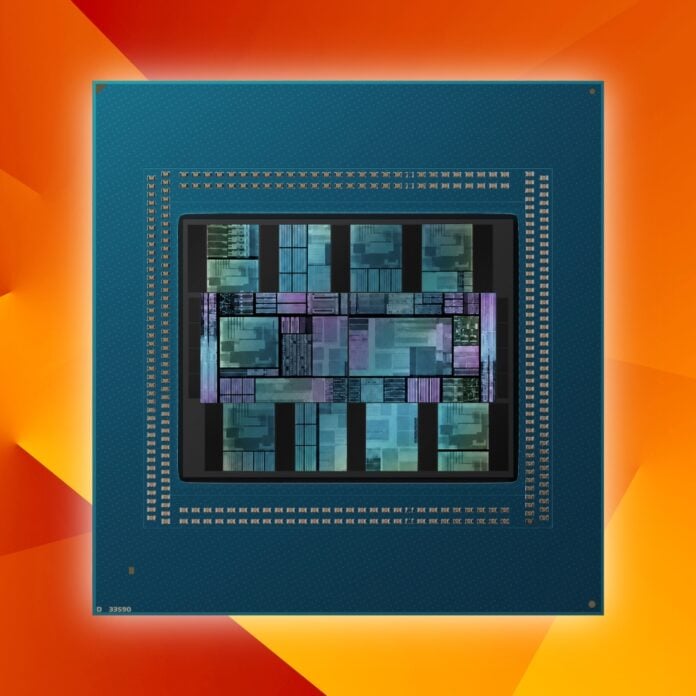
AMD is now shipping Zen 6 processors, by way of its 6th-gen Epyc series, and the company has just revealed a lot more information about how the CPU microarchitecture differs from its predecessor at a launch event in Las Vegas. There’s a lot going on in this new release, but the changes most likely to affect forthcoming desktop Ryzen chips include big increases in core counts, cache, and instructions per clock (IPC).
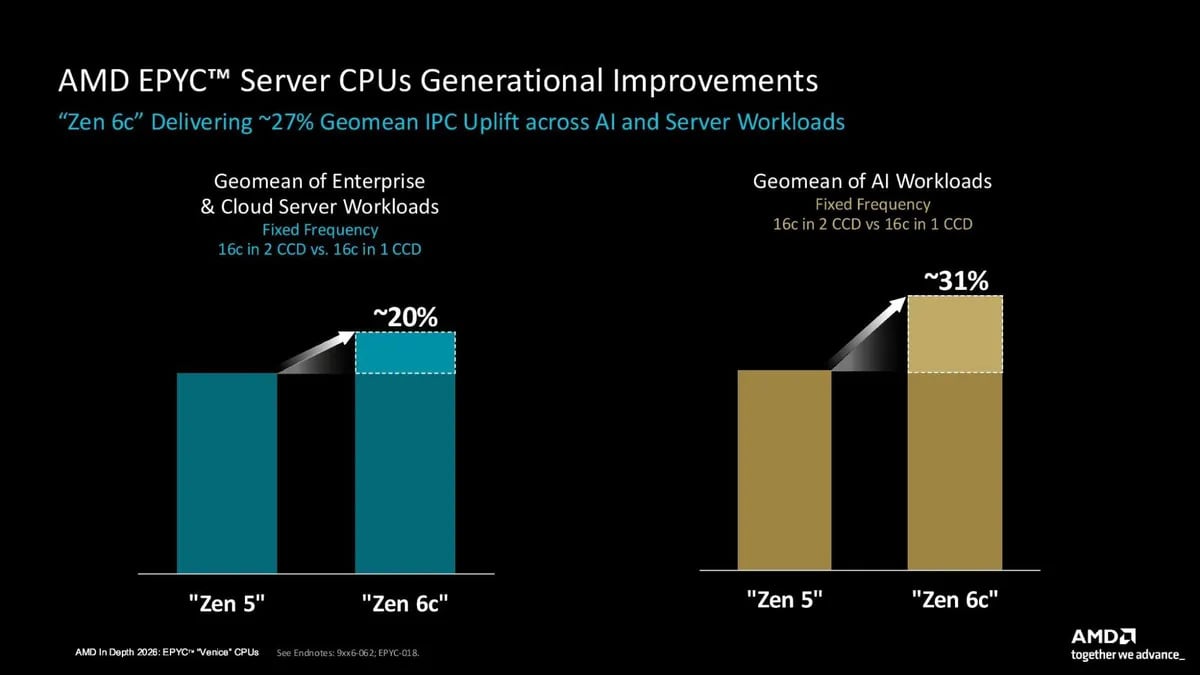
In its Zen 6 launch presentation, AMD claimed an average 27% geomean IPC improvement over Zen 5. This figure stems from two other geomeans, namely a 20% bump in enterprise and server workloads and a 31% increase in AI workload performance.
Importantly, that 27% rise in IPC doesn’t compare Zen 6 to Zen 5, but rather Zen 6c to the latter instead. While testing conditions saw 16 cores in play across each microarchitecture, we don’t yet know how full-fat cores compare. Regardless, this is an impressive feat, and has us all the more curious as to whether AMD will deploy its denser core structure more prominently on the desktop.
Speaking of cores, though, Zen 6 core complex dies (CCDs) can now hold up to 12 cores, a 50% bump over Zen 5, rising to 32 via Zen 6c. This means we could see a prospective Ryzen flagship sporting 24 cores and 48 threads, making for a massive multi-core monster.
However, I’m more curious about how Ryzen 5 and 7 offerings will shape up. The latter will presumably hold 12 cores and 24 threads, while the less-powerful model could rise to eight cores and 16 threads.
Could this leave room for budget chips with six cores and 12 threads? It’s possible, but AMD doesn’t see Ryzen 3 as a big deal these days, owing to an apparently small market.
Finally, Zen 6 is sticking with 4MB of L3 cache per core as per Zen 5, for a maximum shared pool of 48MB per CCD, thanks to higher core counts. Zen 6c is more exciting in this regard, matching the same cache-per-core as standard Zen 6 designs, allowing for a whopping 128MB per CCD, thanks to all those extra cores.
AMD is also delivering a 300MHz clock speed bump with its Zen 6 Epyc processors, relative to Zen 5. However, with a maximum frequency of 5.3GHz, it’s impossible to extrapolate how this headroom will apply to consumer CPUs. If the company can apply the same uplift on its consumer chips, we could soon see the first Ryzen to hit 6GHz out of the box.
We’re expecting more details about how Zen 6 will manifest in Ryzen processors, currently known under the codename Olympic Ridge, sometime in 2027. CES seems a likely date for AMD to make an announcement, but there’s no guarantee of that yet.
For more on the latest processors, check out our picks of the best CPUs on the market today.