

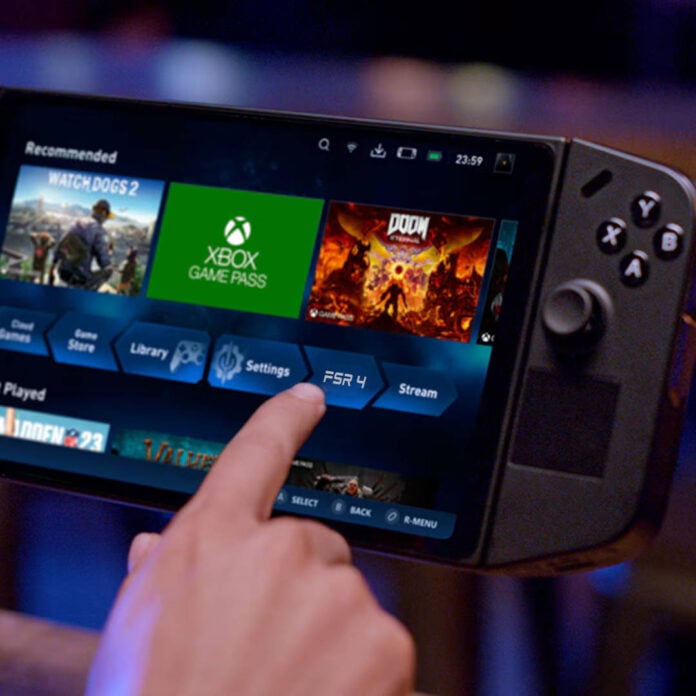
AMD has confirmed that its FSR 4 upscaling technology is coming to APUs, laptops with integrated GPUs, and gaming handhelds this year. This will help owners of integrated Radeon graphics systems enjoy the company’s improved image upscaling, which has until now been reserved for Radeon 9000 and 7000 series GPUs.
Senior vice president and general manager of AMD’s Computing and Graphics Group, Jack Huynh, confirmed that the brand’s machine learning-based FSR 4 technology will come to devices equipped with the brand’s APUs, which are currently usually powered by RDNA 3.5 or RDNA 3 GPUs. In an interview with South Korean media outlet The Elec, Huynh said (translated): “We will expand FSR 4 across our product lineup, including APUs, gaming laptops and handheld devices, by the end of this year.”
Initially, FSR 4 debuted exclusively on RDNA 4-based GPUs, such as the Radeon RX 9070 XT. The reason at the time was that RDNA 4 featured native FP8 processing, which is required to accelerate FSR 4’s neural network calculations.
However, following pressure from last-gen GPU owners and community-made mods, which proved FSR 4’s viability on old hardware, AMD finally decided to release FSR 4 on RDNA 3 GPUs. To do so, AMD used the same trick as modders and adapted FSR 4 neural processing to work efficiently on RDNA 3’s INT8 processing. Unfortunately, this release didn’t cover APUs featuring RDNA 3.5 or RDNA 3 graphics, which are widely used in low-power laptops, compact desktops, and gaming handhelds.
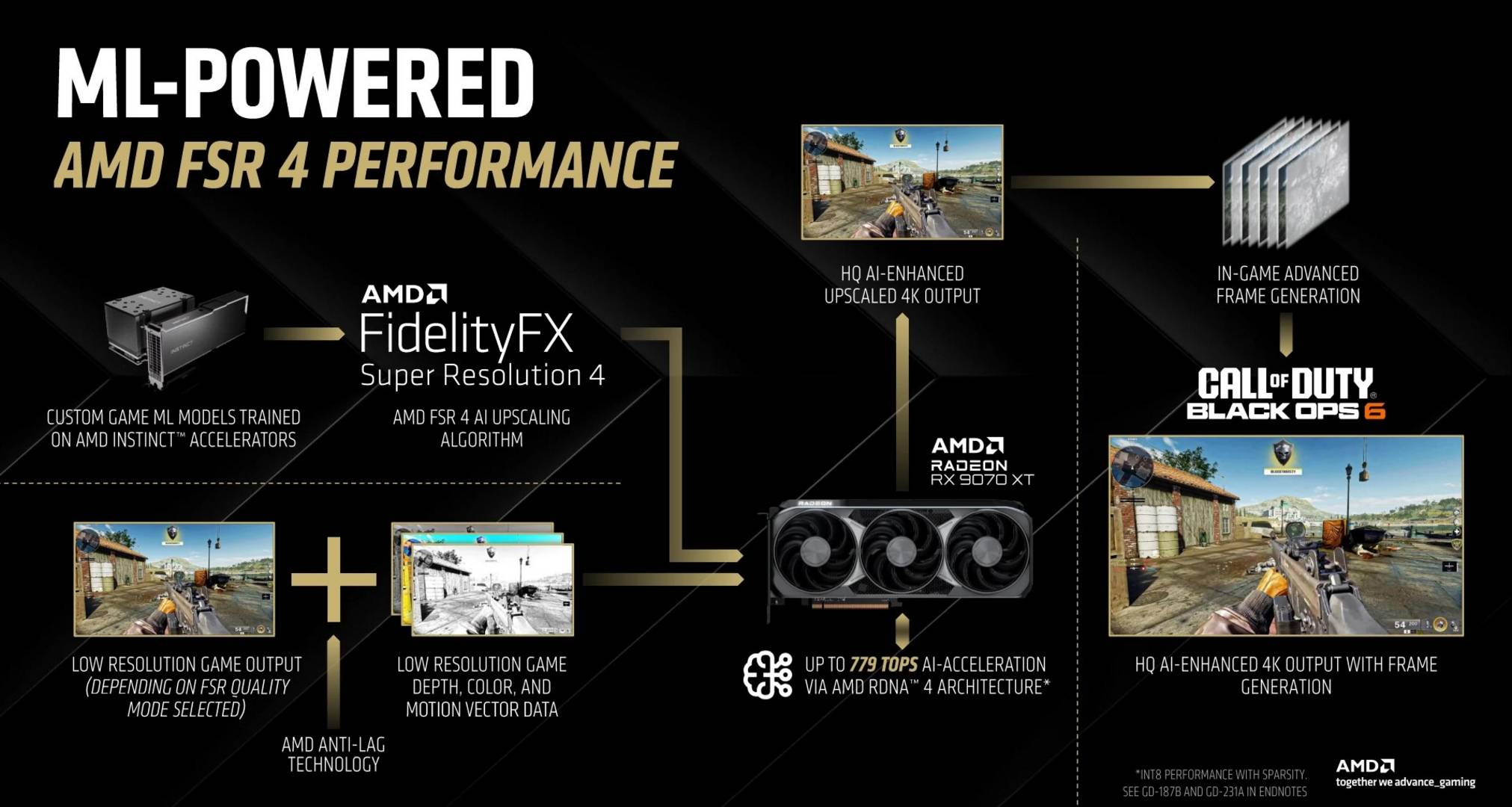
This new report indicates that many of these devices will finally get to enjoy FSR 4’s improved image quality, greatly expanding its reach. That said, its performance impact remains to be seen. For those unfamiliar, FSR 4 runs more efficiently on RDNA 4 than RDNA 3, despite AMD’s optimisations. Plus, considering that the iGPUs in these chips are small by comparison, they may require more optimisation to avoid wasting valuable performance.
In this regard, Jack Huynh said that AMD has developed a dedicated model that makes FSR4 lighter on APUs, adding that the team is focused on keeping the upscaler’s excellent image quality and low latency.
After dealing with APUs, AMD’s next step will be the RDNA 2 Radeon 6000 series, which is set to receive FSR 4 in 2027, according to the company.