
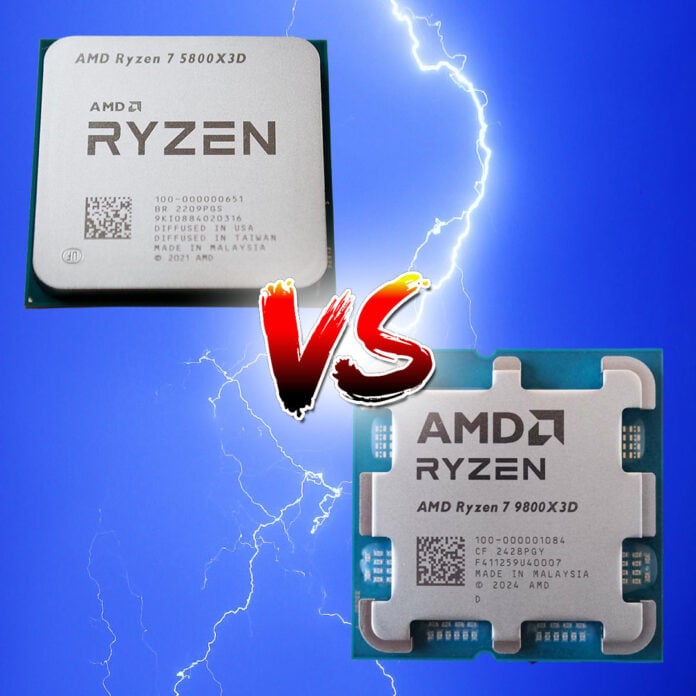
AMD CPUs with 3D V-Cache have been on the market for over four years now, but just how far has processor tech progressed in the time between the Ryzen 7 5800X3D and Ryzen 7 9800X3D were released? Your choices are limited if you can’t afford to buy DDR5 RAM, but how much performance would you be sacrificing by sticking with AMD’s AM4 platform?
I’ve explored both of these questions by pitting these two gaming CPUs in a head-to-head. Without getting ahead of myself too much, the differences in frame rates can be surprising, and there’s a substantial performance gap when it comes to professional applications as well.
Specs
Despite originally launching a mere two-and-a-half years apart from each other, the 5800X3D and 9800X3D are markedly different in many respects. While the two CPUs do share the same number of cores and threads, as well as the same amount of L3 cache, AMD has made big changes to its CPU architecture, as well as its implementation of 3D V-Cache technology, in that time.
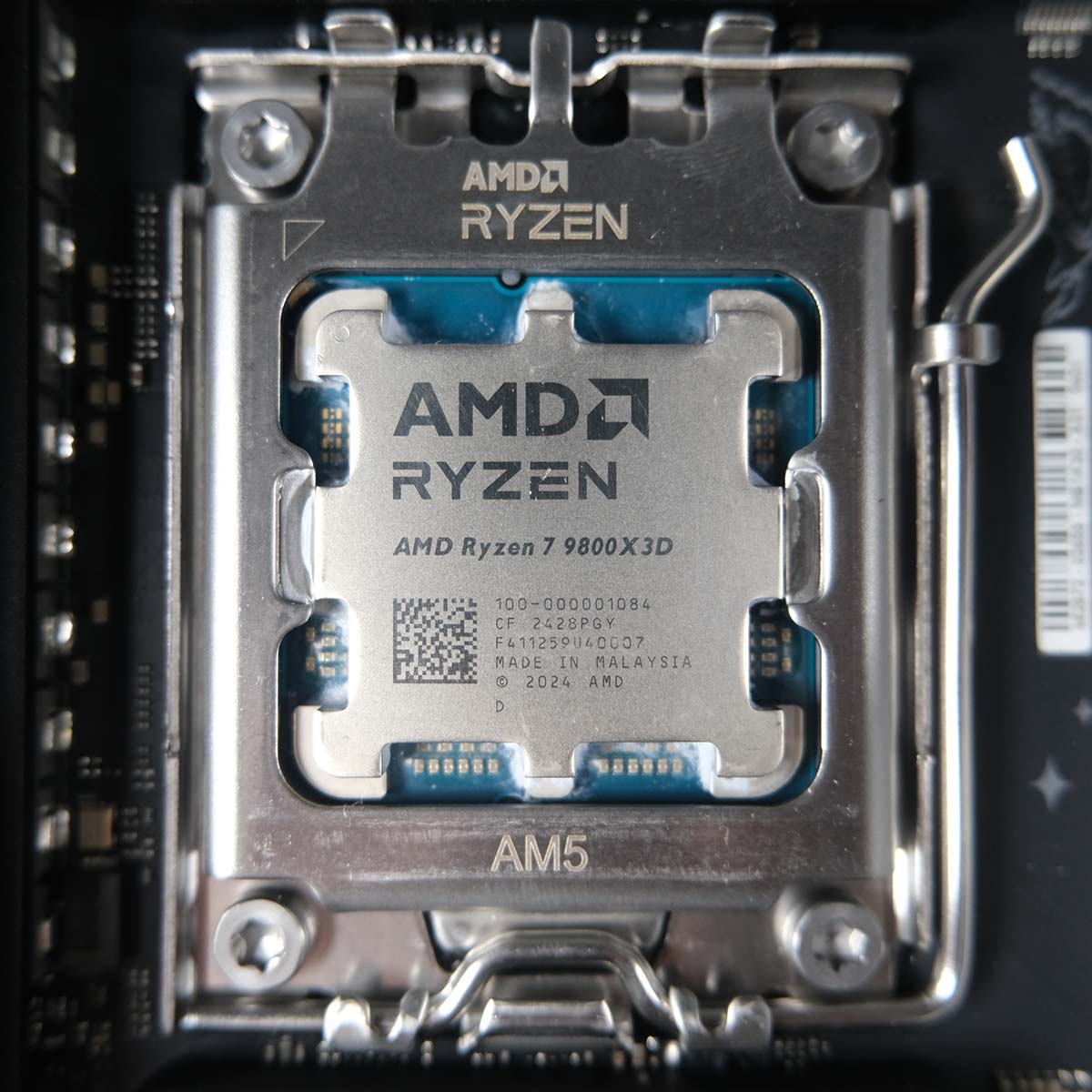
The most obvious difference, of course, is that you’ll need entirely separate motherboards and memory to pair with each CPU; the 5800X3D requires an AM4 board and DDR4 RAM, while the 9800X3D needs an AM5 socket and DDR5 memory. The ongoing RAM crisis makes the former far more affordable in the current market, especially; if you already have some DDR4 sticks handy, though there’s little to no chance of more-powerful processors becoming available for the platform down the line.
| Ryzen 7 5800X3D | Ryzen 7 9800X3D | Ratio | |
|---|---|---|---|
| Release date | April 2022* | November 2024 | – |
| Platform | AM4 | AM5 | – |
| Architecture | Zen 3 | Zen 5 | – |
| Cores | 8 | 8 | 1.00 |
| Threads | 16 | 16 | 1.00 |
| L2 cache | 4MB | 8MB | 0.50 |
| L3 cache | 96MB | 96MB | 1.00 |
| Base clock | 3.4GHz | 4.7GHz | 0.72 |
| Boost clock | 4.5GHz | 5.2GHz | 0.87 |
| TDP | 105W | 120W | 0.88 |
| Launch MSRP | $449** | $479 | 0.73 |
**Initial pricing. AM4 10th Anniversary re-release was $349.
Moving on to cores and threads, both the 5800X3D and 9800X3D arrive with eight and 16 apiece, respectively. However, the older chip rocks the Zen 3 architecture, stemming all the way back to 2020, while the contemporary contender sports AMD’s latest Zen 5 design. This affords the latter a far greater advantage in terms of instructions per clock (IPC), as well as giving it native support for PCIe 5.0, double the amount of L2 cache per core, and more.
You’ll also find 96MB of L3 cache on each chip through the power of AMD’s 3D V-Cache tech. This vertical stack of speedy on-board memory allows these processors to more quickly access data in real-time, being less reliant on comparatively slower system memory and boosting performance, particularly in games.
However, the 9800X3D enjoys a revised version of what the 5800X3D pioneered, moving the pool underneath its cores, rather than on top of them, opening the door to higher frequencies, lower temperatures, and overclocking. Indeed, there’s a substantial difference in clock speed between these two CPUs, with 700MHz separating them at peak boost frequencies.
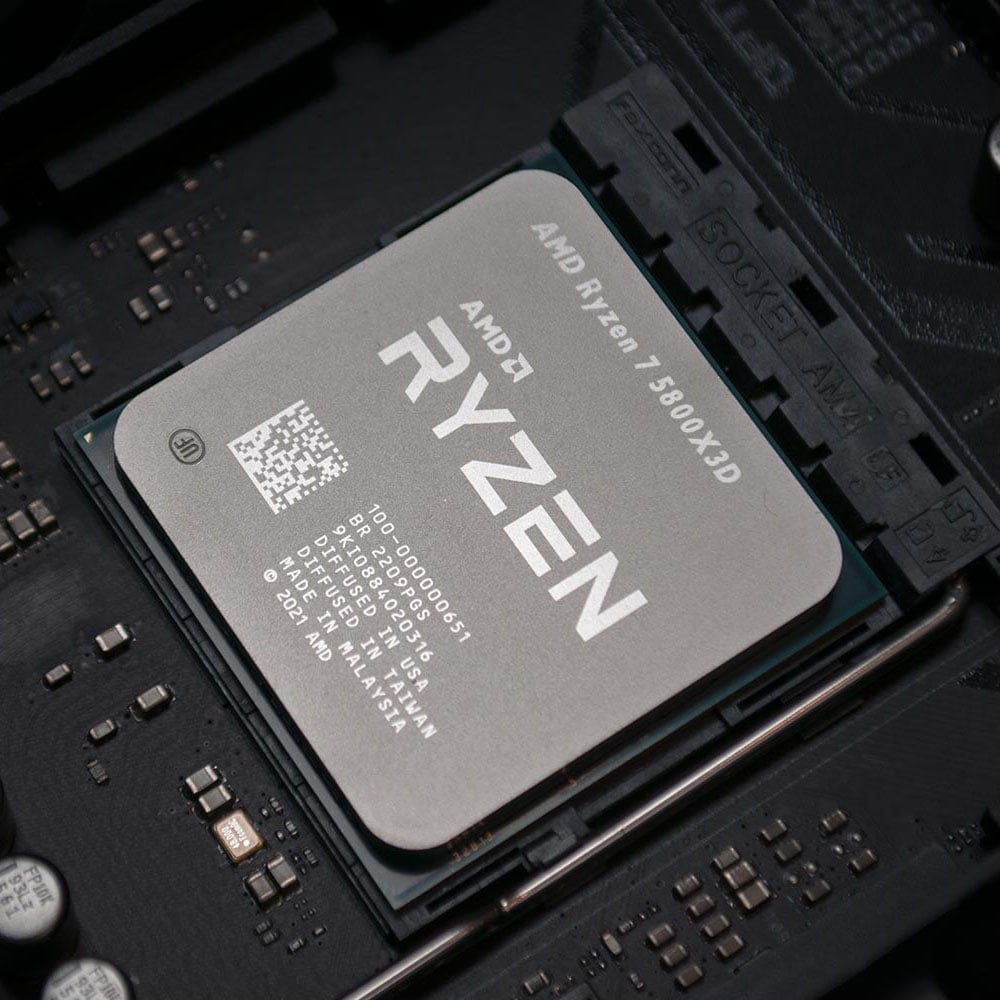
There’s a large gap between base clocks on the 5800X3D and 9800X3D, with frequencies that measure in at 3.4GHz and 4.7GHz, respectively. Boost clocks matter most for gaming, though, and here the newer processor still has a marked lead with a 5.2GHz spec, relative to its predecessor’s 4.5GHz. That 700MHz advantage combined with greater IPC can make for significant gaps in single-core performance.
Finally, the two processors share a similar TDP, but the 9800X3D proves more power hungry out the gate at 120W relative to the 5800X3D’s 105W. In theory, this makes the newer CPU a touch harder to cool, but Zen 3 CPUs typically run hotter than Zen 5 equivalents at similar power draw.
Test methodology
To test the 5800X3D, I’ll be using the PCSpecialist Apex Ultra I reviewed earlier this year. Meanwhile, our 9800X3D takes residency in one of our 2026 test benches. While I’ve made no changes to the former system, I have used the same GeForce RTX 5070 in each PC, so they’re both using the same GPU.
While this choice of graphics card doesn’t demonstrate absolute differences between each processor, as a GeForce RTX 5090 would, it’s nonetheless an entirely realistic pairing for both chips – the RTX 5070 is Nvidia’s most popular Blackwell chip, according to Steam’s Hardware Survey, and RTX 5090 prices are now so extreme that you’d be very unlikely to be pairing one with a 5800X3D.
Our intent here is to see what you lose by pairing an RTX 5070 with a 5800X3D instead of a 9800X3D, given the current memory pricing crisis, and by what degree.
As we’re testing differences in CPU performance, rather than the overall system, I’ve captured fresh benchmarks on the PCSpecialist rig as well as our 2026 test bench. They’re both also using all the latest driver, game, and Windows updates at the time of writing.
In terms of settings, I ran all games at 1920×1080 (FHD) using their High preset, without any upscaling or frame generation. I’ve also captured test results from general applications and content creation programs to paint a full picture of each processor’s capabilities.
App performance
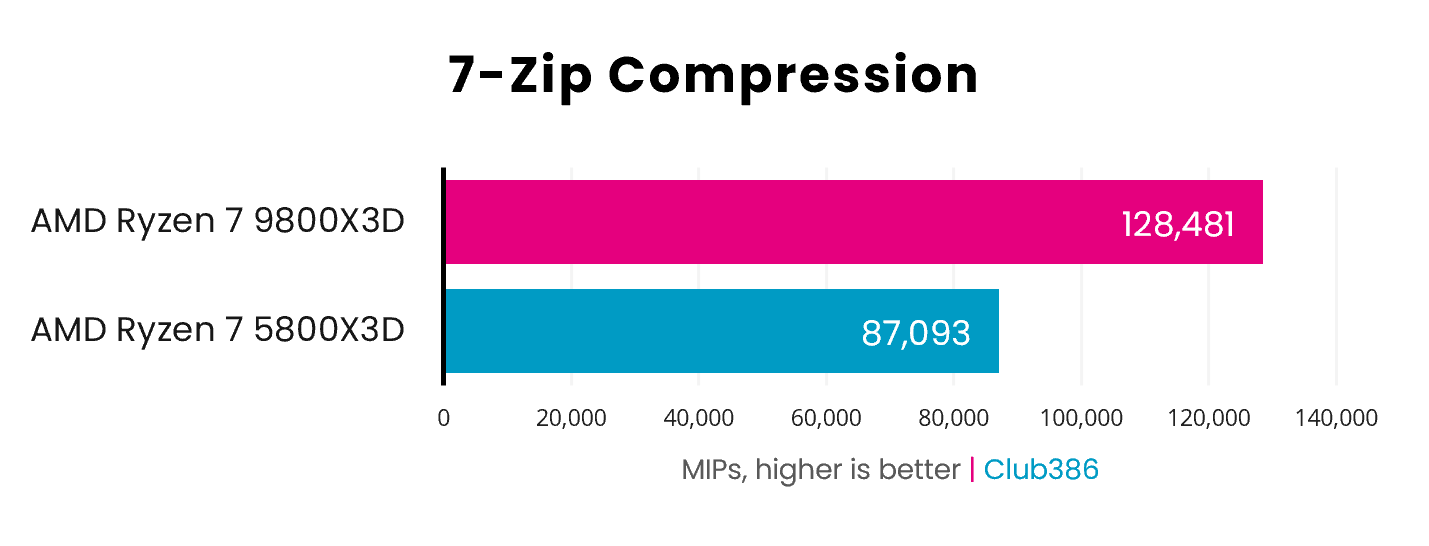
While these two processors share the same amount of L3 cache, differences in clock speed, IPC, and RAM speed all play a larger role in creating notable performance gaps in general applications. The 7-Zip results above aptly illustrate this situation, with the 9800X3D enjoying a massive 47.5% lead over the 5800X3D in terms of million inputs per second, greatly speeding up compression time.
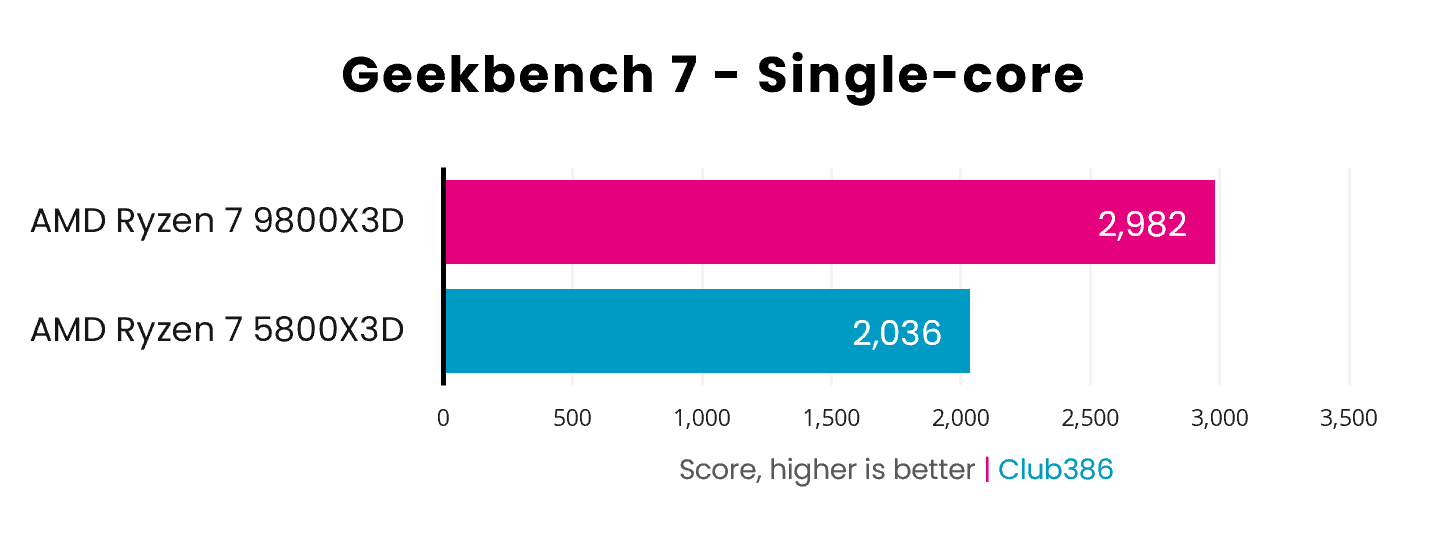
The Geekbench 7 single-core benchmark sees both chips hit their respective maximum boost clocks (4.5GHz vs. 5.2GHz), with the 9800X3D expectedly pulling ahead by a significant margin, owing to its 700MHz advantage and greater IPC. The Zen 5 CPU zooms past our 5800X3D by 46.5% in this test.
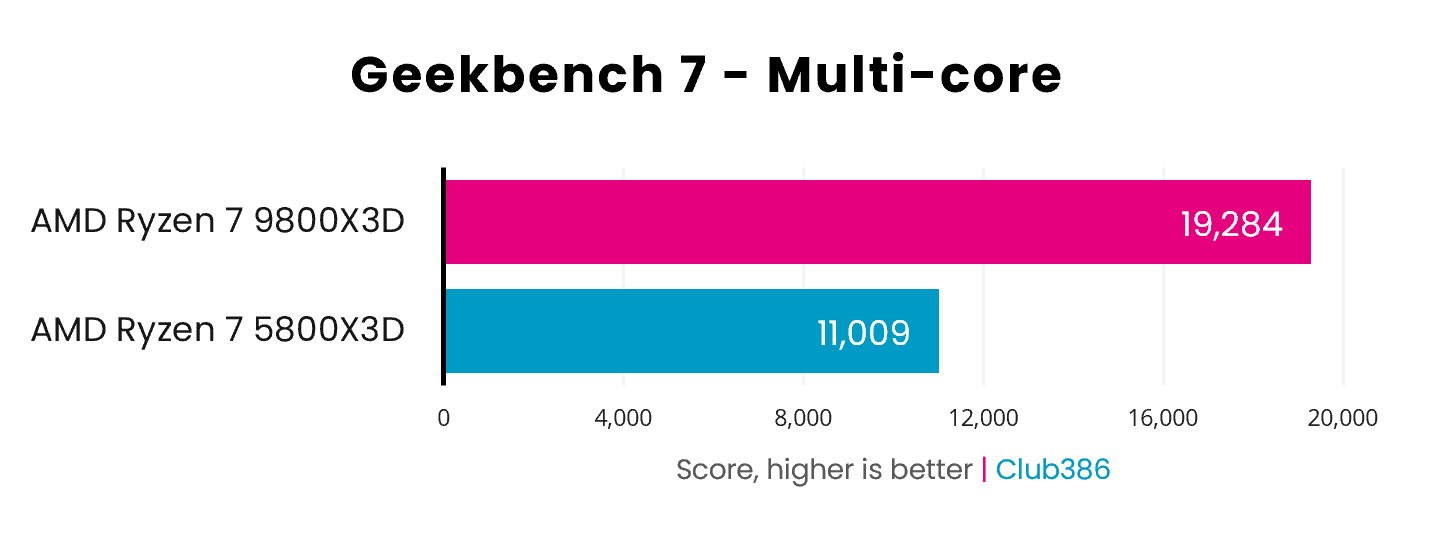
Firing up all eight cores on either processor turns the gap between them into a chasm, with the latter scoring 75.1% during a Geekbench 7 multi-core run. At risk of sounding like a broken record, this is architectural improvements and higher clock speeds manifesting, with a dash of a larger power ceiling for the newer CPU (105W vs. 120W).
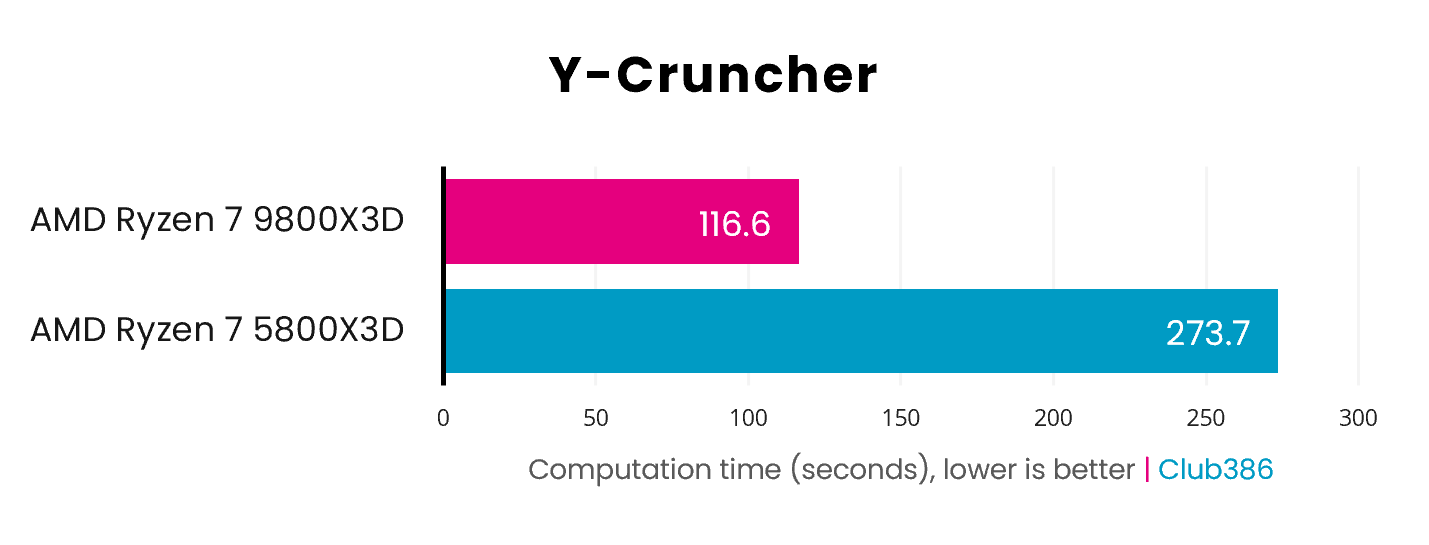
More processing power begets shorter computation times for data crunching. As such, it’s no surprise the 9800X3D clobbers the 5800X3D in calculating Pi to 5B, taking 57.4% less time in our Y-Cruncher test.
Content creation
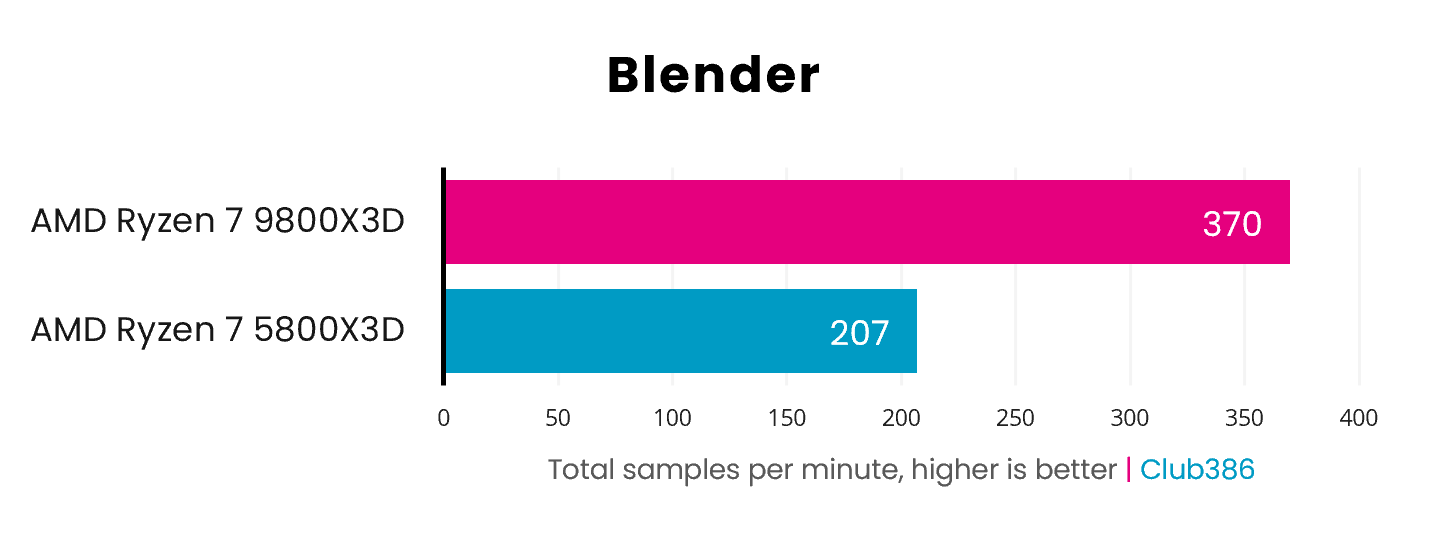
Turning to pure CPU-based 3D rendering in Blender, the newer processor pulls ahead of its predecessor in total sample count by 78.7%. The 9800X3D is massively faster in this content creation test.
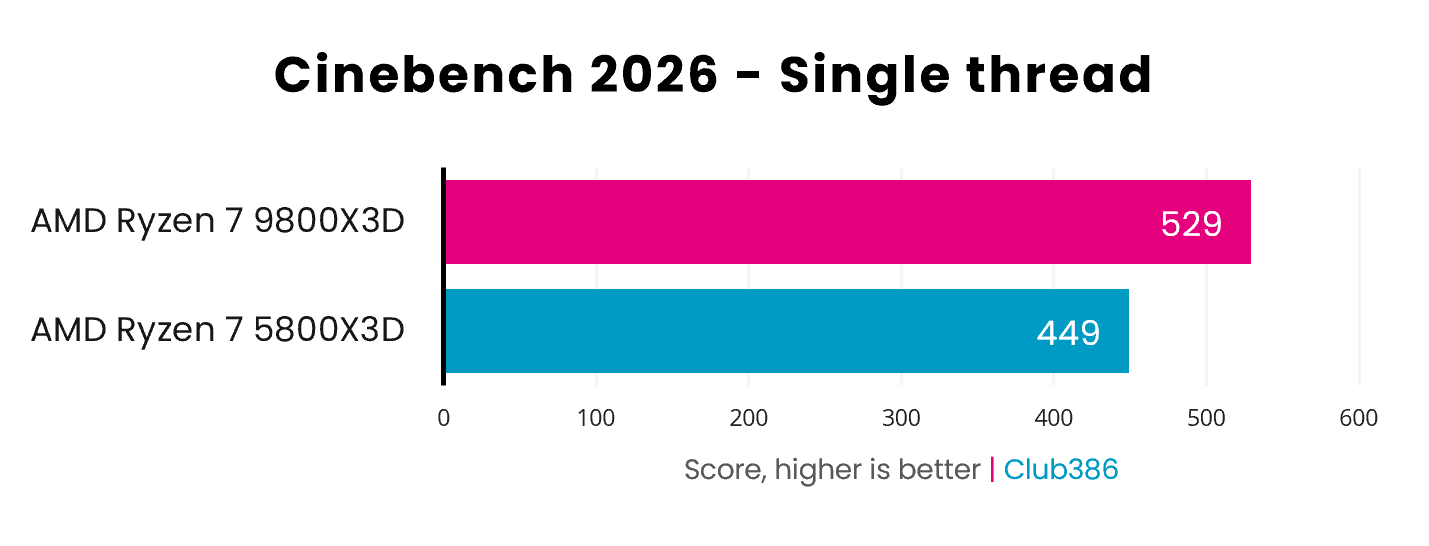
Using a single thread to render Cinebench 2026’s test scene, the 9800X3D musters its smallest lead in an application over the 5800X3D at 17.8%. That’s slightly less than the 20% clock speed lead of this Zen 5 chip, discounting all other advantages.
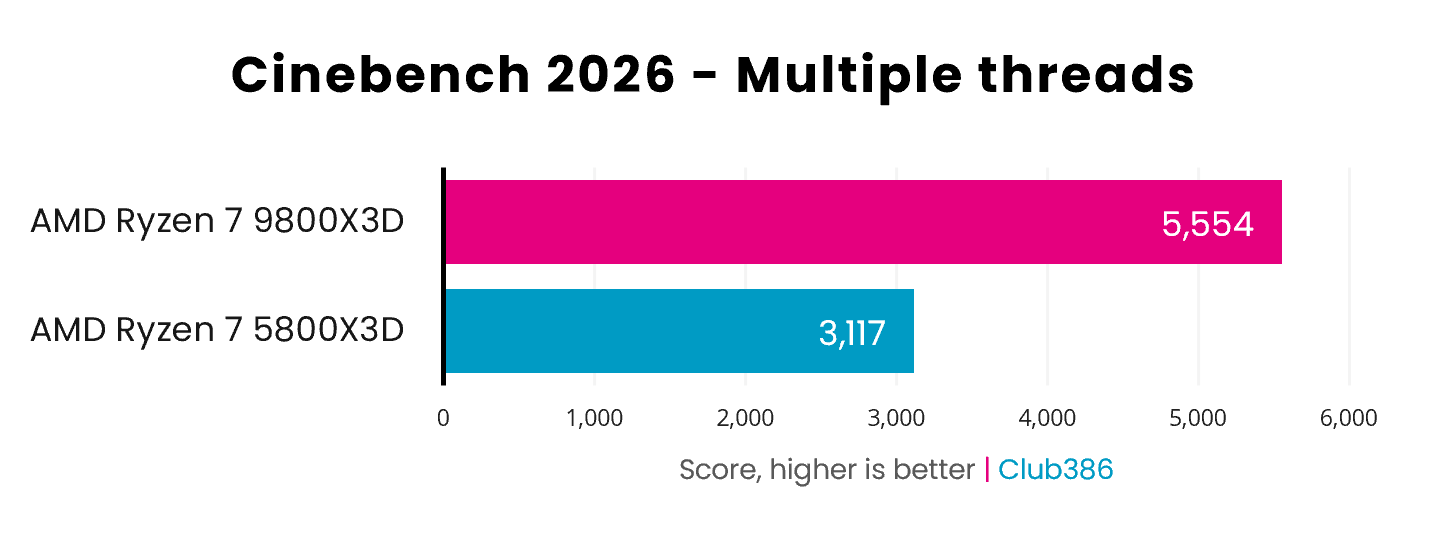
With all eight cores and 16 threads firing off from each chip, the 9800X3D once again establishes itself as being in an entirely different performance class to the 5800X3D. Scores in Cinebench 2026’s multiple threads benchmark are 78.1% higher on the Zen 5 chip relative to its Zen 3 competition.
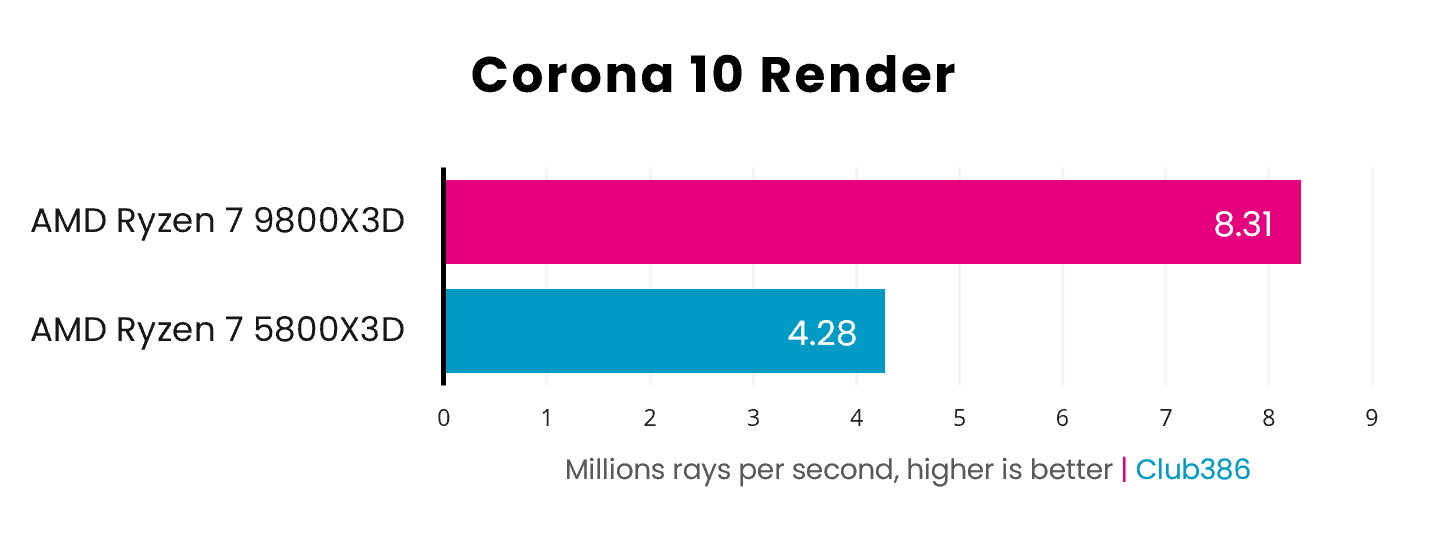
Calculating millions of rays per second in Corona 10, the 9800X3D nearly doubles the 5800X3D’s throughput, with a whopping 94.2% lead.
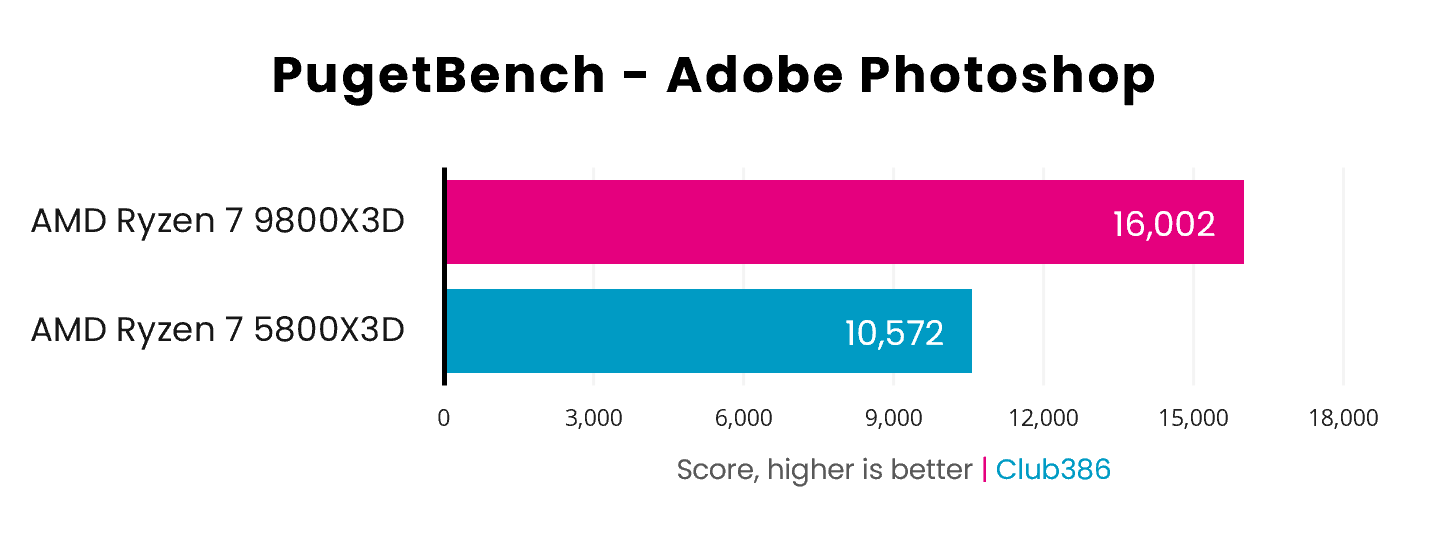
Closing out our application tests with PugetBench’s suite of Adobe Photoshop tests, the 9800X3D’s score is a cool 51.3% higher than that of the 5800X3D.
Gaming
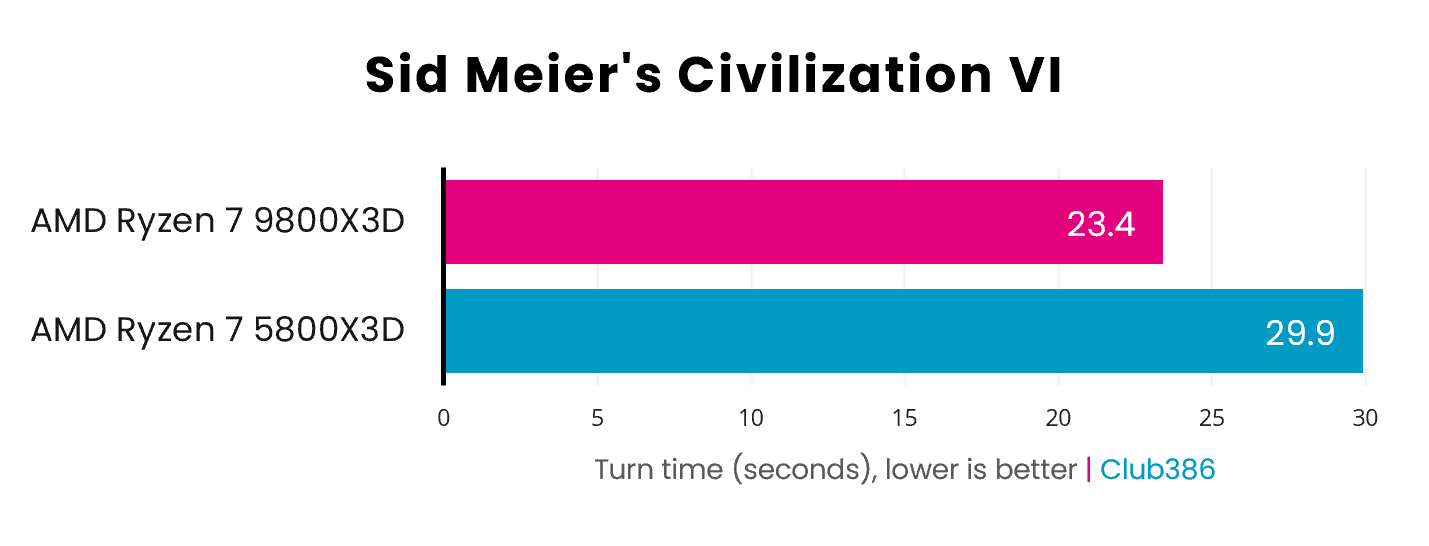
Frame rates are undeniably important in all games, but nobody wants long turn times testing their patience in a game of Civilization VI. Up against the game’s Gathering Storm AI benchmark, the 9800X3D finishes calculations 6.5 seconds faster than the 5800X3D on average.
That’s a cool 21.7% improvement moving from this ageing AM4 CPU to the AM5 one. While this would only net you time savings of ~11 minutes across 100 turns, you’ll feel that difference while you’re waiting.
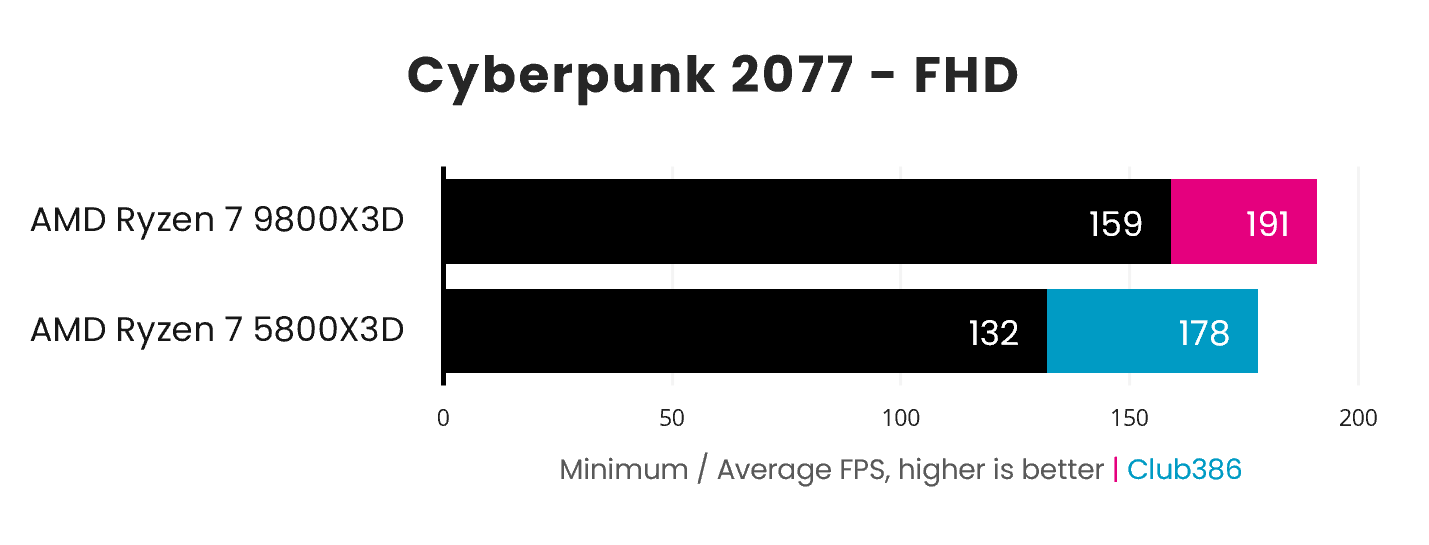
Running through Night City in Cyberpunk 2077, average frame rates are only 7.3% higher on the 9800X3D relative to the 5800X3D. This in part due to GPU bottlenecks entering the frame, but focusing on this value alone ignores greater gains elsewhere.
Comparing minimum frame rates from each processor, the Zen 5 chip’s result is 20.5% higher, meaning performance is more consistent relative to the Zen 3 CPU. This means you’ll get fewer noticeable drops in motion clarity and responsiveness, making for a smoother overall gameplay experience.
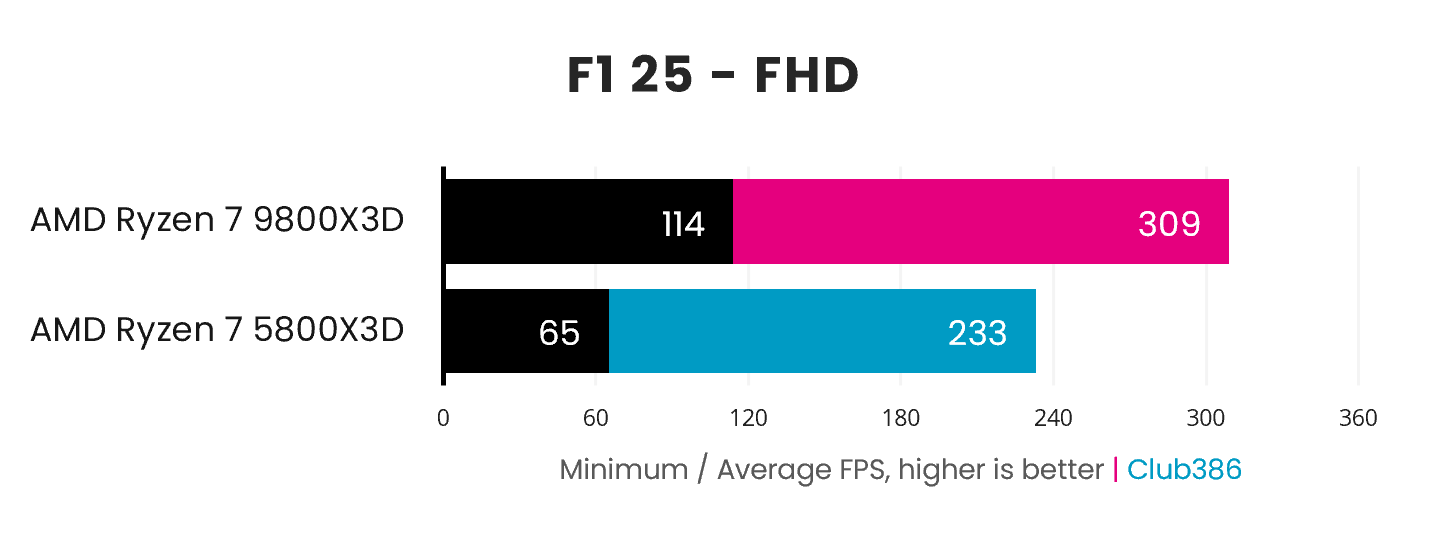
The race between 9800X3D and 5800X3D in F1 25 isn’t even remotely close. The former processor crosses the benchmark finish line at serious speed, with an average frame rates over 300fps, confidently beating its predecessor by 32.6%.
Once again, though, the gap between the two CPUs is much larger upon switching gears to minimum frame rates. The AM5 chip absolutely crushes the AM4 gaming champ, with a stonkingly large 75.4% advantage.
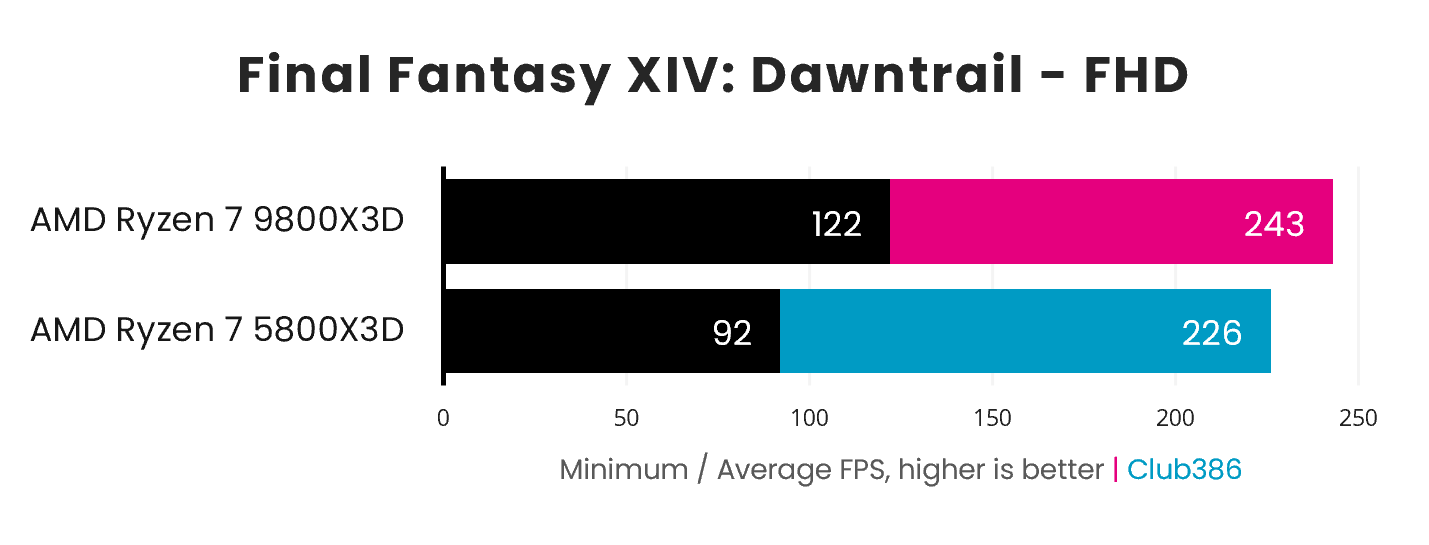
Final Fantasy XIV: Dawntrail exhibits a gap similar to Cyberpunk 2077, with average frame rates proving 7.5% higher on the 9800X3D compared to the 5800X3D. We’ve seen this game hit 298fps on the former while using a GeForce RTX 5090, so there is a small GPU bottleneck in play.
However, Square Enix’s MMORPG runs consistently smoother on the newer CPU, with a 32.6% improvement to minimum frame rates over the older chip.
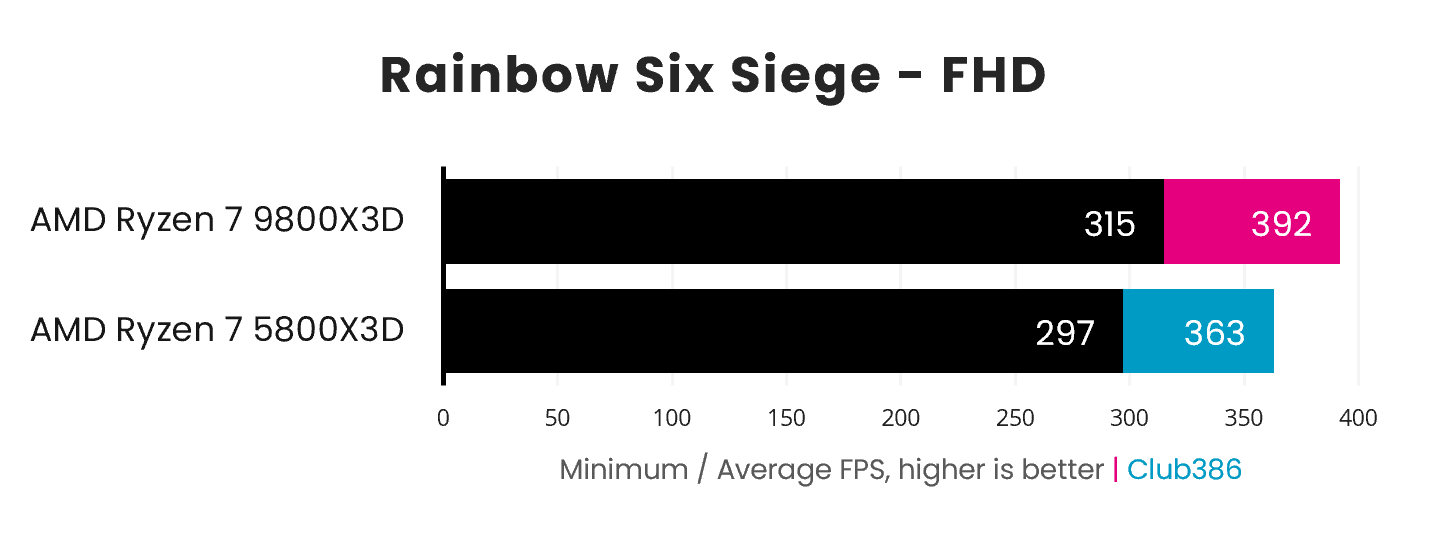
Suiting up in Rainbow Six Siege sees the smallest differences between the 9800X3D and 5800X3D we recorded across our gaming benchmarks. Average frame rates improve by a welcome 8%, while minimum performance only rises by 6.1%.
Like some of our other gaming benchmarks, the 9800X3D would have more to give paired with a more-powerful graphics card here, achieving 480fps with an RTX 5090 at the same settings. However, for those with less-powerful pixel pushers, the 5800X3D provides very similar frame rates in this competitive shooter.
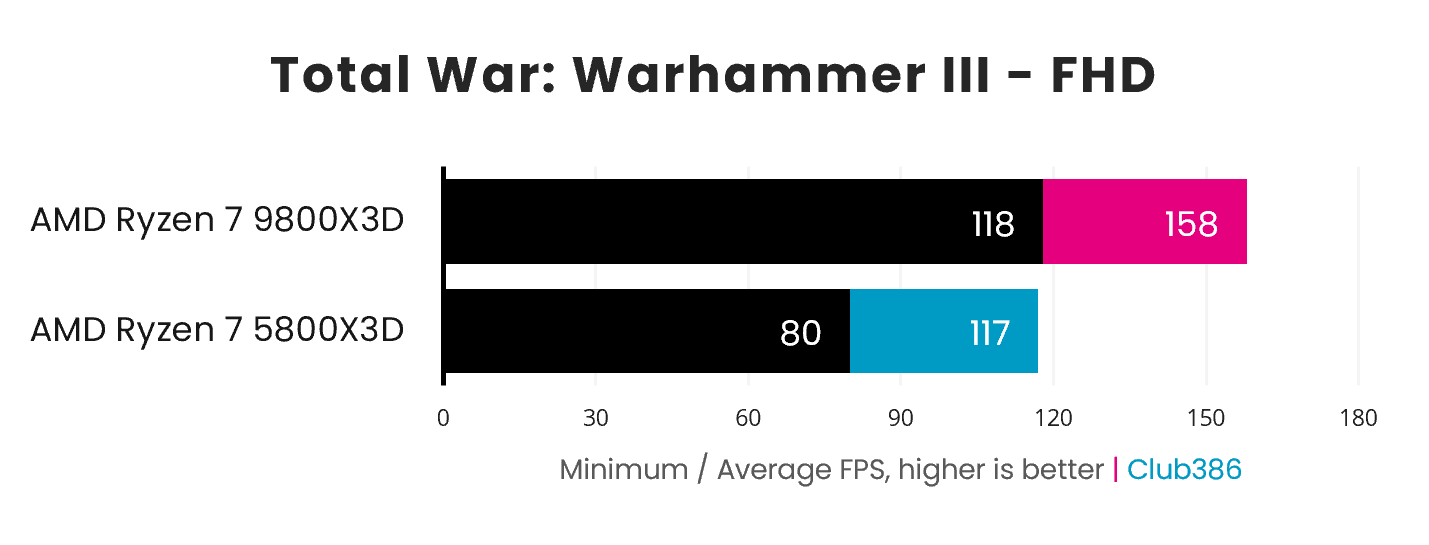
The Total War: Warhammer III Mirrors of Madness benchmark puts big pressure on both CPU and GPU. Shifting from an RTX 5070 to 5090 would net our 9800X3D another ~50fps on average, but the chip still manages a clear win over the 5800X3D regardless.
While the 5800X3D is delivering a respectable 117fps average with 80fps minimums, the 9800X3D is decisively faster at 158fps and 118fps, respectively. That’s a big 35% and 47.5% uplift.
Power
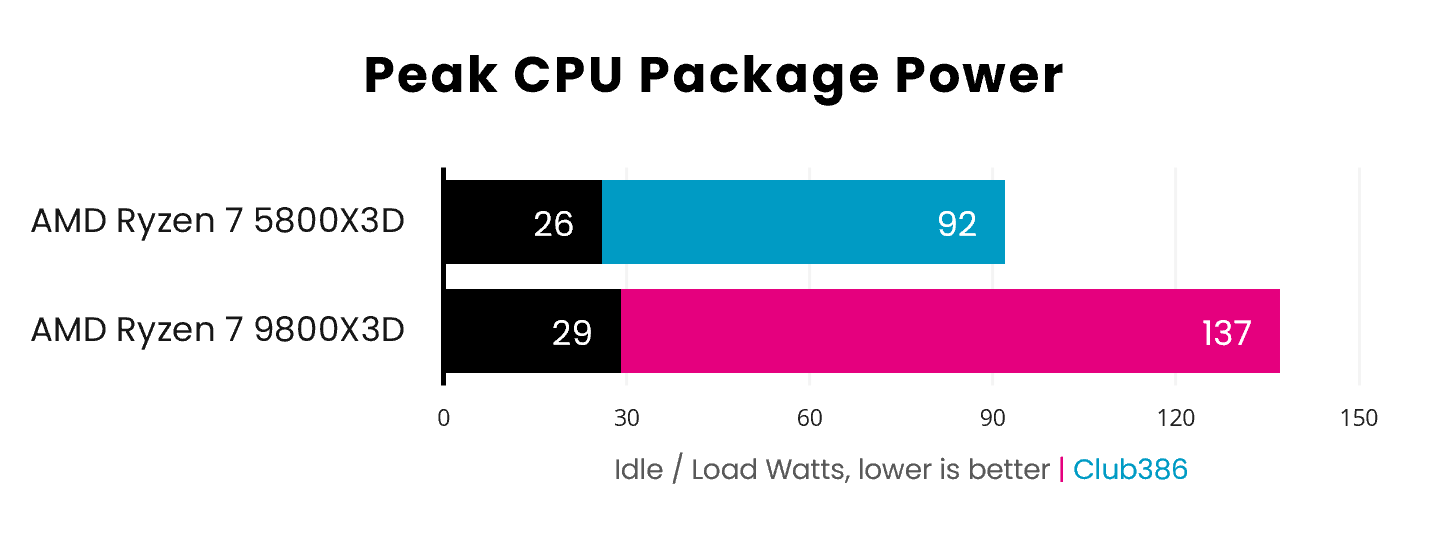
As we’re comparing two entirely different PCs, bar GPU, I’ve zoned in on CPU package power as reported by HWiNFO, rather than overall system power consumption. This is the value I’ll be using to calculate efficiency ratings later in this comparison.
While idle package power is similarly low between the 9800X3D and 5800X3D, at 26-29W, the difference in watts changes substantially under load. Running the Cinebench 2026 multiple thread benchmark, the newer chip pulls 137W comparted to 92W from the 5800X3D, an increase of 48.9%.
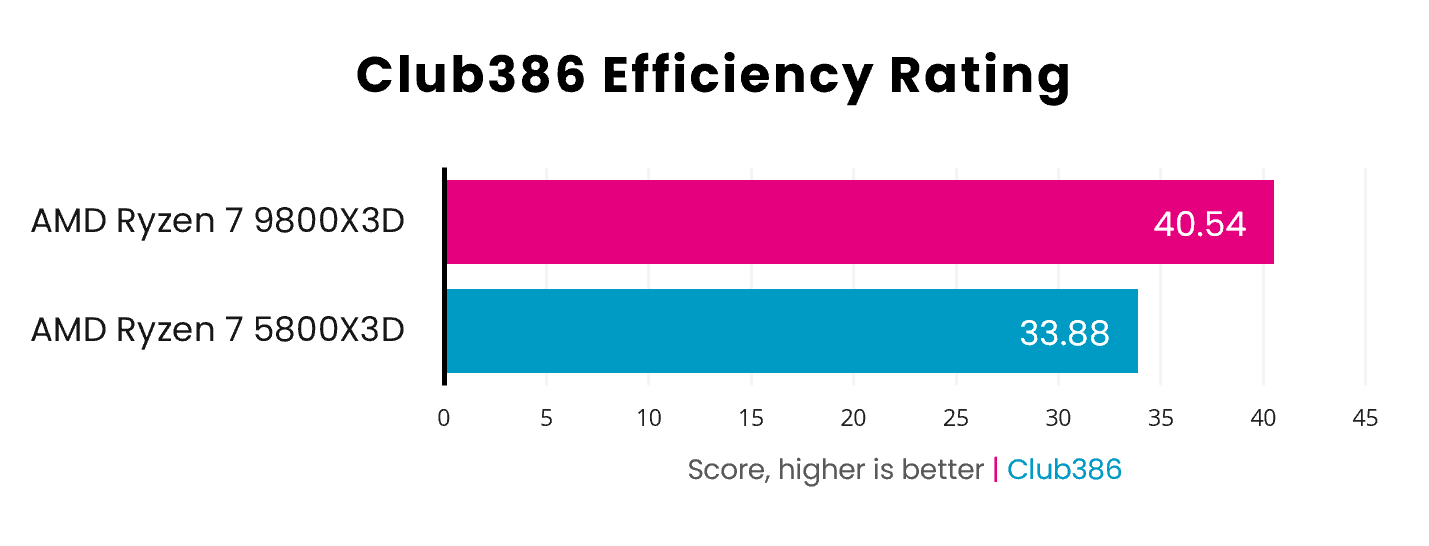
Taking each processor’s Cinebench 2026 multiple-thread score and dividing that value by peak package power, we arrive at the Club386 efficiency ratings above. This results in scores of 40.54 (5,554/137) for the 9800X3D and 33.88 (3,117/92) for the 5800X3D.
Despite drawing more watts from the socket under load, the 9800X3D’s multi-core performance is so much higher that it actually emerges the more efficient chip. That’s a 19.7% increase in efficiency relative to the 5800X3D.
Value
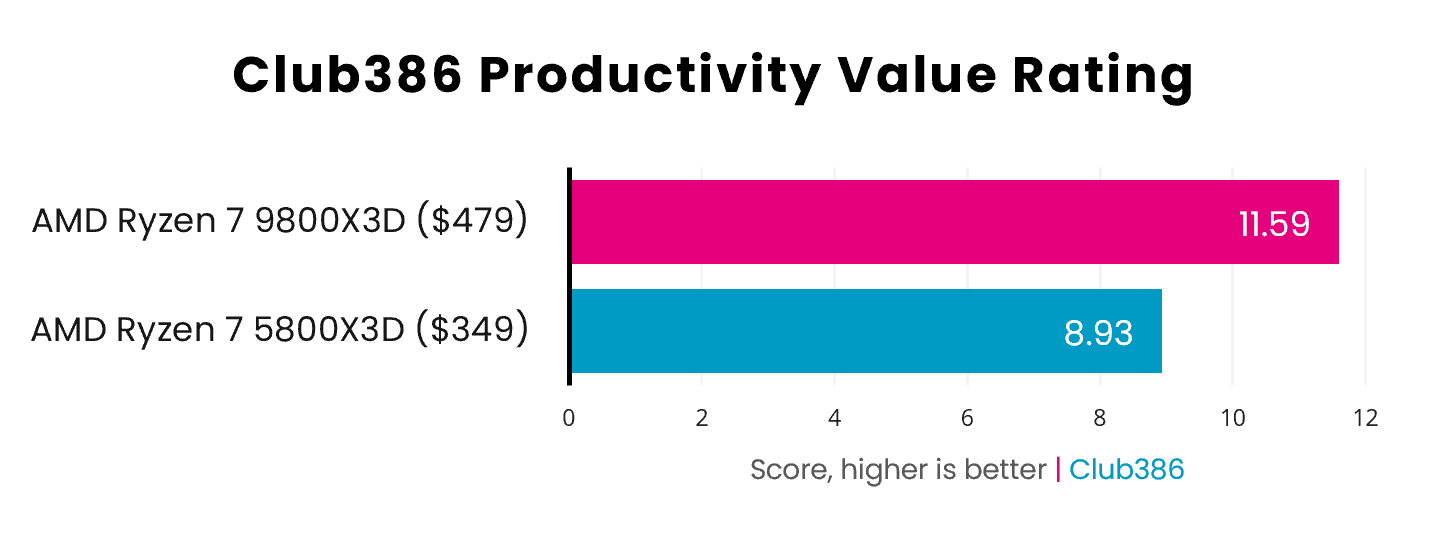
As our application and content creation benchmarks demonstrated, AMD’s Ryzen 7 9800X3D is a better choice for raw productivity performance. However, it’s also a much more expensive chip at its $479 MSRP, costing 37.2% more than the 5800X3D. Taking the CPU’s Cinebench 2026 multi-threaded score and dividing it by price, it’s 29.8% better than the 5800X3D in terms of bang per buck.
However, this isn’t an entirely fair comparison, as you also have to factor associated platform costs into the equation, including expensive DDR5 RAM and an AM5 motherboard.
| 5800X3D | 9800X3D | Difference (%) | |
|---|---|---|---|
| Civ. VI | 29.9s | 23.4s | -21.7 |
| CP 2077 | 132 / 178fps | 159 / 191fps | +20.5 / +7.3 |
| F1 25 | 65 / 233fps | 114 / 309fps | +75.4 / +32.6 |
| FFXIV: D. | 92 / 226fps | 122 / 243fps | +32.6 / +7.5 |
| R6 Siege | 297 / 363fps | 315 / 392fps | +6.1 / +8.0 |
| TWW3 | 80 / 117fps | 118 / 158fps | +47.5 / +35.0 |
Moving on to gaming value, while the 9800X3D is faster in our benchmarks, there are only two of them where its performance advantage is greater than its 37.2% price premium over the 5800X3D. While the latter Zen 3 X3D CPU doesn’t extract quite as many frames per second out of this level of hardware as its Zen 5 counterpart, performance does still remain solid.
A more-powerful graphics card could produce a wider gap, but more GPU horsepower would broadly benefit both CPUs. Moreover, if you have $1,000+ to spend on a GeForce RTX 5070 Ti or better then the costs associated with purchasing, or upgrading to, AM5 likely isn’t a major concern for you anyway.
Conclusion
On the face of it, the 9800X3D absolutely batters its Zen 3 predecessor into a pulp, but current market conditions mean this situation is much more complicated. If you already have an AM4 motherboard with DDR4 RAM, and you want to squeeze some extra gaming performance out of your system, the 5800X3D remains the best way to do that. The 10th Anniversary Edition release of this CPU is a welcome release, even if it’s more expensive that it should be.
Meanwhile, existing owners of AMD’s AM4 X3D champion can rest easy that their processor is still providing a decent gaming experience. The 9800X3D is substantially faster across the board, but the gains it provides come with substantial platform costs that are hard to justify.
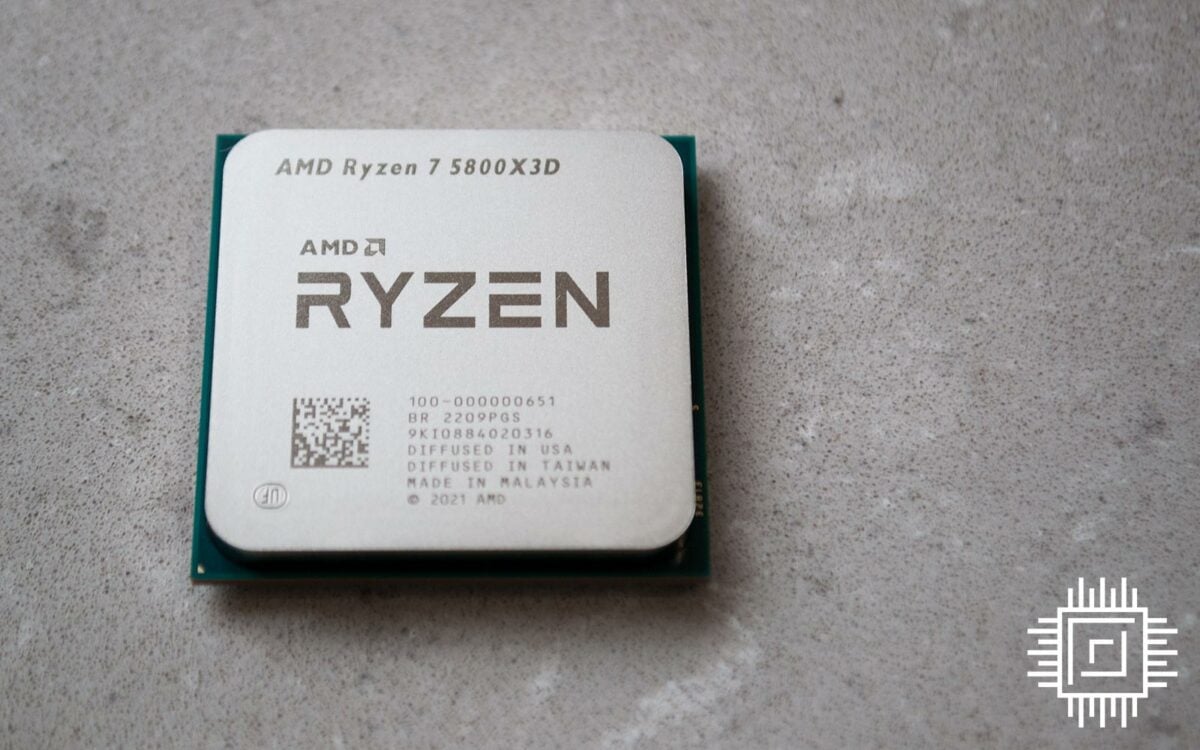
AMD Ryzen 7 5800X3D
The fastest gaming CPU for AM4 systems bar none. Read our review.
Comparisons between these two processors become more nuanced if you’re considering purchasing an entirely new rig. For example, using the PCSpecialist configurator, I can piece together a 5800X3D system with a B550 motherboard, 16GB of DDR4 RAM, a 1TB SSD, and an RTX 5070 for £1,791. Meanwhile, a 9800X3D PC with a B850 board, 16GB of DDR5 RAM, plus the same storage and GPU, costs £2,007.
Spending that extra £208 on the 9800X3D machine is a no-brainer as far as I’m concerned. That price difference is more than reasonable considering the cost of each CPU and their respective RAM standards, and you’ll be unlocking the full performance of your graphics card, while having greater general compute speed at your disposal. That’s not forgetting the upgrade potential that AM5 offers, which AM4 simply can’t match.
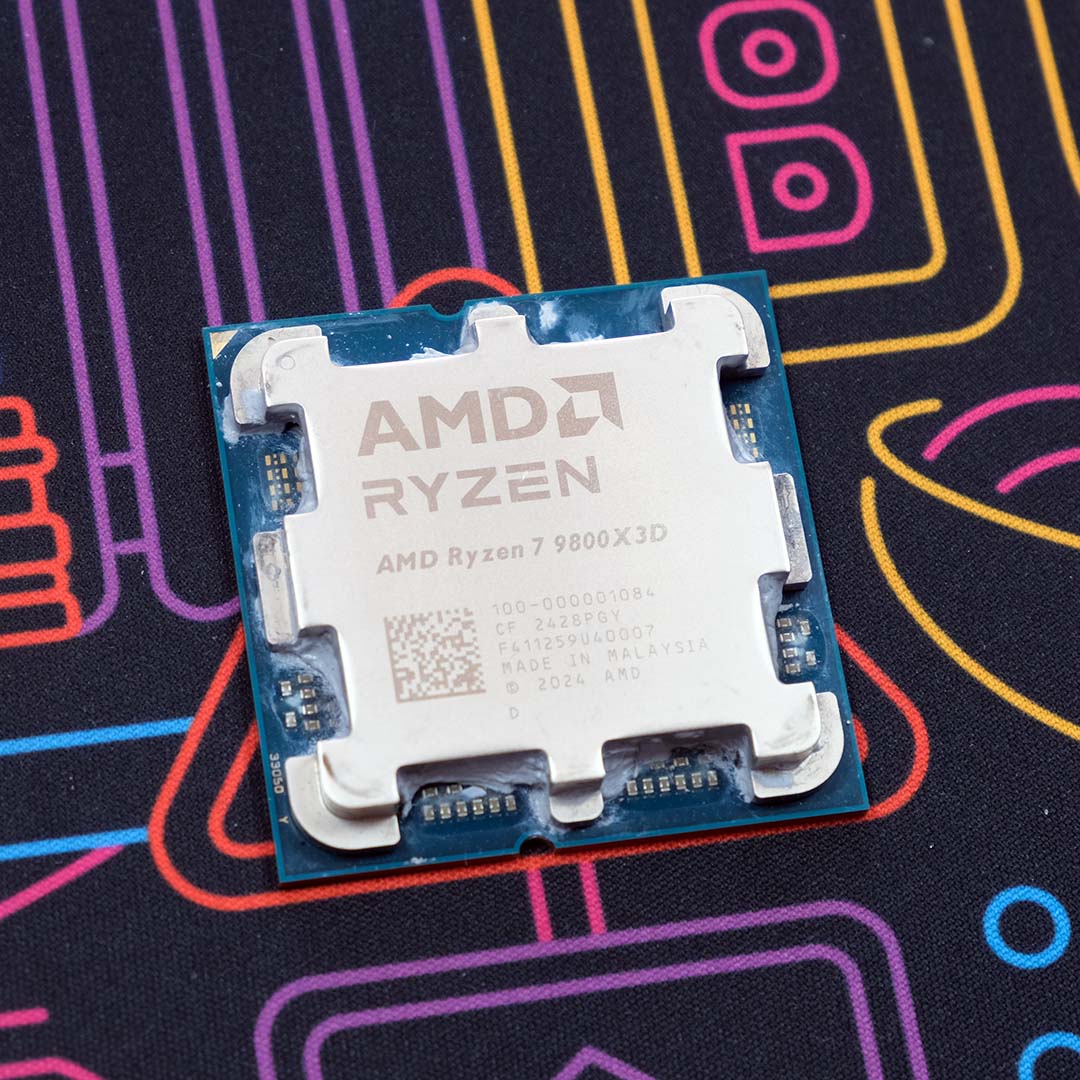
AMD Ryzen 7 9800X3D
The all-round gaming king on AM5 PCs. Read our review.
Summarily, both processors expectedly deliver solid gaming performance, despite the 5800X3D showing its age now. In trying times like these, it’s great to have both chips available on the market, much as I wish AMD would trim back the price of its AM4 processor a touch to really cement its place as a high-value hero.
For more chip chatter, check out our picks of the best CPUs you can buy for your PC today, including picks both Intel and AMD processors.